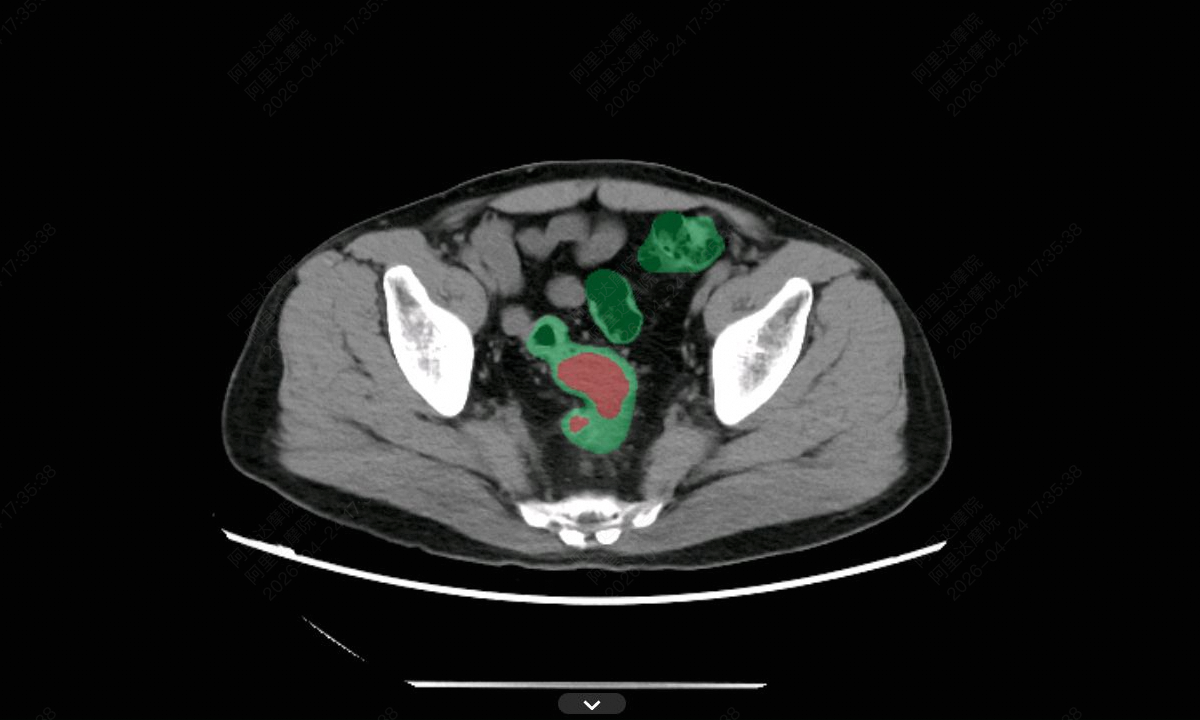
Colorectal cancer (CRC) is the second leading cause of cancer-related deaths worldwide, with early screening vital to reduce mortality. Although established methods such as colonoscopy and CT colonography are clinically effective, their widespread adoption faces significant barriers—including invasive procedures, demanding bowel preparation, patient discomfort, and low adherence rates. Notably, approximately 76% of CRC-related deaths occur among individuals who have not undergone timely screening, highlighting an urgent need for novel approaches that are non-invasive, cost-effective, scalable, and capable of improving screening coverage.
Addressing this challenge, Alibaba DAMO Academy, in collaboration with Guangdong Provincial People’s Hospital and other leading institutions, has developed COCA (Colorectal Cancer detection with AI), an advanced AI model designed to detect colorectal cancer with high accuracy using routine non-contrast abdominal/pelvic or chest CT scans.
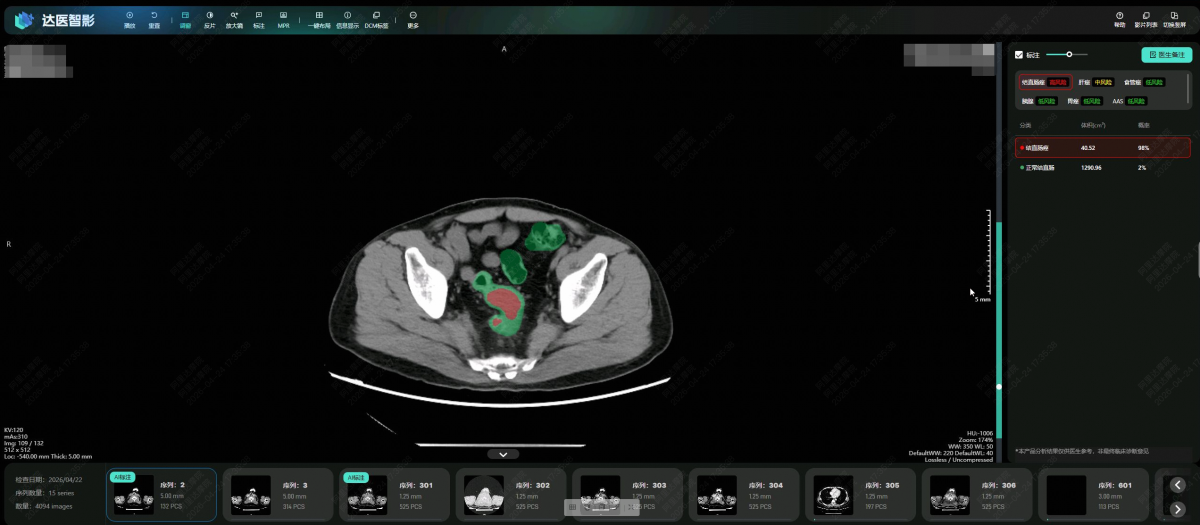
In real-world validation studies conducted across multiple hospitals, DAMO deployed the COCA model and retrospectively analyzed non-contrast CT scans from 27,433 individuals. COCA successfully identified 5 previously missed CRC cases, achieving a sensitivity of 86.6% and a specificity of 99.8%—translating to a false-positive rate of merely 0.2%. These results demonstrate COCA’s strong potential as a practical, patient-friendly opportunistic screening tool to expand CRC screening coverage.
COCA also represents the third cancer-screening AI model released by DAMO Academy, following DAMO PANDA for pancreatic cancer and DAMO GRPAE for gastric cancer. This milestone further validates DAMO’s innovative technical pathway of “non-contrast CT + AI” for multi-cancer screening, showcasing promising prospects in scalable, imaging-based early cancer detection.
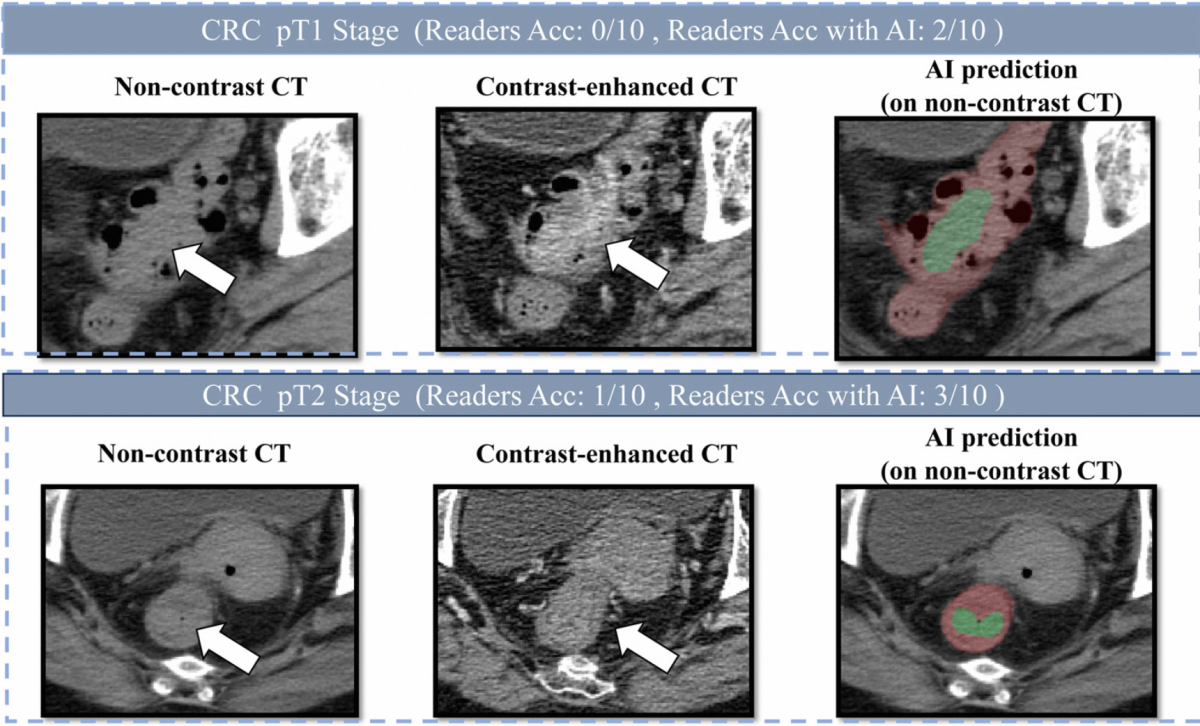
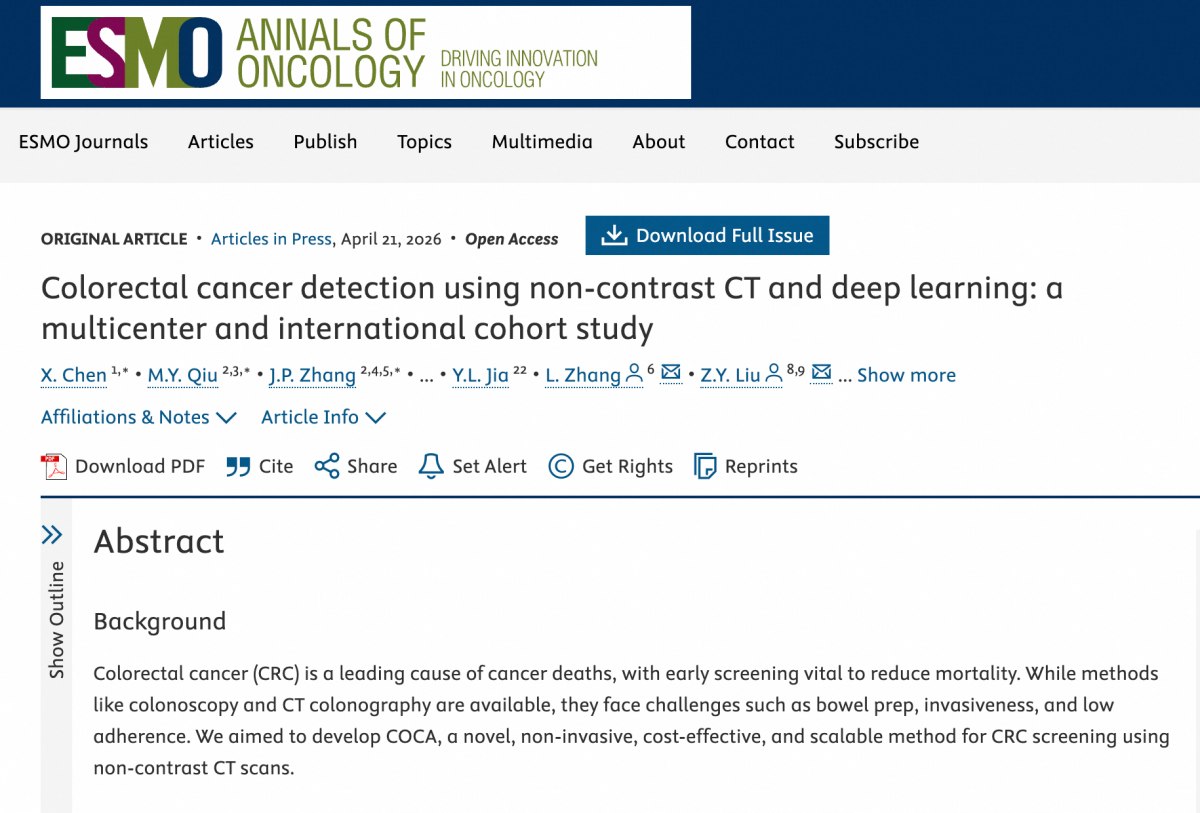
As detailed in DAMO’s research paper published in Annals of Oncology (impact factor: 65.4), the official journal of the European Society for Medical Oncology, COCA demonstrated robust performance across diverse clinical settings. In a multicenter validation involving 2,053 patients across six institutions, COCA improved CRC detection sensitivity by 20.4% and specificity by 5.4% compared to radiologists of varying experience levels, with particularly strong performance in easily overlooked regions such as the sigmoid colon and rectum. Furthermore, when used as an AI-assisted diagnostic tool, average radiologist sensitivity and specificity increased by 14.5% and 3.1%, respectively, significantly reducing clinical missed diagnoses.
By leveraging existing CT imaging data—without imposing additional radiation burden or requiring active patient compliance—COCA offers a scalable, cost-effective screening solution with the potential to substantially expand CRC screening coverage while alleviating healthcare system burdens.
“Intestinal lesions are highly prone to being missed on non-contrast CT images. AI tools like DAMO COCA can effectively help clinicians address this diagnostic challenge, empowering clinical decision-making while enabling more patients to discover potential health risks yet without the need for bowel preparation,” said Dr. Zaiyi Liu, Director of the Radiology Department at Guangdong Provincial People’s Hospital.
Since its establishment in 2017, DAMO Academy has strategically invested in medical AI research, pioneering the application of deep learning to detect subtle, easily overlooked lesions in non-contrast CT imaging. The Academy has successively developed AI models for pancreatic cancer screening (DAMO PANDA) and gastric cancer screening (DAMO GRPAE), with multiple related studies published in Nature Medicine.
Today, DAMO has achieved significant progress in screening for five major digestive-system cancers—pancreatic, gastric, colorectal, liver, and esophageal cancers, while continuing to expand its research into breast cancer, renal cancer, and other tumor types. Through its “non-contrast CT + AI” framework, DAMO Academy remains committed to advancing accessible, efficient, and intelligent early cancer detection for global healthcare.
This article was originally published on Alizila written by Crystal Liu.
Stop Waiting for Data: How Ad Hoc Analysis Speeds Up Business Decisions
How Heaven Gifts Broke Down Data Silos and Powered Global Operations with Quick BI

1,540 posts | 516 followers
FollowAlibaba Cloud Community - September 1, 2026
Alibaba Cloud Community - May 31, 2024
Alibaba Cloud Community - September 8, 2025
Alibaba Cloud Community - June 30, 2026
Alibaba Cloud Community - March 13, 2026
Alibaba Cloud Community - July 7, 2025
1,540 posts | 516 followers
Follow QwenWork
QwenWork is dedicated to helping employees strengthen their professional competitiveness in the AI era and to enabling enterprises to improve organizational effectiveness.
Learn More Token Plan
Build more, spend less. One plan, every modality.
Learn More CT Image Analytics Solution
This technology can assist realizing quantitative analysis, speeding up CT image analytics, avoiding errors caused by fatigue and adjusting treatment plans in time.
Learn More
Alibaba Cloud Model Studio
A one-stop generative AI platform to build intelligent applications that understand your business, based on Qwen model series such as Qwen-Max and other popular models
Learn MoreMore Posts by Alibaba Cloud Community

