In the era of data-driven growth, speed determines success. Every minute saved in identifying a best-selling product matters. Every day saved in clearing slow-moving inventory can determine the success of an entire season. However, after studying many mid-sized and large apparel manufacturing enterprises, we found a common problem: waiting for data is one of the biggest bottlenecks to business agility.

Quick BI ad hoc analysis is designed to break this deadlock. Your enterprise may already have a solid data foundation, but still face limited analyst resources, surging business-side requests, and pressure to respond quickly. In this context, ad hoc analysis puts data access back into the hands of frontline teams.
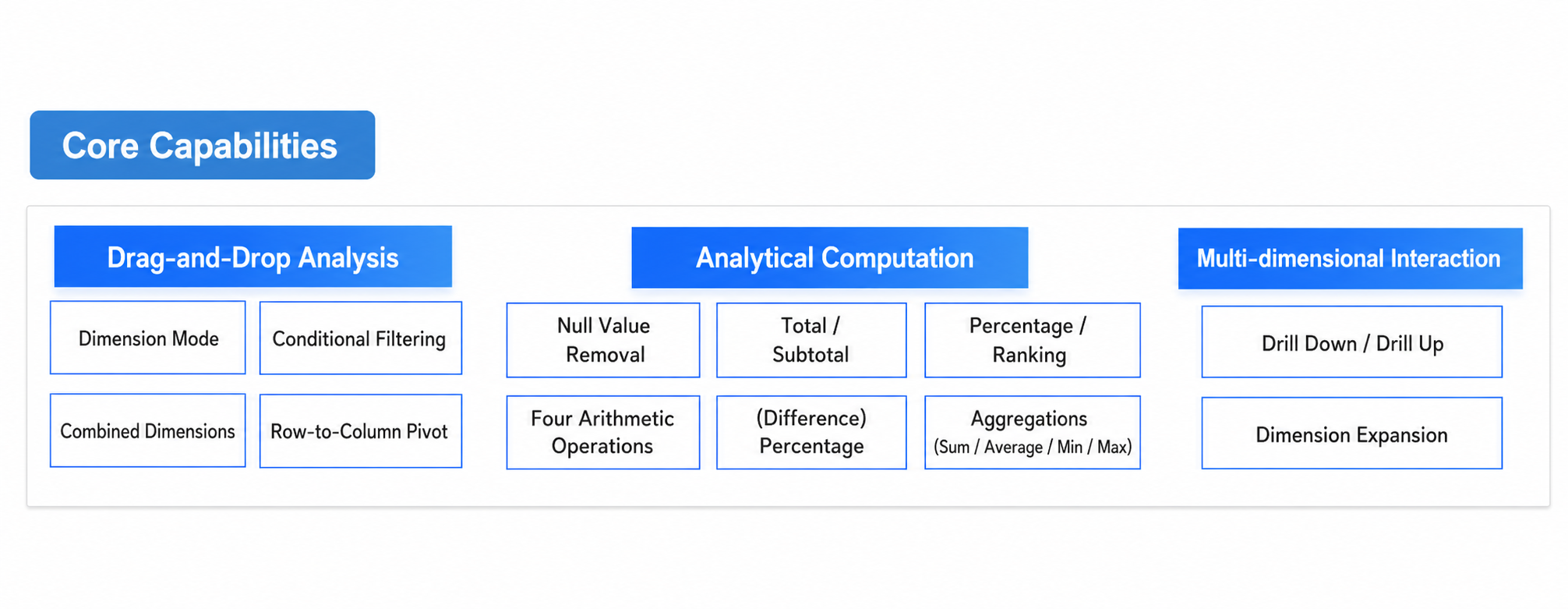
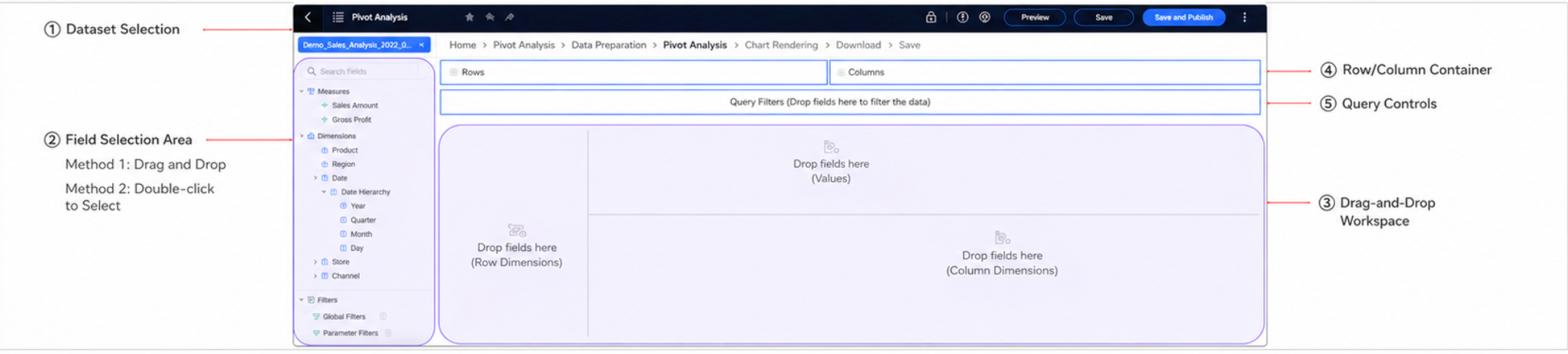
With simple drag-and-drop operations instead of SQL coding, business users can perform rapid data queries and in-depth analysis on their own. This reshapes the traditional model of “business request + IT scheduling,” keeps insights aligned with market changes, and enables faster, more agile business decisions.
Put simply, ad hoc analysis is an easy-to-use exploration tool for datasets containing tens of millions of records. It requires no SQL or programming knowledge. With simple drag-and-drop operations—just like building with LEGO blocks—users can quickly uncover business insights.
Many customers ask why they need ad hoc analysis when they already have well-designed dashboards. In fact, the two serve different purposes and complement each other.
| Analysis tool | Dashboards | Ad hoc analysis |
|---|---|---|
| Positioning | Enterprise command center: fixed logic and unified metrics | Business exploration lab: deep inquiry and interactive drill-down |
| Core value | View the big picture at a glance: monitor frequently used key metrics, ensure metric consistency, support stable communication, and enable overall business monitoring | Get instant answers: define questions independently, obtain answers immediately, and drill down repeatedly for deeper exploration. Ideal for temporary analysis and ad hoc investigation |
| Typical scenarios | Stable data viewing: routine daily and weekly review of key metrics | Dynamic data use: promotion reviews, inventory transfers, and temporary decision-making |
Best practice: Use dashboards to monitor the big picture, and use ad hoc analysis to capture opportunities. Together, they deliver both stability and speed.
On the final day of major shopping festivals such as Double 11 or 618, sales teams face tremendous pressure. They need to evaluate the real-time performance of each region and category. Under traditional collaboration models, IT teams must first extract fields from massive underlying datasets and then rebuild the model. The full feedback cycle often takes days.
Now, with the ad hoc analysis platform, sales managers can build an analysis view in less than 10 minutes. By dragging and dropping fields such as time, region, and category, they can track daily sales trends, instantly identify high-performing best-sellers, and quickly spot products that may lead to inventory backlog.
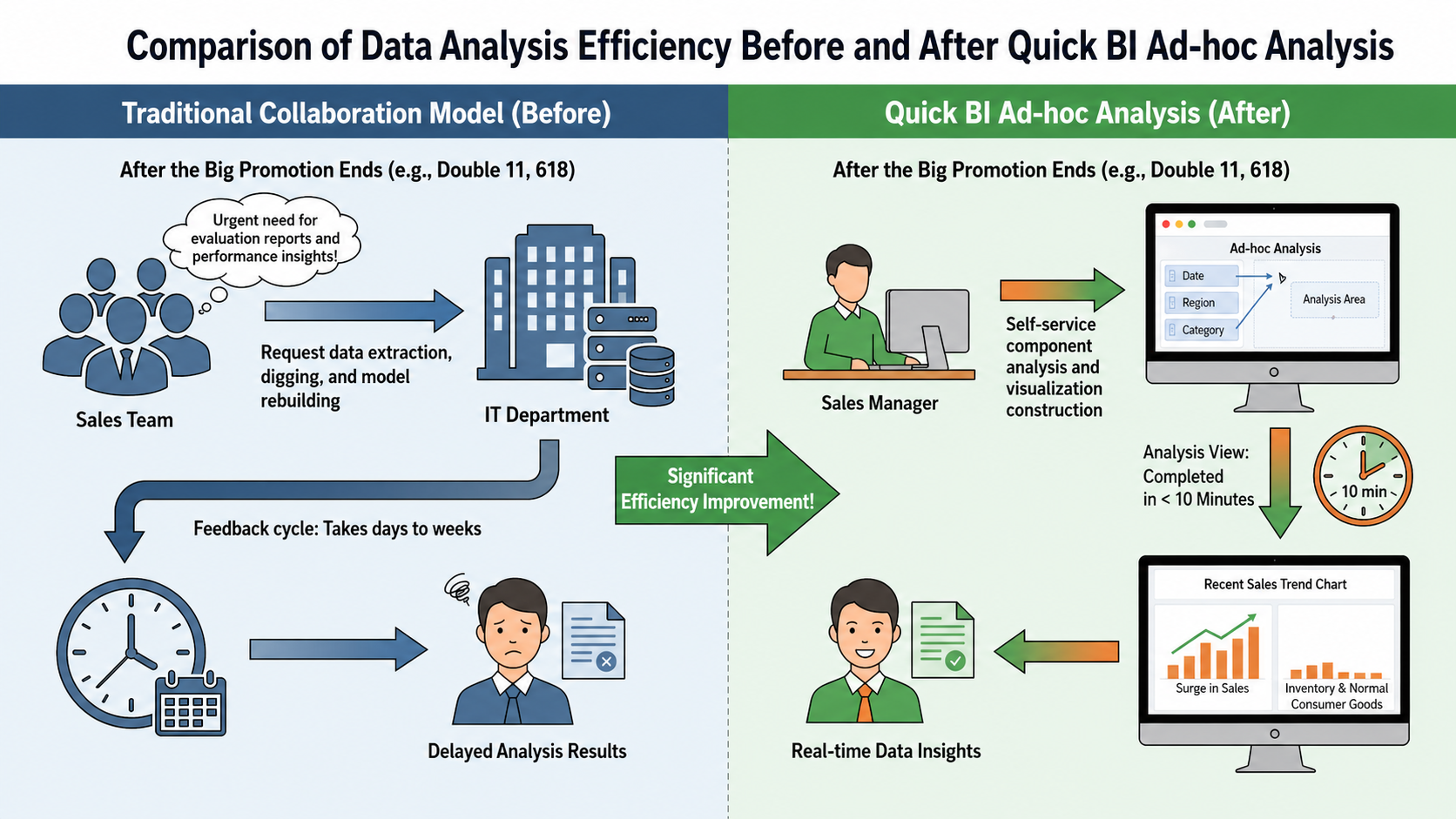
You can complete the full hypothesis -> validation -> iteration loop in just 10 minutes, without any programming background. This dramatically improves the speed of report building, supports agile decision-making, and frees IT teams from more than 80% of temporary data extraction requests. IT can then focus on higher-value work such as data governance.
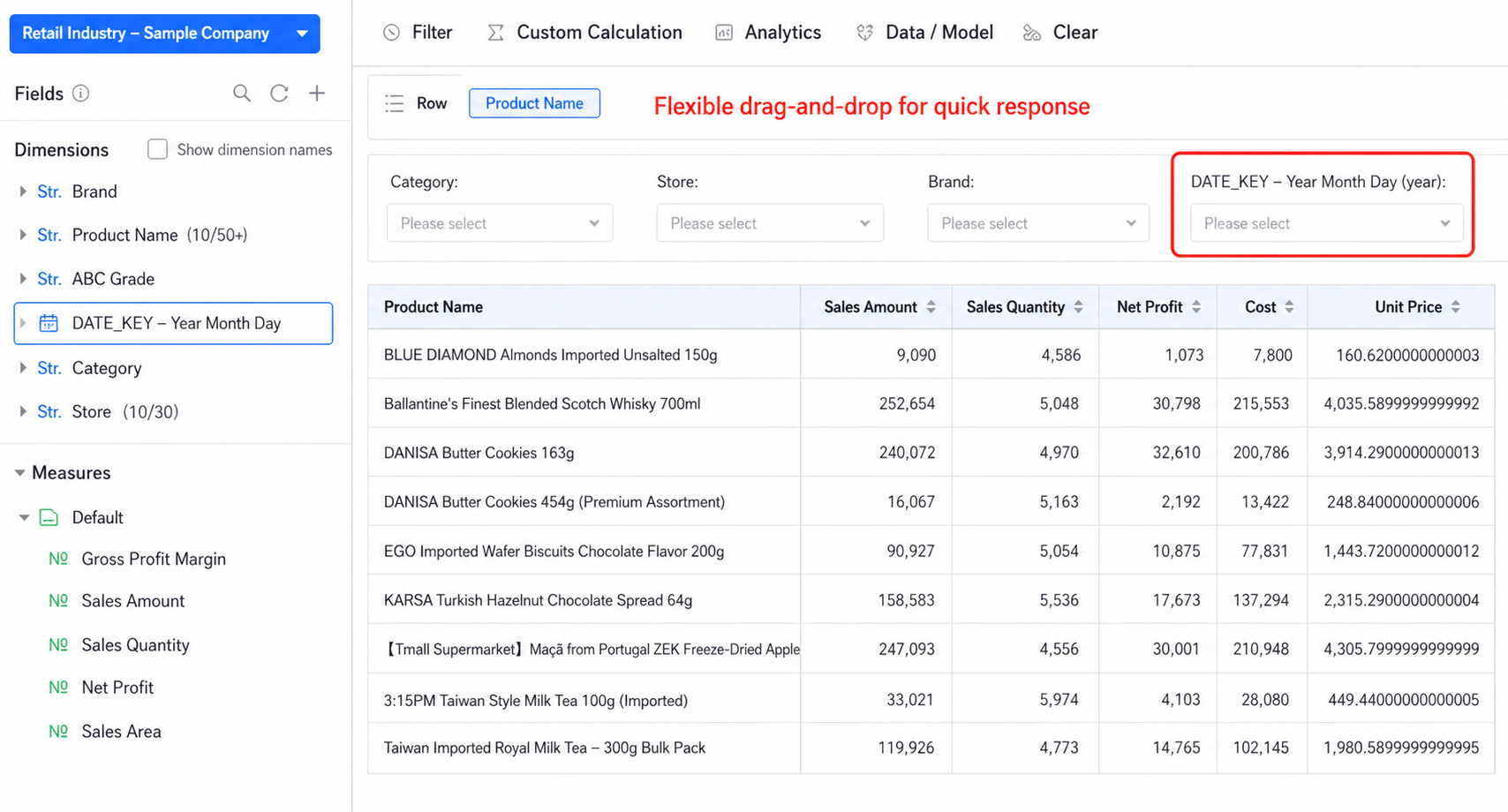
In semi-standardized reporting scenarios, ad hoc analysis becomes a powerful productivity tool. It reduces manual workload and allows teams to focus on analysis instead of repetitive execution.
Take the Monthly Business Analysis Report as an example. The finance team prepares this report at the beginning of each month. It covers dozens of core metrics, such as gross margin and expense ratio. The analytical logic remains relatively fixed, but the volume of data is huge.
Under the traditional model, finance staff must manually export Excel files from multiple systems, run complex formulas, and build charts by hand. The end-to-end process often takes two to three business days.
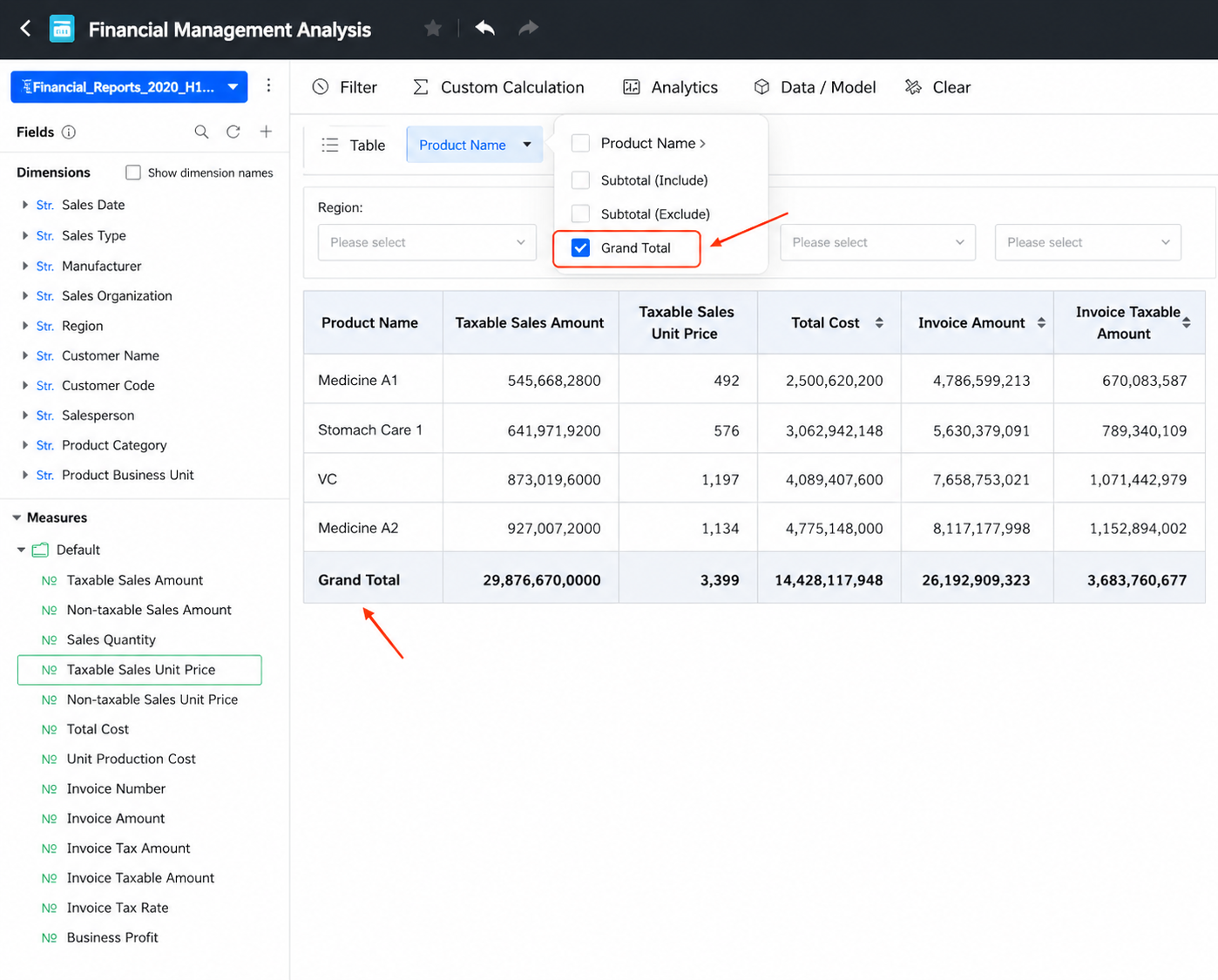
With ad hoc analysis, the finance team can preconfigure account mappings and calculation logic, then build a templated dashboard with multi-level drill-down capabilities. Once the new month’s data is updated, the system automatically syncs and refreshes the report according to the preset logic.
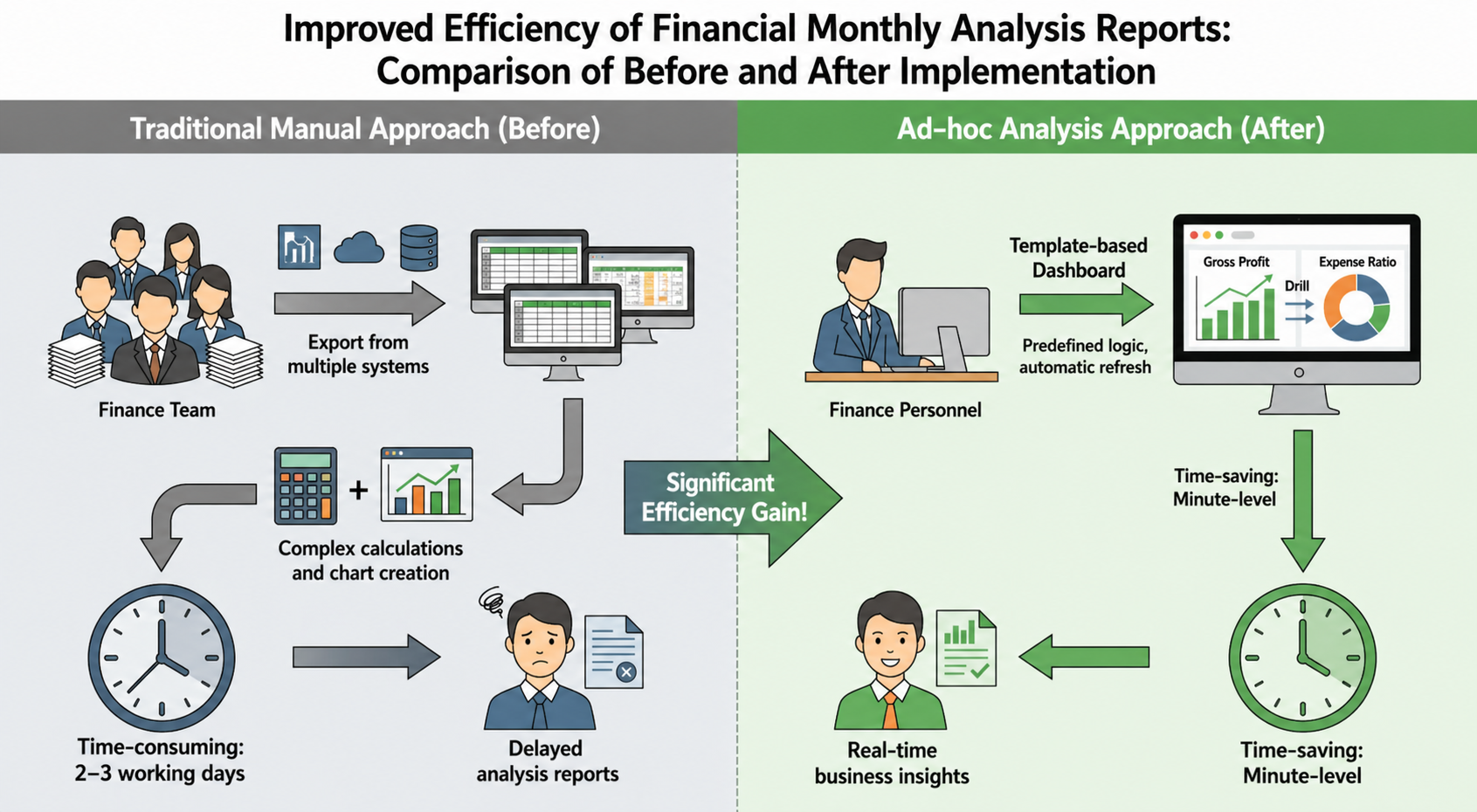
As a result, repetitive work that used to take days can now be reduced to a 10-minute verification process. More importantly, these analytical outputs can be reused as internal enterprise templates. New employees only need to open the template to understand the overall analytical framework. This transforms knowledge from something easily lost when employees leave into something reusable and inheritable, helping finance teams shift from moving data to delivering real business insight.
A well-known apparel manufacturing group, ranked among China’s top 500 private enterprises, operates across multiple sectors, including premium brands, finance, and trade. Its internal IT department handled massive volumes of data requests every day, while business decisions relied heavily on manually compiled paper reports. During its growth phase, the company was once deeply trapped in a data bottleneck.
After adopting the Quick BI ad hoc analysis solution, the company achieved a major breakthrough. The IT team built large wide-table datasets to ensure metric consistency, while giving business teams greater control over data access and analysis. In high-frequency business scenarios such as promotion reviews and inventory transfers, business owners no longer need to wait for IT scheduling. Instead, they can use ad hoc analysis to independently conduct multidimensional cross-analysis within 10 minutes.
This change reduced temporary data extraction requests by more than 80% and transformed the IT department from a data extraction center into a data asset manager. For business teams, the value of data was fully unlocked. Faster decision-making became a direct competitive advantage in the market.
At a critical stage in the shift from report-driven to analysis-driven data transformation, Quick BI ad hoc analysis is more than just a tool upgrade. It is a core driver of enterprise efficiency.
Scan the QR code to contact us and start your ad hoc analysis journey today.

DAMO Academy Unveils COCA: AI Model for Colorectal Cancer Detection

1,540 posts | 516 followers
FollowAlibaba Cloud Community - April 2, 2026
Rupal_Click2Cloud - December 15, 2023
Alibaba Clouder - January 6, 2021
ApsaraDB - September 24, 2025
ApsaraDB - September 25, 2025
digoal - March 20, 2019
1,540 posts | 516 followers
Follow Big Data Consulting for Data Technology Solution
Alibaba Cloud provides big data consulting services to help enterprises leverage advanced data technology.
Learn More Big Data Consulting Services for Retail Solution
Alibaba Cloud experts provide retailers with a lightweight and customized big data consulting service to help you assess your big data maturity and plan your big data journey.
Learn More Quick BI
A new generation of business Intelligence services on the cloud
Learn More Realtime Compute for Apache Flink
Realtime Compute for Apache Flink offers a highly integrated platform for real-time data processing, which optimizes the computing of Apache Flink.
Learn MoreMore Posts by Alibaba Cloud Community

