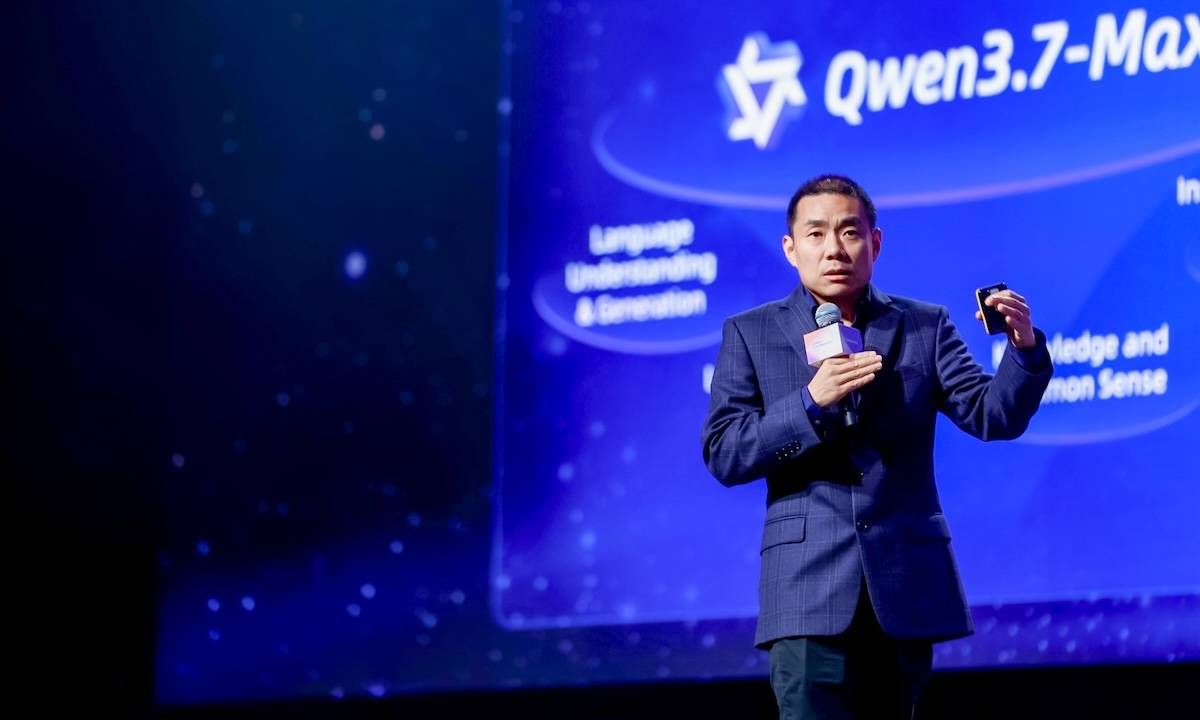
Alibaba Cloud is deepening its push into agentic AI with a full-stack ecosystem designed to help businesses build, deploy and manage AI agents more easily.
At its first international Qwen Conference, held in Singapore, the company unveiled updates spanning foundation models, AI infrastructure, cloud-native tools and enterprise agent products.
The announcements reflect Alibaba Cloud’s view that the next phase of AI adoption will require not only more powerful models, but also the infrastructure, platforms and skills needed to apply AI agents in real-world operations.
The Singapore event also saw the launch of a local AI upskilling initiative with the National Trade Union Congress’ (NTUC) Tech Talent Assembly (TTA) and ST Telemedia Global Data Centres. The one-year programme aims to equip more than 1,000 local SMEs and students with practical skills in generative AI and agentic AI, including access to Alibaba Cloud tools such as Qwen and Wan.
Agentic AI marks a shift from tools that respond to prompts to systems that can reason, plan and act across multi-step workflows.
For businesses, this opens possibilities in areas such as software development, customer engagement, data analysis, workflow automation and cloud operations. It also creates new demands on the underlying technology stack. AI agents need models that can handle complex tasks, cloud environments that support secure execution, and tools that allow them to interact reliably with enterprise systems.
At the centre of Alibaba Cloud’s latest announcement is Qwen3.7-Max, its latest large language model. Now available on Model Studio in the Singapore region, the model is positioned as a foundation for agentic workloads and enterprise AI applications.
Alibaba Cloud also launched a new Skills portal, which converts common cloud capabilities across more than 60 cloud products into Skill-based and MCP-compatible formats. This allows AI agents to call on cloud resources more naturally, similar to how software applications invoke functions.
The company’s core products, including databases, big data, operations and maintenance, and security, have developed dedicated product-level agents to help businesses manage complex cloud environments more efficiently.
Meanwhile, Alibaba Cloud is upgrading its AI infrastructure to support agent runtime environments, with enhancements such as lightweight execution sandboxes, cross-task memory, seamless data circulation and intelligent operations across the full technology stack.
Alibaba Cloud unveiled Qwen Cloud, a new AI-native cloud platform designed to simplify access to and deployment of AI models.
Built for both human users and AI agents, Qwen Cloud features three entry points: Skills for agents, a Command Line Interface for workflow integration, and a website for users who prefer a conventional interface.
The platform brings together Alibaba’s proprietary Qwen models, open-source models and third-party models across text, vision, audio, image, video and embedding tasks. This gives developers, enterprises and prosumers a more integrated way to build AI-powered applications and agents.
Starting in June 2026, up to 200 NTUC and TTAB members will be eligible to register for access to Alibaba Cloud’s GenAI tools, including Qwen and Wan, for use cases such as content creation, multimodal reasoning and data analysis.
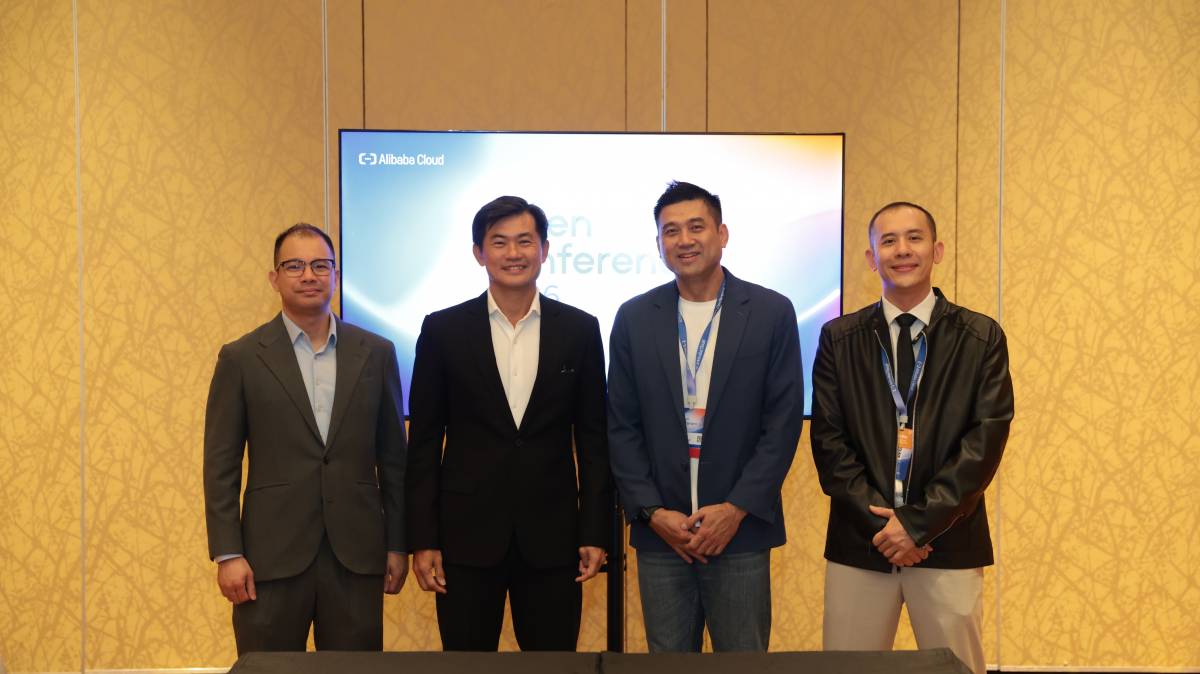
[L-R] Mingcheng Lim, Country Head, Singapore, ST Telemedia Global Data Centres (STT GDC); Desmond Tan, Senior Minister of State in the Prime Minister’s Office and Deputy Secretary-General of the National Trades Union Congress (NTUC); Andy Lee, General Manager of Singapore and Thailand, Alibaba Cloud; Maxim Tint, President, Tech Talent Assembly
The initiative will then be progressively expanded to participants under IMDA’s Digital Enterprise Blueprint-Alibaba Cloud Digital Accelerator Programme, as well as ecosystem partners such as SGTech, Singapore Computer Society, Digital Defence Alliance Singapore and Institutes of Higher Learning.
Alibaba Cloud and STT GDC, together with ecosystem partners, will also organise hands-on workshops to help participants understand how to use these tools and apply them to real business and learning scenarios.
For SMEs, the initiative is designed to address a common adoption gap. Many businesses are interested in AI but may lack the technical expertise, resources or confidence to apply it meaningfully. Structured training and hands-on exposure can help translate interest into practical use cases across productivity, customer engagement, coding, workflow automation and content creation.
In addition, Alibaba Cloud also debuted the JVS Agent Suite, a set of enterprise-grade agent toolkits for enterprises, developers and individuals to easily build and run exclusive AI agents. Built on the OpenClaw framework with robust cloud-native security, JVS Claw Teams supports 7×24 cloud operation, centralised distribution of an organisation’s proprietary Skills, and integrated security management.
Alibaba Cloud’s latest announcements show how the company is positioning itself for the next phase of AI adoption. The agentic era will not be defined by models alone, but by the broader ecosystem around them, including infrastructure, model platforms, developer tools, enterprise deployment frameworks and workforce readiness.
This article was originally published on Alizila written by Shao Xiaoyi.
Alibaba Cloud Unveils Advanced Agentic AI Ecosystem for Global Customers

1,584 posts | 525 followers
FollowAlibaba Cloud Community - May 26, 2026
Alibaba Cloud Community - June 22, 2026
Alibaba Cloud Community - August 28, 2026
Alibaba Cloud Community - May 20, 2026
Alibaba Cloud Community - June 26, 2026
Alibaba Cloud Community - August 25, 2026
1,584 posts | 525 followers
Follow Token Plan
Build more, spend less. One plan, every modality.
Learn More
Alibaba Cloud Model Studio
A one-stop generative AI platform to build intelligent applications that understand your business, based on Qwen model series such as Qwen-Max and other popular models
Learn More QwenWork
QwenWork is dedicated to helping employees strengthen their professional competitiveness in the AI era and to enabling enterprises to improve organizational effectiveness.
Learn More Qwen
Qwen
Full-range, open-source, multimodal, and multi-functional
Learn MoreMore Posts by Alibaba Cloud Community

