You've heard how artificial intelligence is changing the way businesses operate. But if you're trying to bring AI into your organization, you might be wondering: where do you start?
The answer often lies with an AI company — a partner that helps you develop, deploy, and manage intelligent systems tailored to your specific challenges. These companies don't just offer technology. They help you solve real problems, from automating repetitive tasks to predicting customer behavior and improving decision-making.
But not all AI companies are the same. Understanding what they do (and how they differ) can help you choose the right partner for your needs.
At its core, an AI solutions provider builds and manages systems that learn from data, adapt over time, and take action with minimal human intervention.

Think of it this way: you have a challenge — maybe it's too many customer service tickets, unpredictable supply chain delays, or rising fraud rates. An AI company works with you to design a solution that uses machine learning, natural language processing, or computer vision to address it.
They handle everything from model development and training to integration with your existing tools and ongoing performance monitoring. Whether you need a custom-built system or a flexible platform you can adapt, a trusted AI solution provider makes it possible.
And it's not just for big corporations. More and more, businesses of all sizes are working with artificial intelligence services companies to gain efficiency, reduce risk, and stay competitive.
The AI landscape is diverse, and companies vary significantly in how they're built and what they focus on. Understanding these differences can help you find a partner that aligns with your technical needs, industry, and long-term goals.

Here's a breakdown of the main types you'll encounter:
These are end-to-end partners. They offer infrastructure, pre-trained models, deployment tools, and support. If you need a complete solution with minimal internal effort, this type of company can deliver it.
Some AI companies specialize in particular sectors — like finance, healthcare, or manufacturing. Their deep understanding of your industry means they can anticipate challenges, comply with regulations, and deliver faster results.
A growing number of organizations build on open-source AI frameworks. These companies often prioritize transparency and flexibility, making them a strong choice for teams with in-house technical expertise who want control over their models.
Many businesses today choose cloud-based AI solutions. These providers let you scale quickly, integrate easily with other tools, and avoid the complexity of managing on-premise infrastructure. They're especially popular among fast-moving teams that value agility.
Did you know?
Alibaba Cloud is the only cloud provider that natively integrates AI innovation with cloud infrastructure at scale.
This means AI capabilities are built directly into our platform — from computing power optimized for machine learning to pre-trained models and MLOps tools — so businesses get tighter integration, faster deployment, and lower operational overhead.
For customers, this translates into a seamless path from data to intelligence, all on a single, secure, and scalable platform. Learn more about Alibaba Cloud's AI and data intelligence solutions.
Finding the right AI partner starts with clarity. You need a provider that aligns with your business goals, technical environment, and long-term vision. Focus on these five key factors to find your ideal AI provider.
Does the AI solution provider understand your industry? A company that has worked with manufacturers will approach predictive maintenance differently than one focused on retail.

Time matters. Look for providers that can move quickly — whether it's launching a pilot in weeks or rolling out across teams without long delays.
Your data is sensitive. Make sure the ai service provider follows strong security practices and meets requirements like GDPR, HIPAA, or regional standards.
Did you know?
Alibaba Cloud is the most compliant cloud provider in Asia, with over 150 security certifications — including global standards like ISO 27001, regional requirements such as SEC Rules 17a-4(f) for the US, privacy regulations like GDPR, and industry-specific frameworks such as HIPAA.
This deep commitment to compliance means your business can confidently meet audit and data residency requirements, no matter where you operate or which sector you're in.
Off-the-shelf models are a start, but real value comes from customization. Can the system adapt to your unique data, workflows, and goals?
AI implementations succeed when the provider stands by you beyond deployment. Look for a partner that offers clear documentation, responsive technical support, and a collaborative approach — especially during onboarding, troubleshooting, and scaling.
Did you know?
Alibaba Cloud's team of cloud and AI experts is here to help, from your first question to full-scale deployment.
If you're not sure where to start, take advantage of our complimentary 1-on-1 consultation to assess your cloud and AI readiness and map out a clear path based on your business objectives. Once you're onboard, you'll have access to 24/7 technical support, ensuring your systems run smoothly, like clockwork.
AI delivers real results when it's built on a platform that combines innovation, performance, and deep industry understanding. These are two examples of how companies are using Alibaba Cloud to bring bold AI ideas to life:
When Drunk Elephant launched in mainland China, it wanted to create a personalized, interactive experience that reflected its "Listen to your skin" philosophy. The goal: engage customers on WeChat with AI that could answer skincare questions, recommend products, and build community.
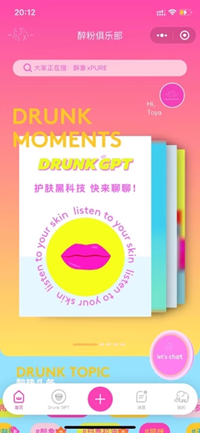
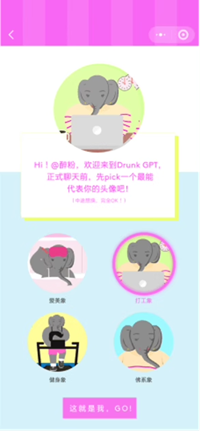
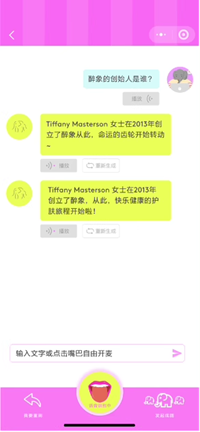
The solution was Drunk GPT, an AI chatbot powered by Alibaba Cloud's Tongyi Qwen large language model and Model Studio. Using retrieval-augmented generation (RAG) and fine-tuned skincare knowledge, Drunk GPT delivers accurate, natural conversations in text and voice, directly within the WeChat mini program and on the brand's website.
Alibaba Cloud ensured enterprise-grade security and content control, preventing misuse while enabling engaging features like AI image generation and interactive skin assessments. The result? A smarter, more dynamic way for Drunk Elephant to connect with Chinese consumers and grow its digital presence.
Futureverse is building the open metaverse with AI-generated music, avatars, and intelligent game characters. At the core is JEN-1, their high-fidelity text-to-music generator that produces complex, emotionally rich compositions at 48kHz stereo quality.
Training such a model demands extreme computing power and reliability. After testing multiple providers, Futureverse chose Alibaba Cloud, whose PAI Lingjun AI infrastructure delivered a 96% performance score in benchmarks and enabled near-linear speedup during training.
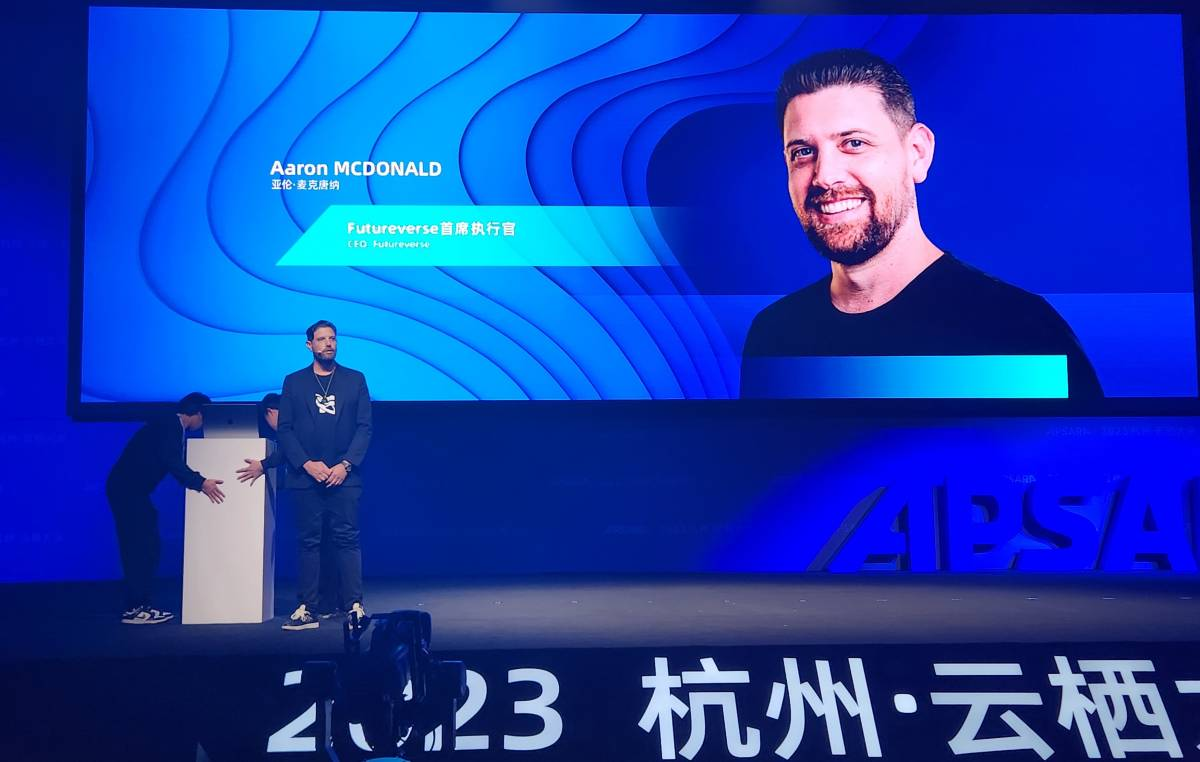
Futureverse CEO Aaron McDonald presenting JEN-1 at Alibaba's 2023 Apsara Conference, Hangzhou. Photo credit: Futureverse
With Alibaba Cloud's single-tenant AI platform, Futureverse gets dedicated resources, full lifecycle AI engineering support, and seamless scalability. This allows them to focus on innovation in AI gaming, generative content, and web3 — without infrastructure bottlenecks.
Choosing an AI partner is a big decision. These five questions can help you understand how a provider works, and whether they're the right fit for your business.
| Question | Rationale |
| Can you walk me through a recent project similar to mine? | This reveals whether they've solved problems like yours. |
| How long does deployment usually take, and what does the onboarding process look like? | Speed and clarity matter — especially if you're running a pilot project. |
| How do you handle data privacy and model security? | Get specifics on encryption, access controls, and compliance. |
| What is your SLA? | Reliability matters. Ask about uptime guarantees, response times for support, and how performance is monitored. |
| Do you offer ongoing support and updates? | AI isn't set-and-forget. You need a partner who sticks around. |
Did you know?
Alibaba Cloud offers industry-leading service commitments:
● Elastic Compute Service (ECS) comes with an SLA of up to 99.995% availability, ensuring reliable performance for critical workloads.
● Object Storage Service (OSS) guarantees 12 9s (99.9999999999%) data durability, meaning your data is protected against loss over time, even in the event of hardware failures.
The world of AI companies is diverse — from specialized vendors solving narrow problems to open-source communities driving innovation, and from cloud platforms offering scalable infrastructure to enterprise providers delivering end-to-end solutions. Each plays a role depending on your needs, resources, and goals.
But as AI moves from experimentation to core operations, one trend is clear: the most effective deployments happen when AI and infrastructure work together seamlessly.
In other words, when compute, storage, and AI services are built on the same platform, teams can train models faster, deploy them more reliably, and scale with fewer bottlenecks.
That's why some organizations are turning to cloud providers that have deep AI capabilities built in — like Alibaba Cloud, which offers not only scalable infrastructure such as Elastic Compute Service (ECS) and Object Storage Service (OSS), but also native AI tools including the Tongyi Qwen large models, Model Studio, and PAI Lingjun for high-performance training. This integration means less time spent connecting systems and more time focused on solving real business challenges.
Not sure how to get started with AI? Try Alibaba Cloud's AI Kit — an all-in-one solution designed for businesses who want to improve producitivity with AI.
Get one million free AI tokens, free AI training, and access to ready-to-use tools that make implementation fast, simple, and scalable.
Alibaba Cloud MVP Story: Sarthak Vashney's Mission to Simplify Cloud for Everyone

1,573 posts | 525 followers
FollowAlibaba Cloud Community - August 27, 2025
Alibaba Cloud Community - September 3, 2025
Alibaba Clouder - February 24, 2020
Alibaba Clouder - July 3, 2018
Alibaba Clouder - June 29, 2020
Alibaba Cloud Community - September 2, 2025
1,573 posts | 525 followers
Follow QwenWork
QwenWork is dedicated to helping employees strengthen their professional competitiveness in the AI era and to enabling enterprises to improve organizational effectiveness.
Learn More Token Plan
Build more, spend less. One plan, every modality.
Learn More
Alibaba Cloud Model Studio
A one-stop generative AI platform to build intelligent applications that understand your business, based on Qwen model series such as Qwen-Max and other popular models
Learn More Qwen
Qwen
Full-range, open-source, multimodal, and multi-functional
Learn MoreMore Posts by Alibaba Cloud Community

