By Qorder team
When you press a key and wait for code completion, how much latency can you truly tolerate?
Human-computer interaction research indicates that 100ms is the boundary for "instant response," while 400ms is the inflection point where productivity begins to decline. Beyond one second, users shift from flow state to frustration. Code completion is uniquely latency-sensitive due to its high-frequency triggers and direct competition with manual typing. We categorize the experience into four levels:
| Experience Level | First Action Latency | User Perception |
|---|---|---|
| Excellent | < 300ms | "The system is reading my mind," completely imperceptible |
| Good | 300-500ms | Barely noticeable, flow state maintained |
| Average | 500-700ms | Noticeable lag, starting to impact efficiency |
| Poor | > 700ms | Frustrating, users may abandon usage |
Why target 300ms? Users typically type with 200–400ms intervals between keystrokes. Responding within 300ms ensures suggestions appear before the next keystroke, providing a vital buffer for network fluctuations. However, executing context collection, model inference, result ranking, and UI rendering within this window is a massive engineering challenge. This article reveals how Qoder NEXT achieves millisecond-level completion through end-to-end optimization.
Before diving into the technical mechanics, let's look at the impact: we have successfully reduced P50 latency from 800ms to 300ms, breaking through the critical experience threshold for the vast majority of our users.
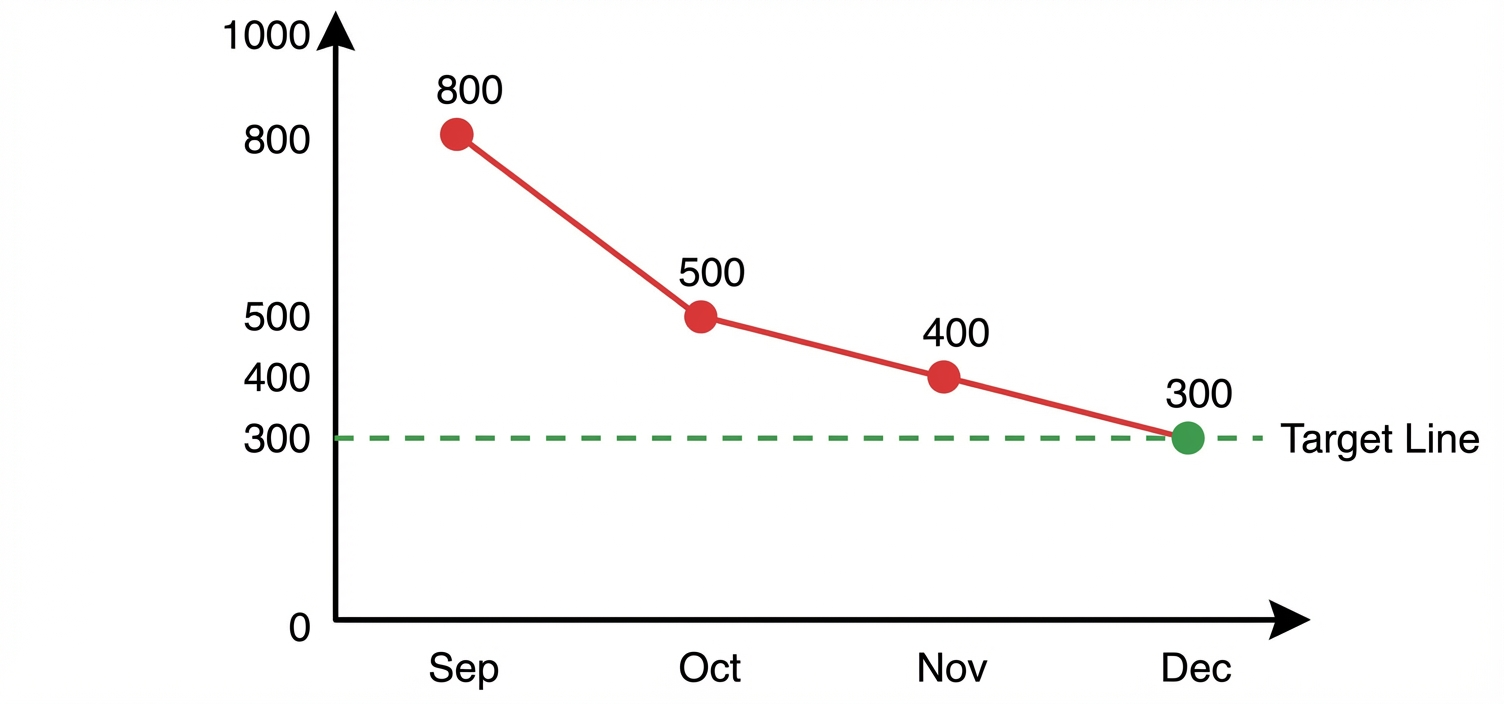
First Action Latency Optimization Trend
Definition of "First Action"
It is vital to distinguish between First Token (the first character generated) and First Action (the first semantically complete, adoptable snippet). Users care about the latter.
● Completeness: Contains enough information for decision-making (not a half-finished fragment).
● Independence: Users can immediately press Tab to accept or continue typing.
● Example: If a user types const user = , the First Action is await getUserById(id);—a complete, functional line.
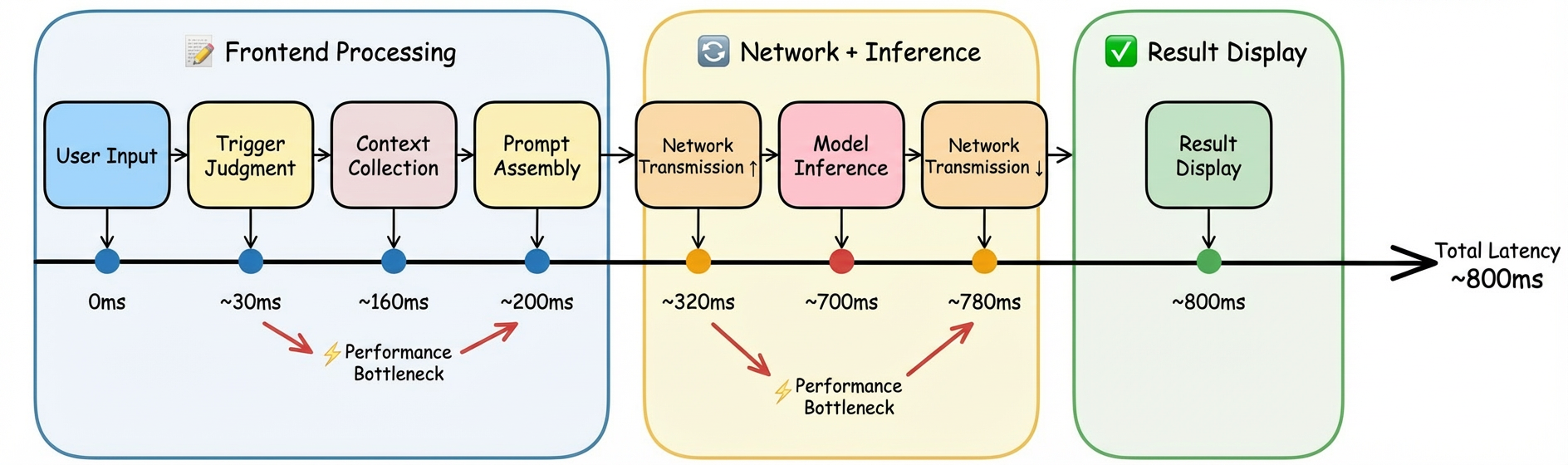
Completion Request Lifecycle
Before optimization, we analyzed millions of requests to identify the primary bottlenecks:
| Metric | P50 | P90 | P99 |
|---|---|---|---|
| First Action Latency | 800ms | 1000ms | 1300ms+ |
Latency breakdown by stage:
● Trigger Decision: 30ms (4%)
● Context Collection: 130ms (16%)
● Prompt Assembly: 40ms (5%)
● Network Transfer: 200ms (25%)
● Model Inference: 400ms (50%)
Key Finding: Model inference and network transfer are the primary culprits, accounting for 75% of total delay. This dictated our strategy: prioritize inference acceleration while streamlining context and network paths.
We optimized two core phases: Prefill (affecting Time To First Token - TTFT) and Decoding (affecting Generation Speed - TPS).
User input continuously changes in code completion, reducing KV Cache affinity. We implemented:
● Prompt Structuring: Optimizing prompt templates to improve KV Cache hit rates by 10%.
● Local KV Cache Scheduling: We chose a local cache approach over distributed architectures to minimize the latency overhead of cache retrieval.
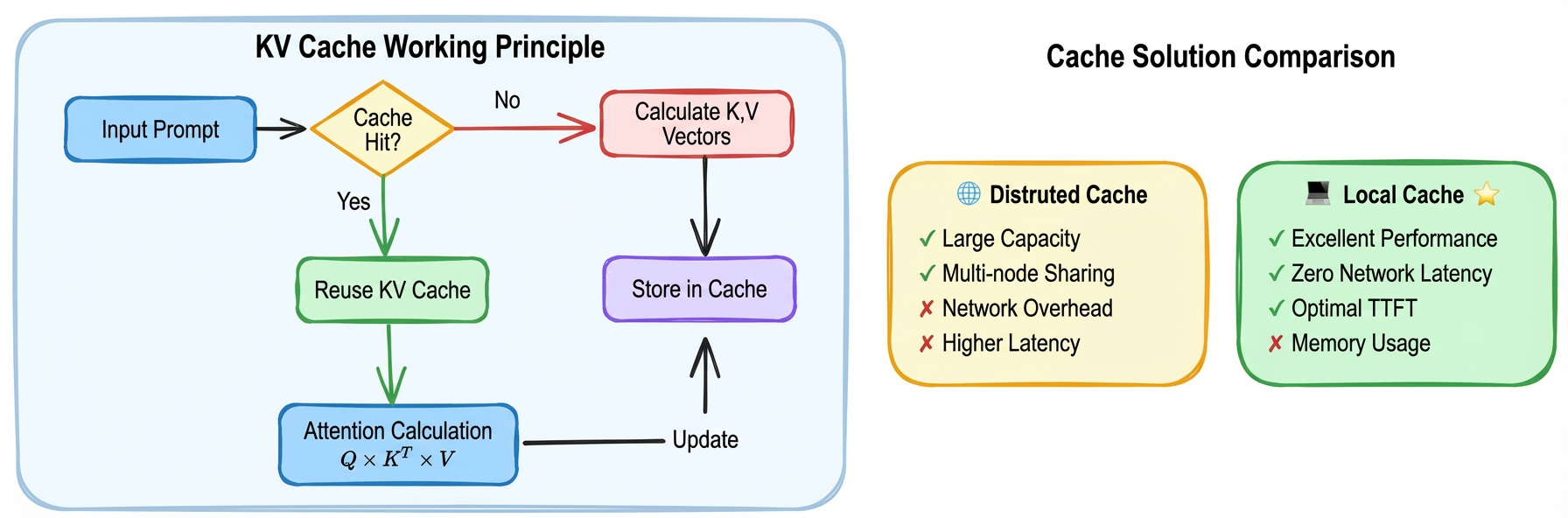
● Parallel Architectures: While Tensor Parallel (TP) improves TTFT, we apply it judiciously based on scenario-specific resource costs.
● Quantization and Operator Fusion: We adopted FP8 quantization to balance precision with performance. By fusing mainstream open-source operators, we achieved significant savings in TPOT (Time Per Output Token).
● Speculative Decoding: We utilize a custom-trained "Draft" model to generate candidate sequences, which the large model verifies in batches. This increases TPS without compromising output quality.
Qoder NEXT requires multi-dimensional data: AST structures, project symbol tables, and semantic Embedding vectors.
To prevent time-consuming file system reads in large projects, we designed a three-tier cache:
| Cache Level | Content | Hit Condition | TTL | Hit Rate |
|---|---|---|---|---|
| L1 Memory Cache | Active file AST, recent contexts | File unmodified | Session-level | ~45% |
| L2 Project Cache | Symbol tables, dependency graphs | File hash match | While project is open | ~20% |
| L3 Semantic Cache | Code block Embeddings | Confidence check | 24 hours | ~10% |
Collecting heavyweight context (like LSP dependencies) takes 100–300ms. If we wait for a trigger to start, latency is inevitable. Instead, we collect while typing, preloading data during natural pauses:
| Typing State | Typical Interval | Available Time Window |
|---|---|---|
| Fast typing | 80-150ms | Update AST near cursor |
| Normal typing | 150-250ms | Incremental parsing + cache queries |
| Thinking/Pausing | 250-500ms | Prefetch related files + semantic analysis |
| Long pause | > 500ms | Full context collection |
We dynamically adjust the depth and scope of context collection based on the user's real-time keystroke rate:
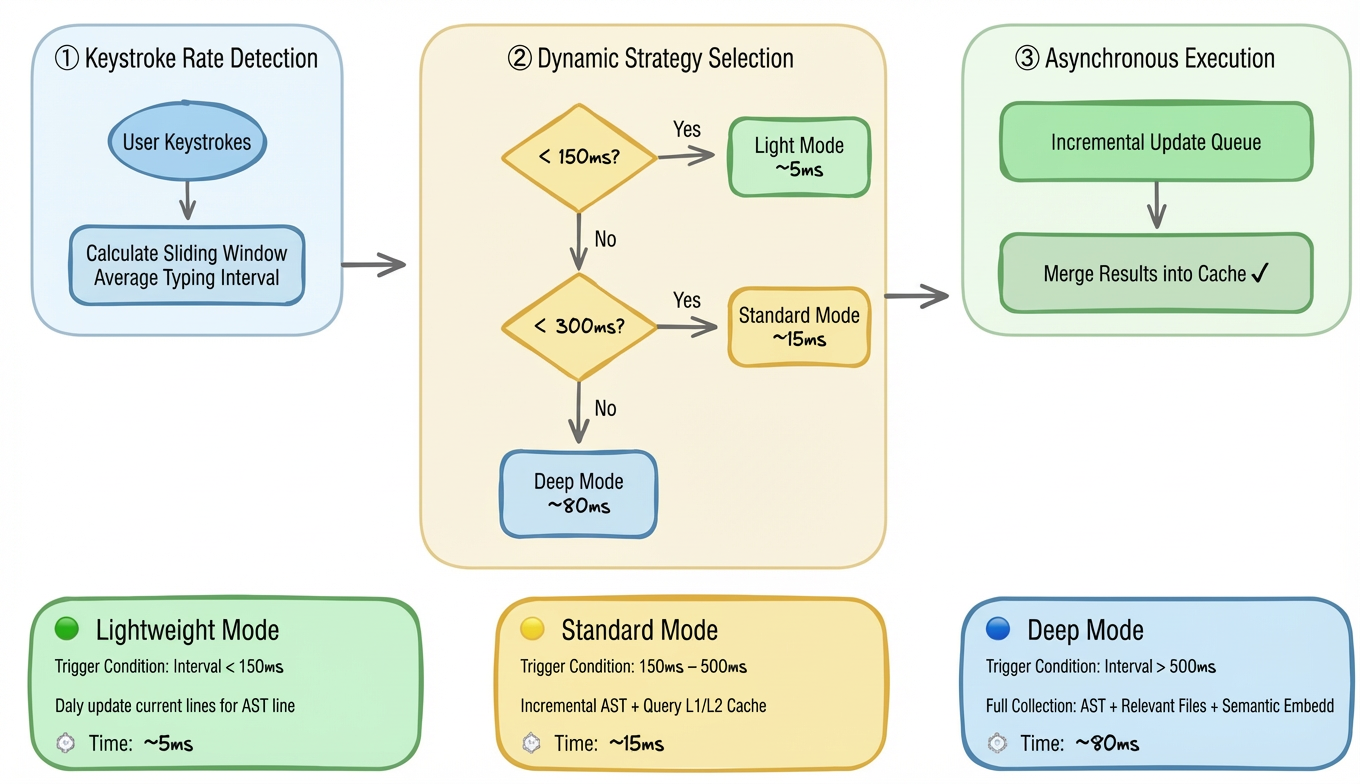
Dynamically Adjust Context Collection Depth Based on Keystroke Rate
The system learns individual habits. For a "fast typist," we raise lightweight mode thresholds; for a "think-while-typing" user, we switch to deep mode more frequently.
| User Characteristic | Identification Method | Strategy Adjustment |
|---|---|---|
| Fast typist | Average interval < 120ms | Raise lightweight mode threshold to 180ms |
| Think-while-typing | High interval variance | More frequent switching to deep mode |
| Batch pasting | Large input in short time | Pause collection, wait for stabilization |
● Proximity Access: Deploying services across global regions reduced network RT from 200ms to 50ms.
● Global Acceleration: We use dedicated cloud lines to bypass public network congestion, gaining an average 30ms benefit.
| Optimization Measure | Latency Benefit | Description |
|---|---|---|
| Proximity Access | -150ms | Requests routed to nearest node |
| Global Network Acceleration | -30ms | Dedicated line transfer, avoiding public network jitter |
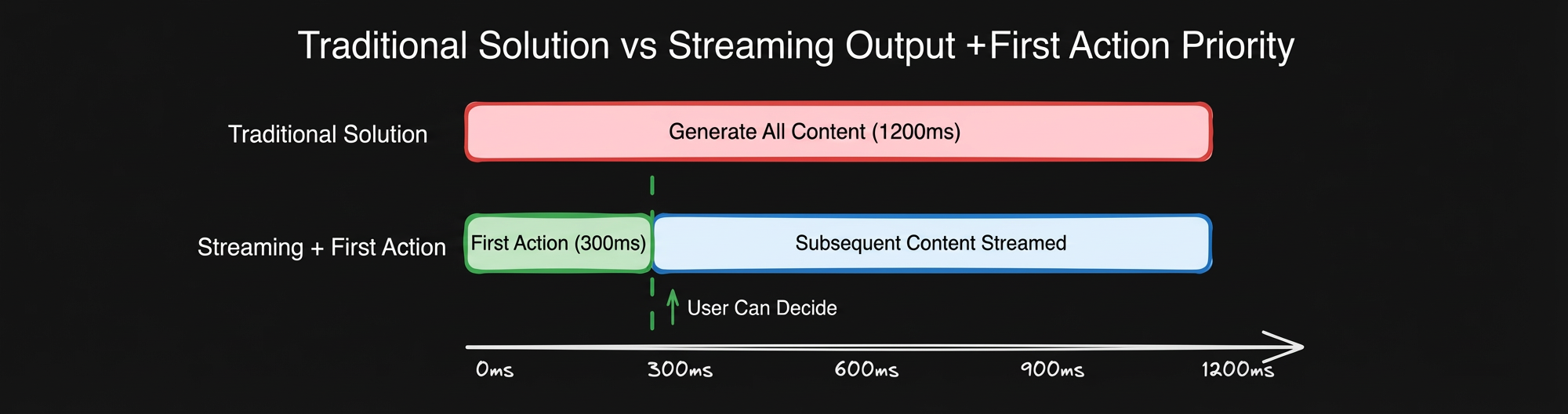
Rather than waiting for a full HTTP response, we use HTTP/2 streams to push tokens as they are generated.
● Traditional Solution: 1200ms (Wait for full generation).
● Streaming + First Action Priority: 300ms (First packet enables immediate user decision).
| Solution | Perceived Latency | Description |
|---|---|---|
| Traditional Solution | 1200ms | Wait for complete generation before returning all at once |
| Streaming + First Action Priority | 300ms | First packet enables decision, subsequent content streams in |
User editing behavior is not always linear. In scenarios like input deletion, undo/redo, cursor jumping, the context is often highly similar to the way it was before. We leverage this characteristic to short-term cache completion results.
Typical Scenario - Input Deletion:
  Type "const result = await get" → Trigger completion → Model returns suggestions
  Delete "get" → Cursor returns to after "await "
  Retype "get" → Trigger completion → Cache hit! (Same context, latency < 10ms)
💡 Approximately 23% of completion requests can hit cache, reducing First Action latency from ~300ms to < 10ms.
To balance hit rate and memory usage, we designed an intelligent cache eviction strategy:
| Strategy | Description |
|---|---|
| Time Window | Cache valid for 30 seconds, auto-expires on timeout |
| Capacity Limit | Maximum 10 cached results per file |
| Active Invalidation | Clear related cache on file save or large-scale edits |
| LRU Eviction | When capacity is insufficient, prioritize evicting least recently hit cache |
📊 Overall Effect: Achieved 23% result reuse rate while keeping memory usage under control.
We are exploring knowledge distillation to create lighter, specialized models that can be dynamically selected based on complexity, as well as INT4 quantization for further hardware-level acceleration.
Our ultimate goal is a "zero-wait" experience. By analyzing editing trajectories, NAP aims to compute results in the background before the user even triggers a suggestion, potentially dropping First Action latency to < 100ms.
There is no silver bullet for performance. Qoder NEXT's millisecond-level response is the result of a holistic synergy between model engineering and infrastructure optimization.
We optimized P50 latency from 800ms to 300ms, achieving milestone results. Code completion is a high-frequency, flow-sensitive scenario where every millisecond matters for the experience. We focus not just on the P50, but on the P99—ensuring a smooth experience for every developer.
We believe that the best technology should be invisible. Users don't need to know about the complex optimizations behind the scenes; they just want to enjoy the smoothness when pressing Tab.
Think Ahead, Code Next — Making the wait disappear.
30-day Countdown to the Olympic Winter Games Milano Cortina 2026
Alibaba Cloud Named a Leader in Omdia’s Global Enterprise-Level MaaS Market Report

1,550 posts | 521 followers
FollowAlibaba Cloud Community - July 13, 2026
Alibaba Cloud Community - January 12, 2026
Alibaba Cloud Community - July 28, 2026
Alibaba Cloud Community - June 16, 2026
Alibaba Cloud Community - July 30, 2026
Alibaba Cloud Community - August 3, 2026
1,550 posts | 521 followers
Follow QwenWork
QwenWork is dedicated to helping employees strengthen their professional competitiveness in the AI era and to enabling enterprises to improve organizational effectiveness.
Learn More Token Plan
Build more, spend less. One plan, every modality.
Learn More
Alibaba Cloud Model Studio
A one-stop generative AI platform to build intelligent applications that understand your business, based on Qwen model series such as Qwen-Max and other popular models
Learn More Qwen
Qwen
Full-range, open-source, multimodal, and multi-functional
Learn MoreMore Posts by Alibaba Cloud Community

