You've heard how artificial intelligence is changing the way companies operate. But if you're thinking about using AI in your business, you might be asking: where do I start, and what can it actually do for me?
The truth is, AI is no longer just a buzzword or a tool for tech giants. It's becoming part of how real companies work — from small teams automating routine tasks to large enterprises predicting market shifts. And the best part? You don't need a data science team to get started.
AI's role in modern business comes down to four key areas: smarter decision-making, better customer experiences, improved operational efficiency, and faster innovation. When used well, it helps you do more with less.
Let's look at how AI shows up in real business functions, how to adopt it step by step, and what to watch out for along the way.
AI is already helping companies improve how they engage customers, manage operations, and empower teams.

Across industries, companies are using AI to solve everyday challenges in six key areas: marketing, sales, operations, finance, HR, and customer support.
Instead of sending the same message to everyone, AI analyzes customer behavior to deliver tailored content, product recommendations, and timing. The result? Higher engagement and conversion — without extra effort from your team.
AI can also generate personalized visuals, ad copy, and marketing collaterals based on audience preferences and brand guidelines. From dynamic social media posts to customized email banners, teams can produce high-quality, on-brand content in seconds — accelerating campaigns and improving relevance at scale.
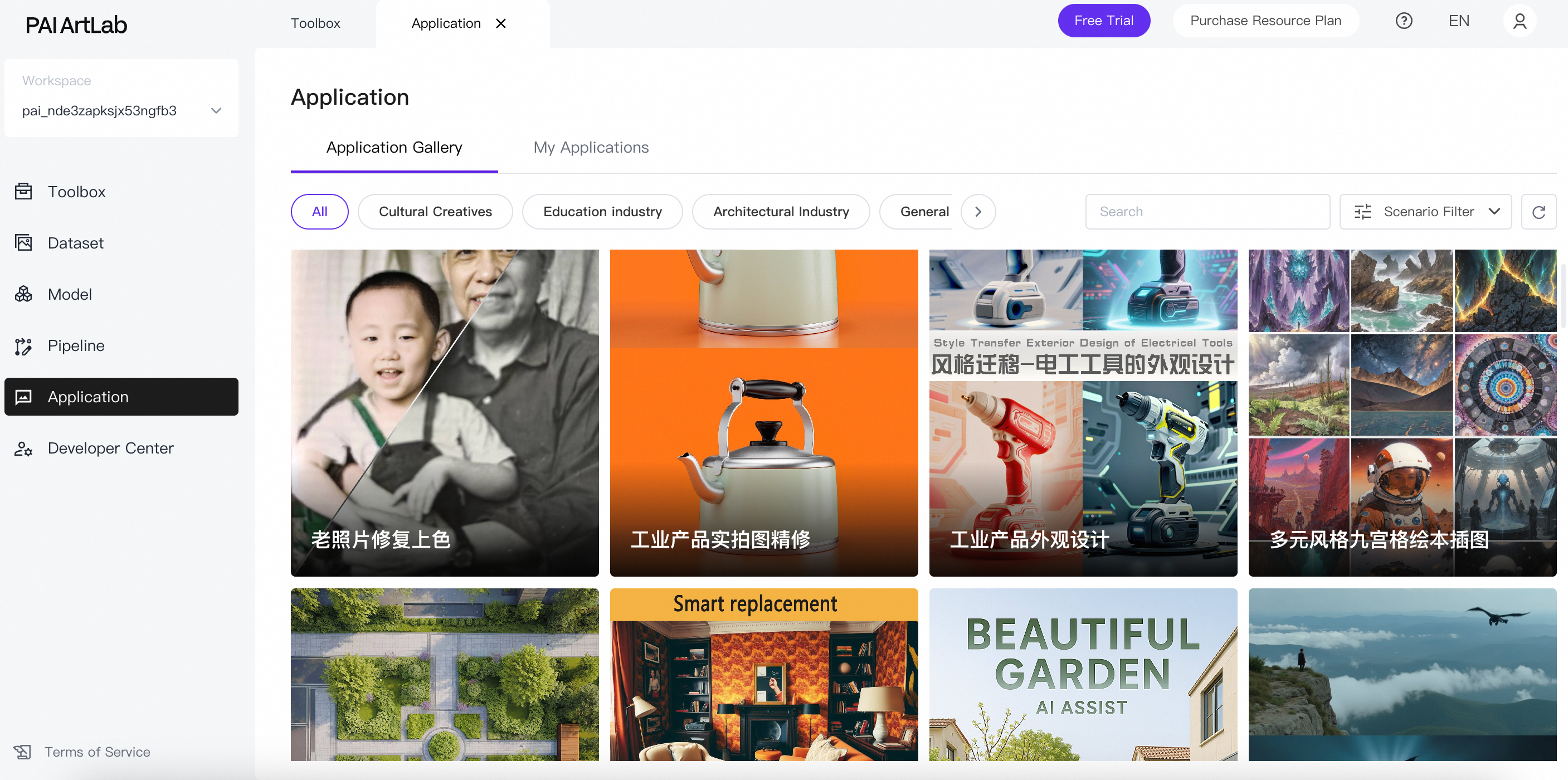
💡 Did You Know? 💡
With Alibaba Cloud's ArtLab, you can generate professional creatives — from logos to posters — using AI, with minimal effort and no technical background required.
Not all leads are created equal. AI helps sales teams prioritize by analyzing past interactions, website behavior, and engagement patterns. You reach the right person at the right time, improving close rates and reducing wasted effort.
💡 Did You Know? 💡
Alibaba Cloud's Omnichannel Data Mid-End empowers brands with unified insights from online, offline, and ecosystem-wide touchpoints. By combining rich customer behavior data with intelligent analysis, it enables smarter segmentation, personalized outreach, and faster growth — just like smarter lead scoring, but across your entire customer journey.
In manufacturing or logistics, unexpected downtime is costly. AI monitors equipment sensors and usage patterns to predict failures before they happen. This means fewer breakdowns, lower repair costs, and more reliable delivery.
Instead of manual data entry and error-prone spreadsheets, AI automates invoice processing, detects anomalies in real time, and improves cash flow forecasting. The result? Fewer mistakes, faster close cycles, and more time for strategic work — not repetitive tasks.
Learn more about Alibaba Cloud's solutions for financial institutions.
Recruiting is time-consuming. AI can scan resumes, match candidates to job descriptions, and even flag potential cultural fits — helping HR teams move faster and reduce bias in early screening.
Instead of long wait times and overloaded agents, AI powers chatbots that answer common questions, route complex issues, and even detect customer frustration.

The result? Faster resolutions, higher engagement, and support that scales with demand — without adding headcount.
💡 Did You Know? 💡
With Alibaba Cloud's chatbot solutions, you can build AI-powered, multilingual chatbots to quickly respond to your customers 24/7.
Adopting AI doesn't have to be overwhelming. In fact, the most successful implementations start small and build momentum over time. Instead of trying to transform your entire business at once, think of AI adoption as a journey — one that unfolds in clear, manageable stages.
Most companies that succeed with AI follow a similar path: they begin with a focused pilot, prove value, then gradually expand. This approach reduces risk, builds internal confidence, and ensures that each step delivers tangible results.
Here's how it typically works:
Start with one well-defined problem — something repetitive, rule-based, and time-consuming. It could be processing invoices, answering common customer questions, or sorting job applications.
Choose a tool that's easy to set up, ideally no-code or low-code, and test it with a single team or process. Track simple metrics like time saved, error reduction, or user satisfaction. The goal isn't perfection — it's learning what works and why.
Need help figuring out where to start? Sign up for a complimentary 1-1 consultation with Alibaba Cloud's AI & Cloud experts to map out a clear path based on your business objectives.
If the pilot delivers value, expand to similar processes. For example, if AI speeds up invoice processing in one department, apply it to expense reports or purchase orders.

This is where you begin to see compounding benefits — not just in efficiency, but in employee morale and customer experience.
At this stage, you might also invest in better integration or more robust tools.
Now, connect AI to your core systems like CRM, ERP, or HRIS. This allows it to access real-time data and act autonomously — for example, updating customer records, triggering approvals, or adjusting inventory forecasts.
Integration turns AI from a standalone tool into an active part of your workflow, where it can deliver deeper insights and faster decisions.
Once AI is embedded in your operations, the focus shifts to refinement. Monitor model performance, retrain with new data, and fine-tune outputs to improve accuracy.
You may also start measuring broader business impact, like revenue lift, cost avoidance, or customer retention. This is where AI evolves from a productivity tool into a strategic asset.
AI brings real benefits, but it's not without obstacles. Even the most promising projects can stall if you overlook common pitfalls.
The good news? Most of these challenges can be anticipated and managed with the right approach.
Here are the most frequent hurdles businesses face, and how to move past them:
AI depends on clean, consistent, and accessible data. If your data is scattered across systems, incomplete, or poorly labeled, the model's output will be unreliable.

Start by identifying the data needed for your use case and centralizing it where possible. Invest time in basic data hygiene — removing duplicates, standardizing formats, and ensuring accuracy.
Even a small, high-quality dataset can power a successful pilot.
You don't need a team of data scientists to get started, but you do need someone who can manage the tool, interpret results, and coordinate with stakeholders. This could be a tech-savvy team member, an operations lead, or someone willing to learn.
Many AI platforms, such as Alibaba Cloud's Model Studio, now include guided workflows and built-in training, making it easier to upskill internally. For more complex projects, consider working with a provider that offers hands-on support or managed services.
It's not always obvious how to quantify AI's impact. To avoid this, define success metrics before you begin.
Are you trying to save time? Reduce errors? Increase conversion? Track those outcomes from day one.
For example, if AI automates a weekly report, measure how many hours it frees up. If it improves lead scoring, track how many more opportunities convert. Clear metrics help you justify investment and guide future decisions.
Many people think of AI as something that's intimidating, difficult, and out of reach, but that's not the case at all.
To start using AI, you don't have to replace your team or overhaul your systems. It's about empowering your people to work smarter, move faster, and focus on what matters most. Whether it's generating personalized marketing content, automating finance workflows, or improving customer support, the most impactful uses of AI begin with one simple step: trying it.
💡 Try Our Free AI Kit
Not sure how to get started with AI? Try Alibaba Cloud's AI Kit — an all-in-one solution designed for businesses who want to improve producitivity with AI.
Get one million free AI tokens, free AI training, and access to ready-to-use tools that make implementation fast, simple, and scalable.
Cloud Security Made Simple: What Every Business Needs to Know
What Is Enterprise AI? Building Scalable, Secure AI for Large Organizations

1,547 posts | 520 followers
FollowAmuthan Nallathambi - October 14, 2024
Amuthan Nallathambi - July 12, 2024
Amuthan Nallathambi - May 12, 2024
Alibaba Cloud Community - September 28, 2026
Alibaba Cloud Community - December 25, 2024
Alibaba Clouder - March 8, 2017
1,547 posts | 520 followers
Follow QwenWork
QwenWork is dedicated to helping employees strengthen their professional competitiveness in the AI era and to enabling enterprises to improve organizational effectiveness.
Learn More Token Plan
Build more, spend less. One plan, every modality.
Learn More
Alibaba Cloud Model Studio
A one-stop generative AI platform to build intelligent applications that understand your business, based on Qwen model series such as Qwen-Max and other popular models
Learn More Qwen
Qwen
Full-range, open-source, multimodal, and multi-functional
Learn MoreMore Posts by Alibaba Cloud Community

