What does a three-second response feel like? Instead of waiting for a reply, you get feedback almost as soon as you finish asking. That is what the recently launched Qoder Fast tier delivers. It brings the time to first response down from 8 seconds to 3 seconds while reducing the Credits consumption multiplier from 1.1× to 0.8×. Many users have asked how we achieved this. This article takes a detailed look at the performance optimization techniques behind Fast tier.
Fast tier availability: Fast tier is now available on Qoder Desktop (version 0.4.4 or later required), Qoder IDE, the JetBrains plugin, and the CLI (version 1.1.70 or later required). It is available to users of both the Personal and Enterprise editions, in both China and international markets. Other products in the Qoder family will add support in the near future. Stay tuned.
We analyzed Qoder's current usage patterns in detail. In the messages we analyzed, command execution accounts for a substantial share, while quick edits account for about 9.6%. We also examined requests for faster responses: explicit requests to hurry account for about 26.9%. These observations capture both task types and requests for speed, rather than a single set of mutually exclusive categories. The following scenarios illustrate where faster feedback is particularly valuable:
The first category is command execution. Users simply need a command to be executed, with little need for model reasoning.
The second category is interactive tasks that depend on continuous feedback. Users glance at the result, then add another requirement. Each round of waiting lengthens the overall collaboration and makes it harder to stay focused on the problem at hand. These tasks need both earlier meaningful feedback and faster delivery of results that users can inspect.
The third category comprises well-scoped tasks with clear acceptance criteria. Examples include format conversion, translation, and targeted edits. These tasks may require planning and reasoning, but unnecessary planning, repeated confirmations, and excessive exploration can easily take longer than the actual task.
Fast tier therefore addresses clear user needs and well-defined use cases. Meanwhile, major model providers have recently been releasing Flash variants to meet user demand. Models such as DeepSeek V4 Flash and Qwen 3.8 Flash, as well as the recently popular Jev, have attracted attention for their speed. A focus on speed has become an industry-wide trend.
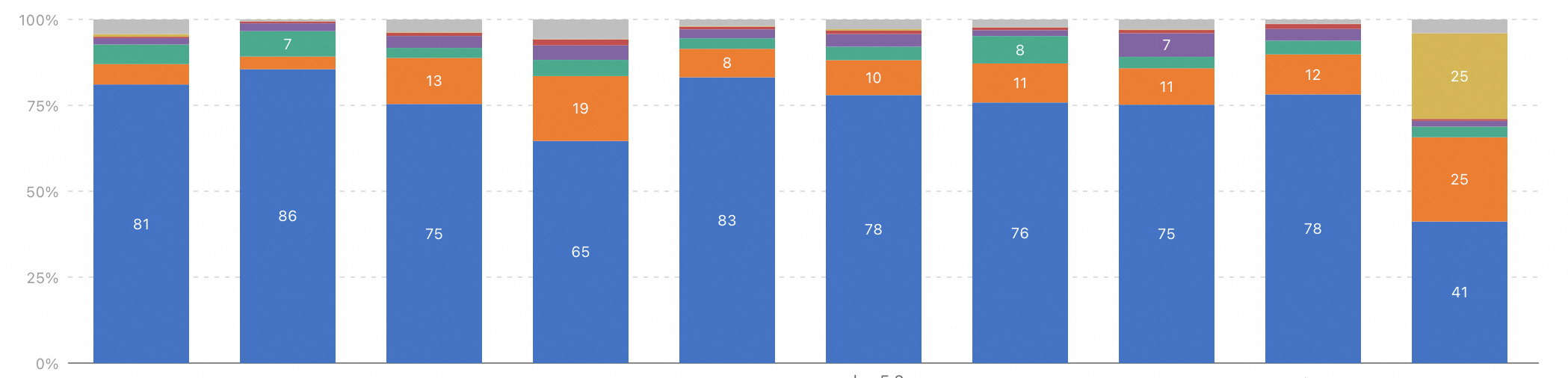
Figure 1. Wall-clock time analysis of task execution across model types
For Fast tier, the key priorities are reducing end-to-end time to first token (TTFT)—the time from submitting a request to the first visible output token—and the total duration of each conversation turn. This user-facing metric is distinct from the latency of an individual model call. To reduce latency, we first need to break down where the time goes. Qoder has collected extensive task-timing data from real-world usage. Breaking task execution down into stages makes our optimization targets immediately clear.
To analyze wall-clock time, we map task execution onto a dependency graph: the model first decides what information it needs, tools retrieve that information, the model makes further decisions, and actions and verification follow. The critical path through this graph determines the total duration. Optimization means shortening a segment of that path, removing unnecessary steps, or running independent steps concurrently. Next, we will examine four areas of optimization:
Before a request can begin, the system may need to prepare the session, load configuration, discover tools, restore context, or establish connections. Cold-start optimization begins by distinguishing the prerequisites essential to the first action from capabilities that can be prepared only when they are actually needed.
There are two direct engineering levers. First, resource reuse reduces repeated initialization on every turn. Second, lazy loading defers capabilities that the current task does not need, so the user's first action does not have to wait for the entire system to become ready. Prewarming must also be constrained by user behavior and resource budgets, so accelerating one entry point does not consume the CPU, memory, or connections needed by other tasks.
Dependencies determine what can run asynchronously. For example, independent state synchronization and telemetry reporting can be separated from task execution, and UI updates should not wait for all background processing to finish. Conversely, permission checks, required inputs, and result validation that affect operational correctness must still be completed before the corresponding action.
A simplified example: after the executor completes an action, it first delivers the verified result, then handles background work that does not affect the result's validity. This shortens the path the result takes to reach the user while ensuring that “completed” remains semantically accurate.
The goal of architectural optimization is to reduce unnecessary synchronous waiting among the UI, orchestration layer, and background tasks. The UI continuously receives status updates and incremental results, the executor advances tasks according to their dependencies, and background work runs within its own lifecycle.
Decoupling must also account for cancellation, timeouts, and resource reclamation. If a task continues to occupy a connection or tool execution slot after the user cancels it, the next request will be slower. Asynchronous tasks therefore require clear ownership, cancellation propagation, and concurrency limits. In the Qoder Desktop, this decoupling reduced overall cold-start time by more than 60%.
The harness is the execution system built around the model. It supplies context, defines tools, schedules operations, handles permissions, manages state, and verifies that tasks have actually been completed.
It affects speed on two levels: how long each action takes, and how many actions are needed to complete a task. The latter is often overlooked. An inefficient tool call, MCP call, or skill initialization can force the model to reinterpret results, search again, and wait again, turning a localized issue into a delay across the entire turn. Taking tool calls as an example, we can examine individual tool execution and parallel execution of multiple tools separately. As discussed earlier, we need both to reduce the time spent on each path and to turn a single serial path into multiple parallel paths.
A tool’s execution time should be broken down into startup, queuing, actual execution, and result processing. Frequently used read and search operations can be optimized by reusing execution environments, reducing repeated scans, and batching known requests. Operations that depend on external services require attention to connection reuse, timeout limits, and failure recovery.
Tool interfaces also affect latency. If the agent only needs to locate a symbol’s definition, returning the raw contents of an entire directory forces the model to do extra filtering in the next model call. A better result contains enough information to proceed—for example, the location, relevant snippets, and an indication of whether any results were omitted—rather than dumping every available piece of data into the context.
Error messages should also help the agent choose its next step. Clearly distinguishing invalid arguments, insufficient permissions, transient failures, and missing data reduces blind retries. Agent-facing tools need to be evaluated jointly on task completion quality, tool-call count, total runtime, and error rate.
By optimizing tool loading and related processes, we reduced overall tool-loading latency by more than 200 ms. For some tools that perform web searches or similar operations, execution time fell by more than 50%.
Parallel execution has two prerequisites: the model must recognize that the operations have no dependencies on one another, and the runtime must be able to execute them concurrently. If either is missing, execution falls back to a serial path.
For example, suppose three known, independent files need to be read before an edit. If the reads take 2, 3, and 4 seconds respectively, serial execution takes about 9 seconds. With sufficient resources and no additional scheduling overhead, the execution portion takes about 4 seconds in parallel. This is an illustrative example; our parallelization work has delivered substantial, multi-second savings for some tools. Submitting the entire batch of reads at once can also reduce round trips to the model between reads.
After we optimized parallel tool execution, the rate of parallel tool use in Fast tier increased by more than 50%, with an observed peak of more than 50 concurrent tool calls. This concurrency peak indicates execution capacity; it does not, by itself, establish the speedup for a typical task. Task-level improvements should be assessed through end-to-end timing comparisons.
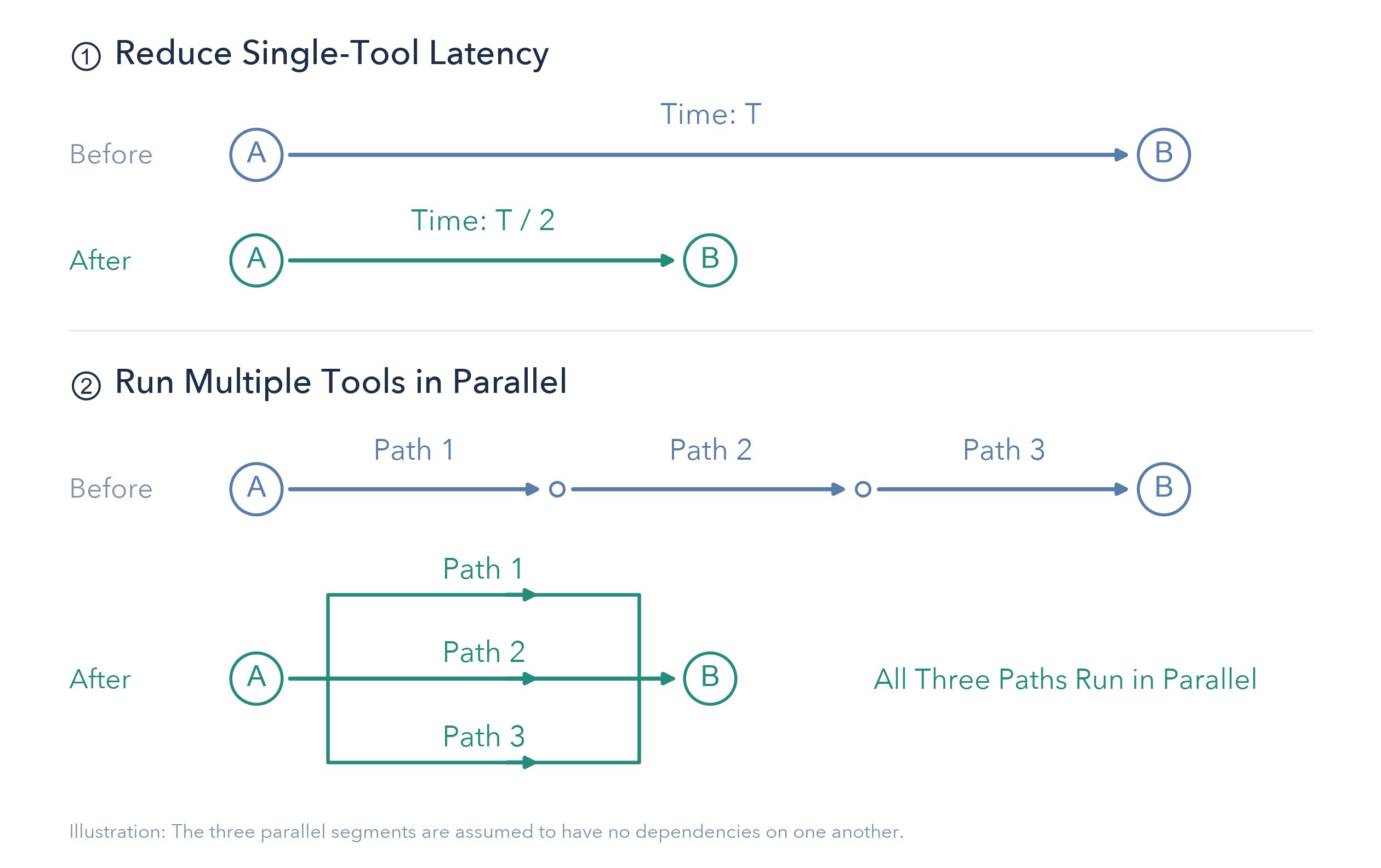
Figure 2. Illustration of tool execution time optimization
Model optimization must address two things together: matching the right model to the right task and allocating the appropriate reasoning effort to each task. The earlier latency analysis shows that different models' speed advantages vary by task type. A faster individual call does not necessarily mean a faster overall agent turn; if a model needs more searches, corrections, and retries, subsequent actions can consume the time saved earlier.
“Explain why this function throws an error” and “Map the module dependencies, complete the refactoring, and verify the results” are both development tasks, but they require different capabilities. The former emphasizes quickly identifying the relevant logic and clearly explaining the cause; the latter requires understanding a broader context, handling cross-file impacts, and continuing execution until verification is complete. Even code changes require different depths of analysis: adding an empty-input check is not the same as updating multiple call sites while preserving interface behavior. Model selection must therefore account for the task's objectives, scope, and delivery constraints.
Fast tier handles this matching within the selected tier. After a developer selects Fast tier, Qoder adjusts candidate model priorities based on the task type, then selects the execution model according to the current request's capability requirements and model availability. Model routing considers each model's overall performance on that type of task, including comprehension, generation, tool use, and sustained execution, as well as the resulting end-to-end turn duration.
System One handles task classification in this workflow. The application defines task categories and the output scope in advance, and System One returns an unambiguous classification based on the input for use in model routing. The key question is what action the user currently wants to perform: for the same code, “Explain why it preserves the original order” is classified as code explanation, whereas “Modify it so that it also works with empty input” is classified as code modification. The code and previous discussion provide context for this classification.
To limit classification overhead, Qoder organizes the current request and recent conversation separately, providing only the information needed for classification at that stage. Once System One has classified the task, the execution model still receives the full context needed to complete it and is responsible for generating code, calling tools, and verifying results. The classification directly informs candidate model ranking and, together with capability requirements and model availability, determines subsequent execution.
Once the model is selected, reasoning effort must also be managed. For models with adjustable effort settings, narrowly scoped, well-defined, easily verifiable tasks can use a lower reasoning effort setting to reduce the wait before action begins; tasks involving complex dependencies, multiple constraints, or cross-file changes require more thorough analysis. Task classification helps inform this decision, but the actual effort setting must also reflect the request's complexity and verification requirements.
The metric remains total task completion time. Lower reasoning effort can reduce reasoning time for an individual call, but the overall benefit may disappear if it leads to more omissions, rework, and tool-call rounds. Both model routing and effort strategies must be evaluated through controlled comparisons of similar tasks while meeting quality requirements. Task completion rate, end-to-end turn duration, tool-call rounds, and rework must be assessed before determining the appropriate configuration for Fast tier.
System One adds a classification step that takes a few hundred milliseconds, while the execution-model optimizations reduce latency by more than 200 ms per model call. Savings can accumulate across multiple model calls, but the net end-to-end benefit depends on whether those savings exceed the total classification overhead. The comparison must therefore include classification time rather than considering model latency alone.
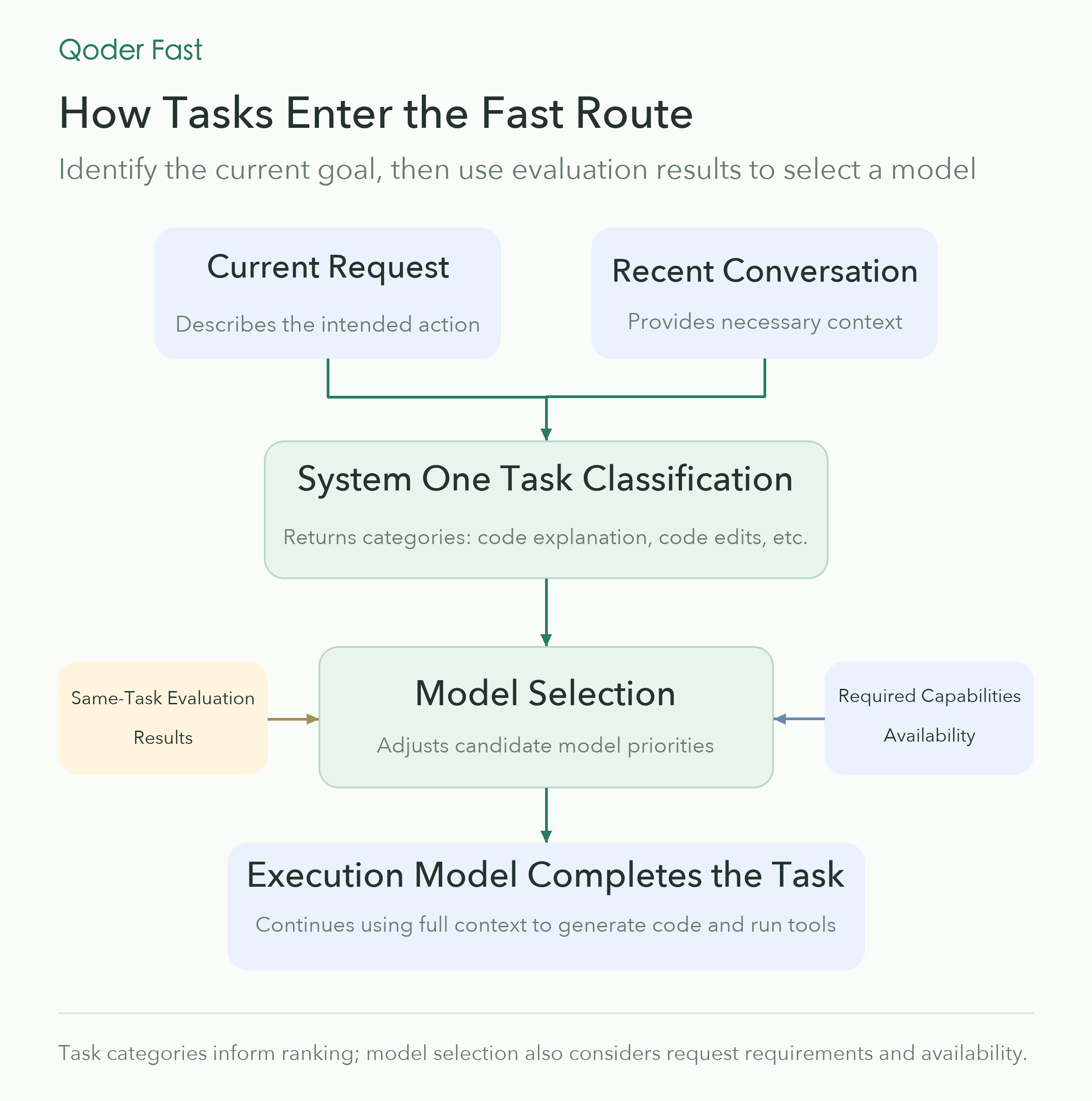
Figure 3. Intent-based model selection architecture in Fast tier
Client-side network conditions are inherently variable, and many clients operate under poor network conditions. Ensuring a consistent user experience across different network conditions is a challenge Fast tier must address, while also laying the foundation for more stable network connectivity in Qoder. Fast tier introduces a dedicated network path for the first time. We have made substantial optimizations across clients, including the CLI, as well as on the server side, significantly improving mean, p50, and p95 latency. For large-payload transfers in particular, p95 latency has been reduced by more than 50%.
Qoder has explored a wide range of technical approaches in Fast tier to continually reduce latency. We will continue these optimizations to deliver a better user experience.
Qoder Cloud Agents Help Developers Enter the Personal Agent Era

1,565 posts | 524 followers
FollowAlibaba Cloud Community - October 15, 2024
Apache Flink Community - August 29, 2025
Alibaba Cloud Native Community - August 7, 2026
Community Builder - July 1, 2026
Alibaba Clouder - June 8, 2020
Alibaba Container Service - March 12, 2026
1,565 posts | 524 followers
Follow Qoder
Qoder
From Assisted to Autonomous — Adapting to Every Programming Need
Learn More AgentCore
AgentCore unifies agent construction, governance, and execution capabilities so enterprises can deploy diverse agents with confidence.
Learn More QwenWork
QwenWork is dedicated to helping employees strengthen their professional competitiveness in the AI era and to enabling enterprises to improve organizational effectiveness.
Learn More AgentBay
Multimodal cloud-based operating environment and expert agent platform, supporting automation and remote control across browsers, desktops, mobile devices, and code.
Learn MoreMore Posts by Alibaba Cloud Community

