
At the World Artificial Intelligence Conference (WAIC) 2026, Alibaba Cloud introduced a suite of agent-native technologies aimed at accelerating the development and deployment of AI agents across industries.
Key announcements include the Agent-Native Cloud suite, designed to govern, optimize, and orchestrate multi-agent workflows while improving large-model inference efficiency. The company also expanded its open-source efforts with the release of the T-Head SAIL software stack, alongside new products such as the team version of its AI development tool Meoo and its first Qwen-powered earbuds, Qwen Clip.
These updates reflect Alibaba Cloud’s continued focus on building a full-stack AI ecosystem spanning silicon, infrastructure, platforms, and applications.
On Sunday, Alibaba unveiled the Qwen 3.8-Max-Preview on its Token Plan, Qoder, and QoderWork platforms. Boasting 2.4 trillion parameters, the model delivers impressive performance comparable to leading frontier AI models, with initial tests ranking it second only to Fable 5. The company has also announced the Qwen 3.8-Max will be open weight soon.
Alibaba Cloud is advancing toward an agent-native architecture, providing a managed environment for building, deploying, and operating autonomous AI agents.
At WAIC, the company introduced two new products—AgentLoop and AgentTeams—expanding its existing AgentRun platform. Together, these offerings support the full lifecycle of enterprise AI agents, with built-in governance and control.
AgentLoop enables real-time tracing, evaluation, and optimization of agent performance. AgentTeams supports coordination and governance across multiple agents, allowing organizations to manage complex workflows. AgentRun provides lifecycle management, covering development, deployment, and operations.
Alibaba Cloud also introduced TokenWorks within its Platform for AI (PAI), available through PAI-EAS. The new serviceintegrates request routing, inference execution, compute reuse, and scheduling into a single system, helping improve performance, reduce costs, and increase reliability for large-model inferences.
Alibaba’s chip unit, T-Head, announced the open-source release of its AI software stack, T-Head SAIL, providing developers with access to its computing framework.
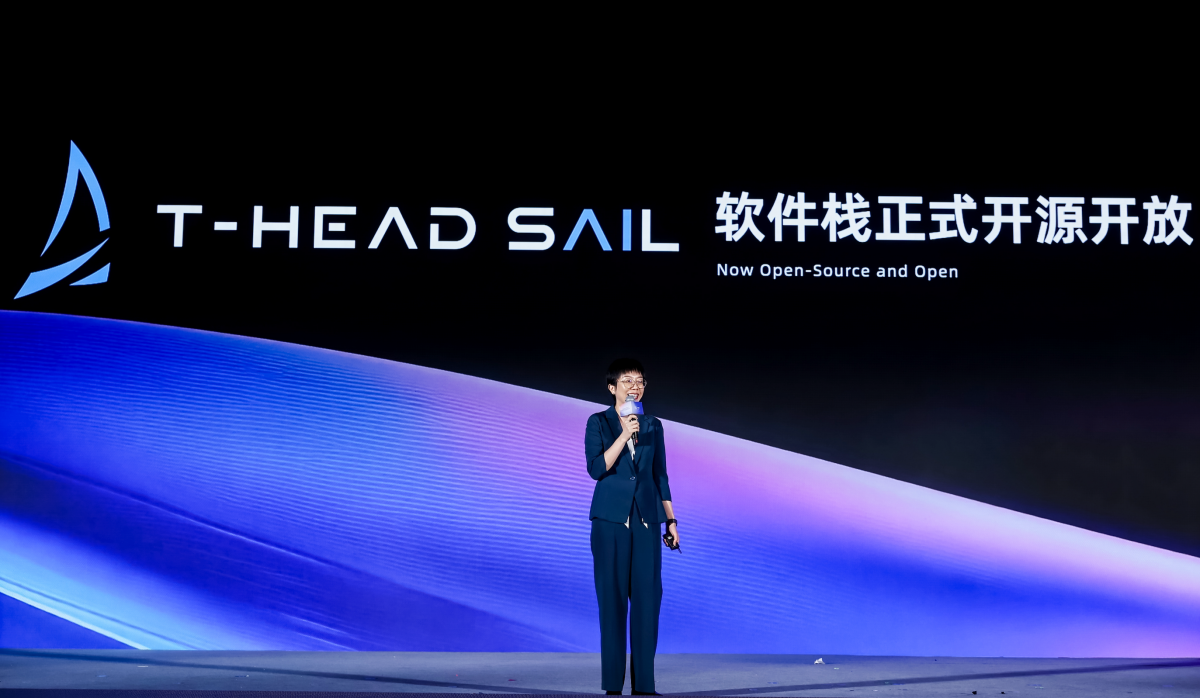
SAIL is compatible with mainstream AI ecosystems and spans multiple layers, including operating systems, SDKs, and interfaces. It is designed to help developers better utilize underlying hardware while supporting a range of applications.
T-Head also launched a developer community platform offering documentation, SDKs, drivers, performance tools, and debugging resources.
The software stack is optimized for T-Head’s Zhenwu AI chips. As of April 2026, cumulative shipments of Zhenwu chips reached 560,000 units, supporting over 400 customers across more than 20 industries.
Alibaba introduced a team version of its AI development tool, Meoo, adding features for organizational use.
Meoo enables users to build digital products using natural language, without requiring technical skills. The team version includes centralized billing, credit allocation, team management, and shared assets.
Integrated with Alibaba Cloud services, Meoo supports the creation and deployment of websites, applications, and WeChat mini-programs, automatically handling frontend, backend, and database components.
The platform also offers off-peak pricing, reducing token costs to as low as 20% of standard rates during designated hours.
Alibaba Cloud also expanded into wearable AI with the launch of Qwen Clip, its first Qwen-powered earbuds, and updates to its AI glasses.
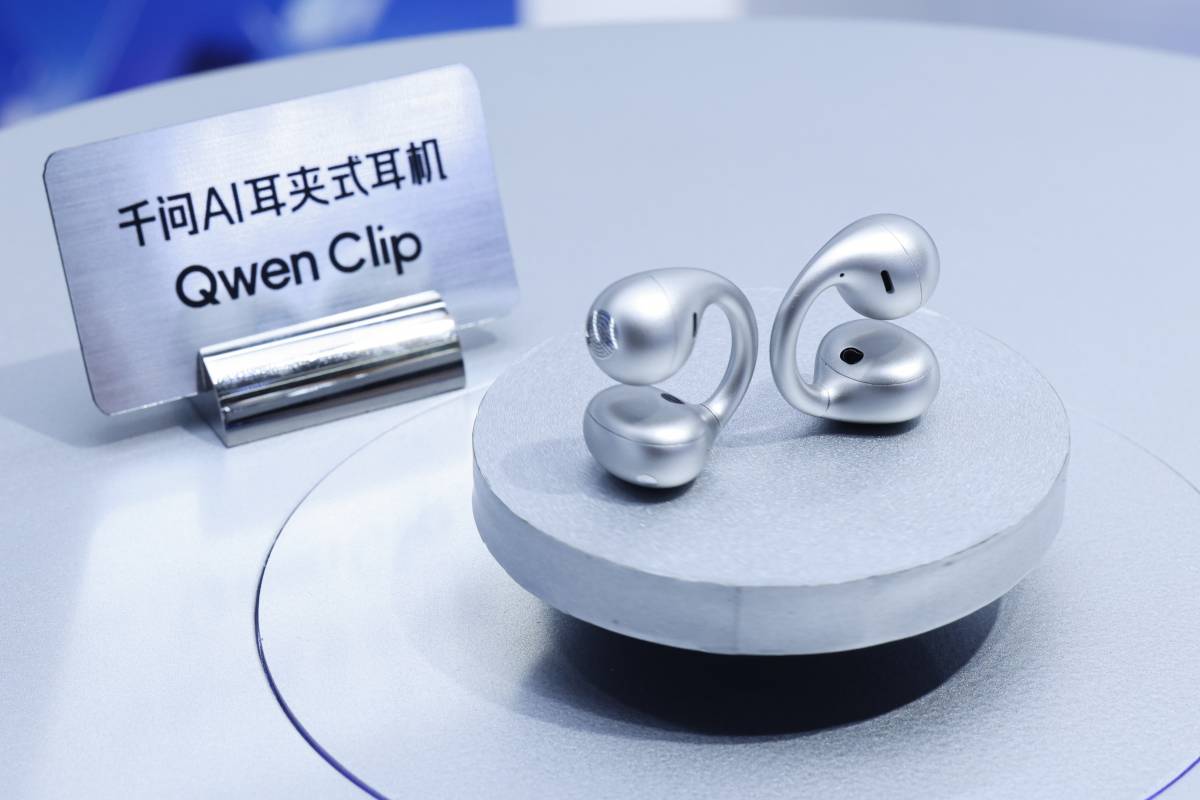
Qwen Clip features a clip-on, open-ear design and integrates the Qwen AI assistant. It supports real-time translation, meeting transcription, and health tracking. The device was co-engineered with Bose for improved audio performance.
Alibaba also introduced “agent glasses,” an evolution of its AI glasses platform. The upgrade enables access to third-party skills and AI agents. Upcoming features include full-duplex voice interaction, eye tracking, and biometric sensing.
This article was originally published on Alizila written by Crystal Liu , Shao Xiaoyi , Karen Zhang and Gabbie Fu.
Wan-Streamer: A Native-Streaming Model for Real-Time Audio-Visual Conversation

1,567 posts | 524 followers
FollowAlibaba Cloud Community - July 28, 2025
Alibaba Cloud Community - August 25, 2026
OpenAnolis - July 15, 2026
Alibaba Cloud Community - July 9, 2024
Alibaba Cloud Big Data and AI - January 21, 2026
Alibaba Cloud Community - September 22, 2026
1,567 posts | 524 followers
Follow QwenWork
QwenWork is dedicated to helping employees strengthen their professional competitiveness in the AI era and to enabling enterprises to improve organizational effectiveness.
Learn More Token Plan
Build more, spend less. One plan, every modality.
Learn More
Alibaba Cloud Model Studio
A one-stop generative AI platform to build intelligent applications that understand your business, based on Qwen model series such as Qwen-Max and other popular models
Learn More Qwen
Qwen
Full-range, open-source, multimodal, and multi-functional
Learn MoreMore Posts by Alibaba Cloud Community

