By Jiangyi and Hualuo
To address the performance issues caused by CPU contention and frequent context switching in traditional multi-threaded database scheduling models, Alibaba Cloud's cloud-native database, PolarDB for MySQL has designed a fully asynchronous execution architecture based on coroutines. It is the industry's first MySQL database product to truly implement a fully asynchronous execution architecture, dramatically improving PolarDB for MySQL's high-concurrency processing capabilities, with a more than 70% increase in general-purpose write performance and a reduction in tail latency by over 60%. Based on this asynchronous architecture, the database's foreground threads can focus on executing code instructions, avoiding unnecessary context switching overhead. Compared to the traditional MySQL thread model, this represents a tremendous leap forward and a complete revolution.
The PolarDB for MySQL fully asynchronous execution architecture has already been deployed in several customer scenarios. As the feature matures and gains wider adoption, this technology will be applied to even more customer use cases.

Figure 1: Performance comparison of various write models in sysbench
In typical OLTP core business scenarios (such as Taobao transactions and payment systems), Buffer Pool hit rates commonly exceed 99%. The performance bottleneck is primarily concentrated in CPU-intensive operations, meaning I/O latency from the storage layer is no longer the main issue. In high-concurrency scenarios, the traditional MySQL architecture exposes inefficiencies in thread scheduling, redundant context switching, and transaction lock contention. These kernel-level problems often prevent CPU resources from being effectively converted into actual business throughput.
Therefore, in OLTP business systems, database performance loss mainly occurs at the kernel level in the following areas:
The coroutine-based fully asynchronous execution architecture in PolarDB for MySQL directly targets these core pain points by re-architecting the database kernel's scheduling module, breaking through the inefficient CPU utilization model of traditional threads.
The 3FS distributed file system, the grand finale of DeepSeek's open-source week, further validates the revolutionary value of coroutine-based architectures in the storage domain. This file system innovatively adopts a fully asynchronous I/O stack. Through a deep, coroutine-based redesign of the user-space protocol stack and RDMA network, it achieves lock-free pipelined processing for metadata operations and the data plane. Its core "Coroutine-Aware Zero-Copy" mechanism reduces the number of context switches in the I/O path by two orders of magnitude, achieving measured performance of millions of IOPS with microsecond-level latency. This type of full-stack asynchronous architecture based on coroutines is reshaping the design paradigm of database systems—from the database engine to the underlying file system, and from the network protocol stack to the hardware acceleration layer, end-to-end non-blocking execution will become the standard for next-generation infrastructure.
It is foreseeable that this asynchronous I/O paradigm, which breaks the constraints of the traditional thread model, will inevitably drive cloud computing infrastructure toward higher throughput, lower latency, and greater elasticity.
Take write requests as an example. Transaction log persistence is required when a transaction is committed. This synchronous I/O logic causes threads to either spin idly or switch contexts frequently. The MySQL community has made many optimizations to address this, such as group commit, which merges multiple transaction commit write operations. In this context, improving write throughput requires increasing the concurrency of foreground write operations.
However, increasing concurrency introduces its own problems:
The asynchronous task designs in other databases, such as PostgreSQL, are mostly based on client-side asynchronous processing. Here, "asynchronous" means that the client sends a request via a specific API and can then proceed with other logic before the request has actually finished executing.
However, from the perspective of the database kernel:
Therefore, the asynchronous task processing mechanisms in some other databases only allow the client to execute SQL tasks asynchronously; they do not represent true asynchronous execution within the database kernel's threads and thus cannot solve kernel-level performance problems under high concurrency.
Retrofitting the historical MySQL codebase for asynchronous execution is an enormous challenge, involving multiple core modules such as connection management, SQL execution, and transaction processing. It requires improving system throughput and reducing tail latency while maintaining transactional integrity. The core of the PolarDB for MySQL asynchronous execution solution is to use coroutine technology to decouple user requests from threads, utilizing eventfd for inter-coroutine communication.
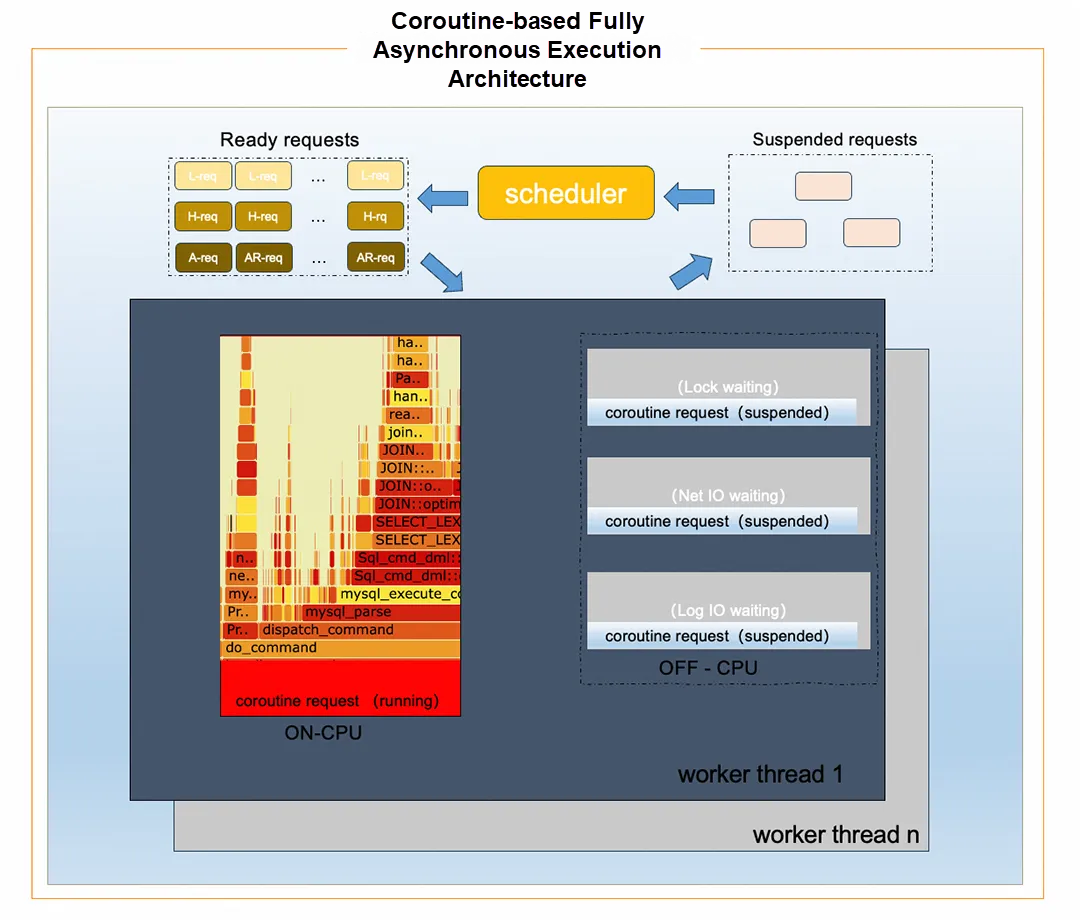
Figure 2: PolarDB for MySQL Fully Asynchronous Execution Flowchart
In existing designs, whether using the one-thread-per-connection or thread-pool model, the lifecycle of a user request is tied to a single thread. This means a request is handled by one fixed thread from start to finish. If the thread encounters a lock or I/O wait, it is suspended by the operating system and resumes execution only after the OS schedules it again when the wait is over. A more rational execution logic would be: when a thread executing a SQL request encounters a wait, it should proactively suspend the current SQL task and use the remainder of its CPU time slice to execute another SQL request. This requires that database threads must be decoupled from user requests.
To decouple SQL execution from threads, the PolarDB for MySQL asynchronous execution framework introduces coroutine technology, encapsulating user requests for execution within coroutines. The request lifecycle is bound to a coroutine, allowing a single kernel thread to process multiple coroutine requests concurrently.
The core problem of executing database requests with coroutines is how to synchronize operations between them. The existing method for synchronization between threads is os_event_t (using pthread_mutex + pthread_cond). For example, Thread A enters a wait state using os_event_t, and after Thread B completes an I/O operation or releases a resource, it wakes up Thread A using pthread_cond_broadcast. However, in our asynchronous execution model, a user request (coroutine) will proactively suspend itself and cannot respond to pthread_cond_broadcast. Therefore, a completely new wait-and-wakeup mechanism for thread-coroutine and coroutine-coroutine interaction was needed within MySQL.The PolarDB for MySQL solution is as follows:
To solve the coroutine state synchronization problem, we introduced eventfd[1]. Each coroutine object creates an efd object for communicating with other threads or coroutines. When a coroutine suspends, it registers its efd with an epoll instance, which is monitored by a unified background thread. The coroutine then enters a suspended state, awaiting an event.
[1] https://man7.org/linux/man-pages/man2/eventfd.2.html
When a background thread completes an I/O request, or another coroutine releases a resource, it writes to the corresponding eventfd to notify the waiting coroutine. The background listening thread captures all ready coroutine tasks and either processes them directly or places them in a queue for other threads to handle.
This mechanism overcomes the limitations of traditional thread broadcast wake-ups, achieving three major improvements: zero spurious wake-ups, nanosecond-level responsiveness, and the ability to manage millions of concurrent connections.
In the PolarDB for MySQL fully asynchronous execution architecture, requests (tasks) are prioritized based on multiple dimensions, such as the client IP address, user type, request type, transaction type, and the current suspension point. The scheduler automatically places tasks into different queues for scheduling based on their priority. A starvation prevention mechanism is also designed, which allows for thread over-provisioning and cross-thread scheduling.
In designing PolarDB for MySQL's asynchronous execution architecture, we not only focused on the benefits of the new solution but, more importantly, on how to introduce it safely into a production environment. Therefore, a dynamic toggle is crucial. The PolarDB asynchronous execution solution allows users to globally toggle the feature on or off with a single command via a global variable. It also allows for granular control over whether specific critical paths—such as authentication, binlog/redo log writes, and row lock waits—use asynchronous execution.
The following is a summary of test results based on the latest PolarDB for MySQL 8.0.2 version. With the current asynchronous execution capabilities, there are very significant optimizations in write throughput and tail latency.
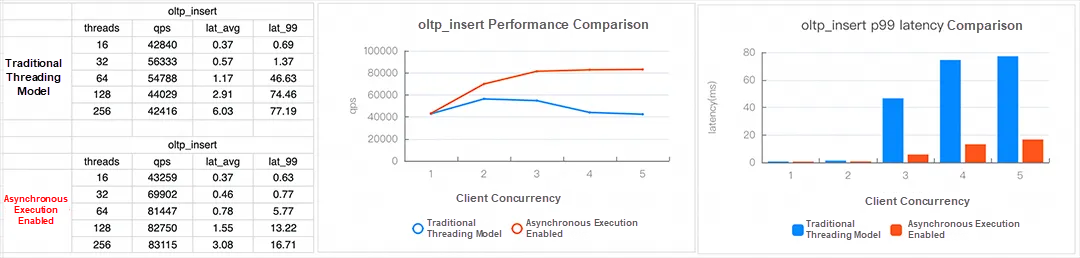
Figure 3: sysbench oltp_insert Performance Comparison
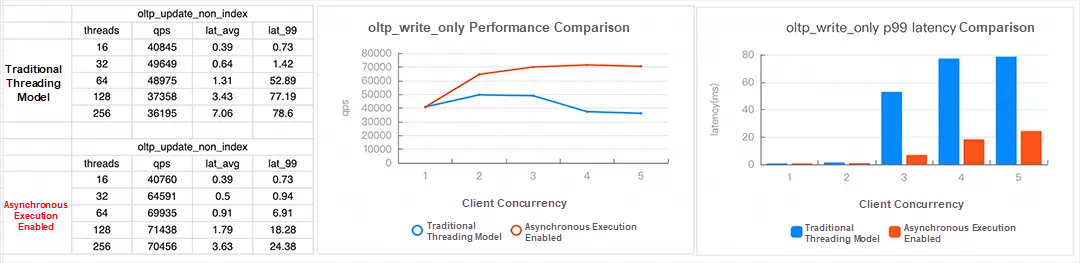
Figure 4: sysbench oltp_update_non_index Performance Comparison
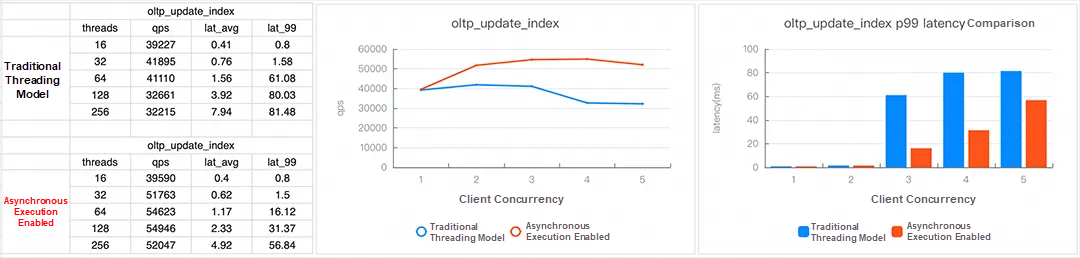
Figure 5: sysbench oltp_update_index Performance Comparison
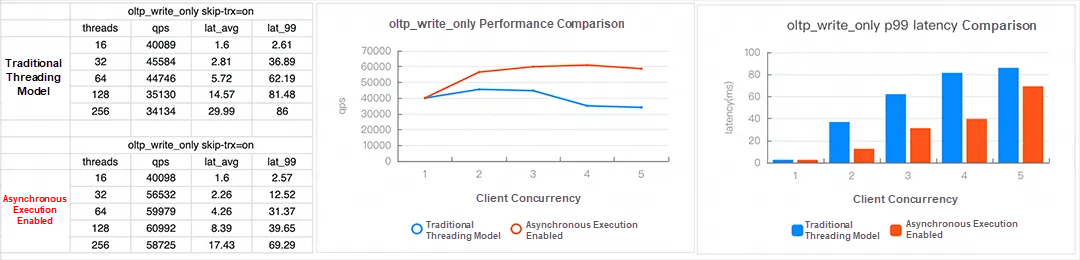
Figure 6: sysbench oltp_write_only Performance Comparison
Driven by continuous innovation and a deep understanding of the difficult challenges in high-concurrency database technology, PolarDB has introduced a revolutionary, fully asynchronous execution architecture into the MySQL ecosystem, aimed at solving the kernel-level concurrency bottlenecks that traditional solutions cannot handle. This fully asynchronous architecture is still under rapid iteration. With further performance testing and optimization, the PolarDB asynchronous execution solution will continue to demonstrate its technical advantages across an even wider range of application scenarios.
Reshaping AI Data Streams: A Deep Dive into PolarDB IMCI's Native Vector Capabilities
Hologres - July 1, 2021
ApsaraDB - January 28, 2026
ApsaraDB - April 9, 2025
Alibaba Cloud Native Community - December 17, 2025
ApsaraDB - April 9, 2025
Apache Flink Community - June 28, 2024
 PolarDB for MySQL
Alibaba Cloud PolarDB for MySQL is a cloud-native relational database service 100% compatible with MySQL.
Learn More
PolarDB for PostgreSQL
Alibaba Cloud PolarDB for PostgreSQL is an in-house relational database service 100% compatible with PostgreSQL and highly compatible with the Oracle syntax.
Learn More
PolarDB for Xscale
Alibaba Cloud PolarDB for Xscale (PolarDB-X) is a cloud-native high-performance distributed database service independently developed by Alibaba Cloud.
Learn More AnalyticDB for MySQL
AnalyticDB for MySQL is a real-time data warehousing service that can process petabytes of data with high concurrency and low latency.
Learn MoreMore Posts by ApsaraDB


