By Wang Chen
The Kubernetes contributor community published a blog (Ingress NGINX Retirement: What You Need to Know) [1], and the Kubernetes SIG Network and Security Response Committee announced the retirement of Ingress NGINX. The key points of the announcement include:
From the perspectives of risk, operations, and architecture:
Increased Security Risks
Increased Operational Burden
Architectural Strategies Need Adjustment
The official recommendations for Ingress NGINX:
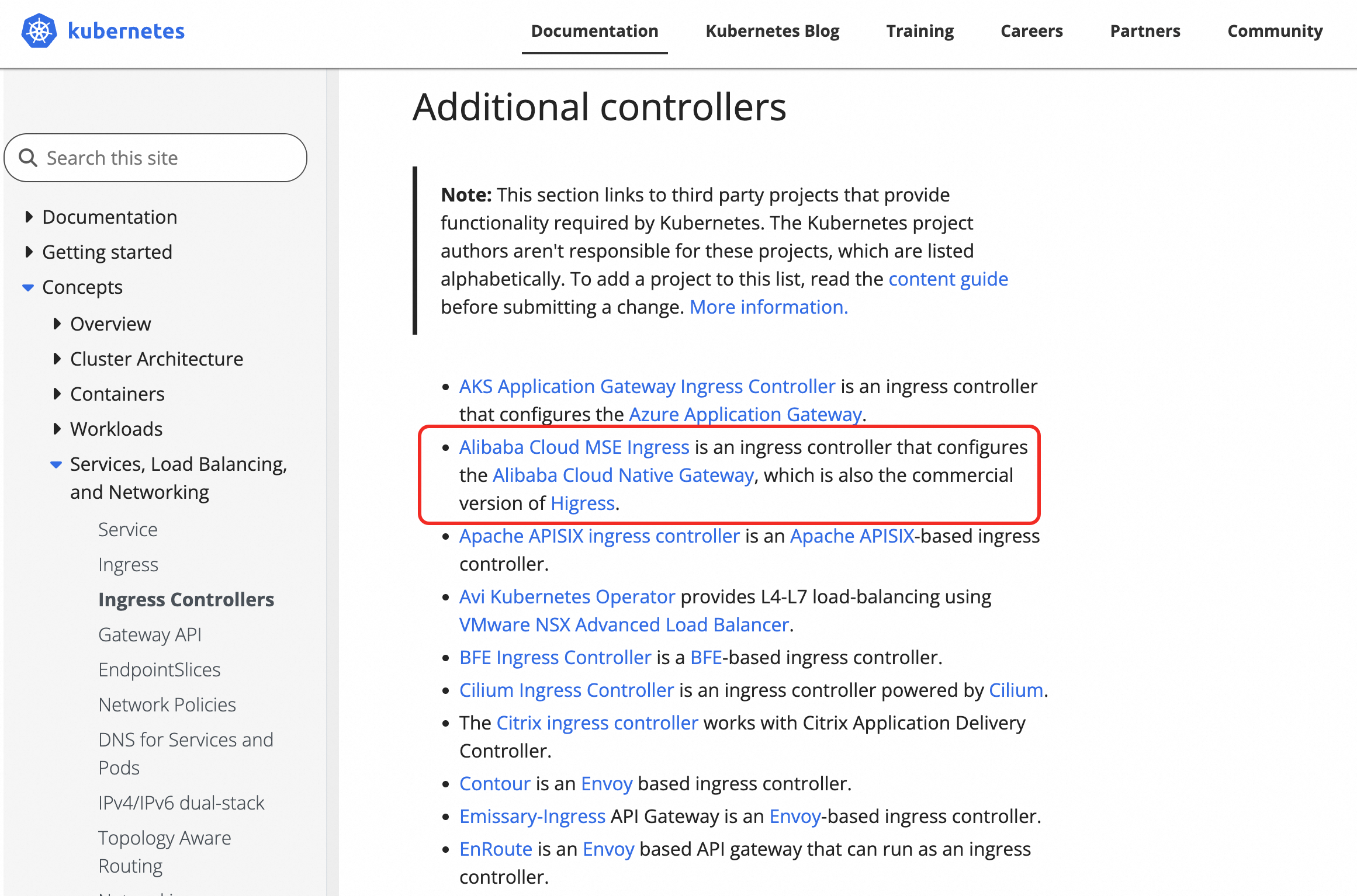
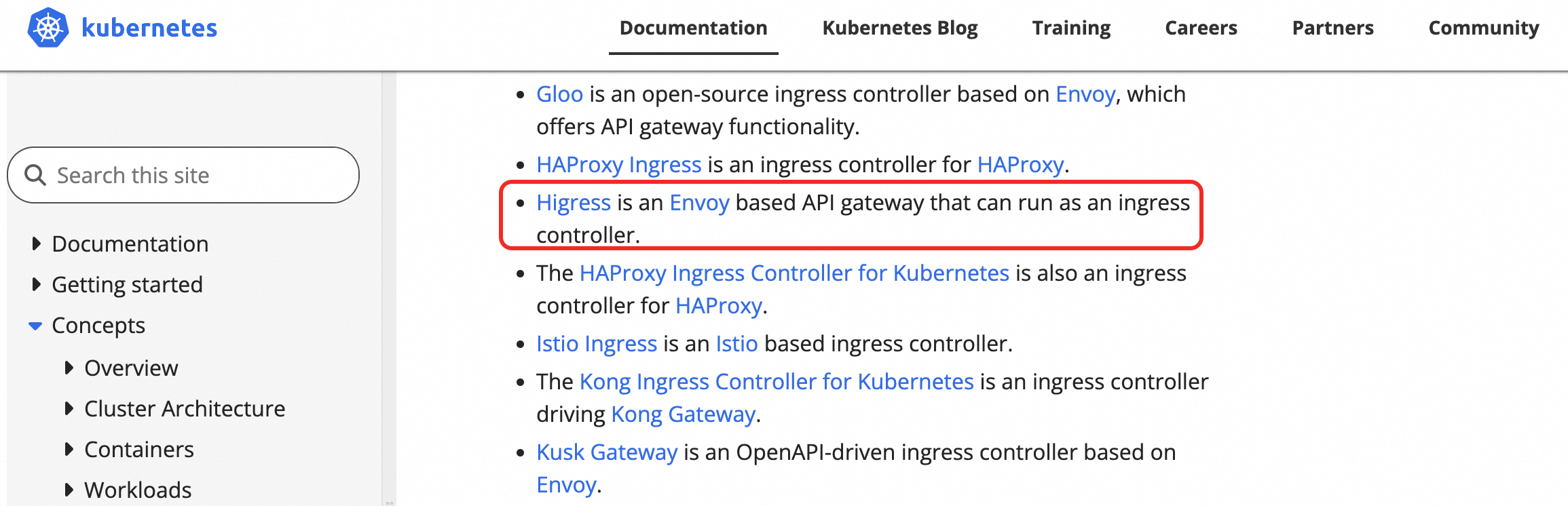
Below, MSE Ingress and Higress are provided as examples, with detailed migration steps:
Ingress is the friendly way to direct network traffic to workloads running on Kubernetes. (Gateway API is a newer method that achieves many of the same goals.) To make Ingress work properly in a cluster, an Ingress controller must be running. There are many Ingress controllers available on the market to meet the needs of different users and use cases. Some controllers are cloud-provider-specific, while others have broader applicability.
Ingress NGINX is an Ingress controller that was developed as an exemplar implementation of the API in the early days of the Kubernetes project. Due to its high flexibility, rich features, and independence from any specific cloud or infrastructure provider, it became popular quickly. Since then, community groups and cloud-native vendors have created many other Ingress controllers within the Kubernetes project. Ingress NGINX has remained one of the most popular controllers, being deployed across many managed Kubernetes platforms and numerous independent user clusters.
The breadth and flexibility of Ingress NGINX have brought maintenance challenges. Expectations for cloud-native software are constantly changing, exacerbating the complexity of the issues. Some features that were once considered beneficial are now viewed as serious security vulnerabilities, such as adding arbitrary NGINX configuration directives through "code snippets" annotations. The flexibility that was once an asset has now turned into an insurmountable technical debt.
Despite the popularity of the Ingress NGINX project among users, it has faced issues with insufficient maintainers and even struggles to sustain itself. For years, the project has relied on one or two people working in their spare time, developing in their free time and on weekends. Last year, the maintainers of Ingress NGINX announced plans to gradually stop maintaining Ingress NGINX and to collaborate with the Gateway API community to develop a replacement controller. However, even such announcements failed to inspire more people to participate in the maintenance of Ingress NGINX or in developing InGate as its replacement. (The development of InGate never reached a level sufficient to be a mature alternative; it will also be deprecated.)
As developers in the cloud-native and open-source fields, we deeply understand that the cessation or retirement of open-source projects is often a decision made reluctantly by the community. We sincerely thank the contributors of the Ingress NGINX community for their efforts in creating and maintaining this project. It has provided developers with a stable, generic, and declarative way to access traffic within the cluster, from simple path forwarding to complex reverse proxies, from TLS termination to multi-tenancy isolation. Ingress NGINX has brought the mature concepts of traditional web services into the container world.
We are grateful not just for the code itself, but for the developers behind the scenes who have quietly maintained it.
[1] https://www.kubernetes.dev/blog/2025/11/12/ingress-nginx-retirement/
[2] https://gateway-api.sigs.k8s.io/guides/
[3] https://www.kubernetes.dev/blog/2025/11/12/ingress-nginx-retirement/
If you want to learn more about Alibaba Cloud API Gateway (Higress), please click: https://higress.ai/en/
Two Open-source Projects were Awarded at the World Internet Conference in Wuzhen

774 posts | 60 followers
FollowAlibaba Cloud Indonesia - February 13, 2026
Alibaba Cloud Native Community - January 6, 2026
Alibaba Cloud Native Community - April 7, 2026
Alibaba Cloud Native Community - February 3, 2026
Alibaba Cloud Native Community - February 4, 2026
Alibaba Cloud Native Community - February 13, 2026
774 posts | 60 followers
Follow Container Service for Kubernetes
Alibaba Cloud Container Service for Kubernetes is a fully managed cloud container management service that supports native Kubernetes and integrates with other Alibaba Cloud products.
Learn More Managed Service for Prometheus
Multi-source metrics are aggregated to monitor the status of your business and services in real time.
Learn More
Container Compute Service (ACS)
A cloud computing service that provides container compute resources that comply with the container specifications of Kubernetes
Learn More Microservices Engine (MSE)
MSE provides a fully managed registration and configuration center, and gateway and microservices governance capabilities.
Learn MoreMore Posts by Alibaba Cloud Native Community

