Data breaches are everywhere these days, and even the biggest companies with massive budgets and dedicated IT teams aren't immune.
When organizations with unlimited resources fall victim to attacks, it's a clear reminder that security in cloud computing is not something you can treat as an afterthought. It's essential.
That's where cloud security comes in. Whether you're a small business owner moving files online or a growing company running your entire operation in the cloud, protecting your data is critical.
With the right cloud security solutions, you can safeguard sensitive information, keep customer trust intact, and avoid the costly fallout of a cyber attack.
In this guide, we'll break down cloud security in simple terms: what it is, why it matters, and how cloud security companies and best practices can help you build a secure foundation in the digital era.
Cloud security protects data, applications, and services that live in the cloud. Think of it as the lock, the alarm system, and the cameras for your online office.
Instead of keeping everything on physical servers in your building, cloud computing lets you store files and run software online. This approach saves space and adds flexibility, but it also creates risks.
That is why cloud information security focuses on blocking unauthorized access, protecting sensitive files, and keeping your systems running smoothly.
In short, cloud security gives you peace of mind in the digital age.
If you wonder why businesses put so much effort into security in the cloud, consider the biggest risks:
● Data breaches. Hackers target cloud databases to steal customer records and financial details.
● Misconfigurations. Incorrect permissions can expose confidential information to the public.
● Insider threats. Employees, contractors, or partners may intentionally or accidentally cause problems.
● Ransomware and malware. Criminals use harmful software to steal or lock up your data until you pay.
These risks affect every type of business. Large corporations may attract headlines, but small and mid-sized businesses face the same threats.
Cloud security is not a single tool but a set of layered protections. Think of it as building defenses around your data from the ground up.

When you choose a cloud provider, make sure it offers strong built-in protections. Look for features like data encryption, secure data centers, compliance with industry standards, and a strong track record in cloud information security. The provider forms the foundation of your protection.
Beyond what the provider offers, businesses can add cloud security solutions such as firewalls, intrusion detection systems, identity management, and advanced threat monitoring. These tools provide extra safeguards that protect against attacks targeting your specific environment.

Even the best technology cannot protect you if your team is careless. Strong passwords, multi-factor authentication, employee training, and regular audits add another layer of defense.
Many companies work with specialized cloud security companies to monitor systems, respond to threats, and stay ahead of emerging risks. These experts bring deep knowledge and advanced resources that smaller businesses may not have in-house.
Every business that uses the cloud relies on its provider as the foundation of cloud security. Providers control the infrastructure where your data lives, so the choices they make about technology, compliance, and operations directly affect your risk level.

When you evaluate a provider, look beyond cost and convenience. Pay attention to the depth of their security framework. Strong providers typically deliver:
● Shared responsibility model. Leading providers clearly define what they secure (such as the physical infrastructure, core networking, and hypervisors) and what you must secure (such as user accounts, applications, and data). Understanding these boundaries prevents dangerous gaps.
● Encryption and key management. Top providers not only encrypt data at rest and in transit but also give you options for managing your own encryption keys. This extra control ensures you decide who can access critical information.
● Compliance and certifications. Look for proof of adherence to standards such as ISO 27001, SOC 2, PCI DSS, and HIPAA. These certifications show that the provider meets globally recognized benchmarks for cloud information security.
● Physical security. Secure cloud data centers often include biometric access controls, surveillance, and redundant power and cooling systems. These measures reduce the risk of downtime or unauthorized entry.
● Threat intelligence and monitoring. Some providers actively monitor global traffic patterns to identify and block large-scale cyber threats before they reach your environment.
● Incident response readiness. Ask how the provider responds if a breach occurs. Do they have a dedicated response team? How fast will they notify you? The quality of their response can limit your damage.
💡 Did you know?
Alibaba Cloud is the most compliant cloud provider in Asia, with over 150 security certifications — including global standards like ISO 27001, regional requirements such as SEC Rules 17a-4(f) for the US, privacy regulations like GDPR, and industry-specific frameworks such as HIPAA.
This deep commitment to compliance strengthens your overall security posture by ensuring your data remains protected, auditable, and aligned with the strictest global and industry standards.
When businesses think about cloud security, one of the first questions that comes up is, "How much is enough?" Do you really need every tool, every policy, and even specialized cloud security companies on your side?

The honest answer is that not every business needs the same level of security. A small startup storing non-sensitive files in the cloud faces different risks than a financial services firm managing customer banking information. What matters is matching your security investment to your exposure.
A good way to frame it is in layers:
● Baseline security. Every business should at least rely on a reputable cloud provider with strong compliance, encryption, and monitoring. That is non-negotiable.
● Enhanced protection. Businesses handling sensitive data, such as customer records or payment details, should add cloud security solutions like identity management, firewalls, and multi-factor authentication.
● Specialized expertise. Companies operating in highly regulated sectors such as healthcare or finance often work with cloud security companies. These experts help close gaps, monitor threats in real time, and respond faster than most in-house teams can.
The goal is not to do everything possible but to do everything necessary. If your security framework addresses your biggest risks, meets compliance requirements, and prepares you for audits, then you are "secure enough."
💡 Did you know?
Alibaba Cloud is already secure by design, with strong compliance, encryption, and monitoring built into its core services. On top of that foundation, you can add extra protection with security features such as Anti-DDoS, Cloud Firewall, and Web Application Firewall. These tools give your business the flexibility to scale security as your needs grow.
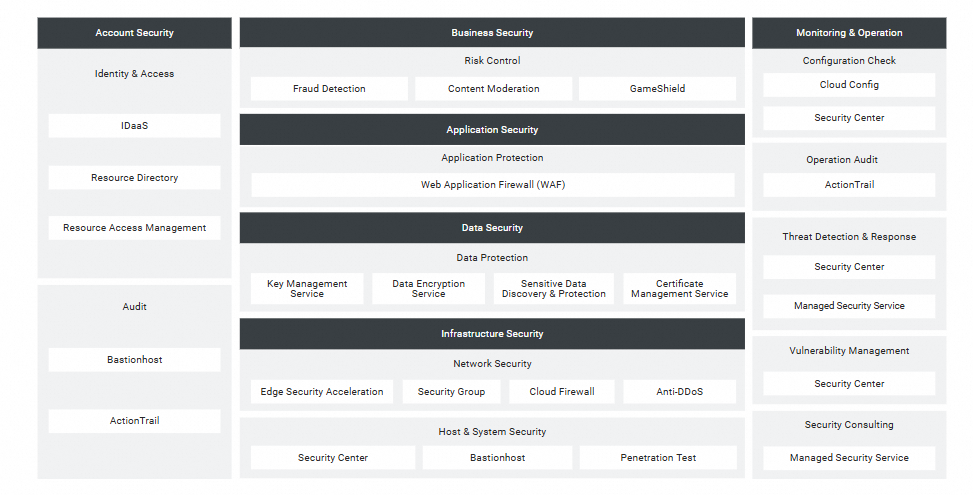
Above: Alibaba Cloud's Security Compliance Portfolio
From breaches to ransomware, weak cloud security creates risks no business can afford.
The good news? Protecting your company doesn't have to be complicated.
Start by understanding the basics of cloud security, choose a cloud provider with a strong track record in security, and implement practical best practices such as encryption, access controls, and regular monitoring. Taking these preventive steps ensures your data stays protected, your operations run smoothly, and your customers can continue to trust your business.
💡Protect Your Business with Alibaba Cloud Security Solutions
Alibaba Cloud provides a comprehensive security toolset to safeguard your business across every layer—application security, data security, infrastructure security, and account security. With built-in protections and global compliance certifications, your data is secure by design.
Al and Business: A Practical Guide to Using AI in Real Companies

1,542 posts | 516 followers
FollowAlibaba Clouder - June 10, 2020
Alibaba Clouder - April 22, 2020
Alibaba Clouder - July 23, 2020
Justin See - March 13, 2026
Alibaba Cloud Community - May 12, 2023
Alibaba Cloud Native Community - April 16, 2026
1,542 posts | 516 followers
Follow Security Center
A unified security management system that identifies, analyzes, and notifies you of security threats in real time
Learn More Security Solution
Alibaba Cloud is committed to safeguarding the cloud security for every business.
Learn More
Data Security on the Cloud Solution
This solution helps you easily build a robust data security framework to safeguard your data assets throughout the data security lifecycle with ensured confidentiality, integrity, and availability of your data.
Learn More Bastionhost
A unified, efficient, and secure platform that provides cloud-based O&M, access control, and operation audit.
Learn MoreMore Posts by Alibaba Cloud Community

