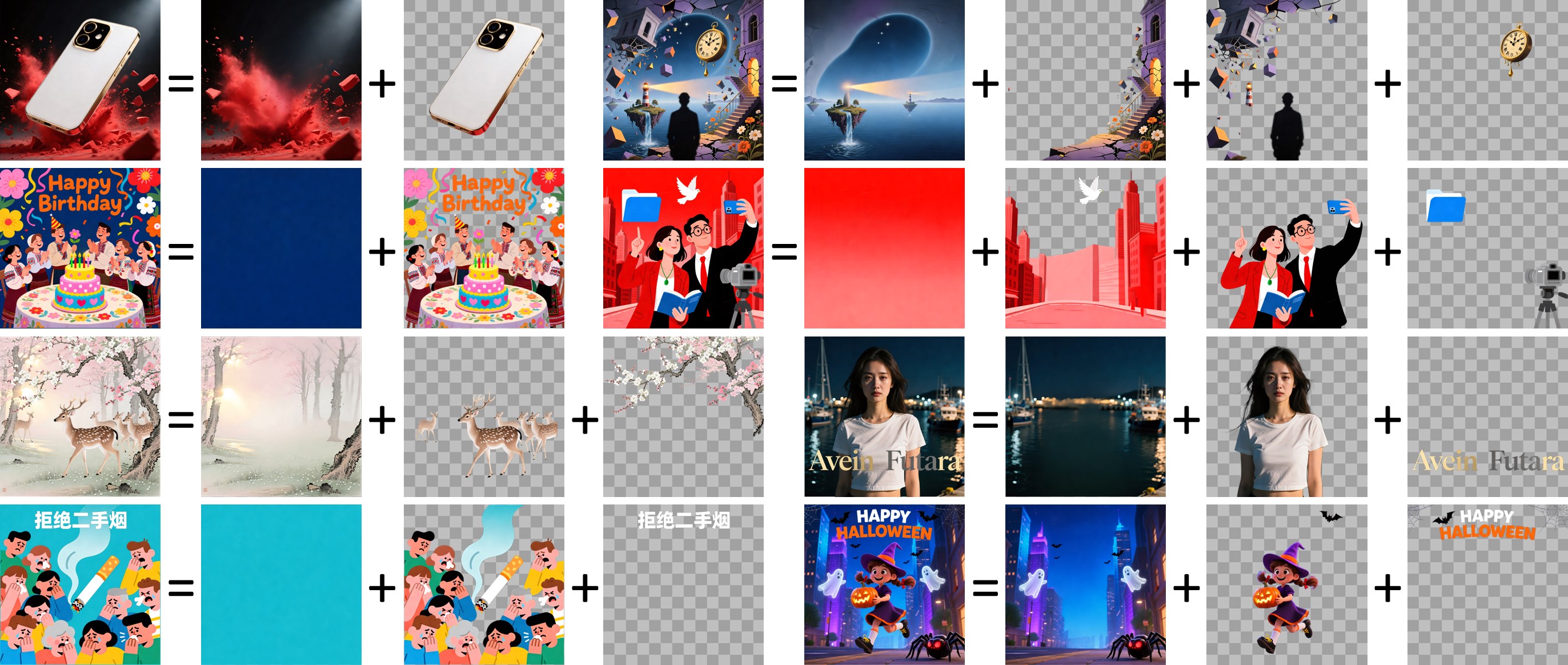
We are excited to introduce Qwen-Image-Layered, a model capable of decomposing an image into multiple RGBA layers. This layered representation unlocks inherent editability: each layer can be independently manipulated without affecting other content. Meanwhile, such a layered representation naturally supports high-fidelity elementary operations-such as resizing, reposition, and recoloring. By physically isolating semantic or structural components into distinct layers, our approach enables high-fidelity and consistent editing.
Given an image, Qwen-Image-Layered can decompose it into several RGBA layers:
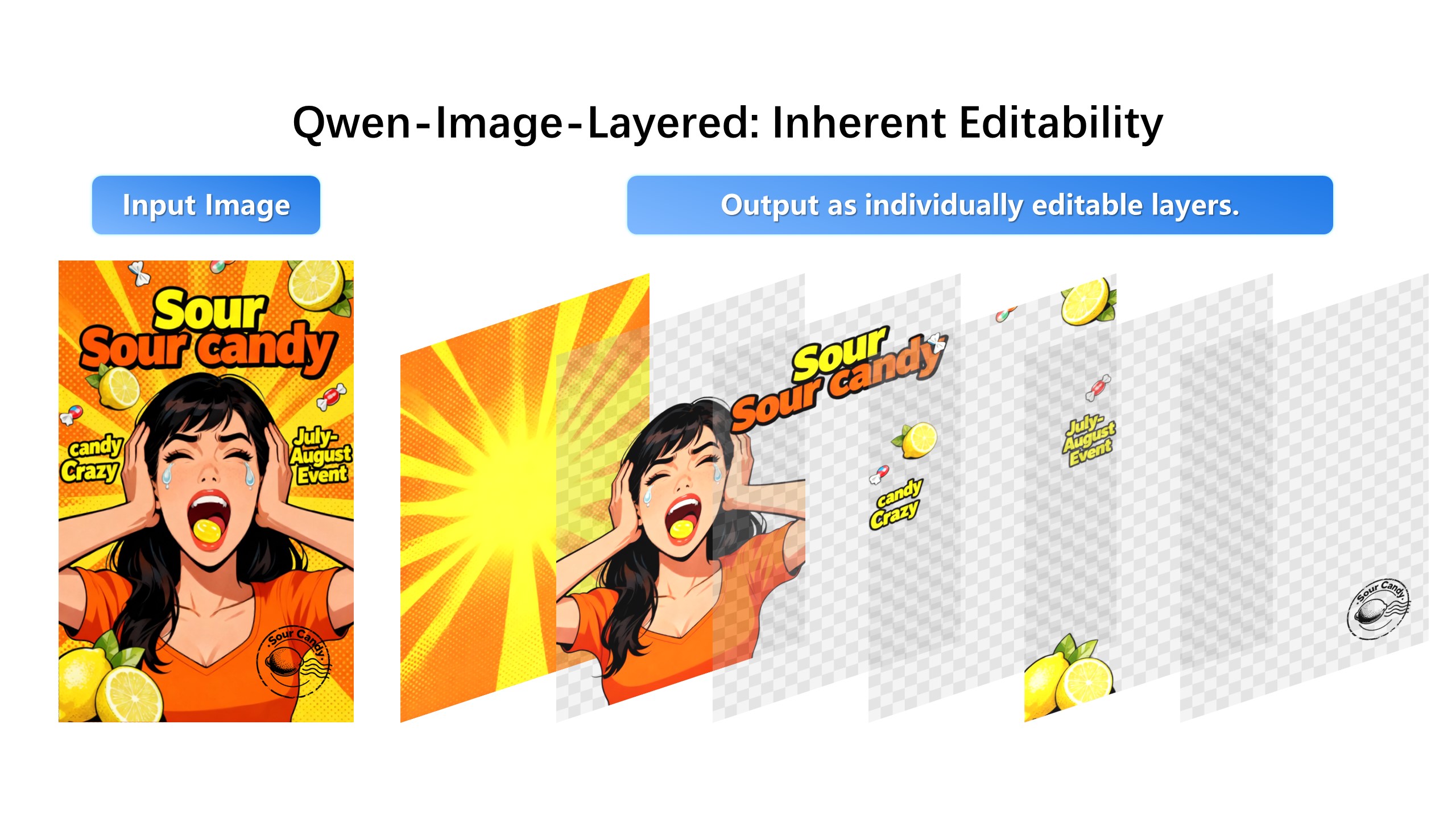
After decomposition, edits are applied exclusively to the target layer, physically isolating it from the rest of the content, and thereby fundamentally ensuring consistency across edits.
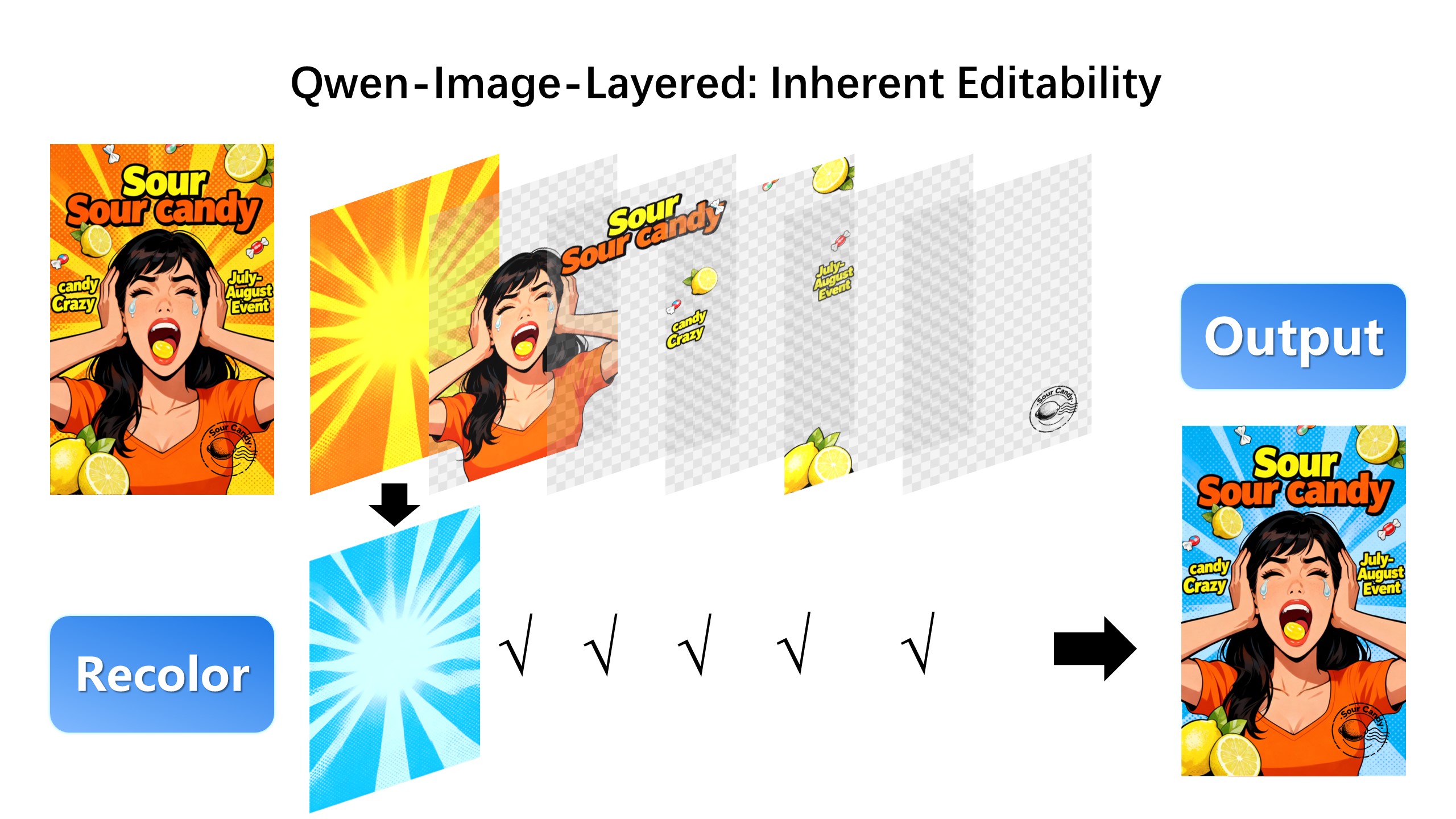
For example, we can recolor the first layer and keep all other content untouched:
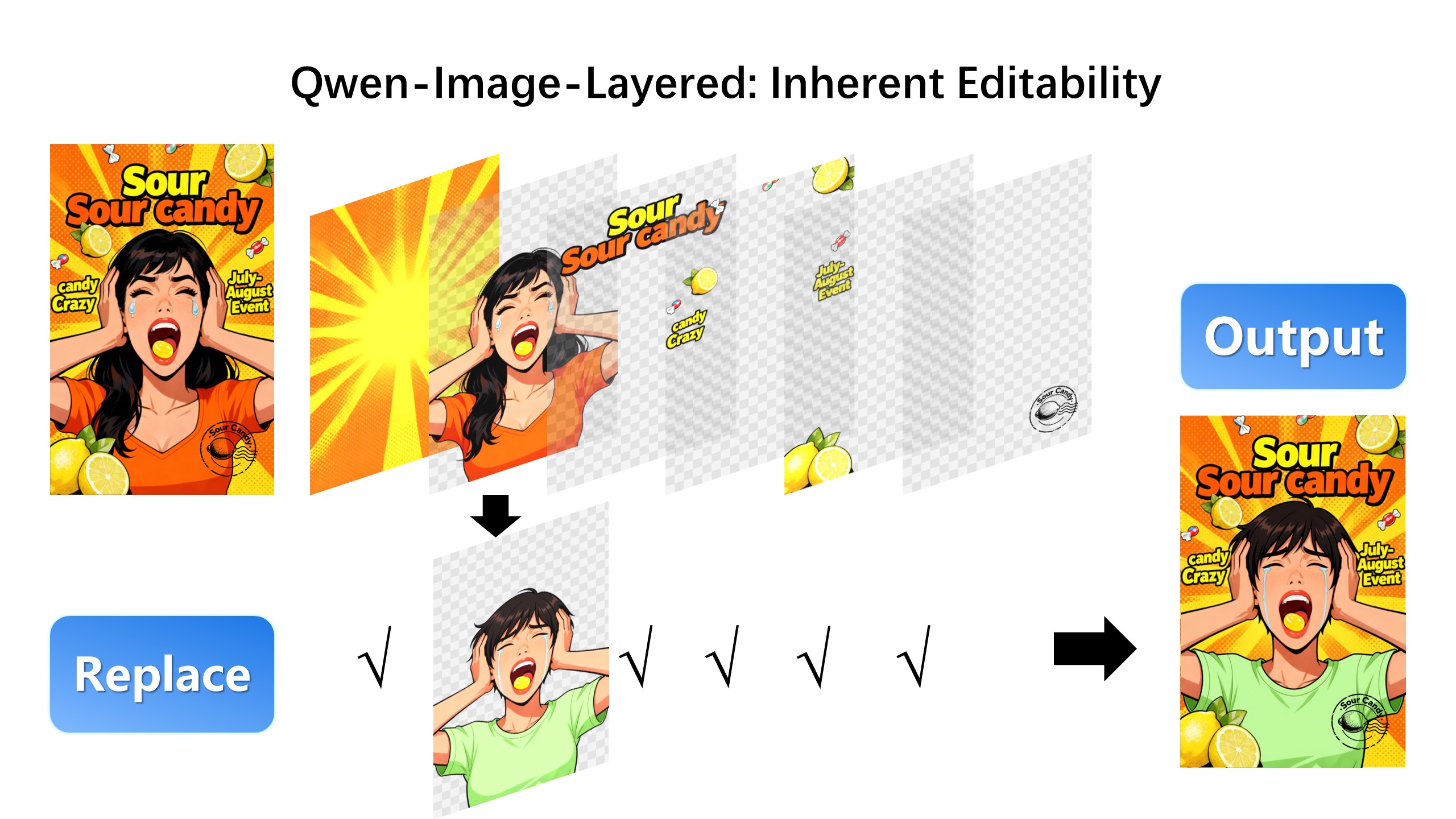
We can also replace the second layer from a girl to a boy:
Here, we revise the text to “Qwen-Image”:
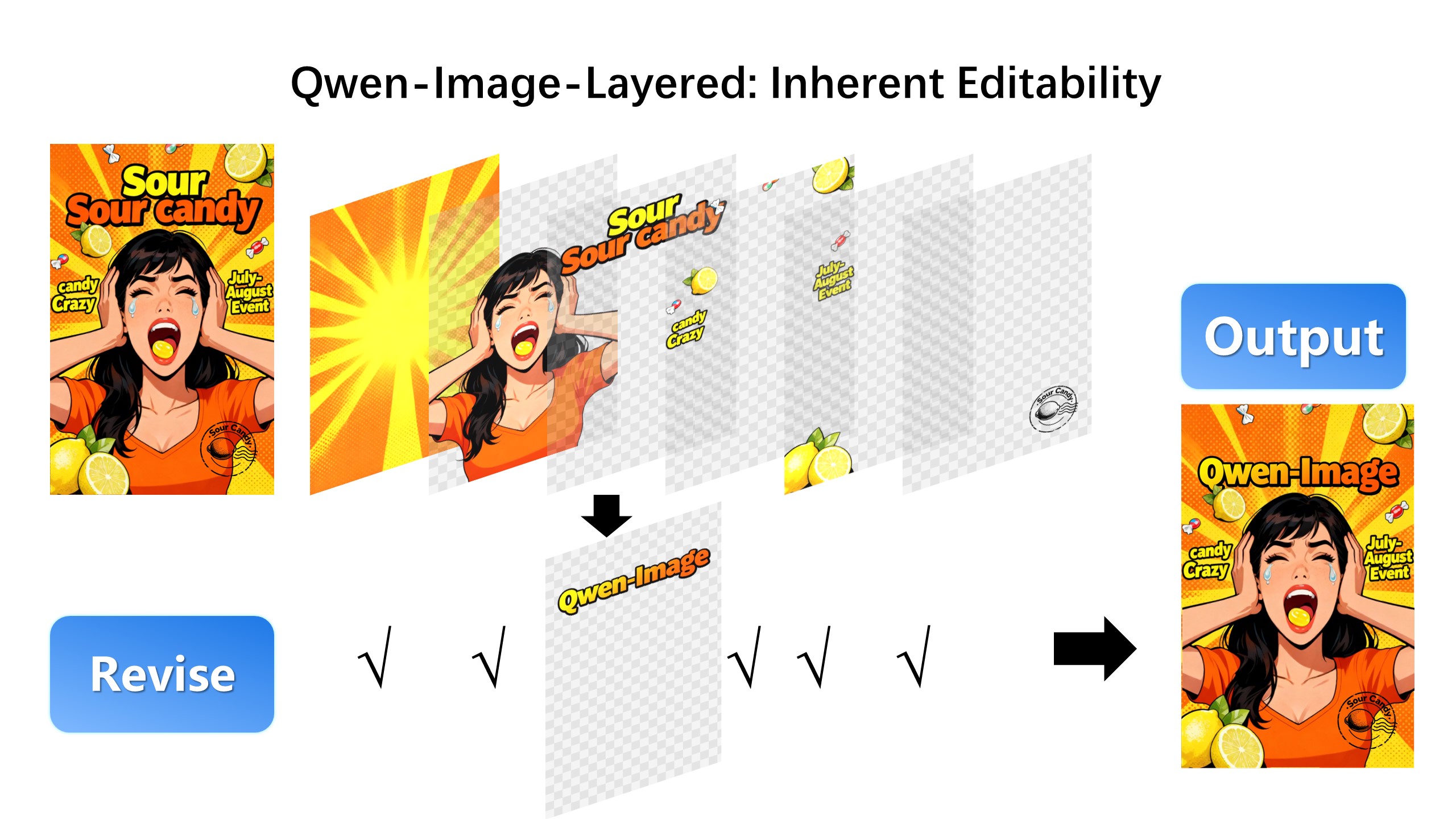
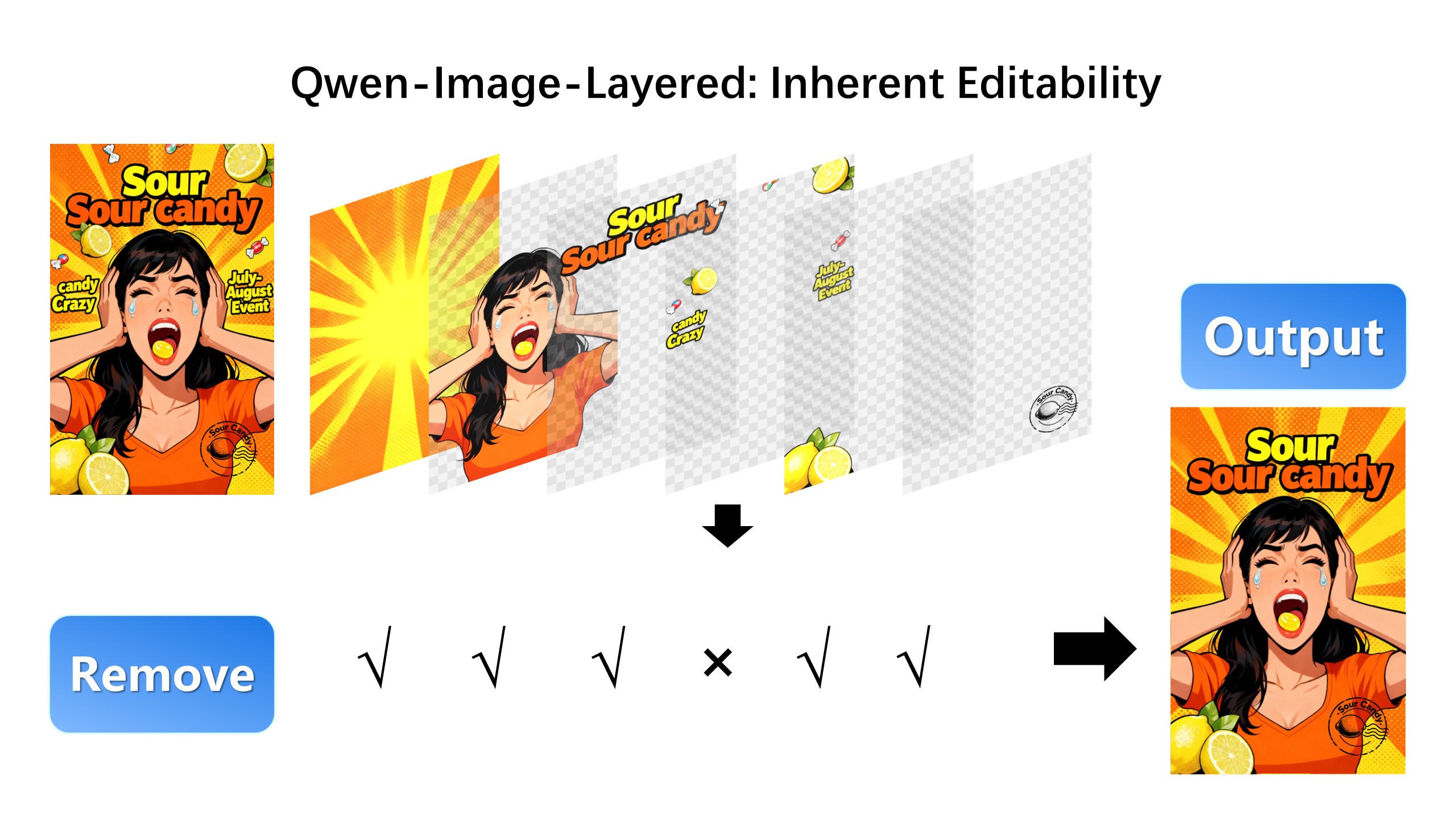
Furthermore, the layered structure naturally supports elemetary operations. For example, we can delete unwanted objects cleanly:
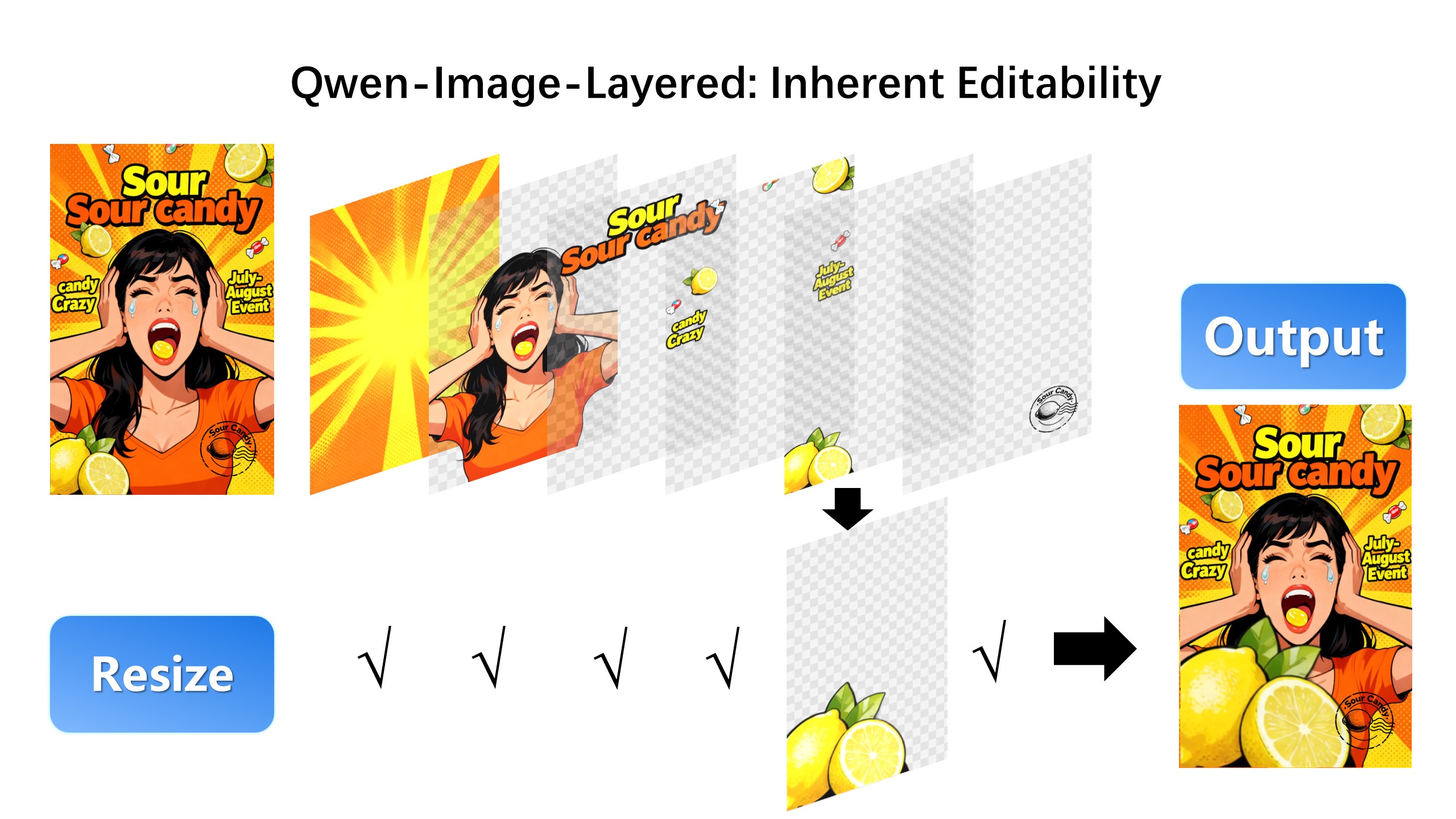
We can also resize an object without distortion:
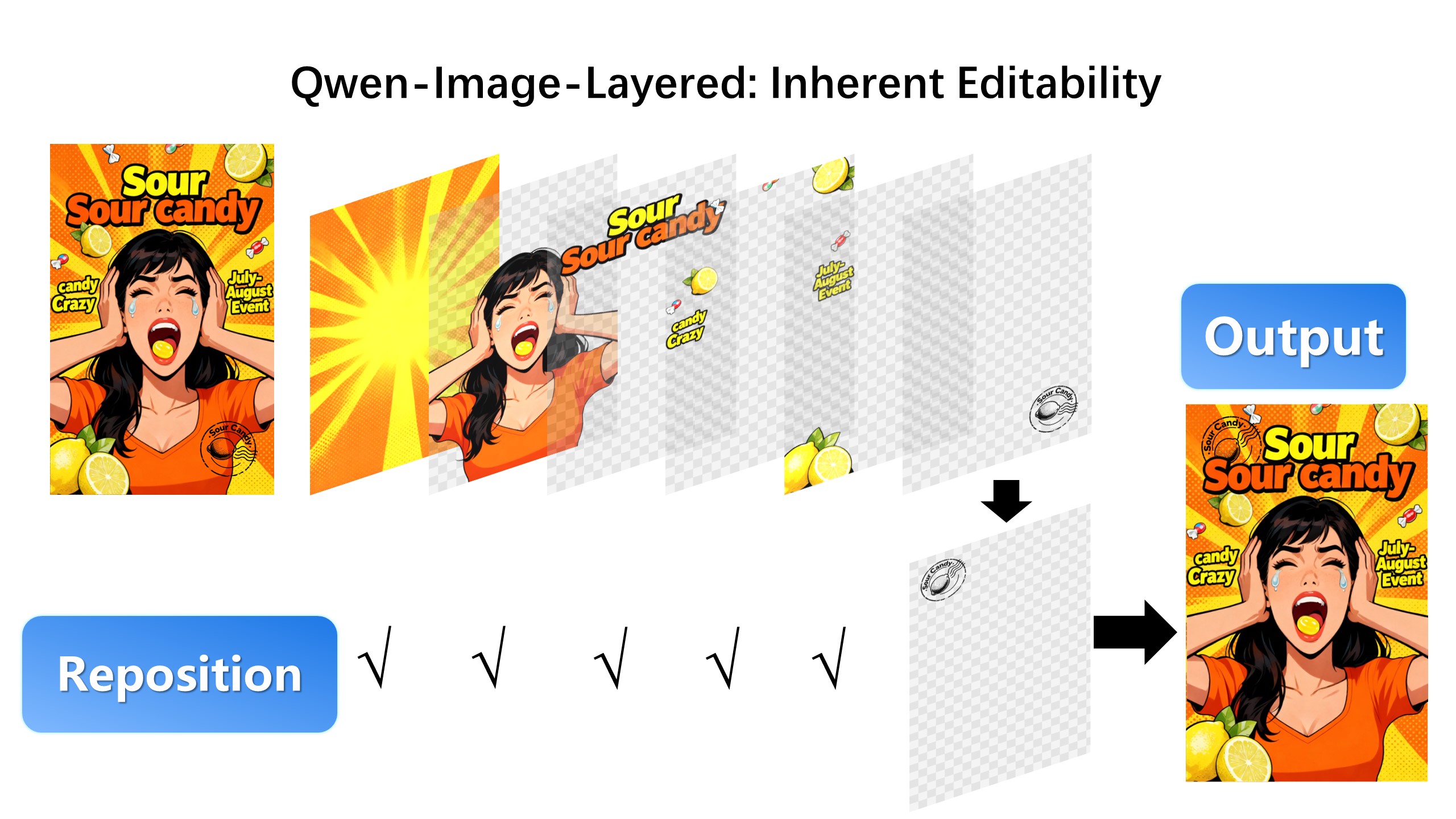
After layer decomposition, we can move objects freely within the canvas:
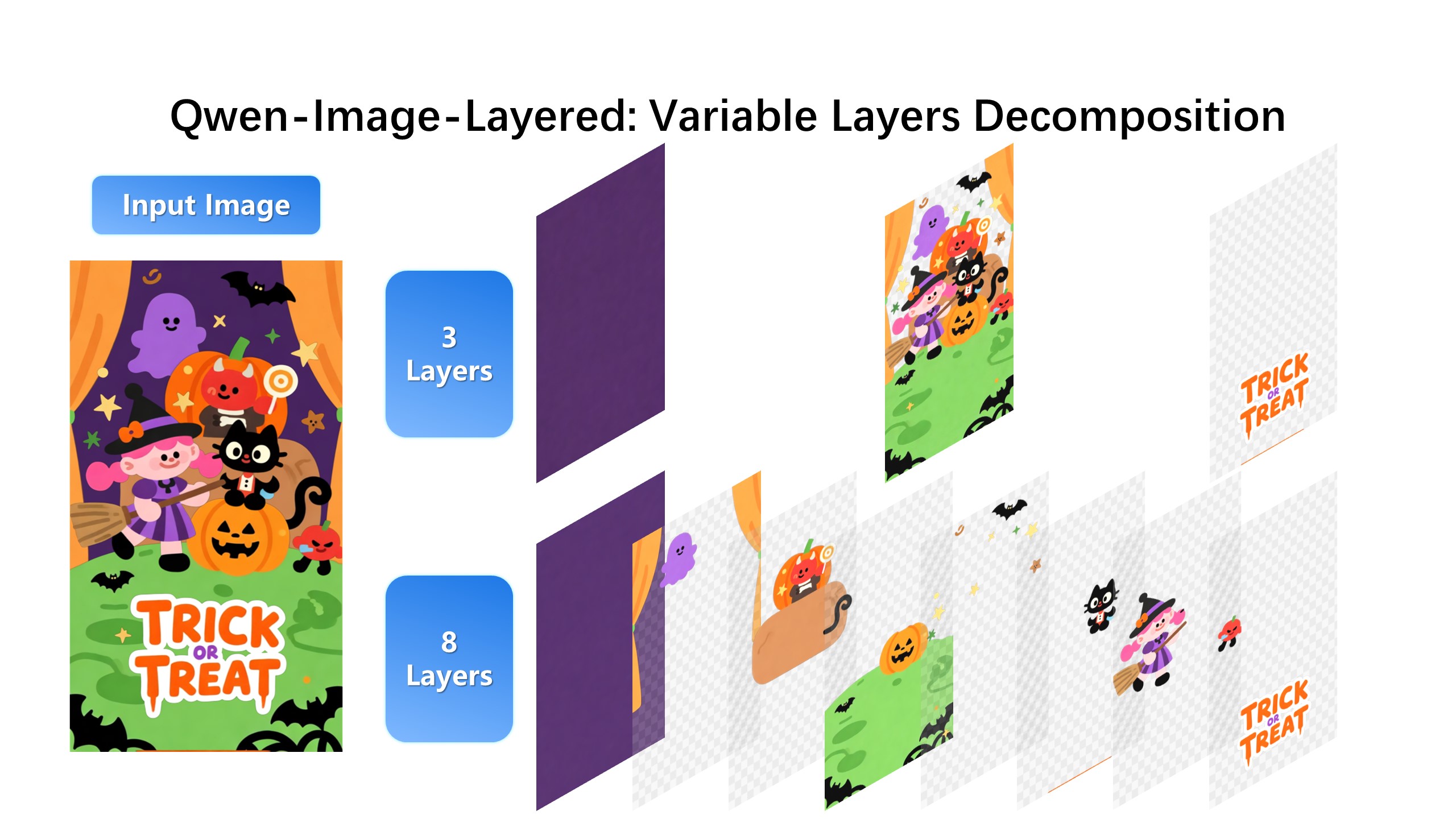
Qwen-Image-Layered is not limited to a fixed number of layers. The model supports variable-layer decomposition. For example, we can decompose an image into either 3 or 8 layers as needed:
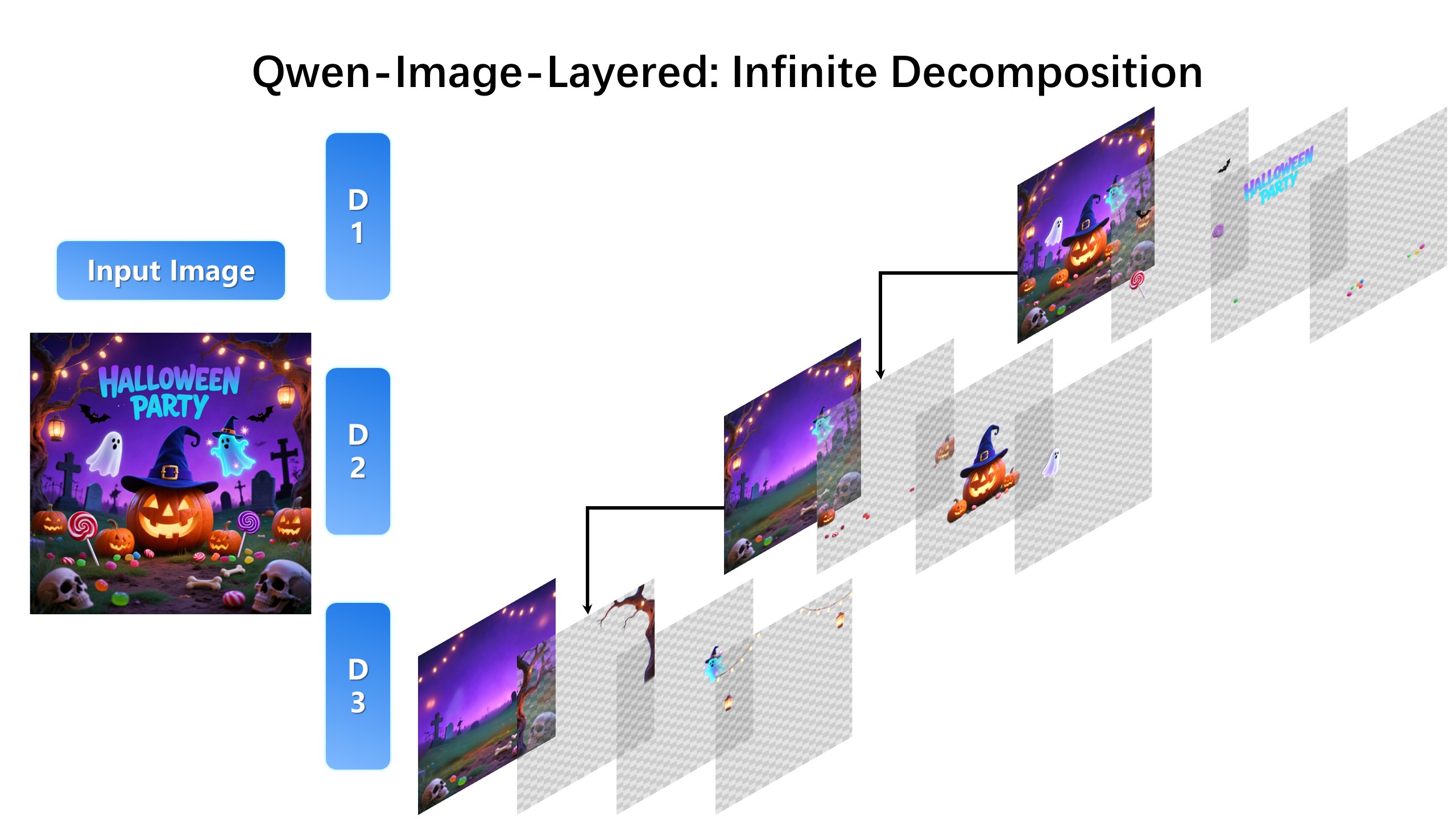
Moreover, decomposition can be applied recursively: any layer can itself be further decomposed, enabling infinite decomposition.
Qwen-Image-Layered bridges the gap between raster imagery and structured, editable representations. By reimagining images as composable layers, we hope to enable intuitive, precise, and robust editing capabilities.
If you find our model useful in your research, please consider citing us 📝 :)
@misc{yin2025qwenimagelayered,
      title={Qwen-Image-Layered: Towards Inherent Editability via Layer Decomposition},
      author={Shengming Yin, Zekai Zhang, Zecheng Tang, Kaiyuan Gao, Xiao Xu, Kun Yan, Jiahao Li, Yilei Chen, Yuxiang Chen, Heung-Yeung Shum, Lionel M. Ni, Jingren Zhou, Junyang Lin, Chenfei Wu},
      year={2025},
      eprint={2512.15603},
      archivePrefix={arXiv},
      primaryClass={cs.CV},
      url={https://arxiv.org/abs/2512.15603},
}Alibaba's Qwen App Integrates with Amap to Deliver Seamless AI-powered Travel Planning

1,550 posts | 523 followers
FollowFrank Zhang - November 1, 2019
Alibaba Cloud Community - September 21, 2026
Alibaba Cloud Community - January 4, 2026
Alibaba Cloud Native - July 18, 2024
Alibaba Cloud Data Intelligence - January 6, 2025
ApsaraDB - May 22, 2026
1,550 posts | 523 followers
Follow Alibaba Cloud Model Studio
A one-stop generative AI platform to build intelligent applications that understand your business, based on Qwen model series such as Qwen-Max and other popular models
Learn More QwenWork
QwenWork is dedicated to helping employees strengthen their professional competitiveness in the AI era and to enabling enterprises to improve organizational effectiveness.
Learn More
Token Plan
Build more, spend less. One plan, every modality.
Learn More Qwen
Qwen
Full-range, open-source, multimodal, and multi-functional
Learn MoreMore Posts by Alibaba Cloud Community

