Infrastructure visibility is a critical requirement in modern cloud environments. Operational activities such as instance modifications, service restarts, and configuration changes can directly impact workload availability and compliance posture.
Rather than relying on periodic polling mechanisms, organizations can adopt an event-driven architecture to capture infrastructure events in near real time.
This article demonstrates how Alibaba Cloud EventBridge and Function Compute can be used to build a lightweight observability pipeline for ECS operational events.
The proposed solution leverages Alibaba Cloud EventBridge and Function Compute to establish an event-driven observability pipeline for ECS infrastructure operations.
When an administrative action is performed on an ECS instance, such as modifying instance attributes, starting or stopping an instance, or updating configuration settings, Alibaba Cloud ActionTrail automatically generates an event record. The event is then published to EventBridge through the default system event bus.
EventBridge acts as the event routing layer of the architecture. Based on predefined event patterns, EventBridge evaluates incoming events and forwards matching events to the designated Function Compute target. This filtering mechanism ensures that only relevant infrastructure activities are processed.
Function Compute serves as the event processing engine. Upon receiving an event, the function extracts operational metadata such as the event name, affected ECS instance, source service, and request details. The processed information is subsequently written to logs and can be extended to trigger downstream operational workflows.
By combining EventBridge and Function Compute, organizations can implement a lightweight, serverless monitoring architecture capable of capturing infrastructure changes in near real time while eliminating the operational overhead associated with traditional polling-based monitoring solutions.
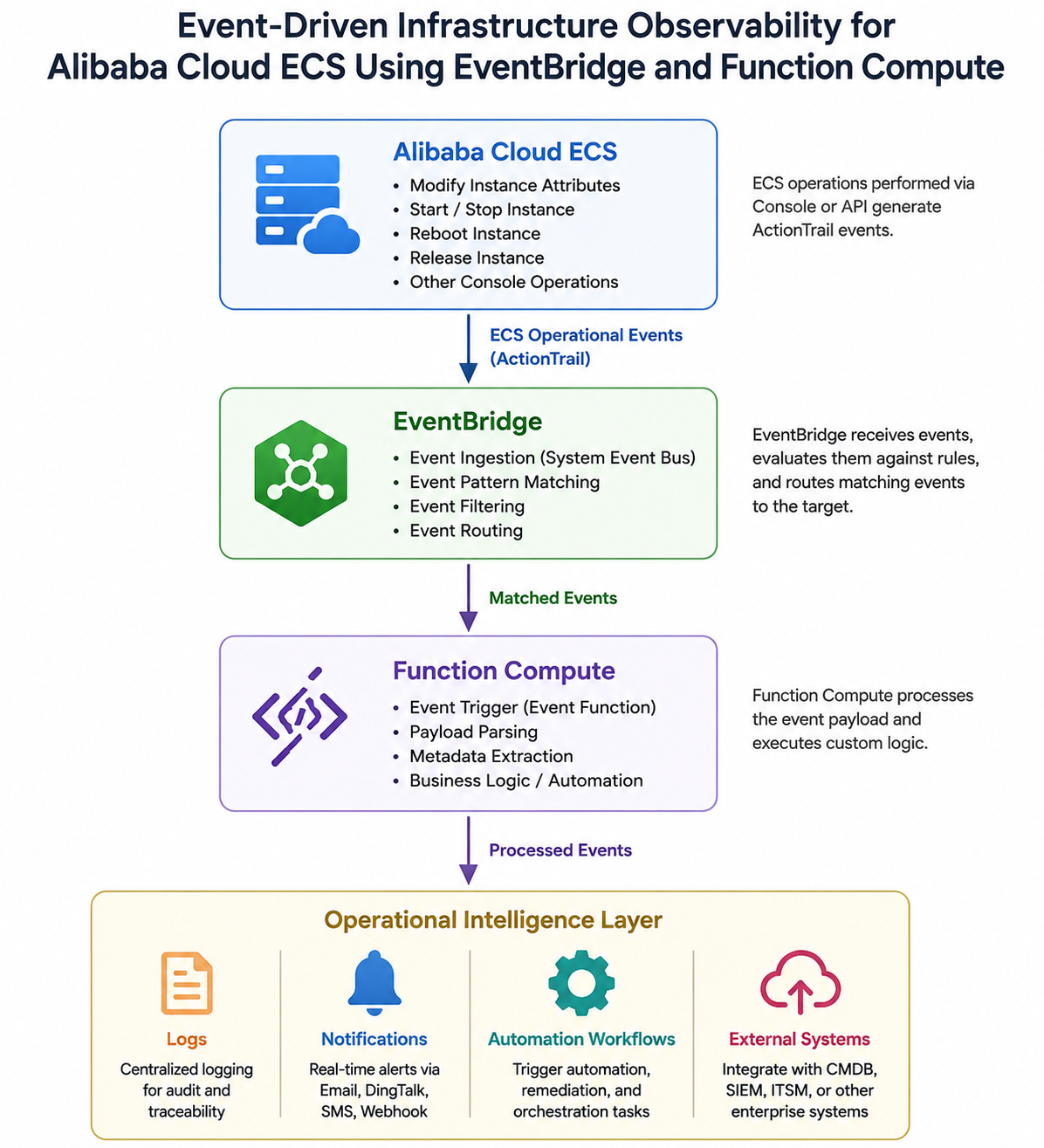
Figure 1. Event-driven observability architecture for Alibaba Cloud ECS using EventBridge and Function Compute.
The workflow begins when an administrative action is performed on an ECS instance. Activities such as modifying instance attributes, updating configurations, or executing lifecycle operations generate management events that are automatically recorded through Alibaba Cloud ActionTrail.
These events are published to EventBridge through the default system event bus. Acting as the central event routing layer, EventBridge evaluates incoming events against predefined matching rules and forwards relevant events to downstream targets.
Function Compute serves as the event processing layer within the architecture. Once invoked by EventBridge, the function receives the complete event payload and extracts operational metadata such as the event name, affected ECS instance, and request details. The processed information is then written to logs, providing visibility into infrastructure activities in near real time.
Although this implementation focuses on event collection and processing, the architecture can be further extended into an operational intelligence layer. The event stream generated by EventBridge and Function Compute can be integrated with notification services, centralized logging platforms, observability tools, ITSM solutions, security monitoring systems, or automated remediation workflows. This extensibility enables organizations to evolve from basic event monitoring toward a broader event-driven operations model without modifying the underlying ECS workloads.
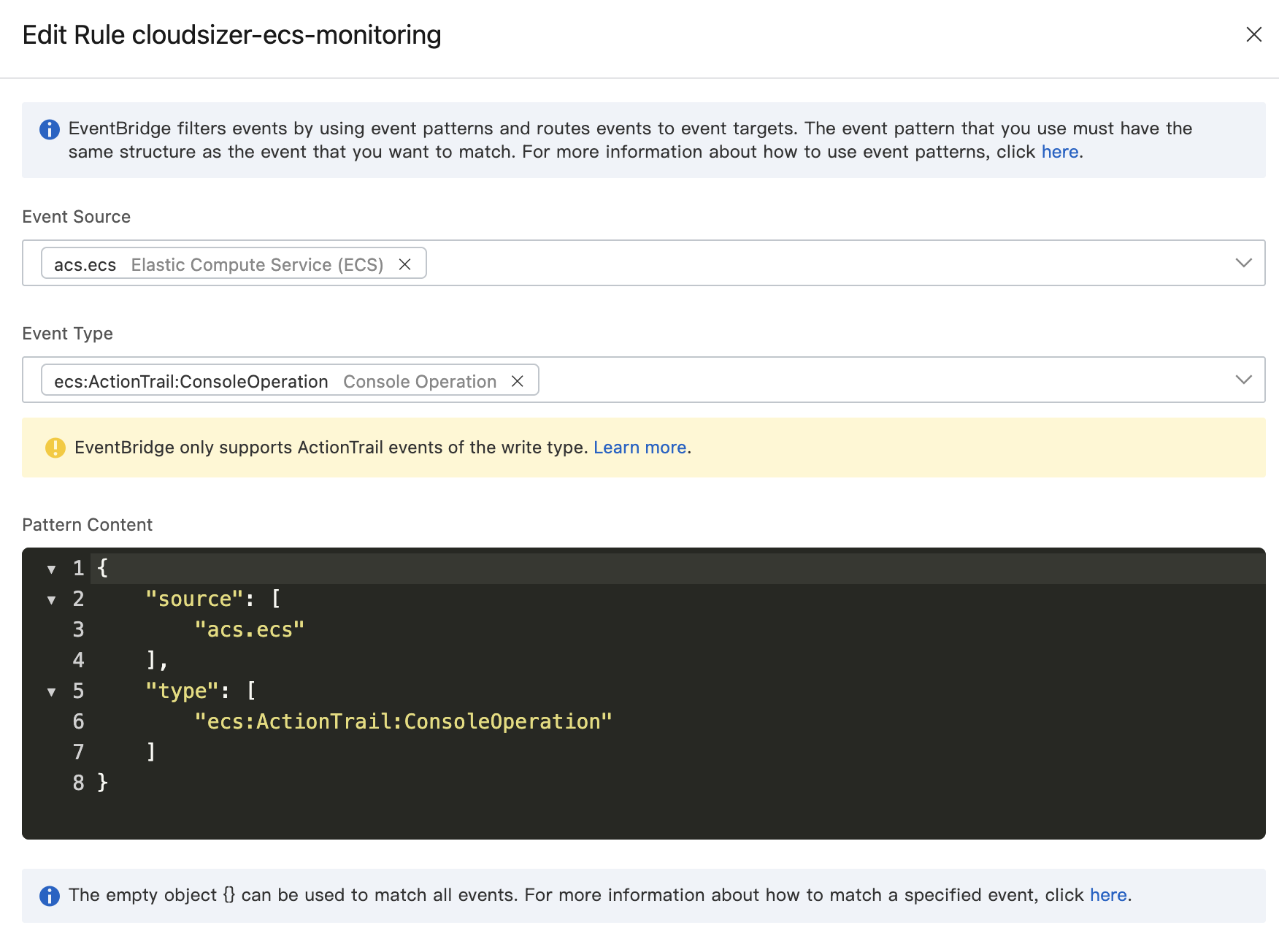
To capture ECS operational activities, an EventBridge rule was created on the default event bus. The rule is configured to monitor ECS management events generated through ActionTrail and selectively route relevant events for downstream processing.
For this implementation, the event pattern targets ECS console operations, allowing the solution to capture administrative actions performed against ECS resources.
The following event pattern was configured:
{
  "source": [
    "acs.ecs"
  ],
  "type": [
    "ecs:ActionTrail:ConsoleOperation"
  ]
}
This configuration enables EventBridge to identify ECS operational events and automatically invoke the designated Function Compute target whenever a matching event is detected.
By implementing filtering at the EventBridge layer, the architecture ensures that only relevant infrastructure events are processed, reducing unnecessary execution and improving overall operational efficiency.
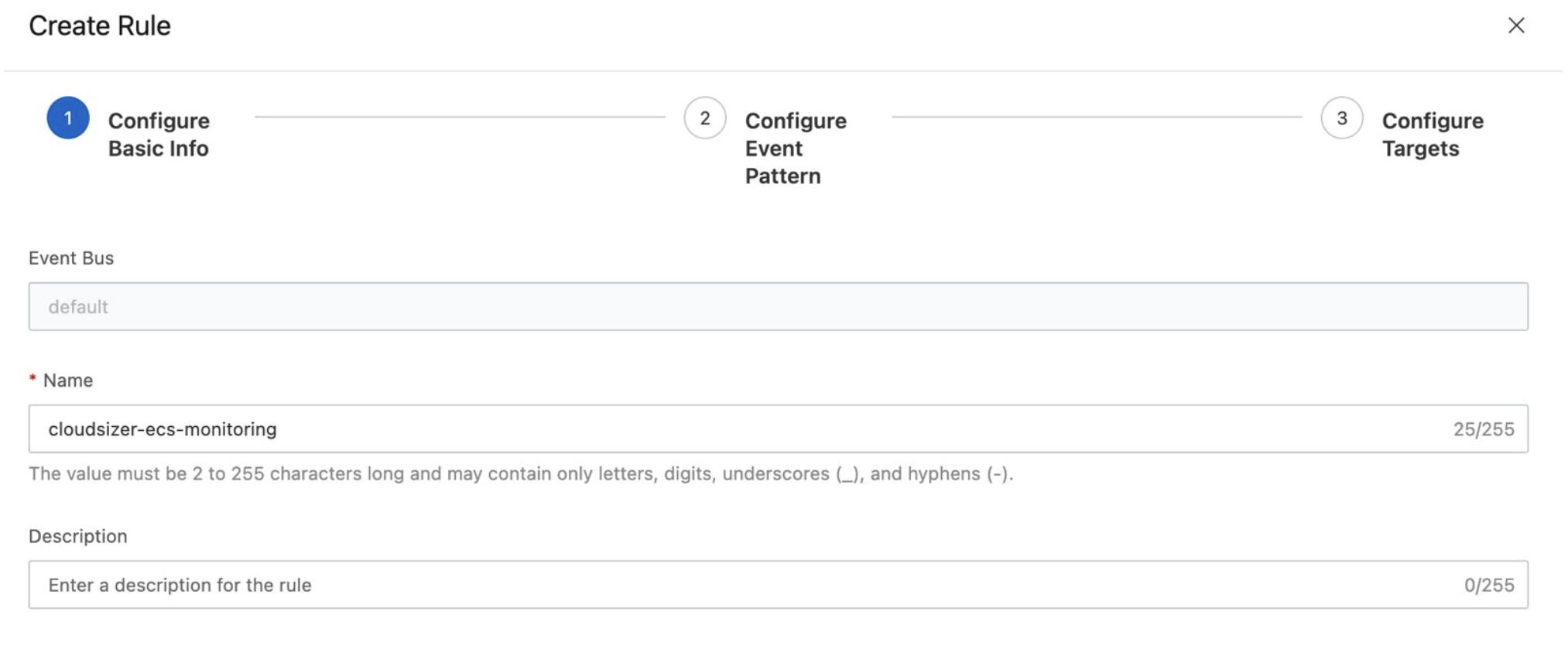
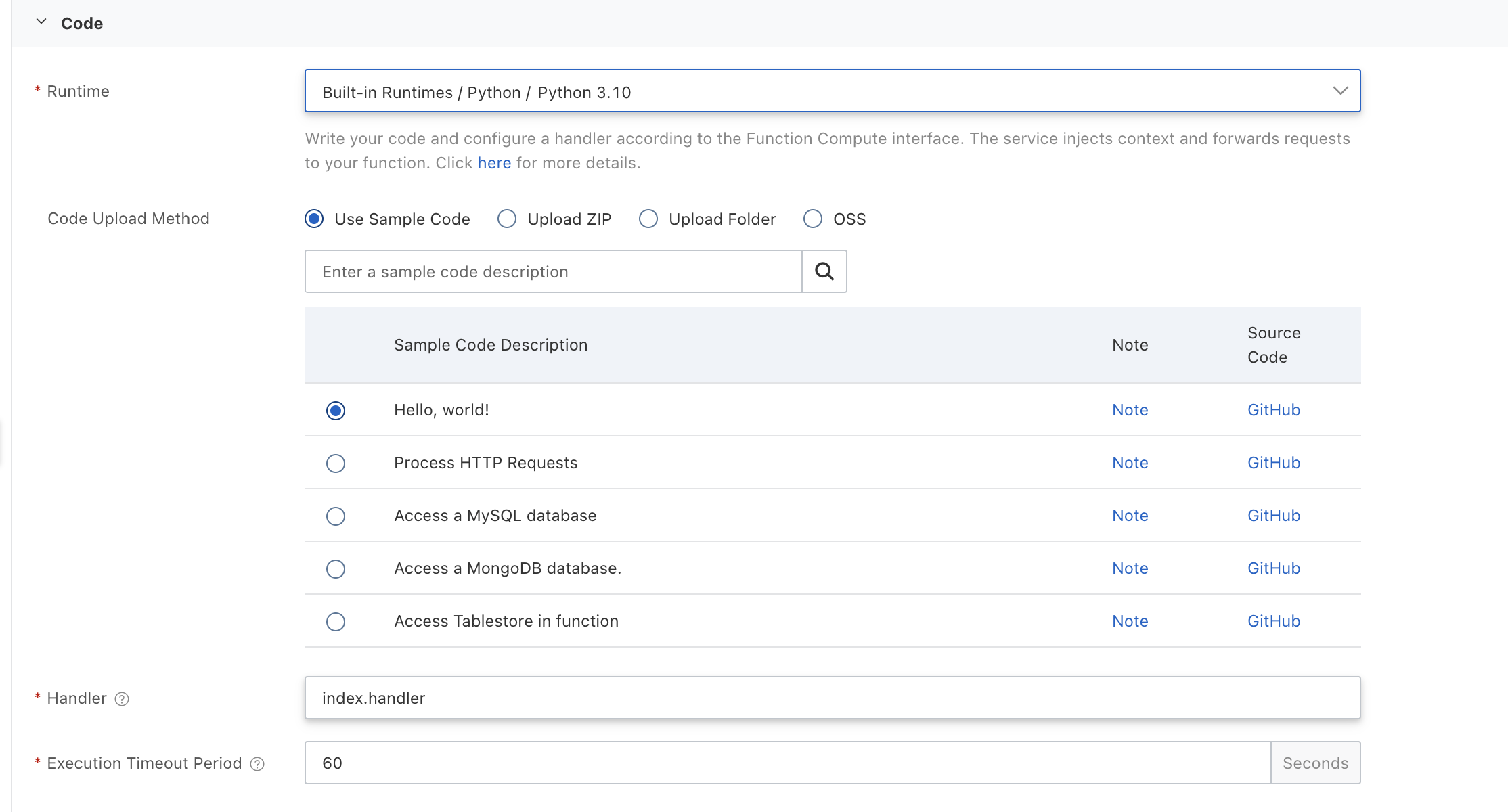
To process incoming ECS events, a Function Compute Event Function was deployed as the downstream target of the EventBridge rule.
Function Compute provides a fully managed serverless execution environment that automatically processes events without requiring dedicated infrastructure. Once EventBridge identifies a matching event, the complete payload is delivered directly to the function for processing.
The implementation extracts key operational metadata from the event payload, including the operation type and affected ECS instance.
import logging
import json

logger = logging.getLogger()

def handler(event, context):
    payload = json.loads(event)

    logger.info(
        f"Event Name: {payload['data']['eventName']}"
    )

    logger.info(
        f"Instance ID: {payload['data']['requestParameters']['InstanceId']}"
    )

    return "OK"
This lightweight processing model provides immediate visibility into infrastructure activities while establishing a foundation for more advanced event-driven operational workflows.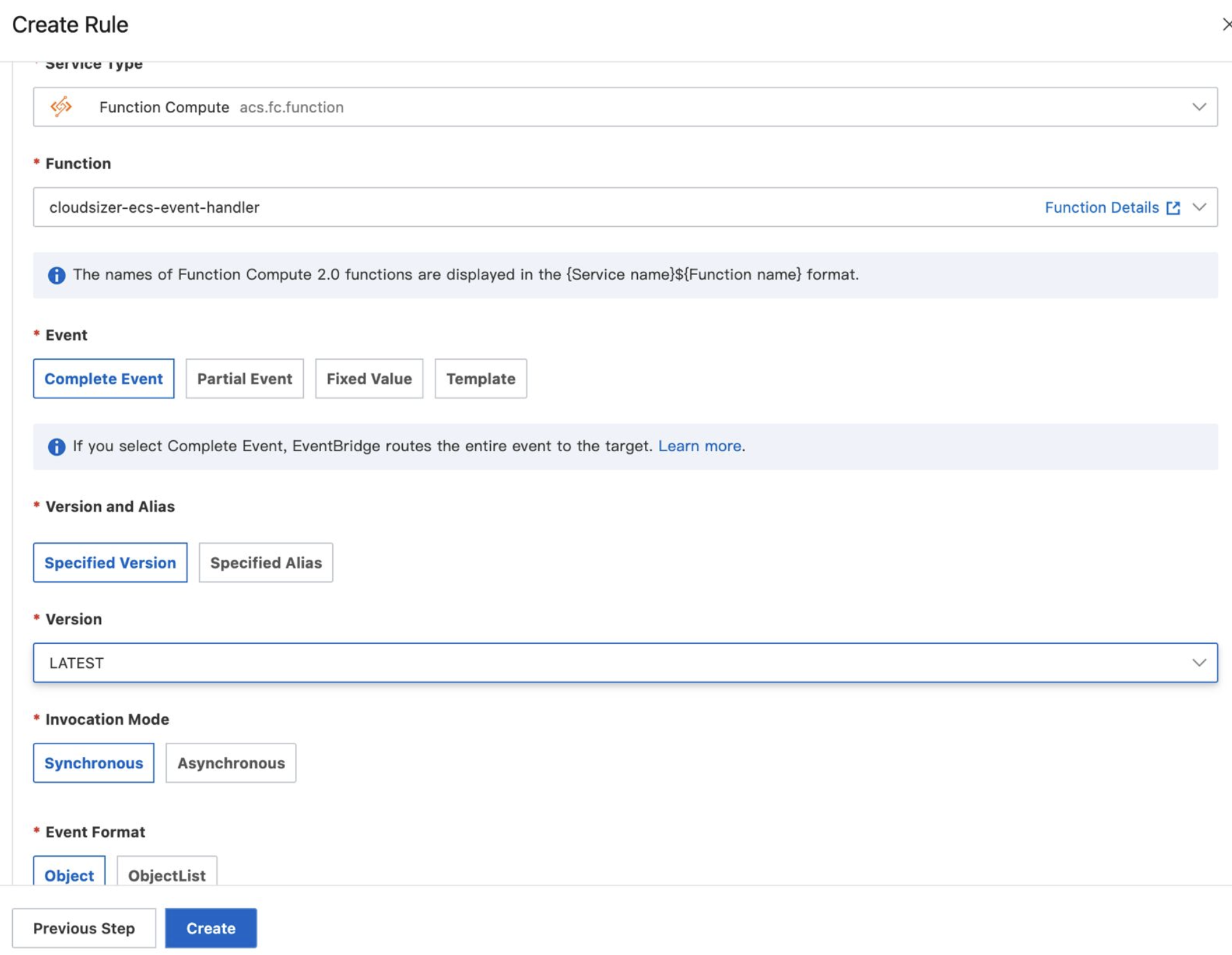
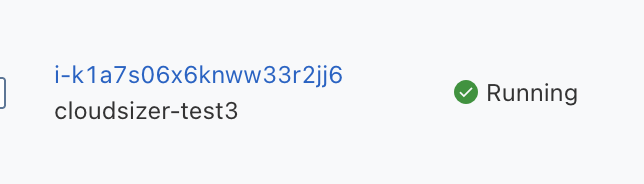
To validate the end-to-end event processing workflow, an administrative operation was performed on an ECS instance by modifying the instance name through the Alibaba Cloud Console.
This operation generated an ECS management event with the following operation type:
ModifyInstanceAttributeOnce the operation was submitted, Alibaba Cloud ActionTrail automatically recorded the activity and published the corresponding event to EventBridge. The event matched the configured routing rule and was subsequently delivered to Function Compute for processing.
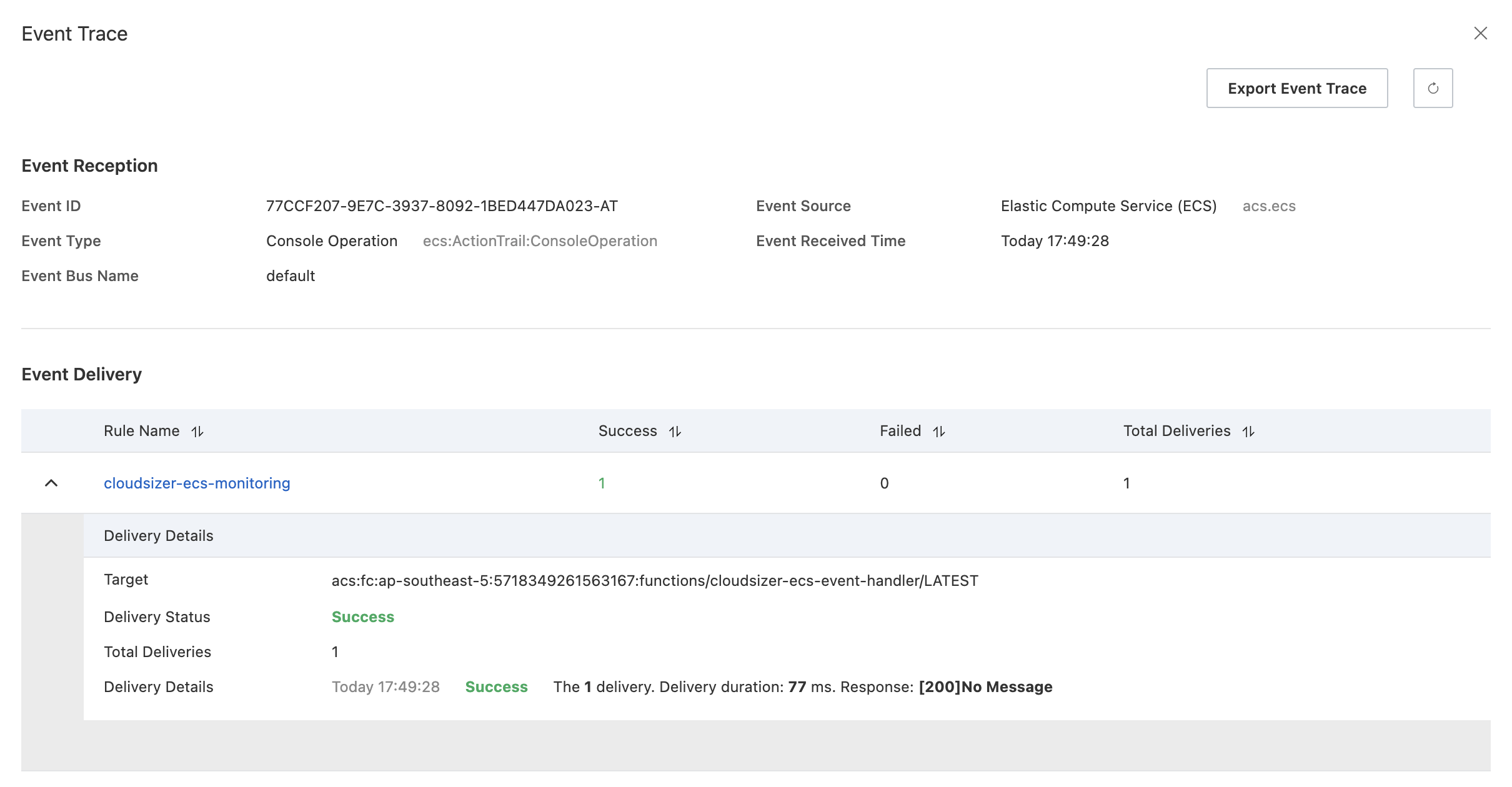
To verify successful event delivery, EventBridge Event Trace was used to inspect the event lifecycle. The trace confirmed that the event was successfully received, matched against the routing rule, and delivered to the configured Function Compute target without errors.
The successful delivery status demonstrates that the event routing configuration is functioning as expected and that ECS operational events can be processed in near real time using a serverless architecture.
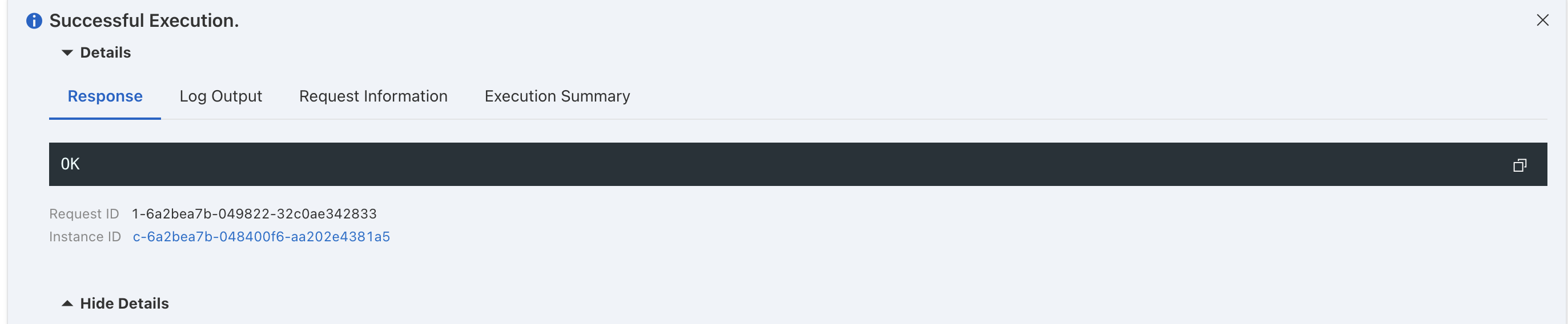
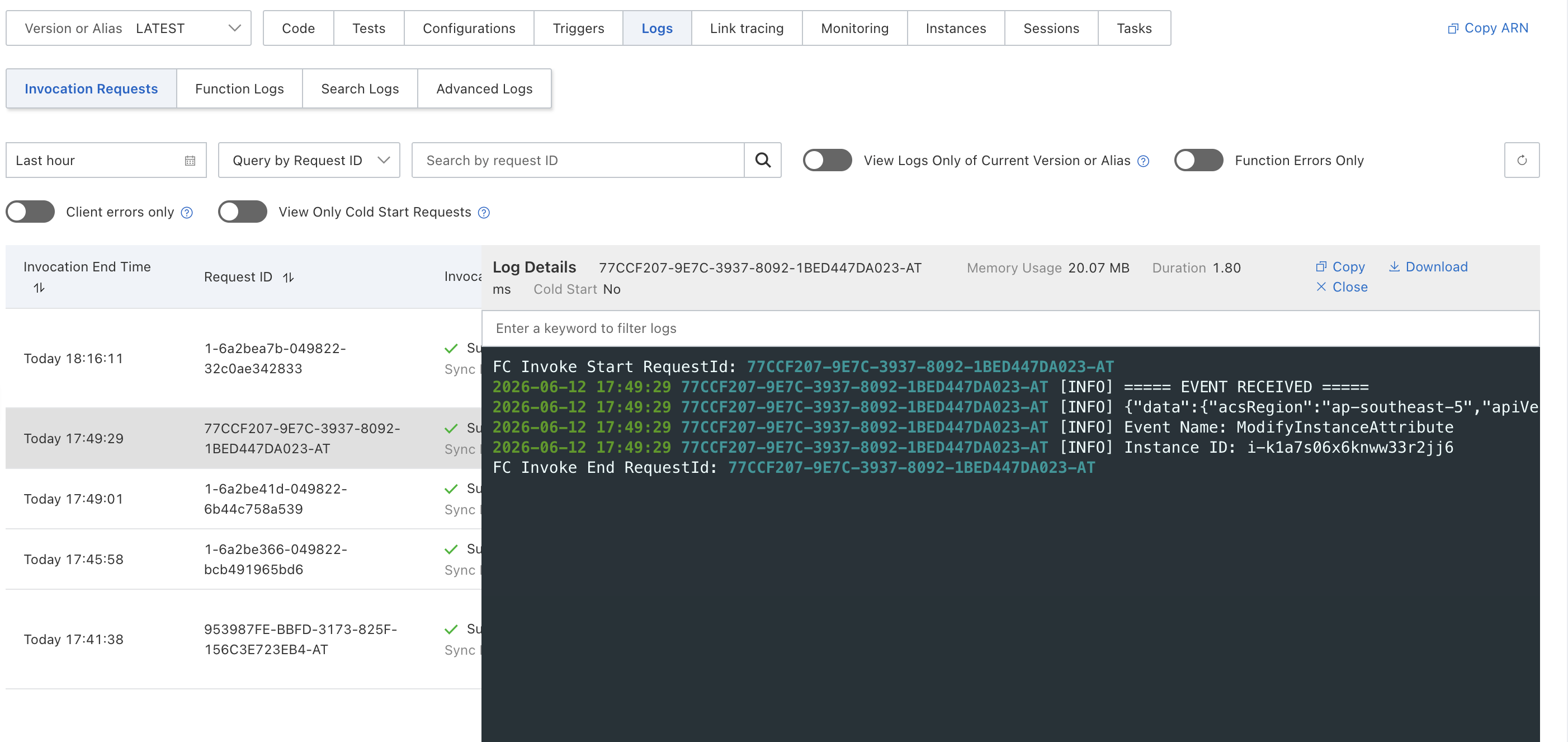
After the event was delivered by EventBridge, Function Compute processed the incoming payload and extracted key operational metadata from the ECS event.
Function execution logs confirmed that the event was successfully received and parsed by the function. The extracted information included both the operation type and the affected ECS instance identifier.
Example output:
===== EVENT RECEIVED =====

Event Name: ModifyInstanceAttribute

Instance ID: i-k1a7s06x6knww33r2jj6
This result validates that the complete event-driven workflow is functioning correctly, from ECS event generation through EventBridge routing and Function Compute processing.
The same architecture can be extended to support additional event types, operational analytics, notification systems, governance controls, and automated remediation workflows.
Event-driven architectures provide an efficient approach to infrastructure observability by eliminating the need for continuous polling and enabling near real-time event processing.
By combining Alibaba Cloud EventBridge and Function Compute, organizations can establish a lightweight and scalable mechanism for capturing ECS operational activities, routing infrastructure events, and processing operational metadata through a fully managed serverless platform.
This implementation demonstrates how Alibaba Cloud native services can be combined to build a scalable event-driven observability pipeline for ECS operations. By leveraging EventBridge for event routing and Function Compute for serverless processing, organizations can establish a foundation for operational monitoring, governance, and automation without introducing additional infrastructure management overhead.
Building a Lightweight Customer Analytics Pipeline with OSS and Tair Redis on Alibaba Cloud
Building Scalable Application Integration Workflows with ApsaraMQ for RocketMQ

9 posts | 0 followers
FollowAlibaba Cloud Native - June 12, 2024
Alibaba Developer - April 19, 2022
PM - C2C_Yuan - May 12, 2026
PM - C2C_Yuan - May 23, 2024
Rupal_Click2Cloud - December 15, 2023
Alibaba Cloud Serverless - February 17, 2023
9 posts | 0 followers
Follow ECS(Elastic Compute Service)
Elastic and secure virtual cloud servers to cater all your cloud hosting needs.
Learn More Function Compute
Alibaba Cloud Function Compute is a fully-managed event-driven compute service. It allows you to focus on writing and uploading code without the need to manage infrastructure such as servers.
Learn More Container Compute Service (ACS)
A cloud computing service that provides container compute resources that comply with the container specifications of Kubernetes
Learn More Realtime Compute for Apache Flink
Realtime Compute for Apache Flink offers a highly integrated platform for real-time data processing, which optimizes the computing of Apache Flink.
Learn MoreMore Posts by Della L. Wardhani

