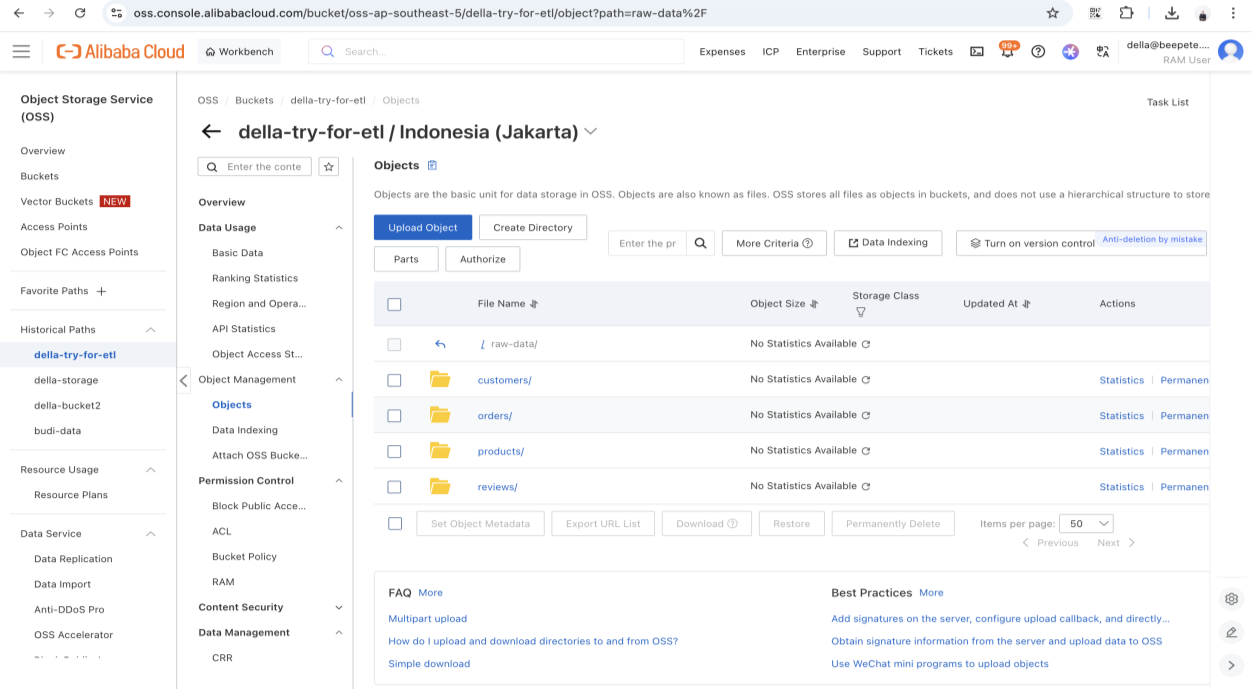
Retail companies generate large volumes of operational data such as customer records, orders, product catalogs, and payment transactions. However, transforming raw datasets into actionable insights often requires a structured data pipeline. This article demonstrates how to build a simple retail analytics pipeline using services from Alibaba Cloud. The architecture combines Alibaba Cloud Object Storage Service (OSS) for data storage, Alibaba Cloud DataWorks for ETL orchestration, and Alibaba Cloud Hologres for running analytical queries. With this approach, raw datasets can be ingested, transformed, and analyzed through a scalable cloud-native data workflow.
The solution demonstrates a simple retail data pipeline designed to process and analyze customer datasets. The workflow consists of three main stages:

This architecture enables organizations to build a lightweight data pipeline for retail analytics workloads.
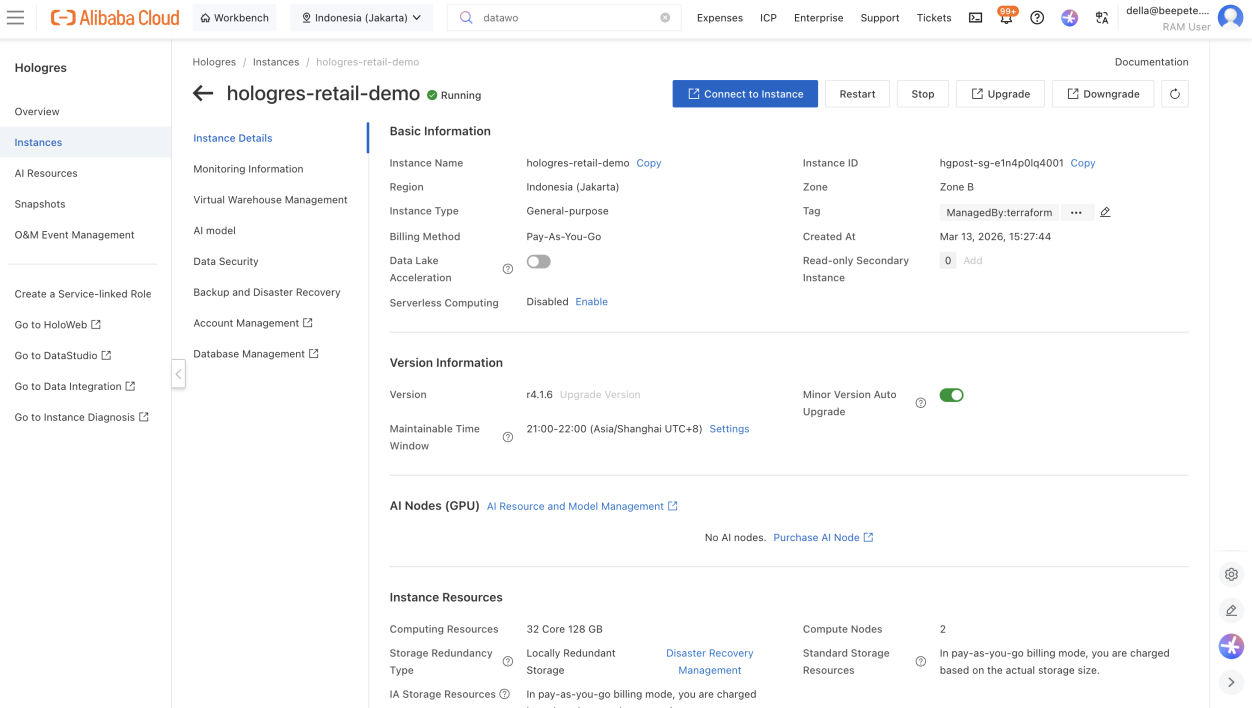
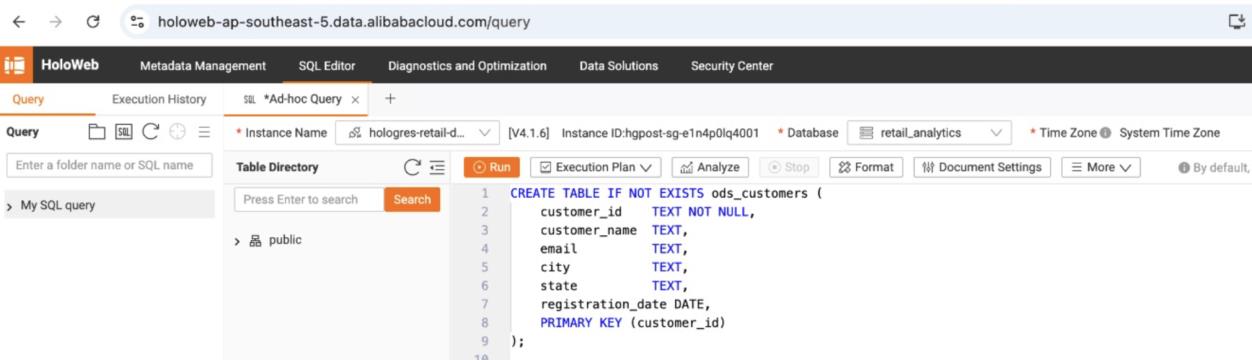
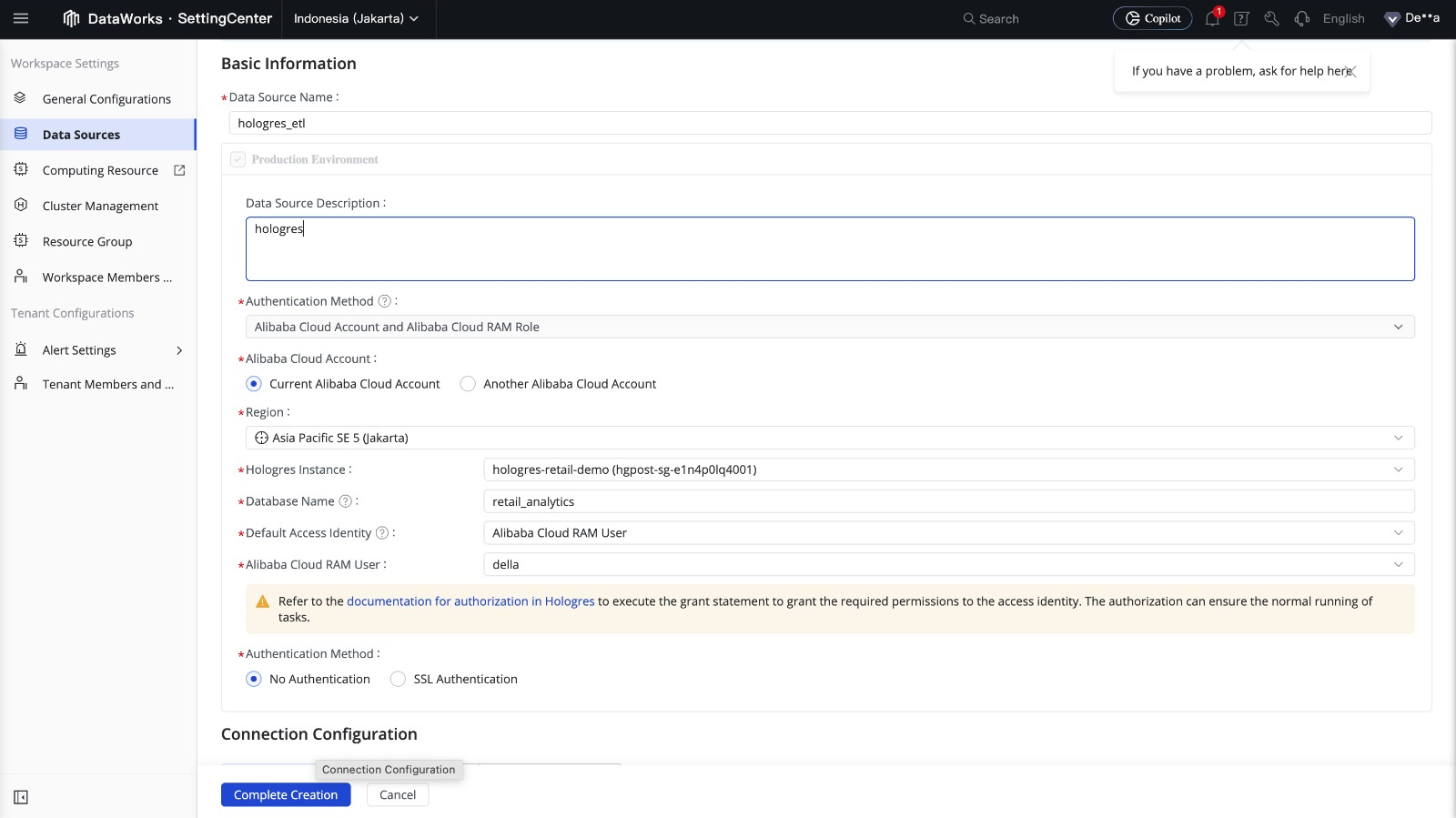
Hologres Schema Design (HoloWeb)
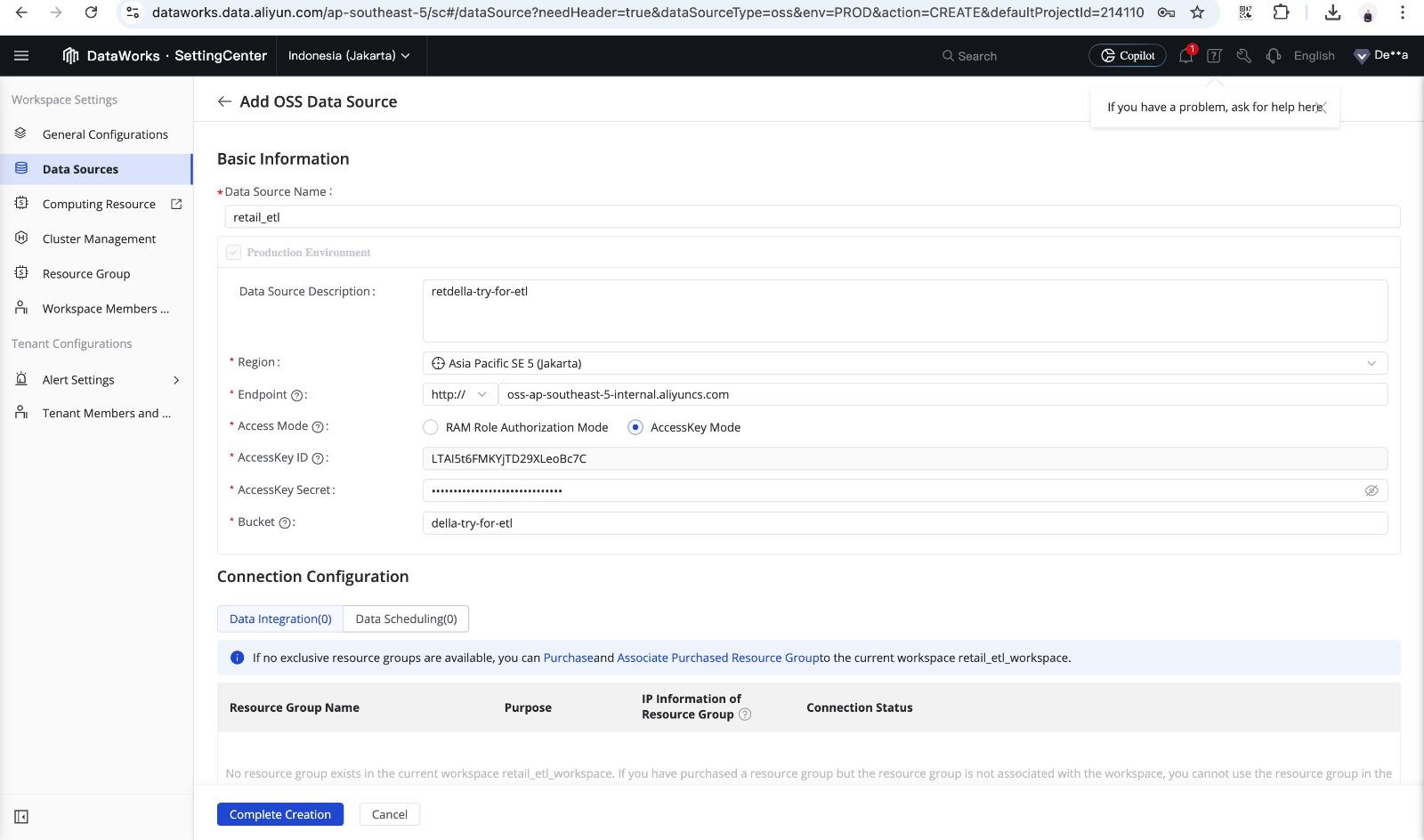
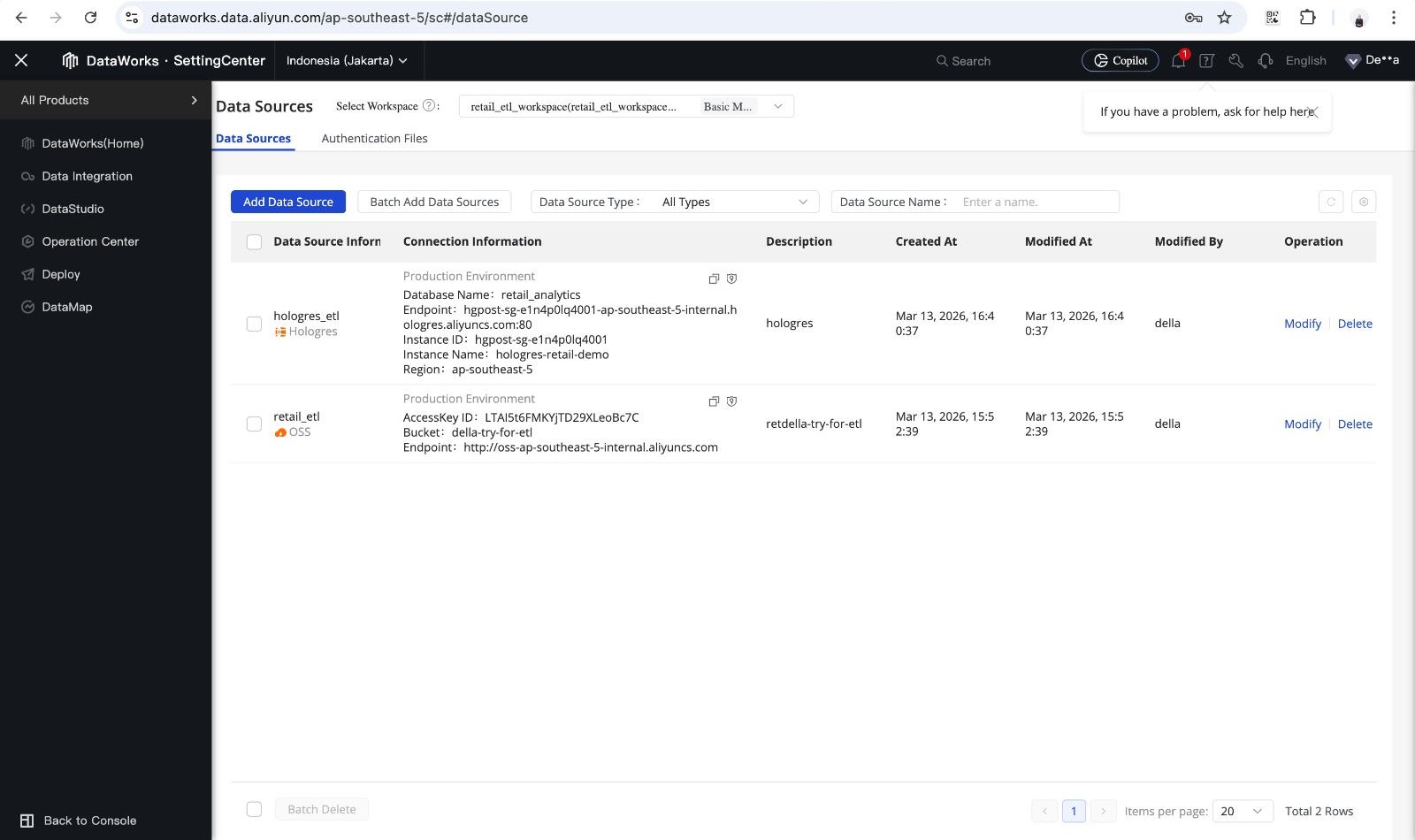
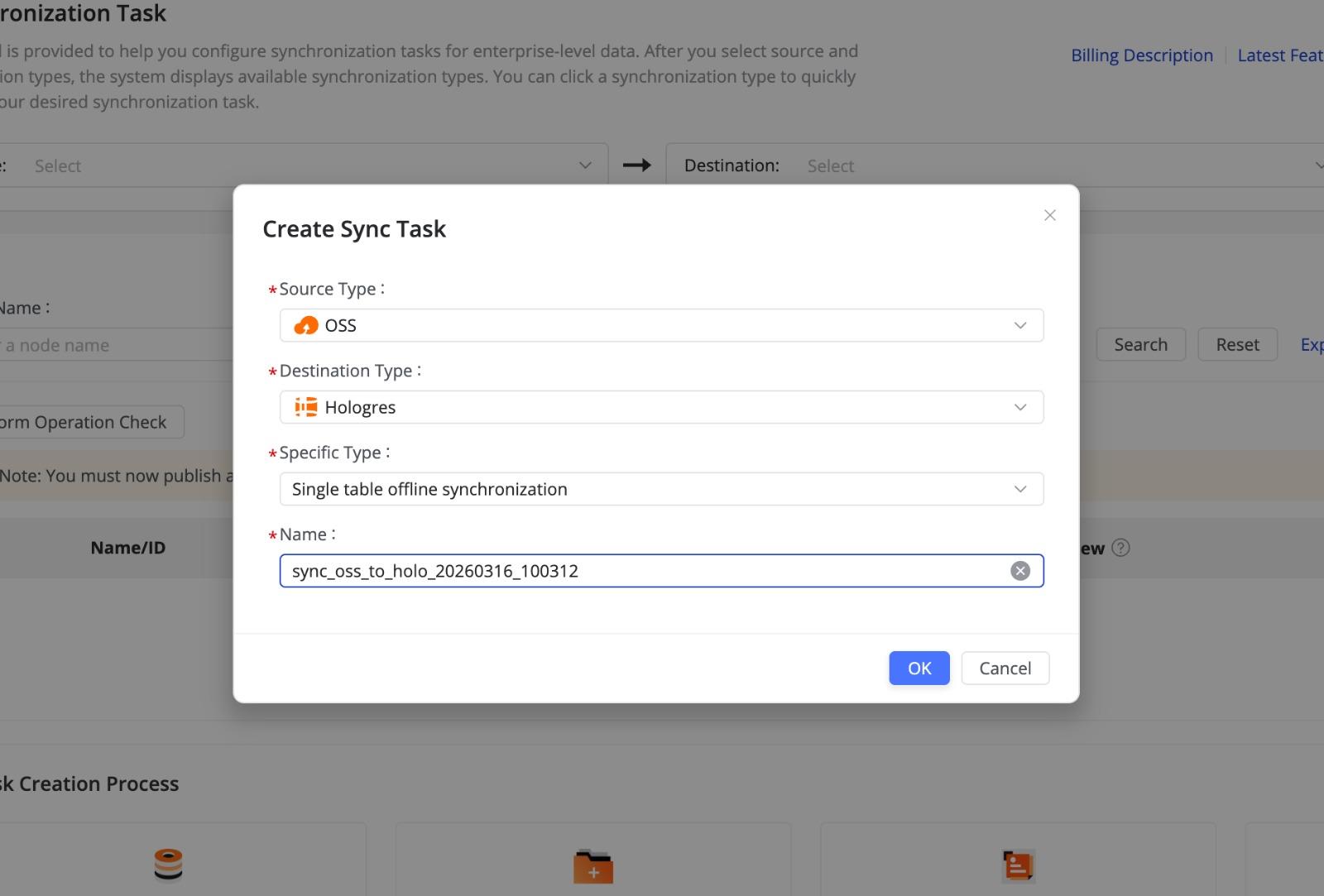
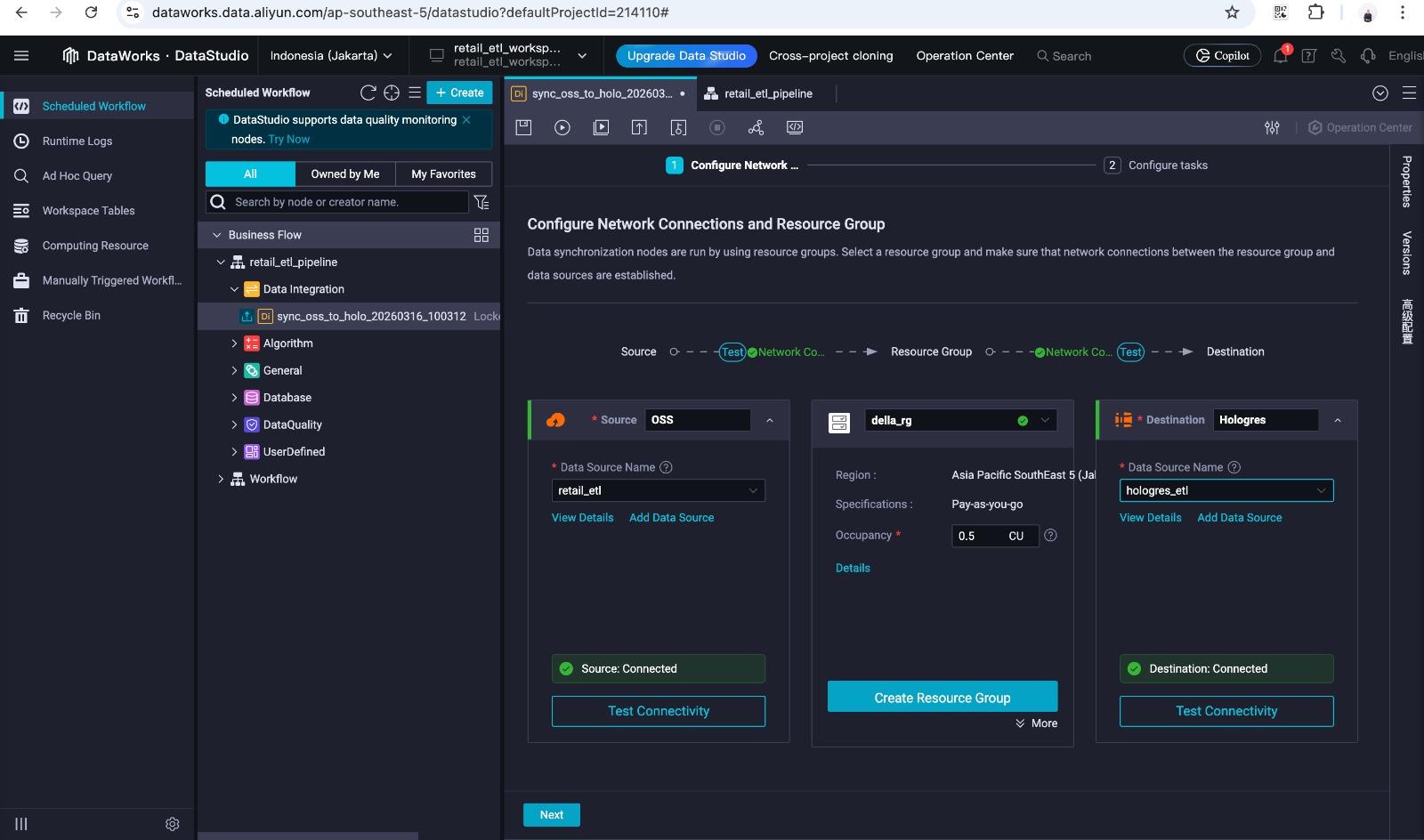
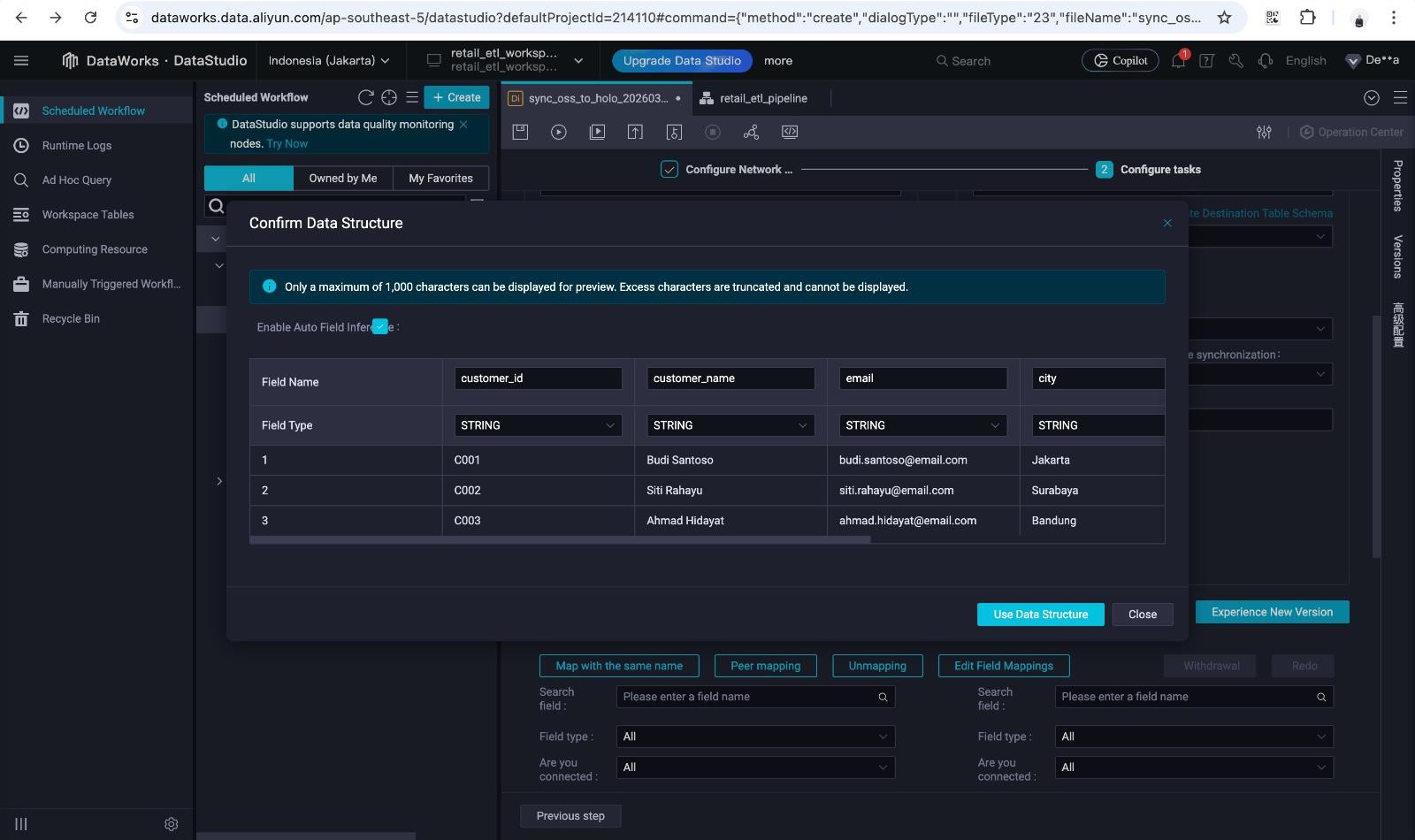
Loading Data with DataWorks Sync Tasks
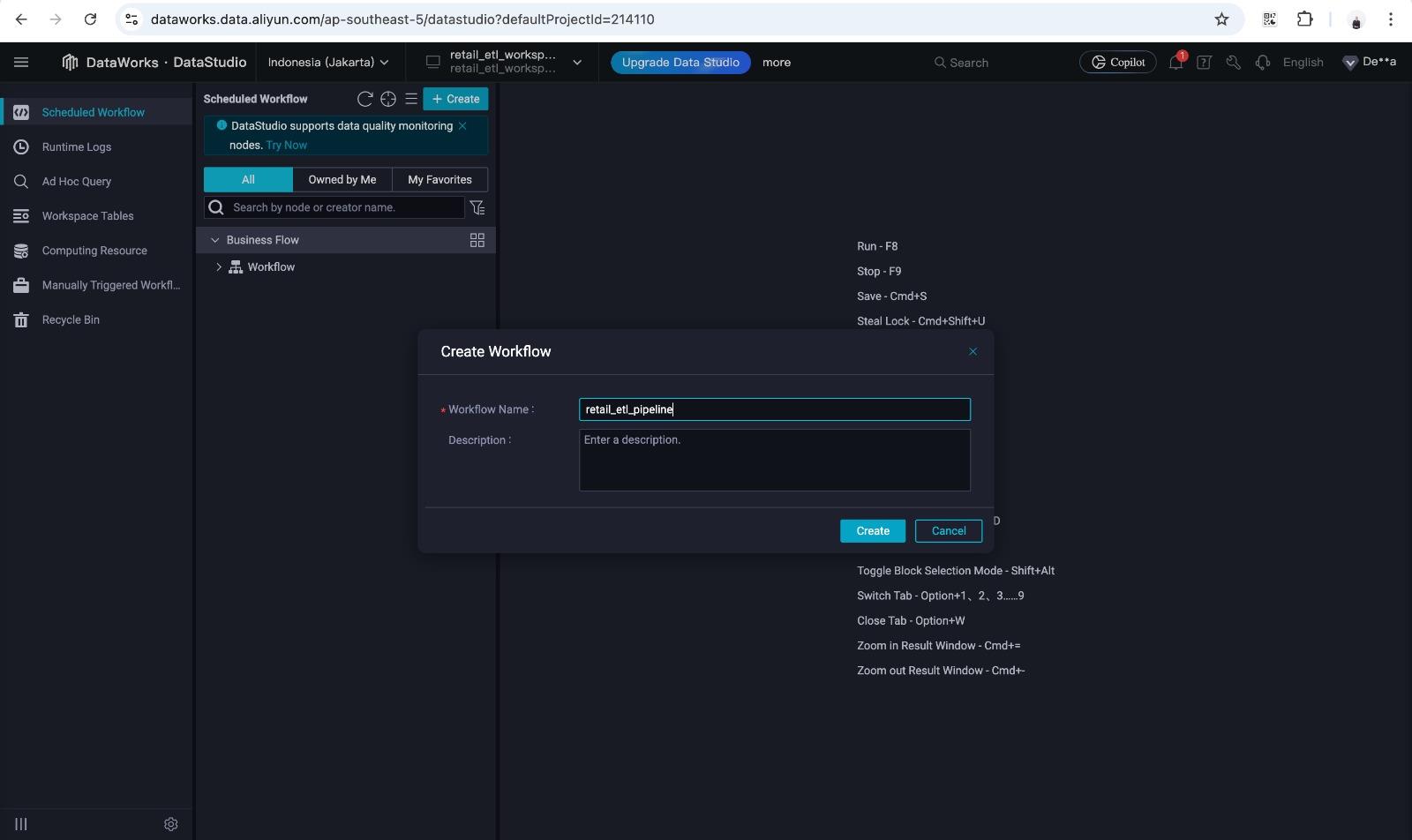
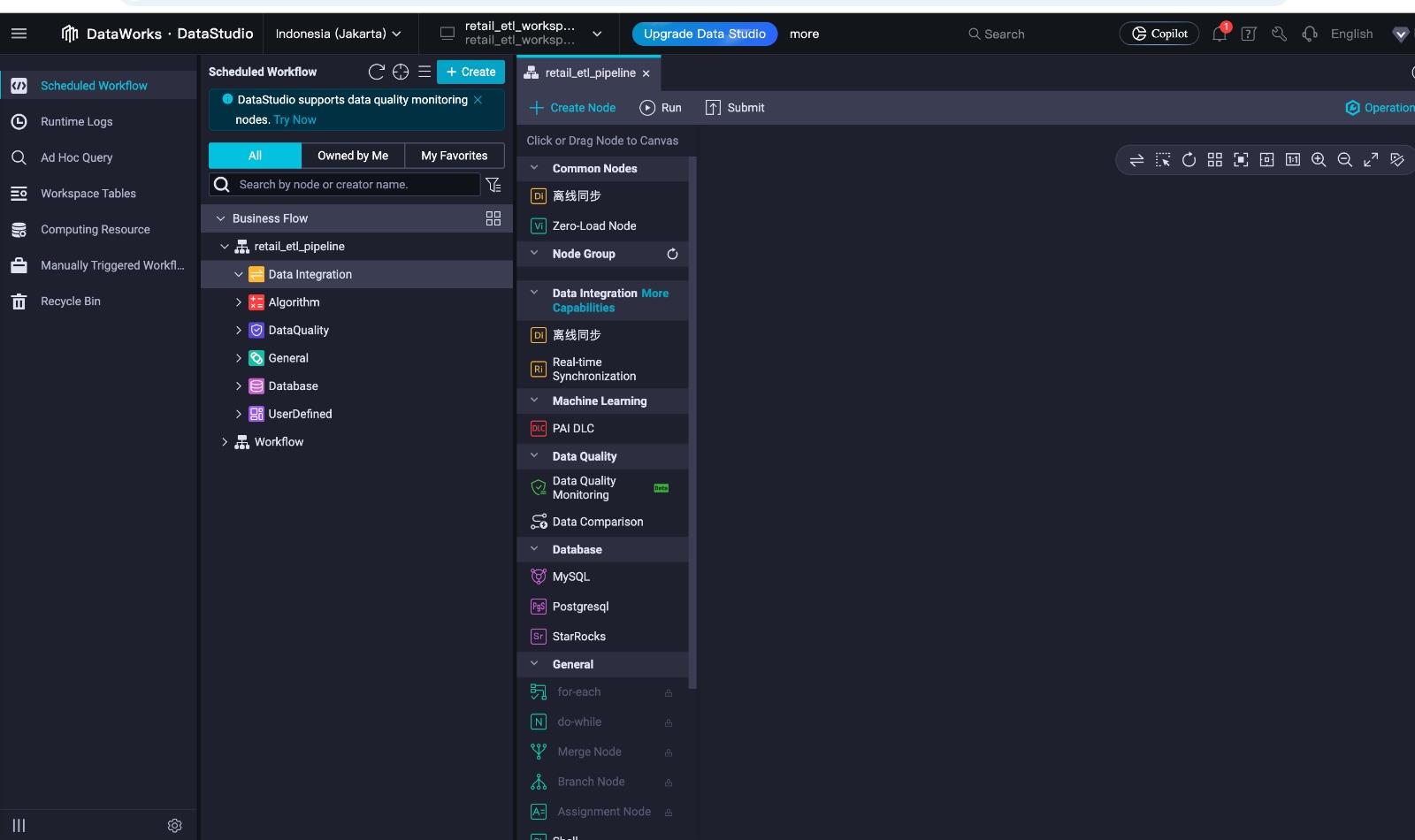

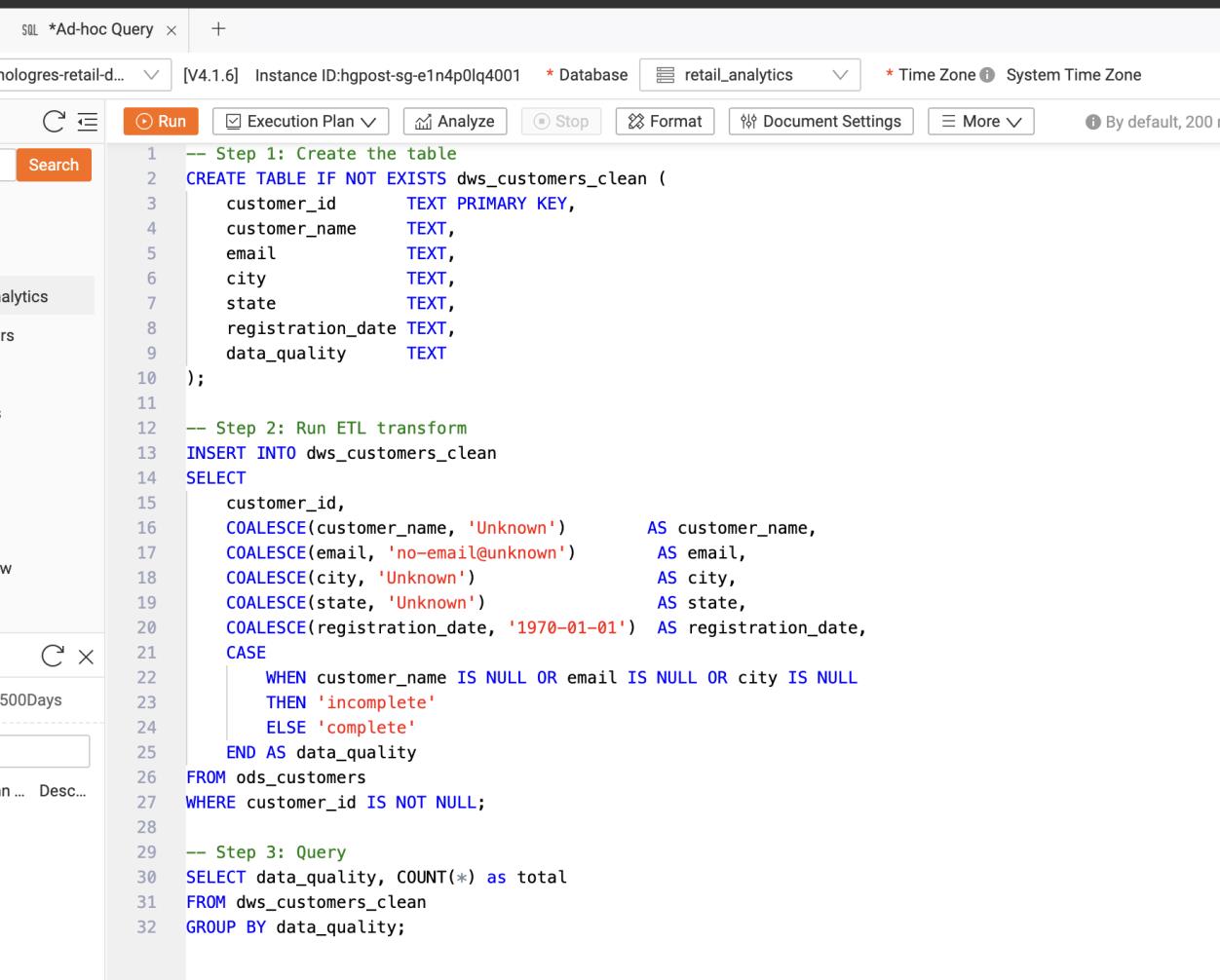
ETL Transformation and Data Cleaning
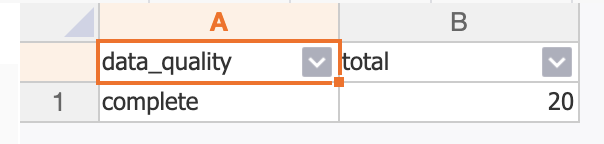
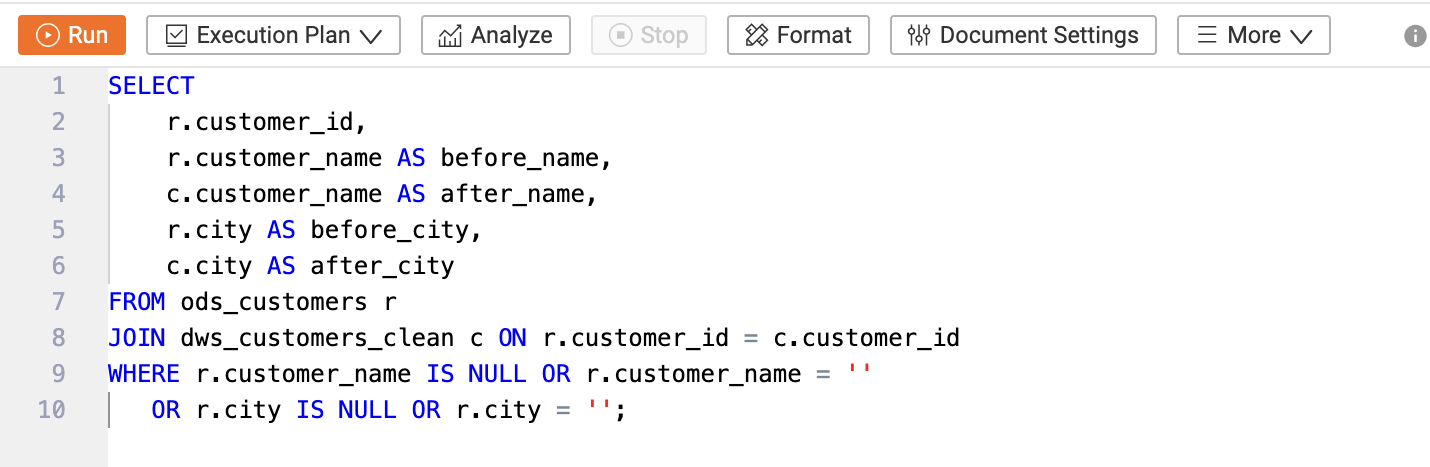
The results show two records with data quality issues that were handled by the ETL process:
Customer C016 had a missing customer name. The ETL transformation replaced the empty value with 'Unknown' using a CASE WHEN expression, while preserving the existing city value (Jakarta). Customer C018 had a missing city value. The transformation filled it with 'Unknown', while the customer's name (Bagus Firmansyah) remained unchanged.
This demonstrates how the ETL pipeline ensures data completeness by replacing missing or empty fields with meaningful default values, making the dataset ready for reliable analytical queries.
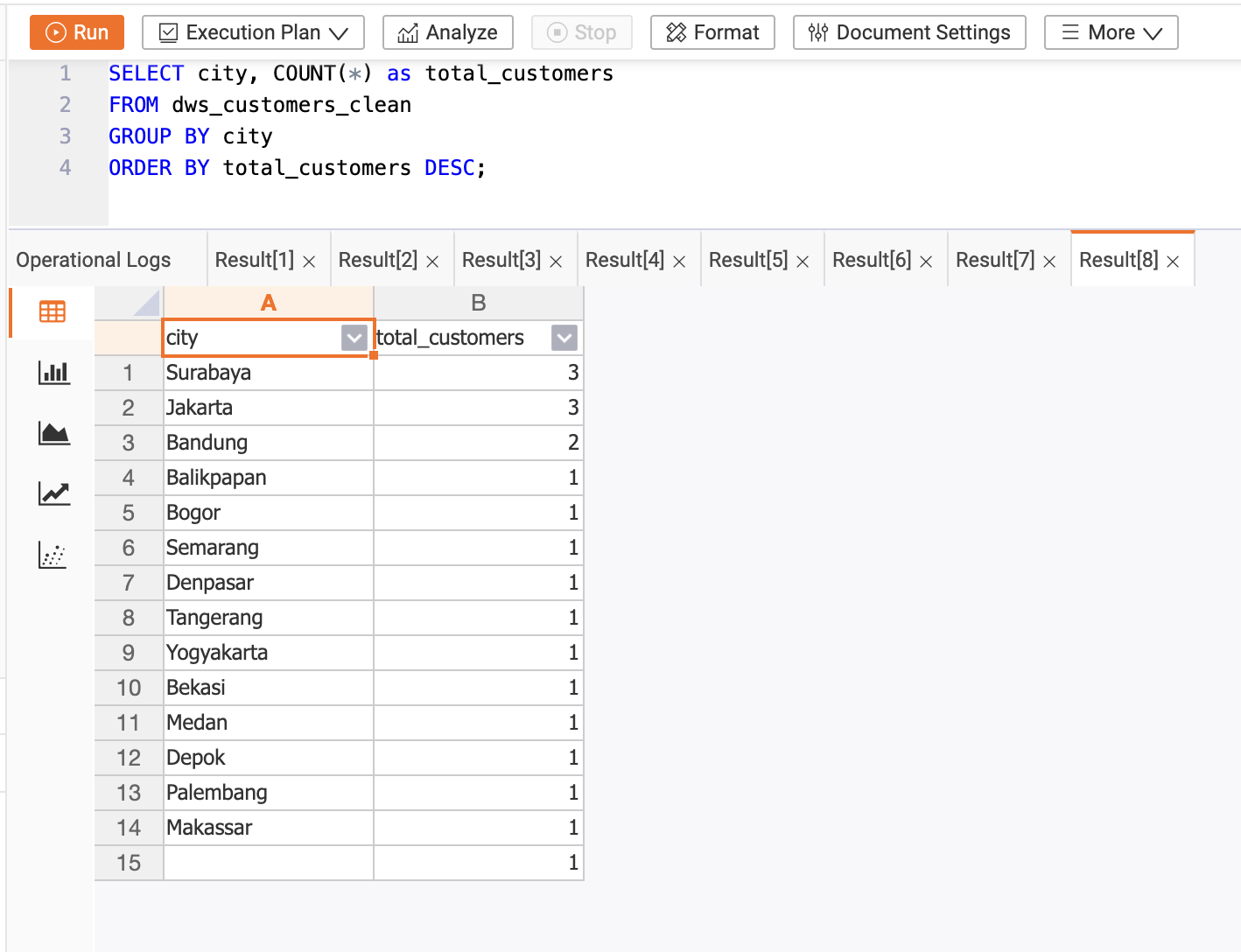
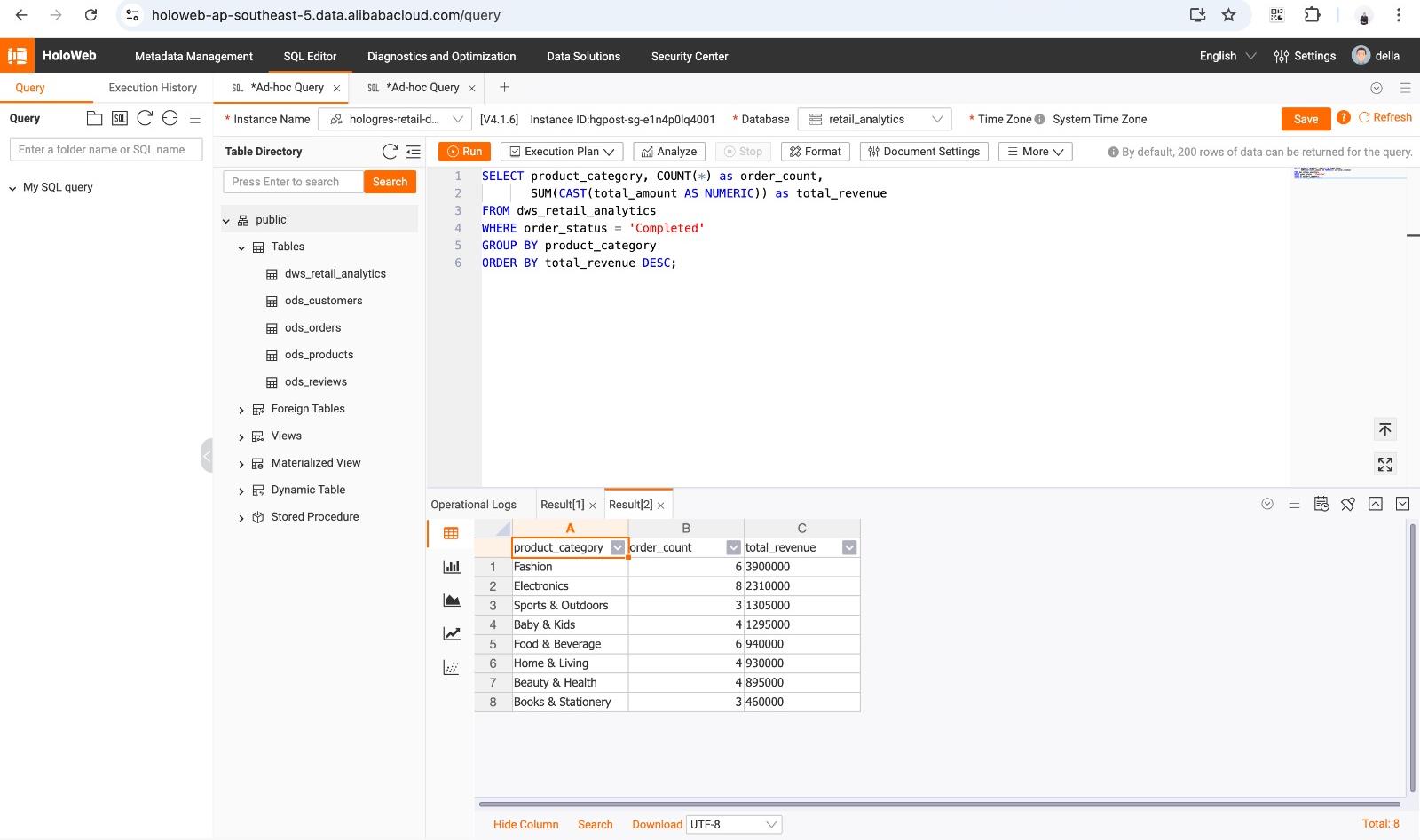
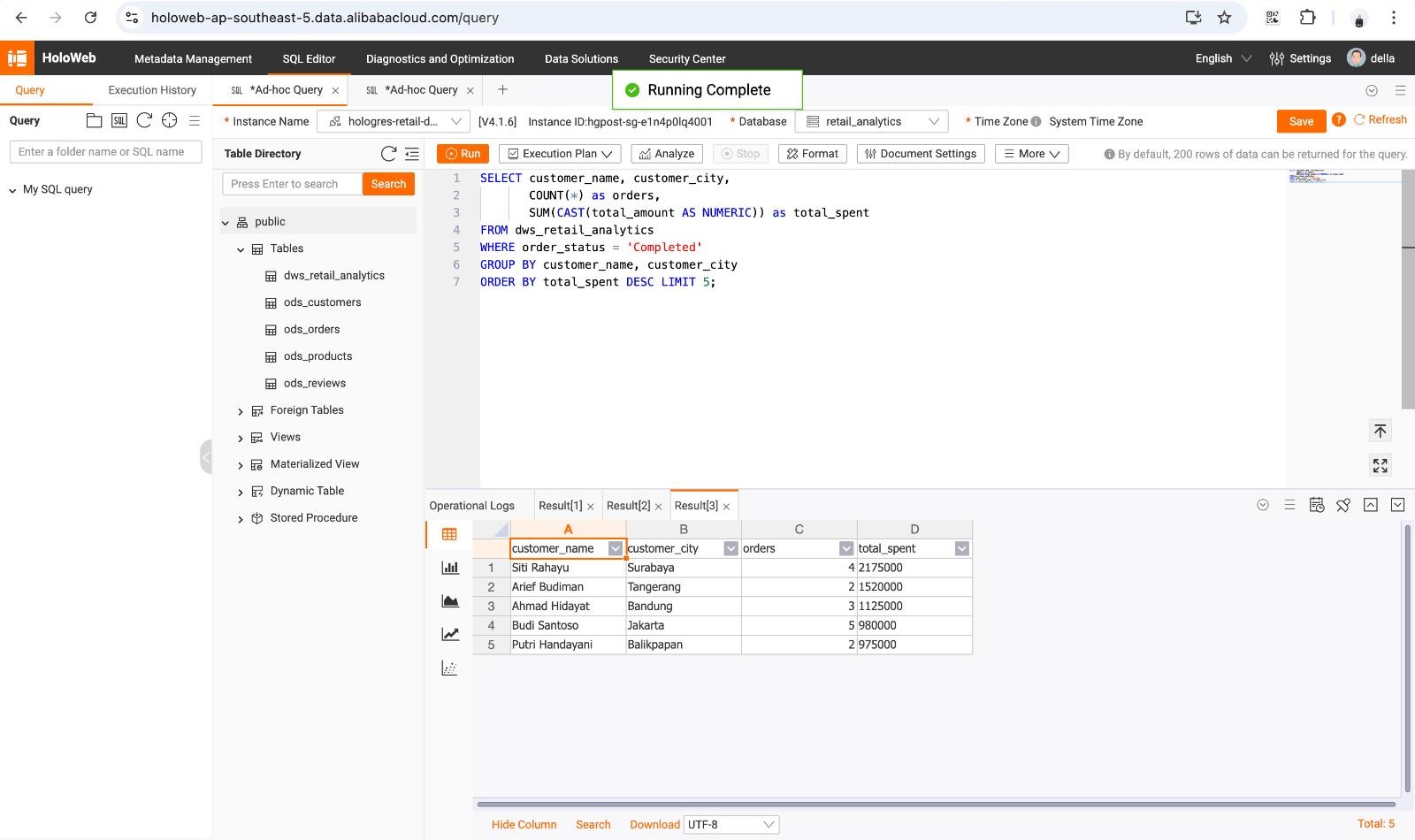
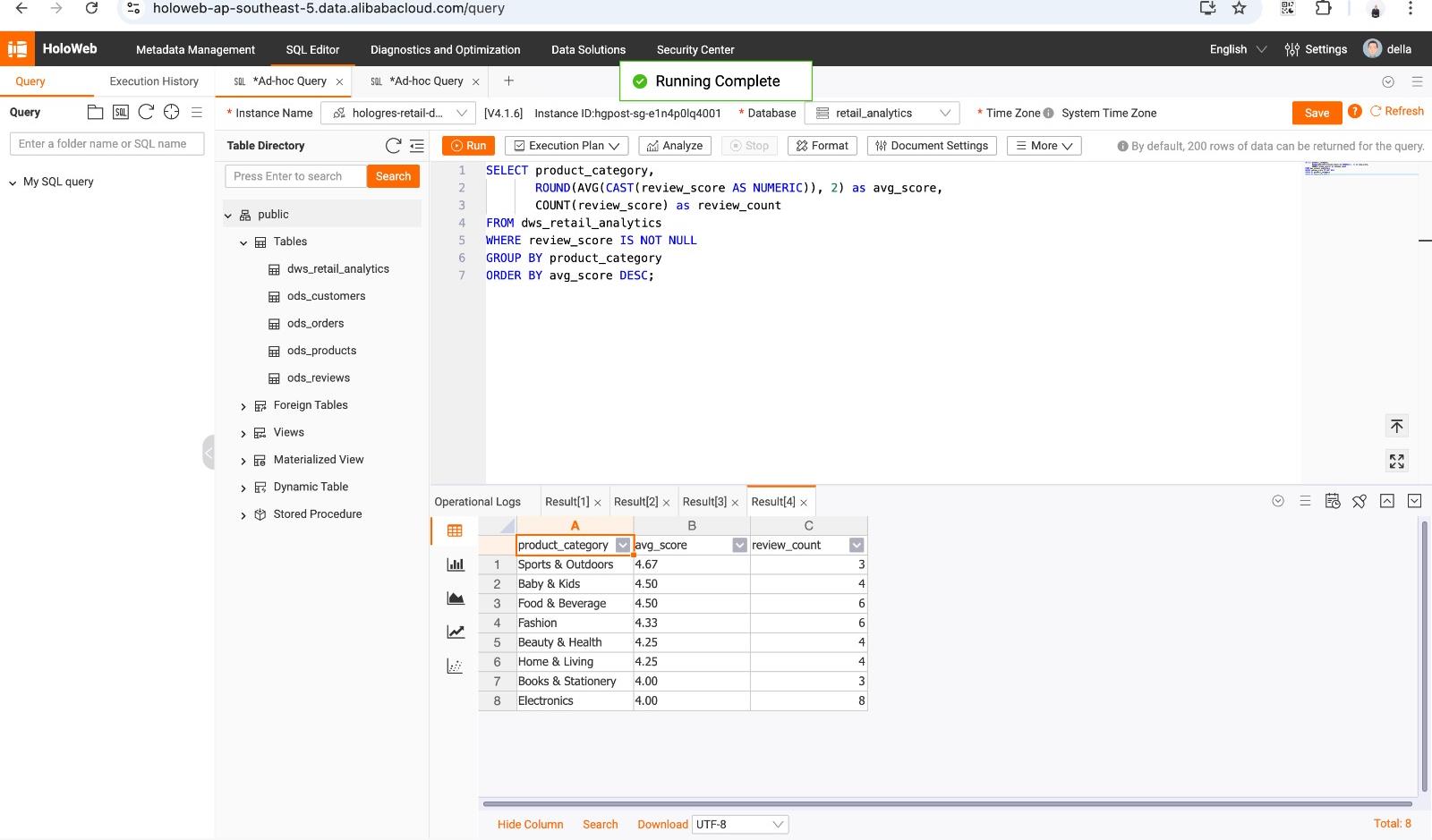
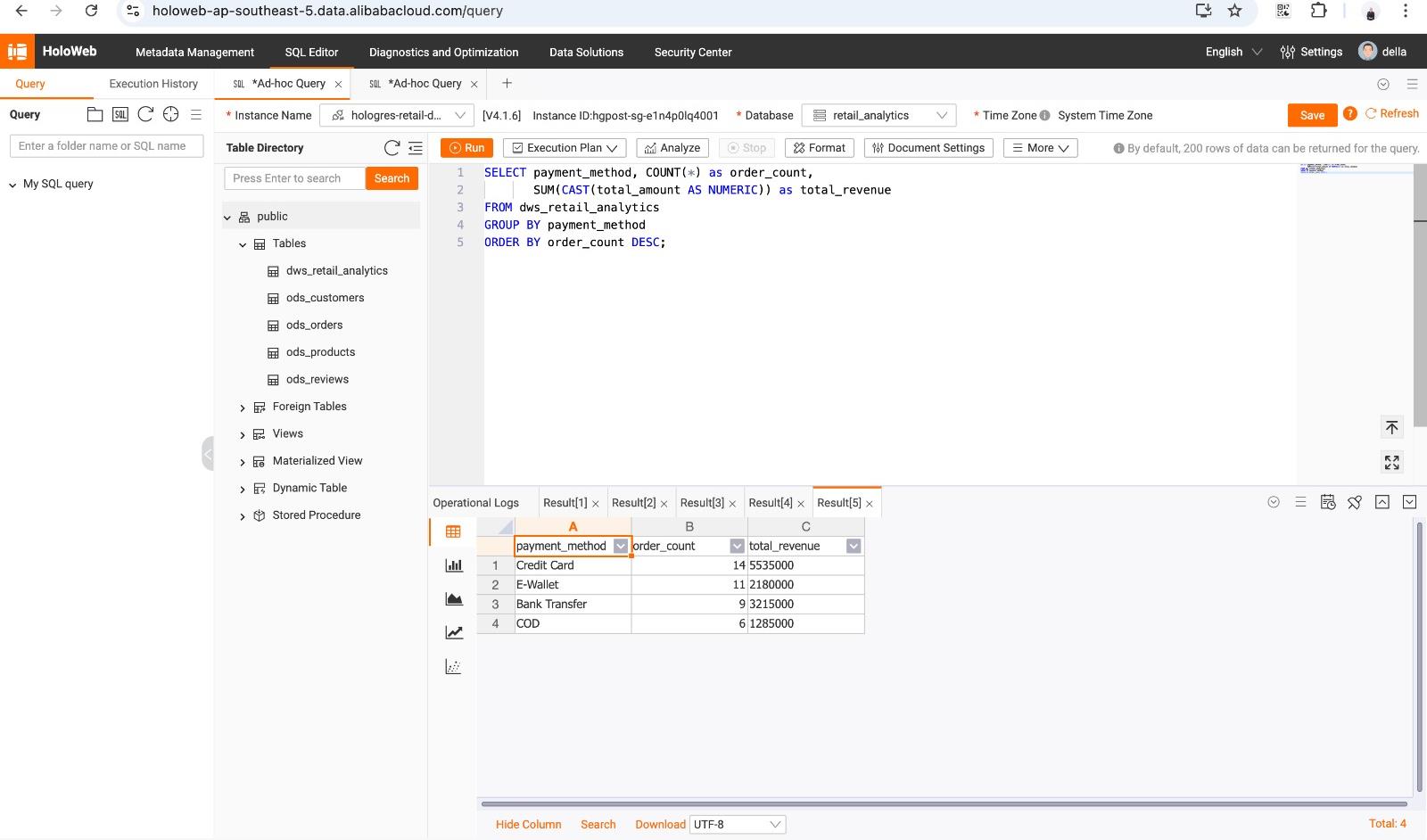
The following example shows the output of the analytical query executed in Hologres. The query aggregates the number of orders and total revenue grouped by payment method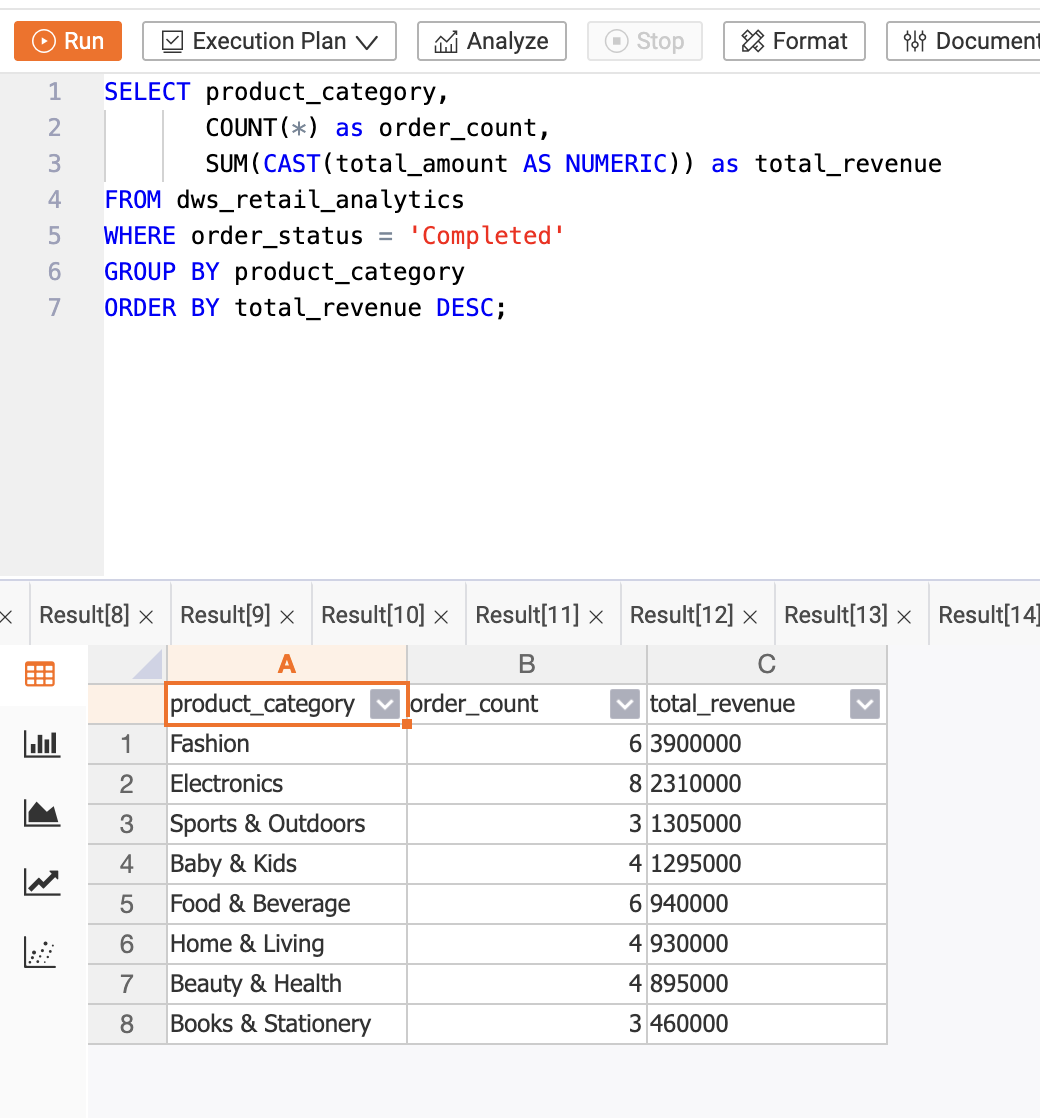
From the results, we can observe how different product categories contribute to overall order volume and total revenue. The Fashion category generates the highest revenue despite having a moderate number of orders, indicating a higher average transaction value. Meanwhile, Electronics also shows strong performance with both high order count and revenue.
On the other hand, categories such as Books & Stationery and Beauty & Health contribute relatively lower revenue, suggesting either lower pricing or smaller purchase volumes. This distribution highlights that revenue is not solely driven by order count, but also by the value of each transaction.
These insights help retail teams identify high-performing categories, optimize pricing strategies, and prioritize inventory or marketing efforts toward segments with the highest revenue potential.
This article demonstrates how a retail analytics pipeline can be implemented using services from Alibaba Cloud. By combining:
organizations can build a flexible data architecture capable of processing and analyzing retail datasets efficiently. This approach enables businesses to transform raw operational data into structured datasets that support data exploration, reporting, and decision-making.
Bring AI to Your Data: Orchestrating Web Research and Internal Databases with Dify
Building a Lightweight Customer Analytics Pipeline with OSS and Tair Redis on Alibaba Cloud

9 posts | 0 followers
FollowApache Flink Community - August 14, 2025
Della Wardhani - March 31, 2026
Della L. Wardhani - June 13, 2026
Apache Flink Community - March 20, 2025
Alibaba Cloud Big Data and AI - January 21, 2026
Alibaba Cloud Community - July 10, 2025
9 posts | 0 followers
Follow Big Data Consulting Services for Retail Solution
Alibaba Cloud experts provide retailers with a lightweight and customized big data consulting service to help you assess your big data maturity and plan your big data journey.
Learn More Hologres
A real-time data warehouse for serving and analytics which is compatible with PostgreSQL.
Learn More Big Data Consulting for Data Technology Solution
Alibaba Cloud provides big data consulting services to help enterprises leverage advanced data technology.
Learn More OSS(Object Storage Service)
An encrypted and secure cloud storage service which stores, processes and accesses massive amounts of data from anywhere in the world
Learn MoreMore Posts by Della L. Wardhani

