By Xueren
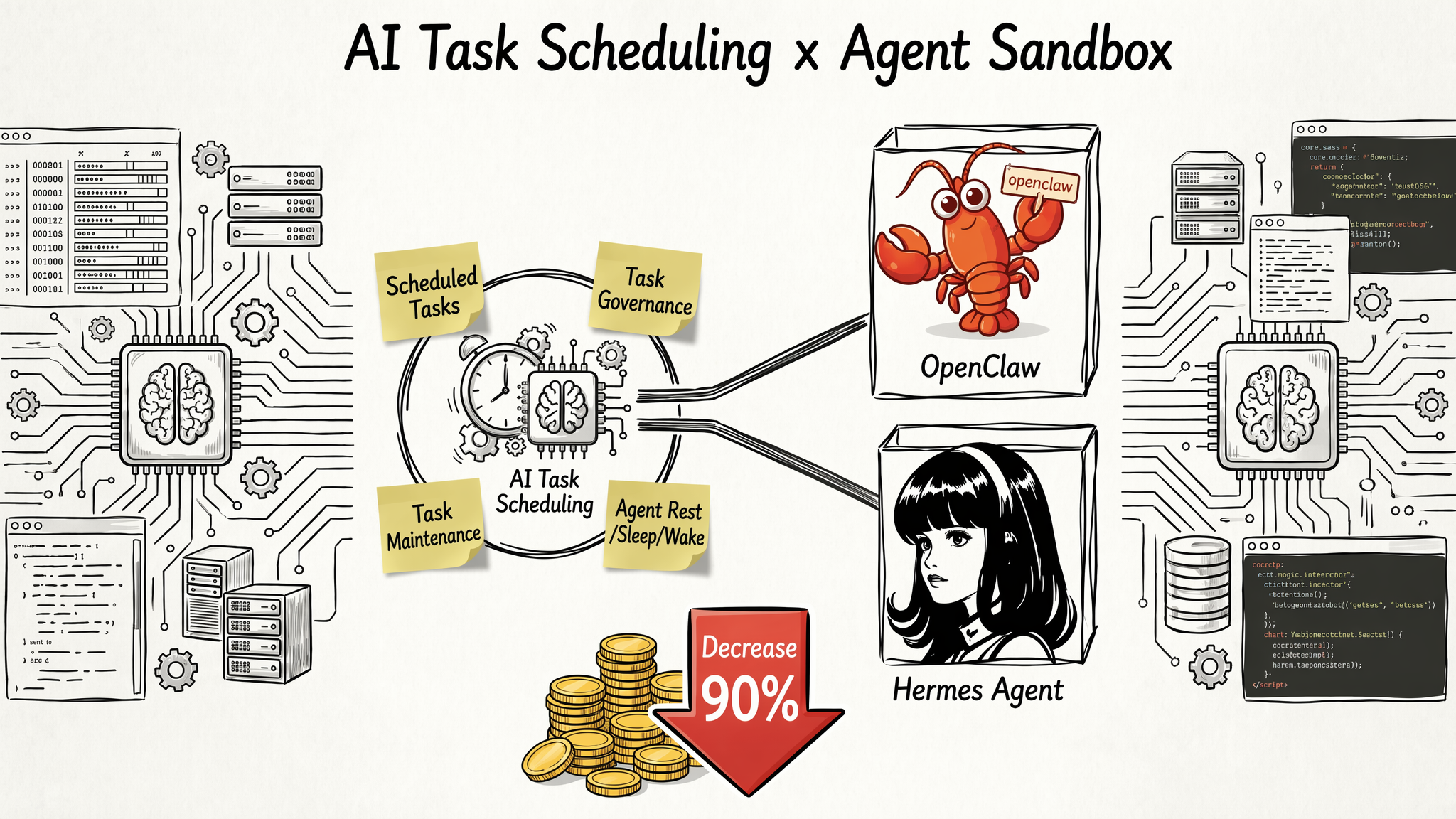
As AI model capabilities become stronger and Agent frameworks become more mature, Agents are evolving from Q&A assistants to personal ass istants that can autonomously execute tasks and perform automated work on behalf of humans. Scheduled tasks are the primary way Agents work autonomously. Recently popular general agents (such as OpenClaw) have built-in scheduled task functions.
Under the current trend of continuous computing resource shortages and rising corporate IT expenses, Agents generally face the dilemma of low resource utilization and high costs. The Alibaba Cloud Middleware Team has officially launched the AI Task Scheduling product to centrally manage and schedule Agent scheduled tasks. It provides highly stable, highly secure, and observable AI task solutions. Combined with Agent Sandbox runtime, it can achieve dynamic sleep/wake-up for Agents, helping to reduce costs by more than 90%.
For individual users, the Agent is deployed on a local PC, configured with a few scheduled tasks to work automatically, which does not incur extra costs for the user. However, a personal computer cannot remain powered on 24/7, so corporate users choose to deploy Agents in the cloud.
For traditional Web applications, the computing layer and the storage layer are generally separated to achieve statelessness, and both layers can be shared across multiple tenants, resulting in relatively high resource utilization. However, Agents (taking OpenClaw as an example) have the following characteristics:
This determines that Agents like OpenClaw cannot improve resource utilization through multi-tenant shared resources like traditional Web applications, as shown below:
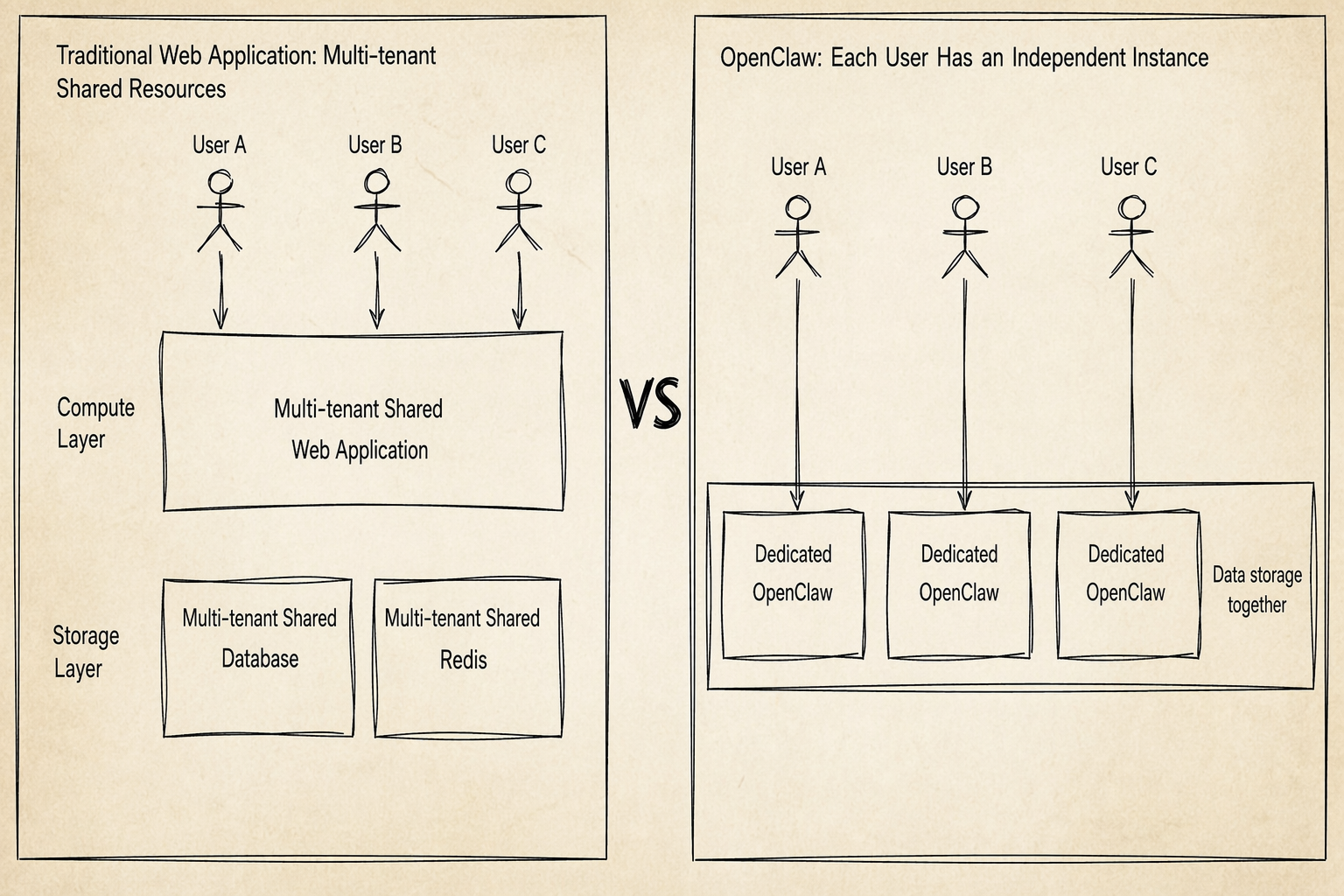
Summary: AI Agents require exclusive ownership due to context isolation and security needs; they are idle most of the time with low resource utilization, but because of local persistence, statefulness, and other reasons, they cannot be destroyed or scaled down; this results in Agent costs being much higher than traditional Web applications.
Agent Sandbox is a sandbox runtime designed for AI Agents to achieve secure isolation of Agents. Taking ACS Agent Sandbox as an example, it is a production-level sandbox computing capability for AI agents launched by Alibaba Cloud Container Service. It provides MicroVM-level isolated runtime environments, memory-level sleep and wake-up capabilities, Checkpoint cloning capability, and large-scale elastic scaling capability of up to 15K Sanboxes per minute. It is fully compatible with the native Kubernetes ecosystem and seamlessly interfaces with mainstream AI Agent frameworks and tools like E2B SDK and AgentScope.
If Agent Sandbox is used alone, it cannot achieve dynamic sleep/wake-up for OpenClaw because OpenClaw's native scheduled tasks are built into the Gateway process. Agent Sandbox cannot sense when a task needs to be executed, nor when the system is idle. Therefore, it needs to be used in combination with AI Task Scheduling, as shown below:
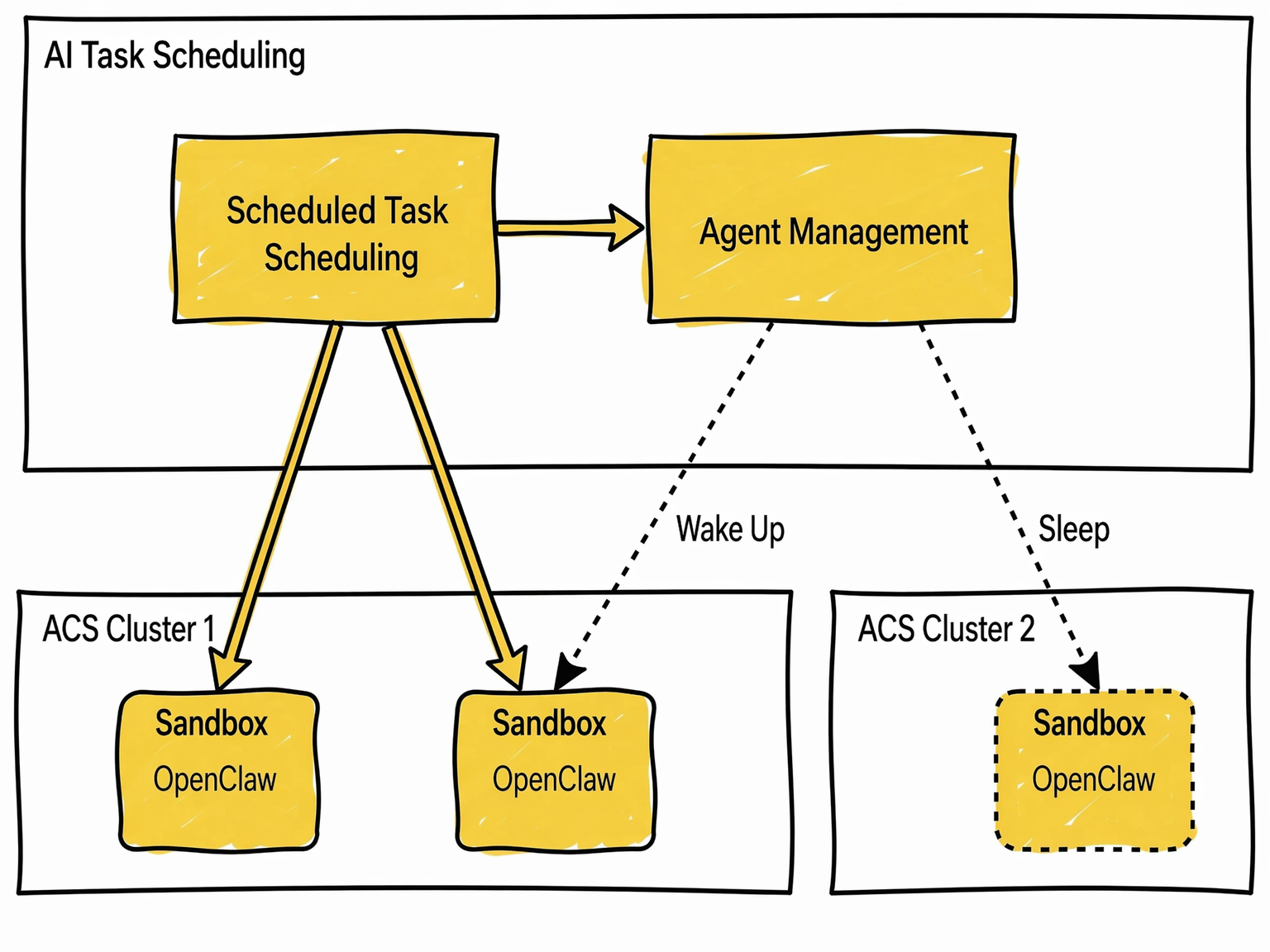
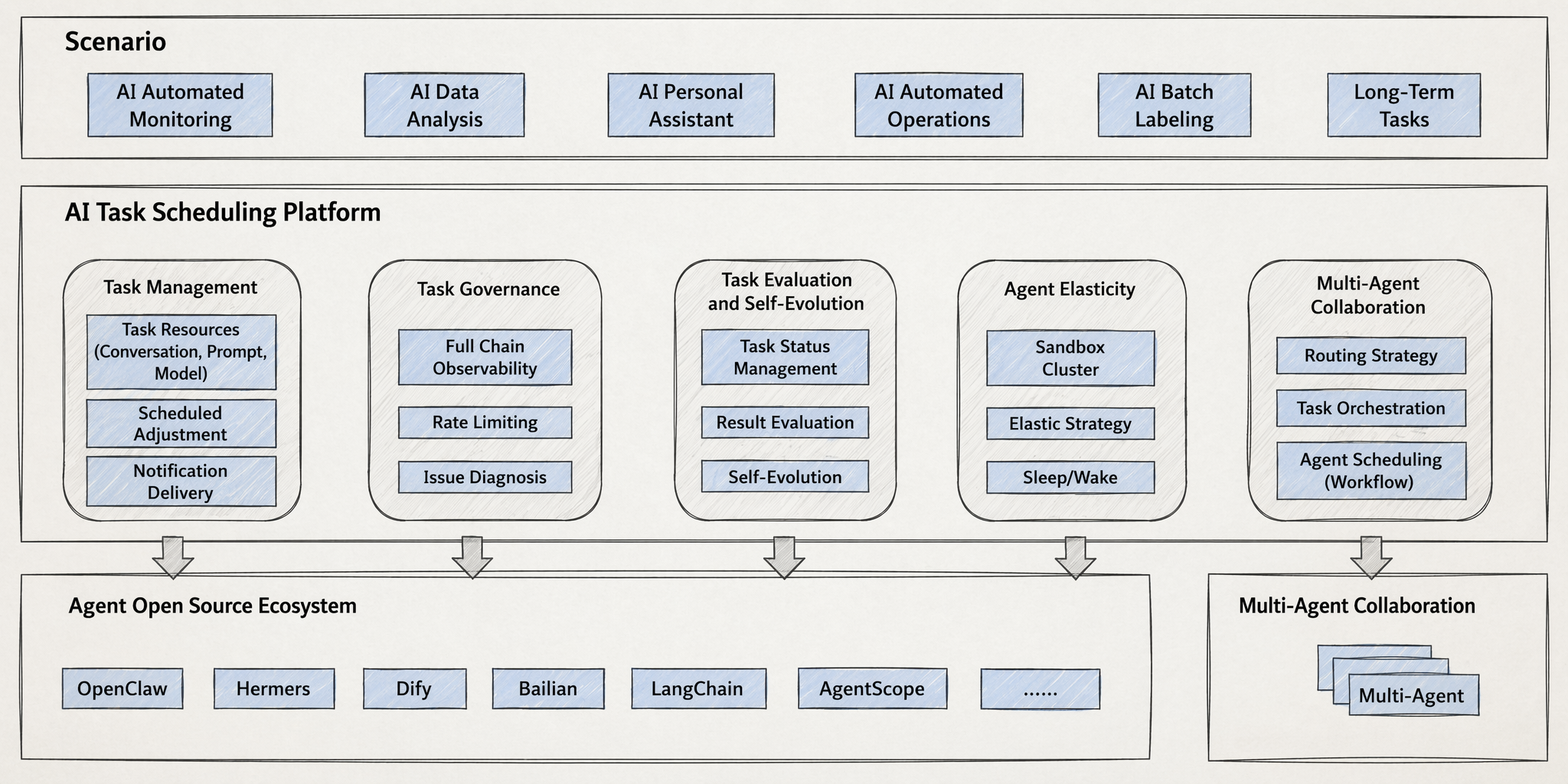
In addition to sandbox scheduled sleep/wake-up, AI Task Scheduling also provides the following capabilities:
Suppose OpenClaw has 5 scheduled tasks:
Using the AI Task Scheduling + Sandbox sleep capability, sleep is triggered when there are no tasks for the next 15 minutes, and a proactive wake-up is triggered when tasks are scheduled in the next 10 minutes:
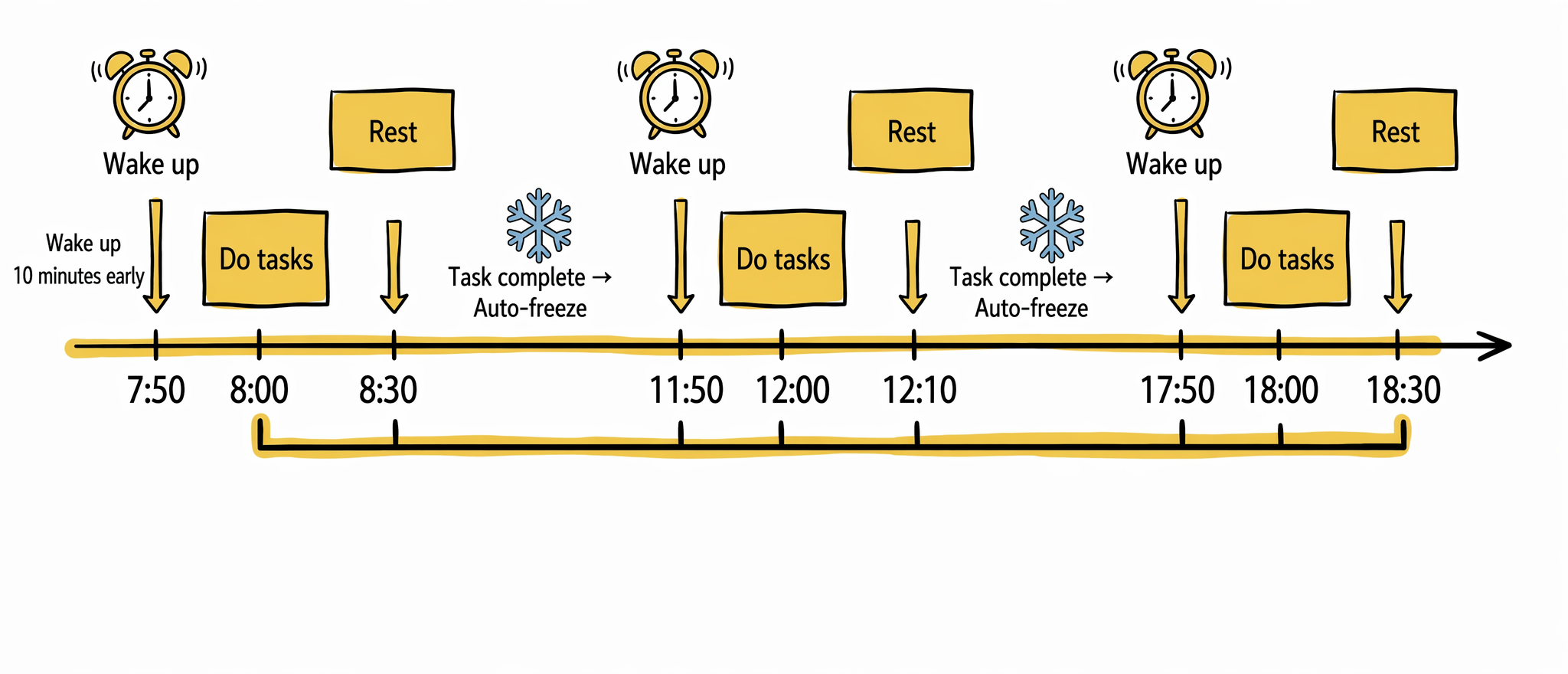
As shown in the figure above, in a 24-hour day, OpenClaw only works for 100 minutes, reducing costs by 90%+.
For more information:
[1] AI Task Scheduling
https://mse.console.alibabacloud.com/#/auth
[2] Agent Sandbox
https://agent-sandbox.sigs.k8s.io/
[3] ACS Agent Sandbox
https://www.alibabacloud.com/help/cs/user-guide/agent-sandbox

773 posts | 60 followers
FollowAlibaba Container Service - January 15, 2026
Alibaba Cloud Native Community - October 11, 2025
Alibaba Clouder - January 21, 2020
Alibaba Container Service - March 12, 2026
Alibaba Cloud Native Community - February 10, 2026
Farruh - June 9, 2026
773 posts | 60 followers
Follow Token Plan
Build more, spend less. One plan, every modality.
Learn More QwenWork
QwenWork is dedicated to helping employees strengthen their professional competitiveness in the AI era and to enabling enterprises to improve organizational effectiveness.
Learn More
Alibaba Cloud Model Studio
A one-stop generative AI platform to build intelligent applications that understand your business, based on Qwen model series such as Qwen-Max and other popular models
Learn More Qwen
Qwen
Full-range, open-source, multimodal, and multi-functional
Learn MoreMore Posts by Alibaba Cloud Native Community

