The subscription feature in Quick BI lets you send reports as screenshots or attachments to users on a schedule. This topic describes how to create a subscription task and send it through various channels, such as email, DingTalk, Feishu, Lark, and custom channels.
Limitations
The subscription feature is available only in Quick BI Advanced Edition and Professional Edition.
The Professional Edition also supports handling empty charts to prevent sending invalid content.
Procedure
Log on to the Quick BI console.
In the top navigation bar, click
 Subscriptions.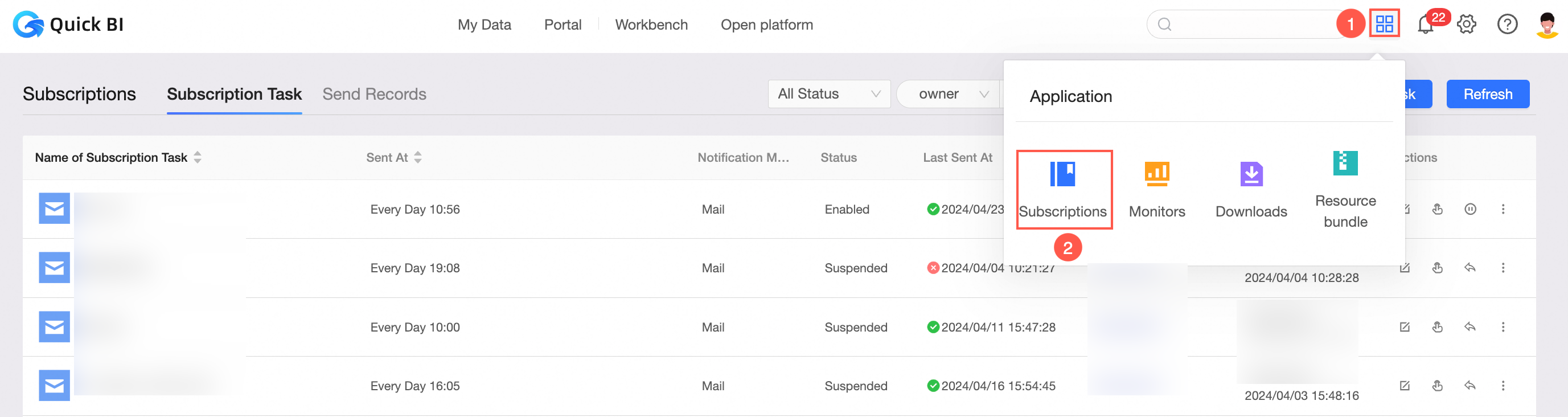
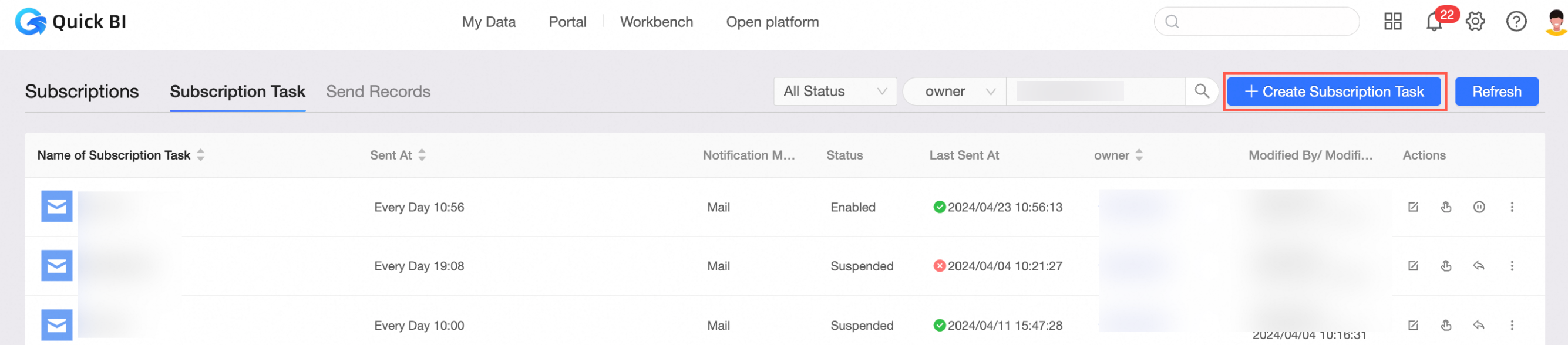
On the Subscriptions page, on the Subscription Task tab, click + Create Subscription Task.
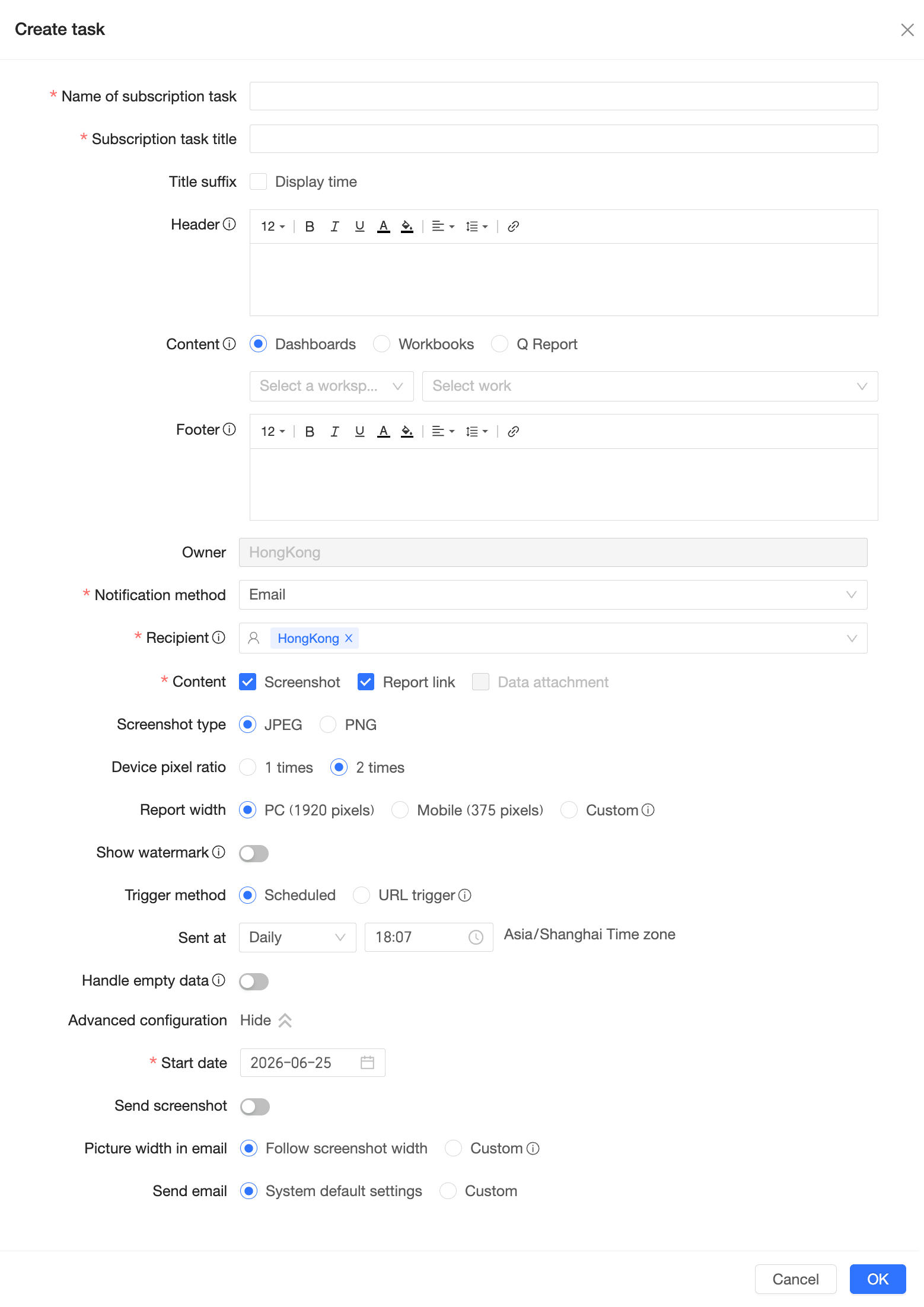
On the Create Task page, configure the following parameters.
Parameter
Description
Subscription task name
Enter a name to help you manage the subscription task. For example, you can name it Finance Department Daily Business Report.
Subscription task title
Enter a subject for the message.
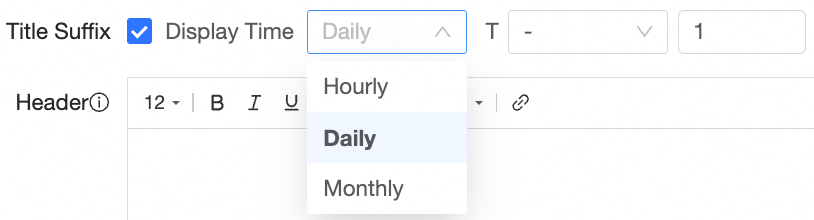
Title suffix
Choose whether to add a timestamp suffix to the subject.
You can set the time granularity to month, day, or hour. The timestamp reflects the time of sending.
Header
Enter header content to appear before the report in the message body.
You can format the text by adjusting font size, bold, italics, underline, font color, background color, alignment, and line spacing. You can also insert hyperlinks.

Content
Select a workspace and the type of report to embed. Supported report types are dashboard and workbook.
When you select dashboard, you can choose to subscribe to All content or Partial content to enable component-level subscriptions.
All content: Subscribes to all components in the dashboard by default.
Partial content: Allows you to select multiple components, including chart components and the dashboard interpretation component.
NoteYou can select up to 50 components.
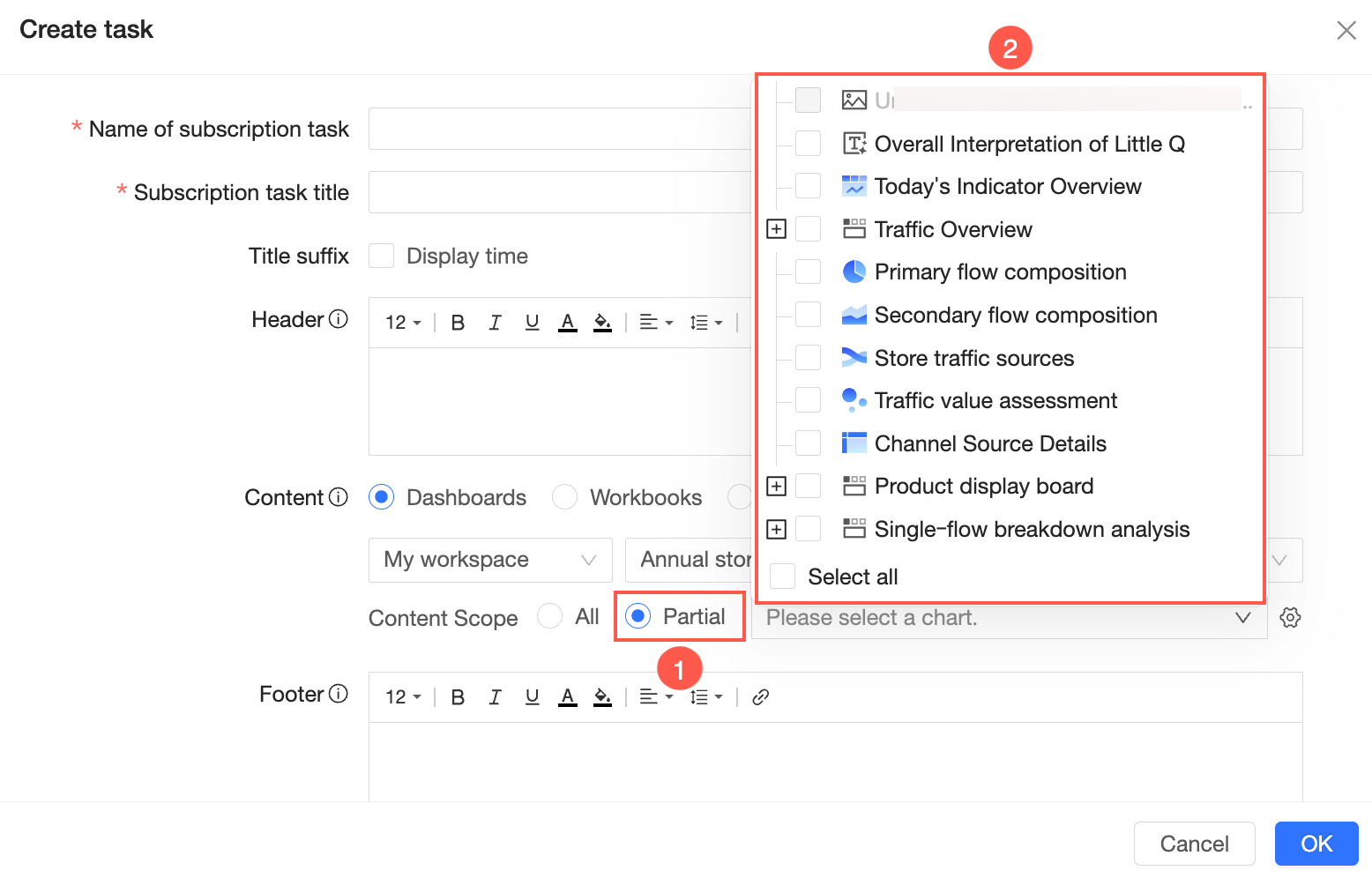
Chart components
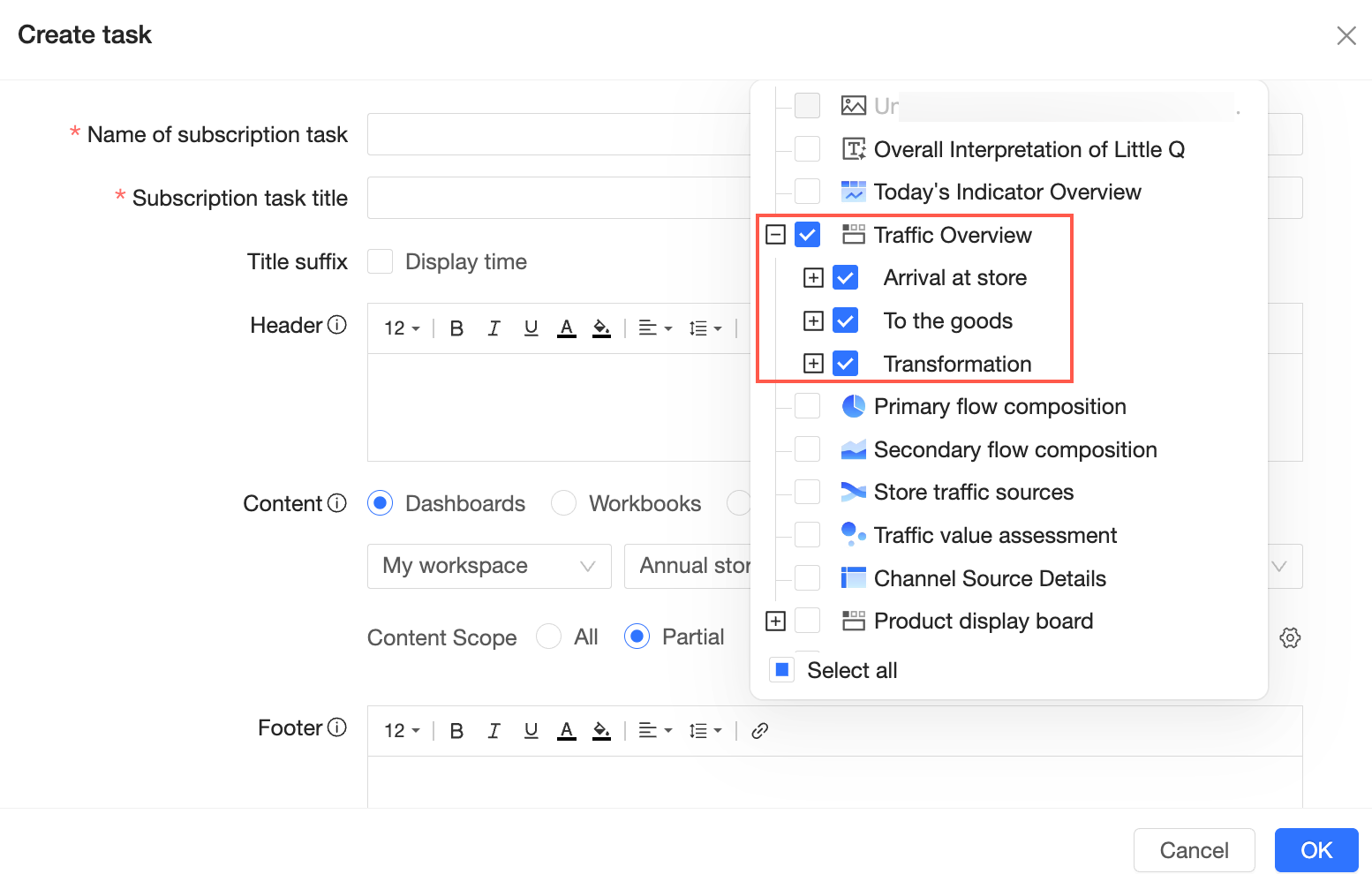
You can select charts on the canvas or within a tab. Selecting a tab selects all charts within it.
Dashboard interpretation component
You can select the dashboard interpretation component.
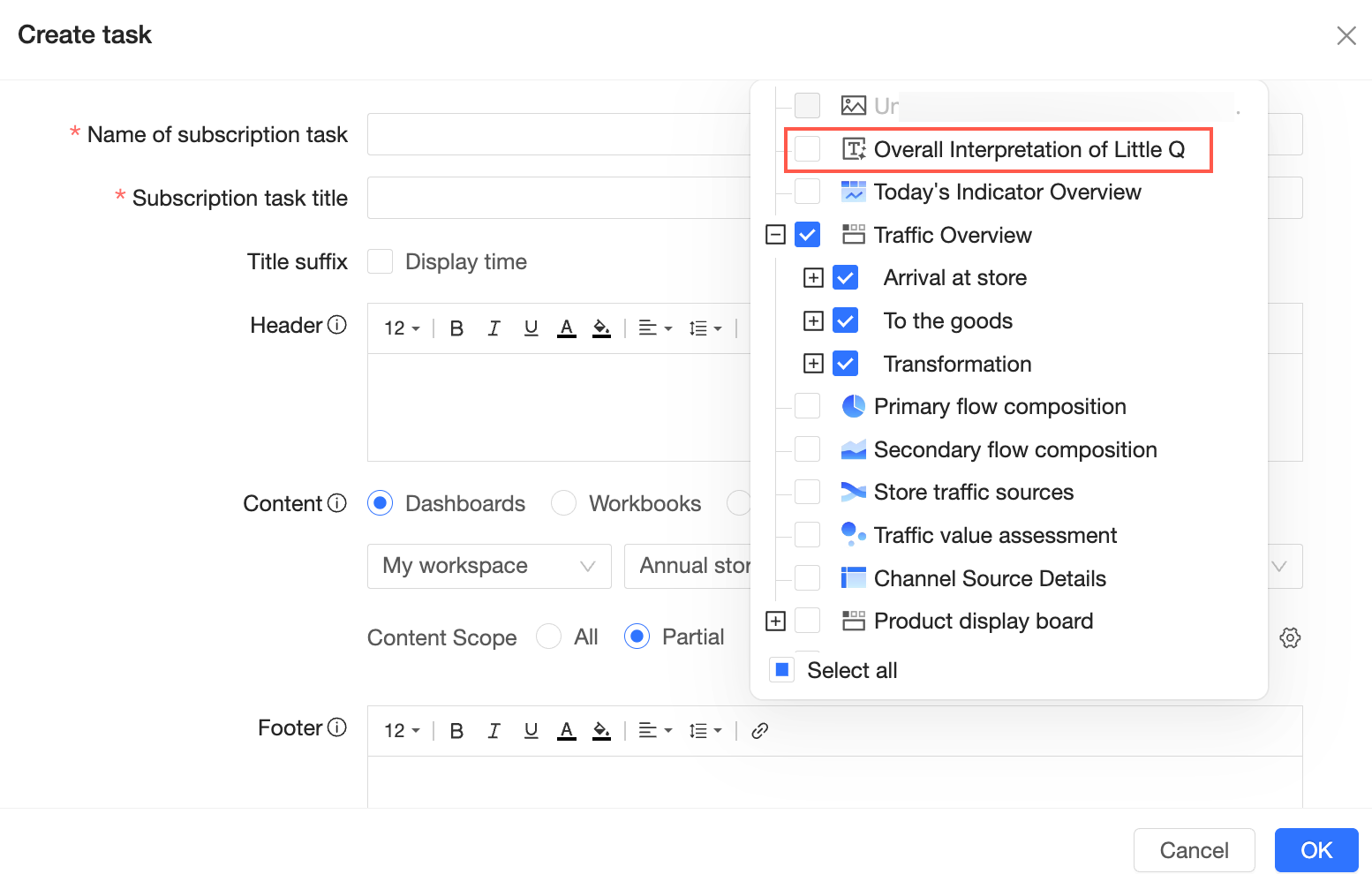
For more information, see Dashboard interpretation component.
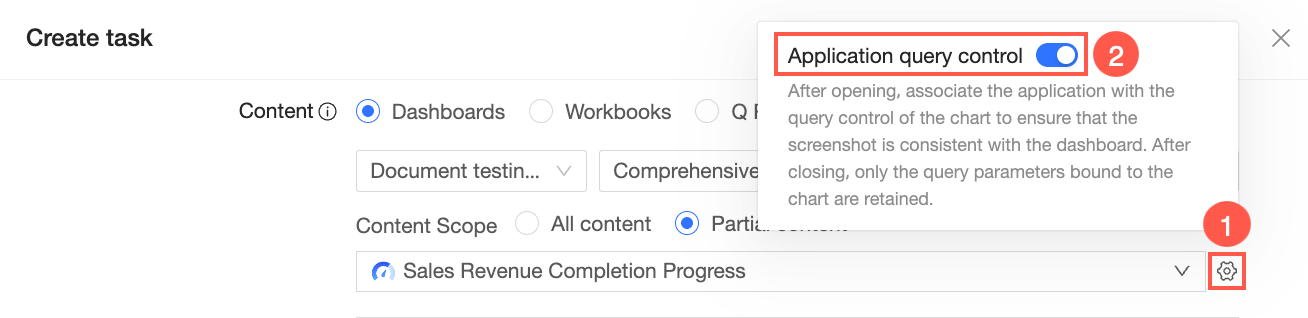
Apply query controls
Click the
 icon on the right to enable Apply query controls as needed.
 Note
NoteWhen enabled, query controls associated with the charts are applied to ensure the screenshot reflects the dashboard's current state.
When disabled, only the query parameters bound to the charts are retained.
When you select workbook, you need to configure the workspace and the specific workbook to subscribe to.

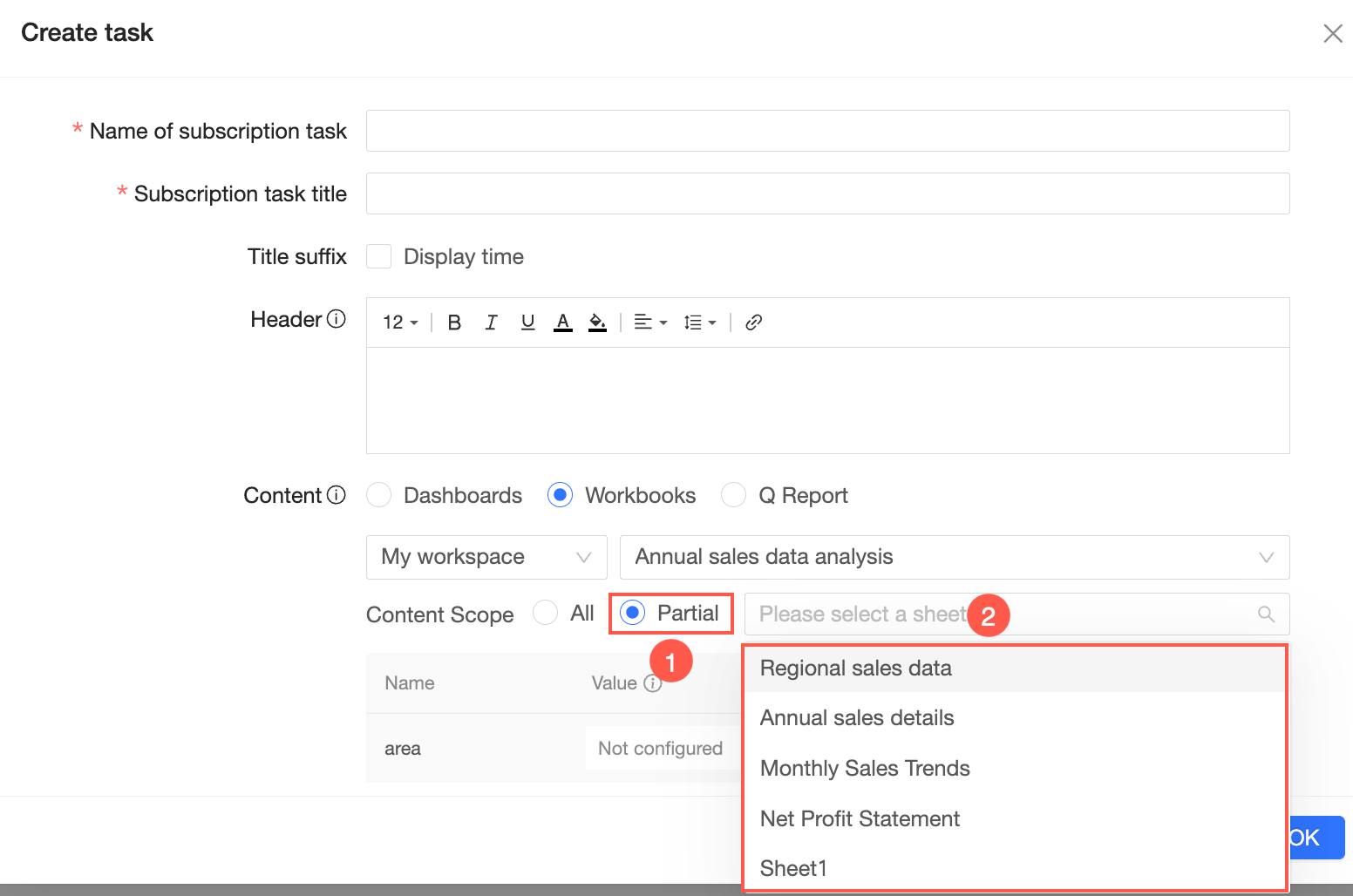
You can subscribe to All content or Partial content within a workbook to enable sheet-level subscriptions.
All content: Subscribes to all sheets in the workbook by default.
Partial content: Allows you to select multiple sheets.
NoteYou can select up to 50 sheets.
Partial content subscription is not supported for legacy workbooks. To use this feature, open and edit the workbook to upgrade it to the latest version before subscribing.
When you select Intelligent Q Report, the list displays all reports in your organization for which you have View permissions. Select a report as needed.

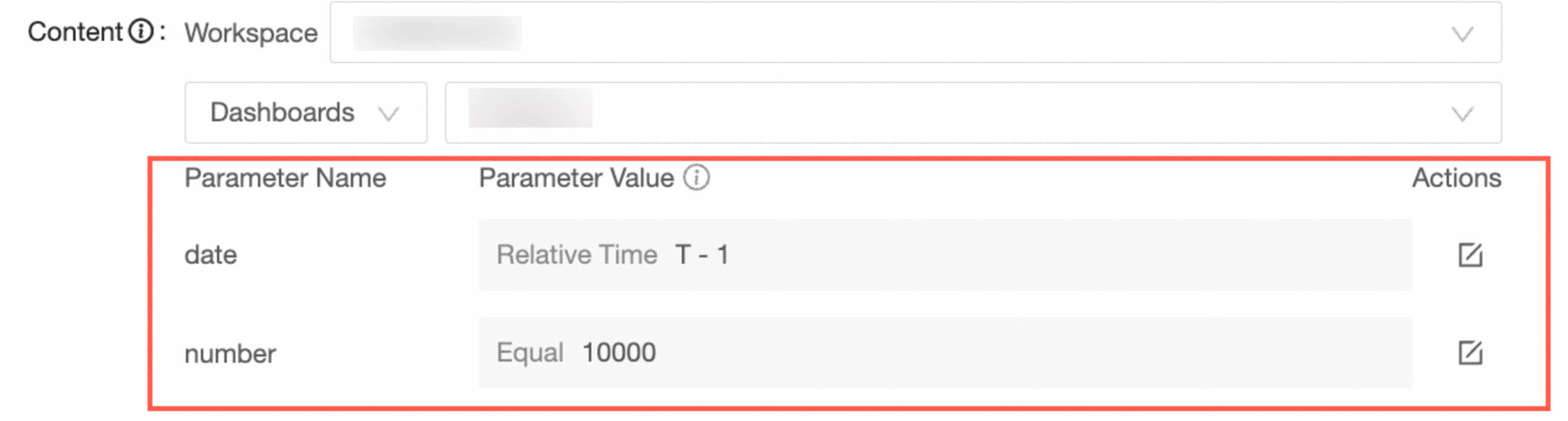
NoteYou can use global parameters to dynamically control the subscription content. For information about how to configure global parameters, see Configure global parameters.
Footer
Enter footer content to appear after the report in the message body.
You can format the text by adjusting font size, bold, italics, underline, font color, background color, alignment, and line spacing. You can also insert hyperlinks.

Owner
By default, this is the creator of the subscription task. You can transfer ownership to another user in the subscription task list. For more information, see Transfer ownership.
Notification method
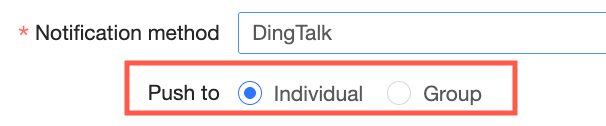
Supported methods include Mail, DingTalk, Feishu, Lark, Slack, Google Sheets, Google Drive, and Custom Channel. For DingTalk, Feishu, Lark, and custom channels, you can choose to send notifications to individuals or groups.
 Note
NoteThe Advanced Edition supports only the Mail method.
Recipients, recipient groups
If the notification method is Mail:
You can select multiple recipients. All recipients must be Alibaba Cloud accounts within the same organization.
NoteIf a recipient's name is grayed out, it means no email address is associated with that account. Ensure all recipients have configured their email addresses.
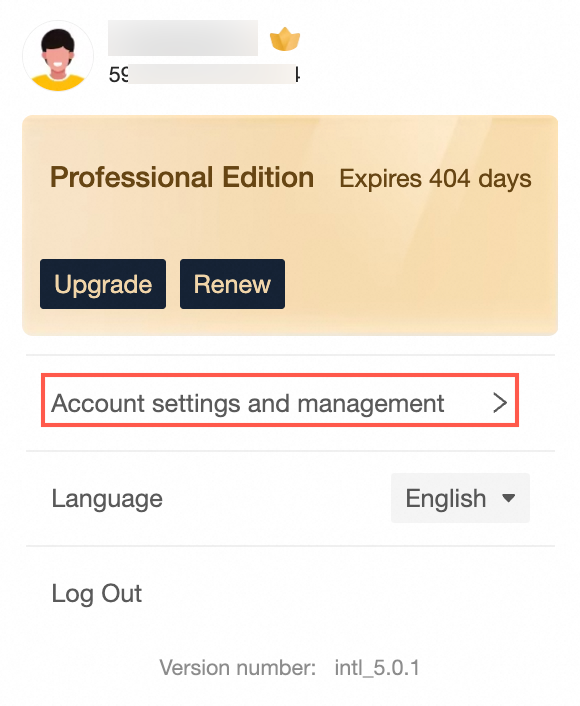
You can associate an email address for receiving subscriptions in Account Settings & Management. To do this:
Hover over your profile picture in the upper-right corner.
From the drop-down menu, select Account Settings & Management.
On the Account Binding tab of the Account Settings & Management page, associate an email address for receiving subscription tasks.
If the notification method is DingTalk, Feishu, or Lark:
To send to individuals:
You can select multiple recipients. All recipients must be Alibaba Cloud accounts within the same organization.
To send to a group:
Select a recipient group and choose whether to use a custom webhook.
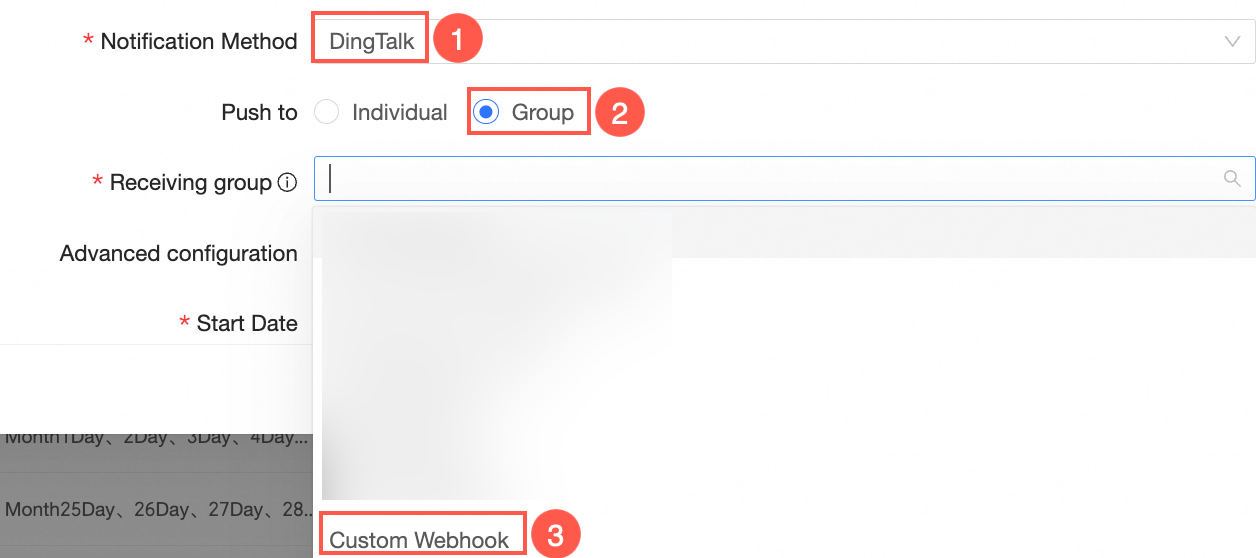
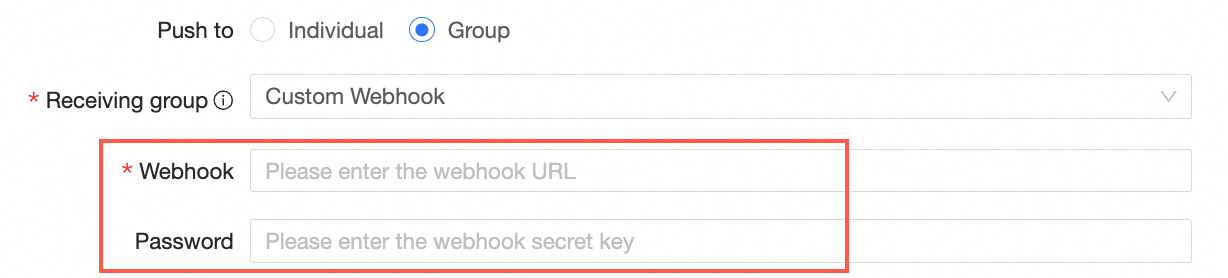
If you use a custom webhook, you must enter the Webhook URL and secret key. To get a DingTalk group bot Webhook URL, see DingTalk Bot Channel.
The secret key is the signing key value from your custom channel configuration.
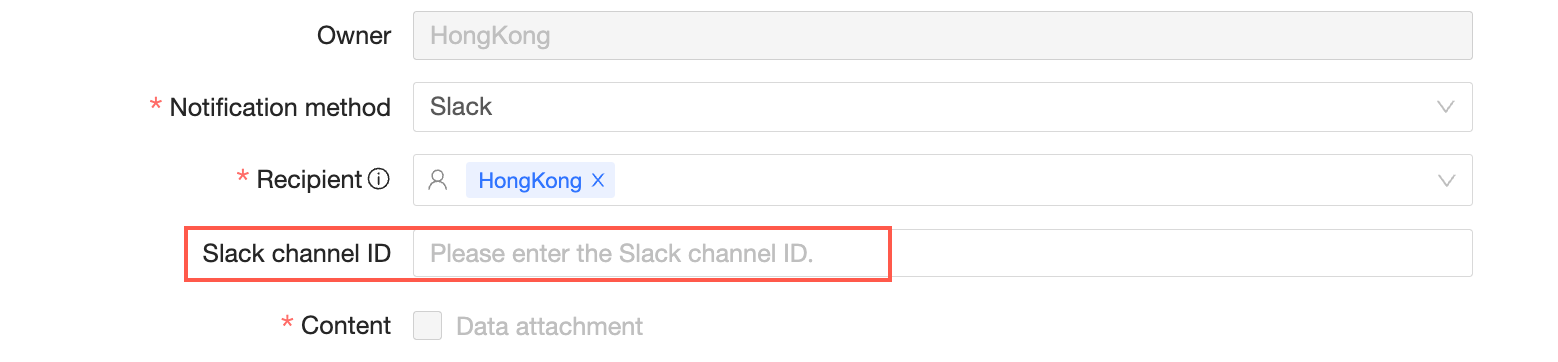
If the notification method is Slack:
Recipients are users who have linked their Slack accounts.
You must enter the Slack Channel ID. For instructions, see Slack App Configuration Guide.
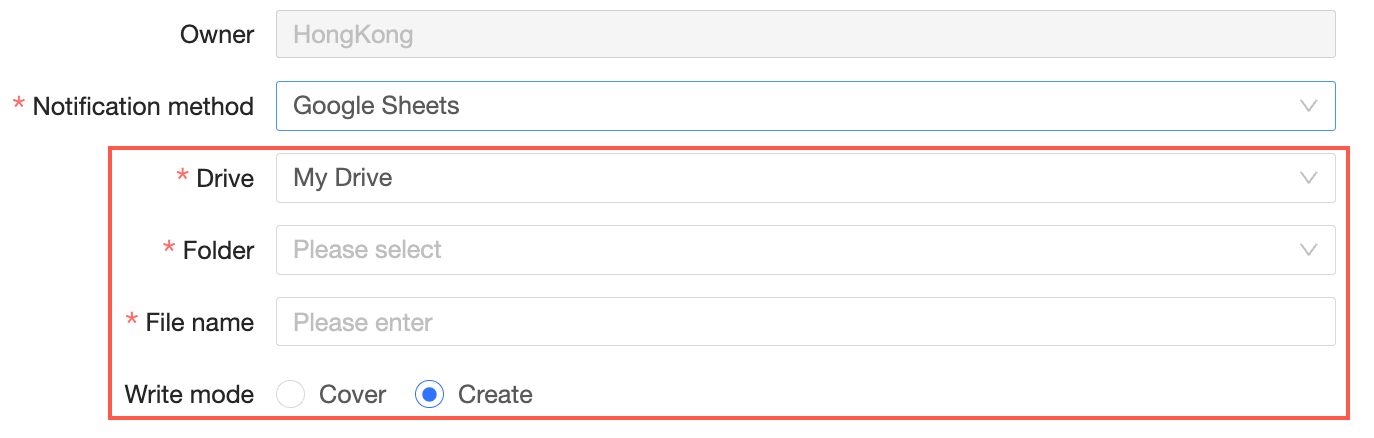
If the notification method is Google Sheets or Google Drive:
NoteThis option is available when the subscribed content is a dashboard or workbook.
Select a Drive and folder, enter a file name, and choose a write mode: Overwrite or Create new.
If the notification method is Custom Channel:
Recipient channel
Select a pre-configured custom channel. To learn how to create one, see Custom channels.
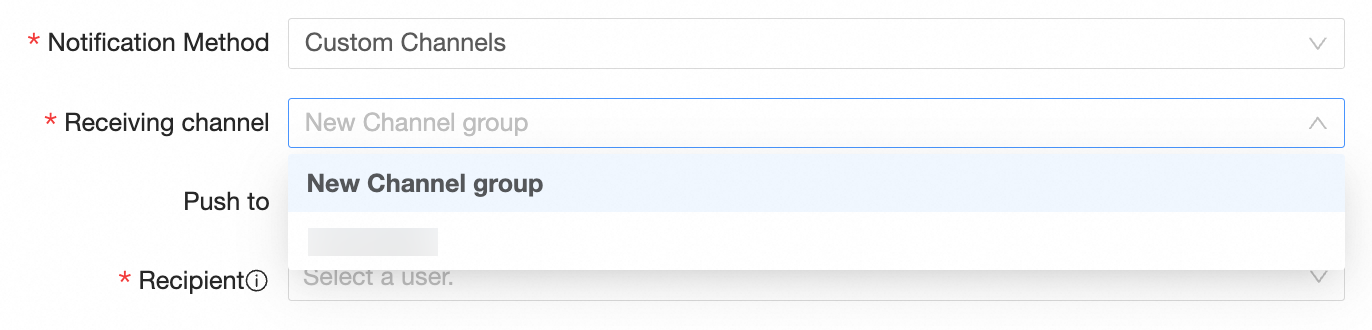
To send to individuals:
You can select multiple recipients. All recipients must be Alibaba Cloud accounts within the same organization.
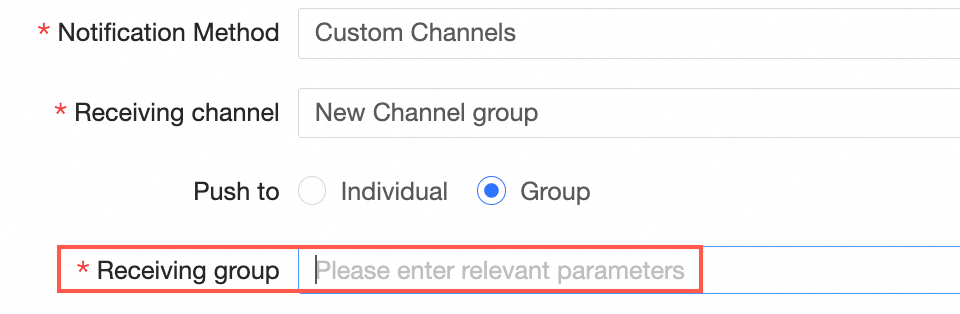
To send to a group:
Enter the parameters required by the custom channel.
Content to send
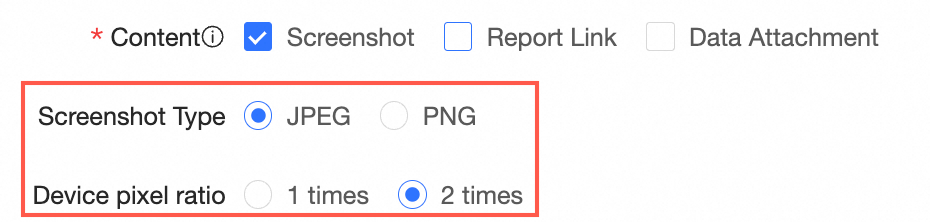
Select the content to send. Options include Screenshot, Report Link, and Data Attachment.
NoteSending a Data Attachment is only supported if the Notification Method is Mail or Slack, the report allows attachments to be downloaded, and the user has export permissions for the content.
Screenshot type
If Content to Send includes Screenshot, you can set the format to JPEG or PNG and select a pixel ratio of 1x or 2x.
Attachment type
Select the format for the data attachment. Supported formats are Excel and PDF.
NoteThis option is available only when Content to Send includes Data Attachment.
Excel content and data format
If Excel is selected as the attachment type, you can configure the following options.
Excel content: When subscribing to a dashboard, you can choose to include all content from the dashboard as the data attachment, or select a specific chart.

Data format: Set the Excel attachment content to Export with formatting or Raw data.
If you select Export with formatting, the Excel attachment retains the data formats and styles from crosstabs and detail tables.
NoteCurrently, only crosstabs and detail tables support exporting with formatting and styles. If the dashboard you are subscribing to does not contain these chart types, you cannot configure this option.
If you select Raw data, the Excel attachment contains only plain text data.
Page orientation
If Attachment Type includes PDF, you can set the page orientation to Portrait or Landscape.
We recommend a portrait orientation if the workbook or dashboard chart has many rows, and a landscape orientation if it has many columns.

Report width
Sets the width of the output image in pixels.
For dashboards, the default width is 1920 pixels for PC view and 375 pixels for mobile view.
For workbooks, the default width for PC view is 1920 pixels. You can customize the resolution for mobile view based on the number of data columns.
Display watermark
If enabled, the task creator's watermark is displayed on subscription screenshots and attachments. Ensure that the watermark switch is also enabled in the report itself.
Trigger method
Select how to trigger the subscription task. Supported methods are Scheduled Trigger and URL Trigger.
Scheduled Trigger: Delivers the subscription task at a specified time, for example, daily at 16:35.

URL Trigger: The system generates a unique trigger URL (a webhook address) for the subscription task. You can trigger the task by making a request to this URL.
After you configure the subscription task, click OK. The trigger URL for the task appears in the Configure URL Trigger dialog box. You can also copy this URL later from the Subscriptions page in the Trigger Method column. For more information, see Obtain a URL trigger address.
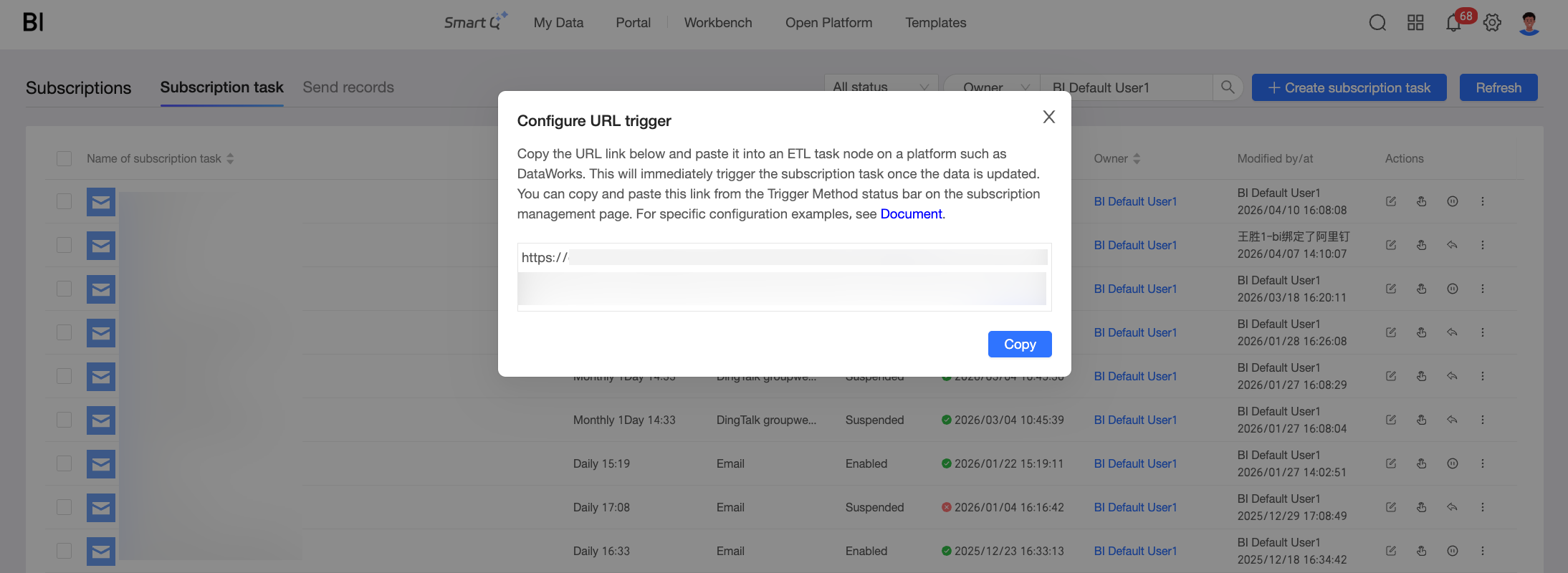
After you get the URL, you can integrate it into external systems or automation workflows to trigger the subscription task on demand.
Handling for empty data
When the content is a dashboard and the trigger method is Scheduled Trigger, you can configure how the system handles empty charts to reduce unnecessary deliveries.
Click the toggle (
 ) to enable this feature, and then click the settings icon (
 ) to configure the rules in the dialog box.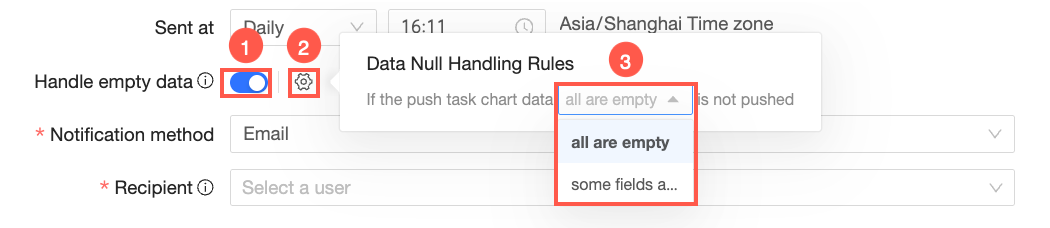
When enabled, if the chart data is empty, the system delays delivery and retries every 30 minutes. The number of retries depends on the delivery schedule, with a maximum of four retries. If the data is still empty after all retries, the subscription task fails, and a notification is sent to the task creator.
NoteThe following dashboard components are not checked for empty content:
Query controls
Rich text
Intelligent Q interpretation component
Storylines
Notes or endnotes in chart components
Advanced configuration
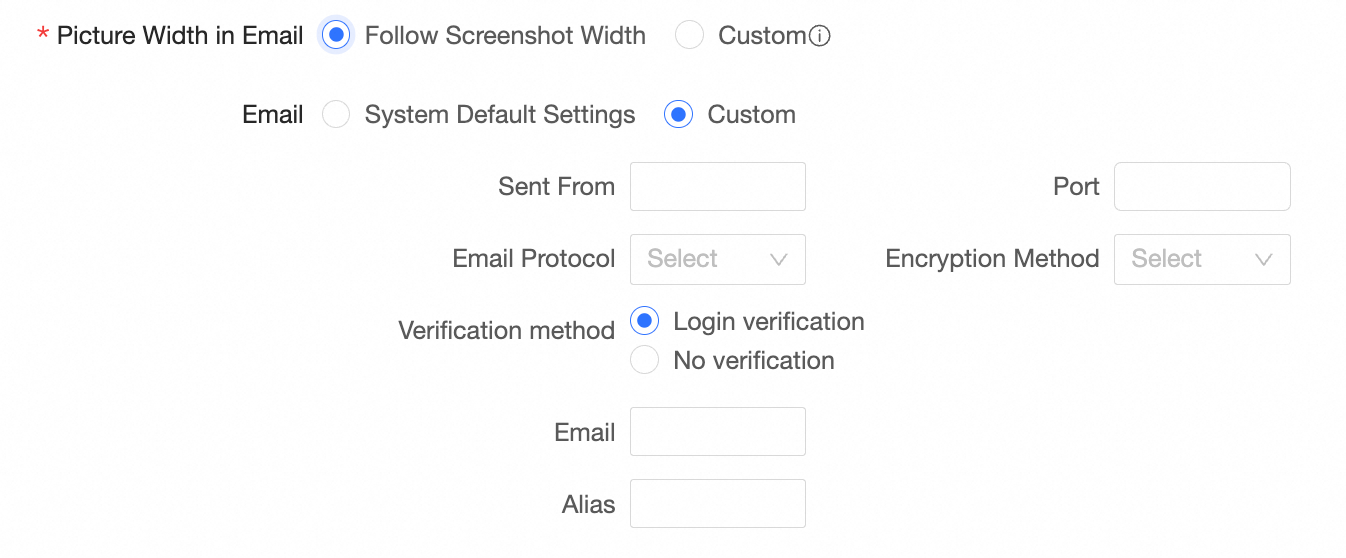
When the notification method is Mail, you can configure the following parameters:
Start Date: Sets the start date for the subscription task.
Slice and Send: Splits large images into multiple seamlessly stitched parts. This improves the viewing experience in email clients that compress oversized images.
Image Width in Email: If images do not display correctly in emails, you can set a fixed width.
Sending Mailbox: You can use the data platform's email service or a custom email server.
If you select a custom email server, you must configure the following:
Email and password: The account and password for the sender's email address.
Sending server and port: The SMTP address and port of the email server.
Mail protocol: Supports SMTP and SMTPS.
Encryption method: Supports SSL, STARTTLS, or no encryption.
If you select Login verification for Authentication method, you must provide the sender's Email, Password, and nickname. If you select No verification, a password is not required.
 Note
NoteThe Slice and Send and Sending Mailbox options are available only when the Notification Method is Mail.
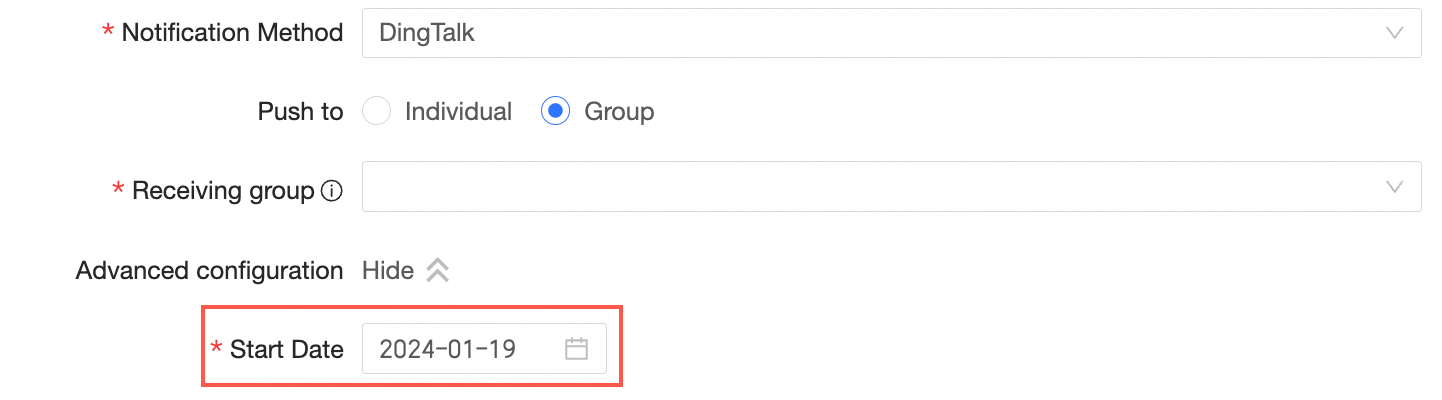
When the notification method is DingTalk, Feishu, or Lark, you can configure the following parameter:
Start Date: Sets the start date for the subscription task.
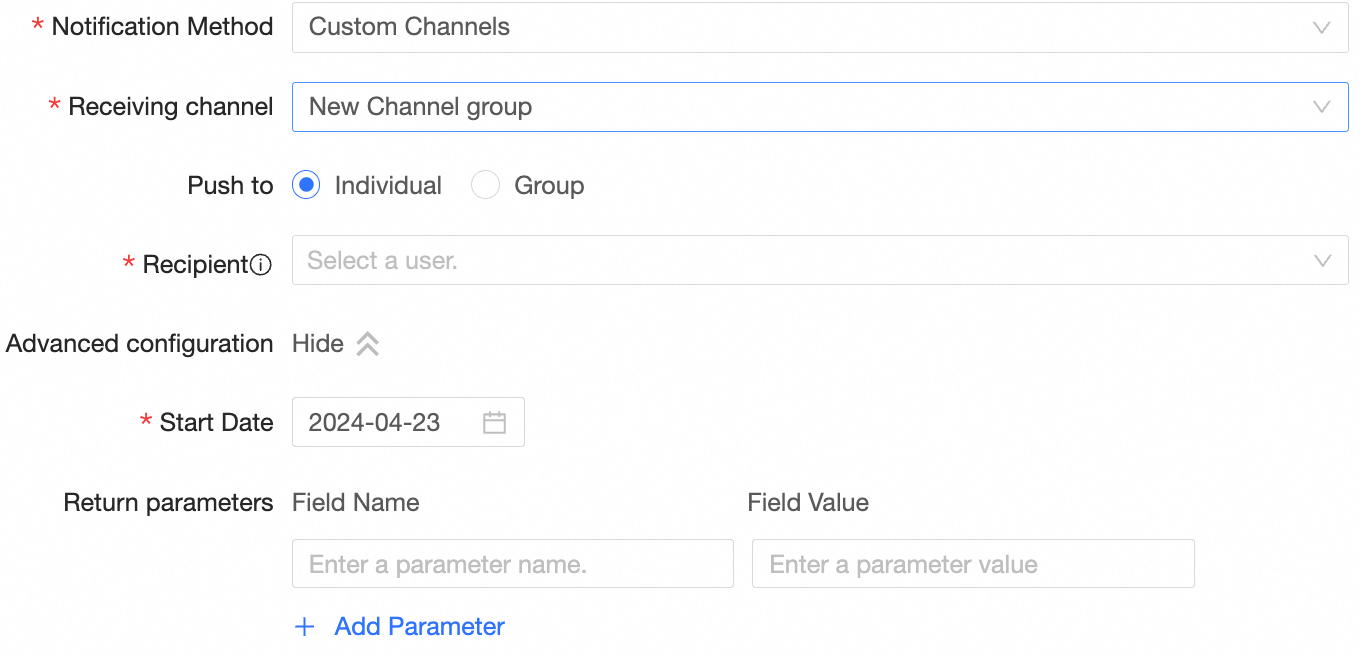
When the notification method is Custom Channel, you can configure the following parameters:
Start Date: Sets the start date for the subscription task.
Callback parameters: Configure custom key-value pairs to be sent with the callback. You can add up to 5 parameters.
Click OK to create the subscription task.
What to do next
After a task is created, you can manage it and view its delivery history. For more information, see Manage subscription tasks.