This topic explains how an organization administrator can add Feishu accounts to a Quick BI organization. You can add one or more Feishu accounts at a time.
Prerequisites
You have authorized Quick BI to access Feishu APIs. For more information, see Authorize Feishu APIs.
Background Information
Quick BI defines the following user types and roles at the organization level:
-
User Types
At the organization level, there are three user types:
-
developer: Includes corporate IT staff, data analysts, and data operations personnel.
-
analyst: A business user who analyzes data without needing deep technical skills.
Analysts analyze data by creating assets such as dashboards and spreadsheets.
-
viewer: A user who only views reports, such as an executive or a frontline business employee. Viewers can access dashboards, spreadsheets, and BI portals through URLs or subscriptions.
-
-
User Roles
-
Organization roles
Quick BI provides three pre-defined organization roles and supports custom organization roles.
-
organization administrator: Manages organization information, status, and members. They can also assign this role to other users.
We recommend assigning this role to 1 to 3 individuals, typically a project manager (PM) or BI platform administrators.
-
permission administrator: Manages permissions for resources within the organization. We recommend assigning this role to 1 to 3 individuals, typically BI platform administrators.
-
standard user: A user who is not an organization administrator or permission administrator.
-
custom organization role: Create custom roles based on your business needs. For more information, see Role Management.
-
-
Workspace roles
Quick BI provides four pre-defined workspace roles and supports custom workspace roles.
-
workspace administrator: Has create (edit), use, and view permissions for all modules. This is the most privileged role in a workspace. Workspace administrators can also manage permissions and assets for other members in the workspace.
-
workspace developer: Has create (edit), use, and view permissions for all modules.
-
workspace analyst: Has create (edit) and view permissions for BI portals, dashboards, large-screen dashboards, spreadsheets, ad hoc analysis, self-service data retrieval, and data preparation modules. This role also has view permissions for data entry and data sources, and use and view permissions for datasets.
-
workspace viewer: Has view permissions for all modules.
-
custom workspace role: Create custom roles based on your business needs. For more information, see Role Management.
-
-
Limitations
Only an organization administrator can add accounts from third-party systems as organization members.
You can only add users who have activated Quick BI Professional Edition.
Add Feishu Accounts
Log on to the Quick BI console.
On the Quick BI homepage, go to the User Management page.
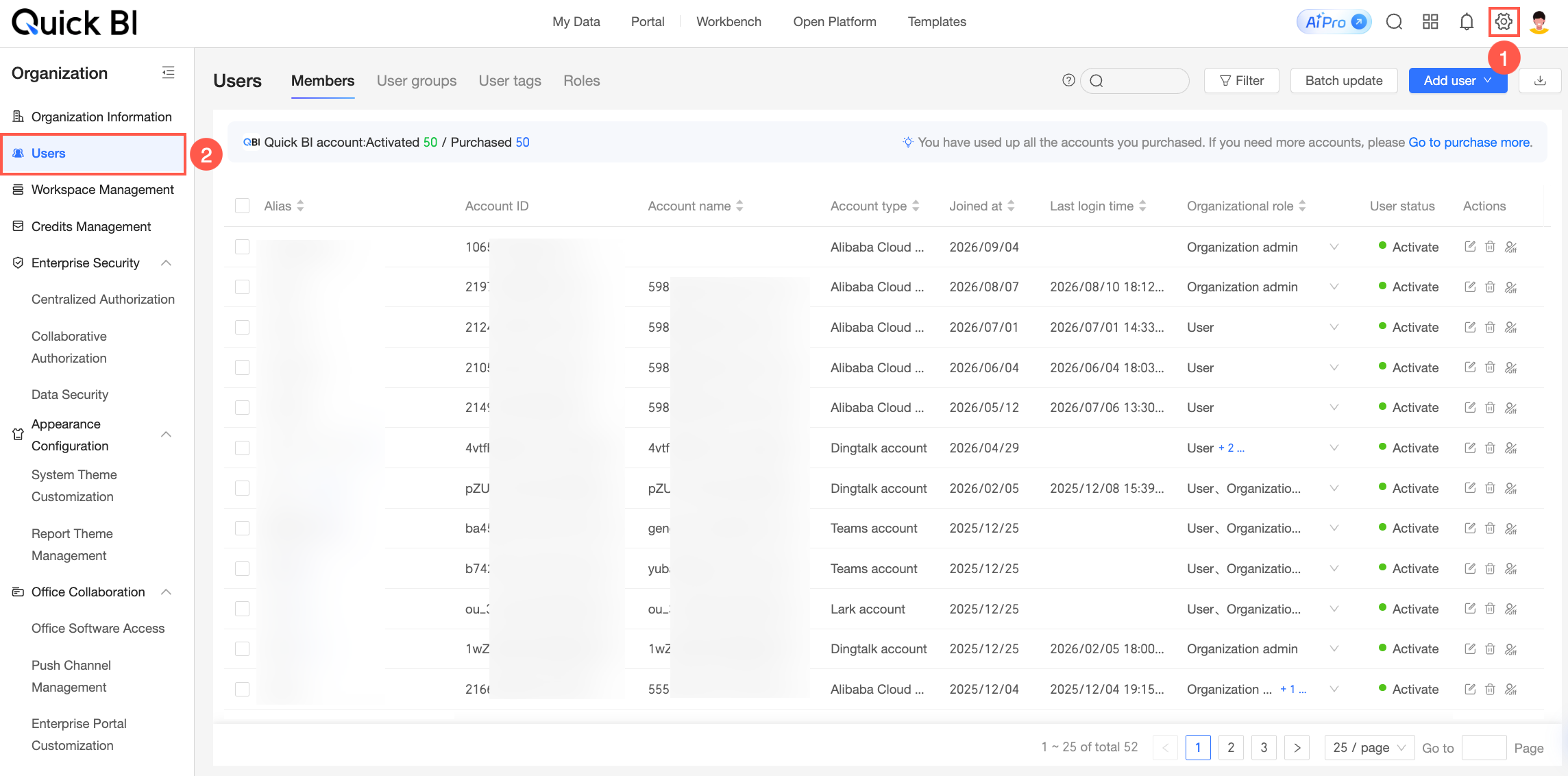
On the Member Management tab, in the upper-right corner, choose .
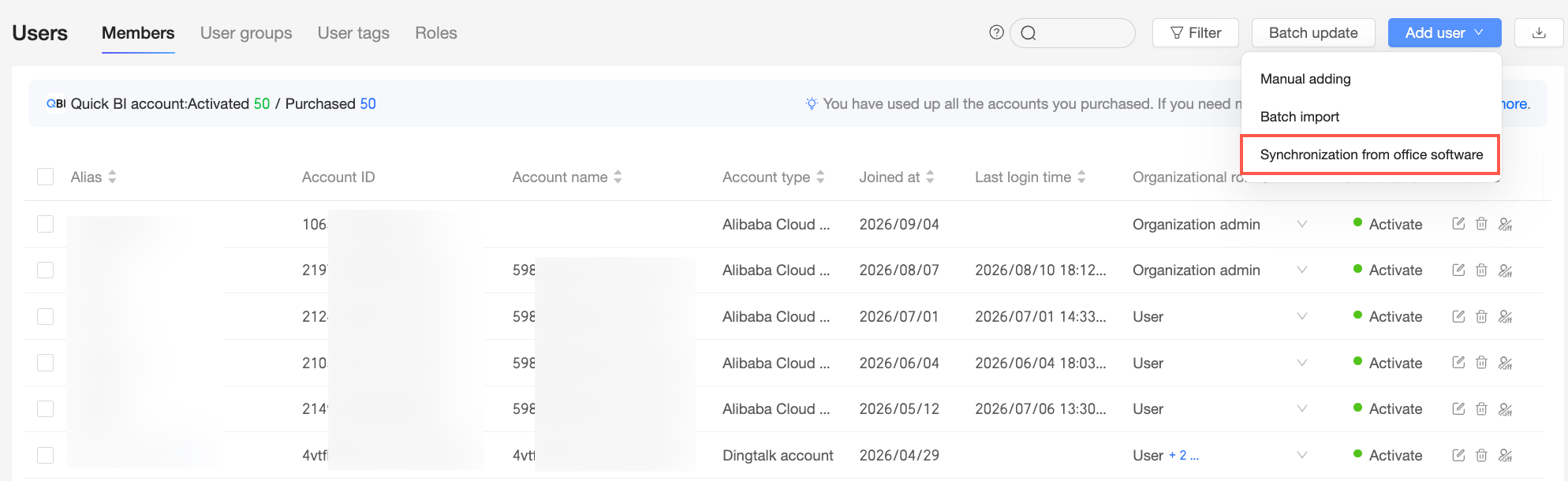
In the Sync Organization Structure dialog box, set Account Type to Feishu Account and configure other parameters as needed.
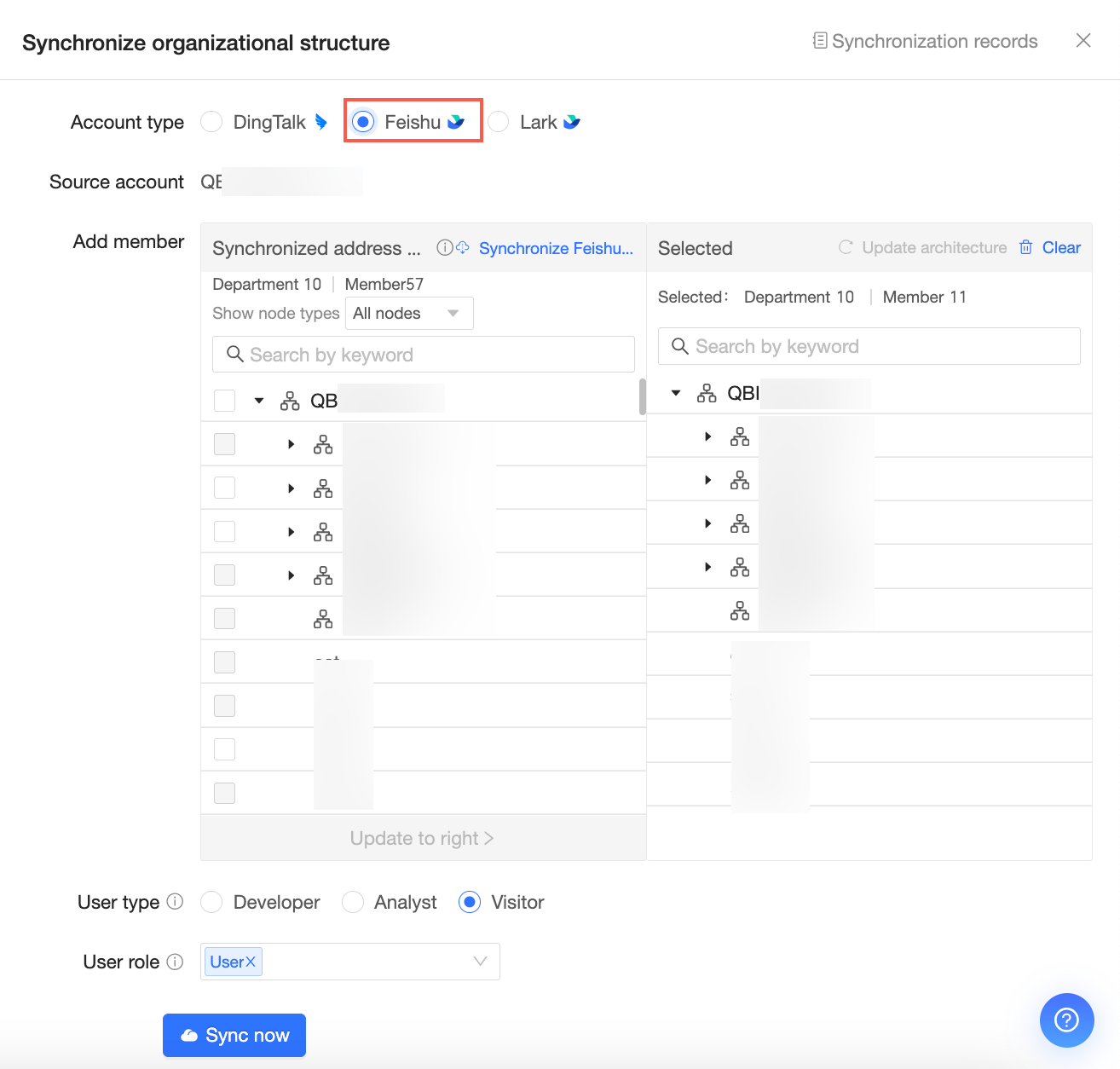
Account Type: Select Feishu.
Account Source: Select the Feishu organization containing the accounts you want to sync. If you have authorized only one Feishu organization in the Lark API authorization settings, it is selected by default. If you have authorized multiple organizations, click the
 icon and select the desired Feishu organization from the drop-down list.
Add Members: Select the members that you want to sync, and then click Update to the right.
User Type: Select developer, analyst, or viewer.
User Role: Select organization administrator, permission administrator, standard user, or a custom user role. You can assign the organization administrator or permission administrator role only when the user type is developer or analyst.
Click Start Sync.
NoteIf your organization structure has changed, update the structure first, and then start the sync.
If a Feishu user belongs to multiple organizations, Quick BI automatically recognizes the user's account and adds it as a single user. The user's information will be based on the organization from the most recent sync.
You can click Sync History in the upper-right corner to view the synchronization history.
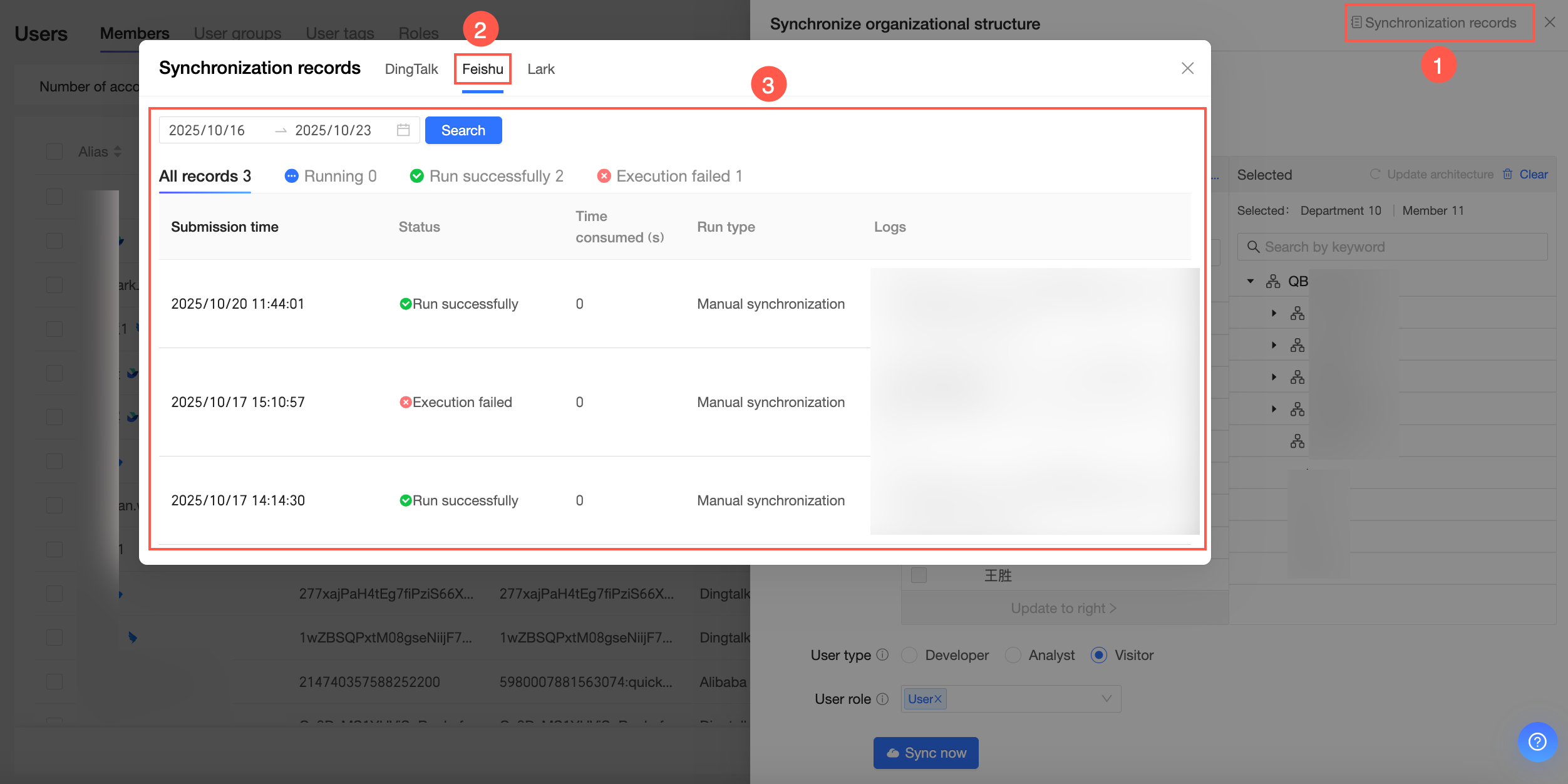
Update Structure
If your organization structure changes, you can update the structure. Name changes do not affect synchronization.
If a user's name has changed, a Name changed tag appears next to the user's name.
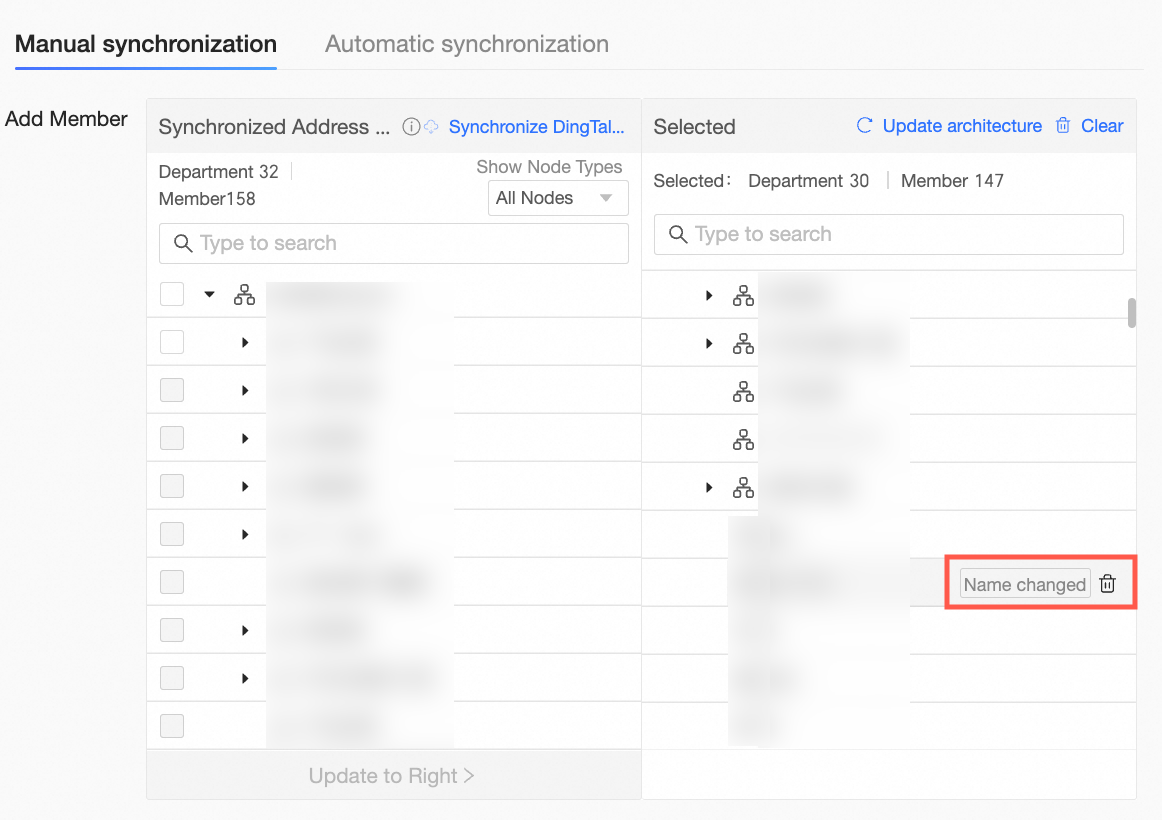 You can then click the
  icon to delete the user if needed.
If a department name has changed, a Name changed tag appears next to the department name. You can then click the
icon and click OK in the confirmation dialog box to delete the department.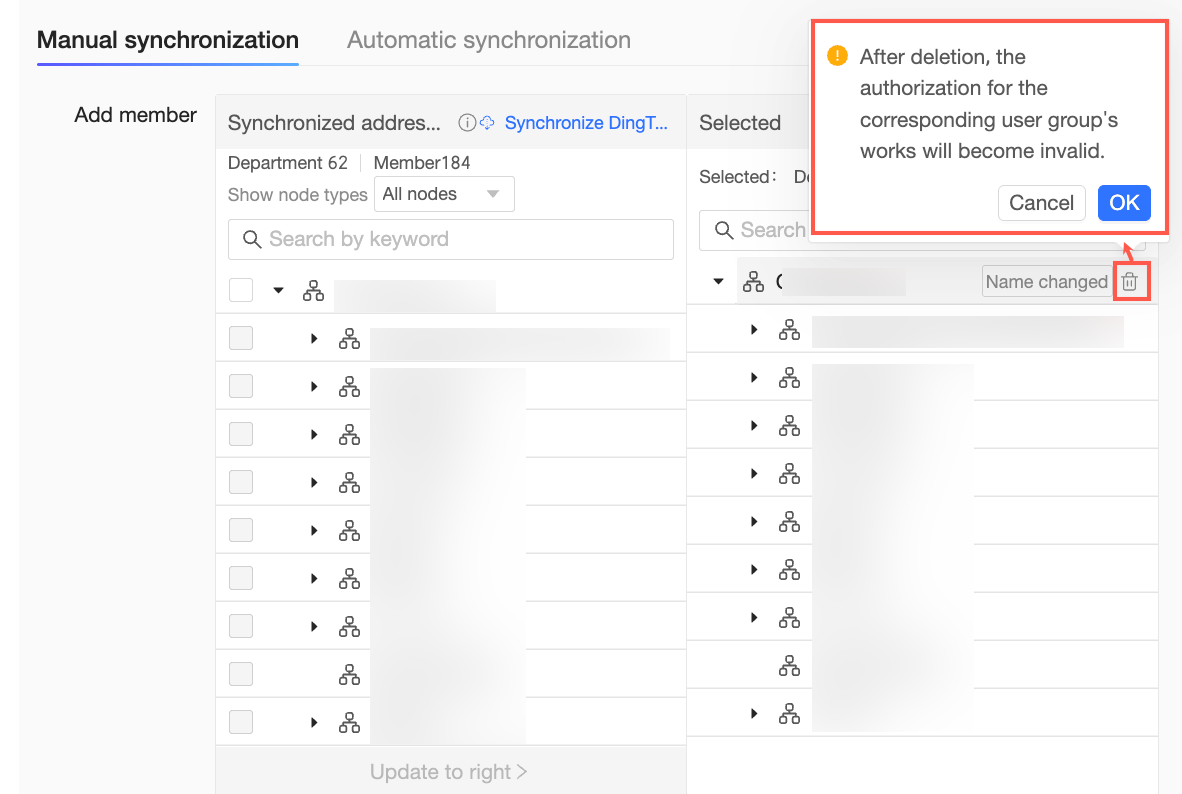 Note
NoteAfter a department is deleted, asset permissions for the corresponding user group will be revoked.
If a user is no longer in the organization, a To be deleted tag appears next to the user's name.
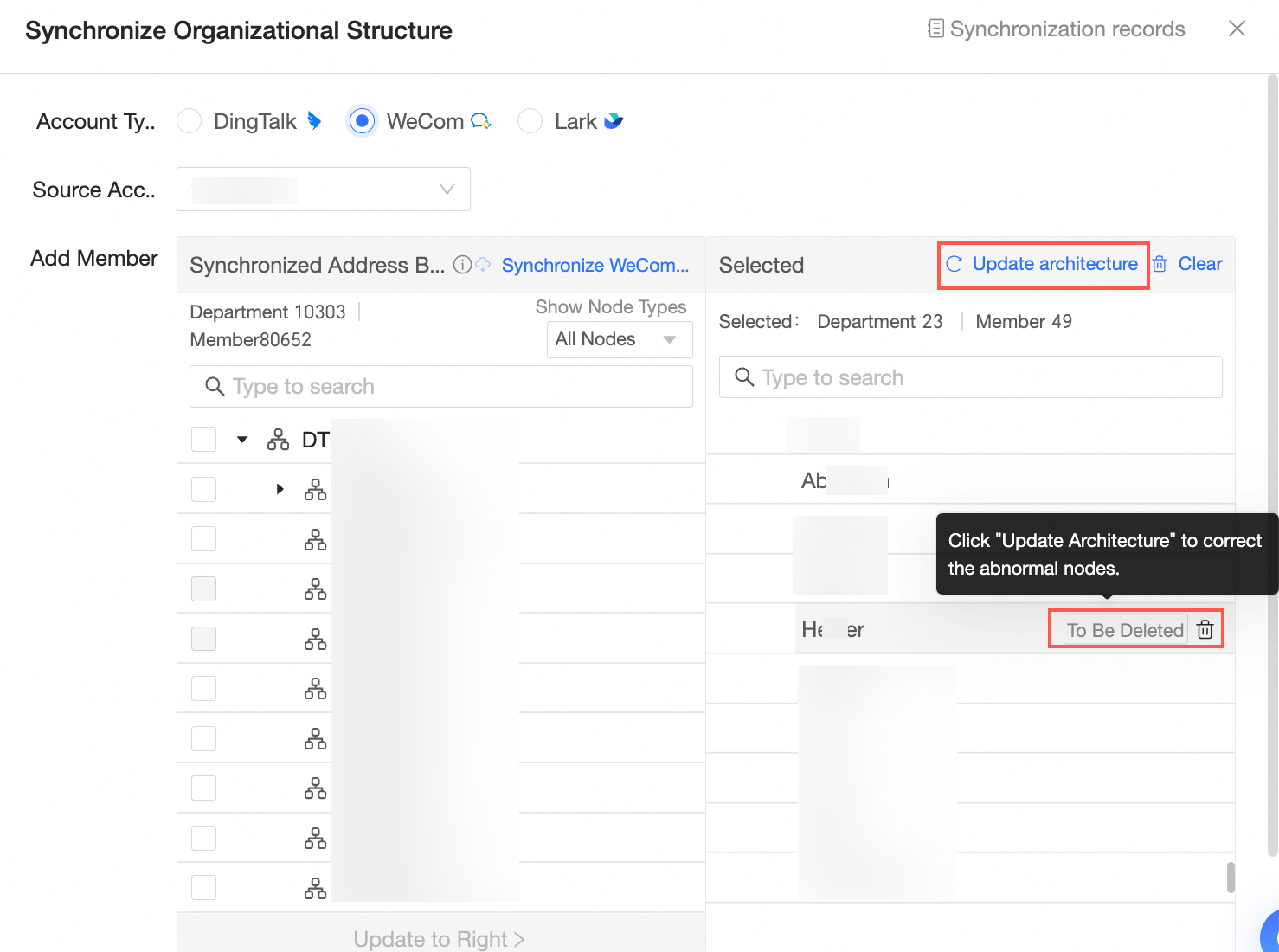
You can then click the
icon to delete the user or click Update Structure to apply the changes.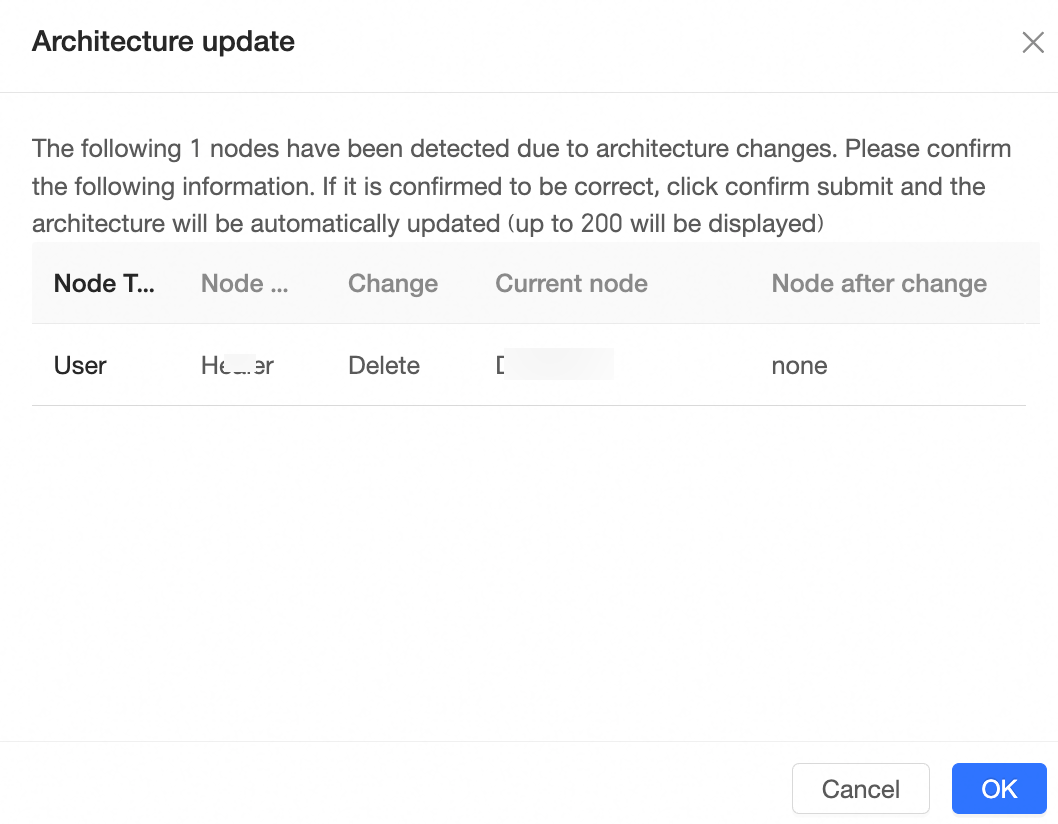
If you need to clear the current organization structure, click the Clear button and then click OK in the confirmation dialog box.
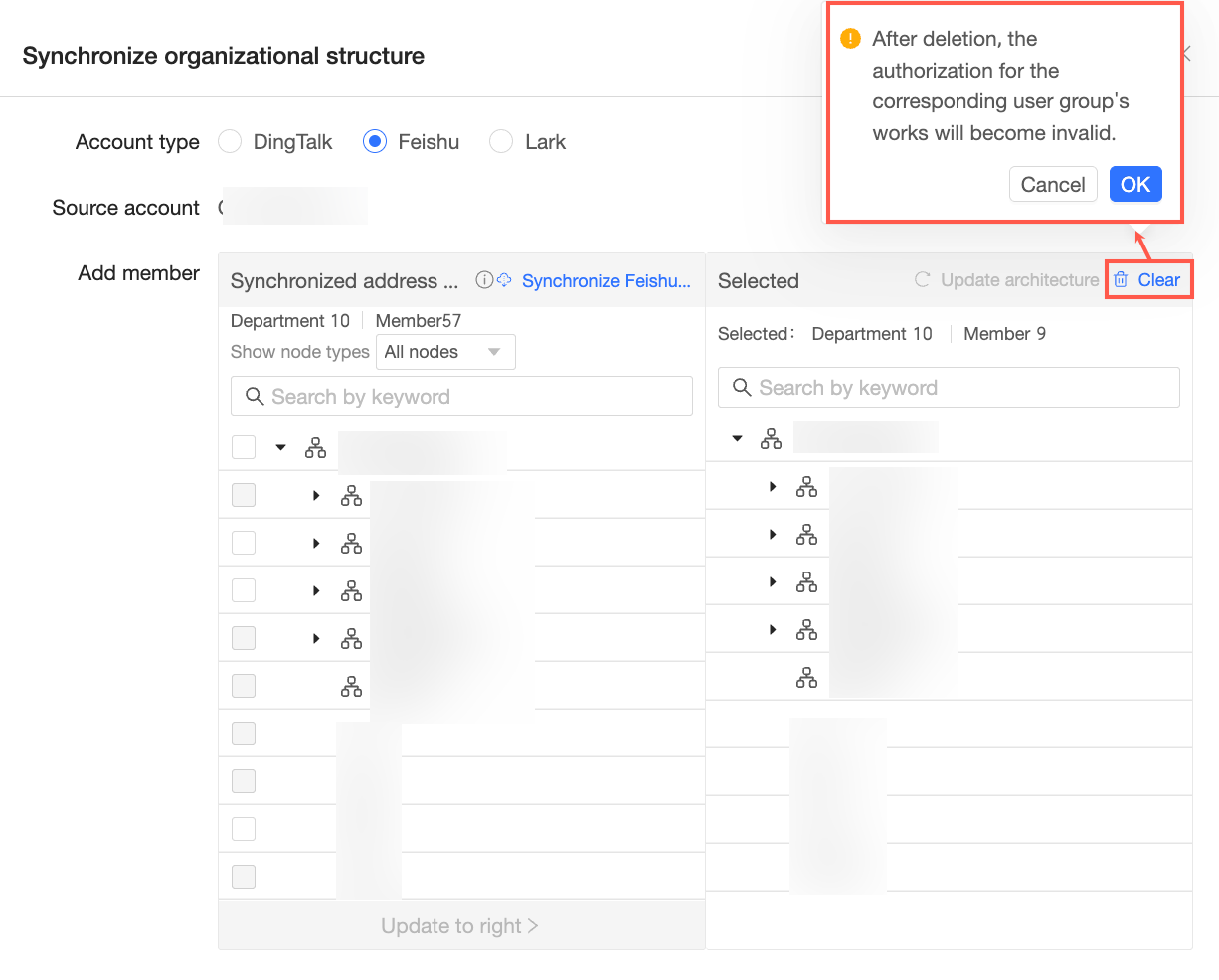 Note
NoteAfter the structure is cleared, asset permissions for the corresponding user groups will be revoked.
FAQ
Q1: Users not visible after Feishu directory sync
Cause: This issue can occur if the user is outside the app's visibility scope.
Solution: Go to the Feishu Admin console. Navigate to Workbench > App Management, search for Quick BI, and configure the app's visibility scope:
On the App Permissions tab, under Directory, select Same as availability range.
On the App Visibility tab, configure the settings based on your requirements. You can make the app visible to all members or add specific members to the visibility scope.