Add an Alibaba Cloud Elasticsearch data source to Quick BI for data analysis.
Prerequisites
-
You have created an Alibaba Cloud Elasticsearch instance.
-
You have the username and password for the Alibaba Cloud Elasticsearch instance.
Limitations
-
Only Elasticsearch 7.8.1 or later with the X-Pack plug-in (Platinum Edition) is supported.
-
The Elasticsearch query language's
LIMITclause does not supportOFFSET, which prevents pagination from working correctly. Disable pagination when you create visualizations from an Elasticsearch data source. -
You cannot perform multi-table joins on Elasticsearch data sources.
Procedure
-
Add IP addresses to the whitelist.
To connect to Alibaba Cloud Elasticsearch, add the IP addresses of Quick BI to the whitelist of your Alibaba Cloud Elasticsearch instance.
-
Log on to the Quick BI console.
-
Navigate to the page for creating a data source. For more information, see Create a data source.
-
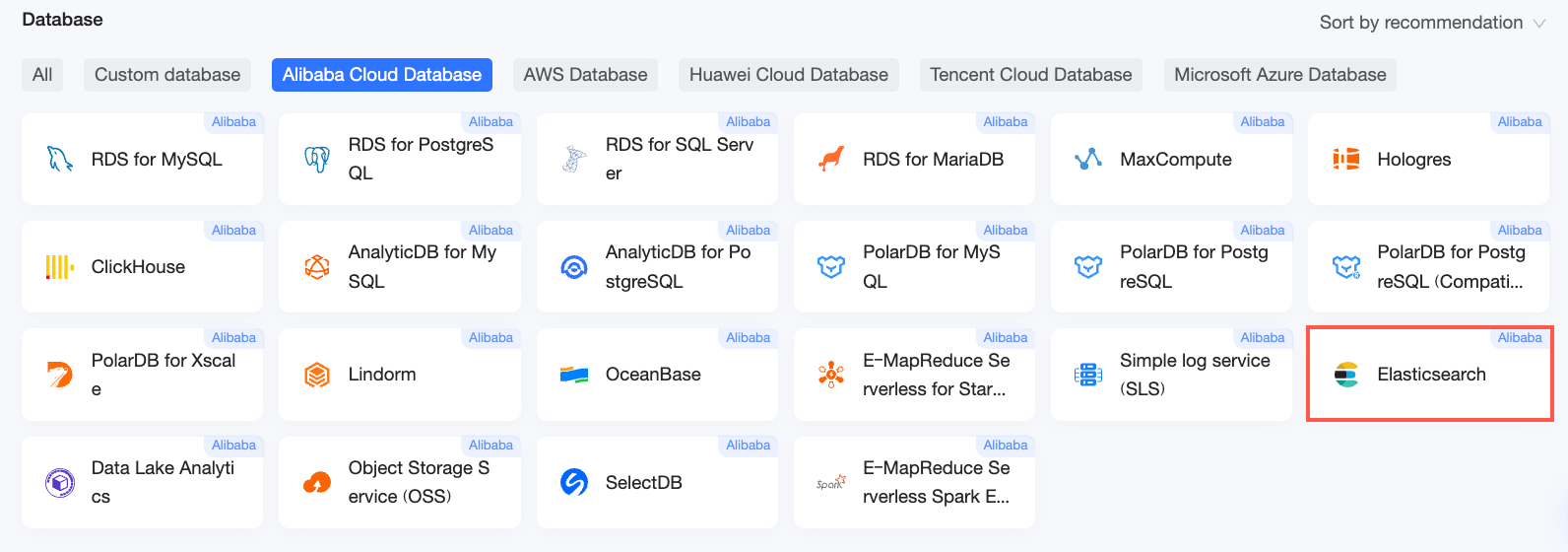
On the Alibaba Cloud Databases tab, select Elasticsearch.
-
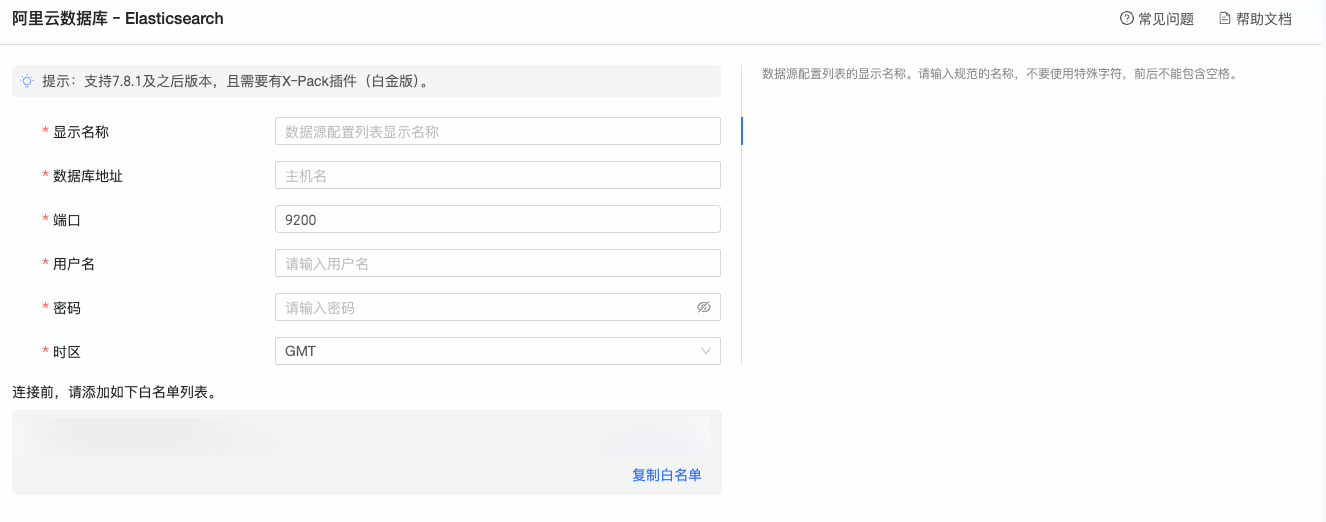
In the Configure Connection dialog box, configure the following parameters.
Parameter
Description
Display name
The display name of the data source in the data source list.
Enter a valid name without special characters or leading or trailing spaces.
Database address and port
The address and port of your Elasticsearch instance.
Find the database address in the network information section of the Alibaba Cloud Elasticsearch console.
Username and password
The username and password for the database.
Ensure that the user has CREATE, INSERT, UPDATE, and DELETE permissions on the tables in the database.
Time zone
The time zone where the Elasticsearch instance is deployed.
-
Click Test Connection to test the connection to the data source.

-
After a successful connection test, click OK.
Next steps
After you create the data source, create a dataset and start analyzing data.
-
To add data tables or custom SQL queries from your Elasticsearch data source to Quick BI, see Create a dataset.
-
To add visualizations and analyze data, see Create a new dashboard and Overview of visualizations.
-
To drill down into your data, see Step 3: Configure and display drill-downs.