I have a chance to become one of the speakers this month in the event called NEXTech: AI Agent in Action at JW Marriott Hotel Hong Kong.
Here I would like to write a Blog with similar topic but focus on Qwen.
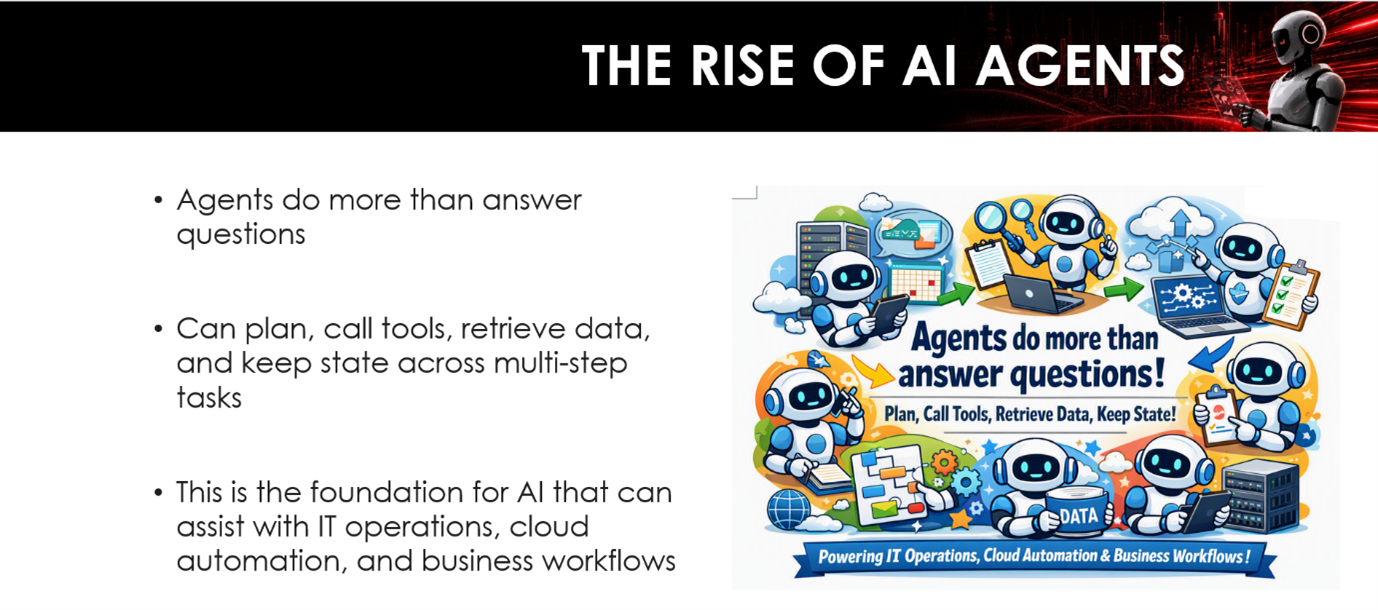
Artificial intelligence is moving beyond conversation. The next major phase is the development of AI systems that can reason through a problem, retrieve information, use software tools, and complete multi-step tasks with limited human intervention.
This transition, from models to agents, is changing how organisations approach workplace productivity, Cloud architecture, IT operations, customer service, and business automation. Alibaba Cloud Qwen ecosystem provides a useful example of this transformation through Qwen Studio, Alibaba Cloud Model Studio, Qwen-Agent, and its growing family of reasoning and multimodal models.
Traditional generative AI applications mainly respond to prompts:
An AI agent follows a broader execution loop:
For example, a chatbot may explain how to troubleshoot a server. An IT operations agent could instead:
• Read the incident ticket.
• Search the organisation’s knowledge base.
• Examine monitoring data.
• Identify likely causes.
• Recommend remediation.
• Execute an approved restart or configuration change.
• Update the ticket and produce an audit record.
The difference is not simply that the agent provides a better answer. The agent participates in the workflow.
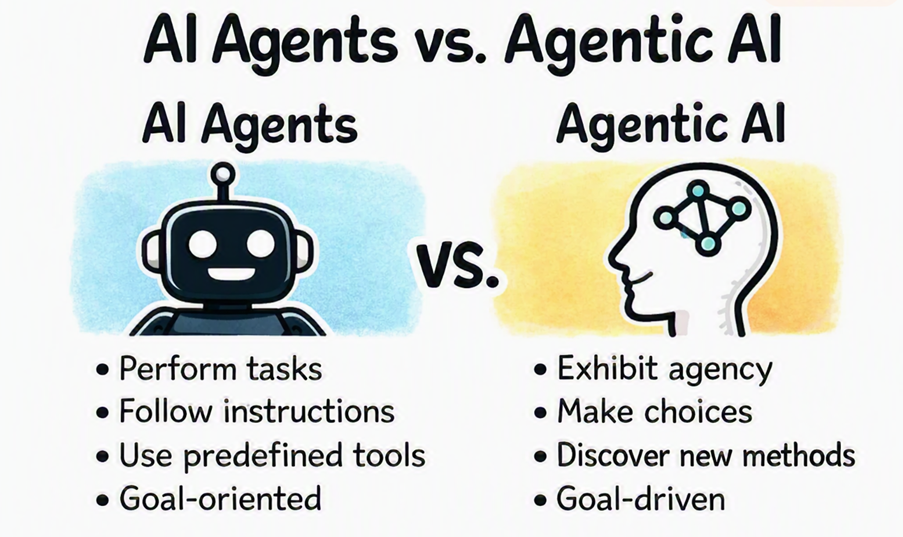
The terms AI agent and agentic AI are related but not identical.
An AI agent is a component. Agentic AI is the architecture and operating model around that component.
A useful enterprise agent normally contains:
• Model layer: reasoning, language understanding, coding, or multimodal capabilities.
• Context layer: enterprise documents, databases, conversation history, and operational state.
• Tool layer: APIs, search, browsers, code interpreters, ticketing systems, and cloud services.
• Control layer: permissions, policies, approvals, monitoring, and logging.
• Evaluation layer: testing, quality measurement, security review, and human feedback.
Without these supporting layers, an application may be an impressive chatbot but not a dependable enterprise agent.
Alibaba Qwen ecosystem illustrates how a model family can evolve into a wider agent platform. Qwen is no longer limited to text generation. Its ecosystem includes consumer-facing experiences, developer APIs, agent frameworks, coding tools, retrieval capabilities, and multimodal models.
Qwen3.7-Max, for example, is positioned as an agent foundation for coding, office productivity, MCP integrations, multi-agent orchestration, and long-horizon execution. It is available through Alibaba Cloud Model Studio and supports interfaces compatible with common OpenAI-style and Anthropic-style APIs.
This is strategically important for enterprise architects. Organisations do not necessarily need to rebuild every application around a proprietary interface. Standard API compatibility can simplify integration with:
• Existing application back ends.
• Agent frameworks.
• Developer tools.
• Internal automation platforms.
• Multi-model routing systems.
• Custom enterprise portals.
Qwen3.6 also demonstrates the direction of travel. Alibaba describes it as an efficient mixture-of-experts model with agentic coding and multimodal capabilities, accessible through Qwen Studio, Model Studio APIs, and open-weight distribution channels.
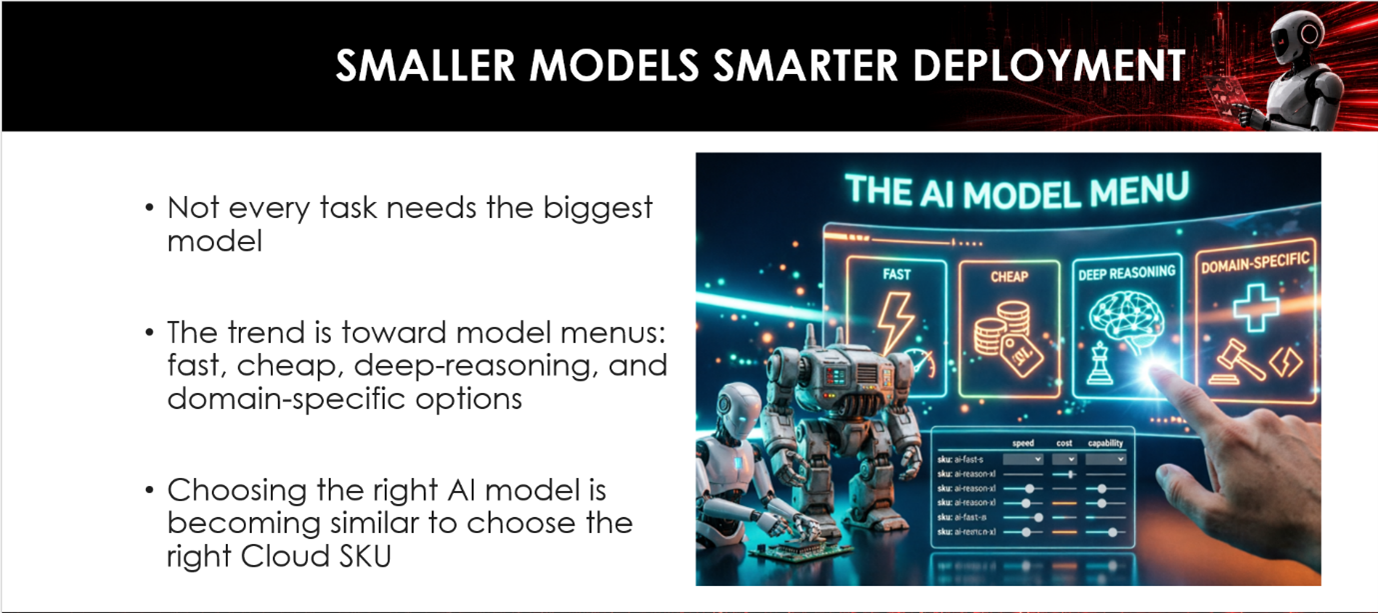
The broader lesson is that model selection is becoming similar to Cloud SKU selection. A business should not use the largest or most expensive model for every task. It should select a model according to:
• Reasoning complexity.
• Latency requirements.
• Input and output modality.
• Context-window requirements.
• Data sensitivity.
• Cost target.
• Hosting and regional requirements.
• Tool-use reliability.
Qwen Studio provides an accessible way for users to experience Qwen capabilities without first building an AI application. It can serve as an experimentation environment for:
• Research and information synthesis.
• Document analysis.
• Coding assistance.
• Content generation.
• Planning.
• Problem solving.
• Early agent workflow design.
Recent descriptions of Qwen Studio highlight specialised workflows such as Deep Research, Web Dev, adaptive tool use, and preservation of reasoning context across longer problem-solving sessions.
For an enterprise, Qwen Studio can be useful at the discovery stage:
However, an interactive studio should not automatically be treated as a production system. Production deployment requires additional controls, including identity, access management, data residency, API security, logging, retention, testing, and human approval.
A practical architectural pattern is:
• Qwen Studio: explore ideas and validate user experience.
• Alibaba Cloud Model Studio: integrate models into applications through managed APIs.
• Qwen-Agent or an equivalent framework: implement tools, retrieval, planning, and orchestration.
• Enterprise platform services: enforce identity, governance, monitoring, and operational controls.
The most valuable agent capabilities are not isolated model benchmarks. They are the ability to complete an end-to-end task reliably.
Reasoning models can decompose complex requests, compare alternatives, identify constraints, and revise an initial approach. This is useful for:
• Root-cause analysis.
• Architecture design.
• Financial and operational analysis.
• Code generation and debugging.
• Policy interpretation.
• Project planning.
Reasoning should not be confused with guaranteed correctness. A longer internal process can still lead to an incorrect conclusion if the underlying data is incomplete or unreliable.
Tools allow an agent to act on the outside world. Examples include:
• Search engines.
• Enterprise document repositories.
• Databases.
• Cloud management APIs.
• Ticketing systems.
• Monitoring platforms.
• Code interpreters.
• Communication applications.
The Qwen ecosystem is increasingly designed for tool invocation, MCP integrations, and agent frameworks. Qwen3.7-Max is described as supporting office workflows and multi-agent orchestration through MCP-based integrations.
Tools should be narrowly scoped. Instead of giving an agent unrestricted administrator access, expose specific functions such as:
• get_server_health
• search_knowledge_base
• create_change_request
• restart_test_service
• update_incident_ticket
Each function should have clear input validation, authorisation, logging, and rollback behaviour.
An agent needs more than a single prompt. It may need to retain:
• The user's objective.
• Completed steps.
• Tool results.
• Open issues.
• Approval status.
• Previous failures.
• Final evidence.
State should be deliberately designed. Persistent memory must not become an uncontrolled copy of sensitive business information. Enterprises should define what is retained, for how long, who can access it, and how it can be deleted.
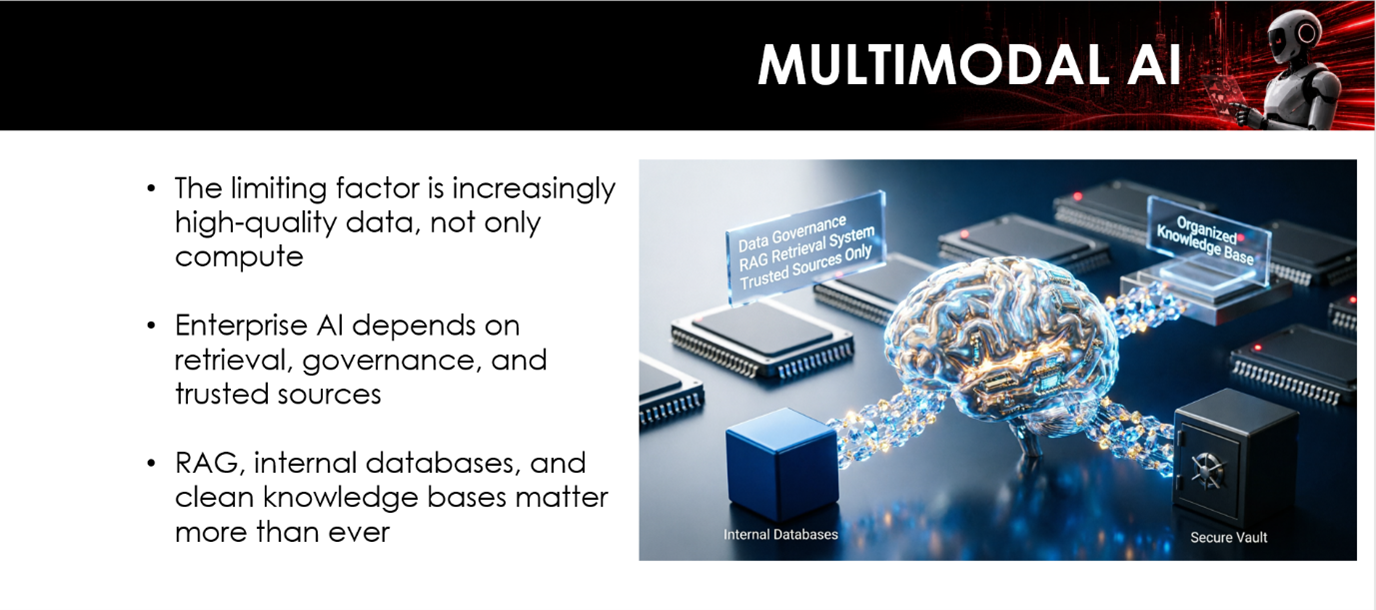
A powerful model connected to poor information may produce a confident but incorrect answer. This is why retrieval-augmented generation, or RAG, remains central to enterprise AI architecture.
A typical RAG workflow is:
For example, an internal IT support agent should not answer solely from the model’s general training. It should retrieve:
• Current operating procedures.
• Supported software versions.
• Approved change methods.
• Known incidents.
• Security standards.
• Asset-specific configuration data.
The retrieval layer must also respect permissions. A user should not receive information merely because the AI can technically retrieve it.
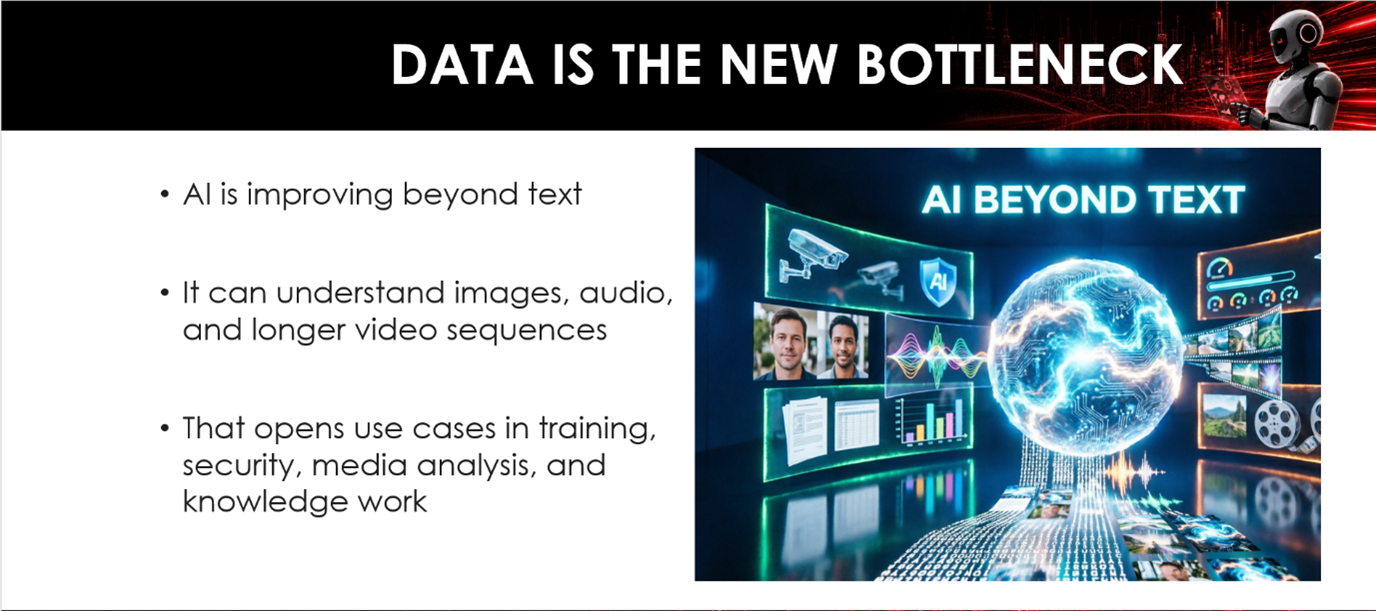
AI is expanding beyond text. Models can increasingly process images, audio, documents, and video. This creates opportunities in:
• Training and learning.
• Security monitoring.
• Quality inspection.
• Meeting analysis.
• Document processing.
• Media search.
• Field-service support.
• Accessibility.
Multimodal Qwen models extend agent workflows by enabling an agent to interpret visual or video input in addition to written instructions. Qwen3.7-Plus, for example, has been described as a multimodal agent model with image and video understanding, tool invocation, verification, and autonomous iteration.
Edge AI is another important direction. Smaller and more efficient models can run closer to users, devices, or operational environments. This can improve:
• Privacy.
• Response time.
• Availability during network disruption.
• Bandwidth efficiency.
• Local processing of sensitive information.
The correct architecture will often be hybrid rather than purely Cloud-based:
• Use an edge or smaller model for fast classification and local assistance.
• Use a cloud reasoning model for complex analysis.
• Use enterprise retrieval for controlled knowledge.
• Require approval before high-impact actions.
An agent can correlate alerts, logs, configuration data, and historical incidents. It can then suggest remediation or perform approved low-risk actions.
A mature design should separate:
• Observation.
• Diagnosis.
• Recommendation.
• Approval.
• Execution.
• Verification.
This prevents an agent from immediately making high-impact changes based on uncertain analysis.
Security agents can assist with:
• Alert triage.
• Threat-intelligence retrieval.
• Identity investigation.
• Suspicious sign-in analysis.
• Vulnerability prioritisation.
• Incident summarisation.
• Playbook execution.
Security automation requires especially strong controls because an incorrect action may lock out users, destroy evidence, or interrupt business services.
A customer-service agent can:
• Understand a customer request.
• Retrieve account and policy information.
• Check order or service status.
• Recommend an action.
• Complete a permitted transaction.
• Escalate exceptions to a human representative.
The customer should be told when automation is being used, and sensitive or disputed cases should be transferred to a person.
Potential applications include:
• Invoice extraction.
• Expense review.
• Reconciliation assistance.
• Management-report preparation.
• Contract analysis.
• Procurement support.
• Policy-based approval routing.
These workflows require traceability. The output should show the source records, calculations, assumptions, and approval history.
Coding agents can support:
• Requirements analysis.
• Code generation.
• Test creation.
• Dependency review.
• Documentation.
• Pull-request preparation.
• Debugging.
• Migration planning.
The appropriate model depends on the task. A fast model may be sufficient for code completion, while a stronger reasoning model may be justified for architecture changes or difficult debugging.
The objective should not be blind automation. It should be trustworthy automation.
A production agent should therefore implement the following controls:
• Least privilege: grant only the tools and data access required.
• Human approval: require confirmation for financial, security, legal, or irreversible actions.
• Auditability: record prompts, retrieved sources, tool calls, decisions, approvals, and outcomes.
• Grounding: require evidence from approved sources.
• Validation: check model outputs before execution.
• Sandboxing: test code and actions in isolated environments.
• Rate limits: control repeated or unexpected actions.
• Rollback: provide a safe recovery path.
• Monitoring: track success rate, latency, cost, errors, and abnormal behaviour.
• Evaluation: test against realistic scenarios, including adversarial prompts.
• Data protection: classify, minimise, encrypt, and appropriately retain information.
A useful design principle is:
The more an agent can affect the real world, the stronger its control boundary must be.
An agent that drafts an email can operate with less risk than an agent that changes a firewall rule, approves a payment, or modifies production infrastructure.
Organisations should avoid starting with a fully autonomous agent. A staged approach is safer and usually delivers better results.
The model answers questions, drafts content, summarises documents, and provides recommendations. It does not execute business actions.
The model is grounded in approved enterprise data. Responses include evidence, document references, and access controls.
The agent analyses information and proposes actions. A human reviews and approves the result.
The agent performs low-risk, reversible actions through narrowly defined tools.
The organisation measures quality, cost, latency, user adoption, exception rates, and business value. Workflows are improved using real operational feedback.
This approach allows the organisation to build trust incrementally while discovering where human judgment remains essential.
AI agents do not eliminate the need for architecture. They make architecture more important.
The IT architect responsibilities increasingly include:
• Designing model-routing strategies.
• Connecting AI to enterprise knowledge.
• Defining agent permissions.
• Separating recommendations from execution.
• Establishing approval boundaries.
• Protecting sensitive data.
• Designing observability and audit trails.
• Managing model cost and performance.
• Evaluating quality and risk.
• Educating users and operational teams.
The modern Cloud architect is therefore becoming an AI workflow architect. The role combines cloud infrastructure, application integration, security engineering, data governance, automation, and business-process design.
The transition from models to agents is not simply a race to build larger language models. It is a shift from generating answers to completing governed tasks.
Qwen and Qwen Studio demonstrate this transition from several angles: accessible experimentation, advanced reasoning, multimodal interaction, tool invocation, coding assistance, and enterprise integration through Alibaba Cloud Model Studio.
For organisations, the winning strategy will not be to automate everything immediately. It will be to identify valuable workflows, connect agents to trusted data, expose carefully controlled tools, and preserve human oversight where the consequences are significant.
The future workplace will likely contain a combination of:
• Humans providing judgment, creativity, accountability, and leadership.
• AI agents performing research, analysis, coordination, and routine execution.
• Cloud platforms supplying scalable models, data, tools, and governance.
The most successful organisations will treat agents not as isolated chatbots, but as managed digital workers operating inside a secure and observable enterprise architecture.
Disclaimer: The views expressed herein are for reference only and don't necessarily represent the official views of Alibaba Cloud.
Alibaba Cloud Community - October 13, 2026
Alibaba Cloud Community - August 3, 2026
Alibaba Cloud Community - August 31, 2026
Alibaba Cloud Community - August 24, 2026
Alibaba Cloud Community - August 26, 2026
Alibaba Cloud Community - September 25, 2026
 Token Plan
Build more, spend less. One plan, every modality.
Learn More QwenWork
QwenWork is dedicated to helping employees strengthen their professional competitiveness in the AI era and to enabling enterprises to improve organizational effectiveness.
Learn More
Alibaba Cloud Model Studio
A one-stop generative AI platform to build intelligent applications that understand your business, based on Qwen model series such as Qwen-Max and other popular models
Learn More Conversational AI Service
This solution provides you with Artificial Intelligence services and allows you to build AI-powered, human-like, conversational, multilingual chatbots over omnichannel to quickly respond to your customers 24/7.
Learn MoreMore Posts by Kidd Ip


