View monthly bills and cost details for analysis and reconciliation.
How bills are generated
Bills are generated based on the billing method for your cloud products:
-
Subscription (pay before you use): You pay for resources such as subscriptions, savings plans, and resource plans at the time of purchase. The cost is added to that month's bill.
-
Pay-as-you-go (use before you pay): You use resources first, such as pay-as-you-go ECS instances. The system calculates fees based on usage over a billing cycle (hourly, daily, or monthly) and adds them to that month's bill.
Learn about billing methods.
Cloud products are billed based on actual usage, and metering granularity varies by product. Bills are generated for a fixed billing cycle. If you release a resource mid-cycle, the bill still spans the full cycle but only includes charges for actual usage. Pay-as-you-go bills are typically available after a delay of several minutes to a few hours. For specific rules, refer to the billing documentation for each product.
Bill types and generation times
The current month's bill is updated in real time but finalized only after the following month's bill is generated.
All times on your bills, including the bill month, bill date, and consumption time, are in UTC+8 (Beijing Time). You may need to convert these times to your local time zone.
|
Type |
Description |
Generation time |
Link |
|
Monthly bill |
View the total amount payable for the month. You can export a spending summary PDF for reconciliation, settlement. |
12:00 on the 3rd of the following month |
|
|
Billing details |
View detailed charges for each resource for cost verification and analysis. You can export the details as a CSV file. |
12:00 on the 3rd of the following month |
|
|
Split bill |
Split bills by department or project for internal cost allocation and budget management. This information is for internal use only and cannot be used for settlement. |
12:00 on the 4th of the following month |
Pay-as-you-go billing delays
Pay-as-you-go bills are not generated instantly. Typical delays are:
|
Product type |
Delay |
|
General pay-as-you-go products |
1–3 hours |
|
Model inference services (e.g., Model Studio) |
Approximately 2–10 minutes |
|
Split-type products (CDN, OSS) |
Up to 72 hours |
The final data for a given billing month is available after 12:00 on the 4th of the following month.
Viewing near-real-time costs
Before a bill is formally generated, pay-as-you-go usage is continuously accumulated and deducted from your account balance as a deferred deduction. You can view approximate real-time costs in two ways:
-
In Bill Details, switch the statistical cycle to By Hour to view near-real-time hourly cost records.
-
In Cost Analysis, view the current day's cumulative pay-as-you-go costs.
"Generating" bill status
If the monthly bill overview shows a Generating status, this is expected. It indicates that the current month's data is still accumulating and is not a system error.
View bills
Log on to the Alibaba Cloud console. In the upper-right corner, choose Expenses > Bills to view your spending.
-
The main account has access by default.
-
A RAM user must have the AliyunBSSReadOnlyAccess policy (read-only access to Billing Management).
The Bill Details page is available in two versions: legacy and new. You can identify the version by its page style.
The new Bill Details page is rolling out by invitation. You can view bill data only from the date it was enabled for your account. To query earlier bill details, switch back to the legacy version.
Key improvements in the new version include:
-
New features: Cost Details (resource-level cost analysis) and bill subscription (automatically pushes bills to OSS or MaxCompute).
-
Field information: Adds Discount Details, Coupon Deduction Details, Deduction Duration, Usage Details, List Price Usage Tiers, and Cumulative Usage Tier Rules. Some fields have been removed or adjusted, and all fields are now grouped.
The following table compares the new and legacy Bill Details pages.
|
New version:
|
Legacy version:
|
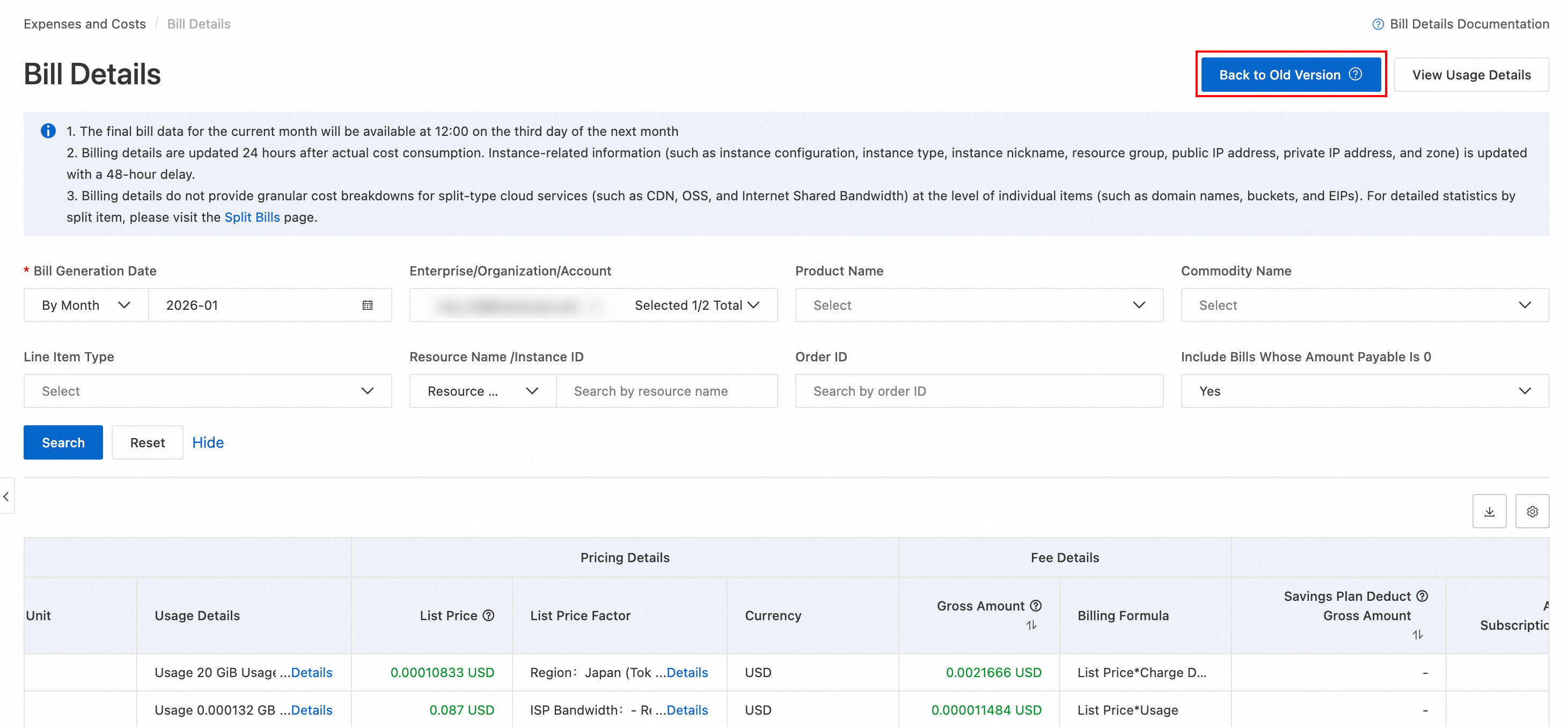
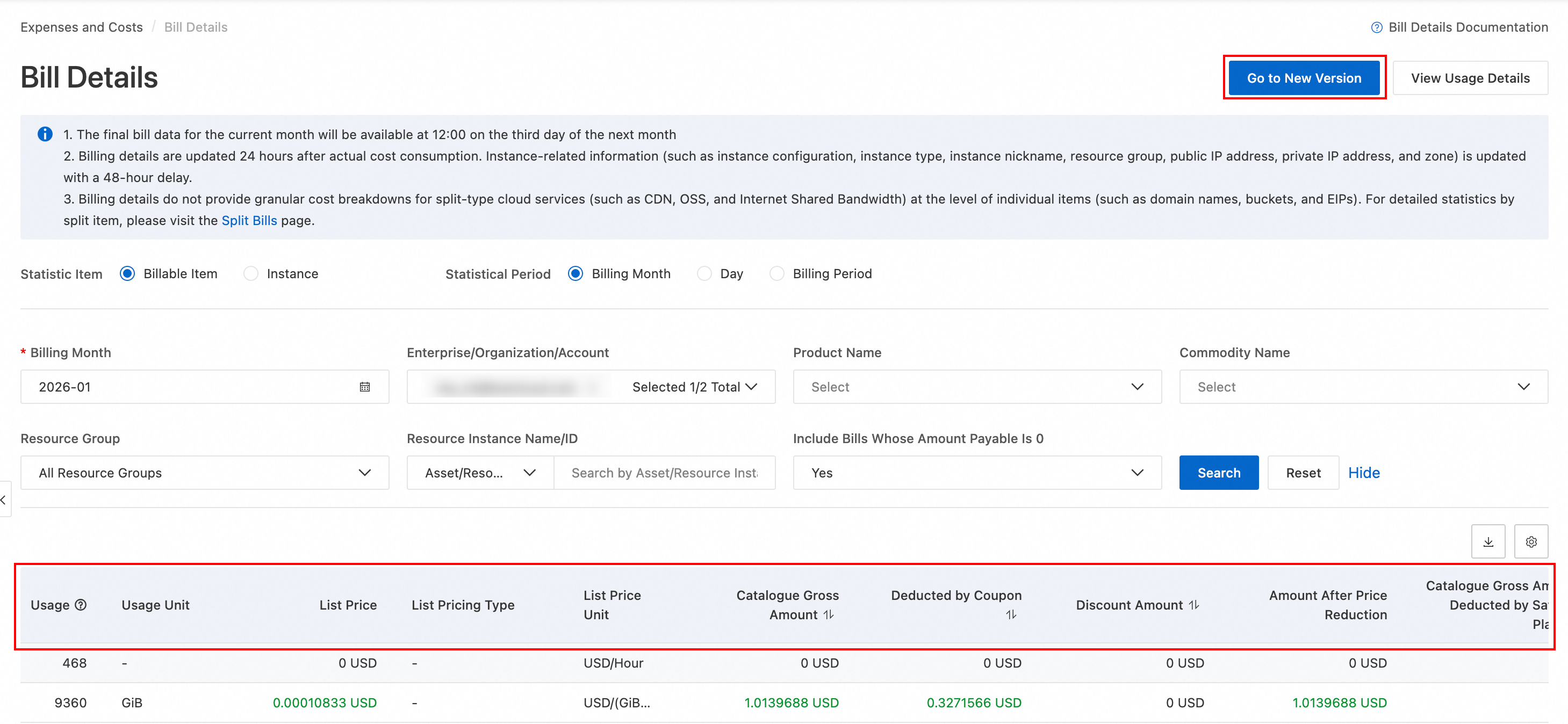
The legacy Expenses and Costs console does not include the new bill version.
Differences and field descriptions for the new bill version.
View monthly bill summaries
Legacy console
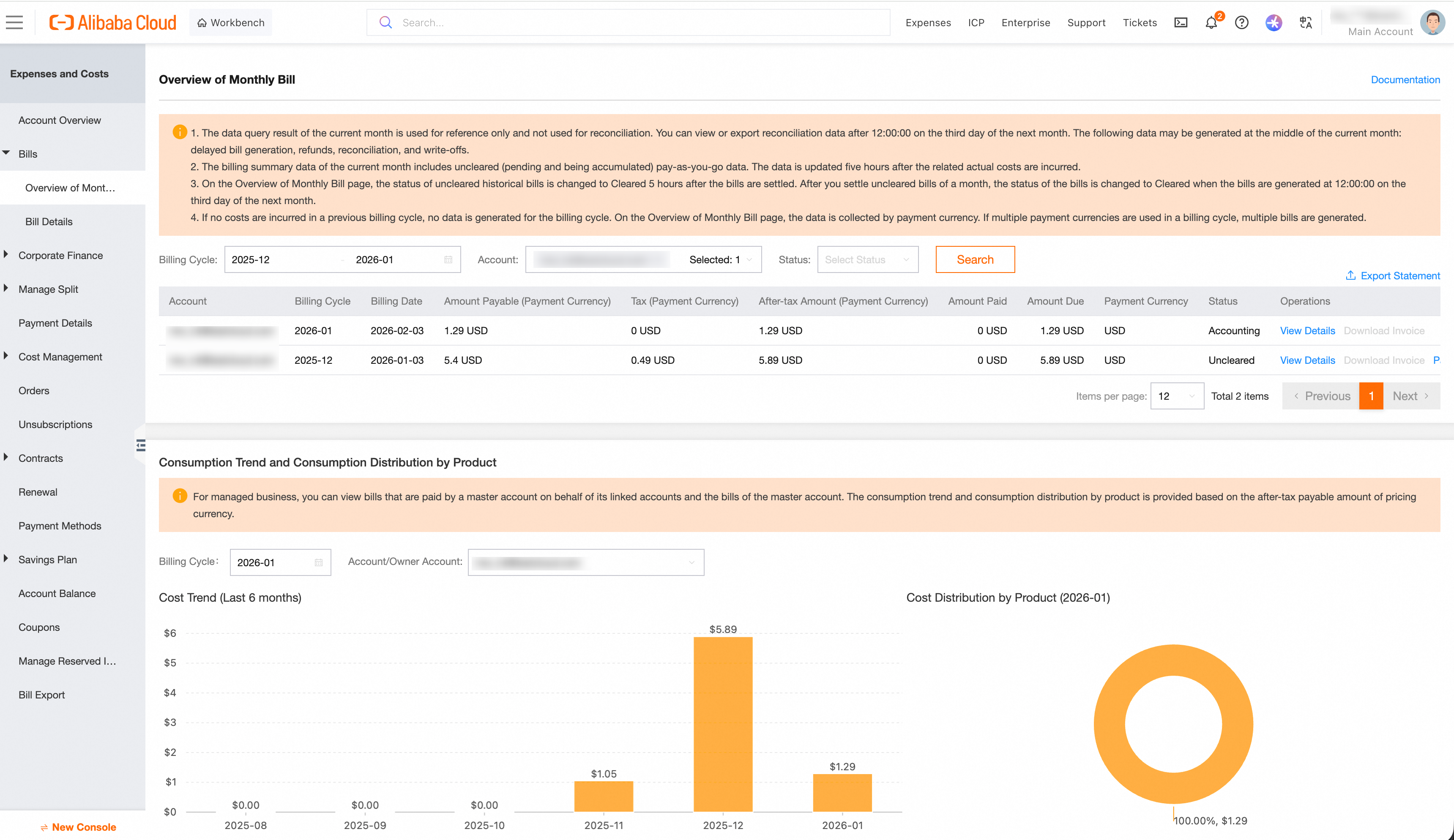
Go to Expenses and Costs> Overview of Monthly Bill to view your spending summary by billing cycle. You can also switch accounts to view member account summaries.
The page displays:
-
The monthly bill for the selected account, reflecting the final settlement with Alibaba Cloud.
-
The spending trend over the last six months and product-specific spending distribution for the selected account.
New console
On the Overview of Monthly Billpage, you can view your overall spending, review bill summaries, verify discounts, make payments, or export bills.
In the monthly summary area, note the following key information:
-
Payable Amount (Payment Currency): The amount payable for cloud resources in the billing period before tax, after all discounts, subscription offsets (for example, savings plans), and coupon deductions.
-
Tax (Payment Currency): Tax calculated on the Payable Amount (Payment Currency) based on the country/region and applicable tax rate.
-
After-tax Amount (Payment Currency): The final total payable for the billing period, including tax.
-
Paid Amount: The total amount that you have paid, including payments made with cash and prepaid cards.
-
OutStanding Amount: The outstanding amount that you have not paid. Formula: OutStanding Amount = After-tax Amount (Payment Currency)- Paid Amount.
On the Overview of Monthly Bill page, you can view bill summary data by different dimensions. Select a dimension tab and filter the summary data by Billing Month:
|
Dimension |
Use case |
|
By Resource Purchase Account |
View the amount payable and payment status per account to identify high-spending accounts in multi-account scenarios. |
|
By Product |
Compare amounts payable across products to identify which cloud products drive the most cost. |
|
By Organization (enterprise accounts only) |
View the amount payable per organization in multi-account enterprise scenarios. |
|
By Service Entity |
View the amount payable per service entity for separate reconciliation. |
|
By The Status Of Hit Discounts |
Compare list price vs. amount payable to evaluate discount effectiveness. Pay attention to bills not eligible for discounts. |
Obtaining pay-as-you-go billing proof
To obtain proof of your pay-as-you-go monthly charges, use either of the following methods:
-
In Cost Analysis, filter by billing method Pay-As-You-Go and export the cost summary for the target month.
-
On the Bill Overview page, export the Monthly Bill PDF (which carries an official financial seal) and filter by billing item for pay-as-you-go line items. The monthly bill PDF can serve as a reconciliation voucher.
Although you can apply for a pay-as-you-go contract online, the contract does not reflect specific consumption amounts. Use the monthly bill PDF as proof of charges instead.
View daily bill details
Legacy console
-
On the Bill Details page, set Statistic Period to By Day.
-
Click Search. In the bill details, view Product Detail, Usage, and Amount After Discount to understand the usage and costs for the day, aggregated by billable item, instance, product, and financial unit.
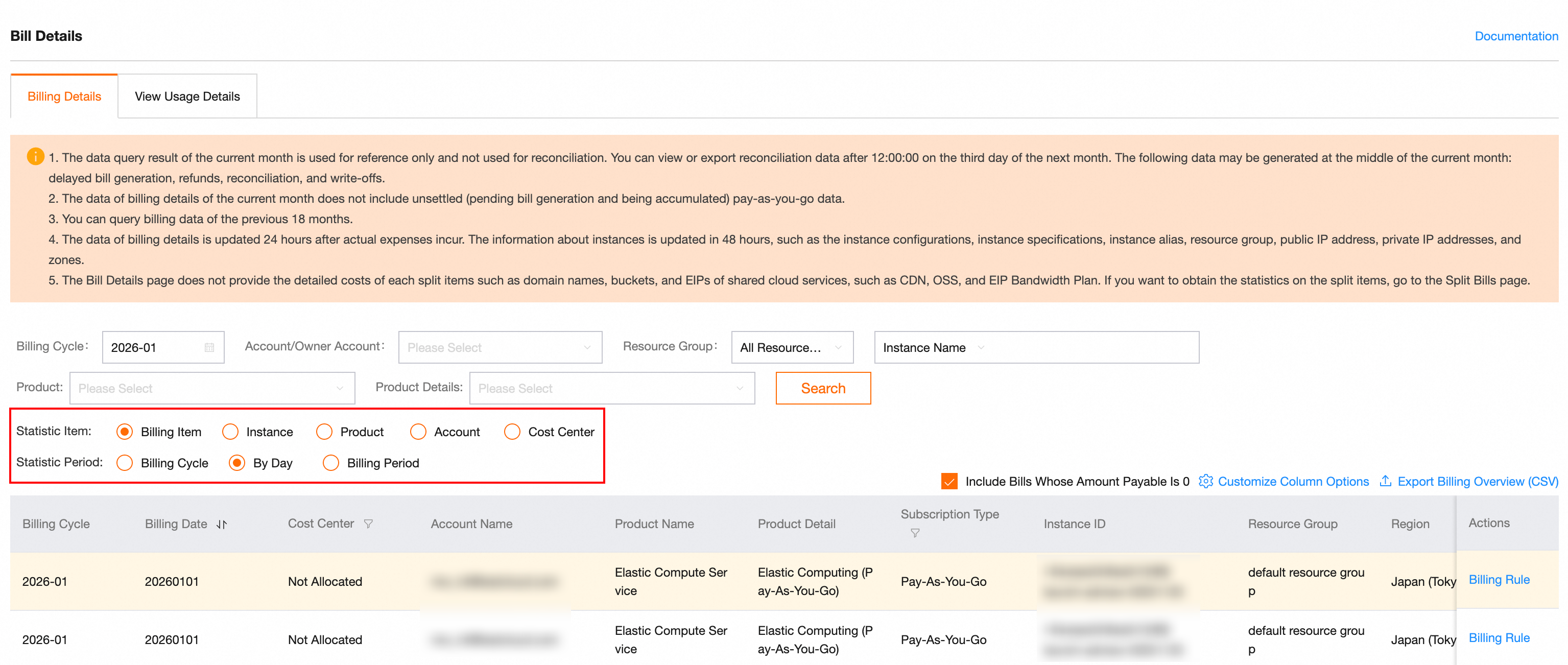
Click the Customize Column Options button on the right to customize the columns displayed in the bill.
New console
On the Bill Details page, filter by date to view your daily spending.
Legacy bills
-
On the Bill Details page, set Statistic Item to Billing Item or Instance.
-
Set Statistic Period to Day to view daily summaries or Billing Period to view hourly details, then select a Billing Month.
-
Click Search. In the bill details, check Product Name and Amount Payable to understand your daily spending.
New bills
-
On the Bill Details page, click the Bill Generation Date filter, select statistics by day, then set the From and To to the same day, such as 2025-10-15.
-
Click Search. In the bill details, view Product Information, Usage Information, and Payable Information to understand the usage and costs of each cloud product for the day.
Click the  icon on the right to customize the displayed columns.
Why does an instance with zero usage show a payable amount?
In Bill Details, consumption amounts are settled at the bill level (by bill number). To provide more granular cost analysis, the system reverse-amortizes the total payable amount of each bill down to individual instances and billable items.
During this reverse-amortization process, to maintain amount precision (two decimal places), situations may arise where values are non-divisible or require rounding. The system assigns any remaining fractional amount to a randomly selected instance or billable item. In extreme cases, the following anomalies may occur:
-
An instance shows zero usage and zero list price, but a non-zero payable amount.
-
When the correct discount is applied, both the list price and discount amount are correct, but the payable amount has a minor discrepancy compared to the expected calculation.
These anomalies result from the algorithmic logic used during reverse-amortization and do not affect your actual total charges. We recommend that you reconcile your costs at the bill number level, where the amounts are accurate.
For information about the Rounded-down Fee that appears during end-of-month settlement, see Alibaba Cloud bill field adjustments.
View cloud product bill details
Legacy console
-
On the Bill Details page, enter or select a product name such as ECS or OSS in the Product or Product Details filter box.
-
Select a Billing Cycle (Billing Month) and click Search.
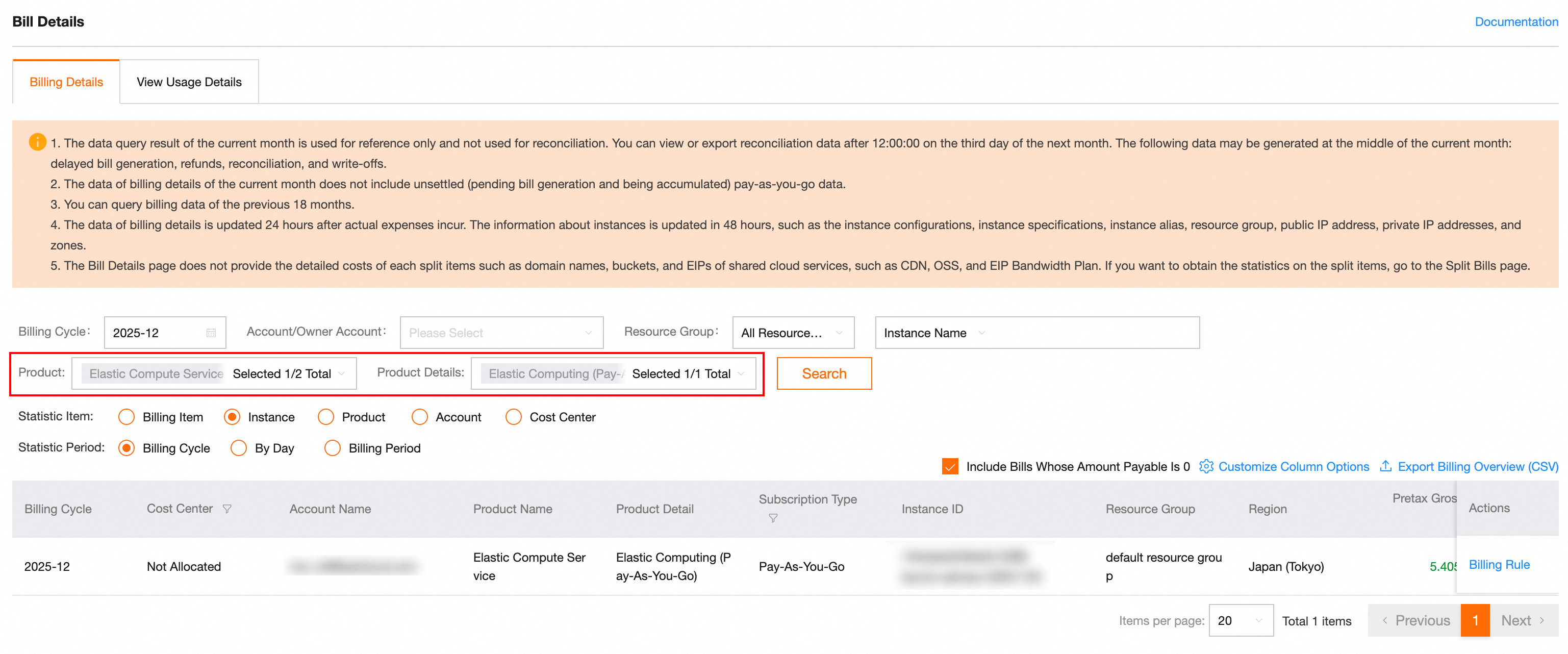
Click the Customize Column Options button on the right to customize the columns displayed in the bill.
New console
On the Bill Details page, filter by Product Name to view all spending details for a product.
Legacy bills
-
On the Bill Details page, set Statistic Item to Billing Item or Instance.
-
Set Statistical Period to Day or Details, select a Product Name and Billing Month, then click Search.
New bills
-
On the Bill Details page, enter or select a product name such as ECS or OSS in the Product Name filter box.
-
Select a Billing Month and click Search.
Click the icon on the right to customize the displayed columns.
The Resource Group column has been removed from Bill Details and cannot be re-enabled through column customization. To view resource group information, go to the Split Bills page (Expenses and Costs > Cost Allocation > Split Bills). On that page, the Resource Group column shows the resource group of each record, and you can also use the Resource Group filter to filter data by resource group.
Filtering and exporting bill data by instance
The console does not support aggregating a single instance's total monthly cost with a single click. To analyze costs by instance, export the bill as a CSV file and use a local tool such as Microsoft Excel to filter and calculate totals by instance ID.
When exporting, the new Bill Details supports filtering by Asset/Resource Instance ID, Billing Date, Fee Type, and other fields. A single export supports up to six months of data. For cross-year queries, export data in batches.
For ECS traffic billed under CDT (Cloud Data Transfer), the instance ID includes the region and line information — for example, i-xxx;cn-hangzhou;BGP;1. Use the full string when searching bill details.
To aggregate costs by resource group, tag, or a custom dimension, use the Cost Analysis feature. Cost Analysis is available approximately 48 hours after activation.
Identifying a scale-up from your bills
If you upgraded a database instance (for example, an ApsaraDB RDS instance), you can identify the scale-up from your bill:
-
On the Bill Details page, set the statistical period to Details.
-
In the Product Name filter, select the target database product (for example, ApsaraDB RDS).
-
Compare the Instance Specification field across historical bills. A change in this field (for example, from
rds.mysql.c1.largetords.mysql.c2.xlarge) indicates a scale-up.
If the Instance Specification field shows no change, the cost increase may come from a storage upgrade instead, which is not reflected in the instance specification. Go to Orders > My Orders and filter by Order Type = Upgrade or Downgrade to find the related order.
Bill details data is updated with a 24-hour delay, and instance specification and other instance ID-related information is updated with a 48-hour delay. Billing Management is a global service with no region selector, so you can view bill data for all regions without switching regions.
Bills for enterprise accounts
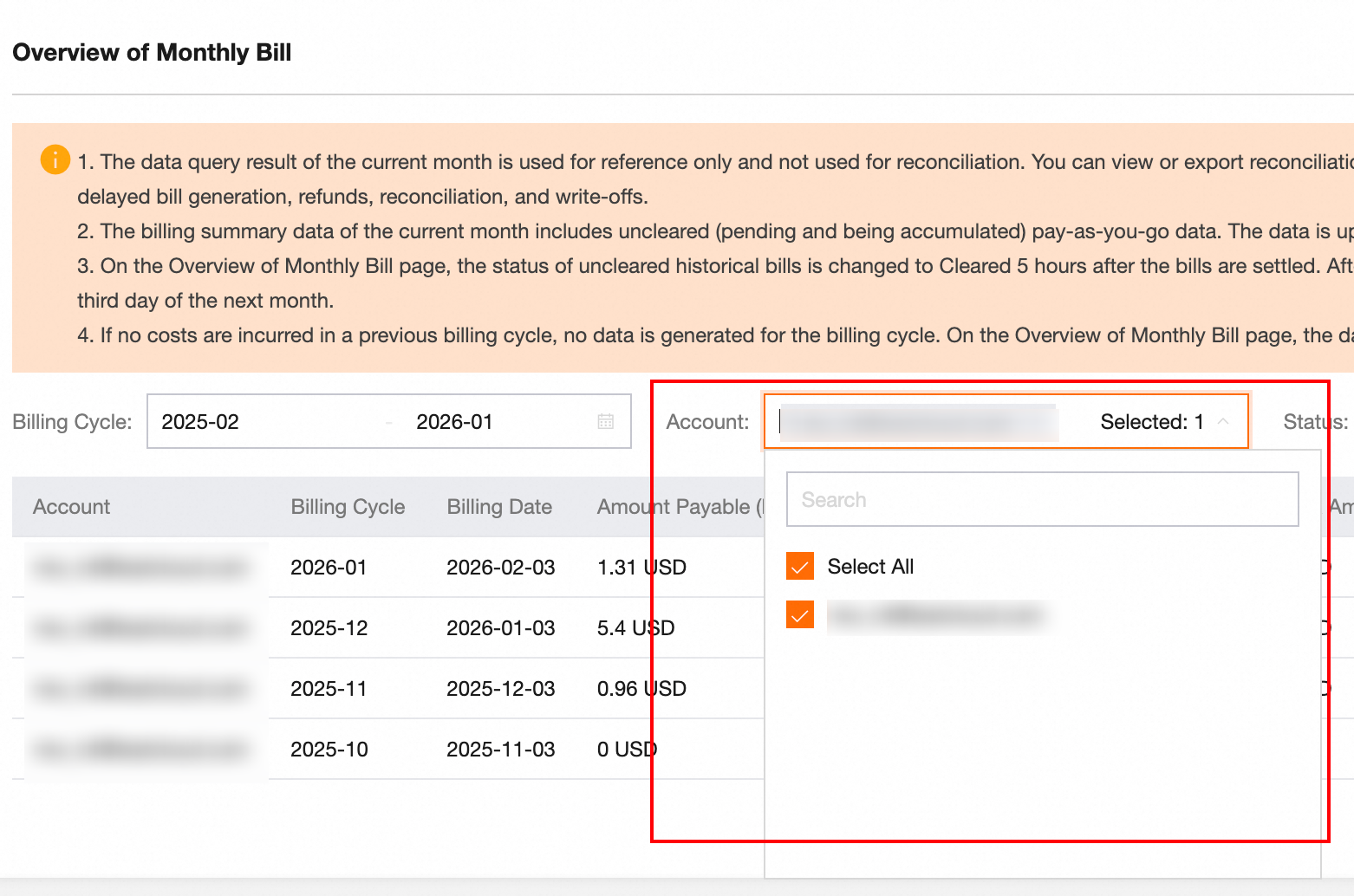
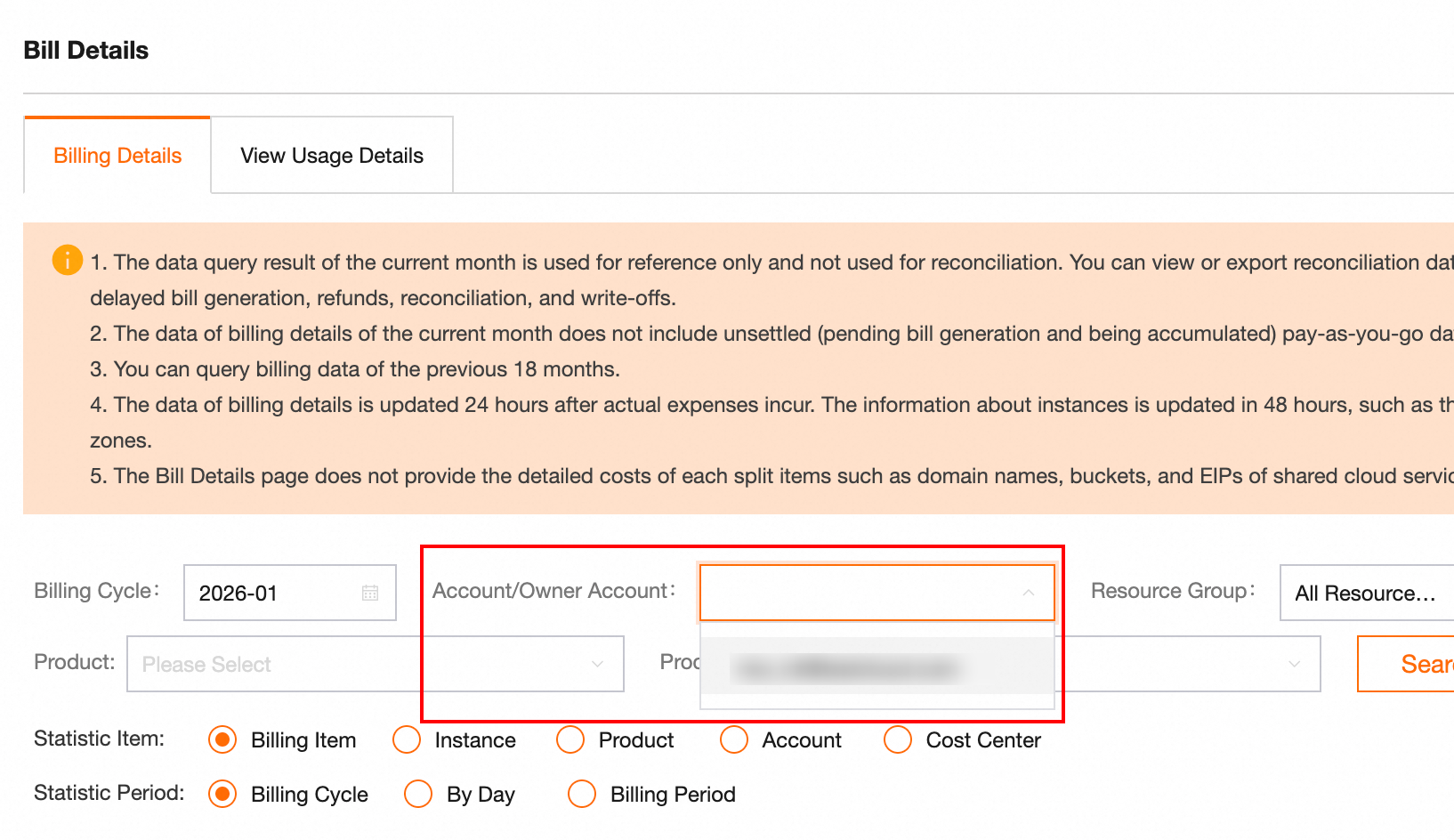
Legacy console
In enterprises that manage multiple accounts, the management account can view the bills of its member accounts by filtering by Account on the Overview of Monthly Bill and Bill Details pages.
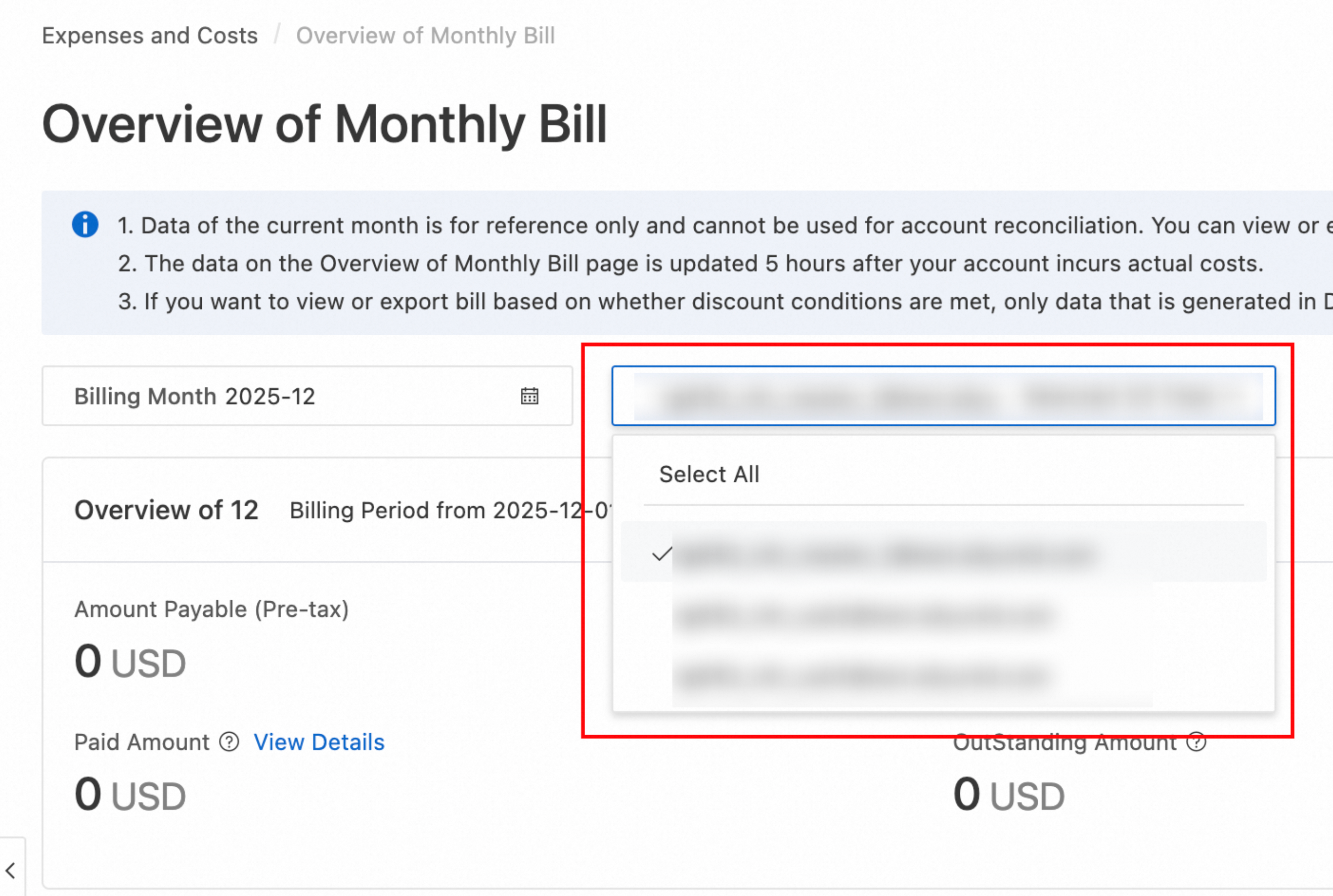
New console
In a multi-account enterprise scenario, a management account (MA) can view the bills of its member accounts on the Overview of Monthly Bill and Bill Details pages by filtering by Enterprise/Organization/Account.
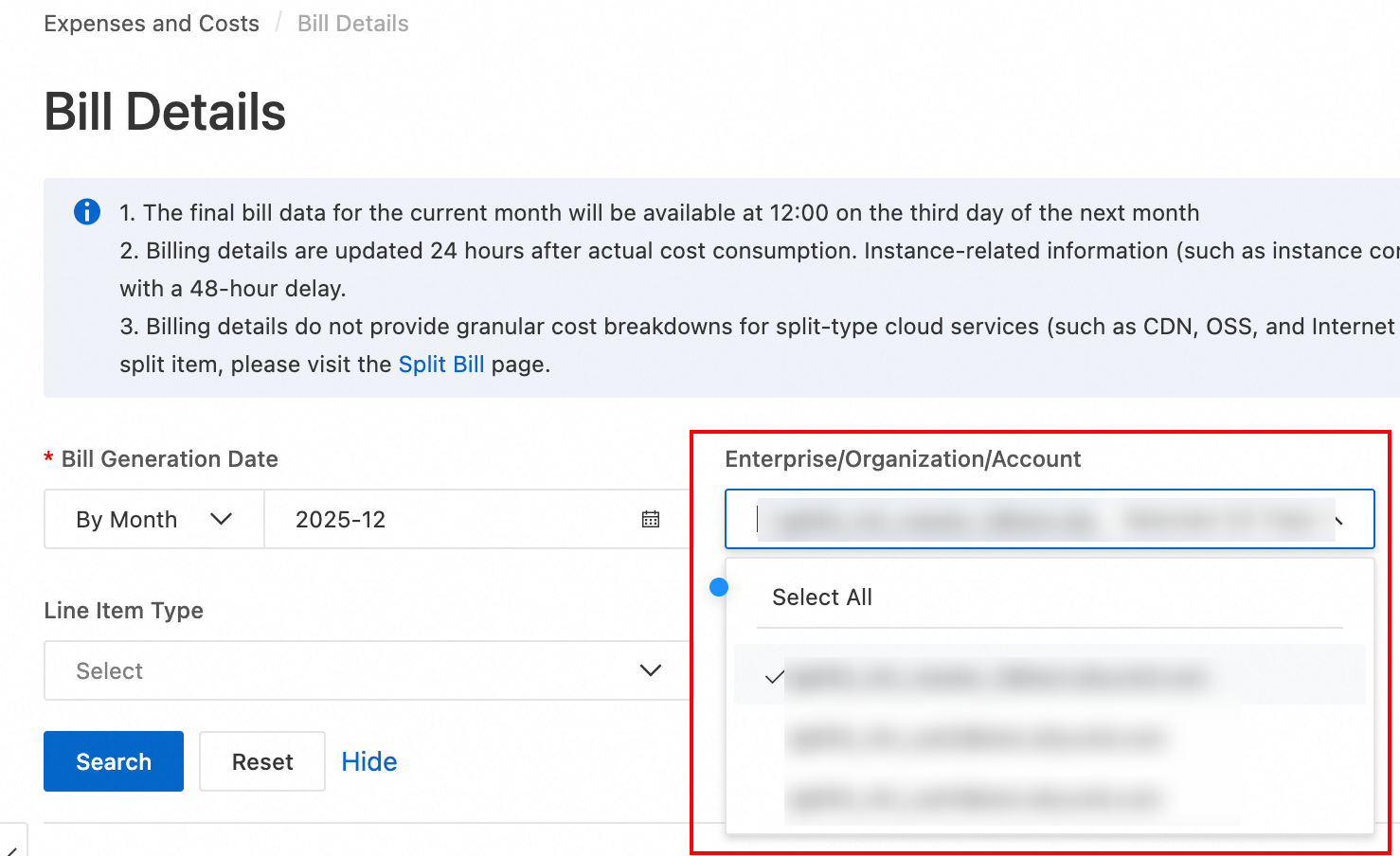
Verify bill costs
Legacy console
When you reconcile your cloud resource bill on the Bill Details page, use the following formula to calculate the Amount Payable (Before Tax):
Amount Payable (Before Tax) = list price - discount amount - coupon deduction - Savings Plans Deduction (List Price).
-
list price: The original cost of usage, calculated based on the standard rate. It is also known as the catalog price.
-
discount amount: The discount from contractual agreements or official promotions.
-
coupon deduction: The amount deducted by a coupon.
-
Savings Plans Deduction (List Price): The total list price of pay-as-you-go cloud resources covered by Savings Plans.
After calculating the Overview of Monthly Bill, verify the Amount Payable (Payment Currency) on the Overview of Monthly Bill page. This amount is typically less than or equal to the calculated pre-tax amount due to a View Details that truncates values from the 3rd to the 10th decimal place. To confirm the exact amount, click View Details for the relevant entry on the Overview of Monthly Bill page.
New console
To verify bill costs, check the Catalogue Gross Amount , Catalogue Gross Amount Deducted by Savings Plan, Discount Amount, and Deducted Amount by Coupons fields and use this formula to verify the Tax-inclusive Payable Amount:
Amount Payable = List Price - Savings Plan Deduction (List Price) - discount amount - coupon deduction amount
|
Reconciliation process |
Console display |
|
Verify the Catalogue Gross Amount The List Price is the total undiscounted price for the selected resource configurations.
|
|
|
Verify Invoice Discount application
|
|
|
Verify coupon usage
|
|
|
Verify Savings Plan deductions
|
|
|
Verify resource plan deductions
|
|
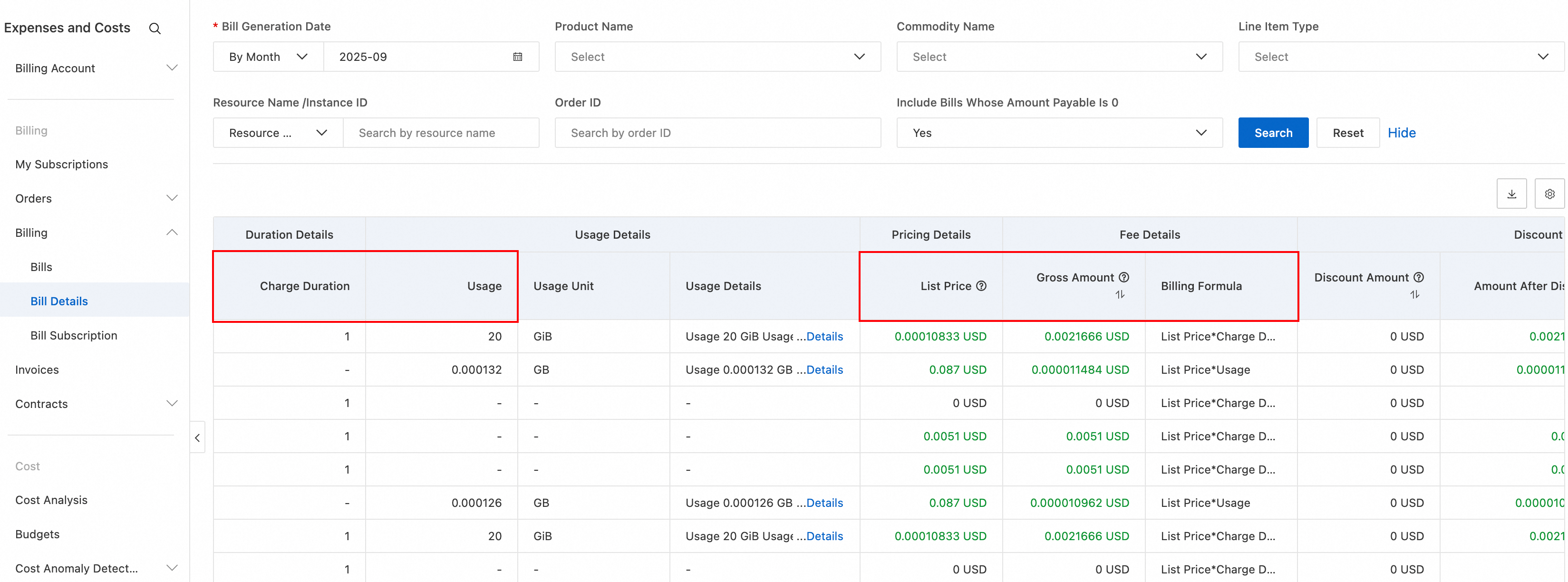
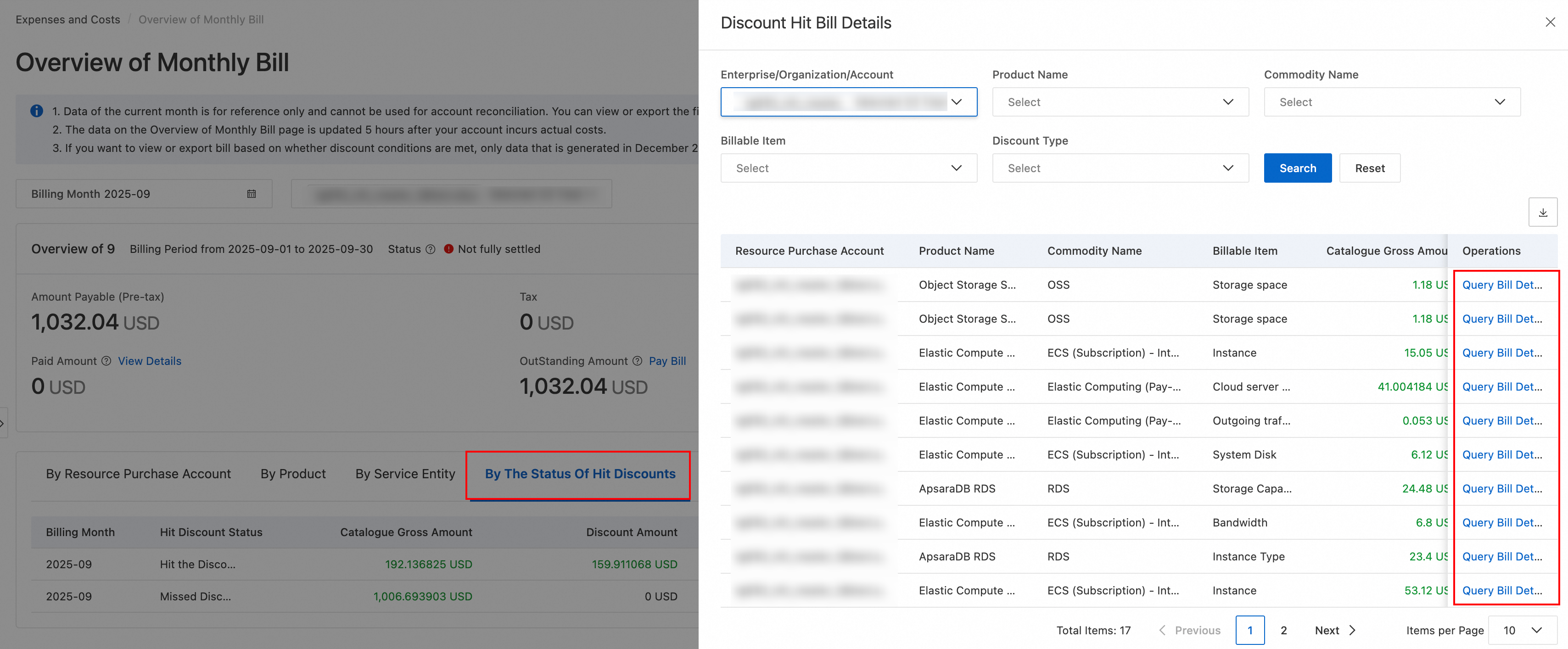
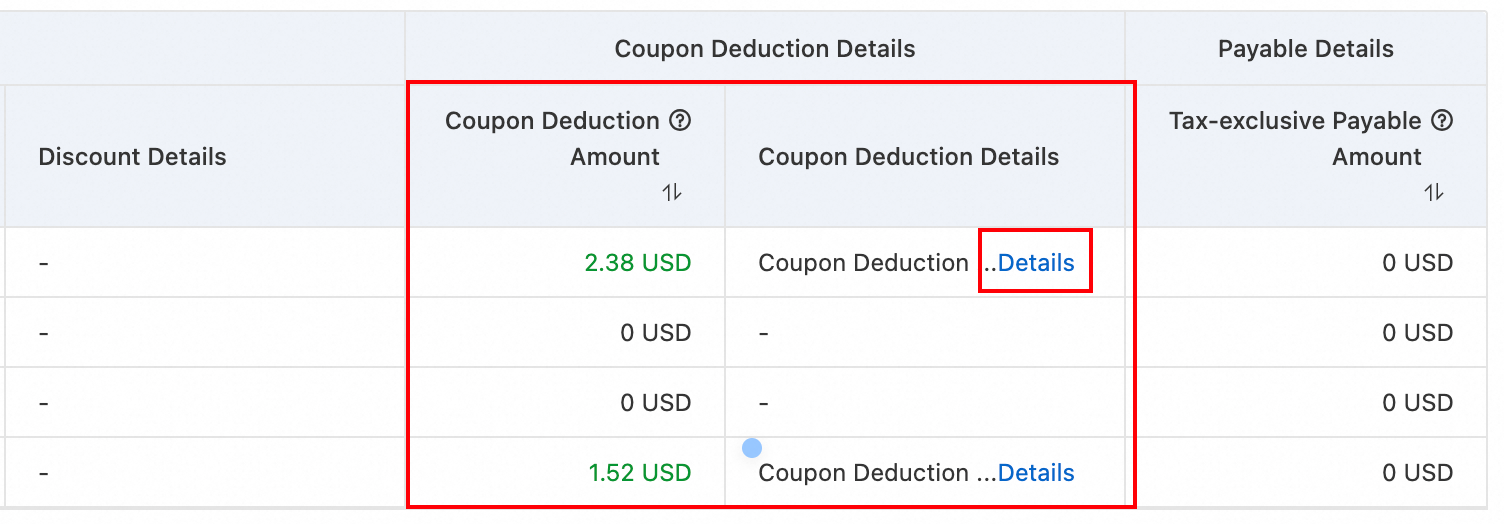
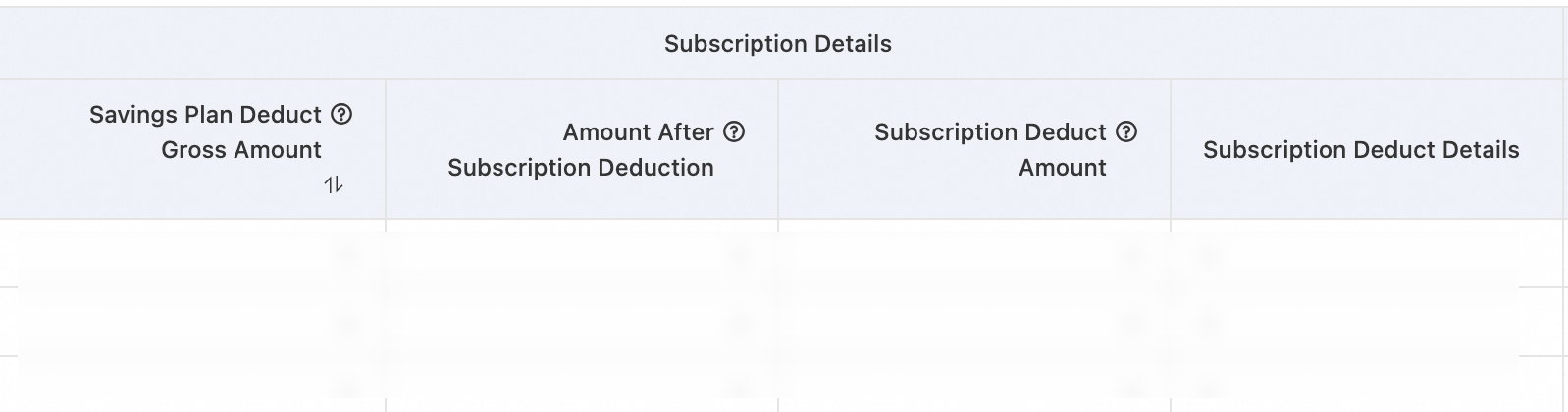
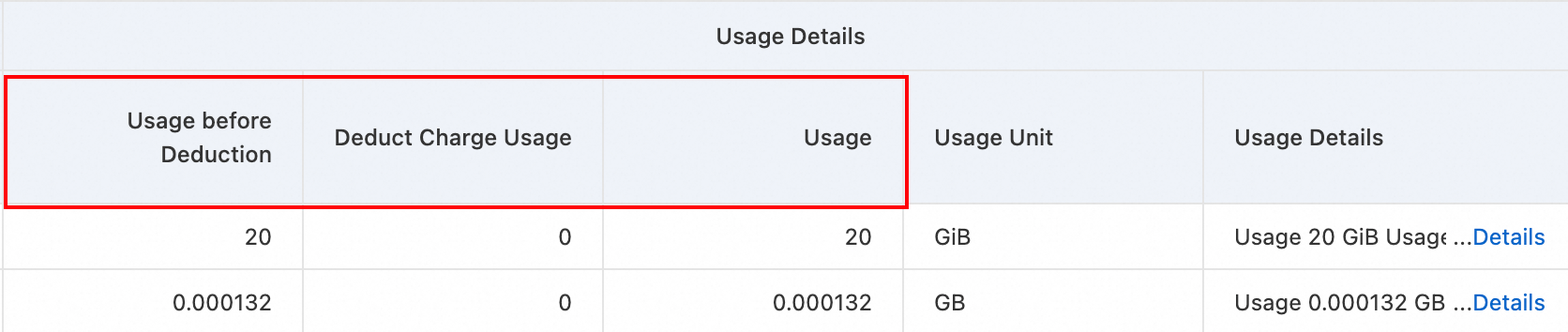
After verifying these values, substitute the Catalogue Gross Amount , Amount Offset, discount amount, and Deducted Amount by Coupons into the formula to verify the Tax-inclusive Payable Amount.
Common billing anomaly scenarios
-
Negative amounts: A negative value in bill details indicates a refund from an order cancellation, a downgrade refund, or a reversal credit for a promotional adjustment. Negative amounts offset your total payable balance.
-
Zero-amount bills: A zero-amount record can result from:
-
A coupon covering the full charge.
-
A rounding discount (amounts under CNY 0.01 are waived).
-
Free quota fully covering the usage.
-
A prepaid order split where the positive and negative charges cancel each other out.
To verify the reason, customize the columns in Bill Details to add the Discount Amount and Discount Details fields.
-
-
Zero-amount filter and the statistical item dimension: When Statistic Item is set to Billing Item, setting Contains payable amount of 0 to No excludes all zero-amount billing items. When Statistic Item is set to Product, the filter is evaluated against the payable amount aggregated at the product level. If a product contains multiple billing items, the product row is still displayed as long as its total payable amount is non-zero, and the zero-amount billing items inside that row cannot be excluded. To exclude all zero-amount data precisely, switch Statistic Item to Billing Item first, and then set Contains payable amount of 0 to No.
-
Discrepancy between the total bill and the sum of line items: The monthly bill total includes prepaid orders such as annual/monthly subscription renewals, while the pay-as-you-go details only show usage-based charges. Additional factors include cross-month settlement and cumulative rounding. For reconciliation, use Bill Overview to verify totals at the product level.
-
Negative opening balance: A negative opening balance indicates that there were unpaid arrears from the previous billing cycle.
FAQ
Multiple billing records for a single instance
A single instance may have multiple line items because:
-
Separate metering for input and output: Model Studio inference meters input and output tokens separately. Verify by checking the "resource instance ID" or "instance ID (for billing granularity)" field.
-
Different billing items: Batch and non-batch calls are separate billing items. Multimodal and text consumption are also separate. Verify by checking the "billing item" or "billing item name" field.
-
Different billing cycles: Starting from 10:00:00 on November 6, 2025, the billing cycle for Model Studio inference services (excluding batch calls) changed from hourly to per-minute. This generates multiple records per minute for an instance. Verify by checking the "consumption time", "service start time", or "service end time" fields.
The 'generating' bill status
The Overview of Monthly Bill page shows up-to-date charges. The final bill for a month becomes available after 12:00 on the 2nd of the following month. Before then, the status shows Being billed as the system is still accumulating charges.
How do I troubleshoot unexpected Model Studio (Bailian) charges, high token consumption, or billing discrepancies?
Two channels for verifying usage
Bill Details shows aggregated billing data only. For token-level usage at the individual API call, go to the Model Studio console > Model Monitoring or Model Observability page. Note that bill data has a delay of 1–3 hours relative to actual usage.
Common causes of unexpectedly high usage
-
The free quota has been exhausted and the Stop when free quota is used up option was not enabled.
-
A high-cost model was used (for example, qwen-max series has different per-token prices for input and output).
-
Web search and plugin calls do not qualify for free quota deductions.
-
Video generation is billed per second of generated video.
-
Batch and non-batch calls are separate billing items and have different pricing.
Understanding cost components
Model Studio charges are composed of independent billing items. Review each separately in Bill Details:
-
Inference fees: Charges for model API calls (input and output tokens billed separately).
-
Deployment fees: Charges for dedicated model deployments.
-
Knowledge base (RAG) compute fees: Charges for retrieval-augmented generation compute resources.
Mitigation steps
-
Delete unused API keys to prevent unauthorized usage from key leaks.
-
In the Model Studio console, enable the Stop when free quota is used up option to automatically halt usage once the free tier is exhausted.
How do I troubleshoot a sudden bill increase, rapid account balance decrease, or unexpected charges?
Step-by-step troubleshooting
-
Go to Bill Overview and compare spending by product across multiple months to identify which product caused the cost spike.
-
In Bill Details, switch the statistical period to By Day or Details to pinpoint the specific billing item and instance ID responsible for the increase.
Common causes of sudden cost increases
-
ECS or CDT outbound internet traffic surged unexpectedly (billed per GB of outbound traffic).
-
OSS storage volume or API request count increased significantly.
-
SMS message volume was abnormally high.
-
A resource plan, savings plan, or free quota was exhausted, causing usage to automatically switch to pay-as-you-go pricing.
-
A subscription ECS instance has a public bandwidth configuration set to pay-by-traffic, generating additional traffic charges beyond the subscription fee.
-
A trial resource (such as Security Center) expired and automatically switched to pay-as-you-go billing.
About deferred balance deductions
If your account balance decreases but no corresponding bill appears in Bill Details, this is because pay-as-you-go products continuously accumulate costs and deduct from your balance in near real time. The formal bill is generated with a delay. To view near-real-time usage, switch the statistical period to By Hour in Bill Details.
Cost optimization recommendations
-
For traffic-intensive products, consider purchasing a shared traffic plan or switching to a fixed-bandwidth billing mode.
-
For storage products, consider purchasing a resource plan to offset pay-as-you-go charges.
How do I find resources and services currently generating charges on my account?
Entry path
Log on to the Expenses and Costs console > Bills > Bill Details.
Filtering tips
Set the statistical period to By Day or Details, then review resources that incurred charges in the last 24 hours. Focus on pay-as-you-go resources, as these continue to accumulate costs as long as they exist.
Stopping charges
Each product requires you to manually delete resources or disable the service in its respective console to stop billing. Releasing an ECS instance, for example, does not automatically release its attached cloud disks, snapshots, or EIPs — these must be released separately.
Querying billing data via API
Developers can use the BSS OpenAPI to programmatically retrieve billing and account data.
Common APIs
|
API |
Description |
|
QueryBillOverview |
Retrieves the monthly bill summary for an account |
|
QueryInstanceBill |
Retrieves instance-level bill details |
|
QueryAccountBalance |
Queries the current account balance |
|
QueryResourcePackageInstances |
Queries resource plan usage and deduction details |
For online testing and debugging, use Alibaba Cloud OpenAPI Explorer.
Notes
-
(Recommended) Use the primary account's AccessKey to call billing APIs.
-
RAM users must be granted the AliyunBSSReadOnlyAccess policy before calling billing APIs.
-
Finance APIs return data with a delay and do not support querying individual API call-level usage details.