Query, edit, share, move, and delete forms on the form management page.
Prerequisites
A form has been created. For more information, see Create a form.
Entry points
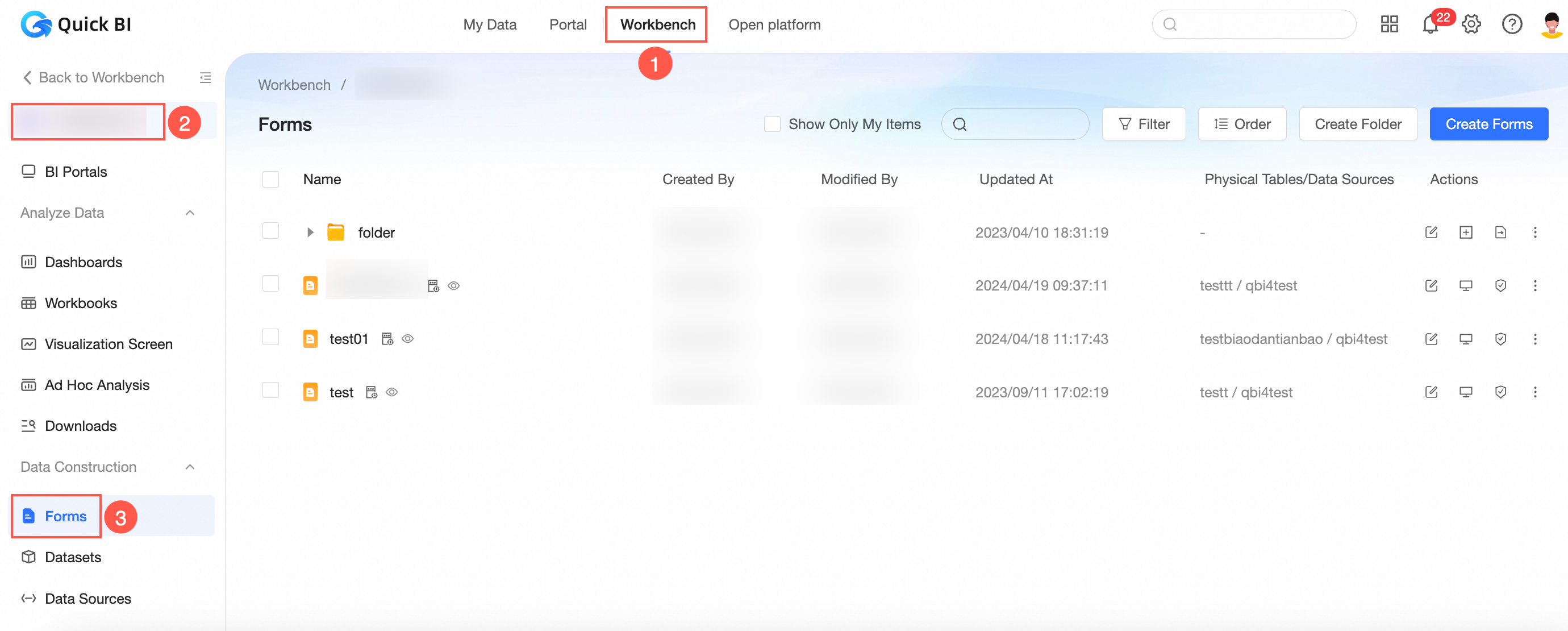
To access the form management page, follow the instructions in the figure below.
Edit
-
Click Forms in the left-side navigation pane.
-
On the form management page, identify the desired form, right-click on it, and choose 'Edit'.
You can also click the
 icon next to the form you want to edit.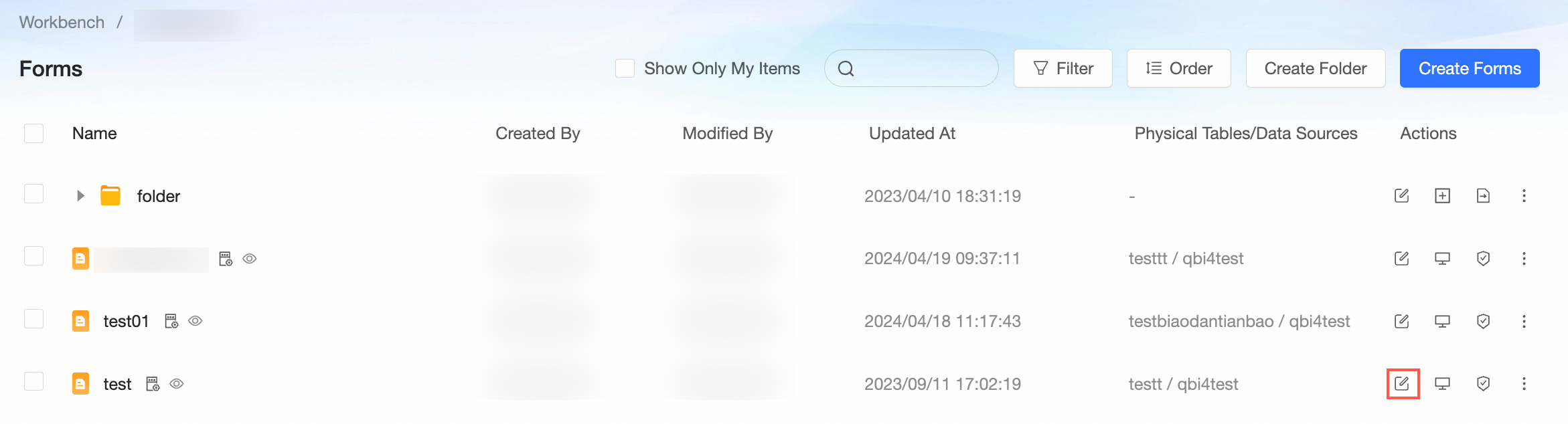
-
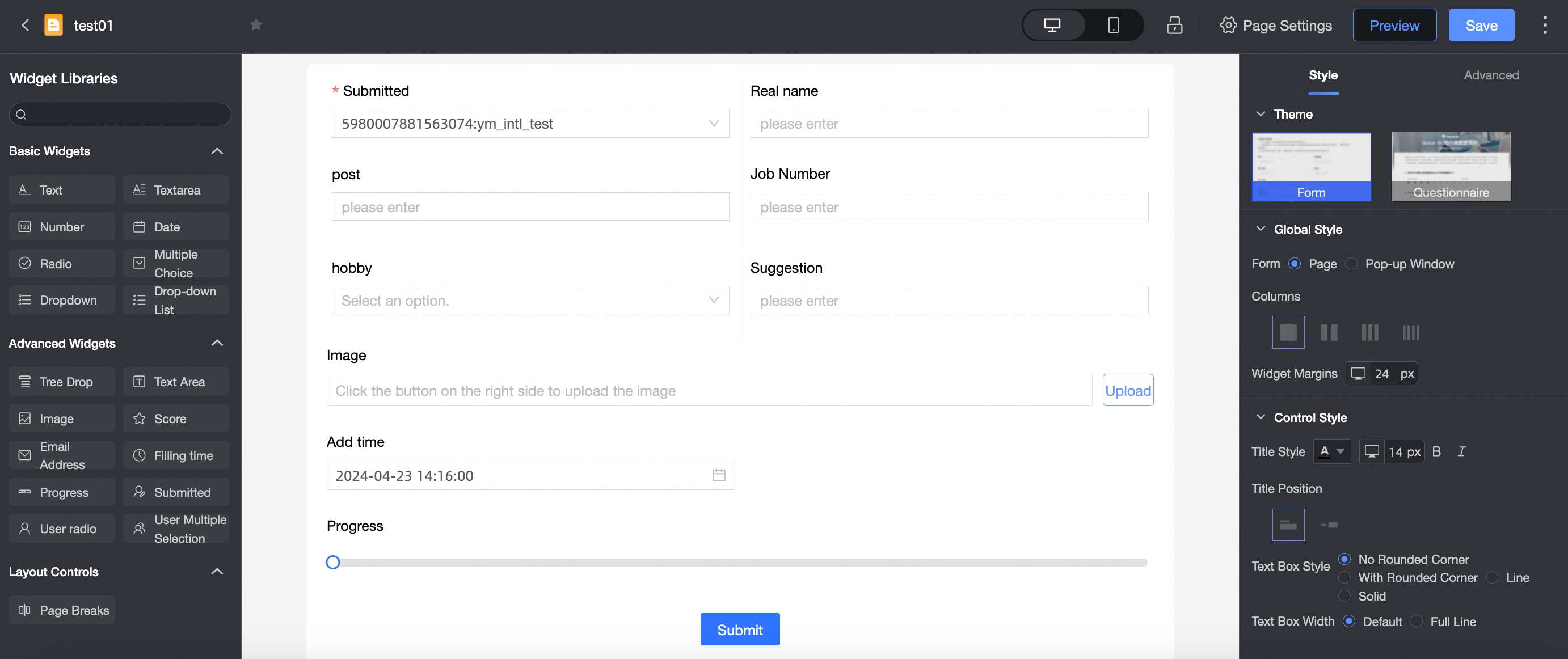
Make the necessary edits on the form editing page.
Query
-
Click Forms in the left-side navigation pane.
-
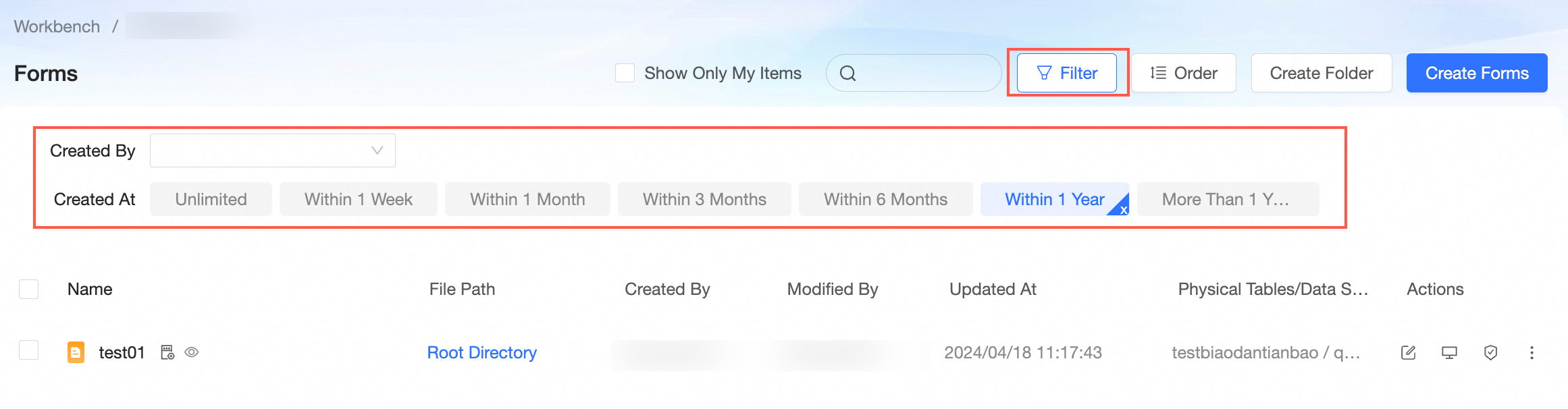
On the Forms management page, search for forms using three methods. You can search for forms that you have created.
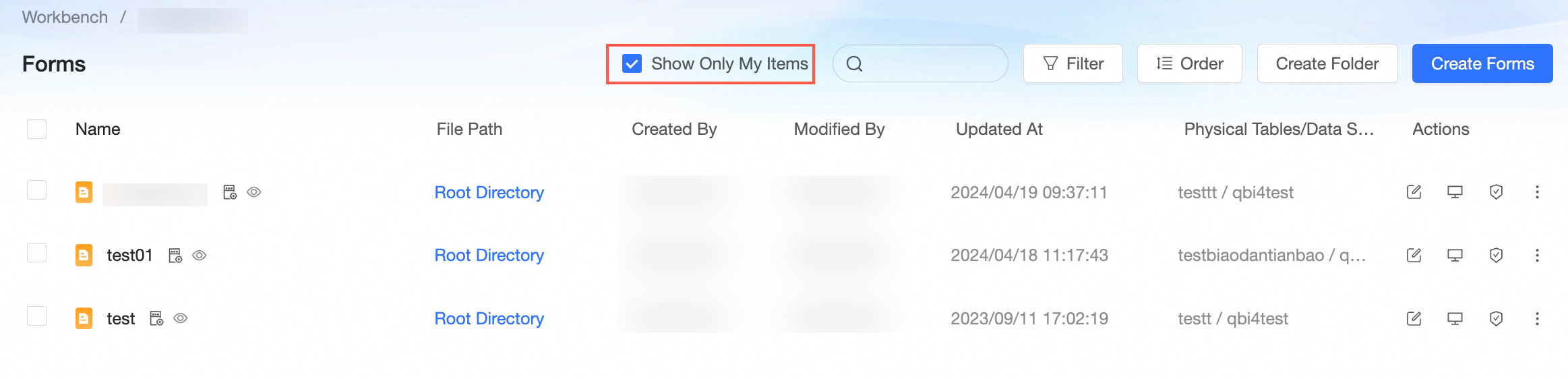

Filter forms by time and creator.
Transfer and rename
-
Click Forms in the left-side navigation pane.
-
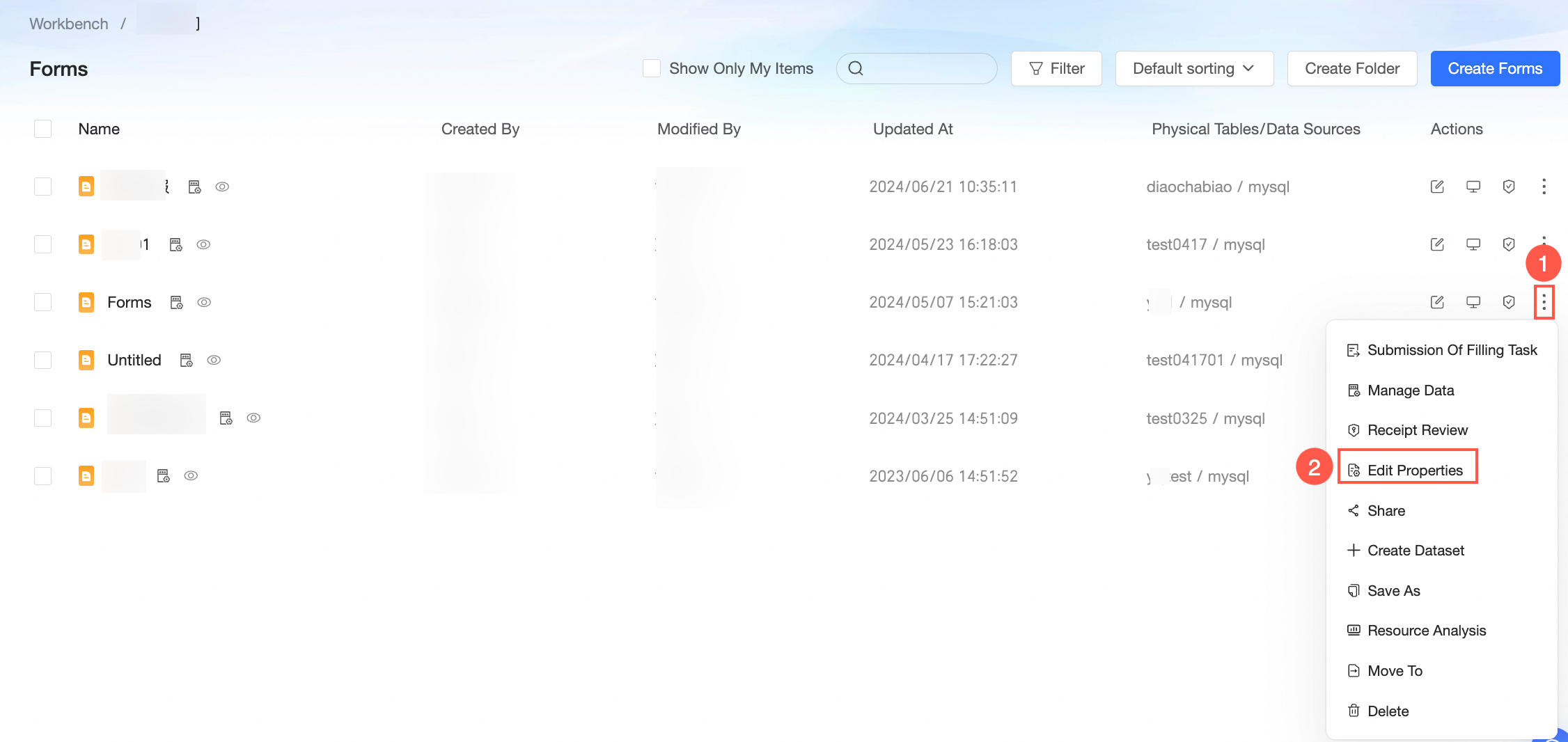
On the Forms management page, identify the desired form, right-click on it, and choose Properties.
-
In the Properties panel, set the following parameters.
Parameter name
Description
Name
Modify the form name to rename it.
NoteForm names must be unique within the same folder but can be the same across different folders.
Owner
Select an owner from the drop-down list to transfer the form.
Description
Add a description to the form.
-
Click Confirm.
Collaborative authorization
-
Click Forms in the left-side navigation pane.
-
On the Forms management page, click the
 icon to open the Collaborative Authorization page.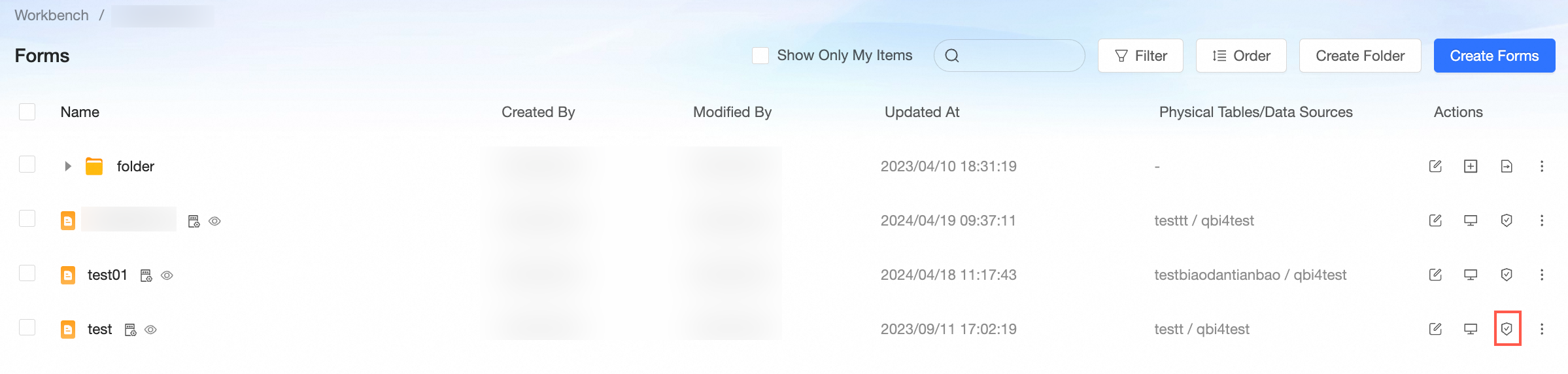
Manage data
-
The form's developer and the workspace administrator can manage all data within the form.
-
If the form is not shared with you or you only have the public URL, you cannot manage the form's data.

Share
-
Click Forms in the left-side navigation pane.
-
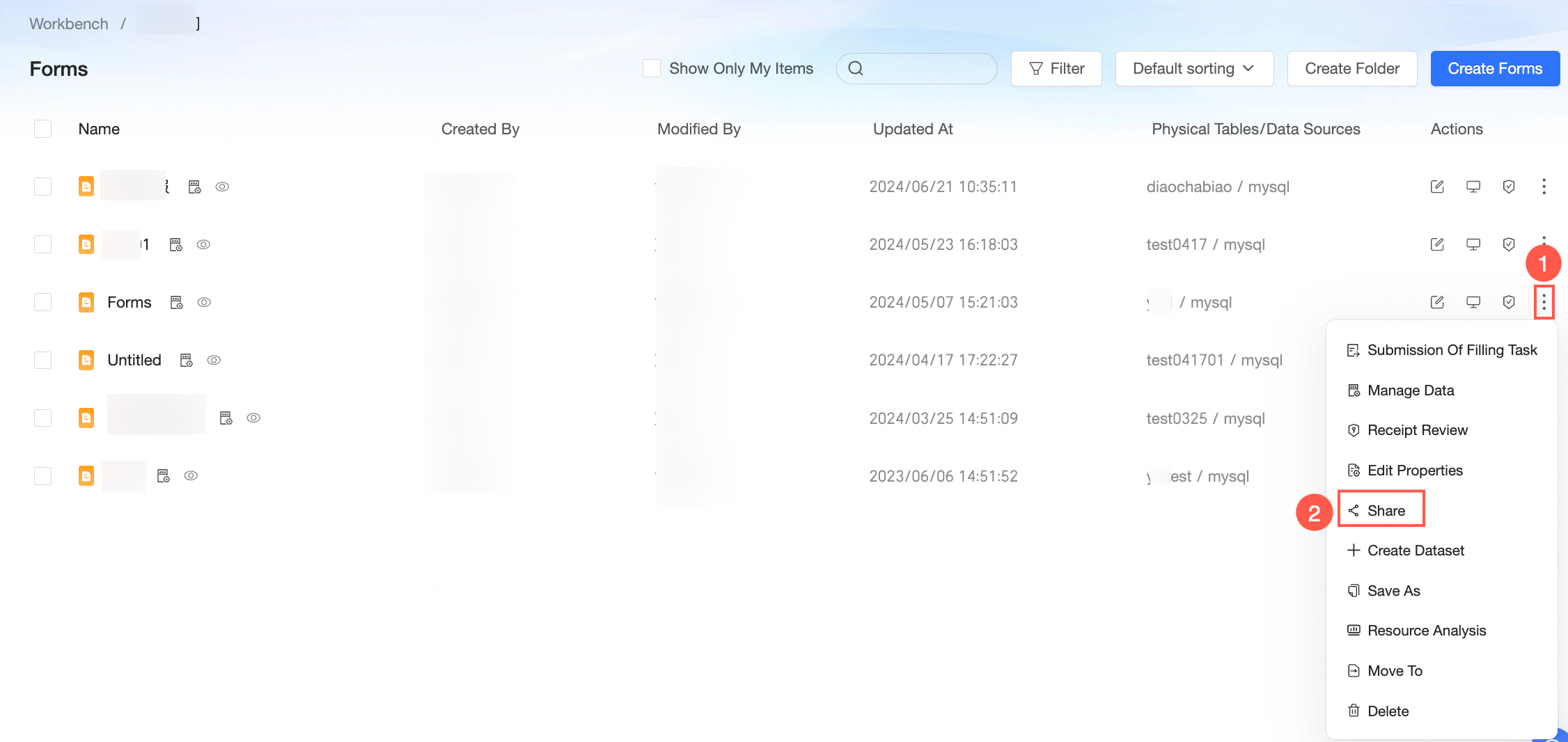
On the Forms management page, follow the instructions in the figure below to open the sharing page.
-
In the Private Link Sharing dialog box, copy the URL and share it with authorized users.
Create datasets
-
Click Forms in the left-side navigation pane.
-
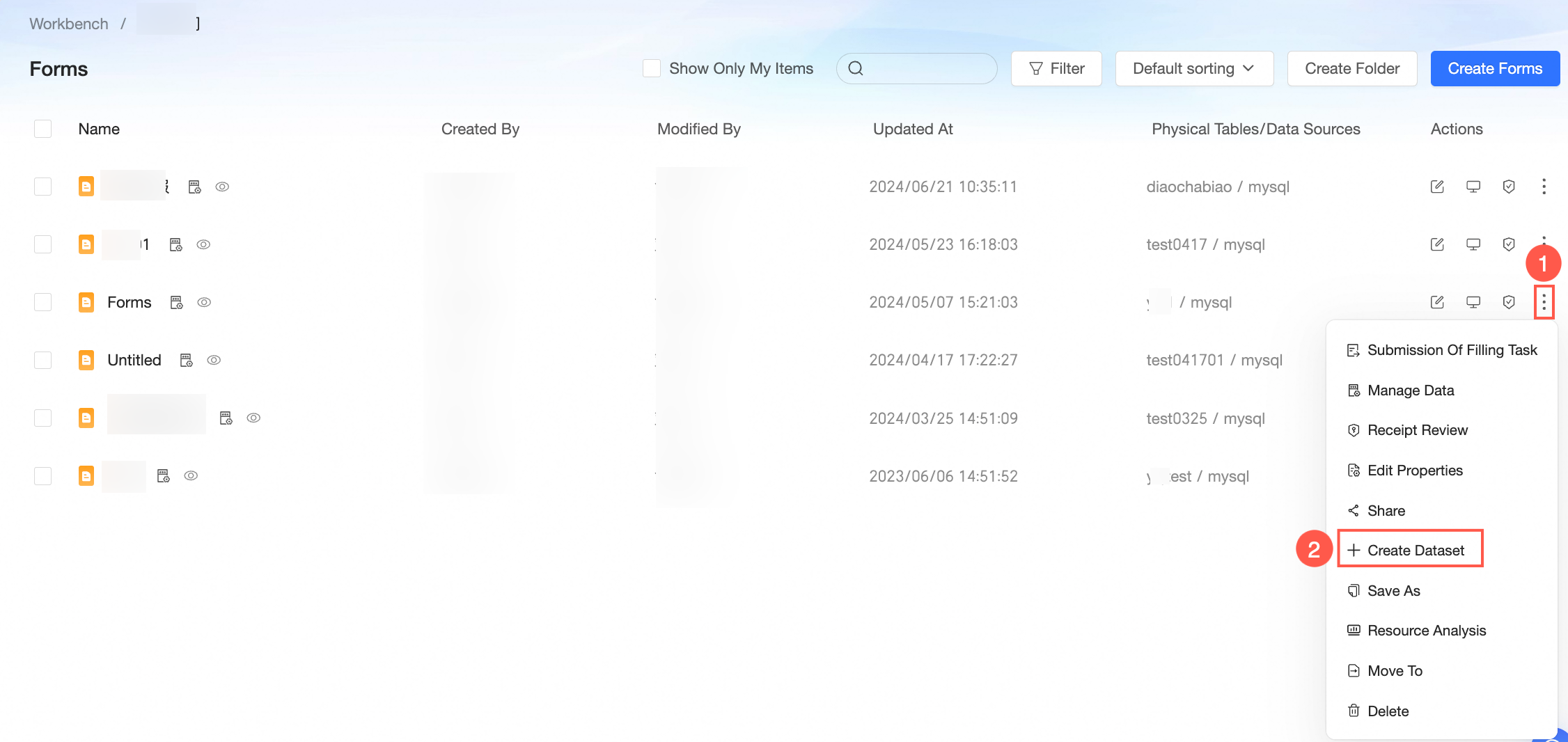
On the Forms management page, follow the instructions in the figure below to create a dataset.
-
In the Create Dataset dialog box, specify the dataset name and location, and then click Confirm.
Save as a form
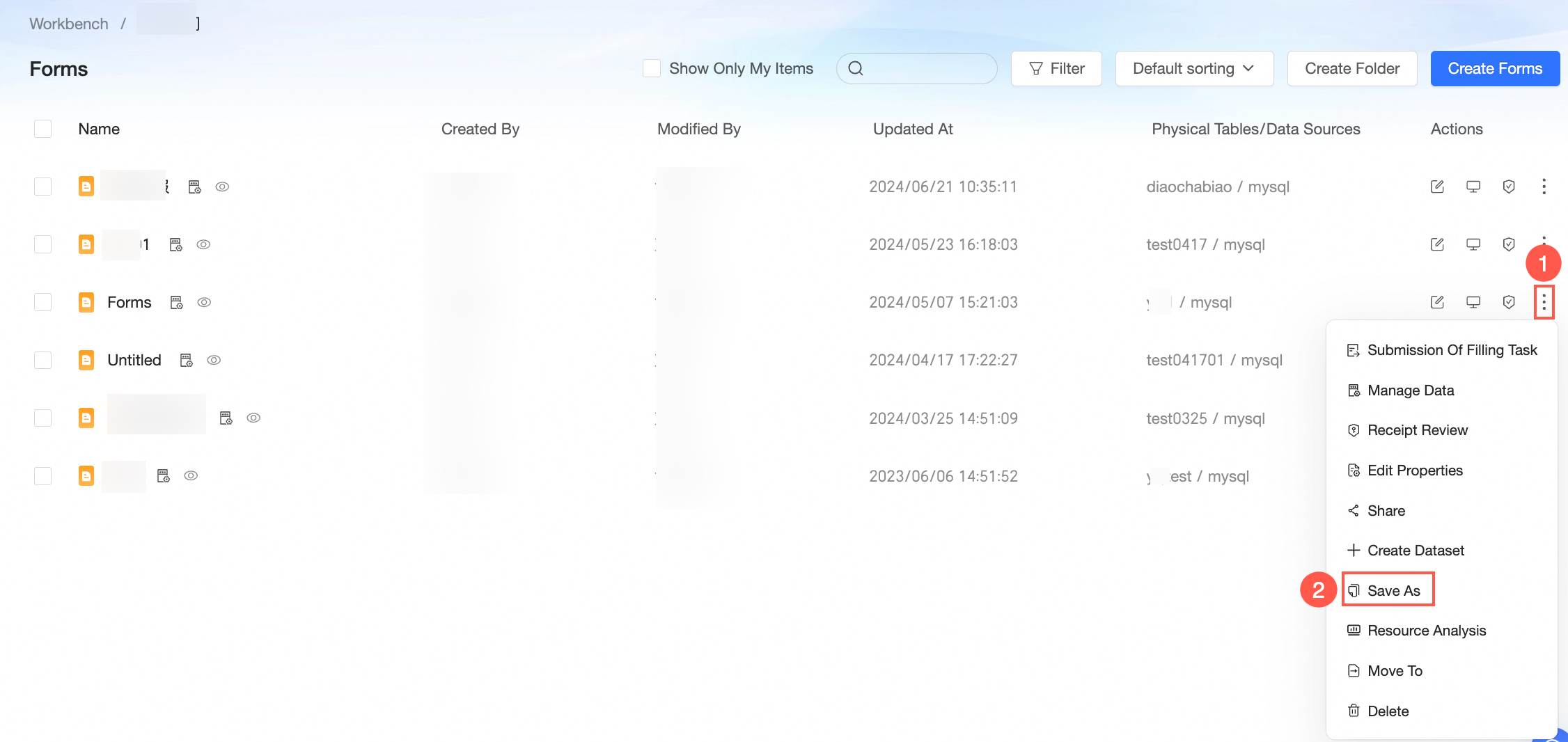
Save an existing form as a copy that retains the same control configurations and layout. This helps you quickly create similar forms.
-
Click Forms in the left-side navigation pane.
-
On the Forms management page, follow the steps in the figure below to replicate a form.
-
In the Save Settings dialog box, click Confirm.
Move to
-
Click Forms in the left-side navigation pane.
-
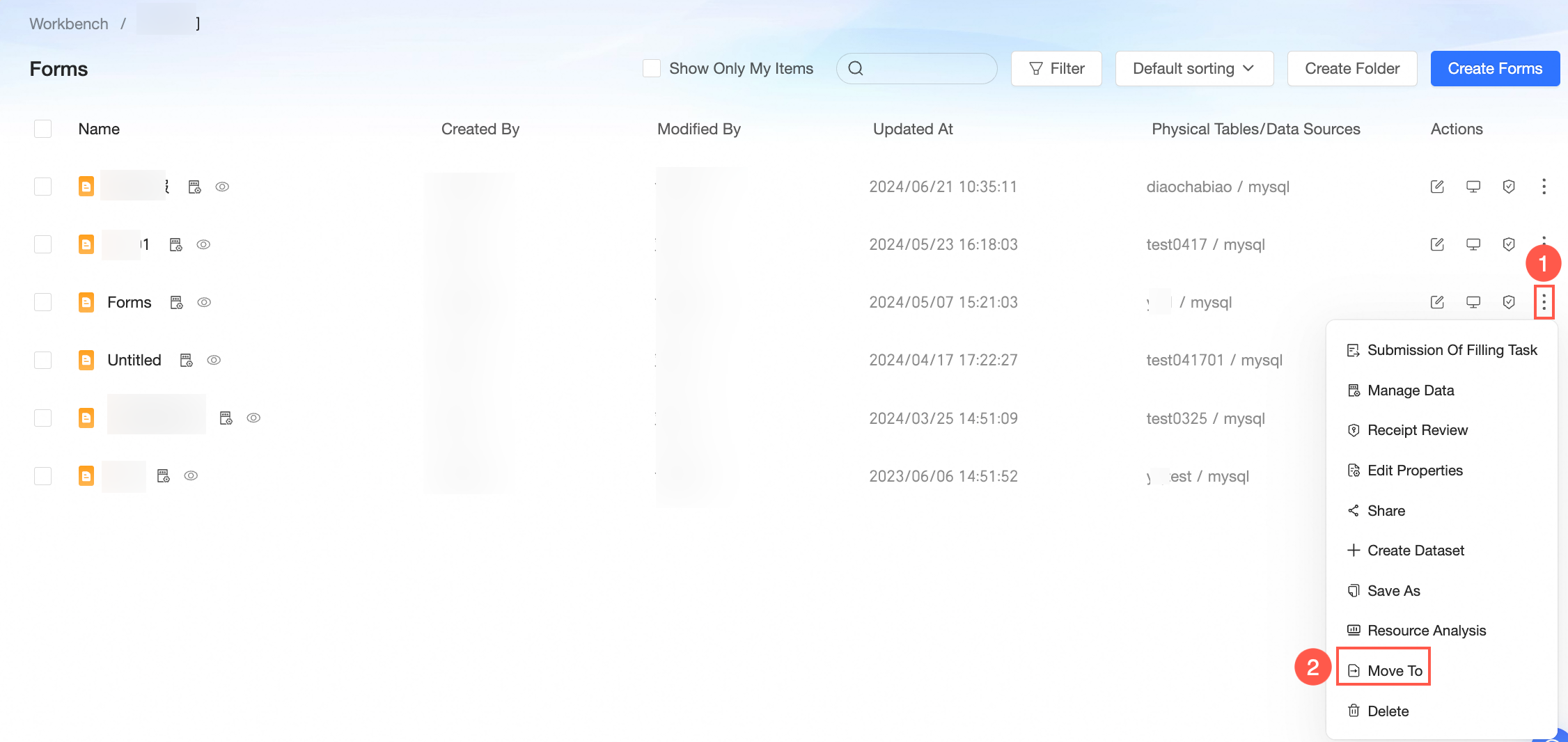
On the Forms management page, follow the instructions in the figure below to move a form.
-
In the Move Resource To panel, select the destination directory and click Confirm.
Delete
-
Click Forms in the left-side navigation pane.
-
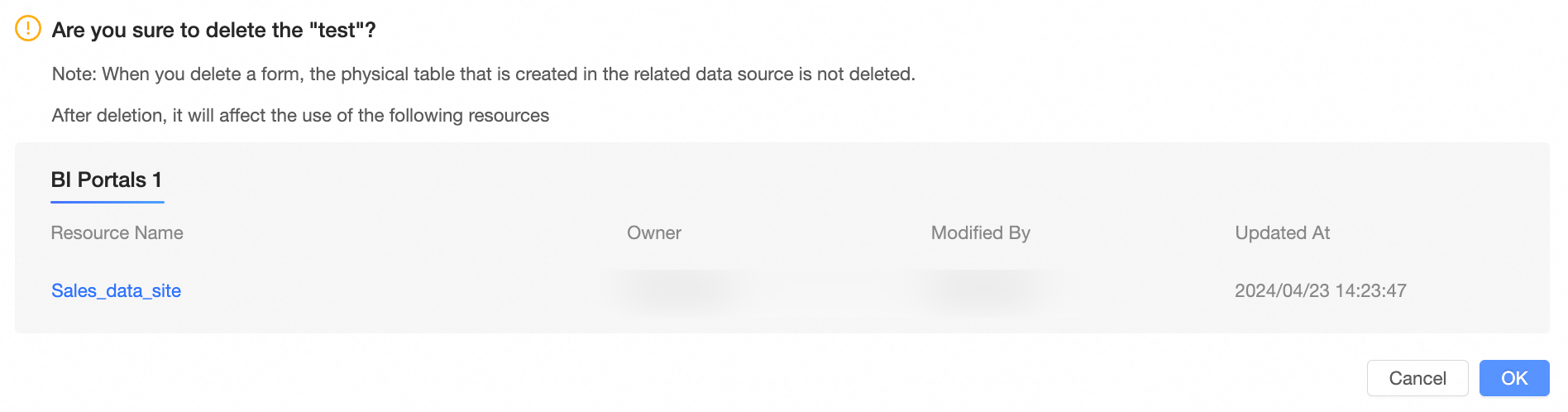
To delete a form, navigate to the Forms management page and follow the steps illustrated below.
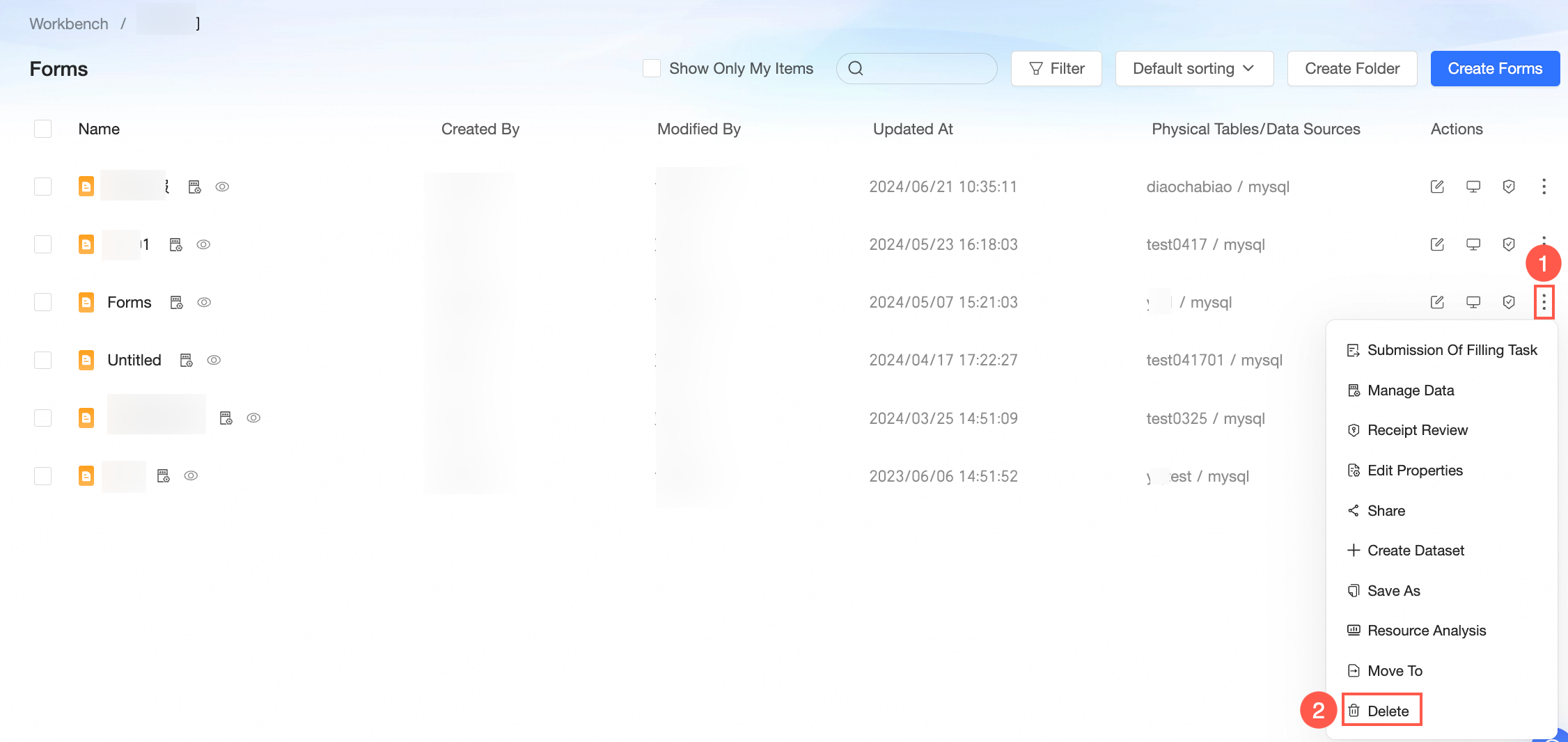
If the form has been used to create a BI portal, a prompt displays the names, owners, editors, and last modified times of the affected published resources.
-
Click Confirm in the confirmation dialog box.
Switch between light and dark themes
-
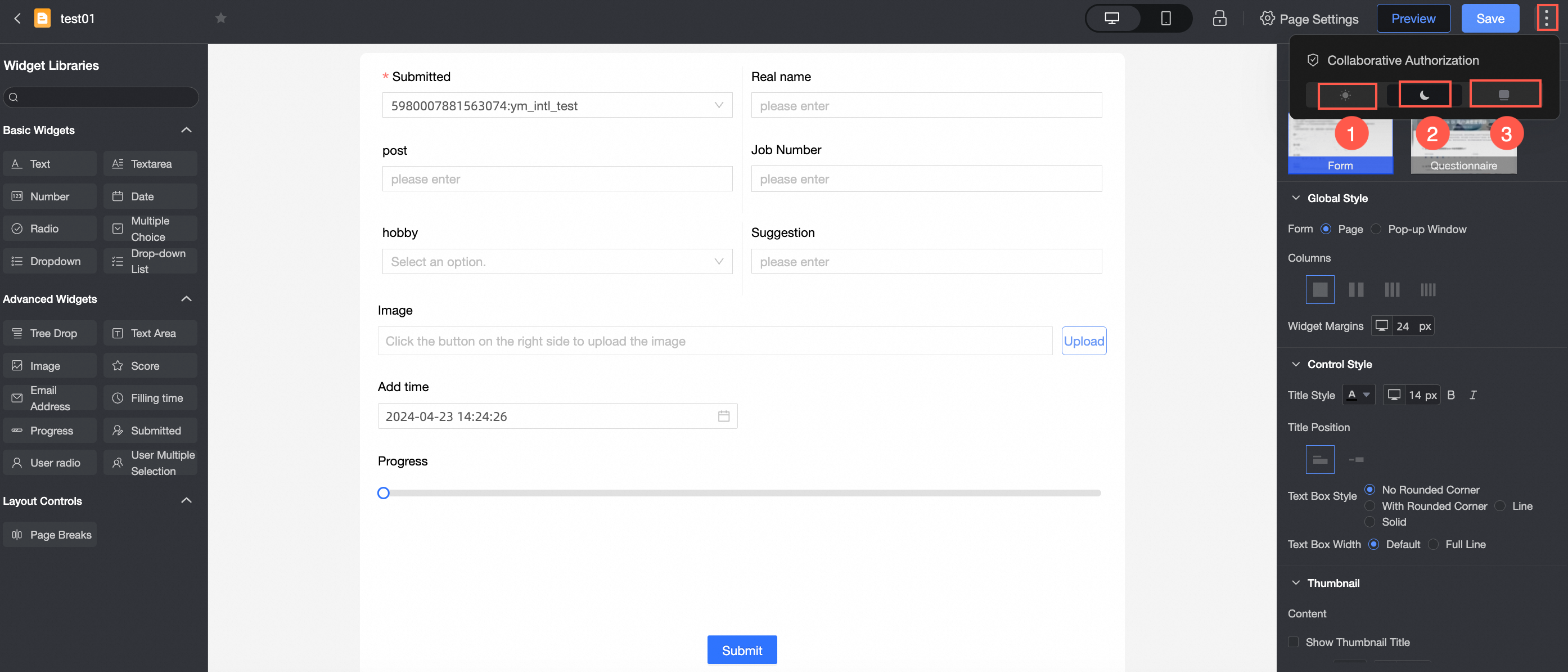
To switch between light and dark themes for forms, click the
 icon in the upper-right corner of the dashboard editing page and find the theme switch icon at the bottom.
 Note
NoteTheme switching applies at the account level, not the module level. For example, switching forms to the light theme also applies the light theme to other theme-supporting modules such as dashboards and workbooks.
①Light Theme
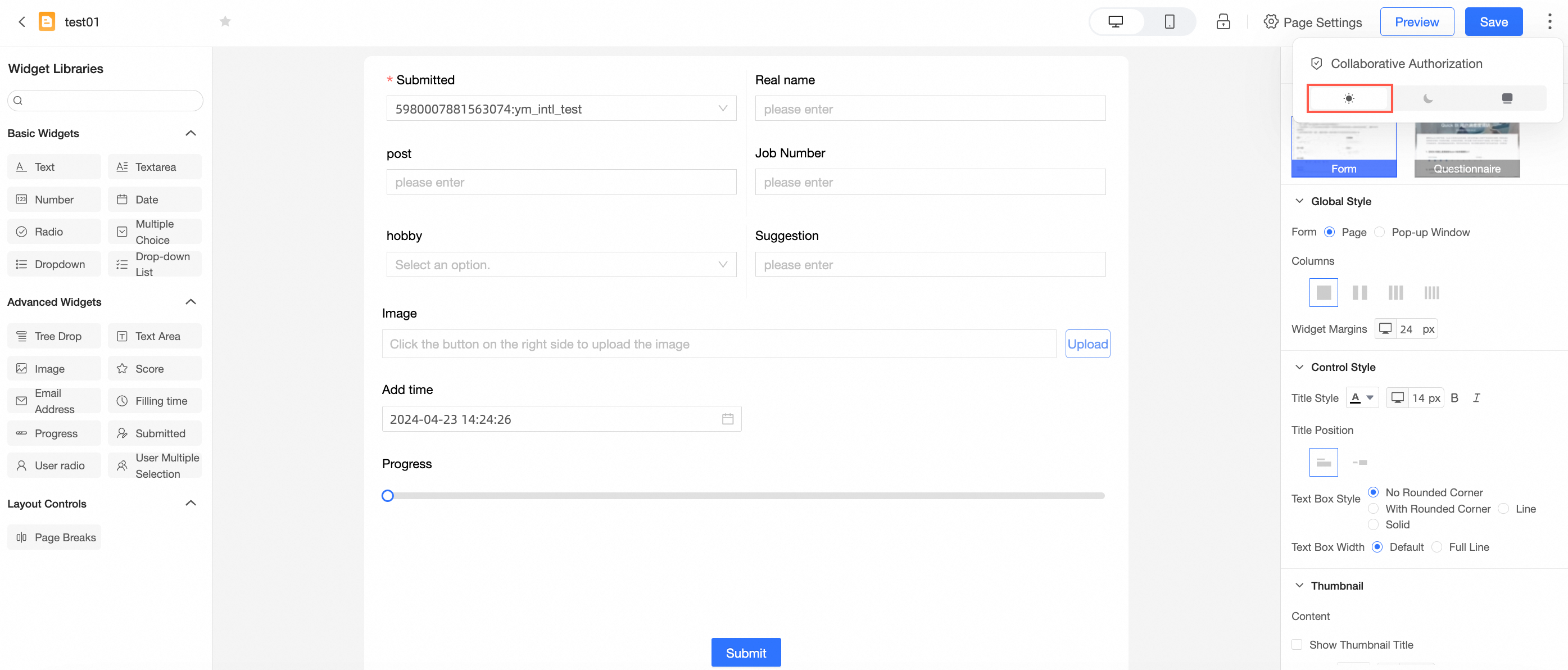
②Dark Theme
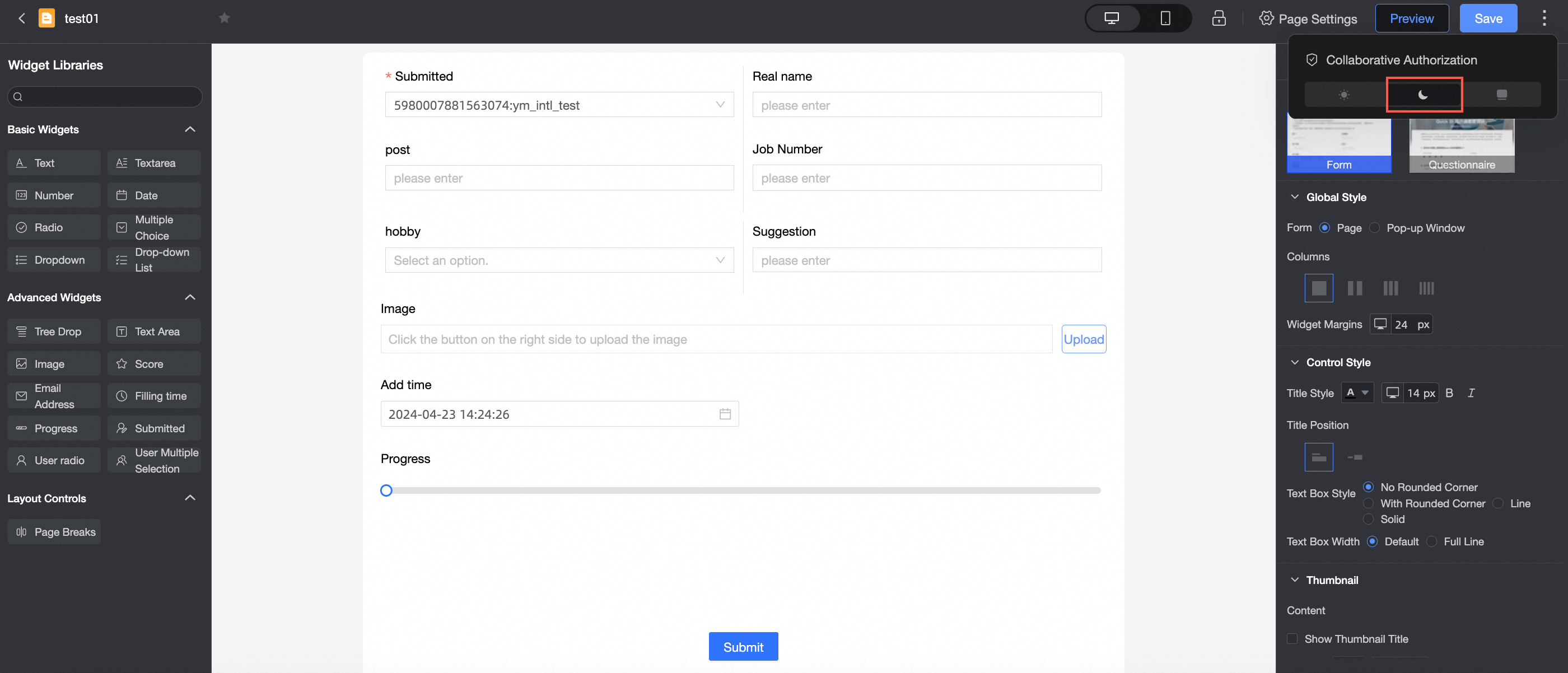
③Follow System
Uses the system style defined in custom configurations.
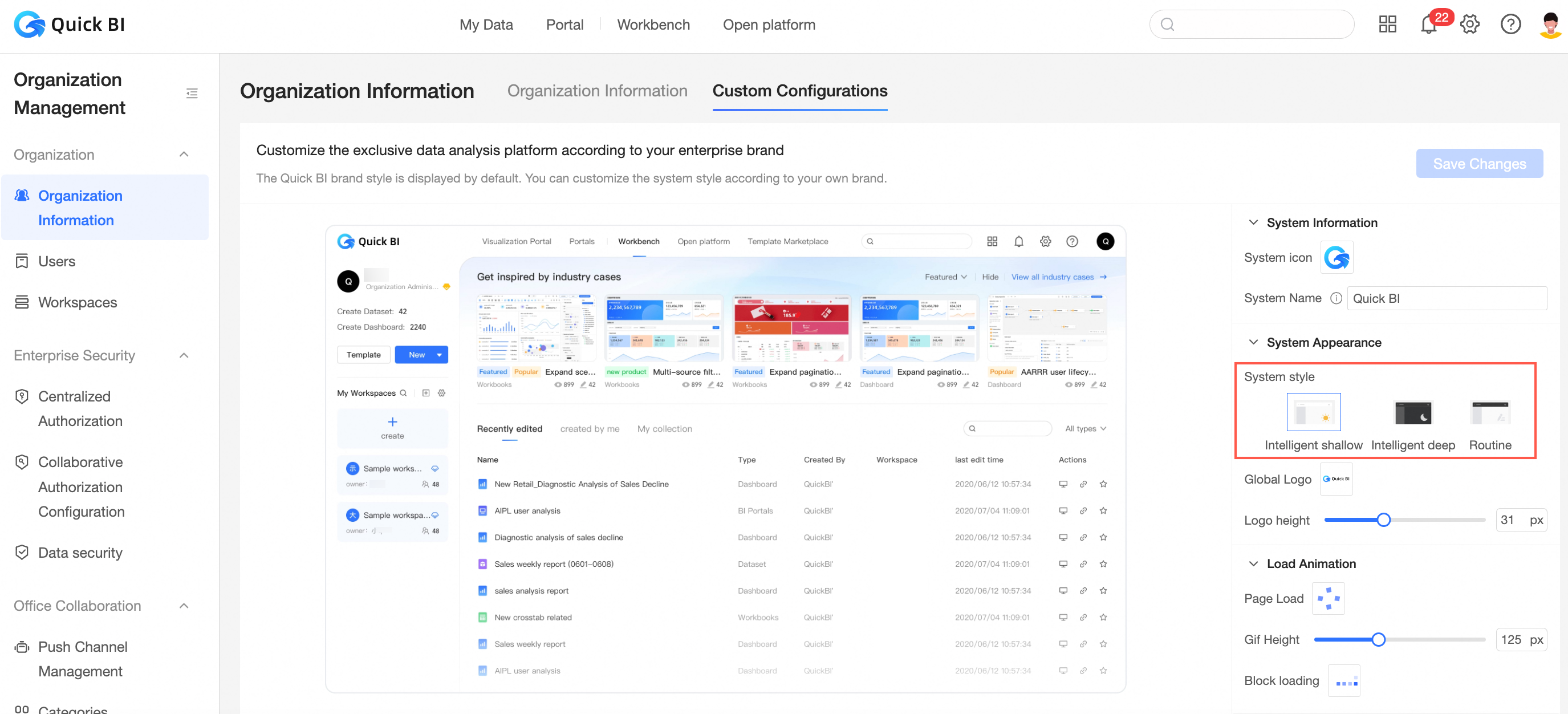
For more information, see System theme customization.
NoteSystem style custom configurations are available only in tenant management. Module-level themes take precedence over organization-level themes.