Search for, rename, delete, and transfer datasets. You can also grant dataset permissions to specific workspace members or apply for permissions on datasets owned by others.
Prerequisites
You have entered the dataset edit page. For more information, see Create a dataset.
Search for a dataset
On the Datasets page, you can search for datasets in three ways:
-
Search for datasets that you created.
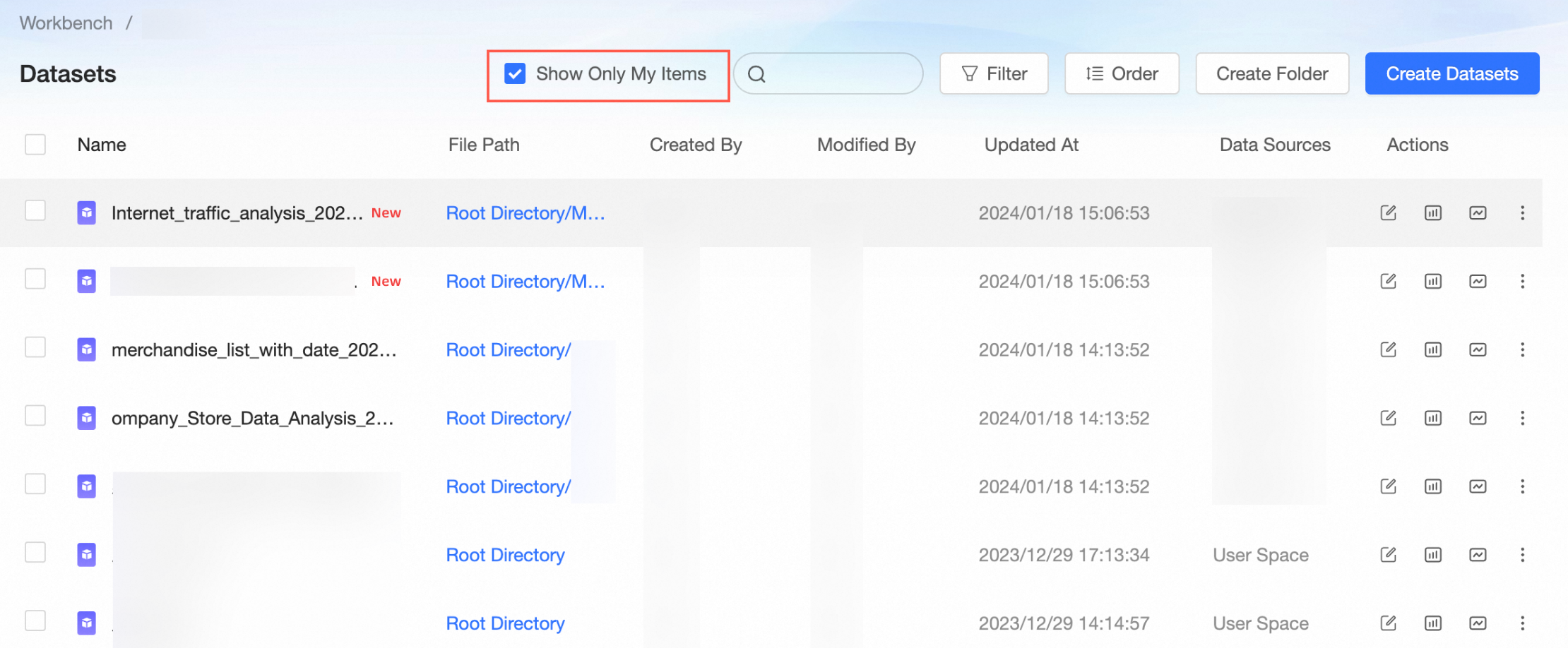
-
Search for a dataset by name.
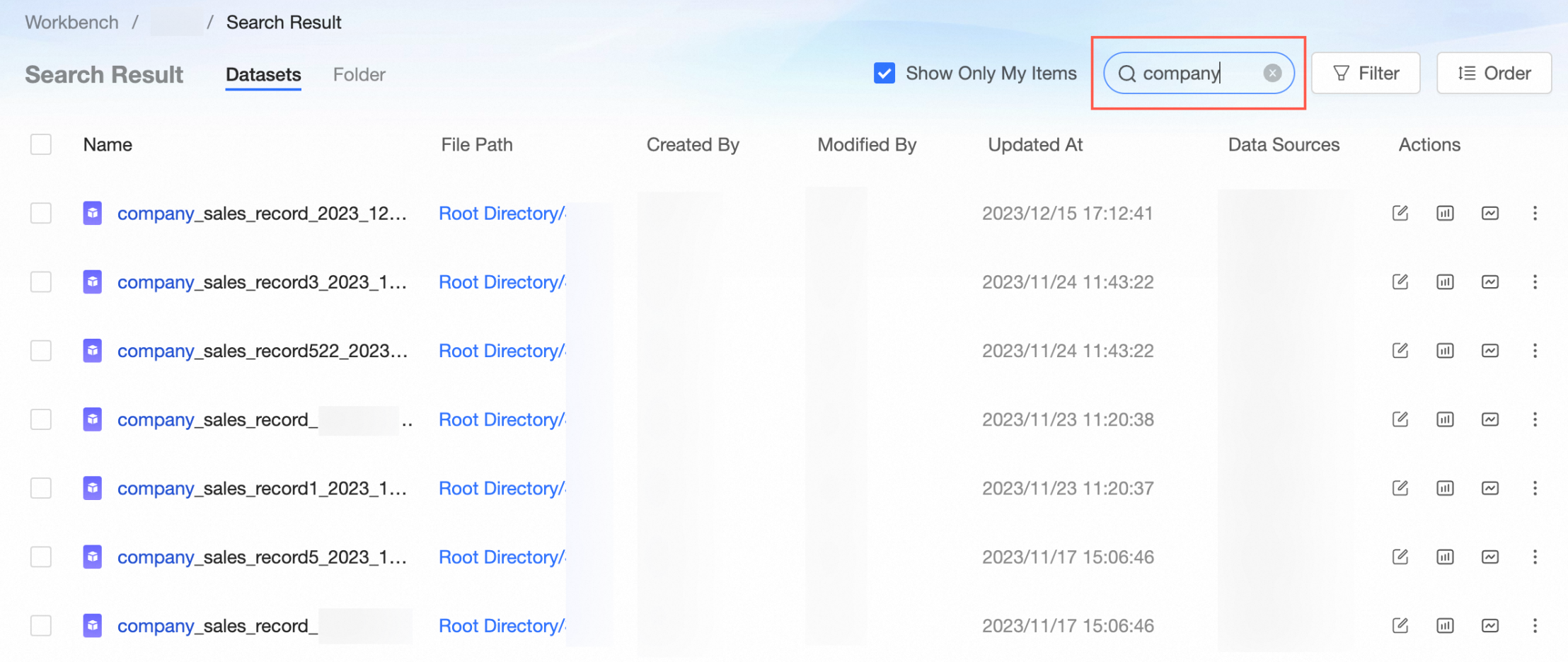
-
Search for a dataset by creation time and creator of the dataset.
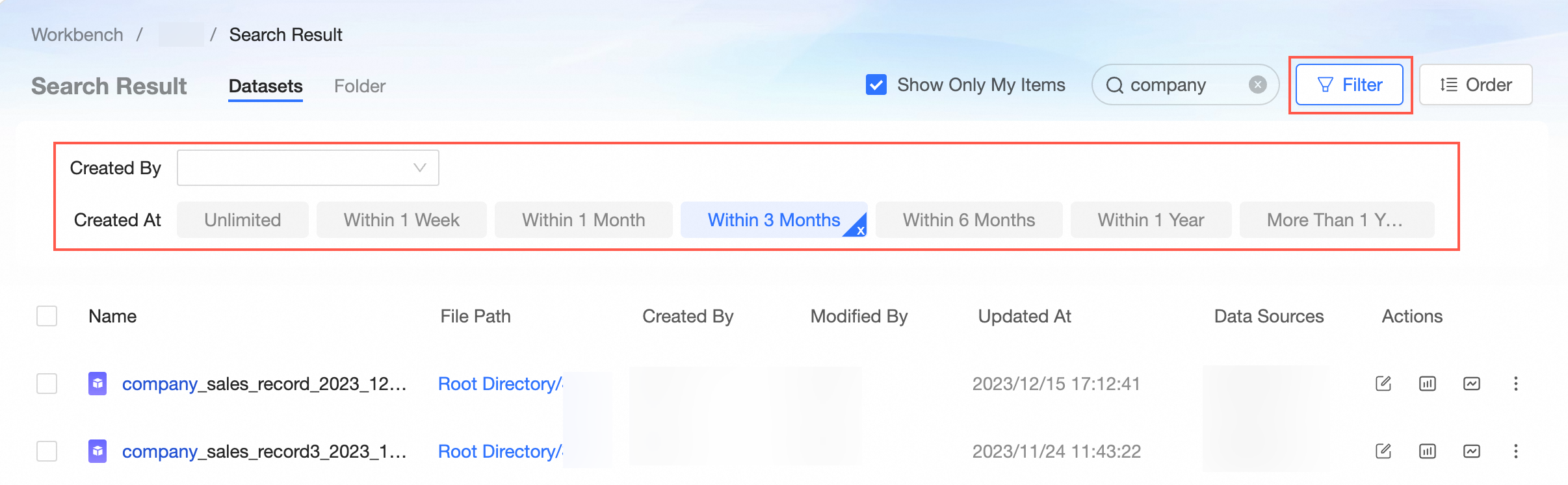
Icon descriptions:
-
The
 icon indicates a dataset created by dragging and dropping a physical table.
 -
The
 icon indicates a dataset created from custom SQL.
 -
The
 icon indicates a dataset with row-level and column-level permissions.
Apply for the permissions to edit a dataset
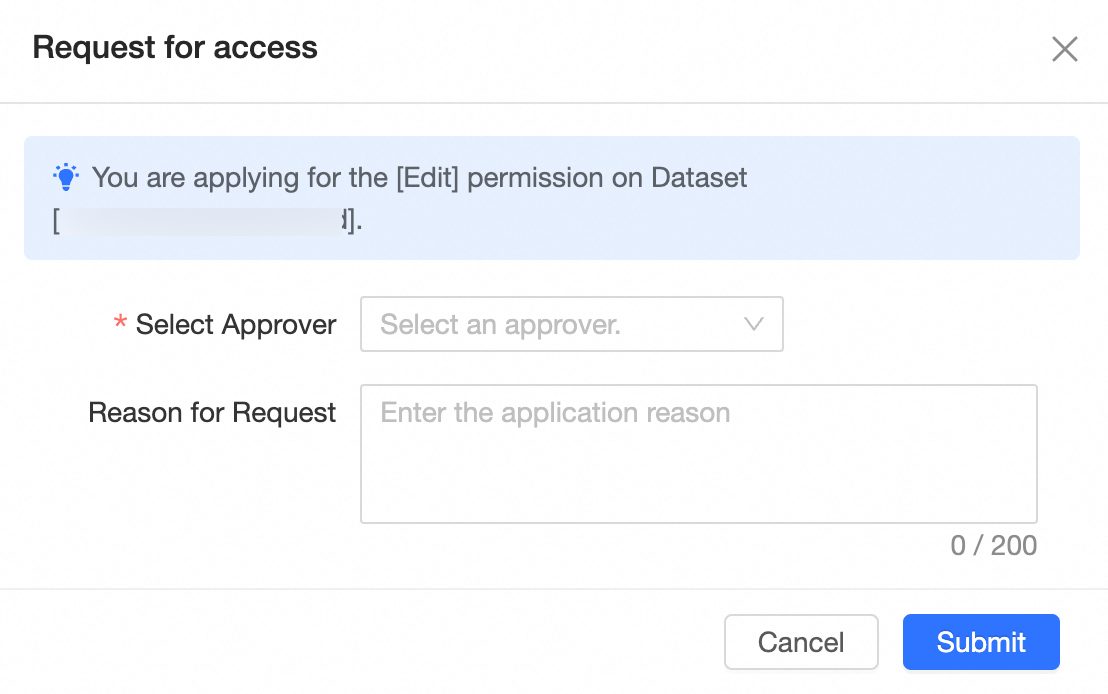
Workspace members with development permissions can view and use all datasets but can only edit datasets they created. To edit a dataset created by another user, you must apply for editing permissions.
-
On the Datasets page, follow the instructions in the figure to request permissions to edit the dataset.
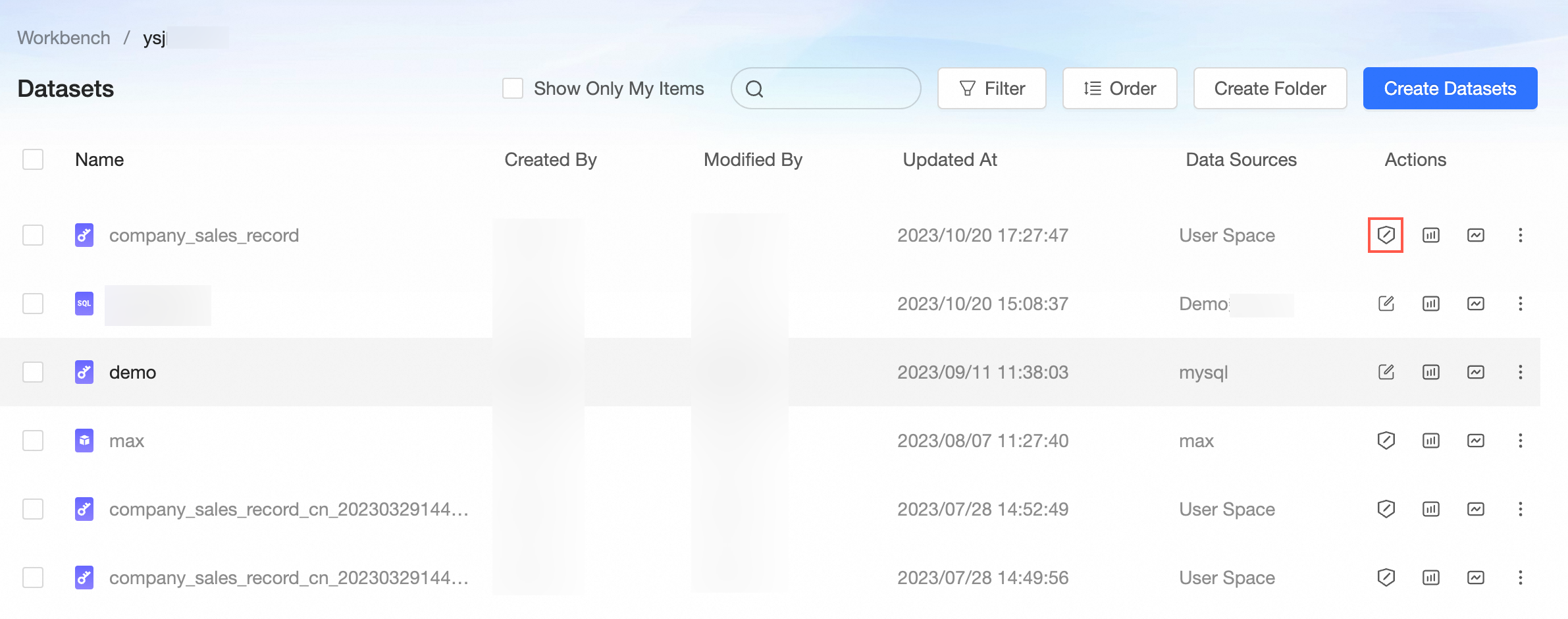
-
On the Request Permission page, select an approver under Select approver, enter a Reason for Request, and click Submit.
Apply for the permissions to use a dataset
Workspace members with analysis permissions can view all datasets but must apply for permissions before using a dataset.
If a workspace member does not have access to a dataset, the dataset name appears gray. The following figure shows an example.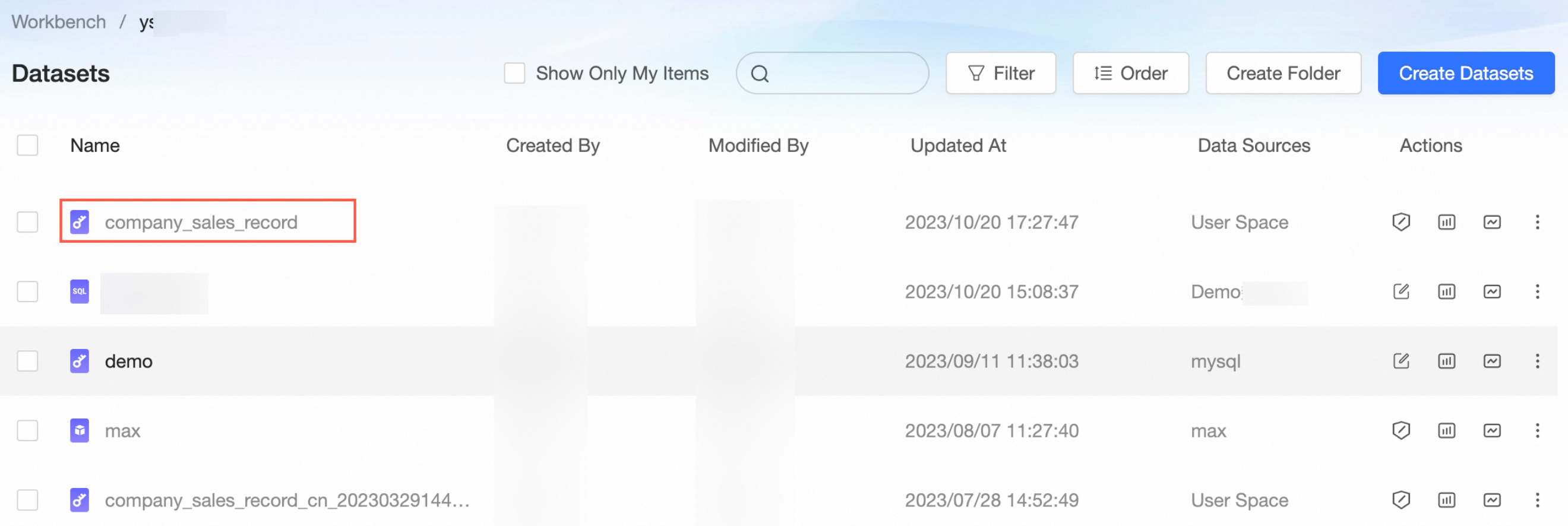
-
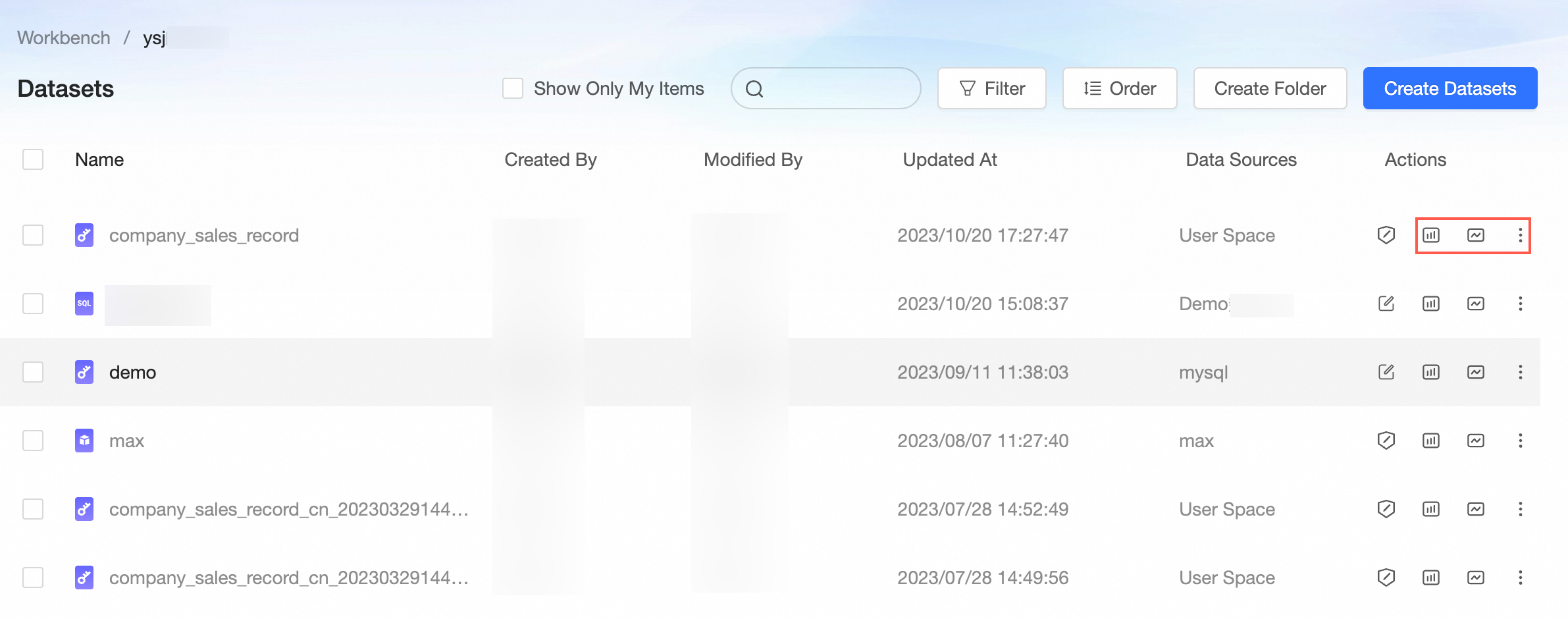
On the Datasets page, find the dataset you want to use and choose an analysis method. You can select dashboard, data screen, workbook, ad hoc query, self-service data retrieval, or data preparation.
-
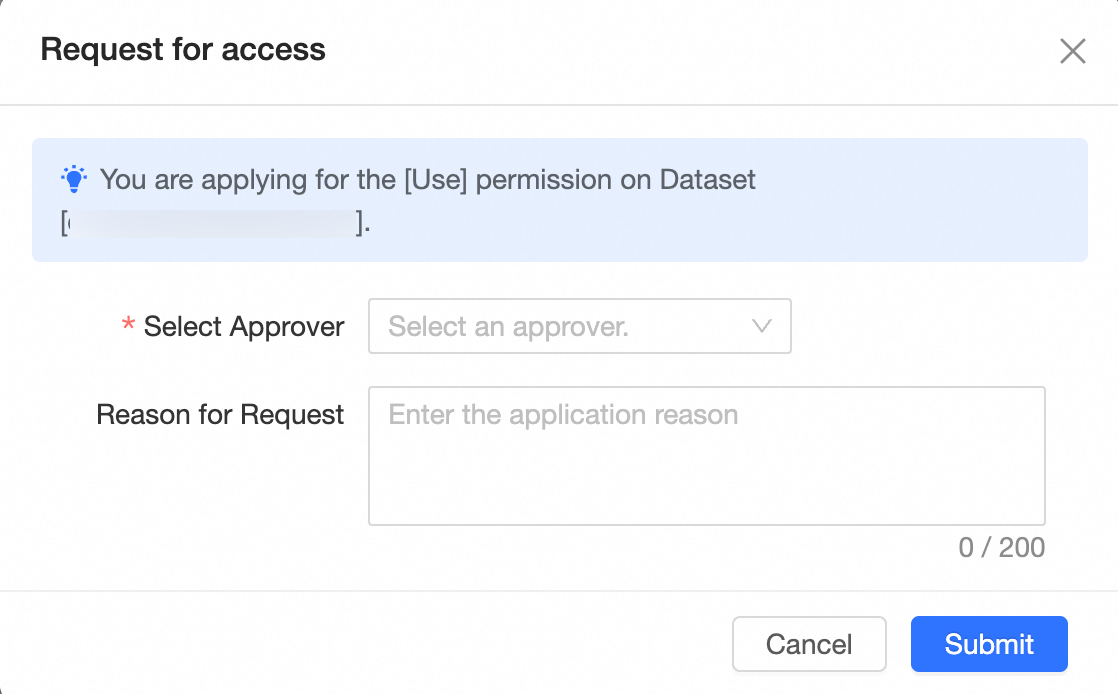
In the Request Permission dialog box, Select approver and enter a Reason for Request, and then click Submit.
NoteOnce your request is approved, you can use the dataset for any type of analysis without requesting permission again.
Collaborative authorization
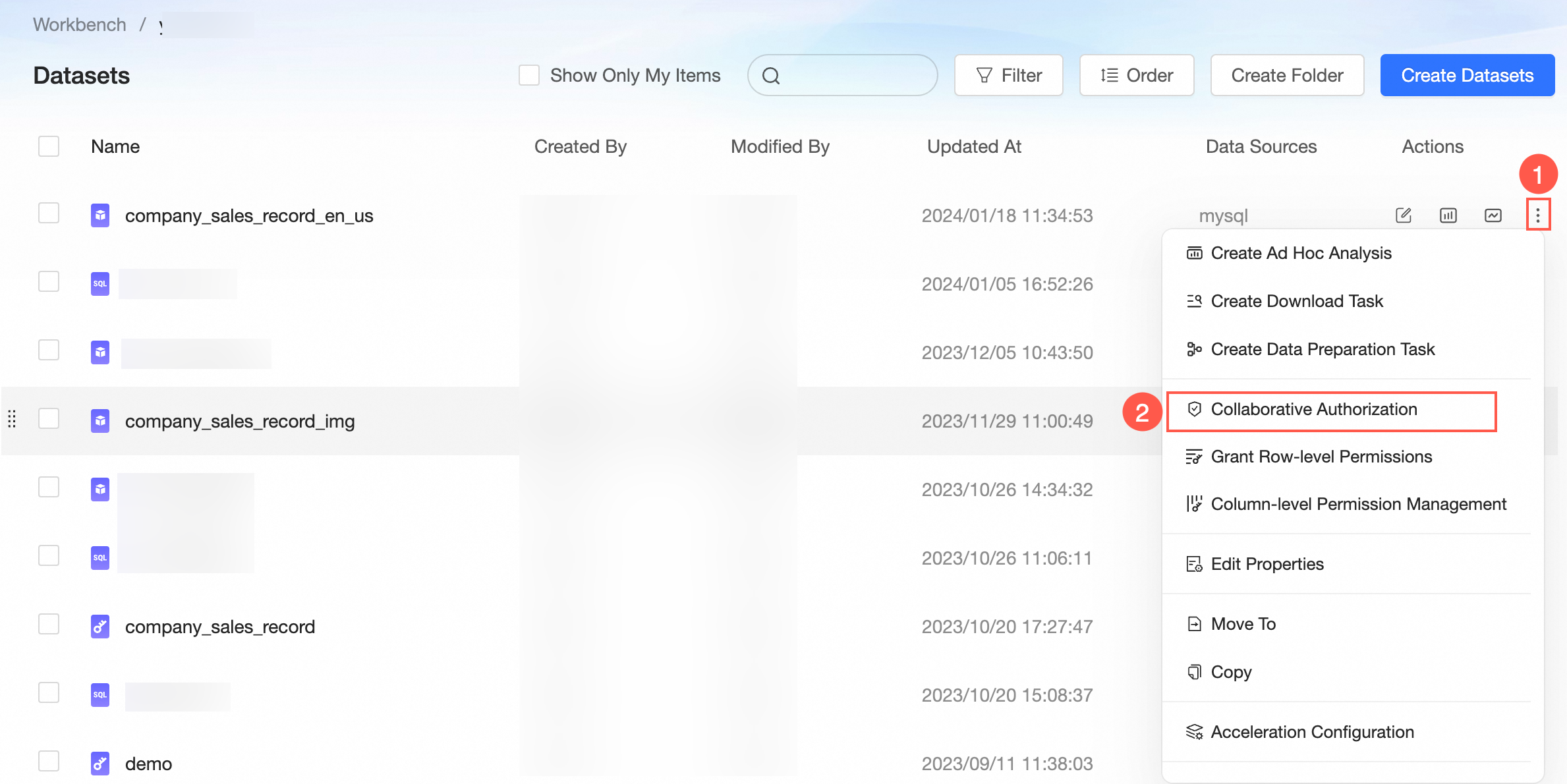
Organization administrators, permission administrators, workspace administrators, and resource owners can grant permissions to users.
-
On the Datasets page, follow the instructions in the figure to configure collaborative authorization. For more information, see Grant permissions on a dataset.
Copy a dataset
You can copy a dataset using the Save As option.
-
On the Datasets page, click the dataset you want to copy.
-
On the dataset editing page, click the
 icon and select Save As.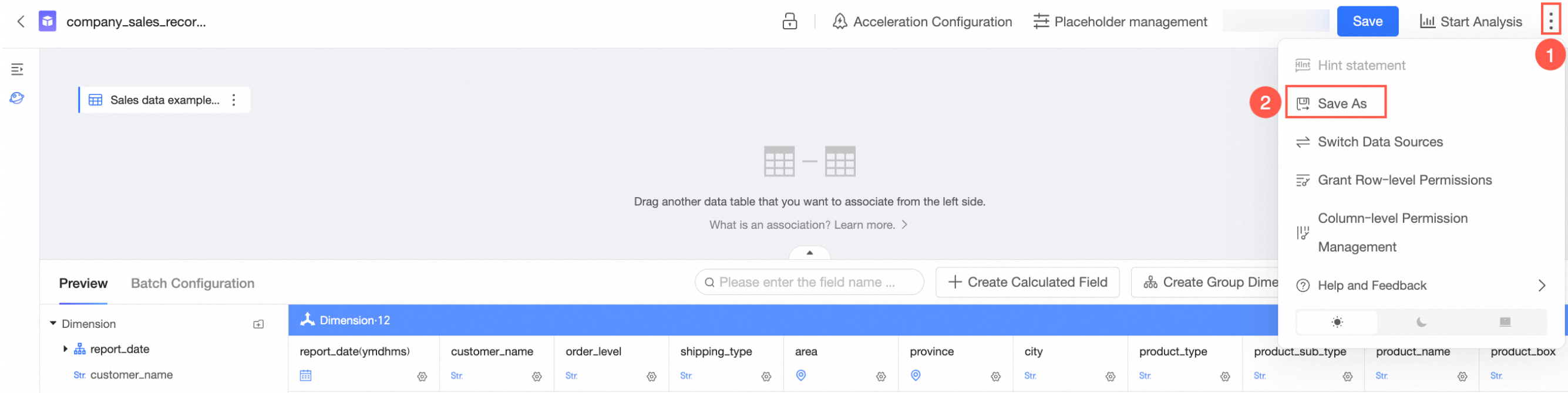
-
In the Save Dataset As dialog box, enter a name for the dataset, specify a location, and click OK.
Rename and transfer a dataset
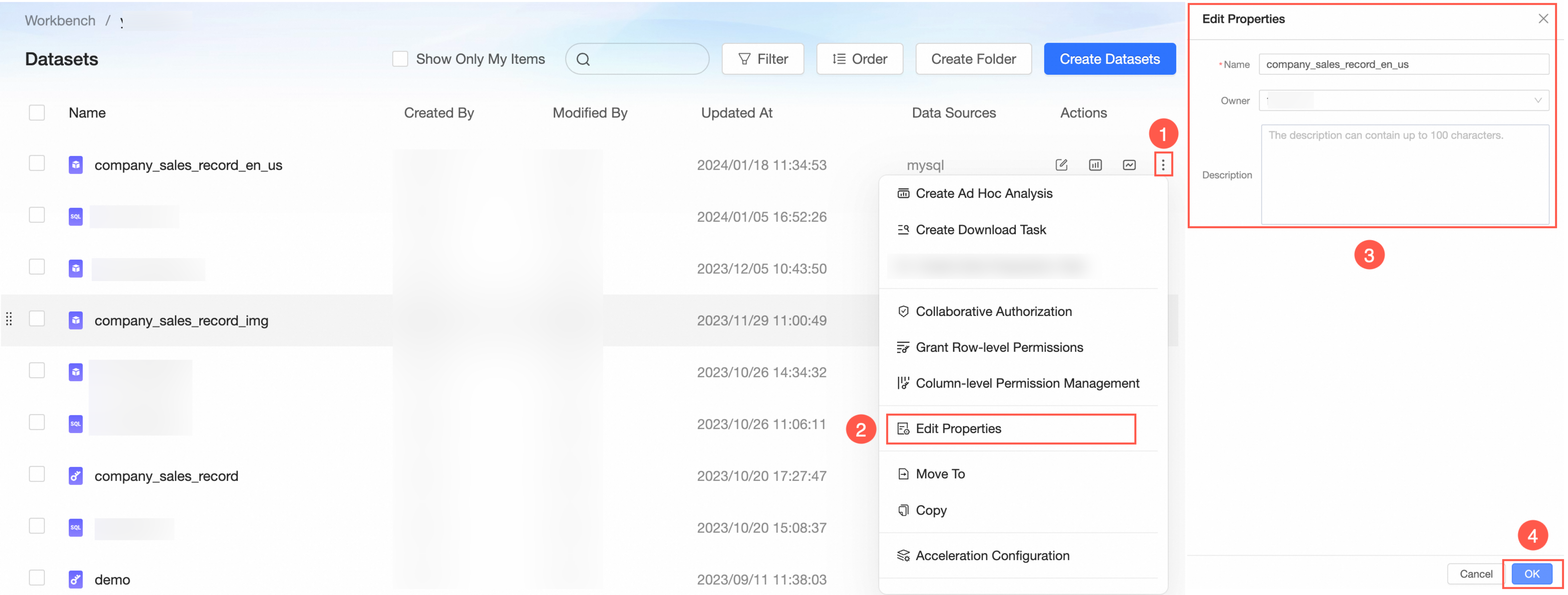
You can edit dataset properties to rename or transfer ownership of the dataset.
-
On the Datasets page, follow the instructions in the figure to transfer or rename a dataset.
-
On the Properties page, perform the following operations on the dataset.
Parameter
Description
Name
Enter a new name for the dataset.
NoteA dataset name must be unique within the same folder. Datasets in different folders can have the same name.
Owner
Select the user to whom you want to transfer the dataset.
Description
Enter a description for the dataset.
Enable Full Table Scan
When enabled, the system scans the entire table.
NoteOnly datasets that are created based on MaxCompute data sources support this feature.
-
Click OK.
Delete a dataset
On the Datasets page, follow the instructions in the figure to delete a dataset.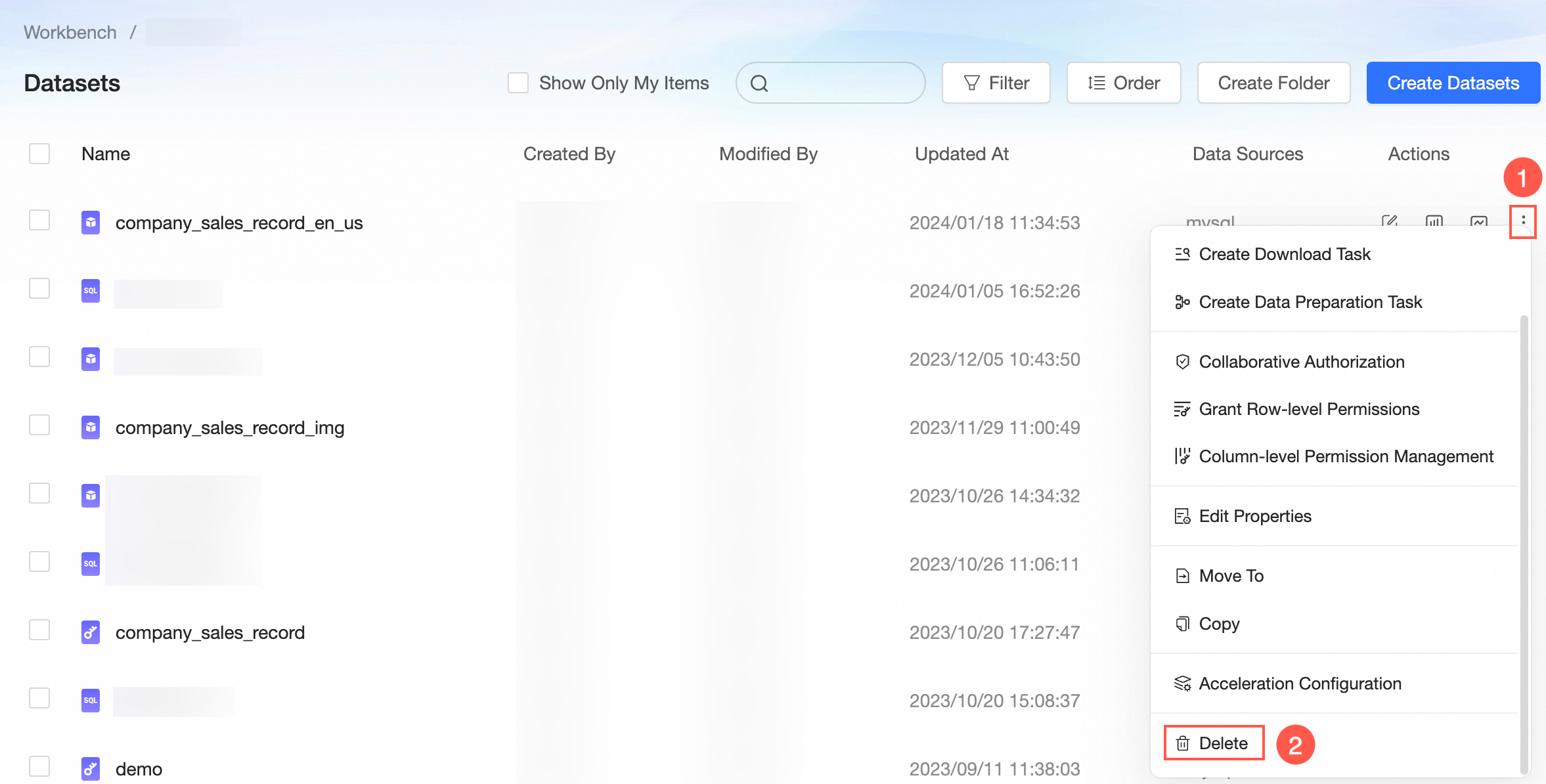
If a dataset is used in other resources, such as a dashboard, self-service data retrieval, workbook, data screen, or ad hoc query, a data entry form, or an exploratory analysis, a confirmation dialog appears when you try to delete it.

Manage multiple datasets at a time
Bulk operations include transferring ownership, moving resources, clearing the cache, and deleting datasets.
-
You can follow the instructions in the figure to transfer ownership of multiple datasets at once.

-
You can follow the instructions in the figure to move multiple resources at once.

-
You can follow the instructions in the figure to clear the cache for multiple datasets at once.

After you click OK, a "Cache cleared successfully" message appears.

-
You can follow the instructions in the figure to delete multiple datasets at once.

If any of the selected datasets are used to create a dashboard, self-service data retrieval, workbook, data screen, or ad hoc query, or a data entry form, a confirmation dialog box appears. This dialog lists the published resources that will be affected by the deletion. In the Delete Resources list, you can switch between different datasets to view their affected resources, including names, owners, last modified by, and modification times. You can also click a resource name to open its edit page for more details.

Modify a dataset
You can modify a dataset by adjusting its configuration, changing the data table structure, or updating the data. Save the dataset after making any changes.
To modify datasets, you must have the Developer user type, along with permissions for dataset creation, editing, and data source usage in the workspace.
-
Edit a dataset
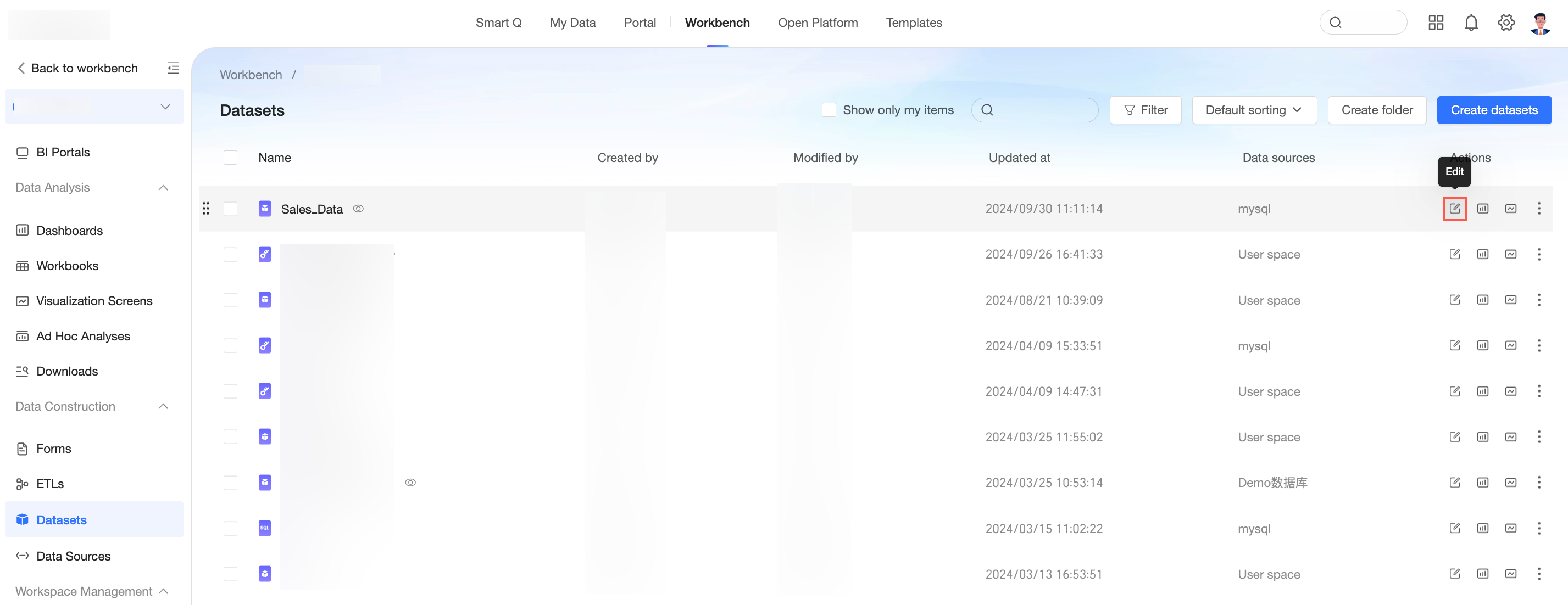
On the Datasets page, find the dataset you want to modify and click its name, or click the Edit button to open the dataset editing page.
-
Unlock a dataset
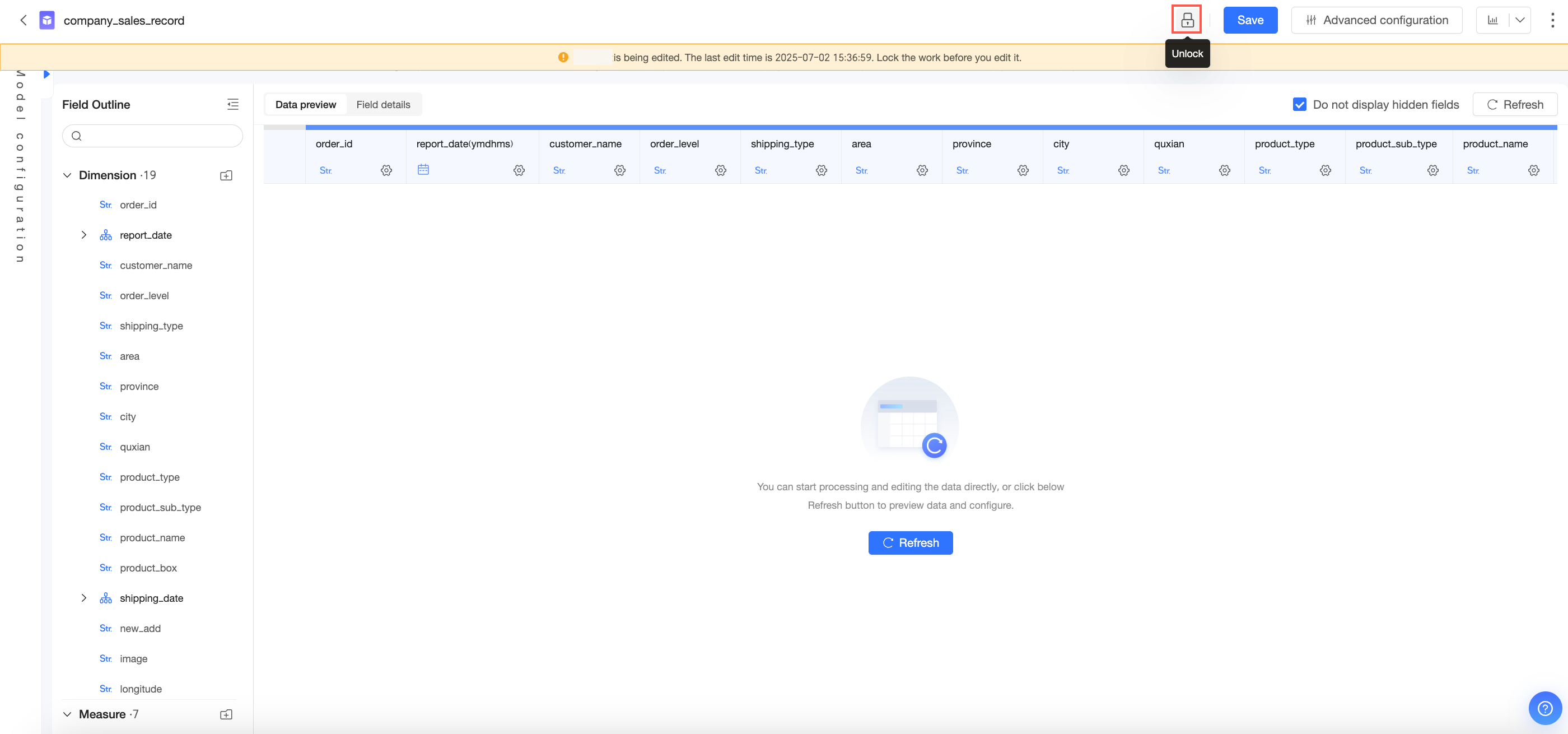
Only one user can edit a dataset at a time. If a dataset is currently being edited, other users must click the Unlock button to gain editing access before they can make changes.
 Note
Note-
After you unlock a dataset, the editing page for the previous user is automatically locked. If that user needs to edit again, they must click the Unlock button to gain editing access.
-
You cannot save a dataset that is locked by another user. You must click the Unlock button to gain editing access before you can save your modifications.
-
-
Modify dataset fields
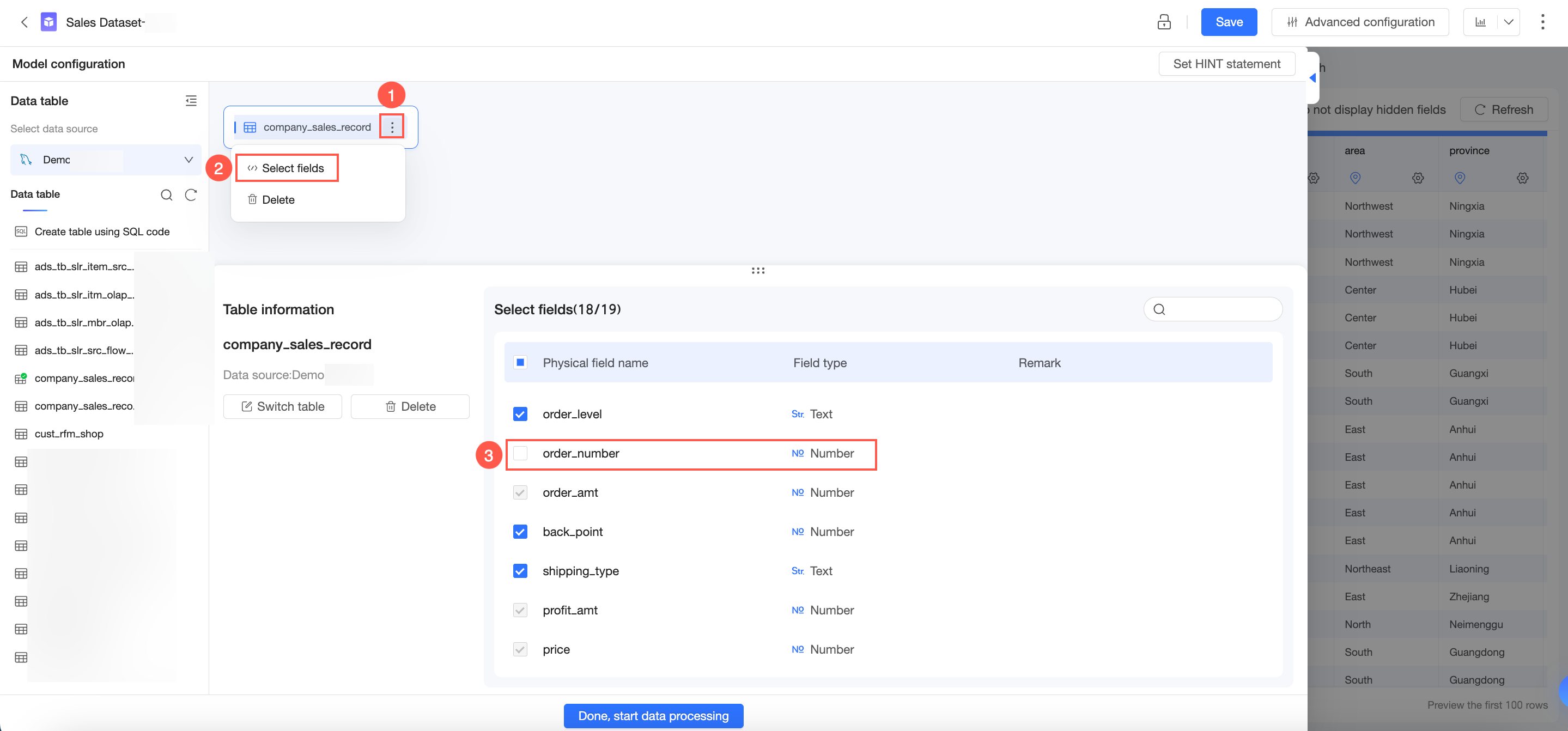
If the structure of a source database table changes (for example, when fields are added or removed), you must update the dataset fields accordingly. On the dataset editing page, click Field Selection to view the current fields in the dataset.
 Note
Note-
In some cases, a field may appear grayed out and cannot be deselected. This is because the field has dependencies that must be resolved before it can be removed.
-
The field is used in a calculated field.
-
The field is used to configure row-level and column-level permissions for the dataset.
-
-
If the dataset was generated from custom SQL, you must add or remove fields by editing the SQL statement.
-
When you remove a field from a dataset, you must also update any reports that use it. This ensures that the reports use the latest field information.
-
-
Clear invalid fields
To remove fields deleted from the source database table, click Clear Invalid Fields in the Field Selection panel.