Dataset collaboration requires two types of permissions: use permission and edit permission. You can grant these permissions to specific users or all eligible workspace members.
Background
An organization administrator, permission administrator, workspace administrator, or a resource owner (the creator) can grant permissions. The following table uses these symbols:
-
 The user type can perform this operation only after the required
 permissionis granted. -
 The user type cannot perform this operation and cannot be granted the
 permission.
|
Category |
User type |
Edit |
Use |
|
Workspace members |
developer |
|
|
|
analyst |
|
|
|
|
Organization members (not in this workspace) |
developer |
|
|
|
analyst |
|
|
|
|
visitor |
|
|
The permissions are defined as follows:
-
Edit permission: If a user's associated
workspacerole includes the Create (Edit) dataset permission, you can grant themedit permissionon a specificdataset. This allows the user to create, edit, replace, and delete thedataset. -
Use permission: If a user's associated
workspaceor organization role includes the Use dataset permission, you can grant themuse permissionon a specificdataset. This allows the user to performdata analysisbased on thatdataset.
Access points
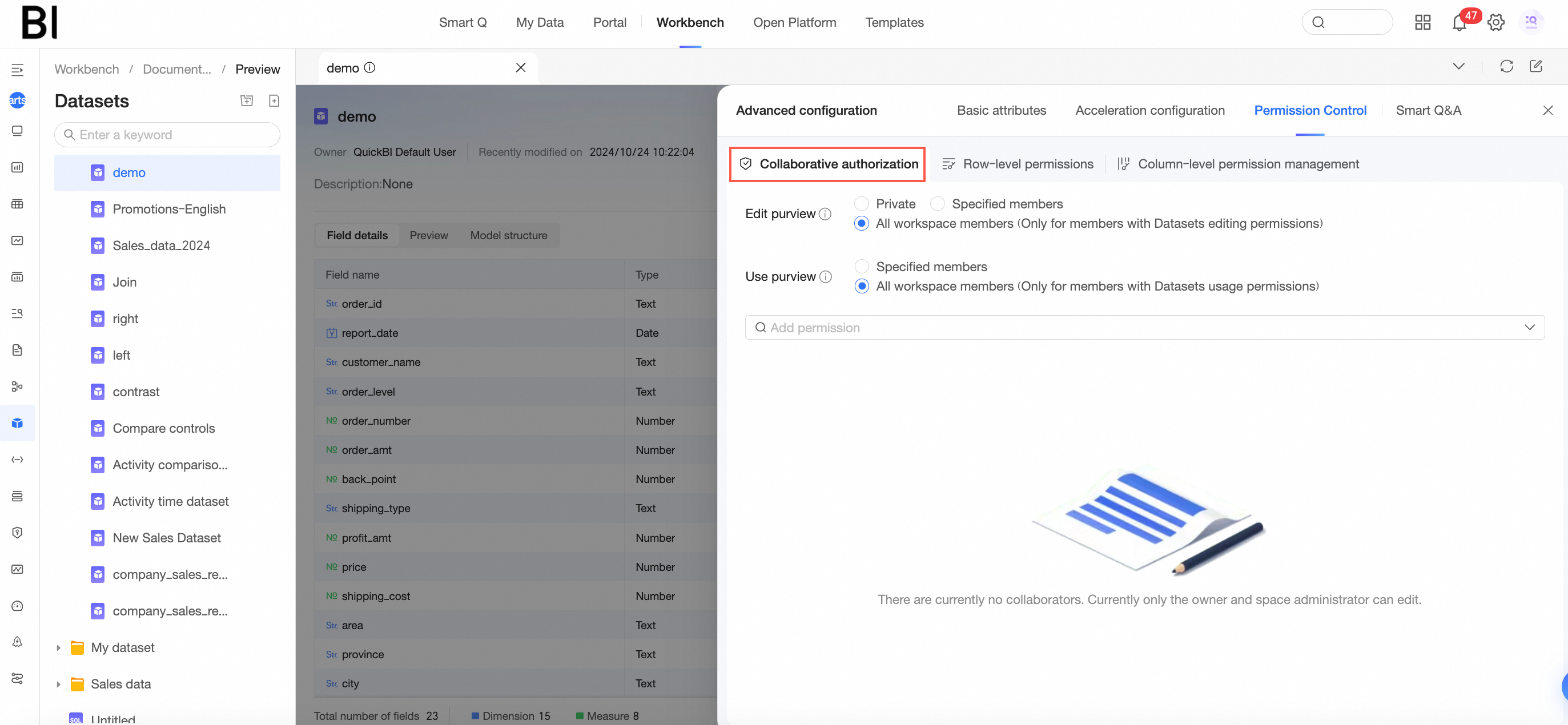
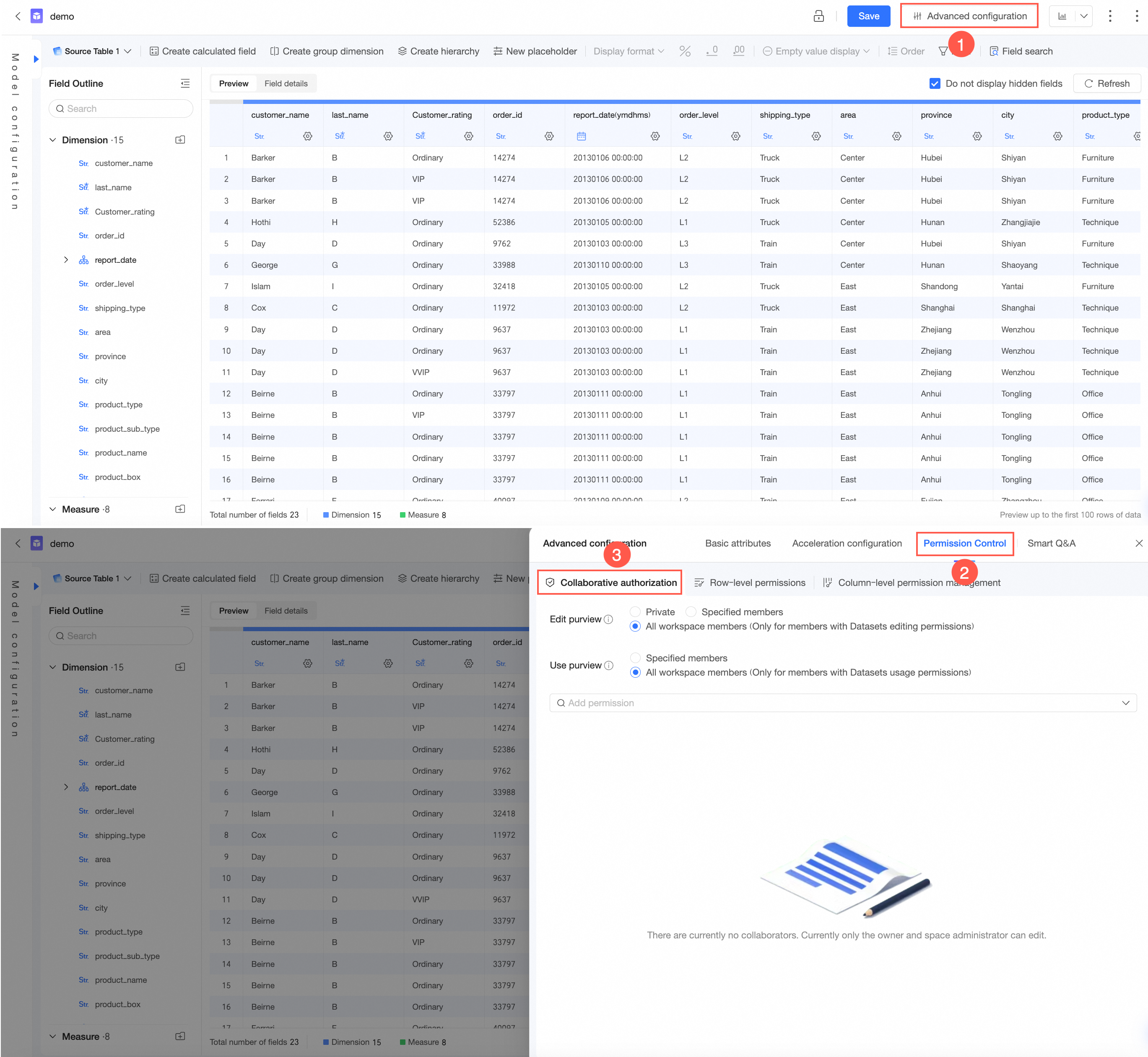
Log on to the Quick BI console. You can open the Collaborative Authorization panel for a dataset from the following locations:
-
On the Datasets page within a
workspace.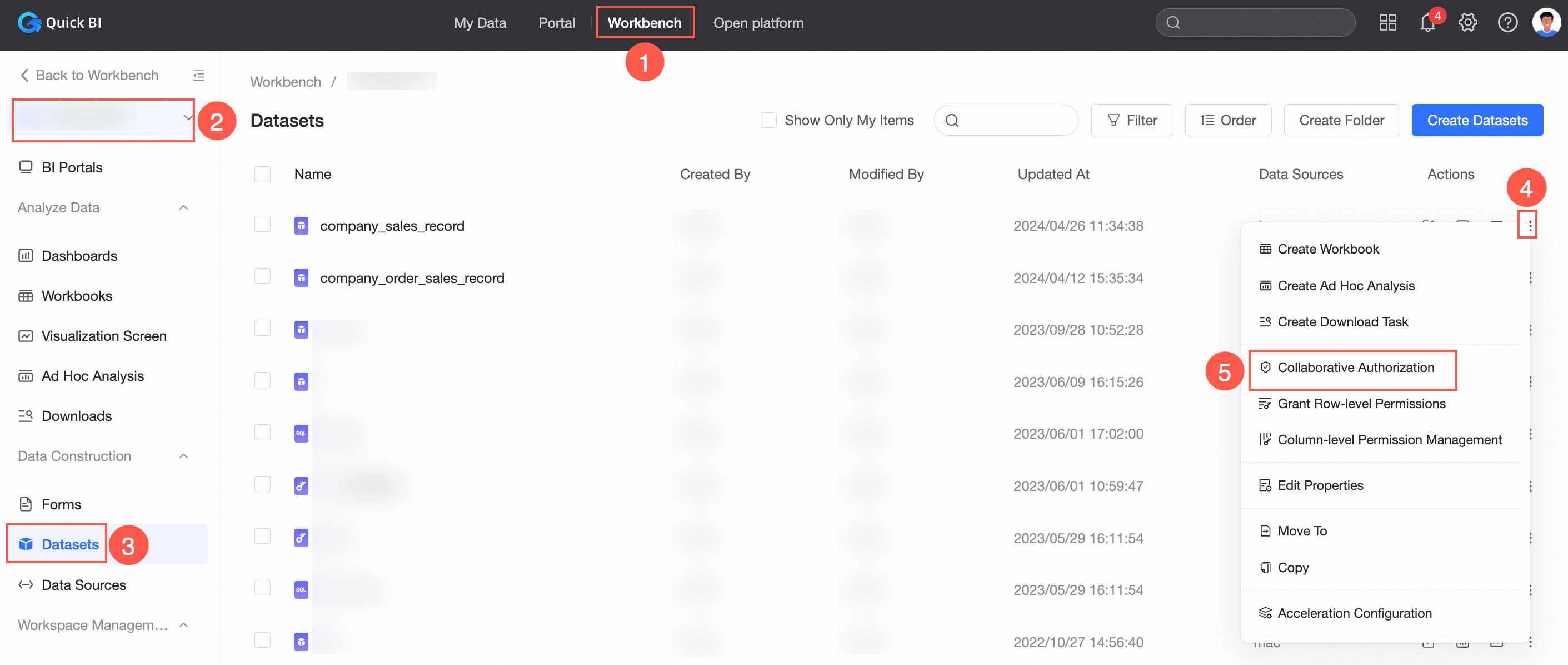
-
On the dataset preview page.
-
In the advanced settings on the dataset edit page.
Grant edit permission
By default, a dataset is private, and only the resource owner and workspace administrator have edit permission. To grant permission to other users, change the setting to allow access for specific members.
-
If you select Specified Members, you can grant
edit permissionto specific developers in theworkspace. -
If you select All Workspace Members (for members with dataset edit permission), all eligible members in the
workspacecan edit thedataset.
-
In the Collaborative Authorization panel, grant the
permission.The following figure shows how to grant
edit permissionto Developer B by selecting Specified Members.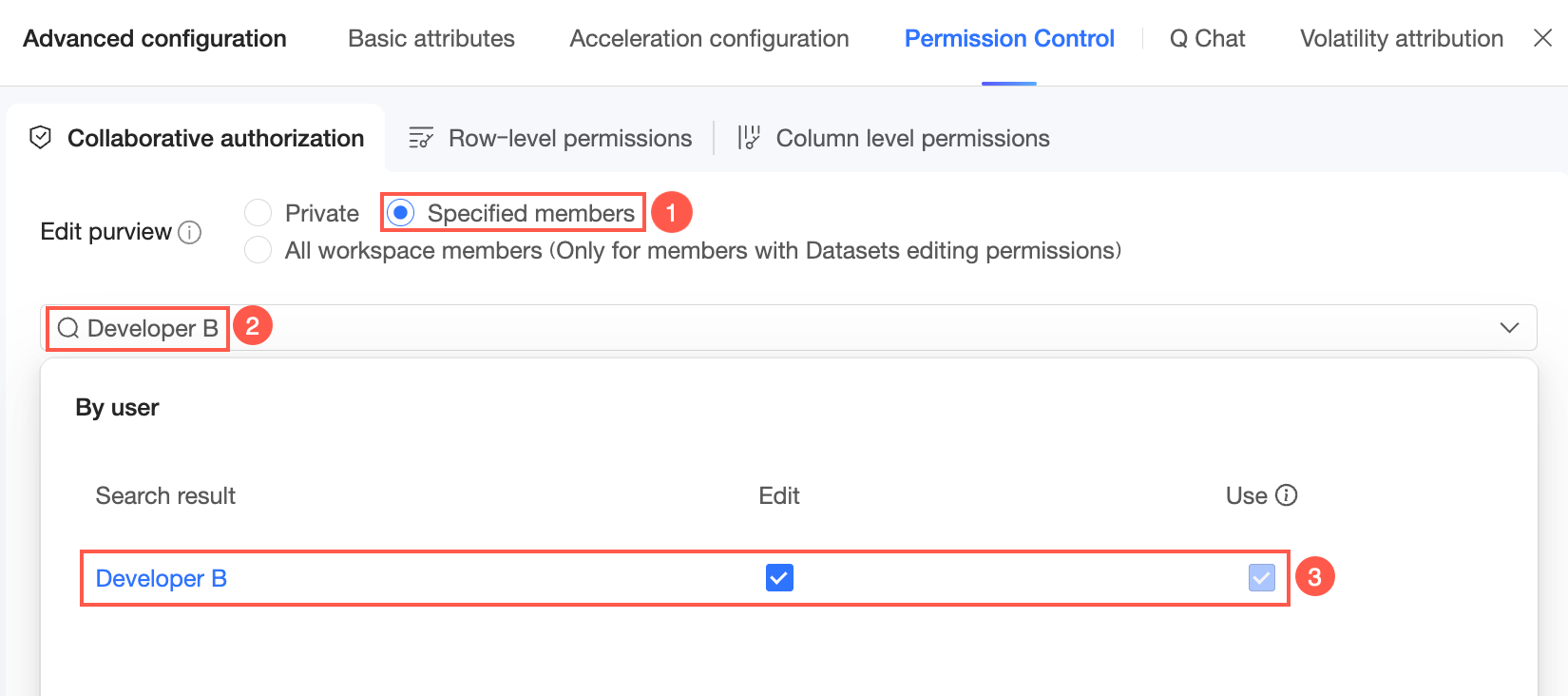
-
After Developer B logs on to the Quick BI console, they can access and edit the
dataset.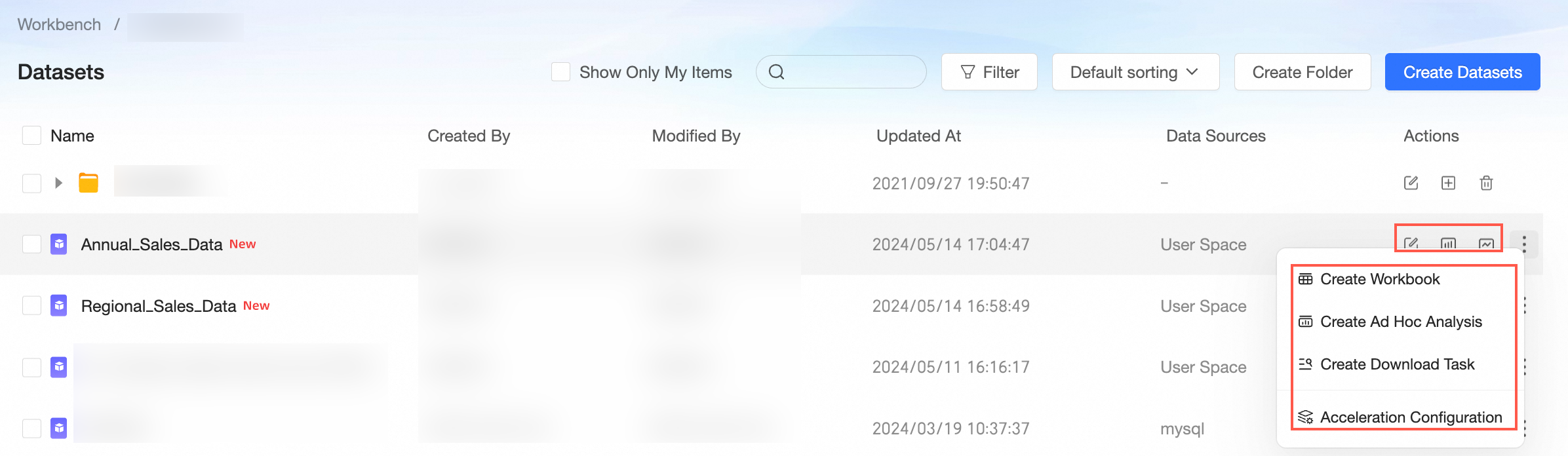
Grant use permission
You can grant use permission to any user in your organization whose role includes the permission to use datasets. This includes two groups of users:
-
Workspace members: Members in a
workspacerole that can be granteduse permissionon datasets. -
Organization members: Members in an organization role that can be granted
use permissionon datasets.
Scope of use after authorization
What a user can do after authorization depends on whether they are in the same workspace as the dataset:
-
Members in the same workspace: Can create dashboards, workbooks, and more based on the
dataset. -
Members in other workspaces: Can perform exploratory analysis based on the
dataset.
-
In the Collaborative Authorization panel, grant the
permission.The following example shows how to grant
use permissionon adatasetto Developer B.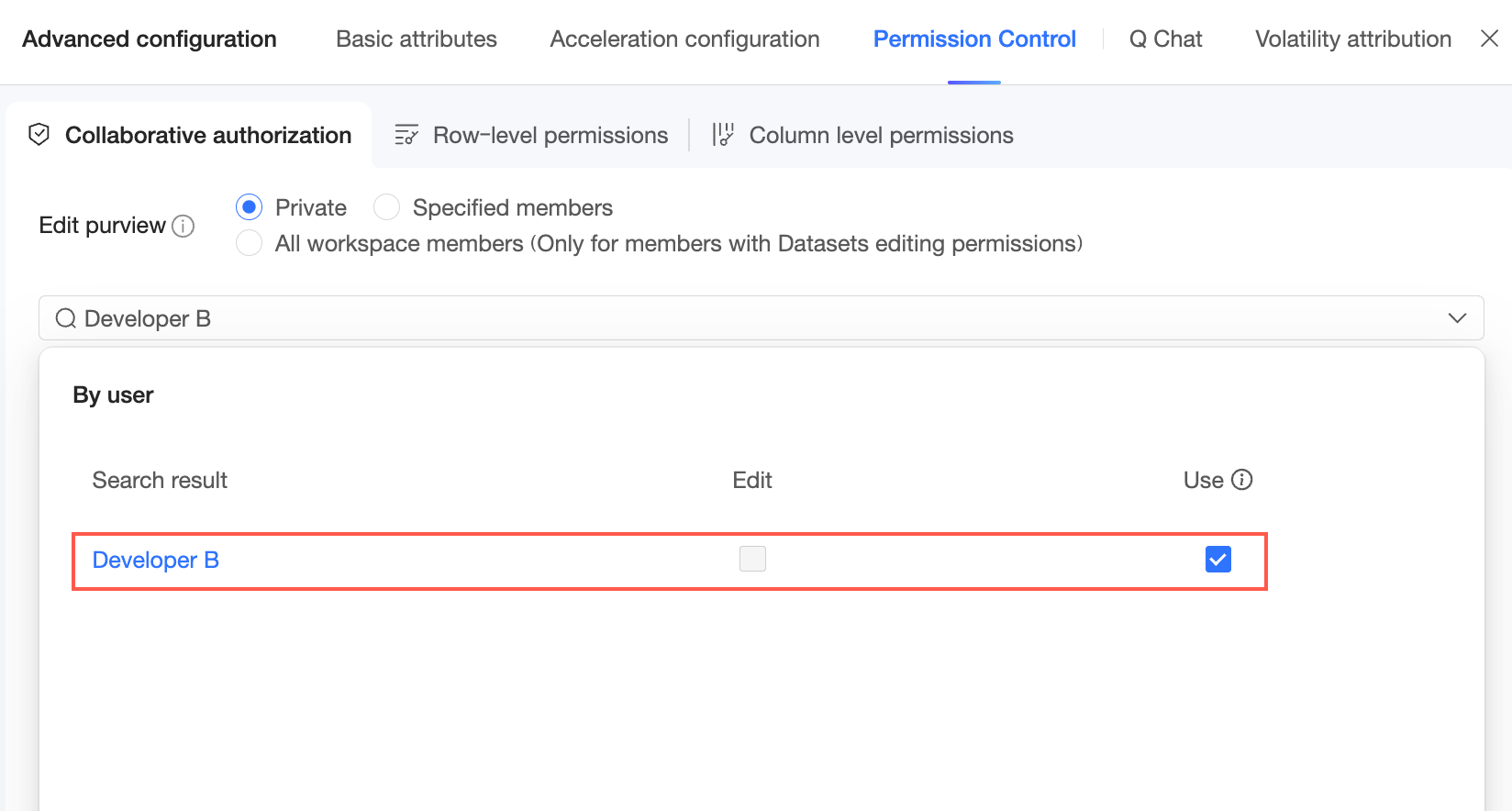
-
After Developer B logs on to the Quick BI console, they can access the
datasetand create resources such as dashboards, workbooks, and ad hoc queries fordata analysis.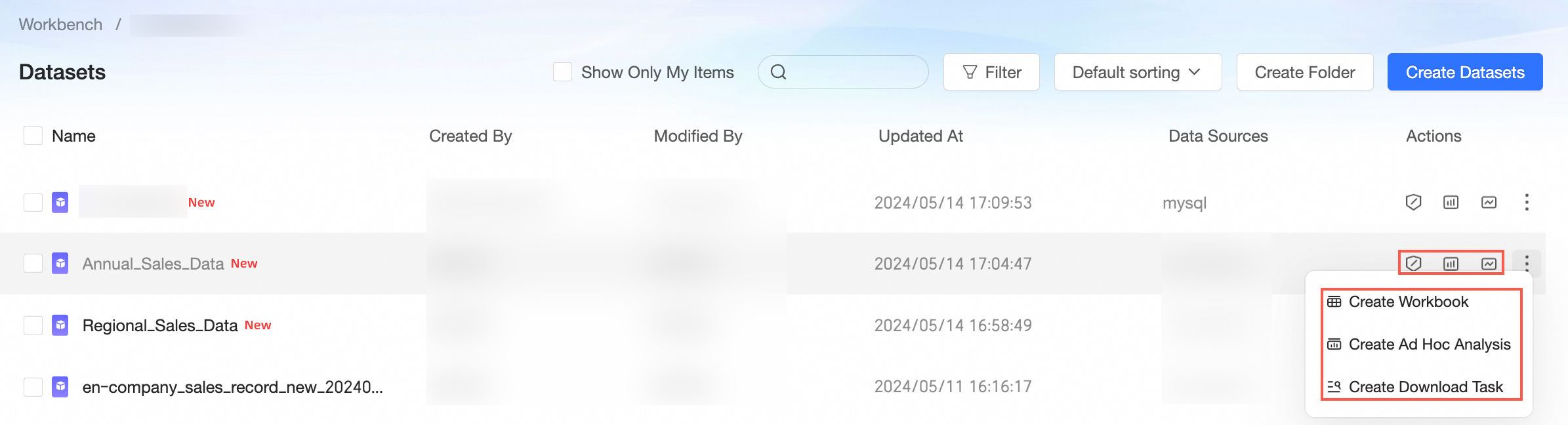
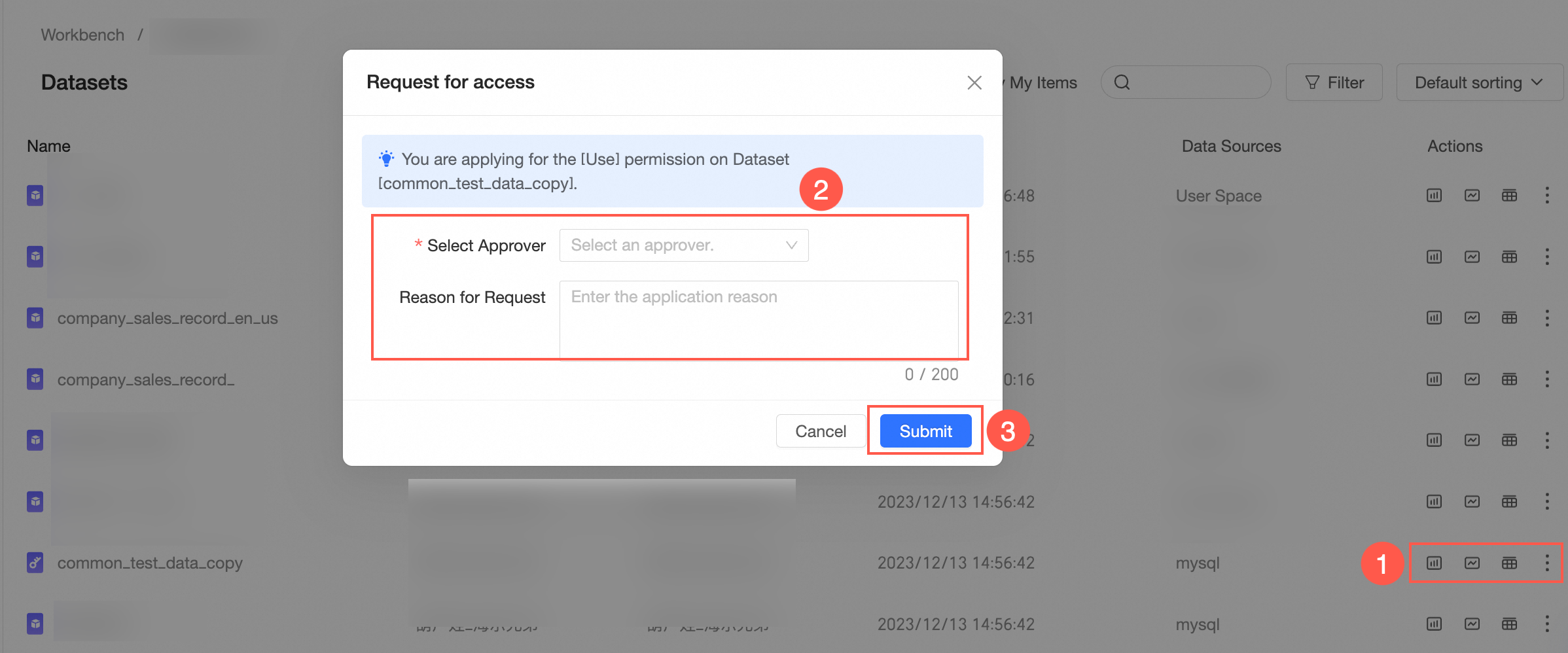
Request use permission
If you need to access a dataset, follow the steps shown in the figure below to request use permission.