Performance Testing Service (PTS) lets you stress-test any public HTTP endpoint directly from the console. Configure a single API request, verify the response, then scale up requests per second to measure how your endpoint handles load.
This guide walks you through five steps: configure, debug, save, run, and monitor.
Prerequisites
Before you begin, ensure that you have:
Access to the PTS console
A publicly accessible API endpoint (URLs must start with
http://orhttps://)
PTS sends requests over the public Internet. Internal endpoints are not supported.
Step 1: Configure the API request
Log on to the PTS console and click Test API.
Select a request method from the GET drop-down list and enter the full target URL. The URL must include the protocol and can contain query parameters. Example:
http://<domain-name>/<path>?key1=value1&key2=value2(Optional) Add request details on the following tabs: For the full list of configuration options, see HTTP nodes.
Tab Purpose Request Parameter Query string parameters appended to the URL Header HTTP headers included in the request Body Request body content Output Parameters Configure output parameters for the request 
Step 2: Debug the request
Verify that the API request returns the expected response before you run the full stress test. This prevents wasting test resources on a misconfigured request.
Click Send.
Check the response status code and body to confirm the request succeeded.

Step 3: Save the test configuration
Click Save.
In the dialog box, configure the following fields:
Field Description API Name A descriptive name to identify this test configuration Set Select a set to organize your saved configurations Click OK.
Step 4: Start the stress test
Click Test.
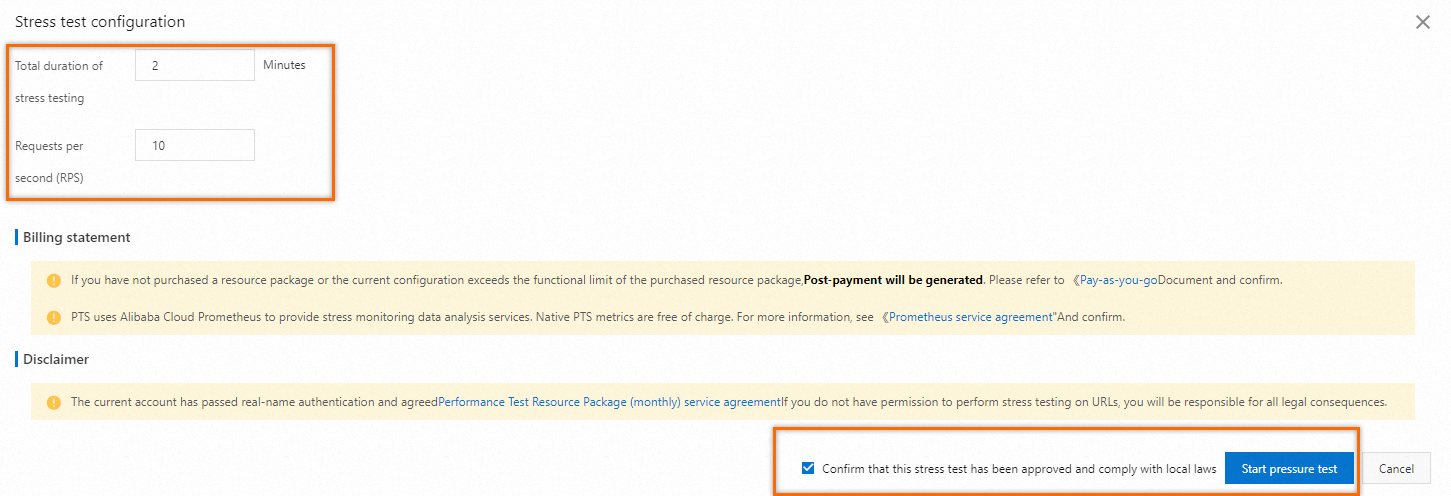
In the dialog box, configure the load parameters:
Parameter Description Test Duration How long the stress test runs Request per Second (RPS) The number of requests PTS sends to your endpoint every second Click Start.
Step 5: Monitor results in real time
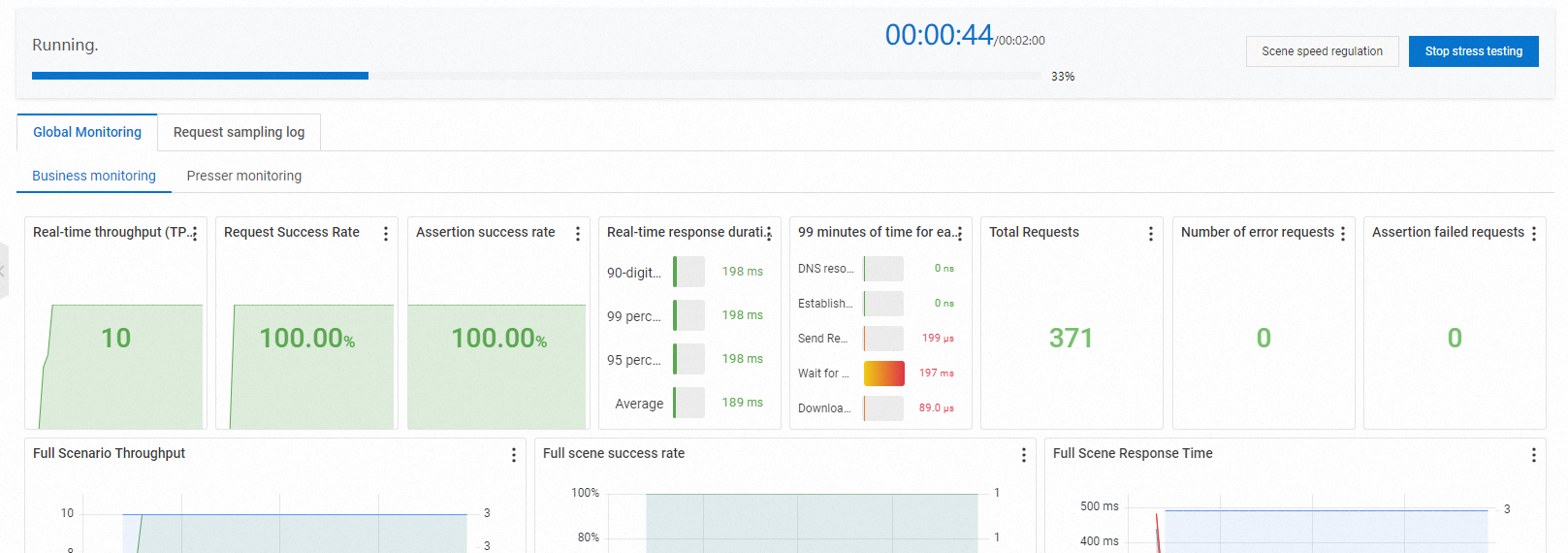
After the test starts, PTS redirects to the test execution page where you can view the real-time stress testing data.
View the stress testing report
After the test completes, PTS automatically generates a report that includes stress testing scenario metrics, business details, monitoring details, and API sampling logs.
For report details, see View PTS stress testing reports.