On February 8, 2021, AnalyticDB for PostgreSQL introduced support for multiple coordinator nodes.
This feature lets you horizontally scale coordinator nodes to overcome single-node architectural limitations. If compute nodes are not a bottleneck, the number of available connections and read/write throughput scale linearly with the number of coordinator nodes. The primary endpoint is retained for compatibility, while the cluster endpoint is available for performance. This allows you to choose the option that best suits your workload. If you have questions, contact our technical support team on DingTalk (Group ID: 11700737).
If you allocate more than 8 compute units (CUs) to the coordinator nodes when you create an instance or change its configuration, the system creates a cluster endpoint in addition to the primary endpoint. The following diagram illustrates the differences: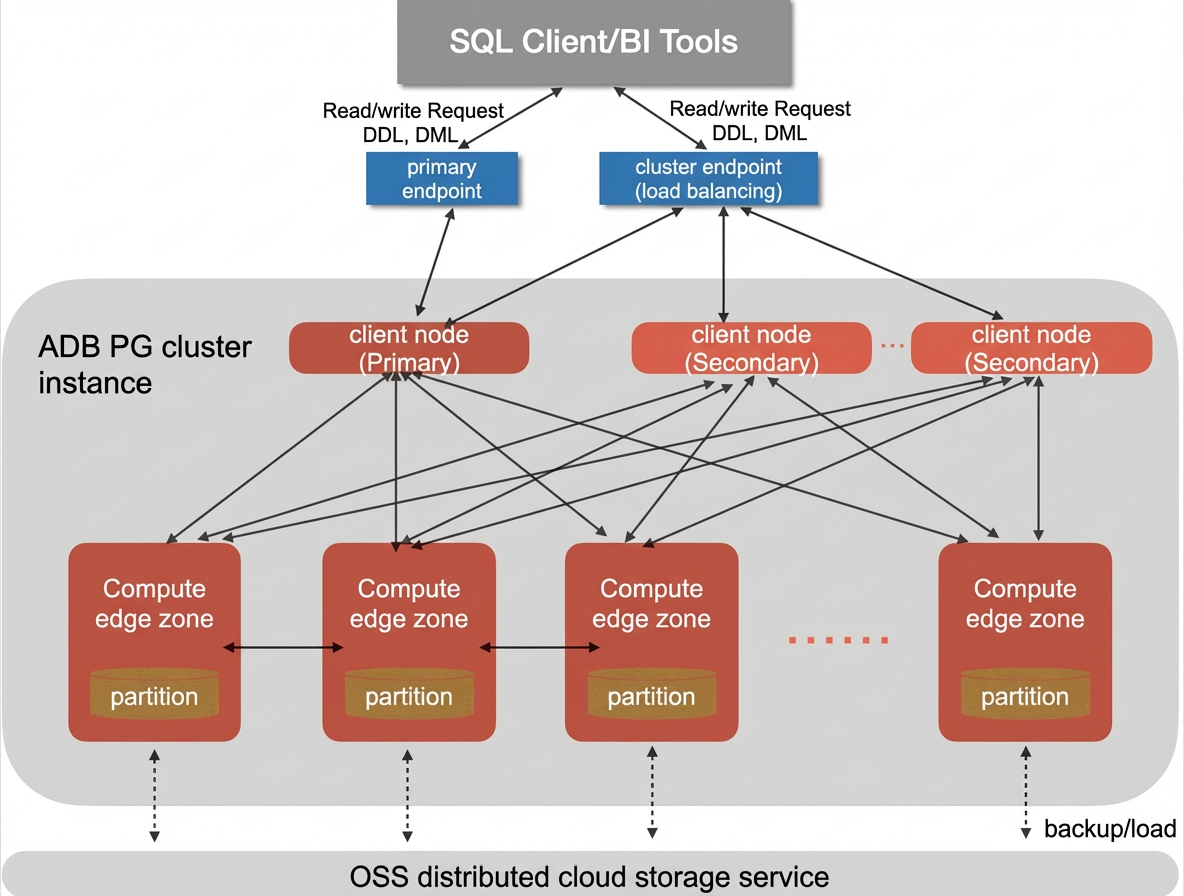
Master Address: Routes all requests to the primary coordinator node. Secondary coordinator nodes do not process requests. This endpoint ensures full compatibility with single-coordinator-node instances.
Cluster Address: Automatically distributes requests across all coordinator nodes using connection-level load balancing.