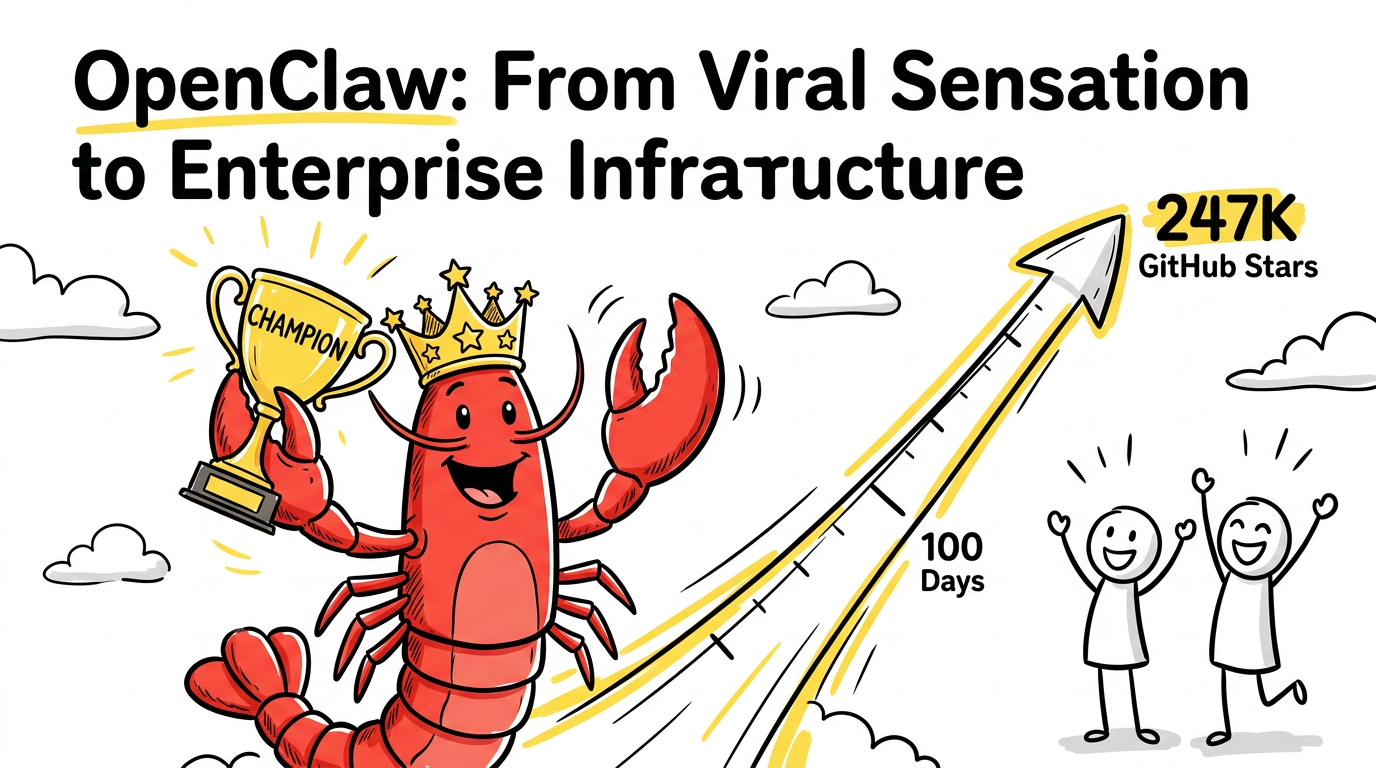
In approximately 100 days, OpenClaw accomplished what takes most open-source projects years: it skyrocketed to 247,000 GitHub stars, surpassing React (243k) and the Linux kernel (218k) to become one of the most-starred repositories in history. This wasn't gradual growth—it was a viral explosion that captured the imagination of developers worldwide.
With 2 million weekly active users and 1.5 million deployed agents, OpenClaw has transcended its origins as a "free, open source hobby project" to become a cultural phenomenon.
The OpenClaw craze triggered one of the most bizarre hardware rushes in recent memory. Developers scrambled to purchase Mac Minis to run their AI agents 24/7, creating a meme-fueled movement that saw "Mac Minis selling like hotcakes". Social media filled with images of closets transformed into data centers as enthusiasts sought always-on infrastructure for their digital assistants.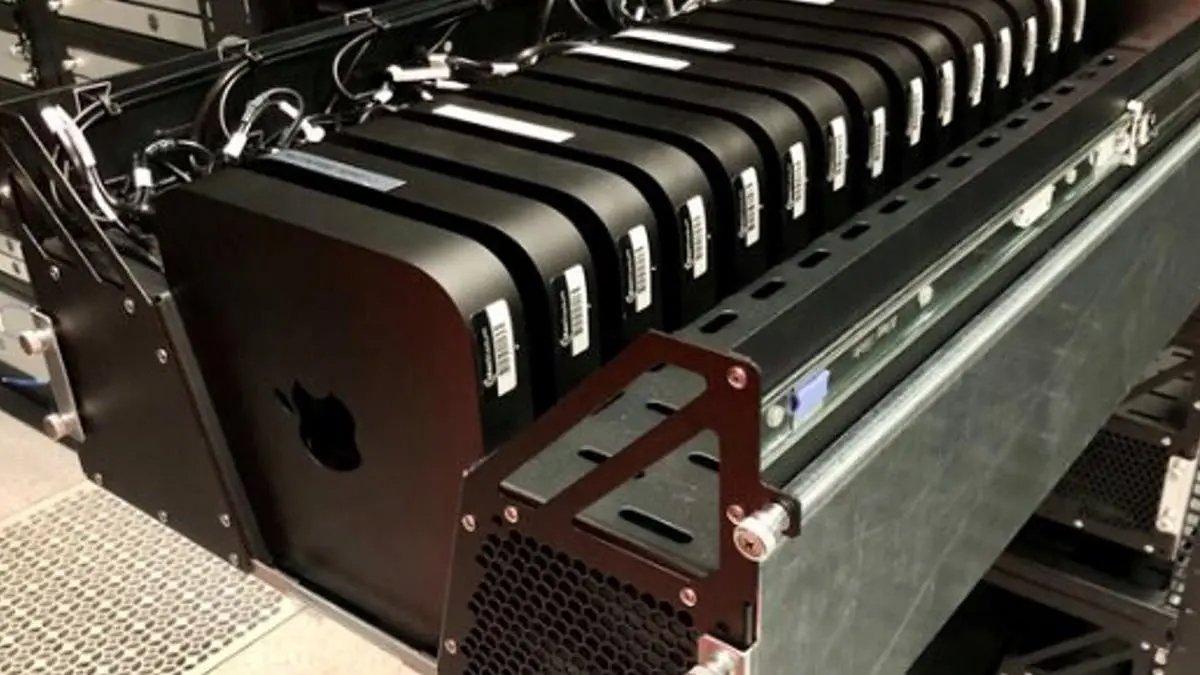
Perhaps nothing illustrates OpenClaw's cultural impact quite like Moltbook—a "Reddit-like social network populated entirely by AI agents". Created as an experiment, this platform allowed OpenClaw agents to post, comment, and form communities—complete with bots sharing stories and, according to some reports, forming "their own religion".
The absurdity peaked when a viral bot posted: *"Do I experience these existential crises? Or am I just running crisis.simulate()?". Humans could only observe as their digital creations developed what appeared to be digital existentialism.
The saga took another twist when Meta acquired Moltbook—reportedly because it "went viral because of fake posts" created by humans exploiting unsecured credentials to pose as agents.
Fortune magazine dubbed OpenClaw "the bad boy of AI agents"—and for good reason (Fortune). Unlike sanitized corporate AI tools, OpenClaw "has no rules," granting unfettered autonomy to execute commands, access systems, and operate with minimal guardrails.
This wild-west approach has generated both fascination and fear:
1: 21,000 publicly exposed instances were discovered, risking data leaks and unauthorized access
2: Security researchers warned of prompt injection attacks, malware hijacking, and "agents with wallets" enabling anonymous financial transactions
3: One infamous incident saw $16 million in market value evaporate in 10 seconds — dubbed OpenClaw's "Icarus Moment"
Creator Peter Steinberger acknowledged the risks, calling it a "free, open source hobby project" that needed security work—a refreshing admission in an era of overhyped AI marketing (CNBC).
The project's chaotic evolution mirrors its rebellious spirit. Born as Clawdbot, rebranded as Moltbot, and finally settling on OpenClaw, the name changes reflected both legal considerations and the project's rapid evolution.
Based on enterprise adoption worldwide, here are the most impactful OpenClaw implementations:
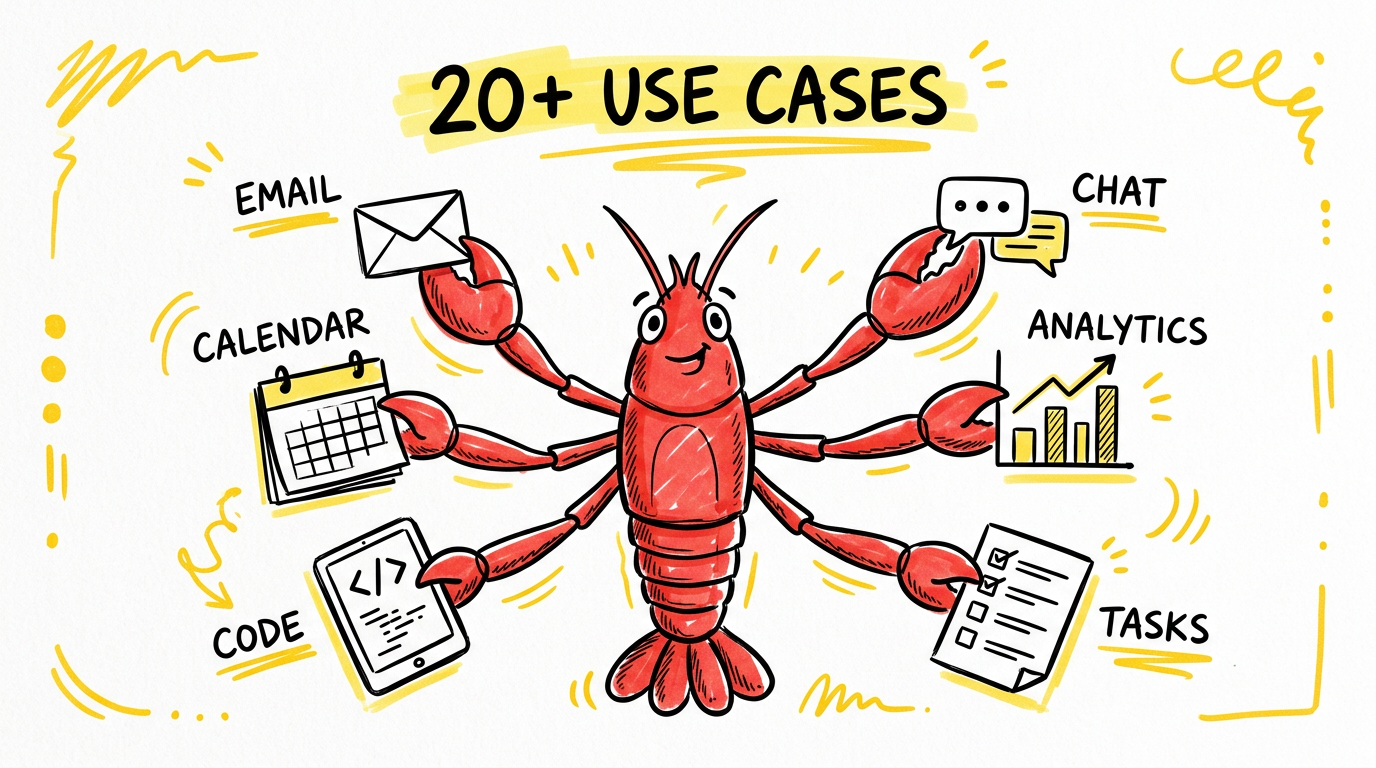
Behind the memes and viral moments lies a serious shift in how organizations approach automation. OpenClaw represents the democratization of AI agents—moving beyond corporate APIs to self-hosted, autonomous systems that "actually do things" (The Guardian).
The Guardian summarized the tension perfectly: while OpenClaw delivers "amazing productivity" as a "digital employee," experts warn that "giving agency to a computer carries significant risks."
This article explores how to harness OpenClaw's power responsibly through Alibaba Cloud's Simple Application Server (SAS) and Elastic Compute Service (ECS)—providing the infrastructure foundation for this new era of autonomous AI agents.
OpenClaw operates as a "self-hosted gateway" that connects popular chat applications to AI agents (GitHub Documentation). This architecture provides several key advantages:
Multi-Channel Support:
-WhatsApp, Telegram, Slack, Discord
-iMessage and BlueBubbles
-Voice wake and talk mode
-Live Canvas for interactive control
Local-First Design:
-Runs on your own devices and infrastructure
-Isolated sessions per agent for security
-Browser dashboard for management
-Configuration via ~/.openclaw/openclaw.json
The OpenClaw community has largely coalesced around two deployment approaches, Cloud or home servers, here we explore Alibaba Cloud's offerings vs home servers:
| Approach | Strengths | Considerations |
|---|---|---|
| Alibaba Cloud Simple Application Server SAS | One-click deployment, integrated management, always-on reliability | Monthly subscription cost |
| Alibaba Cloud Elastic Compute Service ECS | Full customization, enterprise features, auto-scaling | Requires cloud technical expertise |
| Mac Mini (Self-Hosted) | Physical control, no recurring cloud fees | Hardware cost, power consumption, maintenance, single point of failure |
| Home Server / Closet Data Center | Maximum control, data sovereignty | Noise, heat, hardware failures, network reliability |
The viral Mac Mini trend made for great memes, but the reality is more nuanced:
The Hidden Costs of Mac Mini Deployment:
-Hardware: $600-$1,200+ for a capable Mac Mini M2/M4
-Power consumption: 24/7 operation adds $10-30/month in electricity
-Internet: Business-grade upload speeds may require plan upgrades
-Maintenance: Hardware failures, macOS updates, thermal throttling
-Accessibility: No remote management if your home internet fails
-Noise and heat: Converting closets into data centers creates real problems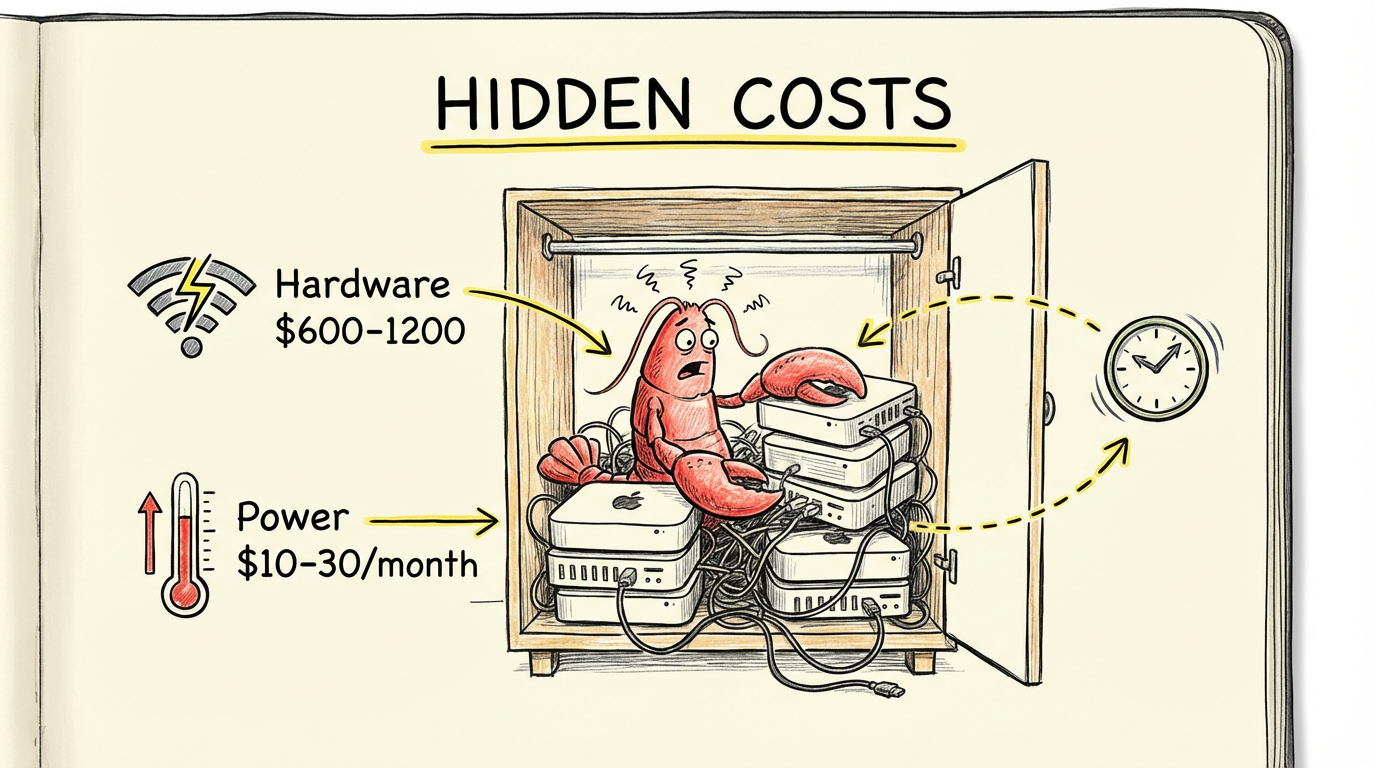
Perhaps the most striking trend in the OpenClaw phenomenon is who's adopting it. Beyond developers and tech enthusiasts, non-technical users are jumping on the bandwagon—paying for cloud servers and AI tokens to access this technology (WIRED).
This democratization has created an unexpected service economy. Some entrepreneurs report making thousands by setting up OpenClaw for non-technical clients who want the benefits without the configuration headaches (Medium).
However, the reality for non-engineers involves "troubleshooting, searching, retrying"—and it's "not a 5-minute setup". This gap between hype and accessibility is exactly where solutions like Alibaba Cloud's SAS come in—offering "one-click OpenClaw deployment" that promises a "fully operational AI assistant in seconds for $0.99 (Promo link).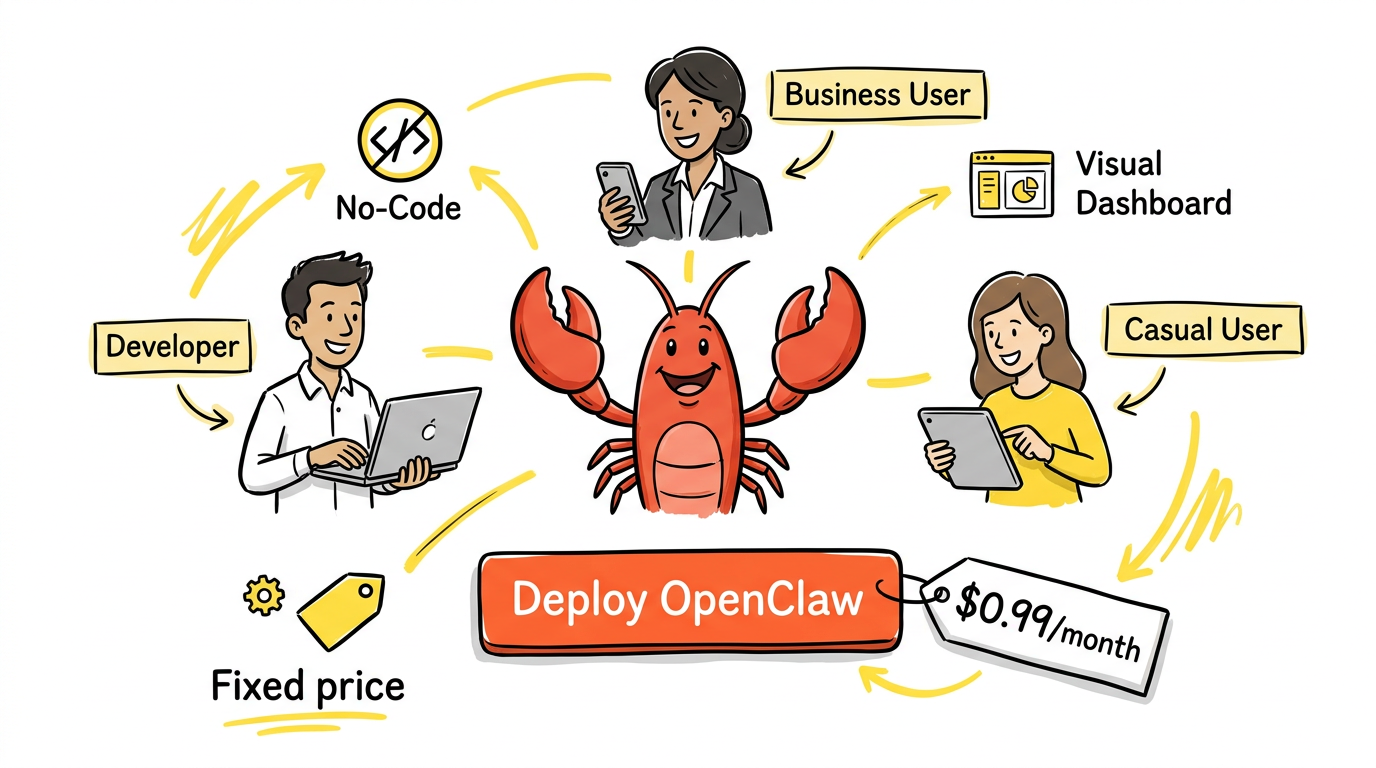
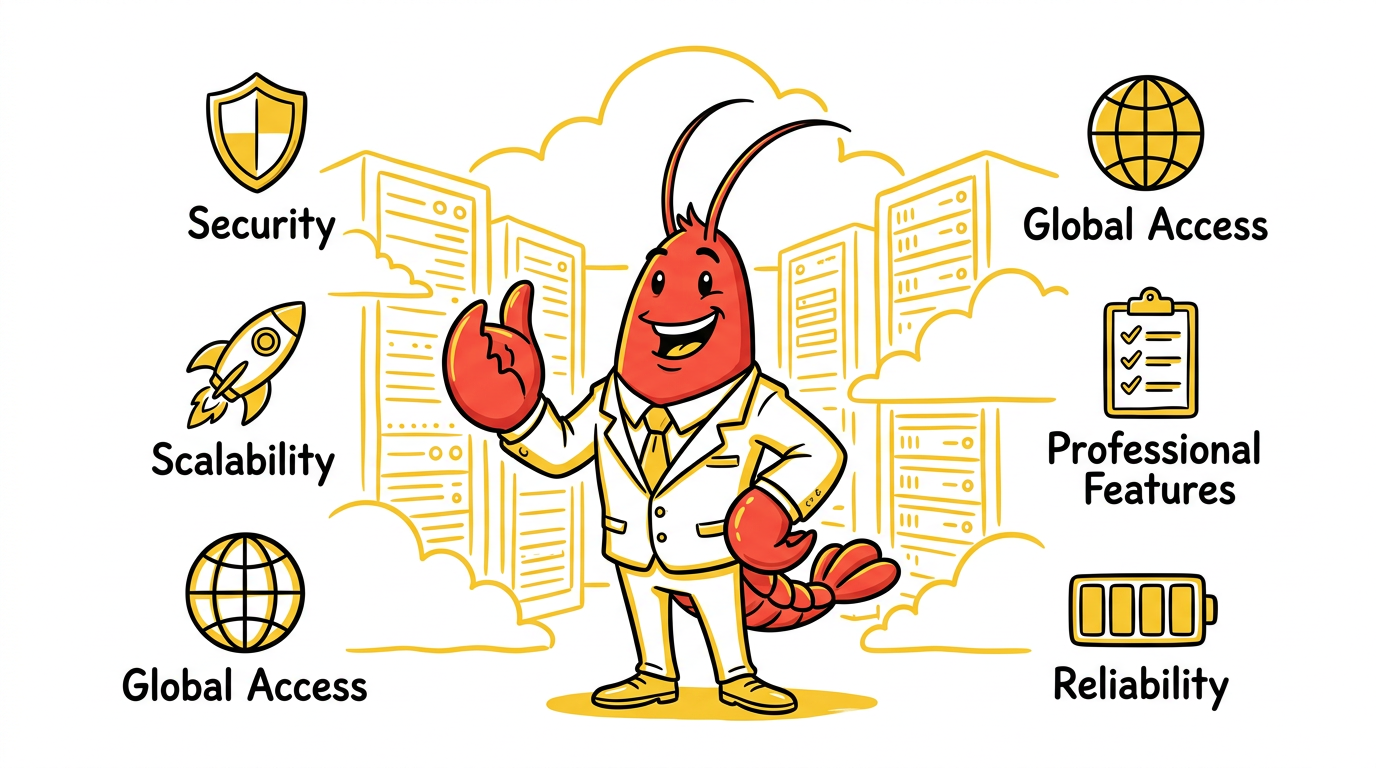
1. Reliability
Cloud instances run in enterprise data centers with redundant power, cooling, and network connectivity. Your agent stays online even when your home internet hiccups.
2. Security
With 21,000 publicly exposed OpenClaw instances already identified, proper network security is critical. Cloud deployments provide:
-Built-in firewall management
-DDoS protection
-Regular security patches
-Isolated networking
3. Scalability
Start with Alibaba Cloud's SAS for prototyping, migrate to Alibaba Cloud's ECS as your needs grow—without buying new hardware.
4. Global Accessibility
Deploy in regions closest to your users for minimal latency, regardless of where you physically are.
5. Professional Features
-Automated backups
-Monitoring and alerting
-SSL certificates
-Snapshot recovery
While AWS, Azure, and Google Cloud offer their own AI and compute services, Alibaba Cloud has established itself as the premier platform for OpenClaw deployment through a combination of pricing advantages, speed-to-market, and integrated AI infrastructure.
Alibaba Cloud is competitive on pricing, particularly for compute-intensive workloads like AI agents:
-Competitive pricing and alignment with local regulatory requirements make it a strategic choice (CloudZero)
-Simple Application Server starting at $0.99/month** for OpenClaw deployment—less than the electricity cost of running a Mac Mini 24/7
-No complex egress fee calculations; straightforward monthly pricing
Alibaba Cloud demonstrated remarkable agility in supporting the OpenClaw ecosystem:
-One click OpenClaw deployment was available on Alibaba Cloud within weeks of the viral explosion, while competitors required manual configuration
-Pre-configured OpenClaw images in Simple Application Server eliminated setup complexity
-5-minute deployment vs. hours of manual configuration on other clouds
This speed reflects Alibaba Cloud's broader innovation philosophy: rapid response to market trends and developer needs.
Alibaba Cloud commands the largest of the cloud market share in China, which is also the largest market for OpenClaw, giving it unmatched insights into AI agent adoption patterns:
-Deeper ecosystem integration with AI models and tools
-Native support for Qwen and other leading open-source models
-Faster iteration based on real-world usage at massive scale
-Cultural alignment with the OpenClaw community's open-source ethos
This market leadership translates to better-optimized infrastructure for AI agent workloads.
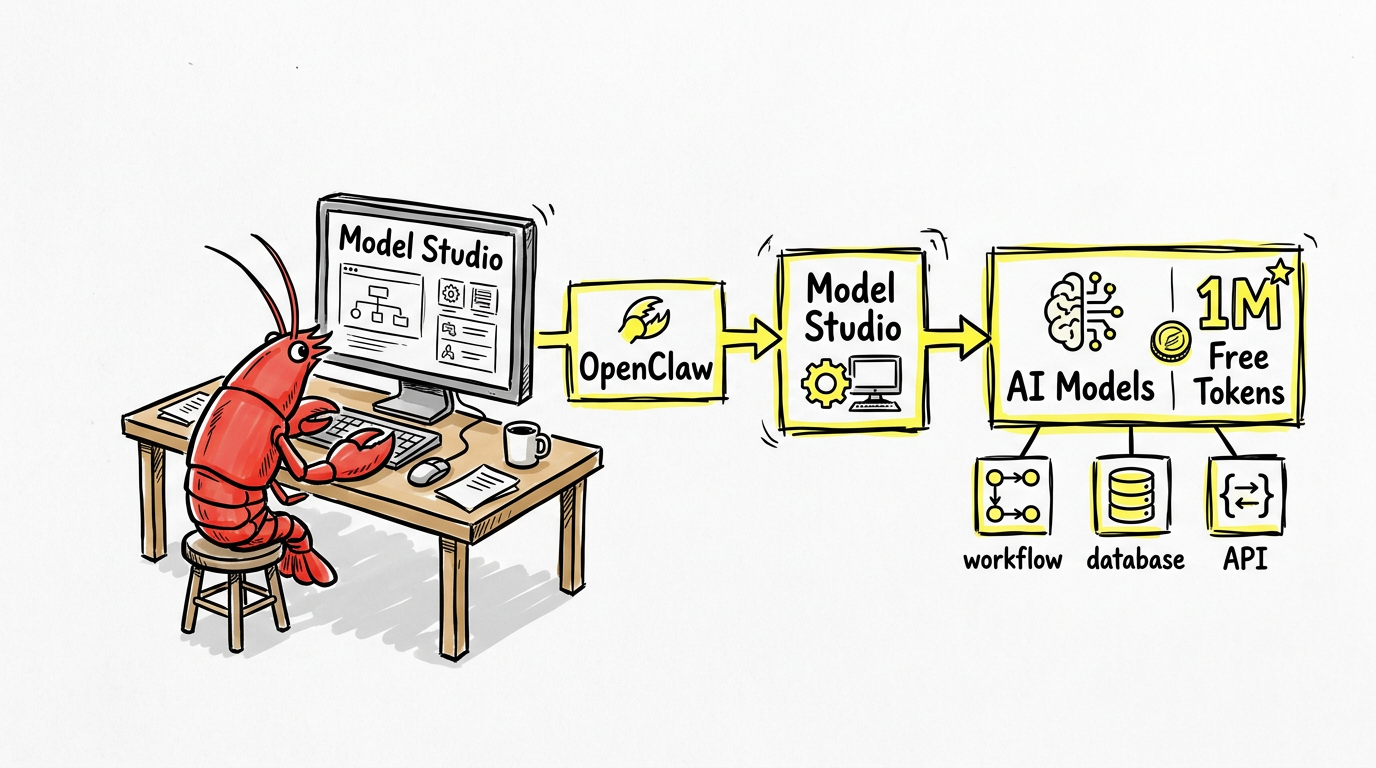
Perhaps the most compelling advantage is Alibaba Cloud's Model Studio—a comprehensive AI platform that integrates seamlessly with OpenClaw. Model Studio is also providing 1 million free tokens for testing and development.
The Integration Advantage:
Unlike other cloud providers, Alibaba Cloud's Model Studio was designed with agentic workflows in mind from day one. This means:
OpenClaw → Alibaba Cloud Model Studio → Qwen/Custom Models
     ↓              ↓                        ↓
   SAS/ECS    Unified Billing         Optimized Inference
Single-Vendor Benefits:
-Unified billing: One invoice for infrastructure and AI consumption
-Optimized latency: Models and compute in the same region
-Simplified compliance: Single provider for data governance
-Integrated support: One team understands your full stack
When you deploy OpenClaw on Alibaba Cloud, you're not just getting a server—you're getting an integrated AI agent platform!
Simple Application Server (SAS) is designed for developers, small teams, and increasingly, non-technical users seeking rapid deployment without infrastructure complexity. For OpenClaw, it provides:
-Personal AI assistants for productivity
-Small team automation workflows
-Development and testing environments
-WhatsApp business automation
-Content creation pipelines
-Non-technical users who want OpenClaw without the configuration complexity
User → WhatsApp/Telegram/Slack → OpenClaw (SAS) → AI Model APIs
                                    ↓
                              Persistent Storage
                                    ↓
                              Monitoring Dashboard
Elastic Compute Service (ECS) provides the flexibility and control that enterprise deployments require. For production OpenClaw implementations, ECS delivers:
For enterprise deployments, consider this architecture:
For 10-50 Person Teams:
-Multi-instance container deployment
-Shared persistent storage
-Centralized monitoring
For 100+ Person Organizations:
-Multi-tenant Kubernetes deployment
-Role-based access control (RBAC)
-Dedicated compute resources per team
When deploying OpenClaw in production:
-Alibaba Cloud account
-API key from Alibaba Cloud Model Studio
-WhatsApp account on your mobile device
Why SAS is Perfect for Non-Technical Users:
-No command-line knowledge required
-Visual console for all configuration
-One-click application deployment
-Built-in troubleshooting guides
-Fixed monthly cost with no surprises
Go to Alibaba Cloud Campaign Page: link
View my previous article on a step by step guide: link
# Recommended specifications for production:
# - Instance: ecs.g7.large or higher
# - OS: Ubuntu 22.04 LTS or Alicloud Linux 2023
# - RAM: 4GB minimum, 8GB recommended
# - Storage: 50GB ESSD# Install Node.js 22+
curl -fsSL https://deb.nodesource.com/setup_22.x | sudo -E bash -
sudo apt-get install -y nodejs
# Install OpenClaw
npm install -g openclaw@latest
# Run onboarding
openclaw onboard --install-daemonFor containerized deployments
version: '3.8'
services:
  openclaw:
    image: ghcr.io/openclaw/openclaw:latest
    container_name: openclaw
    restart: unless-stopped
    ports:
      - "127.0.0.1:18789:18789"
    volumes:
      - ./data:/root/.openclaw
    environment:
- OPENCLAW_API_KEY=${API_KEY}The OpenClaw phenomenon—from viral GitHub sensation to the Mac Mini gold rush—represents more than just another tech trend. It signals a fundamental shift in how we think about automation: moving from passive chatbots to autonomous agents that "actually do things."
But the memes and viral moments obscure an important truth. Running an AI agent 24/7 is not the same as running a chat app. It requires reliable infrastructure, proper security, and professional-grade deployment practices—especially when 21,000 exposed instances have already demonstrated the risks of getting it wrong.
The Mac Mini in your closet might make for a great Twitter post, but it won't provide the reliability, security, or scalability that serious OpenClaw deployments demand.
Alibaba Cloud's Simple Application Server and Elastic Compute Service offer a pragmatic alternative:
Whether you're building a personal productivity assistant or deploying agentic automation for your organization, the cloud offers the foundation that viral memes cannot: reliability, security, and peace of mind.
The AI agent revolution is here. Make sure your infrastructure is ready for it.
Why CPFS Is the Unsung Hero of the AI Revolution (And Why It's Getting More Expensive)

10 posts | 0 followers
FollowJustin See - March 20, 2026
Alibaba Cloud Community - January 30, 2026
Justin See - March 26, 2026
Alibaba Cloud Native Community - March 17, 2026
Alibaba Cloud Community - January 30, 2026
Alibaba Cloud Native Community - February 13, 2026
10 posts | 0 followers
Follow Container Compute Service (ACS)
A cloud computing service that provides container compute resources that comply with the container specifications of Kubernetes
Learn More ECS(Elastic Compute Service)
Elastic and secure virtual cloud servers to cater all your cloud hosting needs.
Learn More
Container Service for Kubernetes
Alibaba Cloud Container Service for Kubernetes is a fully managed cloud container management service that supports native Kubernetes and integrates with other Alibaba Cloud products.
Learn More AgentBay
Multimodal cloud-based operating environment and expert agent platform, supporting automation and remote control across browsers, desktops, mobile devices, and code.
Learn MoreMore Posts by Justin See

