# coding=utf-8

import os, time, json, requests, traceback, oss2, fc2
from requests.exceptions import *
from fc2.fc_exceptions import *
from oss2.models import PartInfo
from oss2.exceptions import *
from multiprocessing import Pool
from contextlib import closing

MAX_PROCCESSES = 20 # The number of worker processes in each subtask
BLOCK_SIZE = 6 * 1024 * 1024 # The size of each part
BLOCK_NUM_INTERNAL = 18 # The default number of blocks in each subtask in case of internal url
BLOCK_NUM = 10 # The default number of blocks in each subtask
MAX_SUBTASKS = 49 # The number of worker processes to do subtasks
CHUNK_SIZE = 8 * 1024 # The size of each chunk
SLEEP_TIME = 0.1 # The initial seconds to wait for retrying
MAX_RETRY_TIME = 10 # The maximum retry times

def retry(func):
    """
    Return the result of the lambda function func with retry.
    :param func: (required, lambda) the function.
    :return: The result of func.
    """
    wait_time = SLEEP_TIME
    retry_cnt = 1
    while True:
        if retry_cnt > MAX_RETRY_TIME:
            return func()
        try:
            return func()
        except (ConnectionError, SSLError, ConnectTimeout, Timeout) as e:
            print(traceback.format_exc())
        except (OssError) as e:
            if 500 <= e.status < 600:
                print(traceback.format_exc())
            else:
                raise Exception(e)
        except (FcError) as e:
            if (500 <= e.status_code < 600) or (e.status_code == 429):
                print(traceback.format_exc())
            else:
                raise Exception(e)
        print('Retry %d times...' % retry_cnt)
        time.sleep(wait_time)
        wait_time *= 2
        retry_cnt += 1

def get_info(url):
    """
    Get the CRC64 and total length of the file.
    :param url: (required, string) the url address of the file.
    :return: CRC64, length
    """
    with retry(lambda : requests.get(url, {}, stream = True)) as r:
        return r.headers['x-oss-hash-crc64ecma'], int(r.headers['content-length'])

class Response(object):
    """
    The response class to support reading by chunks.
    """
    def __init__(self, response):
        self.response = response
        self.status = response.status_code
        self.headers = response.headers

    def read(self, amt = None):
        if amt is None:
            content = b''
            for chunk in self.response.iter_content(CHUNK_SIZE):
                content += chunk
            return content
        else:
            try:
                return next(self.response.iter_content(amt))
            except StopIteration:
                return b''

    def __iter__(self):
        return self.response.iter_content(CHUNK_SIZE)

def migrate_part(args):
    """
    Download a part from url and then upload it to OSS.
    :param args: (bucket, object_name, upload_id, part_number, url, st, en)
    :bucket: (required, Bucket) the goal OSS bucket.
    :object_name: (required, string) the goal object_name.
    :upload_id: (required, integer) the upload_id of this upload task.
    :part_number: (integer) the part_number of this part.
    :url: (required, string) the url address of the file.
    :st, en: (required, integer) the byte range of this part, denoting [st, en].
    :return: (part_number, etag)
    :part_number: (integer) the part_number of this part.
    :etag: (string) the etag of the upload_part result.
    """
    bucket = args[0]
    object_name = args[1]
    upload_id = args[2]
    part_number = args[3]
    url = args[4]
    st = args[5]
    en = args[6]
    try:
        headers = {'Range' : 'bytes=%d-%d' % (st, en)}
        resp = Response(retry(lambda : requests.get(url, headers = headers, stream = True)))
        result = retry(lambda : bucket.upload_part(object_name, upload_id, part_number, resp))
        return (part_number, result.etag)
    except Exception as e:
        print(traceback.format_exc())
        raise Exception(e)

def do_subtask(event, context):
    """
    Download a range of the file from url and then upload it to OSS.
    :param event: (required, json) the json format of event.
    :param context: (required, FCContext) the context of handler.
    :return: parts
    :parts: ([(integer, string)]) the part_number and etag of each process.
    """
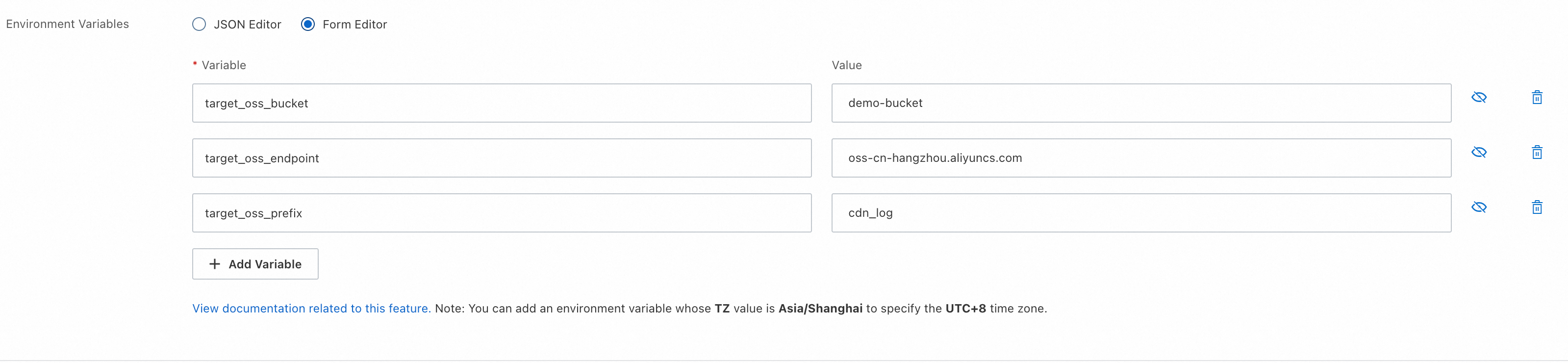
    oss_endpoint = os.environ.get('target_oss_endpoint')
    oss_bucket_name = os.environ.get('target_oss_bucket')
    access_key_id = context.credentials.access_key_id
    access_key_secret = context.credentials.access_key_secret
    security_token = context.credentials.security_token
    auth = oss2.StsAuth(access_key_id, access_key_secret, security_token)
    bucket = oss2.Bucket(auth, oss_endpoint, oss_bucket_name)
    object_name = event['object_name']
    upload_id = event['upload_id']
    part_number = event['part_number']
    url = event['url']
    st = event['st']
    en = event['en']
    if part_number == 1:
        return [migrate_part((bucket, object_name, upload_id, part_number, url, st, en))]
    pool = Pool(MAX_PROCCESSES)
    tasks = []
    while st <= en:
        nxt = min(en, st + BLOCK_SIZE - 1)
        tasks.append((bucket, object_name, upload_id, part_number, url, st, nxt))
        part_number += 1
        st = nxt + 1
    parts = pool.map(migrate_part, tasks)
    pool.close()
    pool.join()
    return parts

def invoke_subtask(args):
    """
    Invoke the same function synchronously to start a subtask.
    :param args: (object_name, upload_id, part_number, url, st, en, context)
    :object_name: (required, string) the goal object_name.
    :upload_id: (required, integer) the upload_id of this upload task.
    :part_number: (integer) the part_number of the first part in this subtask.
    :url: (required, string) the url address of the file.
    :st, en: (required, integer) the byte range of this subtask, denoting [st, en].
    :context: (required, FCContext) the context of handler.
    :return: the return of the invoked function.
    """
    object_name = args[0]
    upload_id = args[1]
    part_number = args[2]
    url = args[3]
    st = args[4]
    en = args[5]
    context = args[6]
    account_id = context.account_id
    access_key_id = context.credentials.access_key_id
    access_key_secret = context.credentials.access_key_secret
    security_token = context.credentials.security_token
    region = context.region
    service_name = context.service.name
    function_name = context.function.name
    endpoint = 'http://%s.%s-internal.fc.aliyuncs.com' % (account_id, region)
    client = fc2.Client(
        endpoint = endpoint,
        accessKeyID = access_key_id,
        accessKeySecret = access_key_secret,
        securityToken = security_token
    )
    payload = {
        'object_name' : object_name,
        'upload_id' : upload_id,
        'part_number' : part_number,
        'url' : url,
        'st' : st,
        'en' : en,
        'is_children' : True
    }
    if part_number == 1:
        return json.dumps(do_subtask(payload, context))
    ret = retry(lambda : client.invoke_function(service_name, function_name, payload = json.dumps(payload)))
    return ret.data

def divide(n, m):
    """
    Calculate ceil(n / m) without floating point arithmetic.
    :param n, m: (integer)
    :return: (integer) ceil(n / m).
    """
    ret = n // m
    if n % m > 0:
        ret += 1
    return ret

def migrate_file(url, oss_object_name, context):
    """
    Download the file from url and then upload it to OSS.
    :param url: (required, string) the url address of the file.
    :param oss_object_name: (required, string) the goal object_name.
    :param context: (required, FCContext) the context of handler.
    :return: actual_crc64, expect_crc64
    :actual_crc64: (string) the CRC64 of upload.
    :expect_crc64: (string) the CRC64 of source file.
    """
    crc64, total_size = get_info(url)
    oss_endpoint = os.environ.get('target_oss_endpoint')
    oss_bucket_name = os.environ.get('target_oss_bucket')
    access_key_id = context.credentials.access_key_id
    access_key_secret = context.credentials.access_key_secret
    security_token = context.credentials.security_token
    auth = oss2.StsAuth(access_key_id, access_key_secret, security_token)
    bucket = oss2.Bucket(auth, oss_endpoint, oss_bucket_name)
    upload_id = retry(lambda : bucket.init_multipart_upload(oss_object_name)).upload_id
    pool = Pool(MAX_SUBTASKS)
    st = 0
    part_number = 1
    tasks = []
    block_num = BLOCK_NUM_INTERNAL if '-internal.aliyuncs.com' in oss_endpoint else BLOCK_NUM
    block_num = min(block_num, divide(divide(total_size, BLOCK_SIZE), MAX_SUBTASKS + 1))
    while st < total_size:
        en = min(total_size - 1, st + block_num * BLOCK_SIZE - 1)
        tasks.append((oss_object_name, upload_id, part_number, url, st, en, context))
        size = en - st + 1
        cnt = divide(size, BLOCK_SIZE)
        part_number += cnt
        st = en + 1
    subtasks = pool.map(invoke_subtask, tasks)
    pool.close()
    pool.join()
    parts = []
    for it in subtasks:
        for part in json.loads(it):
            parts.append(PartInfo(part[0], part[1]))
    res = retry(lambda : bucket.complete_multipart_upload(oss_object_name, upload_id, parts))
    return str(res.crc), str(crc64)

def get_oss_object_name(url):
    """
    Get the OSS object name.
    :param url: (required, string) the url address of the file.
    :return: (string) the OSS object name.
    """
    prefix = os.environ.get('target_oss_prefix')
    tmps = url.split('?')
    if len(tmps) != 2:
        raise Exception('Invalid url : %s' % url)
    urlObject = tmps[0]
    if urlObject.count('/') < 3:
        raise Exception('Invalid url : %s' % url)
    objectParts = urlObject.split('/')
    objectParts = [prefix] + objectParts[len(objectParts) - 3 : len(objectParts)]
    return '/'.join(objectParts)

def handler(event, context):
    evt = json.loads(event)
    if list(evt.keys()).count('is_children'):
        return json.dumps(do_subtask(evt, context))
    url = evt['events'][0]['eventParameter']['filePath']
    if not (url.startswith('http://') or url.startswith('https://')):
        url = 'https://' + url
    oss_object_name = get_oss_object_name(url)
    st_time = int(time.time())
    wait_time = SLEEP_TIME
    retry_cnt = 1
    while True:
        actual_crc64, expect_crc64 = migrate_file(url, oss_object_name, context)
        if actual_crc64 == expect_crc64:
            break
        print('Migration object CRC64 not matched, expected: %s, actual: %s' % (expect_crc64, actual_crc64))
        if retry_cnt > MAX_RETRY_TIME:
            raise Exception('Maximum retry time exceeded.')
        print('Retry %d times...' % retry_cnt)
        time.sleep(wait_time)
        wait_time *= 2
        retry_cnt += 1
    print('Success! Total time: %d s.' % (int(time.time()) - st_time))