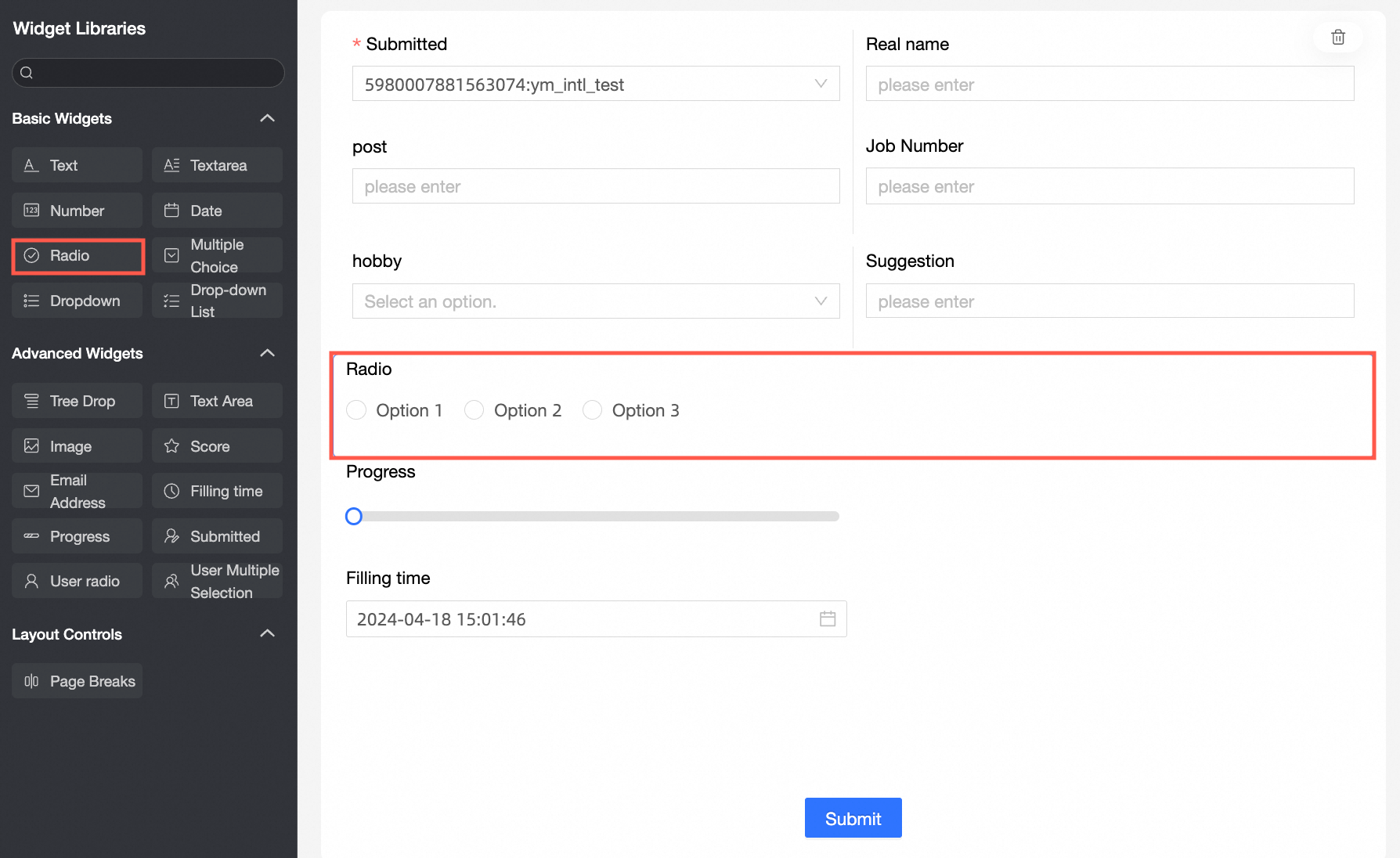
A radio button lets users select a single option from a set of choices. It is commonly used in forms.
Use cases
Use radio buttons when you have a small number of mutually exclusive options that can be displayed directly. For example, gender or income type.
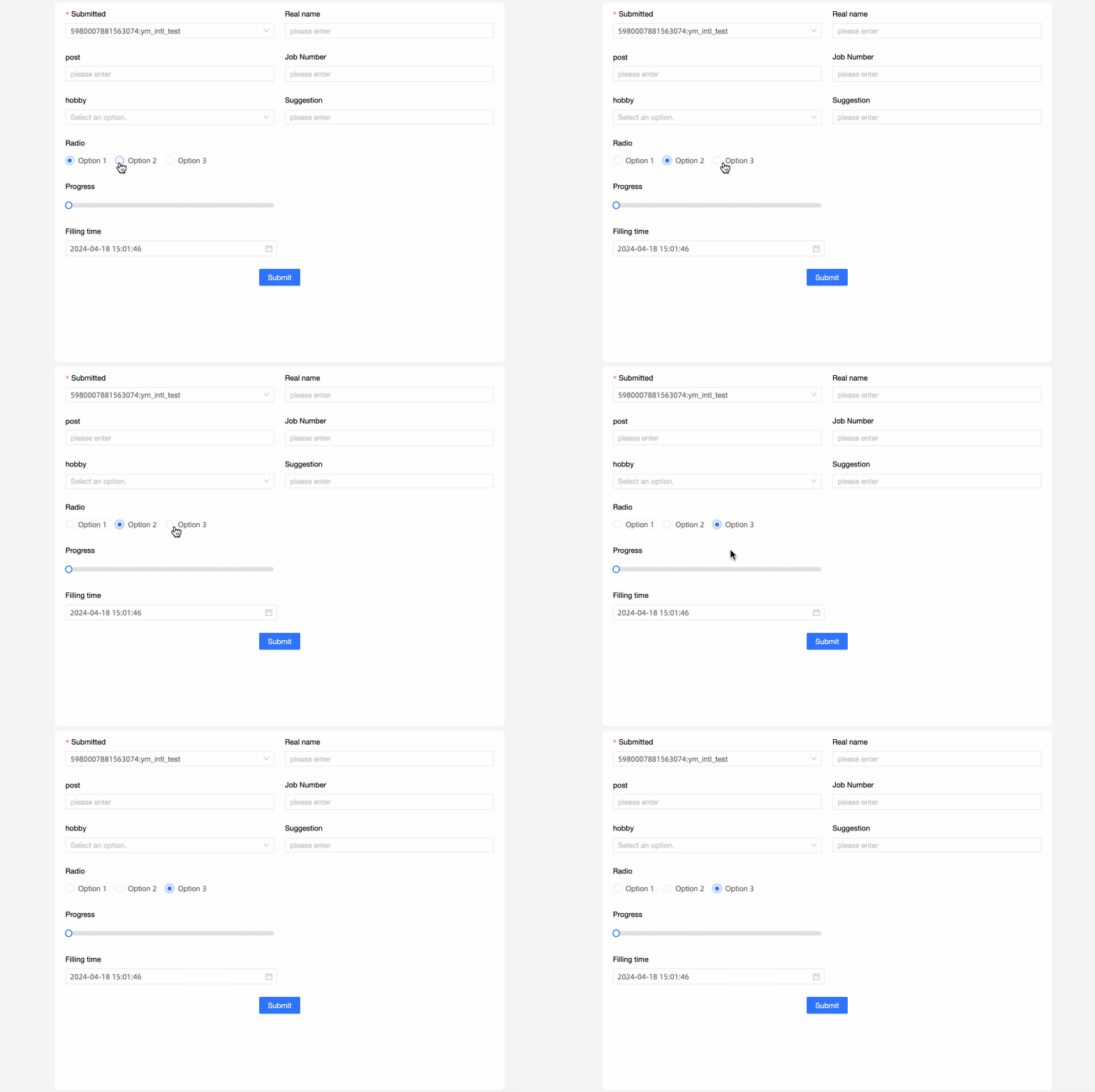
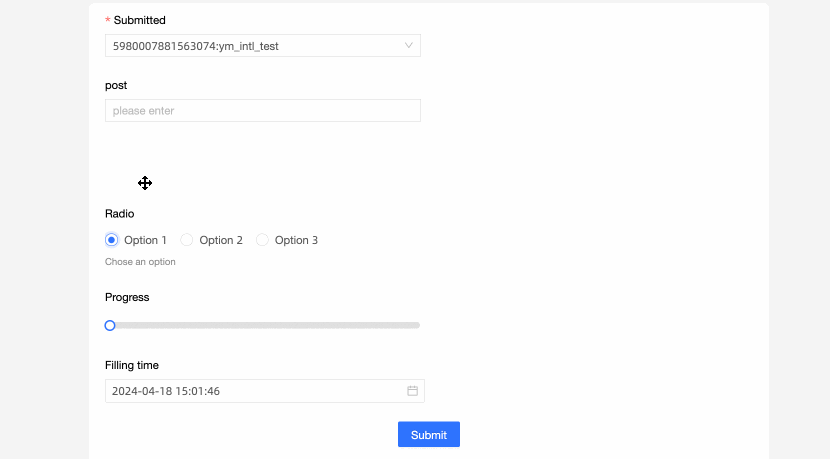
Preview
Control settings
Basic configuration
|
Parameter |
Description |
|
|
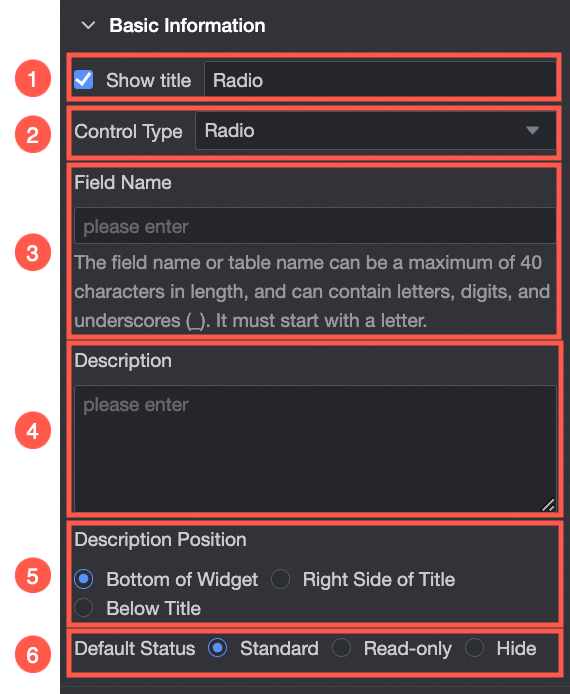
① Display title: Specifies whether to show the control title. The title also serves as the column name for submitted data. |
|
② Control type: Changes the control to another type. The dropdown menu lists other basic and advanced control types. |
|
|
③ Column name: The column name in the data table generated by this form. Note
A field name or table name must start with a letter and can contain only letters, digits, and underscores (_). The maximum length is 40 characters. |
|
|
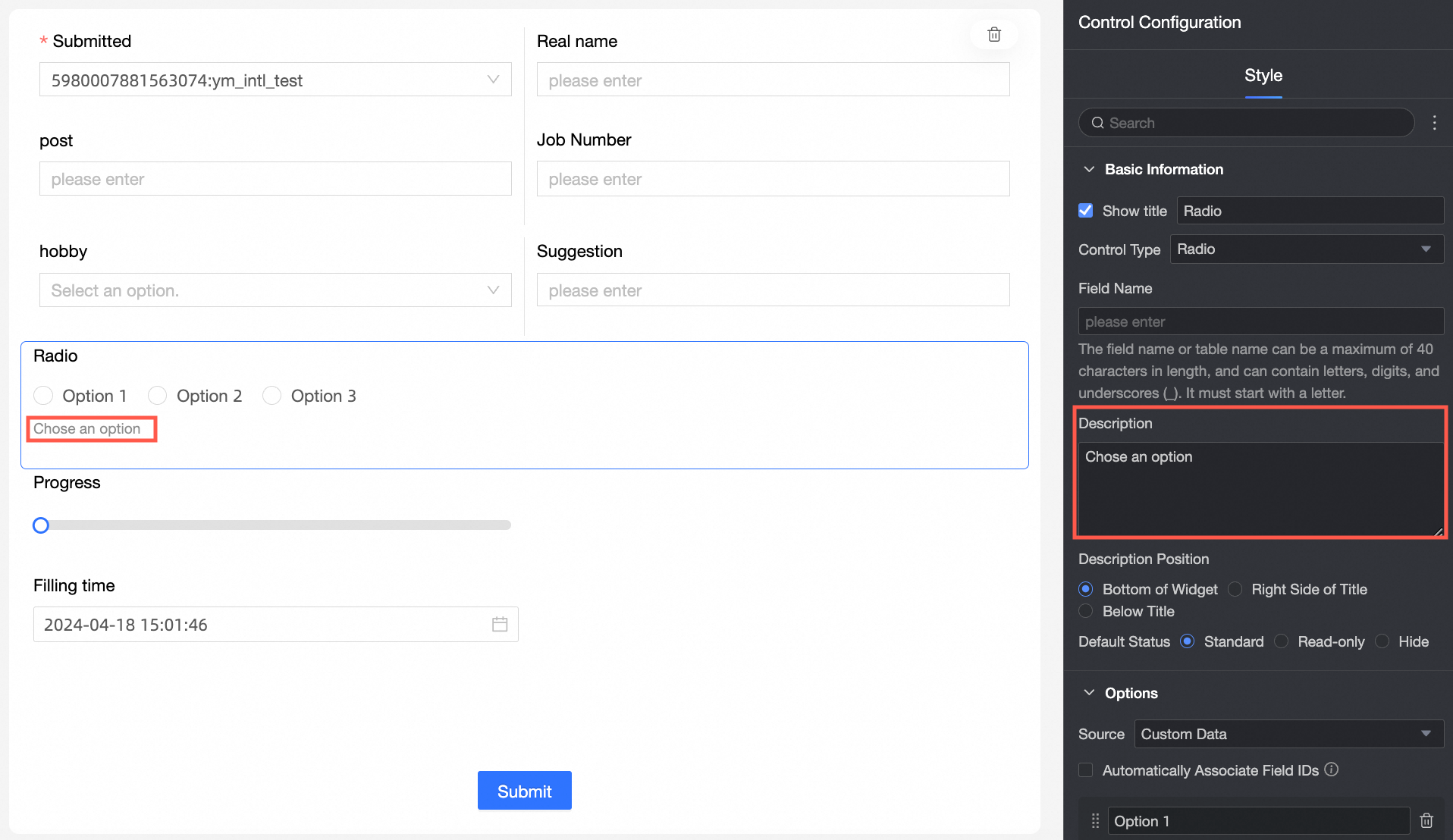
④ Description: A custom description for the control.
|
|
|
⑤ Description position: The position of the description. Options: Bottom of the control, Right of the title, and Below the title. |
|
|
⑥ Default state: The default state of the control. Options: Normal, read-only, and hidden. |
Options
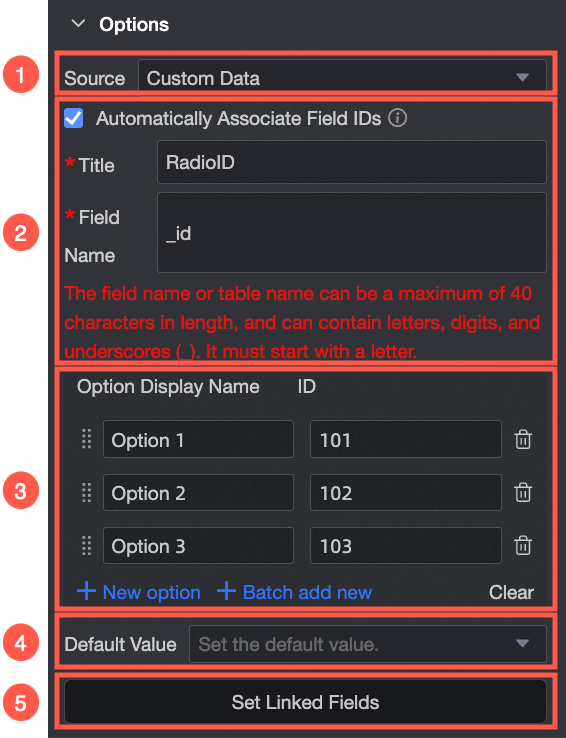
Source: Choose a source for the options: custom data, data source, or dataset.
|
Parameter |
Description |
|
Populate options from custom data.
|
① Source: Custom Data: Manually define option display names and their associated ID values. |
|
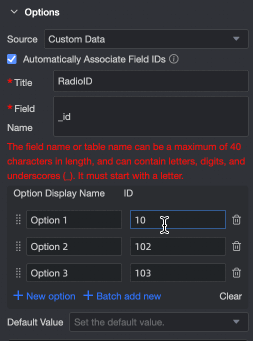
② Automatically associate field ID values: Associates an ID value with each option. When defined, the ID value is automatically written to the generated data table upon form submission, allowing you to join or look up other data tables. Configure the option display name and associated ID value fields. You can add option, batch add, edit, and delete options.
|
|
|
③ Option display name: Add options, edit their names, or delete them. |
|
|
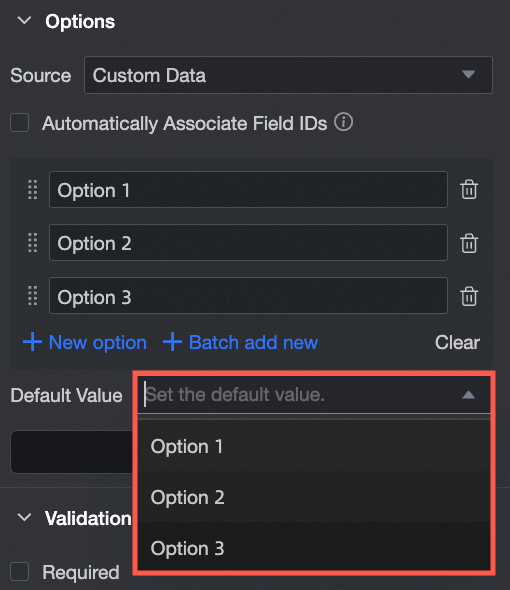
④ Default value: Select a default value from the list of options you defined.
|
|
|
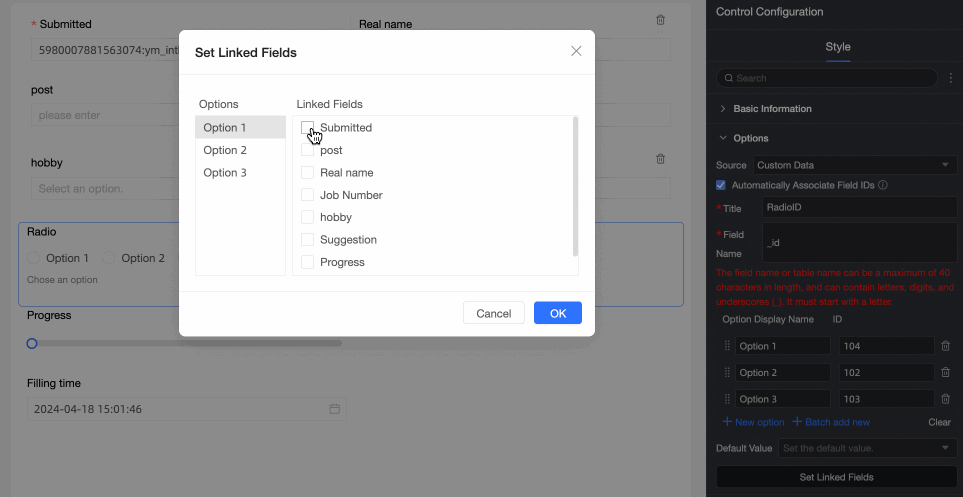
⑤ Linked options settings: Available when the form contains two or more of the following: radio button, single-select dropdown, and multi-select dropdown. Creates dependencies between them. Note
You can only link a field to other fields that appear after it in the form.
|
|
|
Populate options from a data source.
|
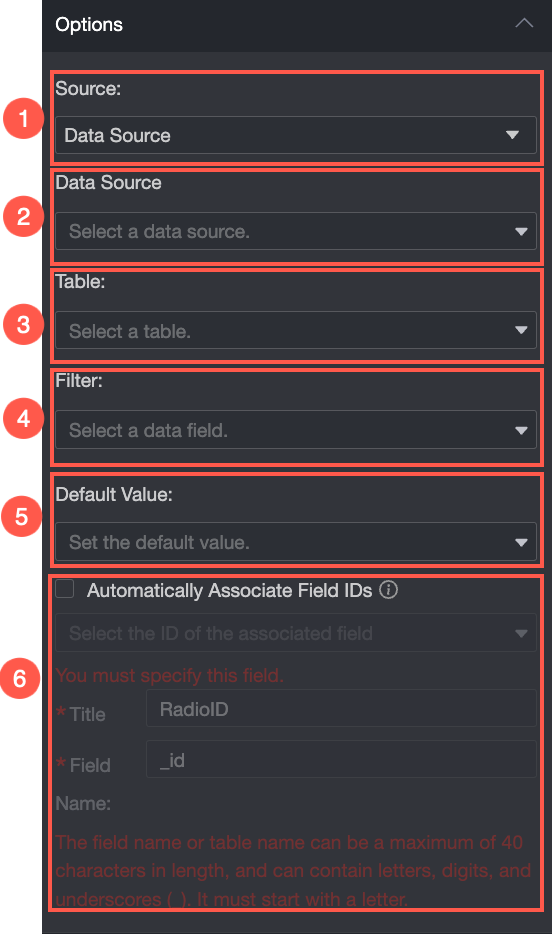
① Source: Data Source: Populates options from a data table within a selected data source. |
|
② Data source: Select a data source from the current workspace. |
|
|
③ Data table: Select a data table from the chosen data source. |
|
|
④ Data field: Select a data field from the chosen data table. |
|
|
⑤ Default value: Select a default value from the chosen data field.
|
|
|
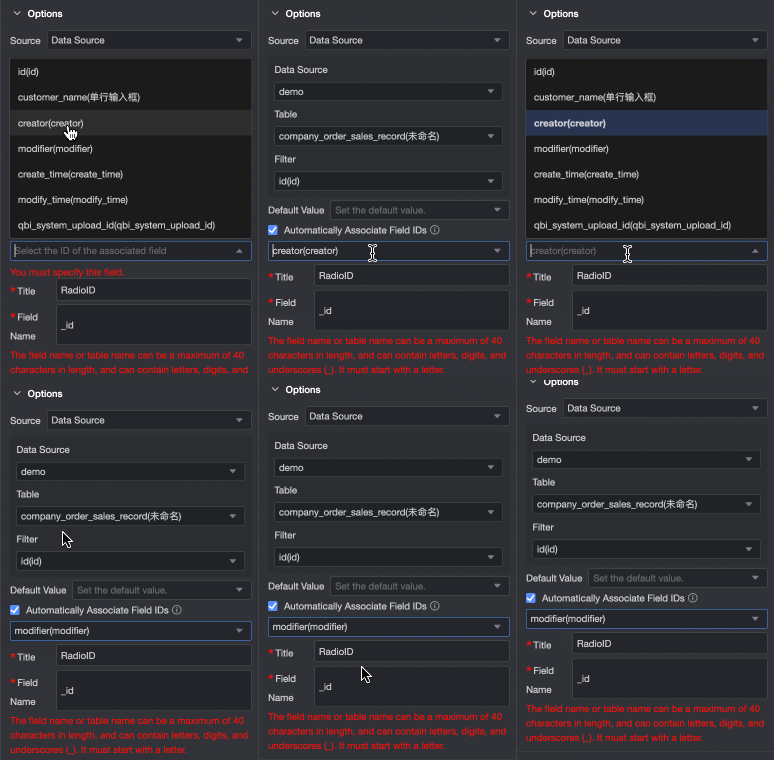
⑥ Automatically associate field ID values: Associates an ID value with each option. When defined, the ID value is automatically written to the generated data table upon form submission, allowing you to join or look up other data tables. You can associate the option display name field with the corresponding ID value field.
|
|
|
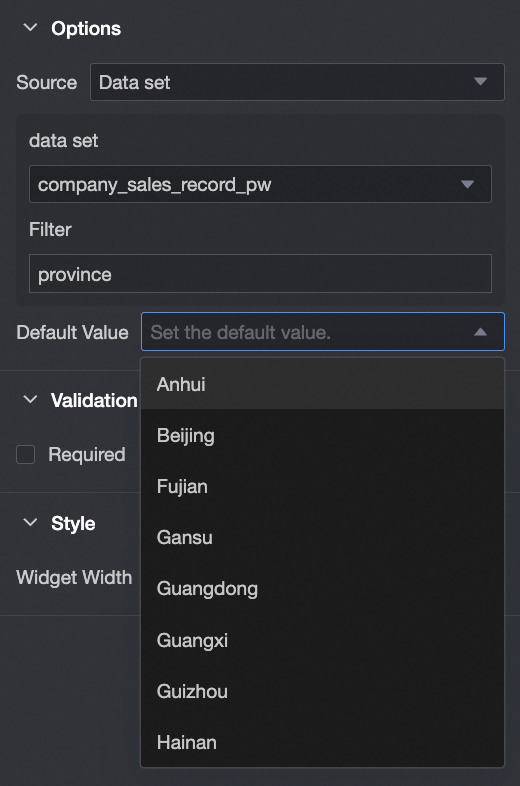
Populate options from a dataset.
|
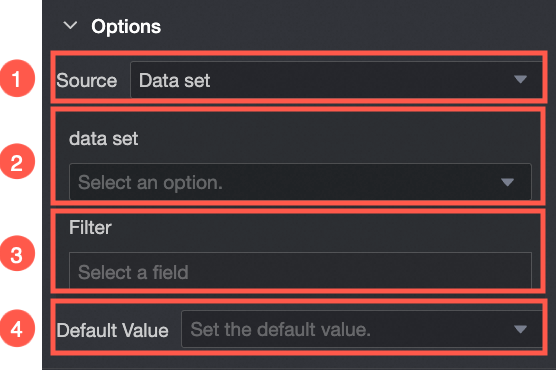
① Source: Dataset: Populates options from a data field within a selected dataset. |
|
② Dataset: Select a dataset from the current workspace. |
|
|
③ Data field: Select a data field from the chosen dataset. |
|
|
④ Default value: Select a default value from the chosen data field.
|

Validation
|
Parameter |
Description |
|
|
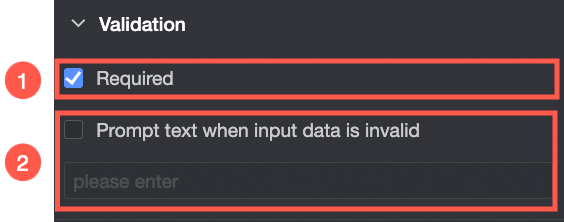
① Required: Makes the control a required field in the form. |
|
Validation error message: A custom message displayed when validation fails. For example, if Required is enabled and the user does not select an option, this message appears. |
Style
|
Parameter |
Description |
|
|
Control width: The width of the control. Options: Default and Full Row. Note
On the data entry page, you can also manually adjust the control width by dragging the control's border. |
