This topic describes the performance differences between hot standby-enabled and hot standby-disabled read-only nodes.
Comparison overview
The following table describes the performance differences between hot standby-enabled and hot standby-disabled read-only nodes.
Item | Hot standby-enabled read-only node | Hot standby-disabled read-only node |
Service capabilities | Provides read-only services. A small amount of memory is consumed during prefetching. | Provides read-only services. |
Switchover (in proactive O&M scenarios such as a minor version update or an upgrade or downgrade of the specifications) | Connections and transactions are not interrupted. The number of transactions per second (TPS) drops to zero for approximately 5 seconds. | Connections and transactions are interrupted. The number of TPS drops to zero for more than 10 seconds. |
Failover (in disaster recovery scenarios, such as a failure of the primary node) | Connections and transactions are not interrupted. The number of TPS drops to zero for approximately 5 seconds. | Connections and transactions are interrupted. The number of TPS drops to zero for 60 seconds and errors are reported. |
The preceding table indicates that:
In proactive O&M scenarios, a hot standby-enabled read-only node has shorter service downtime and provides uninterrupted connections and transactions.
In disaster recovery scenarios, a hot standby-enabled read-only node has shorter service downtime and provides uninterrupted connections and transactions. In addition, the number of errors reported by clients is significantly reduced.
Detailed performance data
The following section describes the performance data of hot standby-enabled and hot standby-disabled read-only nodes during a switchover and a failover.
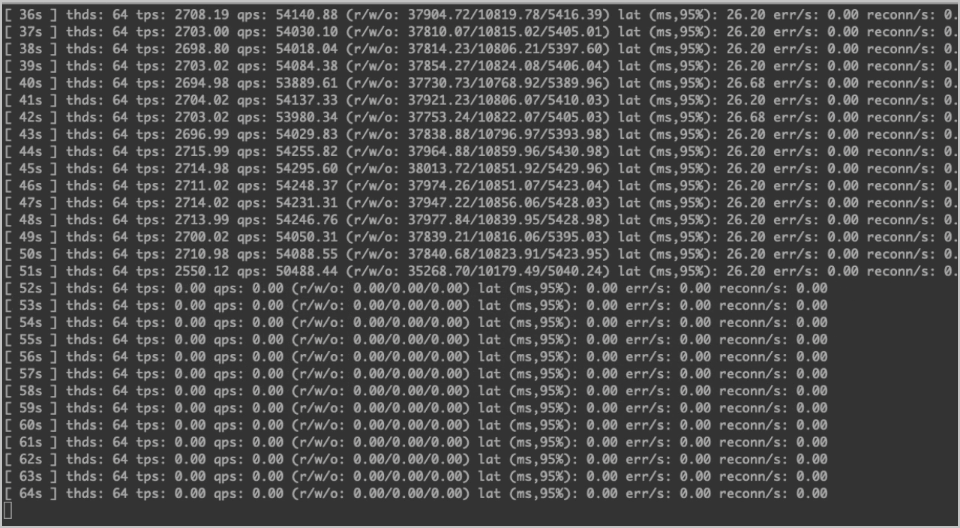
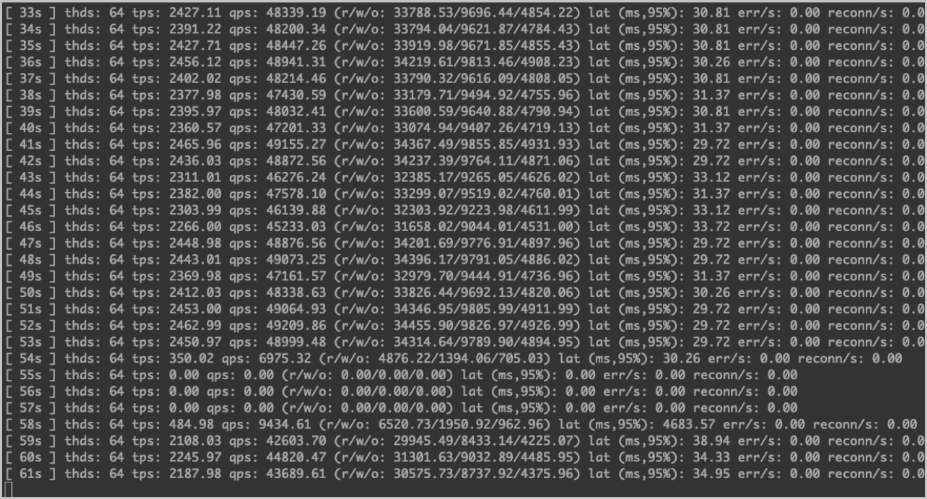
Switchover (in proactive O&M scenarios such as a minor version update or an upgrade or downgrade of the specifications)
Hot standby-disabled read-only node: The number of TPS drops to zero for more than 10 seconds.
Hot standby-enabled read-only node: The number of TPS drops to zero for approximately 5 seconds.
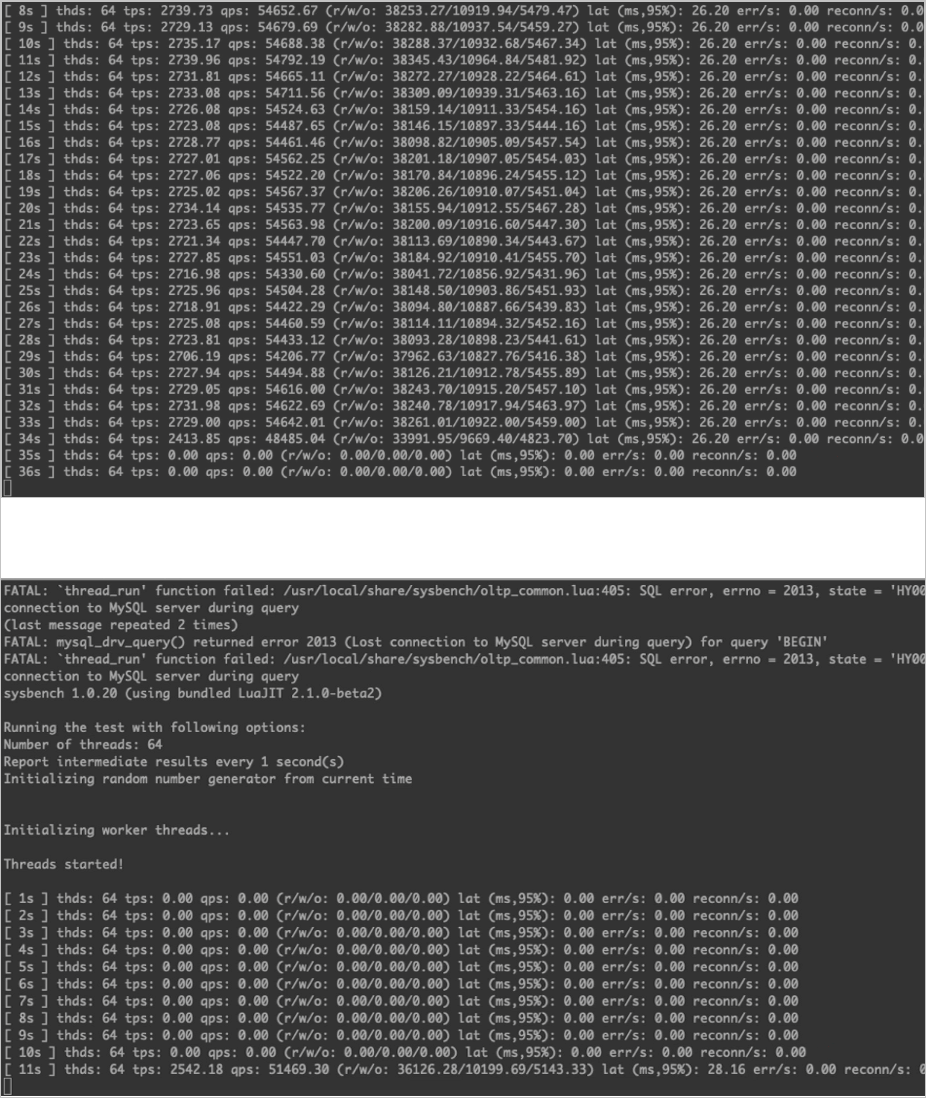
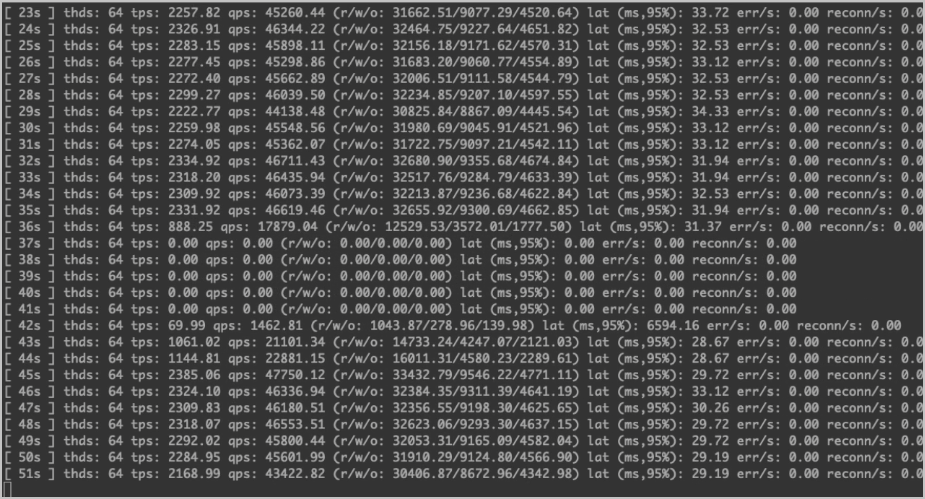
Failover (in disaster recovery scenarios such as a failure of the primary node)
Hot standby-disabled read-only node: The service downtime lasts approximately 60 seconds.
Hot standby-enabled read-only node: The number of TPS drops to zero for approximately 5 seconds.
Videos
Performance comparison between hot standby-enabled and hot standby-disabled read-only nodes in proactive O&M scenarios
The following video shows the performance differences between hot standby-enabled and hot standby-disabled read-only nodes in proactive O&M scenarios. The experimental results in the video show that in proactive O&M scenarios such as when the primary node is changed or the specifications are upgraded or downgraded, hot standby-enabled read-only nodes have a shorter service downtime and provides uninterrupted connections and transactions.
Performance comparison between hot standby-enabled and hot standby-disabled read-only nodes in disaster recovery scenarios
The following video shows the performance differences between hot standby-enabled and hot standby-disabled read-only nodes in disaster recovery scenarios. The experimental results in the video show that in disaster recovery scenarios, such as when the primary node fails, hot standby-enabled read-only nodes provide uninterrupted connections and transactions and no errors are reported.