You can create notification rules in your Platform for AI (PAI) workspace to track and monitor the status of Deep Learning Containers (DLC) jobs. This topic describes how to use the notification feature.
Configure notifications
-
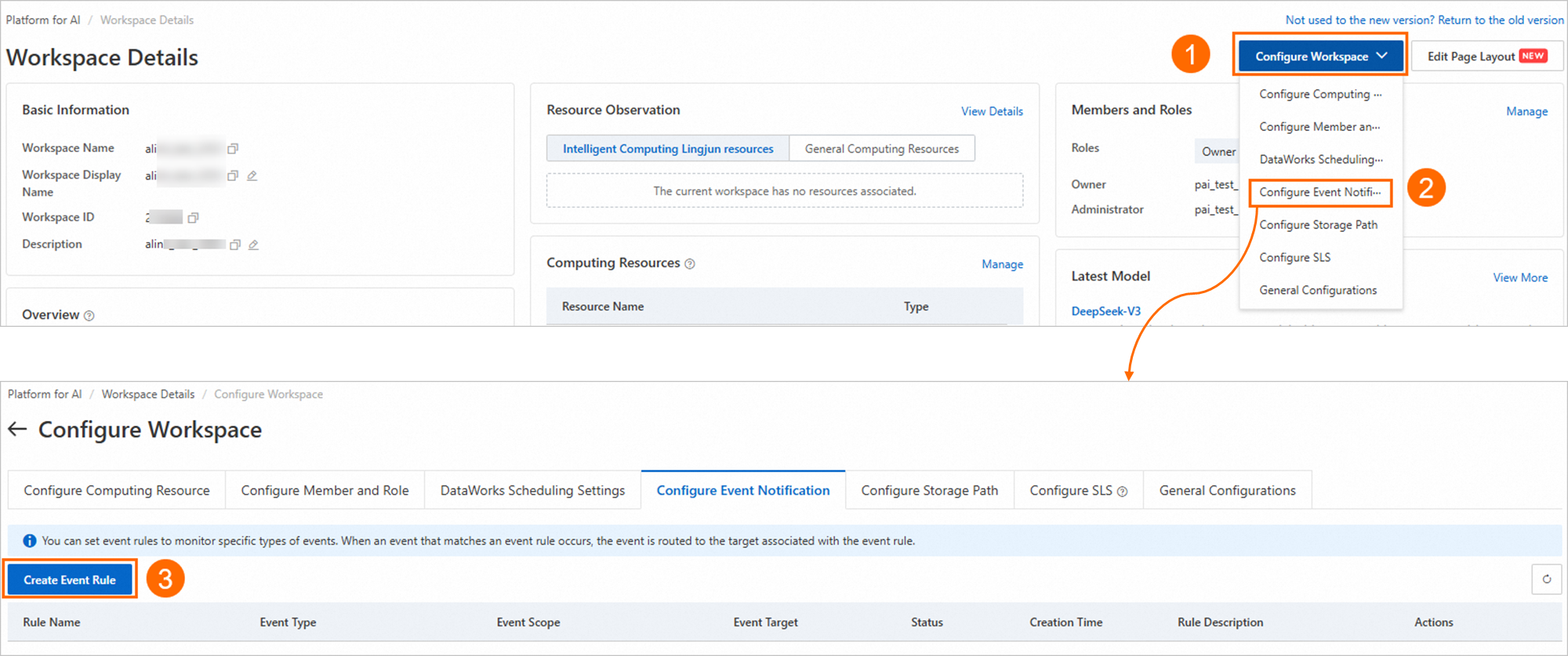
On the Workspace Details page, choose , and then click the Create Event Rule button.
-
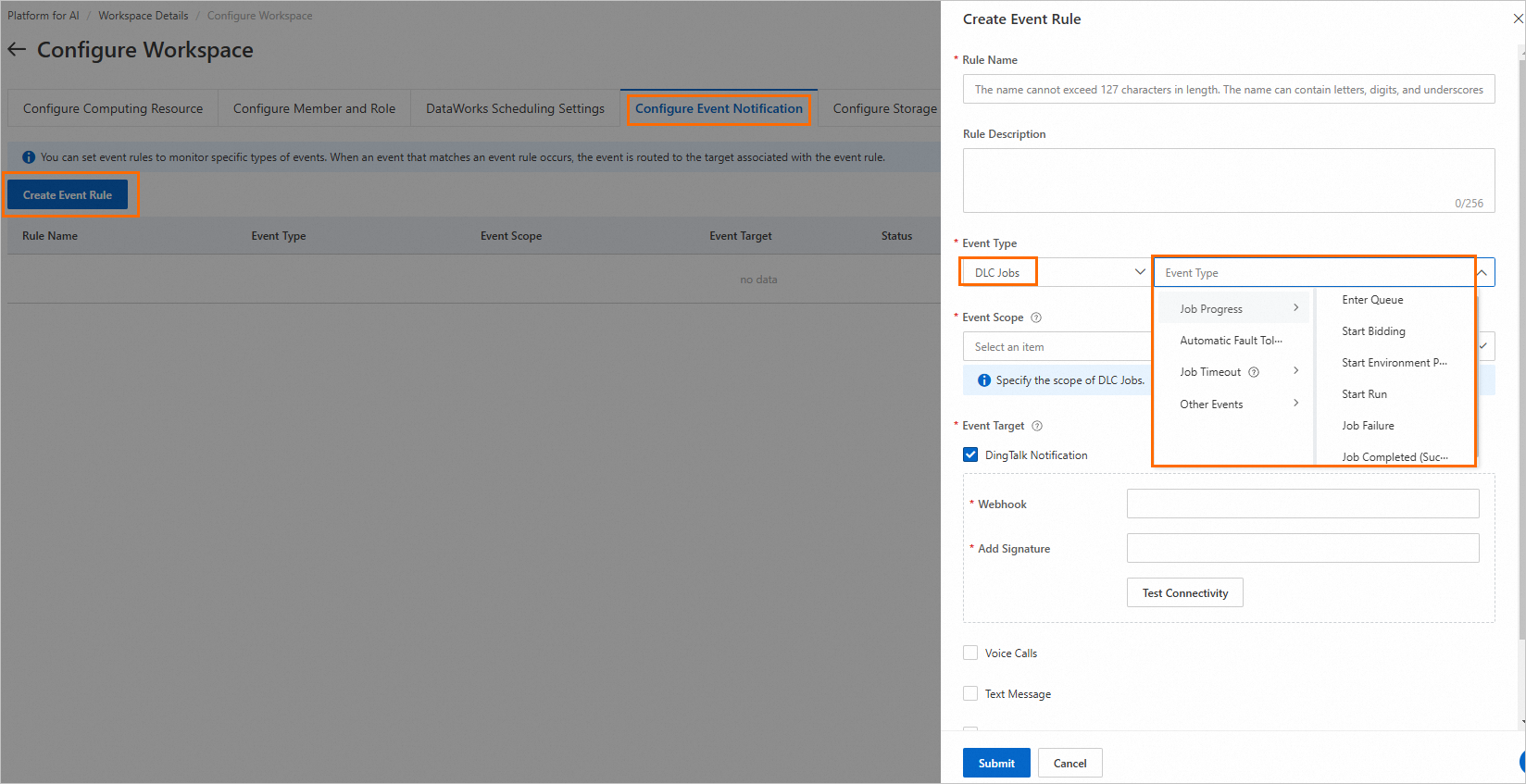
In the Create Event Rule panel, configure the following parameters and click the Submit button.
Parameter
Description
Rule Name
Enter a custom rule name as prompted.
Event Type
Set Event Source to DLC Job. The following event types support notifications:
-
Job Progress
-
Enters Queue: The job is queued.
-
Start Bidding: The job enters the Bidding state.
-
Starts Environment Preparation: The job starts preparing the environment.
-
Starts Running: The job starts running.
-
Retained on Success: The job is retained after successful completion.
-
Retained on Failure: The job is retained after it fails.
-
Job Fails: The job execution fails.
-
Job Finishes (Success or Failure): The job execution is complete, regardless of the outcome.
-
-
Automatic Fault Tolerance: Sends a notification when a DLC job encounters an error and triggers automatic fault tolerance.
-
Job Timeout: If you select this option, first set a timeout rule on the Scheduling Configuration page of the workspace. For more information, see Configure timeout alert rules.
-
Queue Timeout: The job queuing duration exceeds the configured maximum queuing duration.
-
Environment Preparation Timeout: The environment preparation duration exceeds the configured maximum preparation duration.
-
Wait Timeout: The waiting duration from job creation to execution exceeds the configured maximum waiting duration.
-
Run Timeout: The job runtime exceeds the configured maximum runtime, which triggers an automatic stop.
-
-
Other Events
-
Job Is Preempted: A notification is sent when an idle or spot instance job is preempted.
-
Job Is Manually Stopped
-
Job Priority Is Adjusted
-
Event Scope
The following values are supported:
-
Created by me: Only DLC jobs that you created.
-
All in current workspace: All DLC jobs in the current workspace.
Event Target
Notifications can be sent through DingTalk, WeCom, Lark, voice calls, text messages, and email.
-
After a notification rule is created, the system automatically sends a notification to the preset contacts when a job triggers the rule. When you receive a notification, go to the Deep Learning Containers (DLC) page to check whether the job is running as expected. You can also investigate the cause by checking the job's monitoring status and logs. For more information, see View training details.
Configure timeout alert rules
To configure a timeout rule for a specific event type, follow these steps:
-
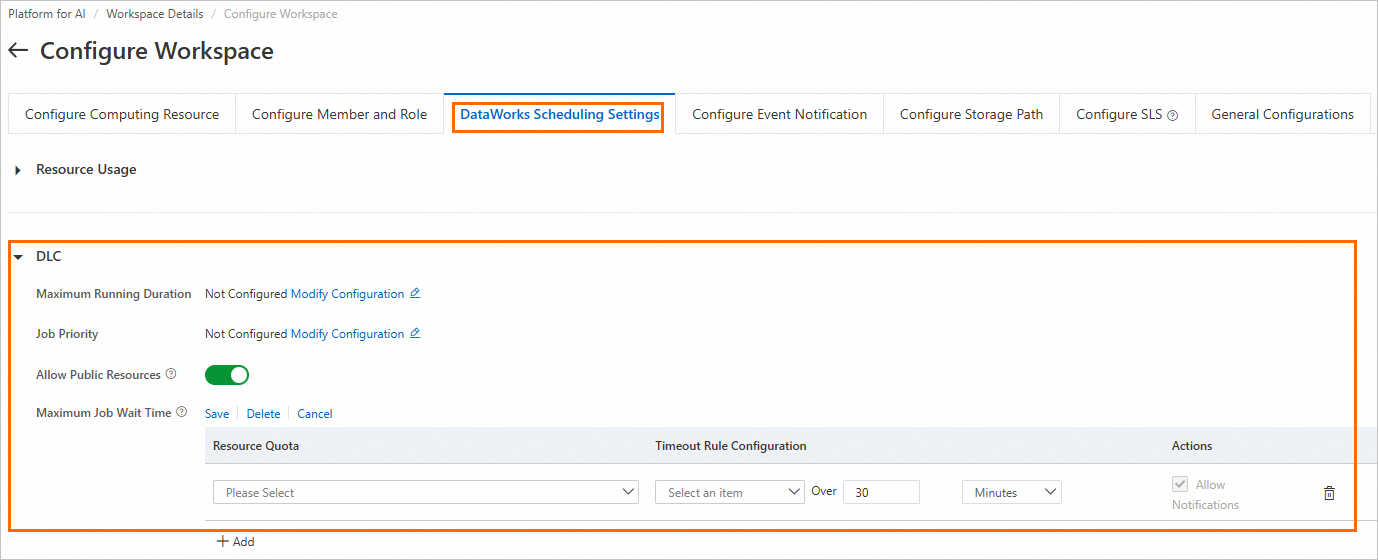
On the Workspace Configuration page, switch to the Scheduling Configuration tab. In the DLC section, configure timeout rules for the maximum job waiting duration and maximum runtime.
Policy
Description
Resource Quota
Configure the maximum waiting duration for jobs that use specific resources. The following values are supported:
-
Public resource group
-
Resource quota: Select a resource quota that is attached to the workspace.
Timeout Rule Configuration
Set the timeout duration for specific event types. The following event types can be configured:
-
Job waiting duration (Queuing duration + Environment preparation duration)
-
Queuing duration
-
Environment preparation duration
You can also click the Add button to configure multiple timeout rules.
-
-
After you configure the parameters, click the Save button.
Go to Event Notification Configuration, select the DLC Job type, and configure the corresponding timeout event notification. If this is not configured, you will not receive notifications. For more information, see Configure notifications.