Source texts often contain proper nouns, domain-specific terms, untranslated words, abbreviations, and codes that the translation engine may not handle correctly by default. The dictionary intervention feature lets you define how these elements are translated or preserved, then upload a custom dictionary to control Machine Translation output.
Examples of proper nouns: Great Wall → The Great Wall
Examples of domain terms: Colestyramine → Colestyramine
Examples of untranslated words: IBM, BBC
Dictionary interventions are only available in the console. API calls are not supported.
Step 1: Open the Dictionary Management page
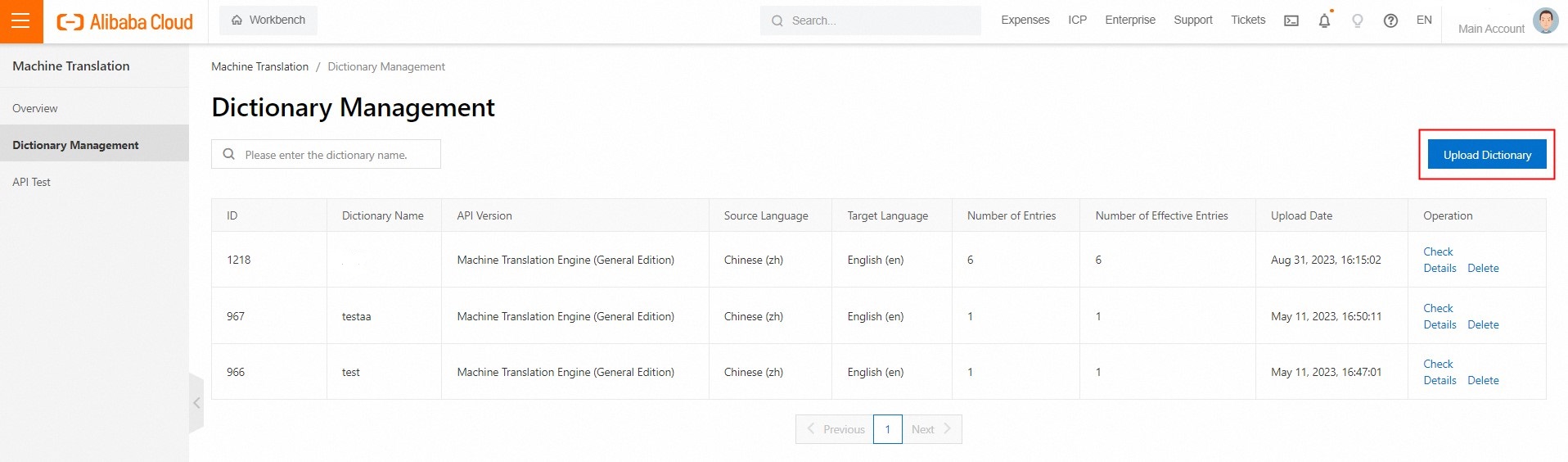
Log on to the Machine Translation console. In the left-side navigation pane, click Dictionary Management. On the Dictionary Management page, click Upload Dictionary.
A dictionary takes effect only for the engine version it was uploaded to. For example, a dictionary uploaded for the universal version engine does not apply to the professional engine.
Step 2: Configure and upload the dictionary
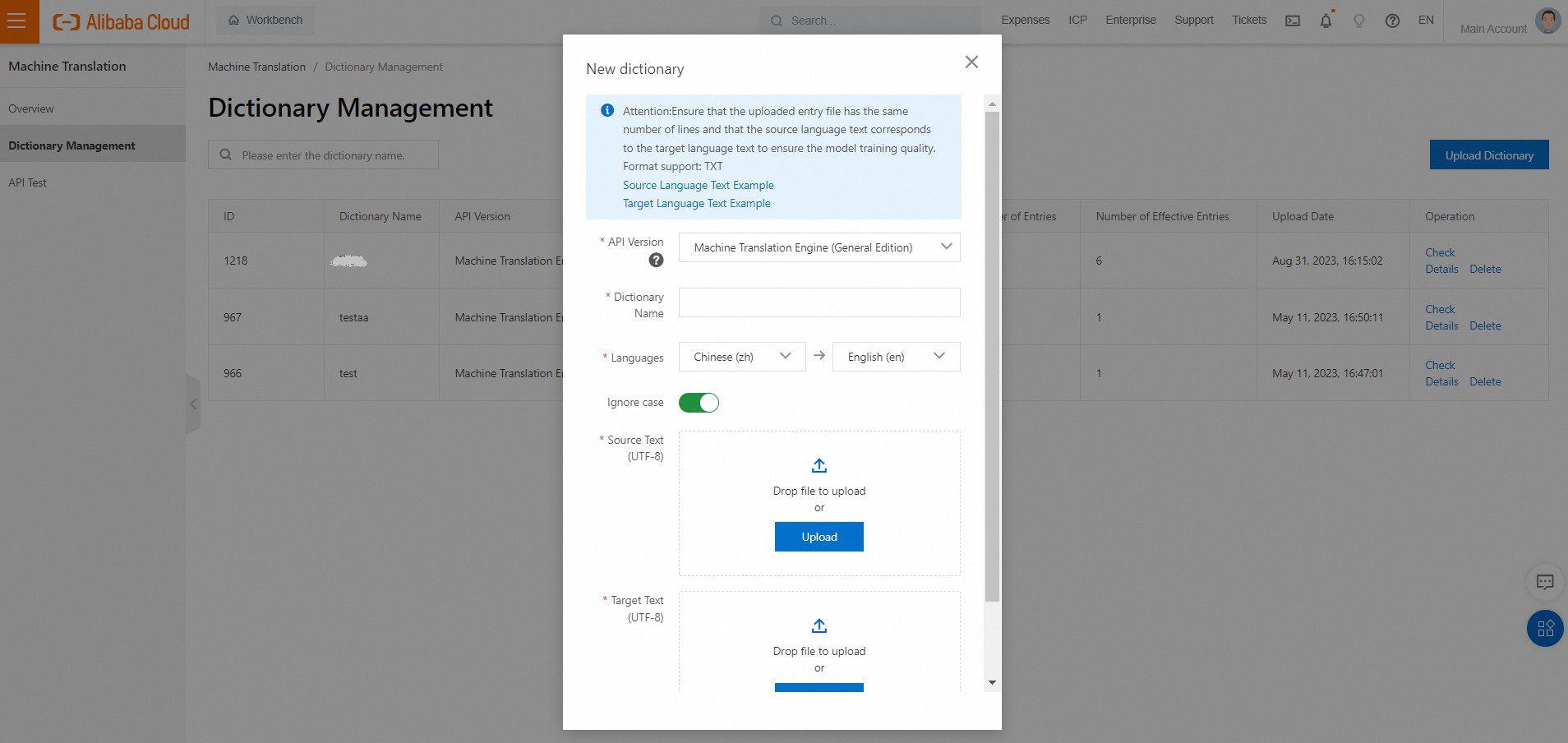
Select the Machine Translation engine version, fill in the dictionary details, and upload your dictionary file following the format shown in the sample file.
Upload dictionaries for each engine version separately. For general-purpose translation, select the universal version engine. For specialized domains, select the professional engine.
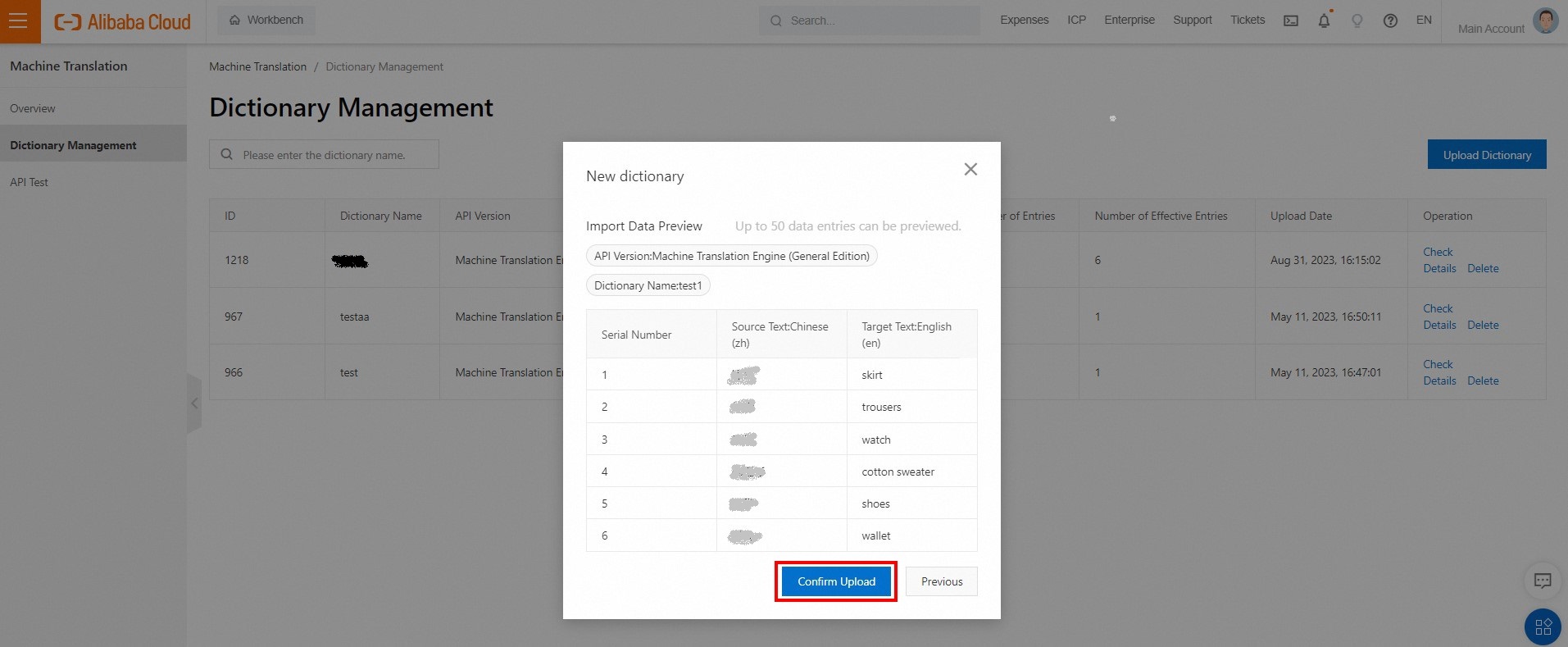
Step 3: Confirm and submit the upload
Review the dictionary details and click Upload.
If the translation direction is incorrect or the source text contains duplicates, the dictionary will not take effect. Make sure the direction is set correctly and all source entries are unique before uploading.
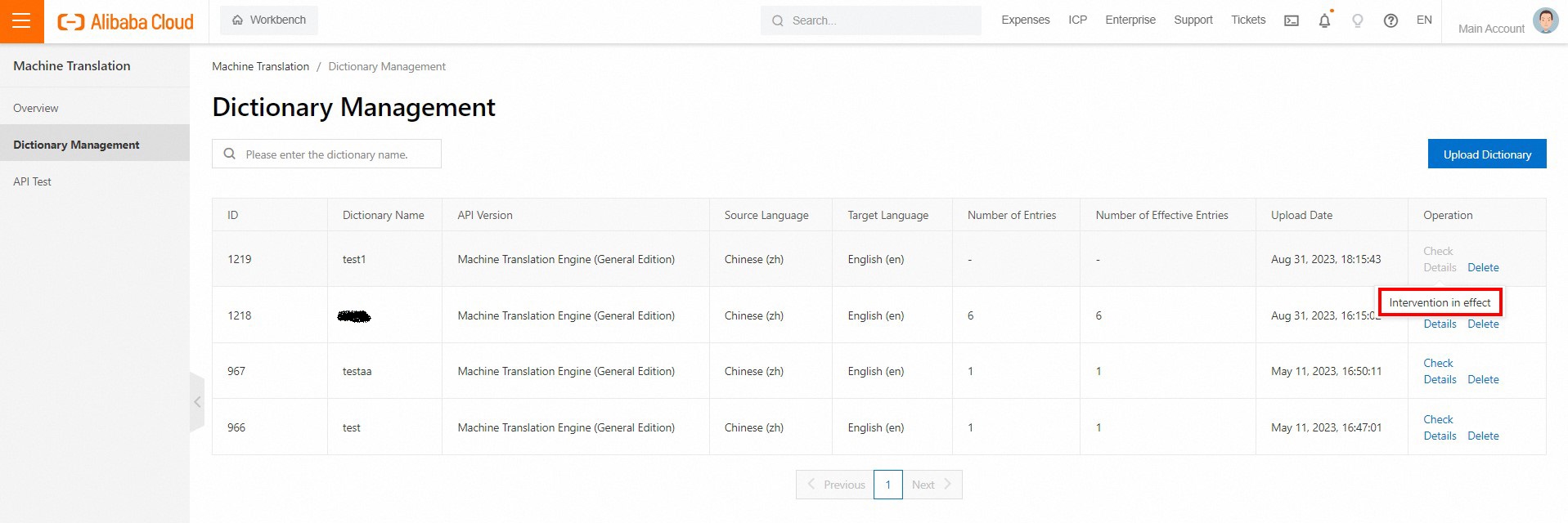
Step 4: Verify that the dictionary is active
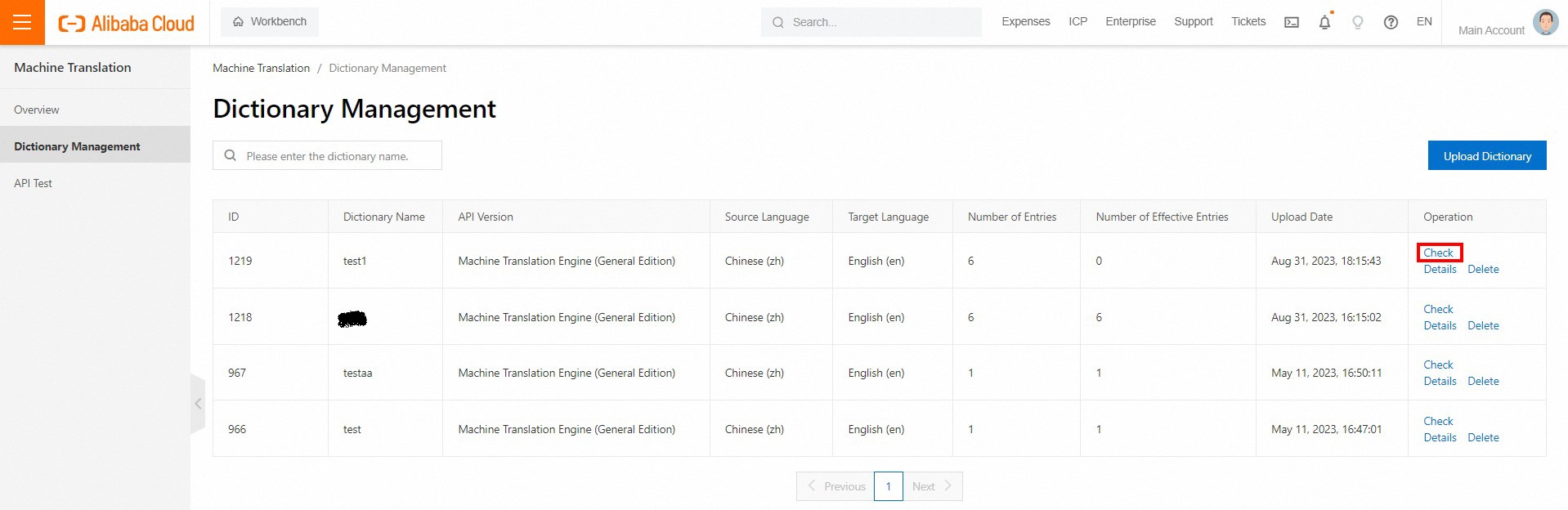
After the upload, the dictionary status is Pending Effect. It changes to Effective within one minute. Click the dictionary entry to view its details.
Step 5: Manage terms
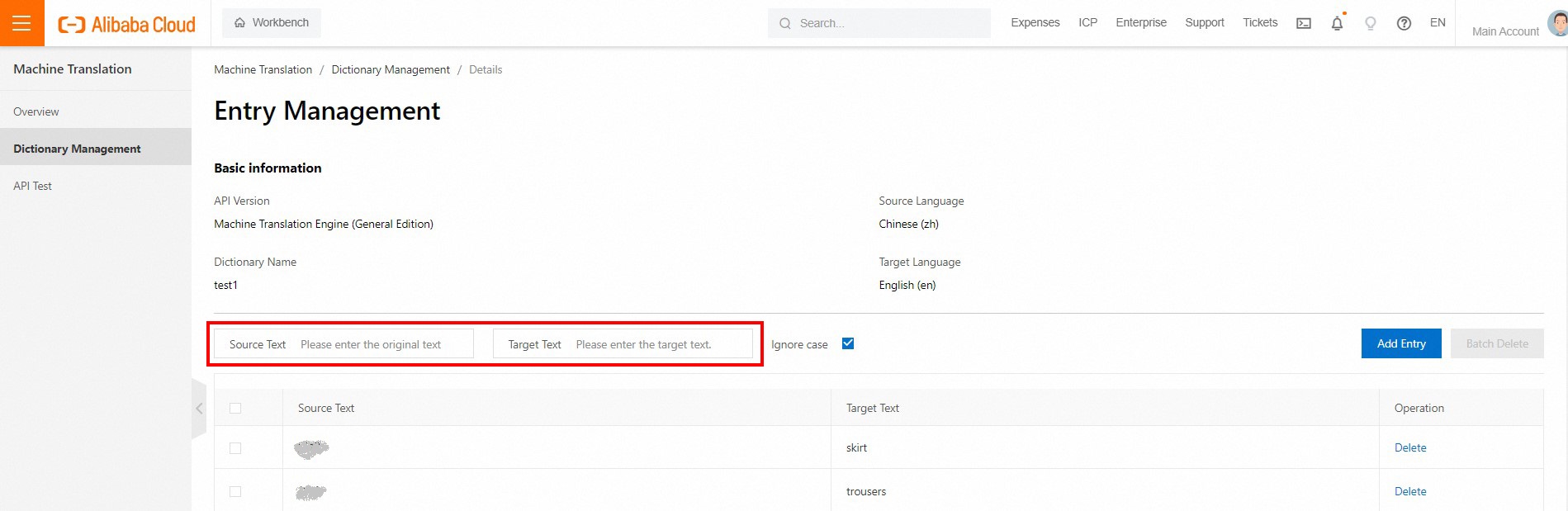
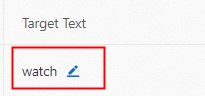
Click View Details to open the Terms page, where you can add, edit, or delete individual entries.
Add an entry
Edit an entry
Delete an entry

FAQ: What if some paragraphs are not translated when converting Simplified Chinese to Traditional Chinese?
When you use Machine Translation to translate text from Simplified Chinese to Traditional Chinese, some paragraphs in the translation result may not be translated, or abnormal characters may appear. In this case, you can use the dictionary intervention feature to intervene manually. On the Terms page described in Step 5, click Add Entry, add the untranslated field or source text as an entry, and specify the expected Traditional Chinese translation. After the intervention dictionary takes effect, translate the text again to verify that the previously untranslated paragraphs are now translated correctly.