Benefits
Intelligent Media Management (IMM) allows you to efficiently process multimedia data stored in Object Storage Service (OSS), such as documents, images, and videos. Common applications scenarios include image applications, video applications, and network drives.
Pain points
Image applications
Many image applications use OSS as the backend storage for images and videos. To support business expansion and meet regulatory and compliance requirements, image applications may require the integration of image analysis capabilities driven by artificial intelligence (AI), such as pornography detection, label detection, face detection, and optical character detection (OCR).
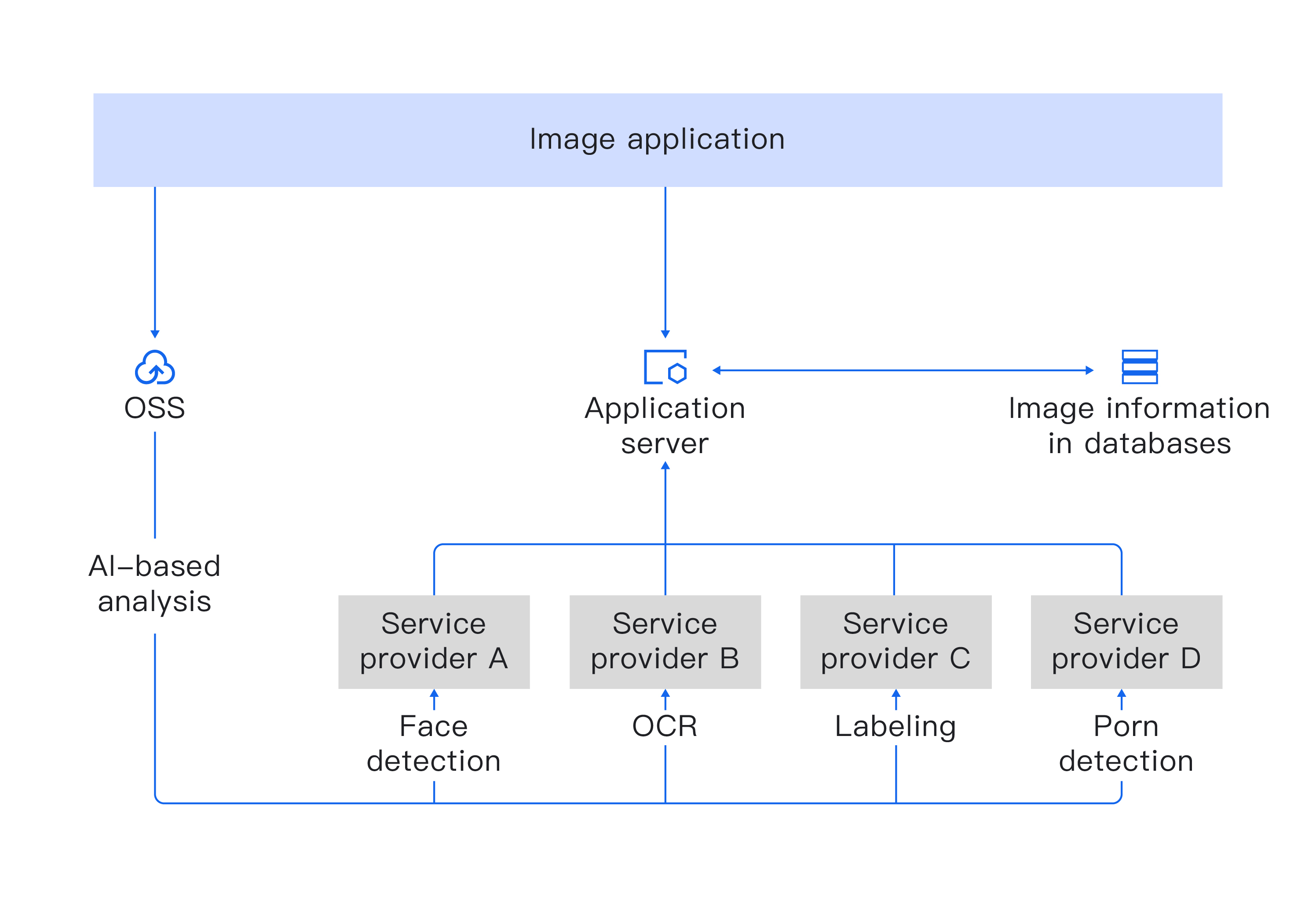
In most cases, image application companies equip their image application servers with AI-driven analysis capabilities from different service providers and save the metadata collected by using the analysis capabilities to application databases for efficient data retrieval. This solution has the following disadvantages:
Incompatible API operations
The AI-driven analysis capabilities come from multiple cloud providers, which makes API compatibility a big concern.
Wasted resources
The same image may be requested multiple times or even transmitted to an external network, which wastes bandwidth resources.
No cost-effective solutions to analyzing existing data
Synchronous processing capabilities are expensive. Image application companies expect cost-effective analysis of existing data and asynchronous API operations for cost optimization. For example, an image application company may want to cost-effectively label all existing images in a specific OSS bucket.
Network drives
A network drive application may require capabilities, such as login, directory management, direct upload to OSS, and AI-driven data processing. The following figure shows the architecture of a sample network drive application that uses OSS as the backend storage.
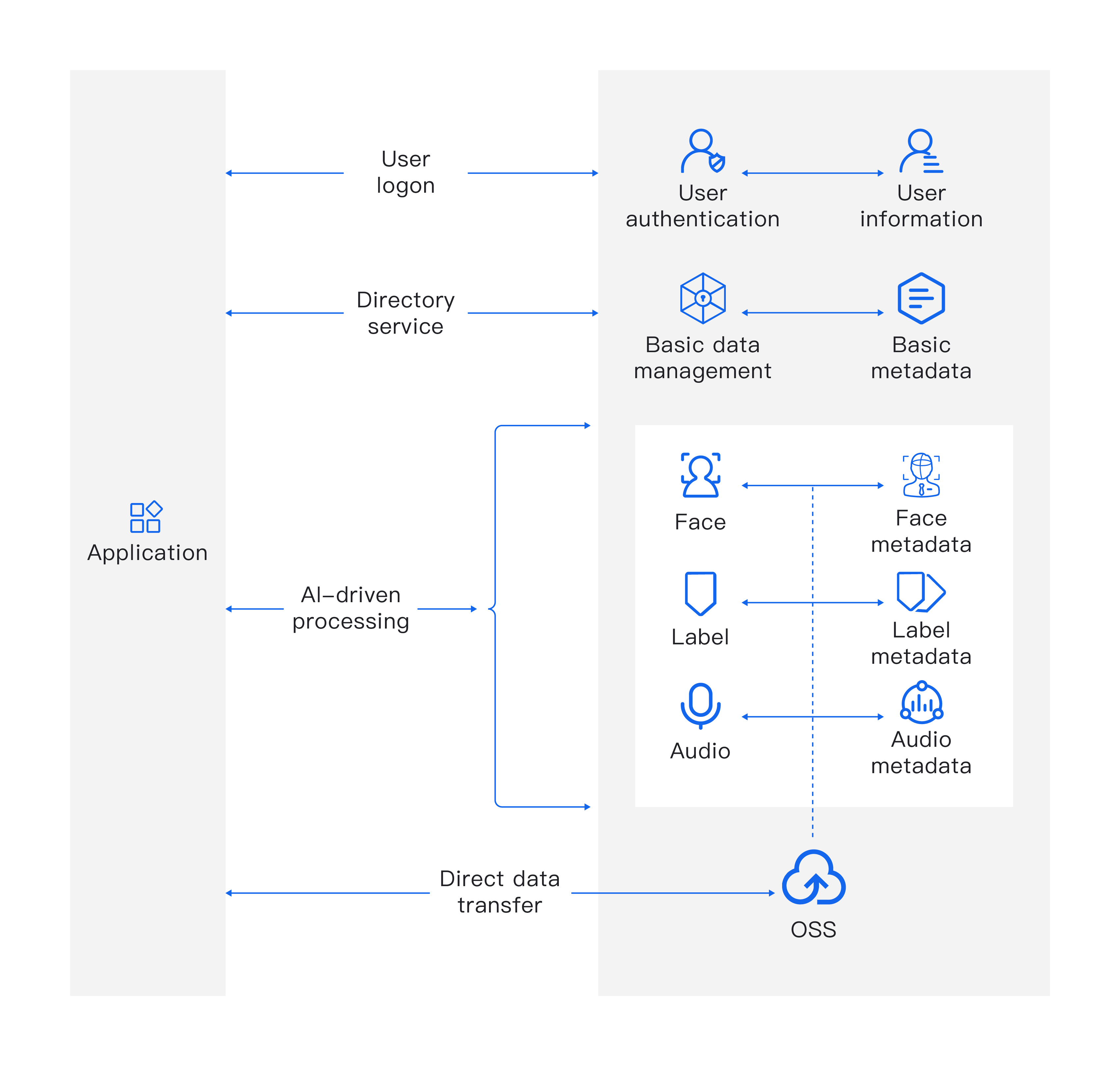
In most cases, metadata management capabilities are used to facilitate data management in network drive applications. However, developing metadata management capabilities can be difficult and expensive. For example, in AI-driven processing scenarios, metadata storage formats and database error handling are needed. This solution has the following disadvantages:
Demanding metadata table design
Different metadata categories require different table schemas. Metadata table design requires sufficient skill and effort.
Challenging multidimensional metadata management
Different metadata categories need to be combined to support complex queries,. Designing an efficient metadata management mechanism for this purpose can be challenging.
Difficult metadata consistency management
Metadata recovery from exceptions is a system-level challenge.
Benefits of IMM
IMM is designed to efficiently process large amounts of data by using AI-driven analysis capabilities based on consistent standards to meet data analysis and processing requirements in specific scenarios and implement device-cloud integration. The following figure shows the major benefits of IMM.
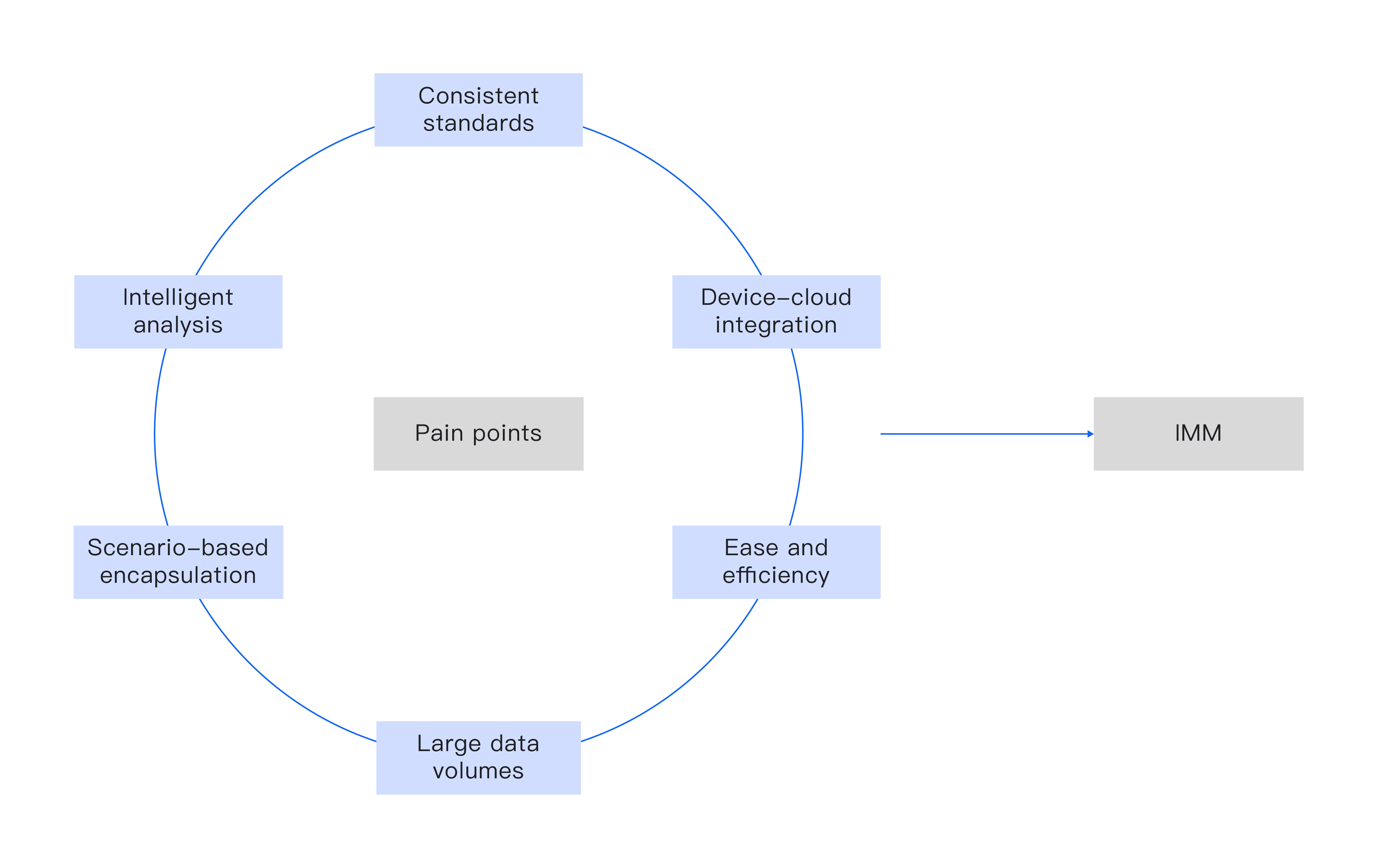
IMM provides the following benefits:
Seamless data integration
You can connect IMM to OSS to enable automatic processing and analysis of data in the cloud.
Rich data processing capabilities
IMM allows you to easily integrate advanced recognition and processing capabilities into your applications.
Simplified O&M
IMM provides serverless capabilities for more streamlined O&M.
Scenario-based data processing solution
IMM allows you to quickly build metadata management capabilities that are suitable for your application scenarios.