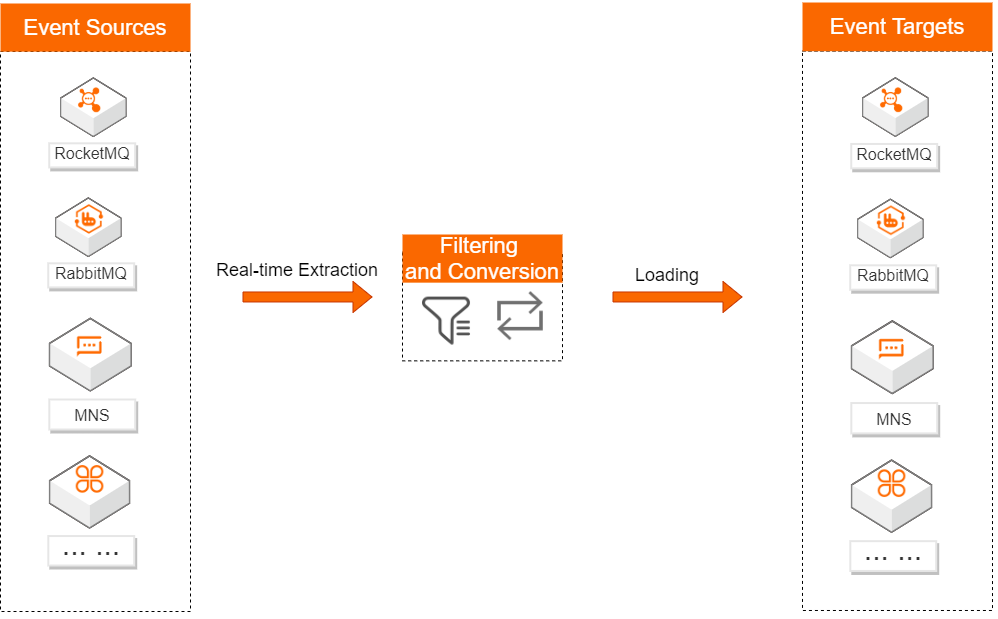
Event streams let you process end-to-end streaming data by extracting events from event sources, transforming and analyzing them, and loading them to event targets. This extract-transform-load (ETL) approach provides a lightweight, cost-effective alternative to the full event-driven architecture.
Scenarios
ETL
Event streams are lightweight channels for real-time, end-to-end streaming data processing. You can filter and transform streaming data, synchronize data, and connect services to systems. For example, you can synchronize data between data warehouses, data processing programs, and data analysis and processing systems.
The following figure shows how events flow from event sources to event targets through event streams, bypassing event buses.
Message routing or synchronization
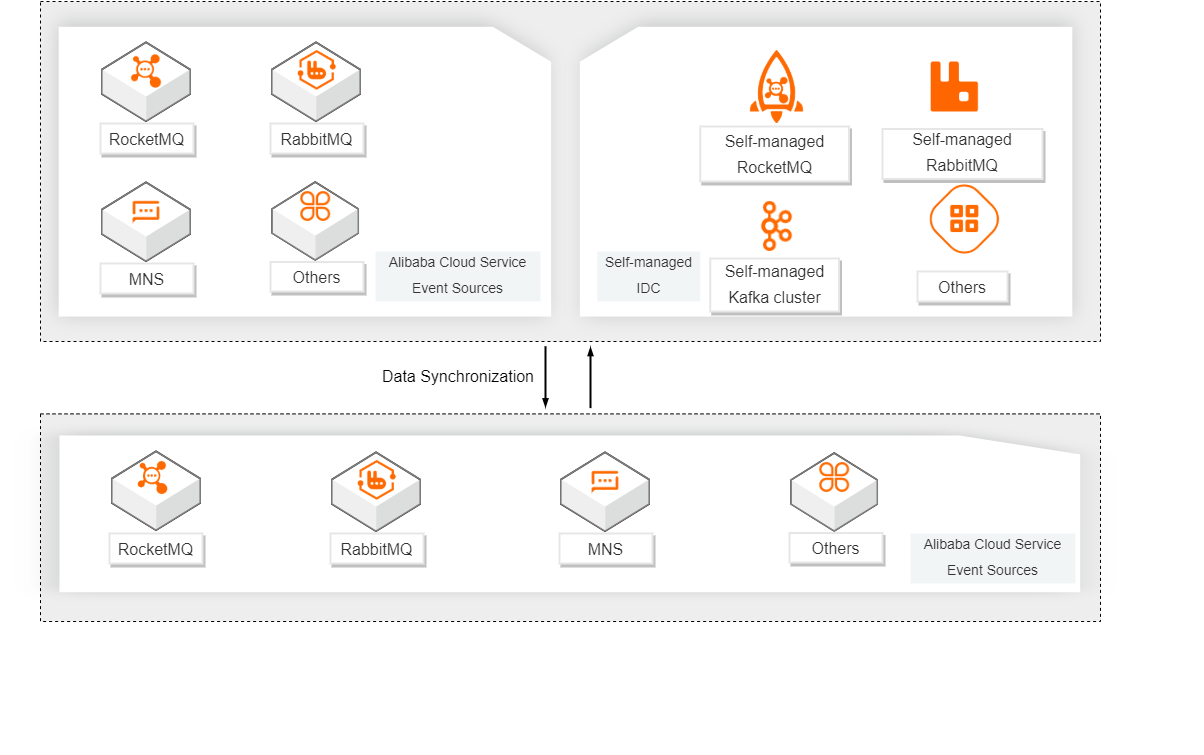
Event streams support on-cloud message routing, data backup, active geo-redundancy, cross-account data synchronization, and data synchronization across data centers in hybrid cloud environments, providing an all-in-one message processing solution.
Limits
By default, up to 50 event streams can be created in a region.
If you require more than 50 event streams, apply for a quota increase in Quota Center. The number of event streams that you can apply for ranges from 51 to 10,000. For more information, see Request a quota increase.
Benefits
-
Real-time and efficient
Event streams extract events from event sources and load them to event targets in real time without accumulation, enabling faster event access and more responsive handling of business and operational events.
-
Lightweight integration
EventBridge provides a simple stream model and API operations that let you manage multiple underlying resources of event-driven data streams from the EventBridge console or through API calls, simplifying integration.
-
Metric monitoring
EventBridge provides multiple metrics for monitoring event stream data. You can set threshold alerts to detect exceptions early and ensure data streams run as expected.
-
Cost-effective
No minimum charge is required. You are billed based on the amount of data transmitted to event streams, which you can view on the EventBridge console dashboard. Data transformation and metric monitoring are optional and incur no charges when unused. Compared with the event-driven architecture, event streams offer a more cost-effective event processing solution.
Architecture comparison
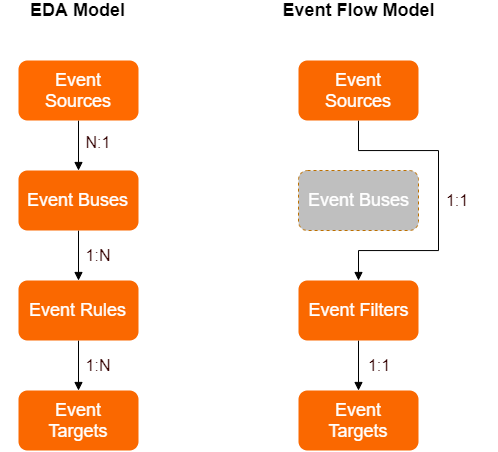
The following figure compares the event stream architecture and the event-driven architecture. Event streams use a 1:1 structure instead of an N:N structure and do not require event buses, making them more lightweight with higher dumping efficiency.