Edge Routine can help you quickly perform A/B testing in scenarios such as canary releases and traffic distributions for experimental features. This topic describes an example of performing A/B testing by controlling cookie-based responses.
Sample code
Result: A/B testing is performed based on direct access to the same URL.
Language:
JavaScriptSample code:
// Determines the user group based on the cookie header. Different contents are returned based on group labels.
async function handleRequest(request) {
  const NAME = 'var';
  const TEST_RESPONSE = new Response('A group'); // You can replace the content of Response with the dynamic content of a fetch request.
  const CONTROL_RESPONSE = new Response('B group');
  // Uses the var field in the cookie to determine the group.
  const cookie = request.headers.get('cookie');
  if (cookie && cookie.includes(`${NAME}=B group`)) {
    return CONTROL_RESPONSE;
  } else if (cookie && cookie.includes(`${NAME}=A group`)) {
    return TEST_RESPONSE;
  }
  else {
    // If no cookie exists, selects a group.    const group = Math.random() < 0.5 ? 'A group' : 'B group';
    const response = group === 'B group' ? CONTROL_RESPONSE : TEST_RESPONSE;
    response.headers.append('Set-Cookie', `${NAME}=${group}; path=/`);
    return response;
  }
}

export default {
  fetch(request) {
    return handleRequest(request);
  }
}
Deployment result
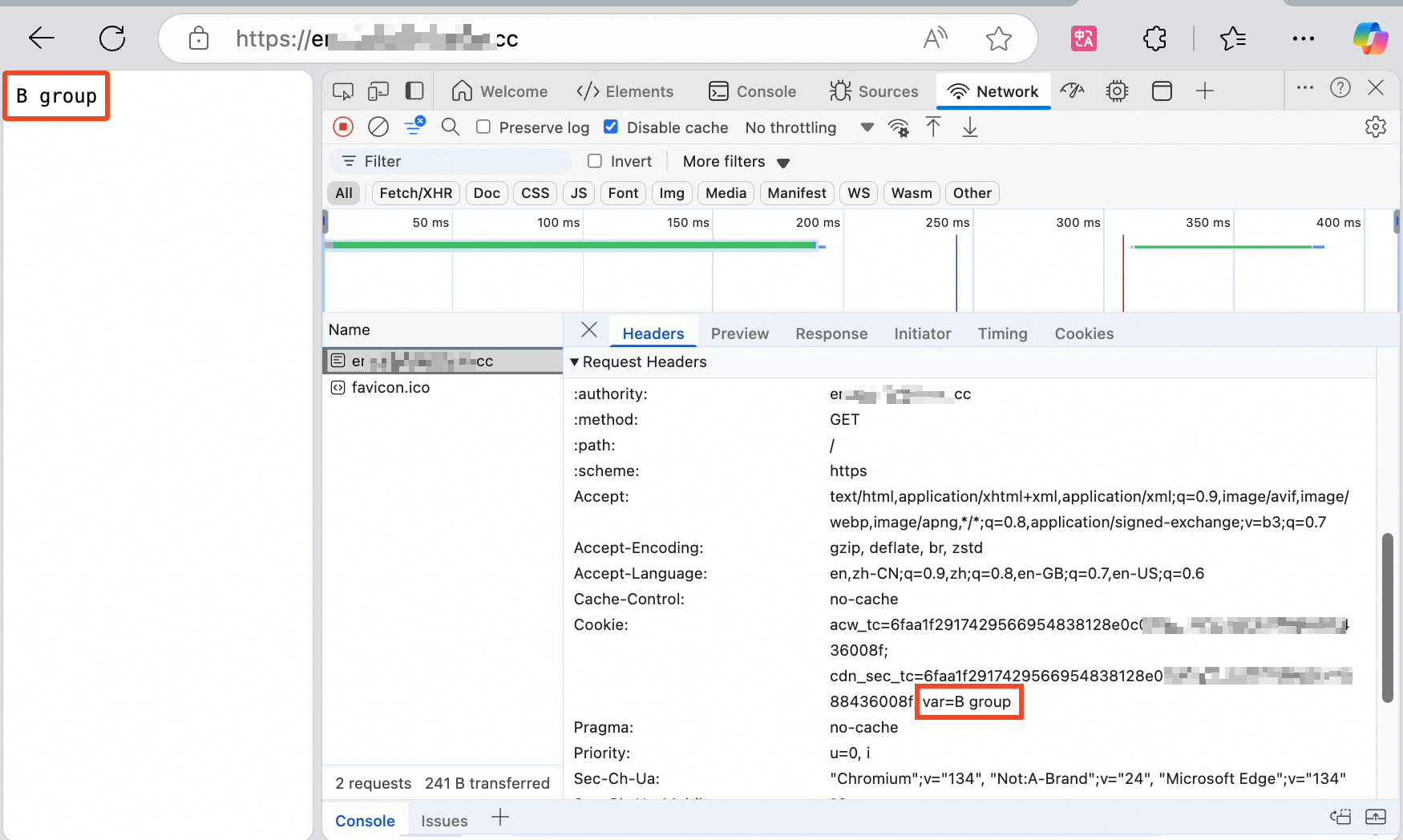
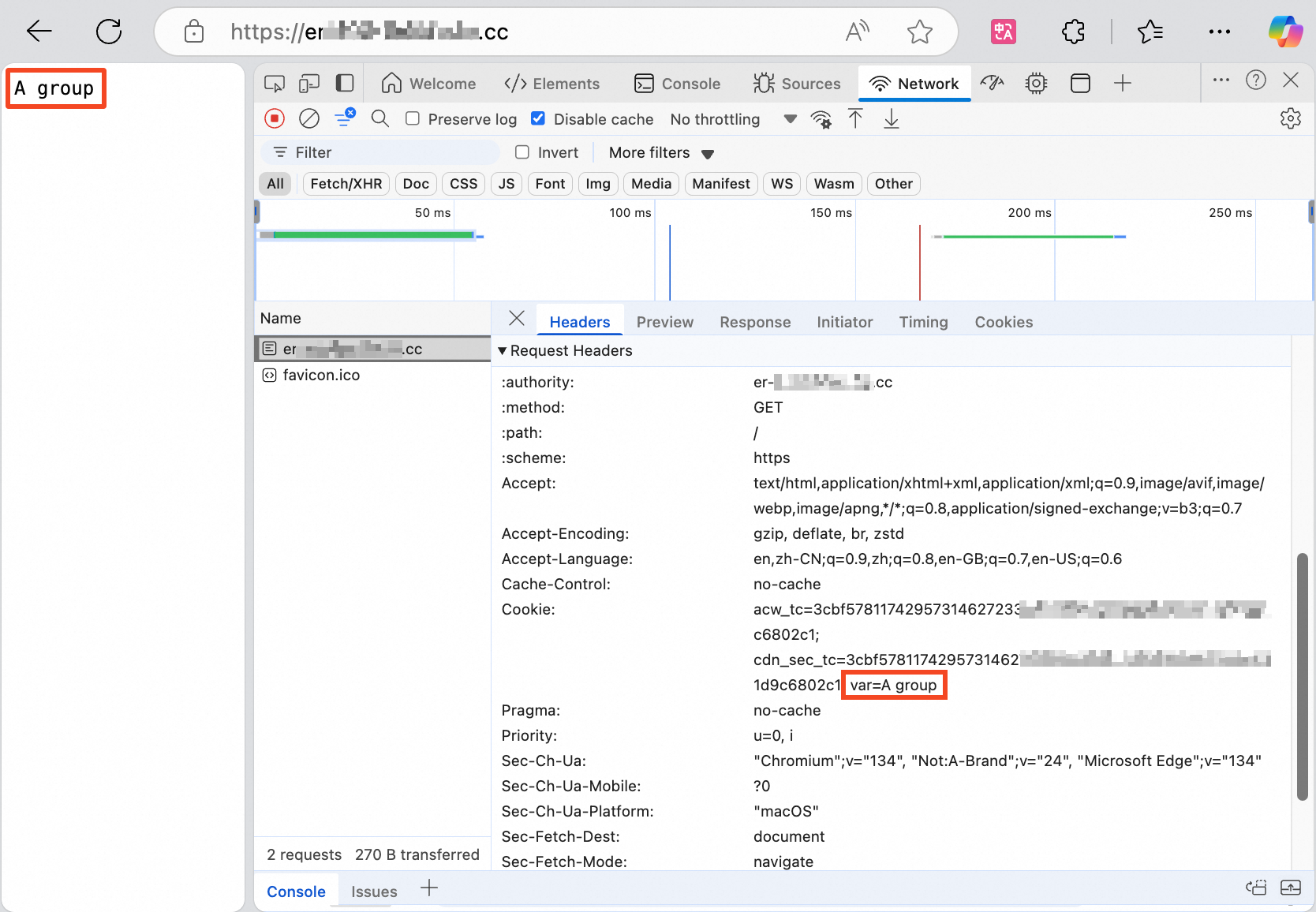
Visit the routine associated by Edge Routine or the configured routable IP address in a browser. If no cookie exists in the browser, a group is selected randomly:
If group A is labeled, the response for group A is returned.
If group B is labeled, the response for group B is returned.