Experiment flowchart
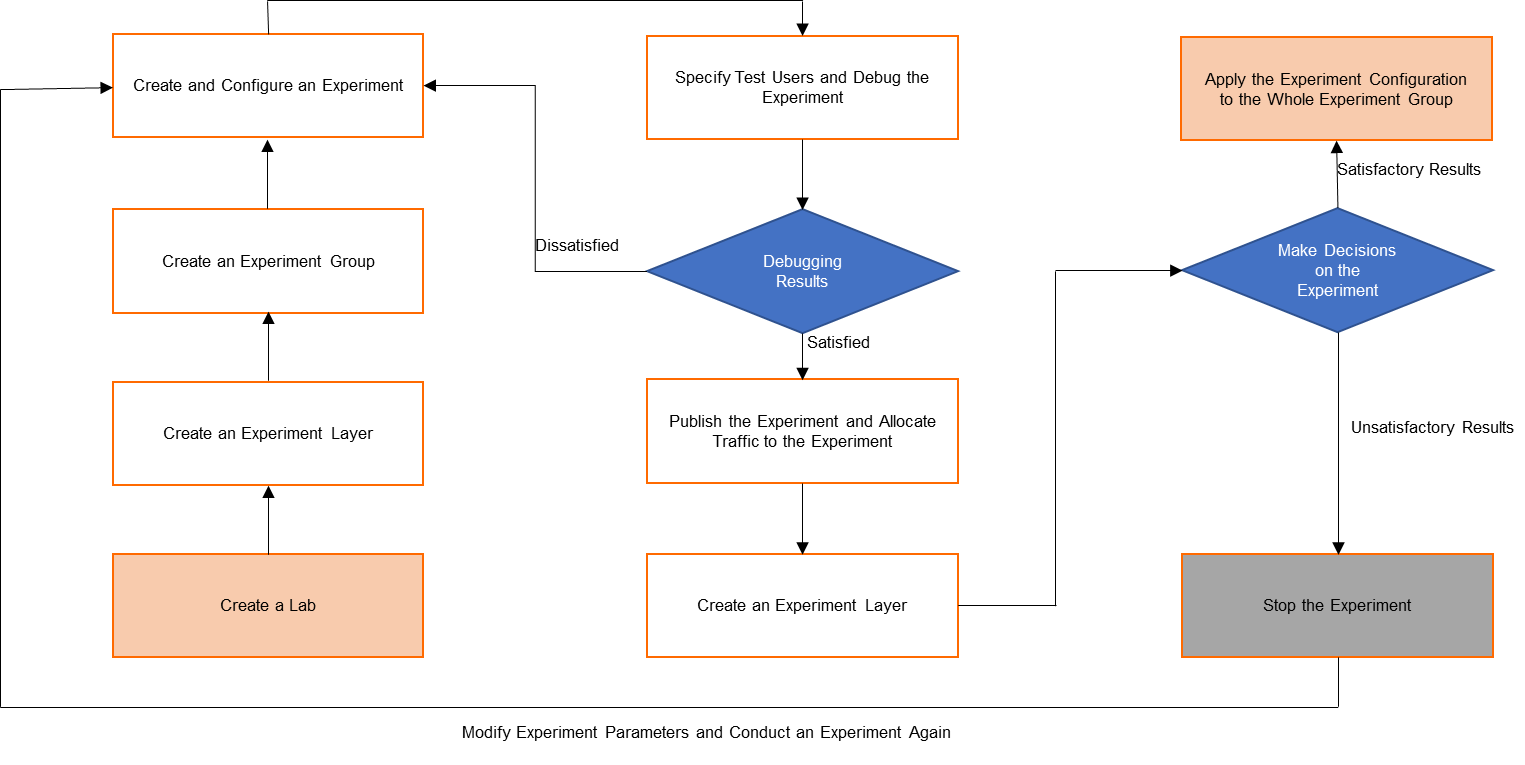
The following figure shows the process and lifecycle of an experiment in PAI-Rec.
When you go to the Experiment Overview page for the first time, you are guided to perform a complete experiment setup, which mainly includes five steps.
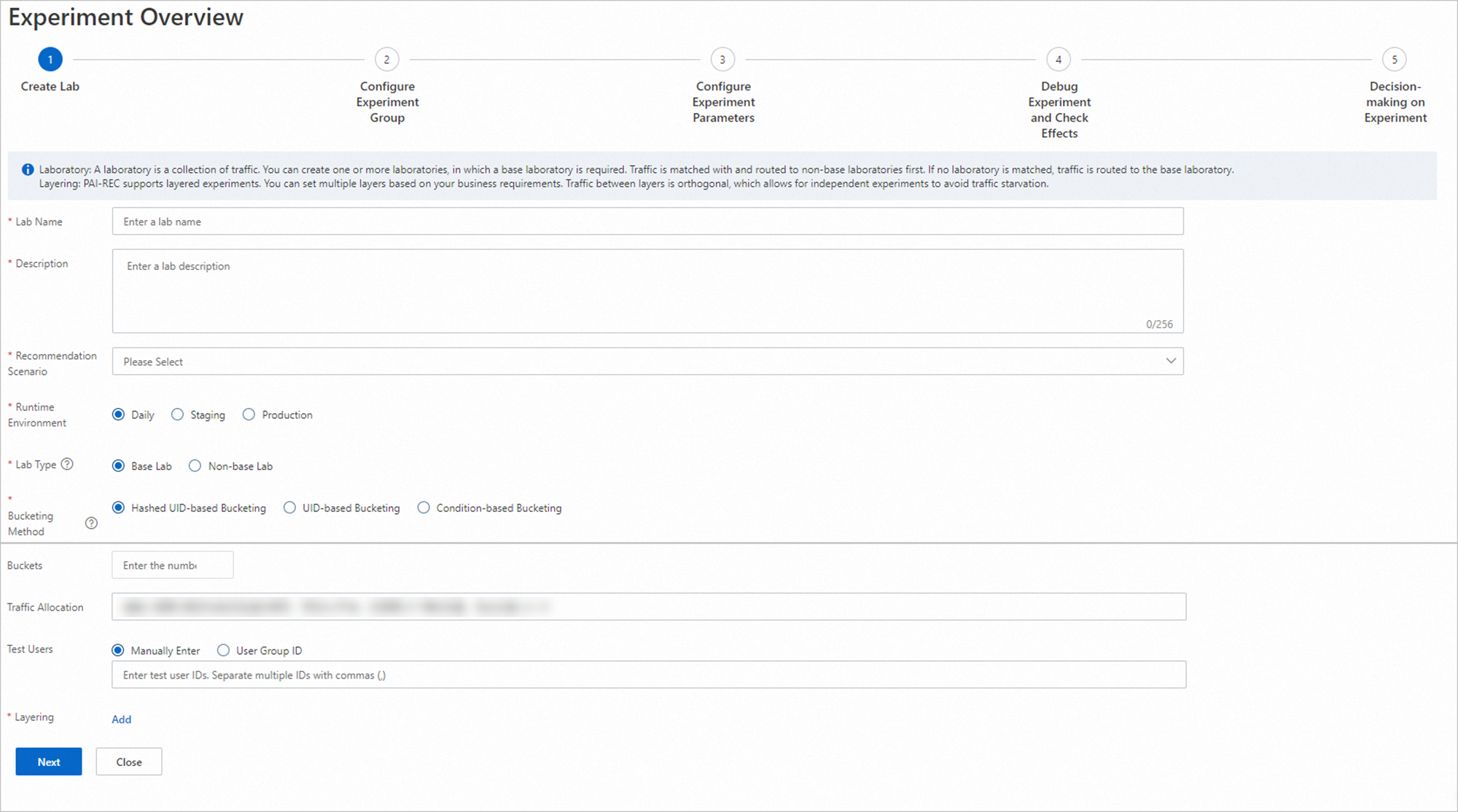
Create a lab.
You can specify Recommendation Scenario, Runtime Environment, Lab Type, Bucketing Method, and other required parameters to create a lab.
NoteLab Type:
A base lab is required. The base lab is used as the fallback lab. If traffic cannot be matched with any non-base lab, the traffic is routed to the base lab by default.
Bucketing Method:
Hashed UID-based Bucketing: Bucketing is performed based on the hash values of UIDs.
UID-based Bucketing: Bucketing is performed based on the last digits of UIDs.
Condition-based Bucketing: Bucketing is performed based on a key-value expression, such as gender=man.
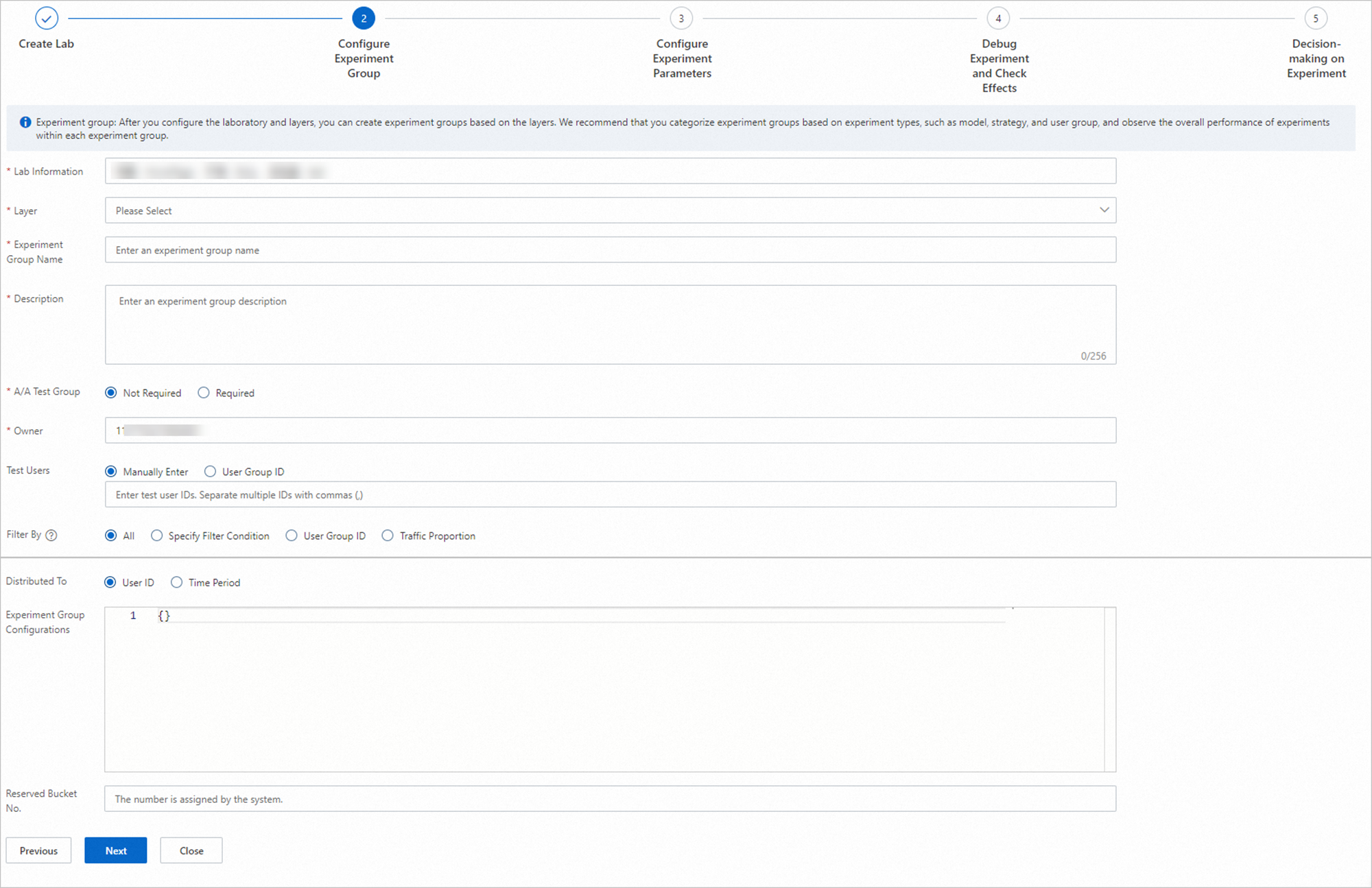
Configure an experiment group.
An experiment group is a collection of experiments. Each experiment has a different configuration.
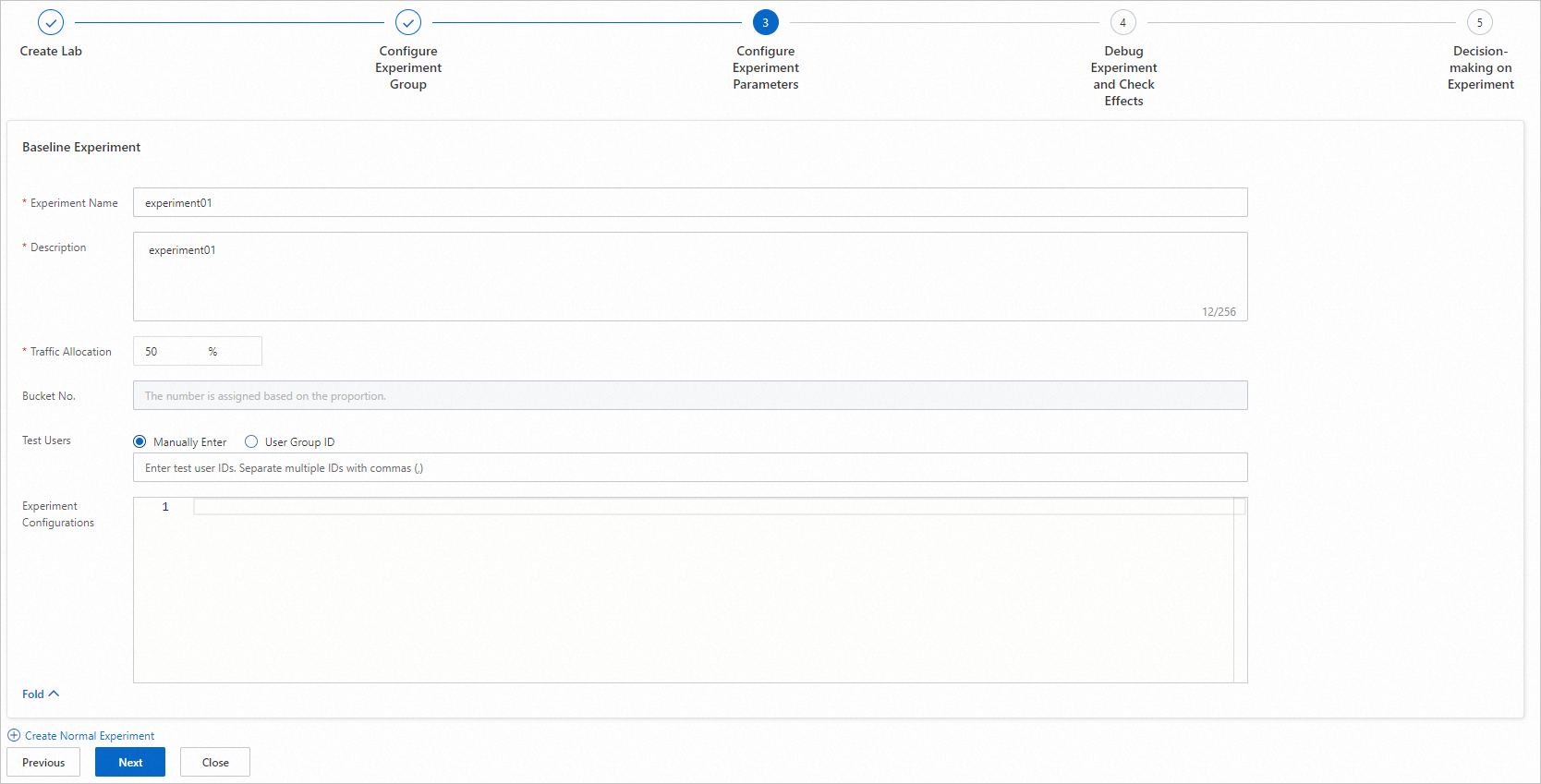
Configure experiment parameters.
You can configure information about the experiment and allocate traffic to the experiment. You can also specify test users to test the availability of the experiment before you publish the experiment.
Debug the experiment and check effects.
After you confirm that the experiment is available, you can officially publish the experiment and route production traffic to the experiment.
ImportantYou can publish an experiment only after the experiment group to which the experiment belongs and other experiments in the experiment group are published.
Publish a lab
Publish an experiment group
Publish an experiment
Make decisions on an experiment.
If you find that an experiment works well and stably after a period of observation, you can apply the experiment configuration on a large scale. If the performance of an experiment is poor, you can stop the experiment.
You can also use the icons in the upper-right corner of an experiment card to perform related operations such as publishing and deleting an experiment.