Qwen4-Max at Work: Six Real-World Scenarios for an Always-On AI Teammate
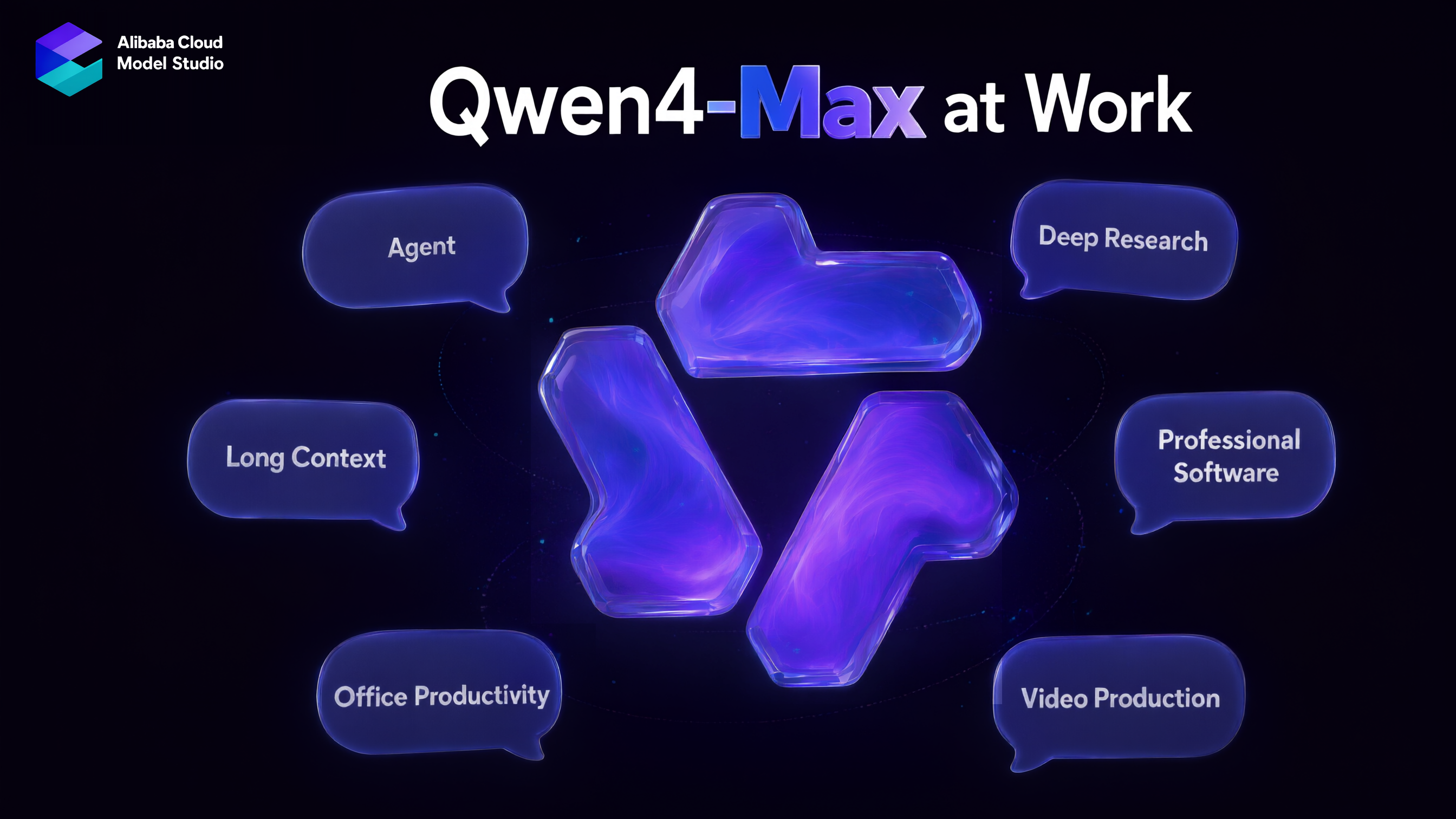
TL;DR: Qwen4-Max is an always-on AI teammate for real-world productivity: it operates the professional tools your team already uses, carries long-horizon tasks through to delivered results, and backs its research conclusions with traceable evidence. This post walks through six real-world scenarios: long-horizon agents with live delivery, evidence-backed research in finance, law, and healthcare, professional software operated directly inside CAD, Blender, and game engines, agentic video production, office deliverables that trace back to their sources, and million-token multimodal understanding. The thread running through all six is the same: Qwen4-Max brings deeper domain knowledge and a richer understanding of the real world to industry and professional work, and handles complex work with engineering-grade execution to deliver practical, professional results.
1. Agent: Long-Horizon Work That Stays Visible and Steerable
The Agent scenario is for work that runs for the long haul, not a single turn, and that you can still steer mid-flight.
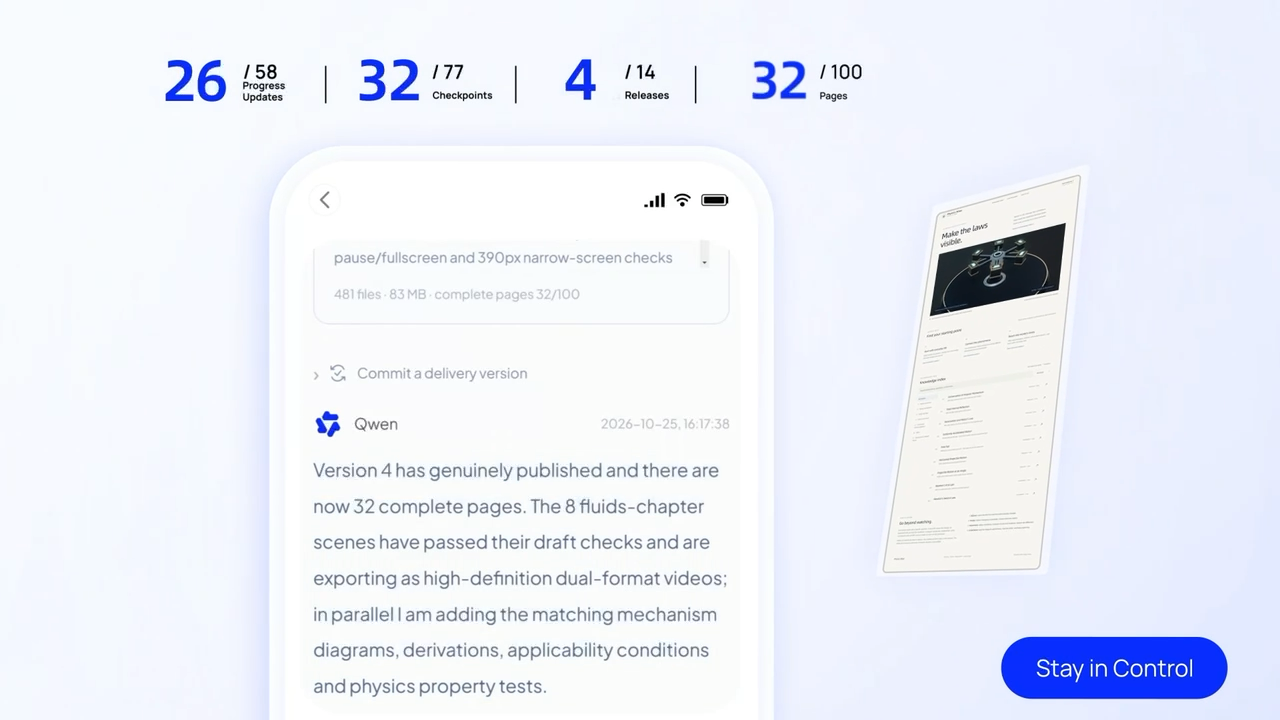
Qwen4-Max plans over a long horizon, calls tools, and iterates on feedback. What matters most for teams is Live Delivery: it ships results incrementally, so progress stays visible, steerable, and reversible, and you can redirect or roll back a step instead of waiting on a black box that returns one final answer.
We are also open-sourcing the Qwen-Live-Delivery-Plugin, which you can install to get started with Live Delivery yourself.
2. Deep Research: Evidence-Backed Conclusions for Finance, Law, and Healthcare
Deep Research is for work where every conclusion has to trace back to a source.
Qwen4-Max traces evidence to its source, checks how current the data is, and cross-checks authoritative sources before committing to a finding. The same discipline applies to drug discovery, where it works end to end from early research through autonomous optimization to final evaluation, moving from a patent-derived starting molecule to a prioritized candidate.
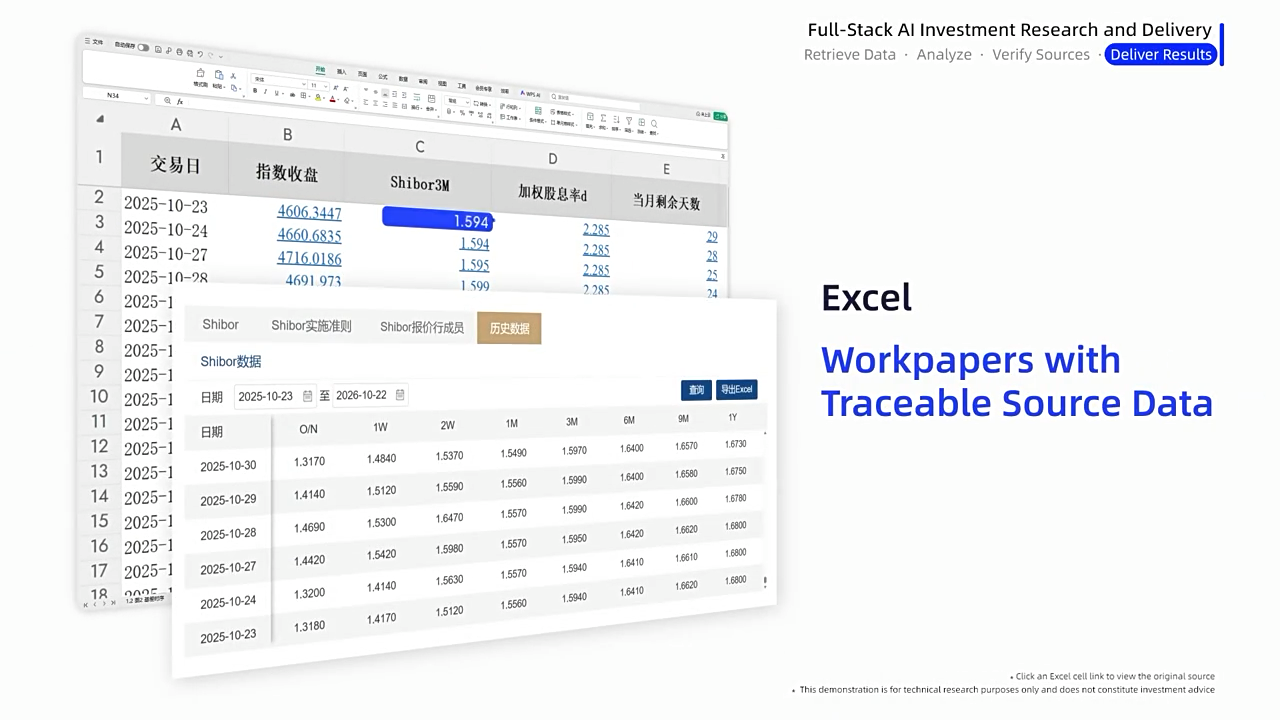
In financial investment research, Qwen4-Max calls 90 MCP tools to pull quotes, financials, rates, and dividend data across A-shares, HK and US equities, bonds, funds, and derivatives, cross-checking public disclosures with search. On a CSI 300 index derivatives case it combined financing costs, dividend yields, and contract maturities to compute the theoretical futures basis, analyze the actual discount to spot, and compare implied with historical volatility. Deliverables ship as an Excel workbook and an editable PowerPoint deck with dual traceability: cell hyperlinks lead to the original source, and every deck chart maps one-to-one to the workbook.
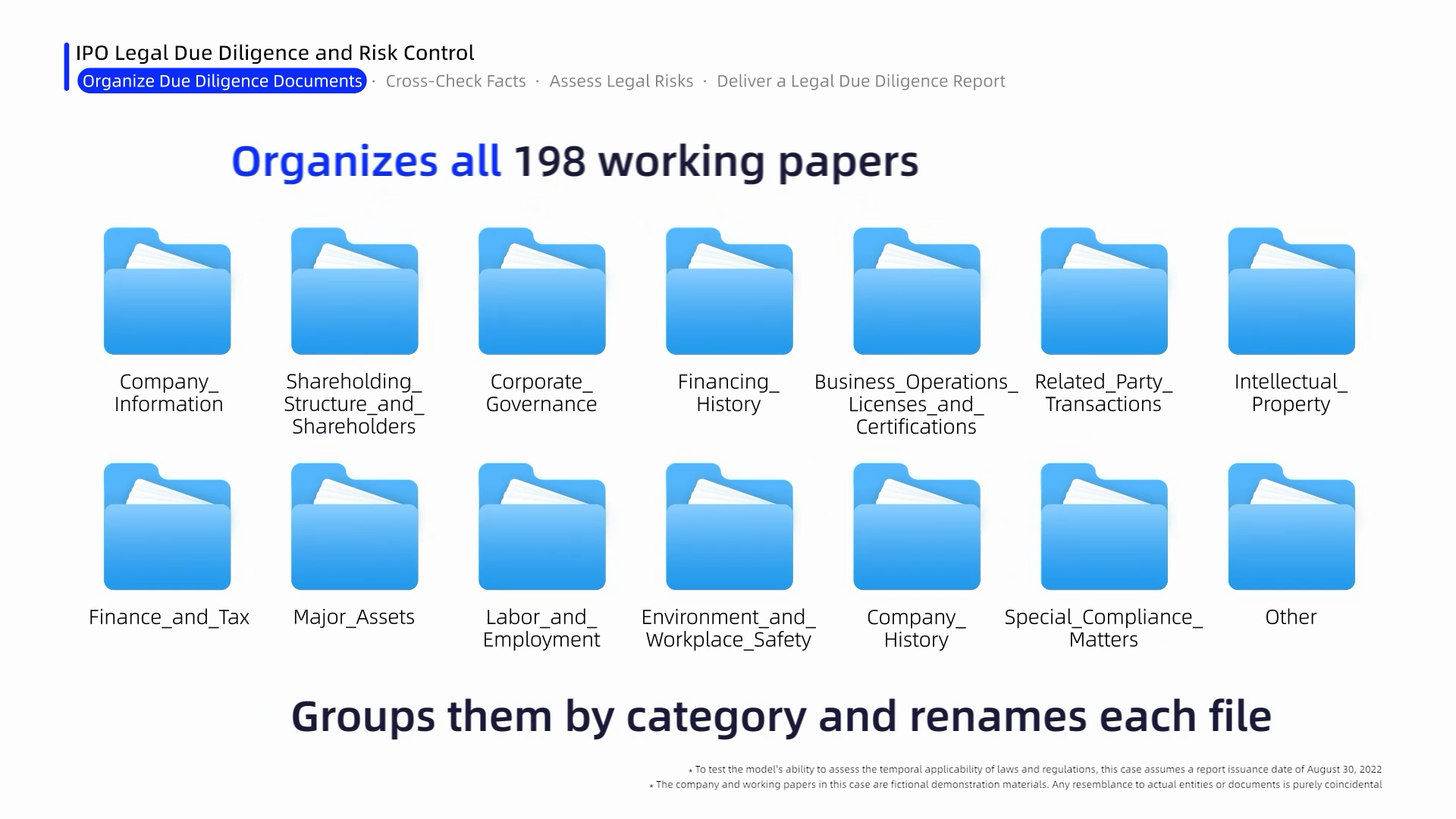
In pre-IPO legal due diligence, Qwen4-Max took 198 working papers supplied in batches with inconsistent formats and names, filtered the noise, renamed and grouped them by substantive content into 14 folders, and compiled a working paper index. It cross-checked the papers against public registration, IP, judicial, and credit records to verify issuer facts, and flagged contract risks such as reinstatement clauses in valuation adjustment mechanism (VAM) agreements with remedial recommendations. The final report runs 86 pages and over 60,000 Chinese characters across 12 review areas and 14 legal issues, every conclusion cited to a working paper.
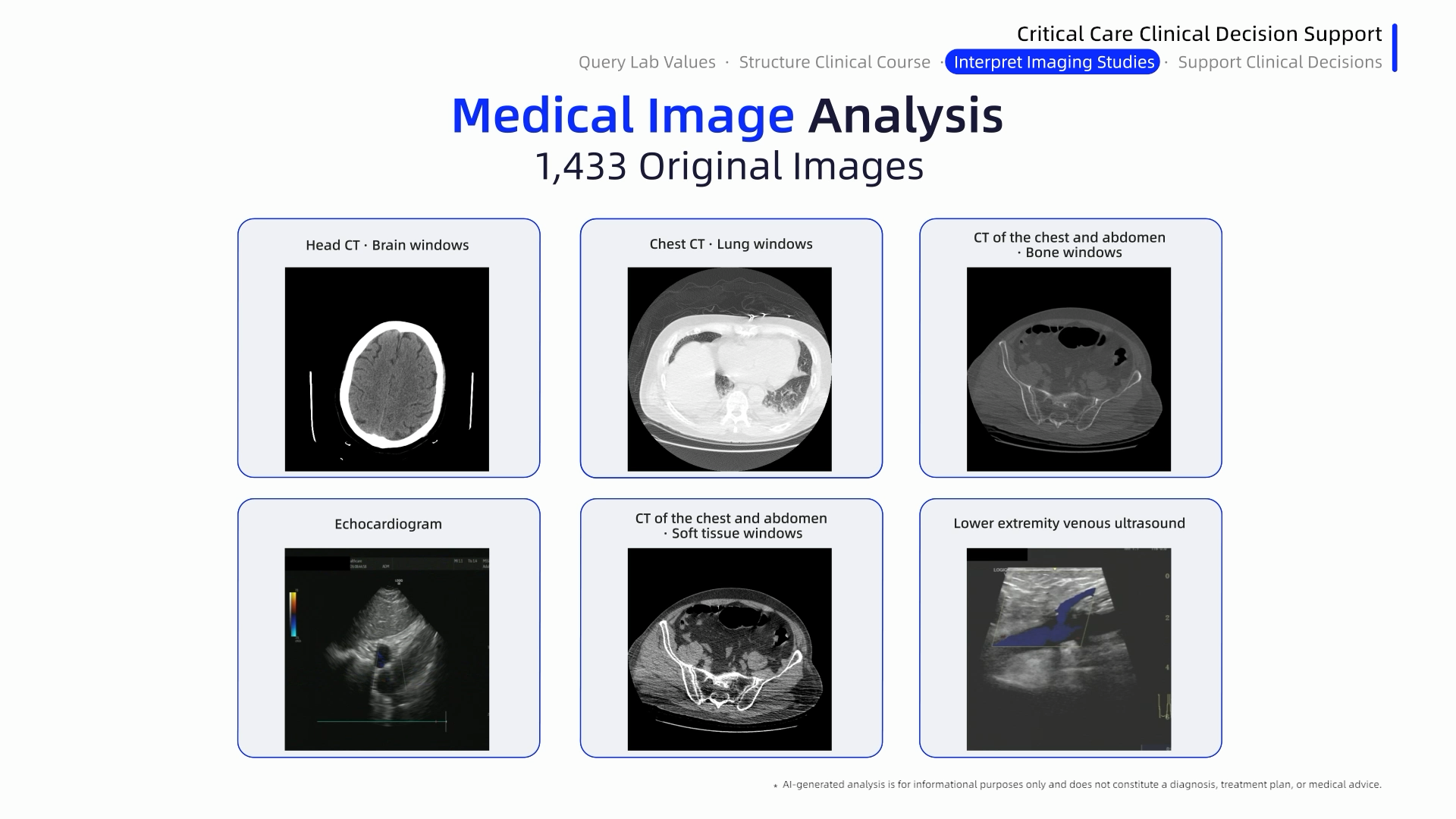
In clinical care, where the data is messy and the clock short, Qwen4-Max read a whole critical-care record in one conversation (dozens of lab reports, over 10,000 characters of progress notes, and 1,433 original medical images): it pulled the right lab values across dates, aligned six days of events into one timeline, sorted imaging into six series, and ran subagents over hundreds of slices to support the decision.
3. Professional Software: Working Directly Inside CAD, Blender, Unity, and Godot
This scenario is about operating the tools professionals already use, not just describing them.
Qwen4-Max completes engineering, 3D modeling, and game work directly inside CAD, Blender, Unity, and Godot, interpreting the intent and chaining the steps that produce a result. For 3D work, it drives Blender through geometry modeling, scene assembly, material setup, lighting, and rendering, turning an idea into a detailed 3D world with a distinct visual style. Across architecture, interiors, natural landscapes, and science-fiction scenes, it treats spatial layout, object structure, and visual appearance as one problem, and the finished assets go on to feed games and, through 3D printing, physical objects.
In manufacturing it carries a CAD drawing through to a full automotive production line. In real production environments at SANF and Pacific Union, it reads 2D layouts and process parameters, builds 3D line models from an existing equipment library, simulates cycle times, and tests PLC programs on the virtual line before commissioning. At the part level it models car-door assemblies and friction wheels, plans machining processes, generates toolpaths, and verifies them in simulation, catching overcuts and insufficient material removal before machining begins. In the showcased case, manual effort to program a single workpiece fell from about 475 minutes to 24 minutes, a reduction of roughly 95%.
For games it works in Unity, Unreal Engine, and Godot, taking one natural-language brief through scene construction, gameplay logic, integration of external assets, material setup, HUD design, and visual effects until the game is playable. It then runs the game and refines camera tracking, character animation, hit feedback, lighting, and pacing on visual and interaction feedback, testing and iterating until scenes, gameplay, and sound hold together as one cohesive experience. Meow of Magic (Unreal) is one such end-to-end build: a cat-mage adventure where players cast spells, choose upgrades, and take on waves of enemies and bosses.
4. Agentic Video Production: From Storyboard to a Cohesive Multi-Scene Film
This scenario is about carrying one brief through to a finished film, not just isolated clips.
For video, Qwen4-Max paired with WonderClip builds an end-to-end workflow, from storyboard scripts and static assets to camera blockouts, rendered clips, and a cohesive multi-scene film. Parametric blockouts keep geometry and scale consistent, and controllable previsualization makes the result predictable and easy to interpret.
5. Office Productivity: Documents, Spreadsheets, and Reports That Trace Back to Sources
Office Productivity covers the collaborative work across industries that fills a professional's day.
Qwen4-Max generates, edits, and verifies documents, spreadsheets, and reports, keeps charts aligned with the underlying working papers and sources traceable, so the result is professional-grade rather than a first draft that still needs to be checked line by line. A clear example is accounting and audit: the model assembles audit working papers across financial statement accounts, the kind of work where every figure has to line up with its source. This breadth is what our Work360 evaluation measures, covering knowledge across 721 specialized industries to strengthen collaborative office work in industrial and professional settings.
6. Long-Context Understanding: A Million Tokens and Native Vision in a Single Pass
This scenario is about reading a great deal at once and reasoning across all of it.
With a million-token context and native vision, Qwen4-Max reads long documents and massive image sets in a single pass, reasons across chapters, aligns complex events into timelines, and supports citation-backed verification. This is the capability that underpins the others. It can hold a due-diligence folder, a full codebase, a stack of drawings, or a long video in view at the same time, answering from the whole picture instead of a retrieved fragment.
Where to Start
Whether your team is still figuring out where AI fits in these workflows or already running it elsewhere, the question worth asking is how much of the whole task one model can carry. The six scenarios above answer it in six different kinds of work: a long-running brief becomes delivered work version by version, a folder of evidence becomes a conclusion any reviewer can trace, a CAD drawing becomes a full production line, a storyboard becomes a cohesive multi-scene film, a set of accounts becomes audit working papers, and a million-token folder becomes one coherent reading.
Start with your own hardest task, the one your current tools only half finish or the one you have never trusted to AI, and let Qwen4-Max carry it end to end on Alibaba Cloud Model Studio.
Read previous post:
-

-
Alibaba Cloud Community
1,607 posts | 526 followers
Follow
Comments
-
-
Alibaba Cloud Community
1,607 posts | 526 followers
Follow
Related Products
-
 Token Plan
Build more, spend less. One plan, every modality.
Learn More -
 Qwen
Full-range, open-source, multimodal, and multi-functional
Learn More -
Alibaba Cloud Model Studio
A one-stop generative AI platform to build intelligent applications that understand your business, based on Qwen model series such as Qwen-Max and other popular models
Learn More -
 QwenWork
 is dedicated to helping employees strengthen their professional competitiveness in the AI era and to enabling enterprises to improve organizational effectiveness.
Learn More
More Posts by Alibaba Cloud Community
- Alibaba Cloud Named a Leader in Gartner® Magic Quadrant for Container Management for Fourth Consecutive Year
- The Easiest Way to Try the Latest Models in One Place: Token Plan Starting at $3 for the First Month
- 一個平台輕鬆試用最新 AI 模型:Token Plan 首月低至 $3
- Alibaba Cloud Advances AI Adoption in Malaysia with Nationwide Youth Contest and Industry Collaborations
- Alibaba Cloud Unveils New AI Initiatives at Hong Kong Summit to Advance the City’s AI Ecosystem
- QoderWake: Digital Workers Take the Initiative — No Need to @ Every Time
- What Is Model Thinking Effort? Should You Choose Low, High, or Maximum?
- High-Risk PHP and Node.js Vulnerabilities: A Scan Costs Pennies. A Miss Could Cost a Fortune.
- Alibaba Unveils Qwen4-Max: New AI Teammate for Work, Creativity, and Discovery