Firm G is a rapidly expanding, vertically-integrated home-furnishings company that combines retail, cross-border e-commerce, supply-chain services, and energy-resource logistics. To sustain double-digit growth, the firm has adopted an advanced “middle-office” architecture, building three domain hubs—Big Supply-Chain Management (BSCM), Data Governance (DGT), and Consumer Engagement (CE)—to connect dozens of front-line business units. While the organisational redesign unlocked operational scale, executives recognised a critical gap: they lacked a single, trusted analytics layer that could turn heterogeneous order, marketing, and finance data into timely, actionable insight for managers, marketers, and supply-chain partners.
“Quick BI is extremely friendly for newcomers to data analysis; it removed many early obstacles for our team and quickly permeated collaboration across departments.”
—— DGT Lead

Before adopting the BI platform, Firm G’s departments maintained conflicting data definitions, leading to “precisely wrong” analyses that eroded confidence in decision-making. Marketing teams could not isolate customer traits, so a portion of ad spend was wasted and revenue forecasts remained unreliable. Operations analysts struggled with dozens of time-stamp fields and siloed inventory records, delaying financial close and obscuring supply-chain risks. The lack of unified, real-time insight limited membership growth, suppressed order volume, and slowed strategic expansion.

Working with Lingyang’s Quick BI, the DGT hub first harmonised core dimensions—order timestamps, regional codes, SKU hierarchies, and finance metrics—then used open APIs to stream data from ERP and marketplace systems into a cleansed cloud repository. AI-assisted data profiling flagged anomalies automatically, while NLP search let business users surface metrics without SQL, closing the analytics skills gap identified by management.
Within only three days the team published an interactive “data cockpit” that visualises sales heatmaps, profitability, inventory turns, and SKU rankings. Drag-and-drop filters allow managers to pivot by region, store, or campaign; embedded machine-learning models forecast stock-outs and recommend optimal ad bids across Google, Instagram, and TikTok. A further two-month sprint automated scheduled ETL jobs, enabling bottom-layer data to update without manual effort and preparing three additional dashboards for executives, marketing, and finance.
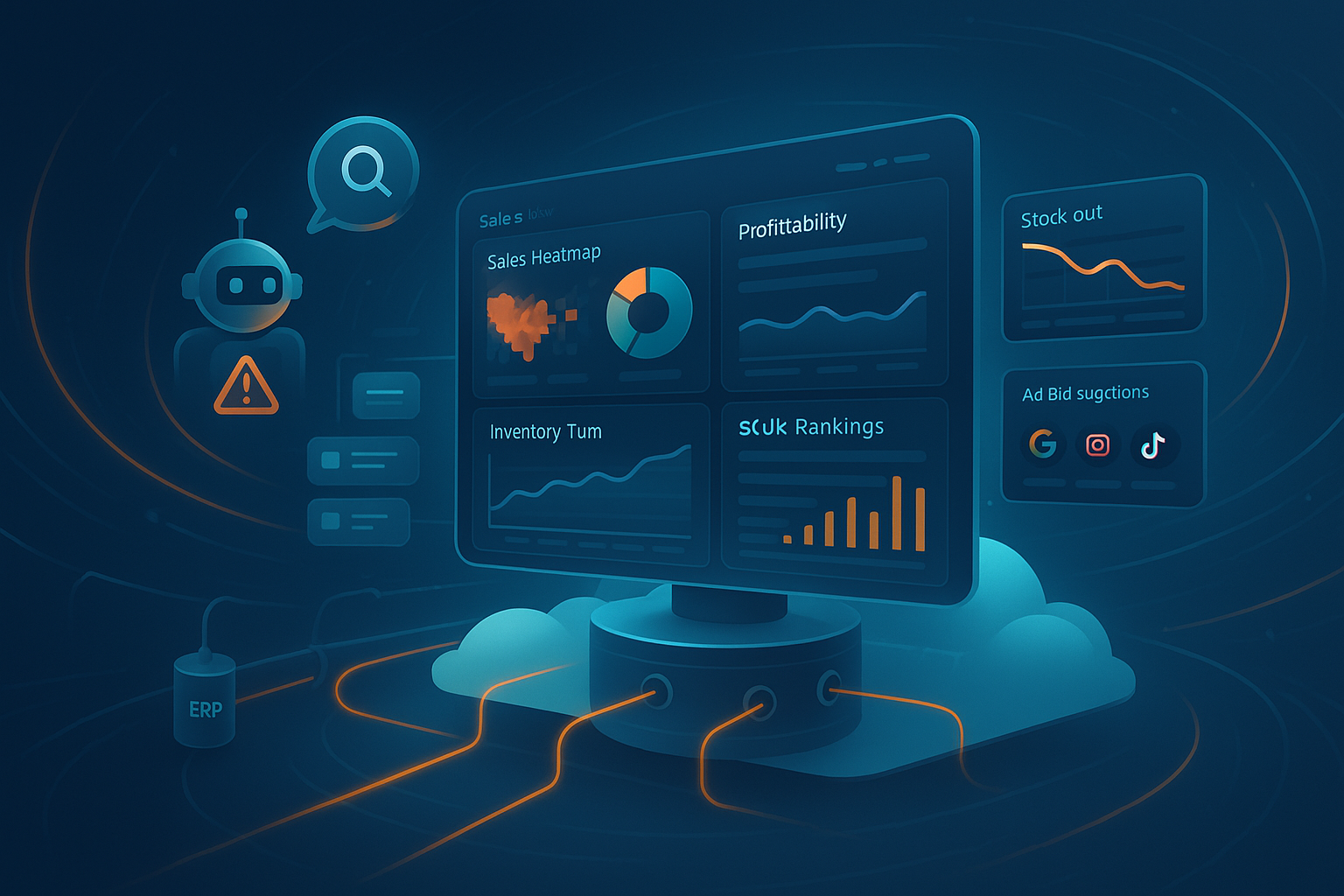
The unified cockpit doubled order conversion while holding ad spend nearly flat, thanks to granular audience targeting and cross-platform bid optimisation. Membership sign-ups rose 45%, and finance closed the monthly books two days faster. Supply-chain analysts now detect low-quality suppliers early, cutting after-sales costs by 12%. Crucially, data literacy has widened: more than 70% of departments produce self-service reports, embedding a culture of data-driven experimentation that supports Firm G’s continued rapid growth.
Alibaba Cloud and HP Partner on Qwen-powered Smart Assistant to Drive AI PC Experience

1,543 posts | 516 followers
FollowAlibaba Cloud Community - July 14, 2025
Apache Flink Community - March 20, 2025
Alibaba Cloud Community - July 18, 2025
Alibaba Cloud Community - July 16, 2025
Alibaba Cloud Community - April 2, 2026
Alibaba Cloud Community - July 17, 2025
1,543 posts | 516 followers
Follow Big Data Consulting Services for Retail Solution
Alibaba Cloud experts provide retailers with a lightweight and customized big data consulting service to help you assess your big data maturity and plan your big data journey.
Learn More QwenWork
QwenWork is dedicated to helping employees strengthen their professional competitiveness in the AI era and to enabling enterprises to improve organizational effectiveness.
Learn More Token Plan
Build more, spend less. One plan, every modality.
Learn More
Alibaba Cloud Model Studio
A one-stop generative AI platform to build intelligent applications that understand your business, based on Qwen model series such as Qwen-Max and other popular models
Learn MoreMore Posts by Alibaba Cloud Community

