Common questions:
As more businesses expand into overseas markets, international SMS has gained tremendous momentum. We frequently receive customer inquiries about international SMS, with questions about "Sender ID" being particularly common. For example: What is a Sender ID? What does a dynamic Sender ID mean? Why are some Sender IDs numeric while others are alphabetic? How can I apply for a Sender ID?
We’re here to answer all your questions. This article addresses key concerns about International SMS Sender ID (SID) .
A Sender ID is the name displayed as the sender of an SMS message on the recipient’s device. It is an effective way to identify your brand to recipients. In domestic markets, businesses typically use an SMS signature to display their company name, product name, or brand, distinguishing their messages from others and establishing quicker connections with users. In international markets, however, a Sender ID serves this purpose.
There are two types of Sender IDs:
When applying for a Sender ID, the name is usually limited to 3–11 characters, and requirements differ by country:
Refer to the International SMS Registration Rules and check the table for your target country or region. This list is for reference only and is continuously updated—always verify with local regulations.
For example, to check if Afghanistan requires Sender ID registration:
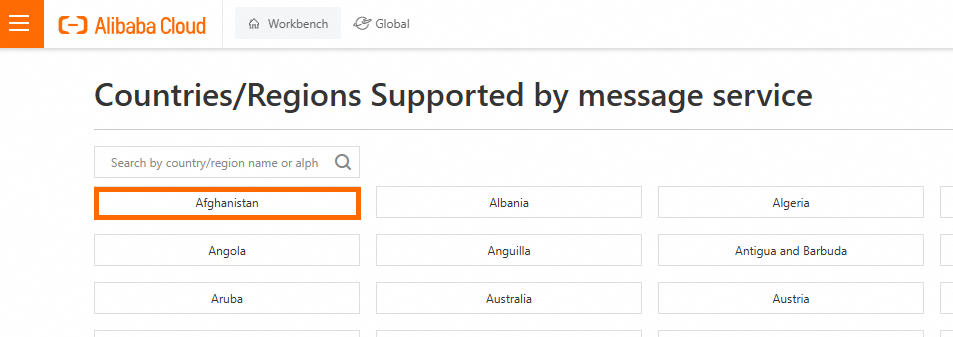
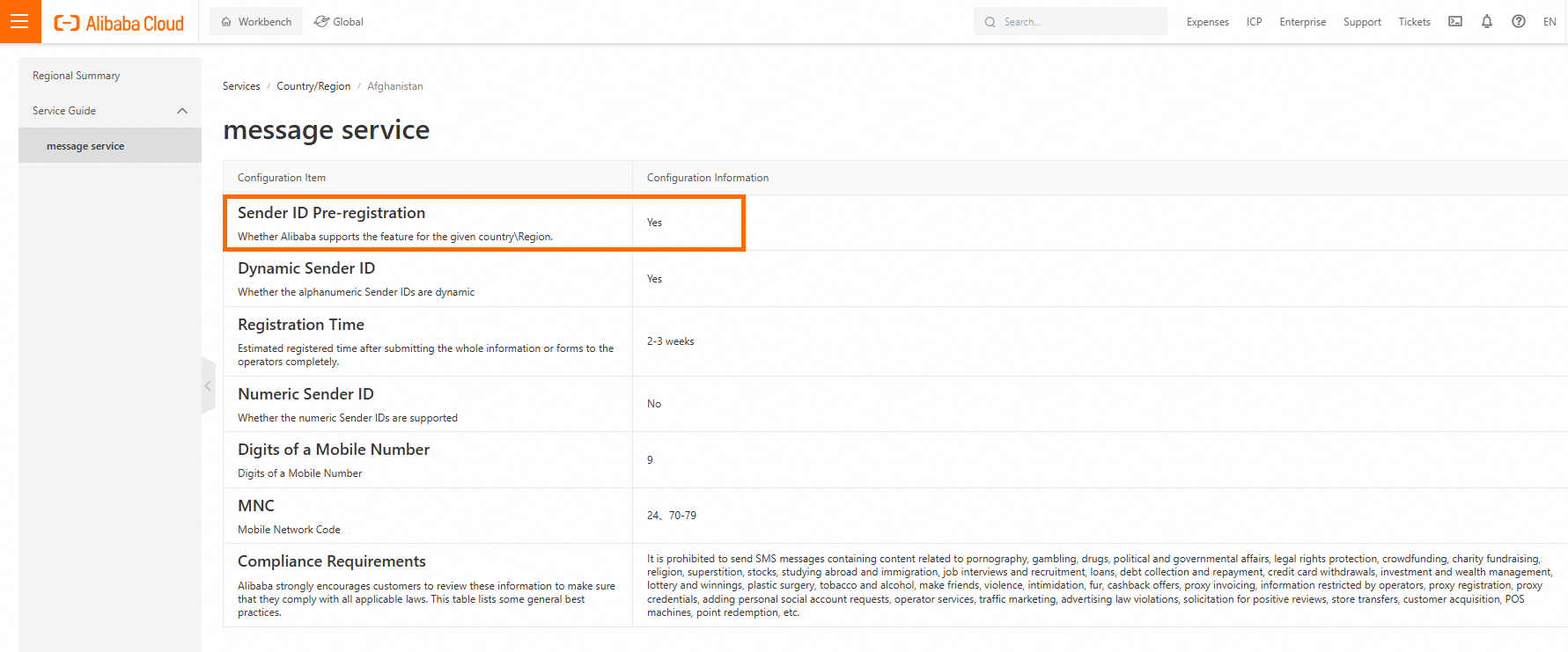
Sender ID regulations vary by country:
Pre-registration requirements differ by region:
Processing times after submission also vary:
At Alibaba Cloud SMS, we streamline the Sender ID registration process, guiding customers through application, documentation, approval, and configuration for seamless global outreach. You can track your application status in the backend: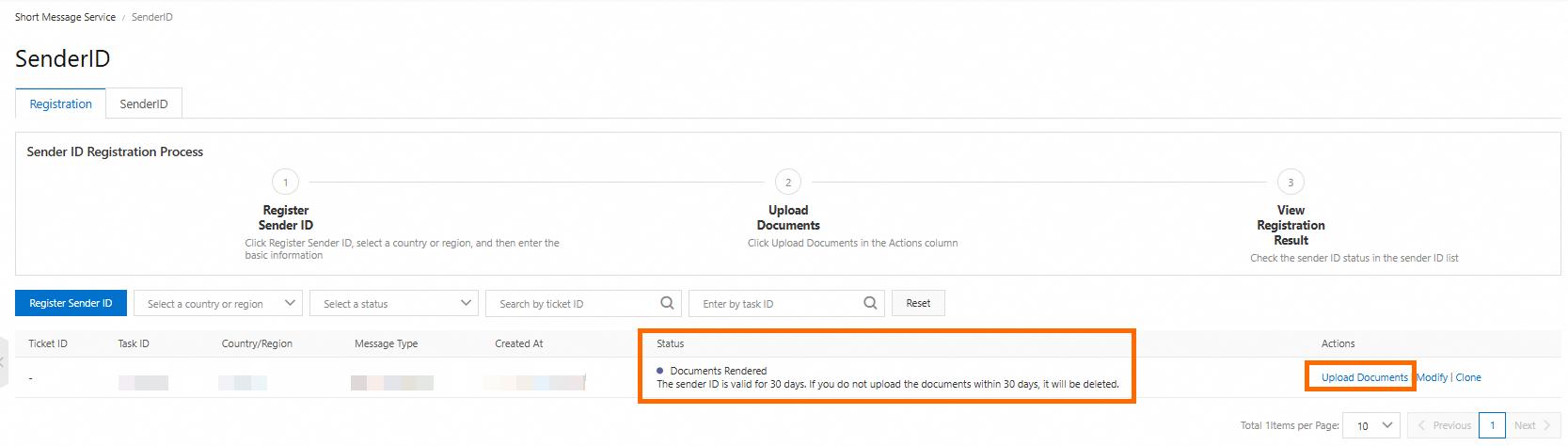
Have more questions about Sender IDs? Feel free to leave the comments
Win Global Markets in 2025: Smart SMS Strategies for Cross-Border Success
Alibaba Cloud International SMS Now Supports Go China Service (Whitelist Mechanism)

21 posts | 2 followers
FollowAnna cloud communication - November 4, 2024
Ila Bandhiya - February 27, 2026
Kalpesh Parmar - May 6, 2026
Anna cloud communication - November 22, 2024
Anna Chat APP - November 8, 2024
Alibaba Cloud Community - January 10, 2022
21 posts | 2 followers
Follow Short Message Service
Short Message Service (SMS) helps enterprises worldwide build channels to reach their customers with user-friendly, efficient, and intelligent communication capabilities.
Learn More ID Verification
A digital ID verification solution to provide highly secure, convenient, and flexible remote ID verification
Learn More Global Network Solution
Alibaba Cloud's global infrastructure and cloud-native SD-WAN technology-based solution can help you build a dedicated global network
Learn More ZOLOZ Real ID
A Digital and Remote Online Solution for eKYC
Learn MoreMore Posts by Bella - Cloud Communication

