隨著人工智慧的發展,許多業務和資料分析可以基於大語言模型(LLM)進行廣泛的應用,而資料處理是LLM開發尤為重要的一環,資料品質的好壞直接影響大模型訓練、推理的最終效果。相較於昂貴的GPU資源,MaxCompute的海量彈性CPU資源能夠成為LLM海量資料處理的資源基礎,而MaxFrame分散式運算能力可以協助您更加高效、便捷地完成LLM資料處理工作。
前提條件
已安裝MaxFrame,詳情請參見準備工作。
資料準備
本文以開源專案RedPajama在GitHub中的少量(一萬+)資料為例,為您介紹如何使用MaxFrame對GitHub代碼資料進行清洗和處理。
為便於使用,資料已被提前存放在MaxCompute公開專案BIGDATA_PUBLIC_DATASET下的data_science Schema中,您可直接進行使用,表名為llm_redpajama_github_demo_data。部分資料如下:

公開資料集的介紹及使用詳情請參見公開資料集概述。
使用MaxFrame對資料進行“著作權資訊去除”
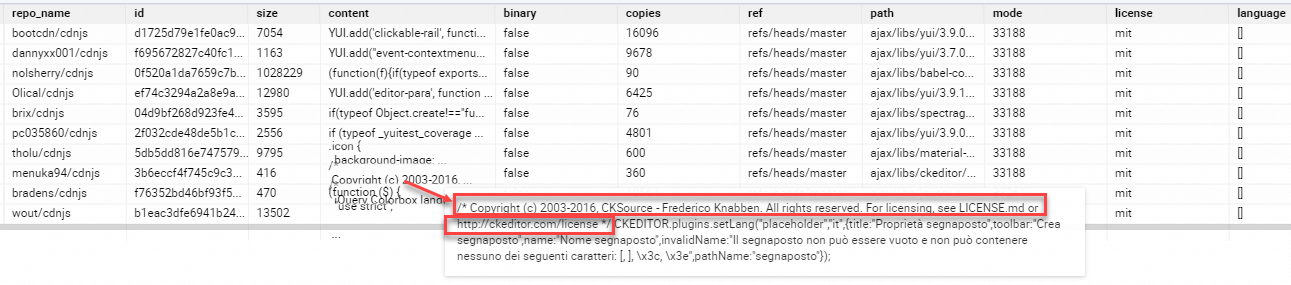
對未經處理資料進行分析,若其中含有“Copyright”等著作權資訊,需要對該類敏感資訊進行去除。
例如:repo_name值為“menuka94/cdnjs”時,對應的content欄位中含有“Copyright”等著作權資訊。
建立MaxCompute入口類。
import os
import time
import numpy as np
import maxframe.dataframe as md
from odps import ODPS
from maxframe import new_session
# from maxframe.udf import with_resource_libraries
from maxframe.config import options
from maxframe import config

o = ODPS(
    # 確保 ALIBABA_CLOUD_ACCESS_KEY_ID 環境變數設定為使用者 Access Key ID,
    # ALIBABA_CLOUD_ACCESS_KEY_SECRET 環境變數設定為使用者 Access Key Secret,
    # 不建議直接使用AccessKey ID和 AccessKey Secret字串。
    os.getenv('ALIBABA_CLOUD_ACCESS_KEY_ID'),
    os.getenv('ALIBABA_CLOUD_ACCESS_KEY_SECRET'),
    project='your-default-project',
    endpoint='your-end-point',
)
參數說明:
ALIBABA_CLOUD_ACCESS_KEY_ID:需將該環境變數設定為具備目標MaxCompute專案中待操作對象相關MaxCompute許可權的AccessKey ID。您可以進入AccessKey管理頁面擷取AccessKey ID。
ALIBABA_CLOUD_ACCESS_KEY_SECRET:需將該環境變數設定為AccessKey ID對應的AccessKey Secret。
your-default-project:使用的MaxCompute專案名稱。您可以登入MaxCompute控制台,在左側導覽列選擇工作區>專案管理,查看MaxCompute專案名稱。
your-end-point:目標MaxCompute專案所在地區的Endpoint,可根據網路連接方式自行選擇,例如
http://service.cn-chengdu.maxcompute.aliyun.com/api。詳情請參見Endpoint。
引用MaxCompute內建鏡像common,其中包含Python環境及本次資料處理所需的regex等第三方包。
config.options.sql.settings = {
    "odps.session.image": "common"
}
通過UDF構建資料處理邏輯。
def clean_copyright(row):
    import re
    pat = re.compile('/\\*[^*]*\\*+(?:[^/*][^*]*\\*+)*/')
    cpat = re.compile('copyright', re.IGNORECASE)

    text = row['content']

    if not text:
        return row

    r = pat.search(text)
    if r:
        span = r.span()
        sub = text[span[0]:span[1]]
        if cpat.search(sub):
            # cut it
            text = text[:span[0]] + text[span[1]:]

        row['content'] = text
        return row

    lines = text.split('\n')
    skip = 0

    for k in range(len(lines)):
        if (lines[k].startswith('//') or lines[k].startswith('#')
                or lines[k].startswith('--') or not lines[k]):
            skip = skip + 1
        else:
            break

    if skip:
        text = '\n'.join(lines[skip:])
    row['content'] = text

    return row
建立MaxFrame Session,提交作業至MaxCompute。
def maxframe_job():
    s_time = time.time()
    table_name = 'bigdata_public_dataset.data_science.llm_redpajama_github_demo_data'

    session = new_session(o)
    print('session id: ', session.session_id)

    df = md.read_odps_table(table_name, index_col='id')
    df = df.apply(
                clean_copyright,
                axis=1,  # row
                output_type="dataframe",
            )

    out_table = 'tmp_mf_clean_copyright'
    md.to_odps_table(df, out_table).execute()
    session.destroy()

maxframe_job()
資料處理結果
查詢tmp_mf_clean_copyright表,對之前含有“Copyright”等著作權資訊的資料進行查看,已去除敏感資訊。
SELECT * FROM tmp_mf_clean_copyright;部分返回結果如下: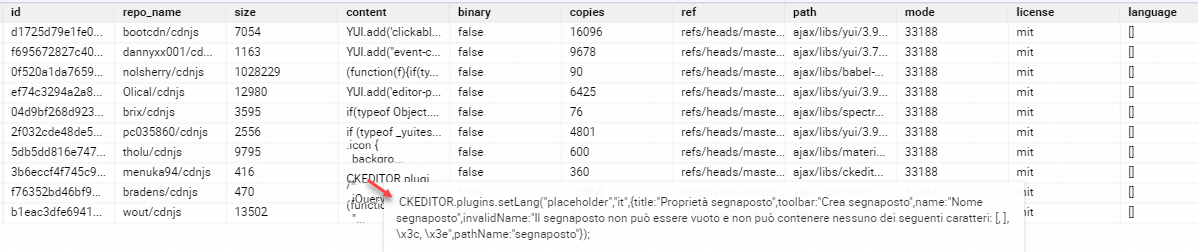
後續操作
MaxCompute已與阿里雲人工智慧平台PAI成功對接,您可基於PAI Desinger進行更多LLM運算元的開發和使用,LLM運算元詳情請參見組件參考:大模型資料處理。