Real-time data channel
Import heterogeneous data from multiple data sources and deliver it to downstream big data systems
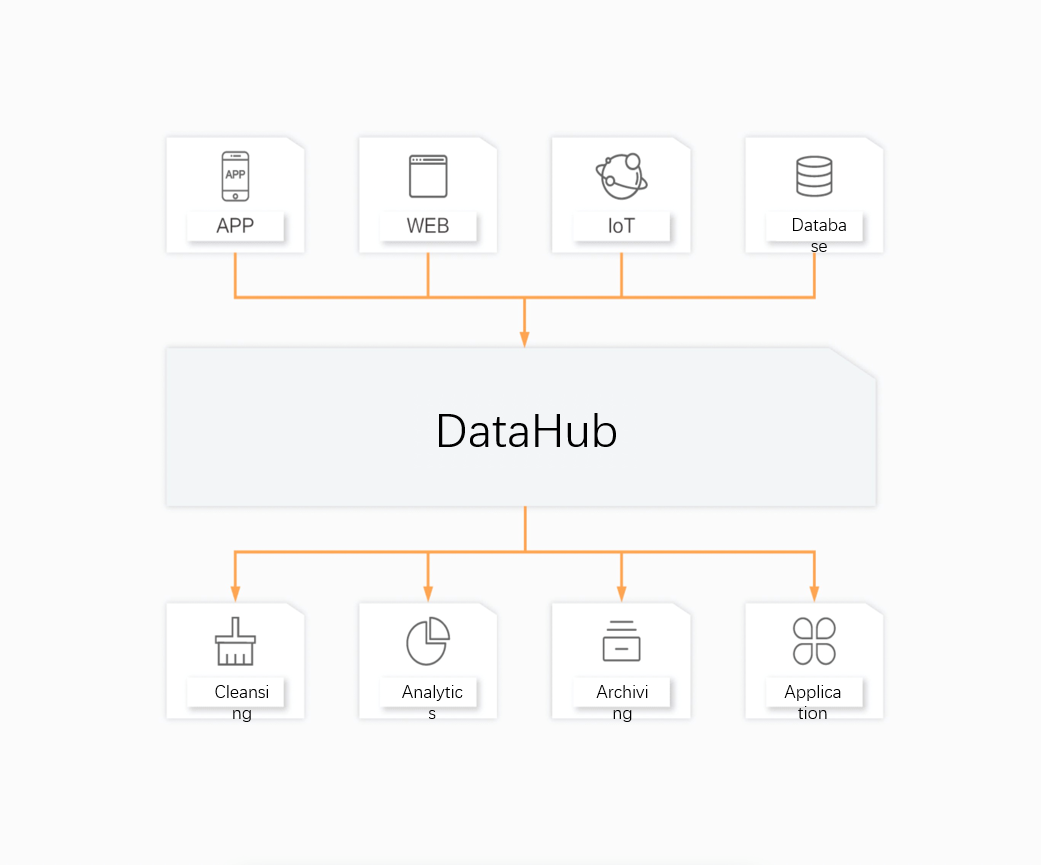
You can use DataHub to import heterogeneous data in real time from sources such as applications, websites, Internet of Things (IoT) devices, and databases. You can manage this data centrally and deliver it to downstream systems for analysis and archiving. This process builds a clear data stream to help you unlock the value of your data.
Benefits
System decoupling
You can decouple big data systems from business systems and decouple components within the big data system.
Real-time channel
DataHub imports business data into your big data system in real time. This shortens the data analytics cycle.
Real-time data cleansing and analysis
Import heterogeneous data, and perform real-time cleansing and normalization
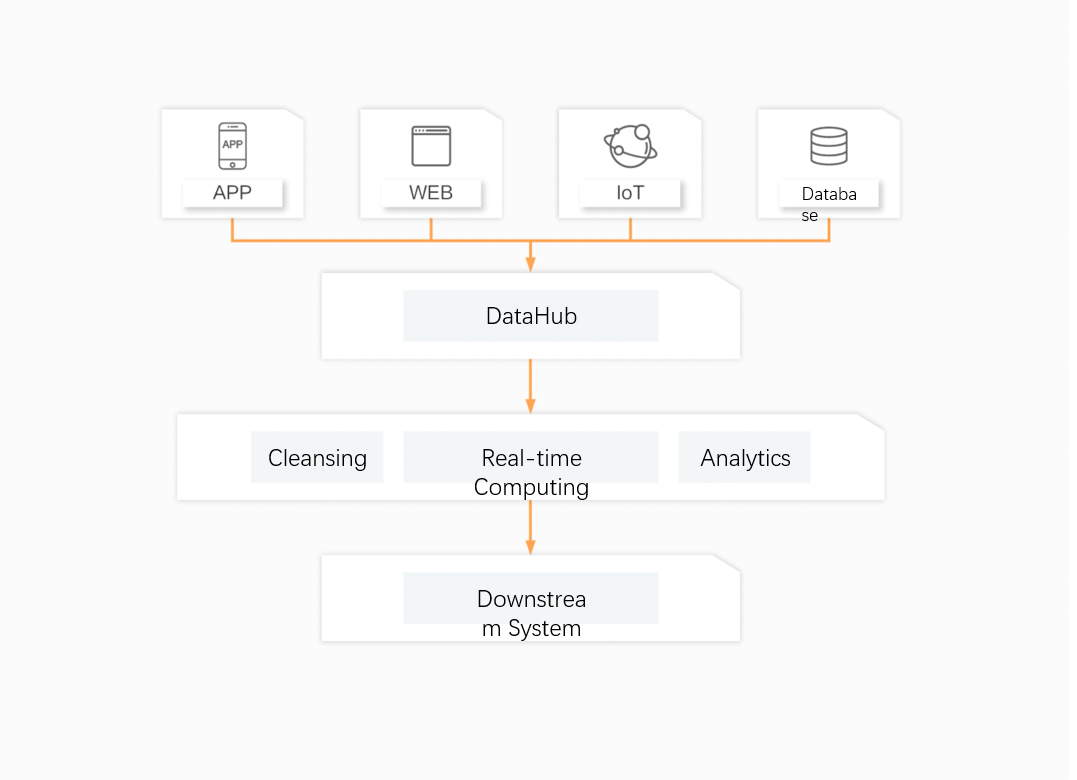
Using DataHub and Realtime Compute, you can cleanse heterogeneous data from multiple data sources and transform it into unified structured data in real time. This prepares the data for further analysis.
Benefits
Real-time extract, transform, and load (ETL)
You can connect to multiple data sources to cleanse, filter, associate, and transform data in real time to produce structured data.
Real-time analysis
You can generate business metrics in sub-seconds to capture the value of fleeting data.
Real-time data warehouse
Replace traditional databases with DataHub to build a real-time data warehouse
You can transition from a Lambda architecture to a Kappa architecture and use DataHub to build a raw data layer, a real-time detail layer, and a real-time summary layer to create a real-time data warehouse.
Benefits
Unified Kappa architecture
The two pipelines of the traditional Lambda architecture are reduced to one. This greatly lowers maintenance costs.
Real-time big data
A data warehouse is the foundation of big data. A real-time data warehouse benefits many business scenarios, such as business intelligence (BI), reporting, and recommendations based on user tags. This enables real-time processing for the entire big data system.