Digital transformation is changing the way companies work, compete, and grow. But many businesses still face slow progress due to siloed teams and outdated workflows. That’s where DevOps makes a big difference.
DevOps breaks down barriers between teams and helps them work together more effectively. This shift from silos to synergy is critical to succeed in a fast-moving digital world.
DevOps blends practices, tools, and a mindset from software development (Dev) and IT operations (Ops). Teams work together instead of separately. This approach allows them to build, test, and release software faster and more reliably.
DevOps focuses on:
● Continuous Integration and Continuous Delivery (CI/CD)
● Automation of processes
● Collaboration across departments
● Faster feedback loops
This helps companies release new features, fix bugs, and respond to market needs faster than ever before.
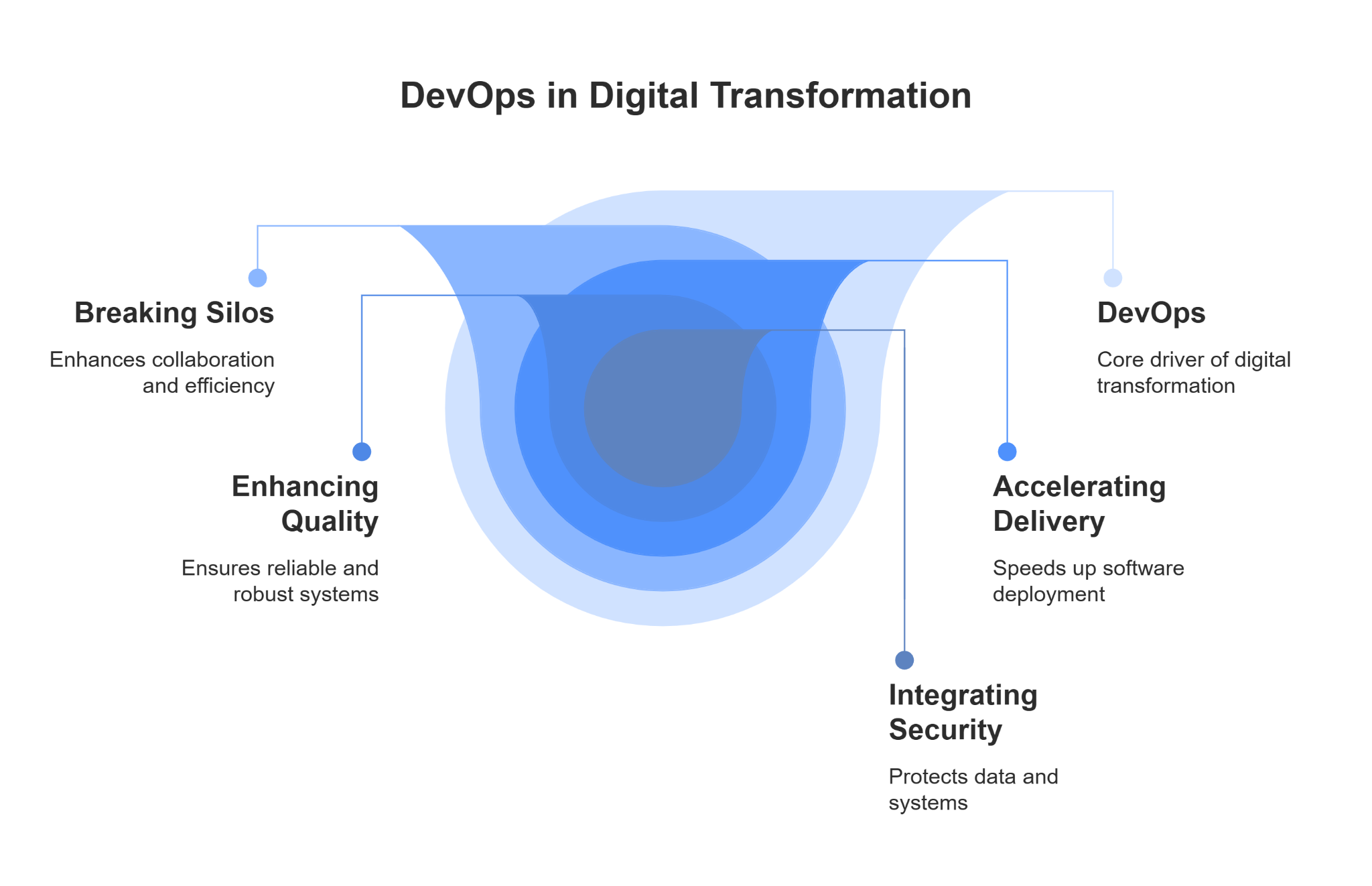
Digital transformation is about using technology to boost how a business works, serves customers, and competes.
It often involves shifting to the cloud, adopting new software, or changing processes.
Still, technology alone won’t do the trick.
Without a culture of collaboration and agility, new tools won’t deliver their full value. DevOps provides that culture.
Here’s why DevOps is essential for digital transformation solutions:
Silos cause teams to work in isolation, slowing down progress. DevOps creates cross-functional teams where developers, operations, and security specialists collaborate continuously to plan, create timelines, and execute together.This teamwork boosts efficiency and innovation.
In digital transformation, speed matters. DevOps, combined with data analytics, uses automation and CI/CD pipelines to deploy code often and safely.
With continuous testing and monitoring, DevOps ensures software is high-quality and stable. Bugs are caught early, reducing downtime and improving user experience.
Digital risks are rising, so security must be part of every stage.
DevSecOps adds security checks and best practices directly into development and operations. This approach makes products safer from the start.
As businesses expand, their IT needs shift. Tools like Infrastructure as Code (IaC) help teams manage infrastructure easily. They can scale up or down quickly, which is key in cloud environments.
To succeed in digital transformation, businesses must embrace strategic DevOps practices:
Start with Automation: Automate everything from code builds to testing and deployment.
These practices help organizations deliver faster, improve reliability, and stay ahead of competitors.
DevOps is not just about tools—it’s about people and culture. For DevOps to truly work, companies need to:
● Foster Collaboration: Encourage open communication between Dev, Ops, QA, and business teams. You can also consider hiring a developer from Upwork or Fiverr, but make sure you checkout and read reviews about Fiverr and Upwork to avoid scammers.
● Embrace a Growth Mindset: Accept that failure is part of learning and innovation.
● Break Down Silos: Create cross-functional teams that work towards shared goals.
● Promote Continuous Learning: Train teams regularly on new tools, practices, and trends.
When culture changes, teams become more agile, accountable, and customer-focused. This cultural shift is at the heart of digital transformation.
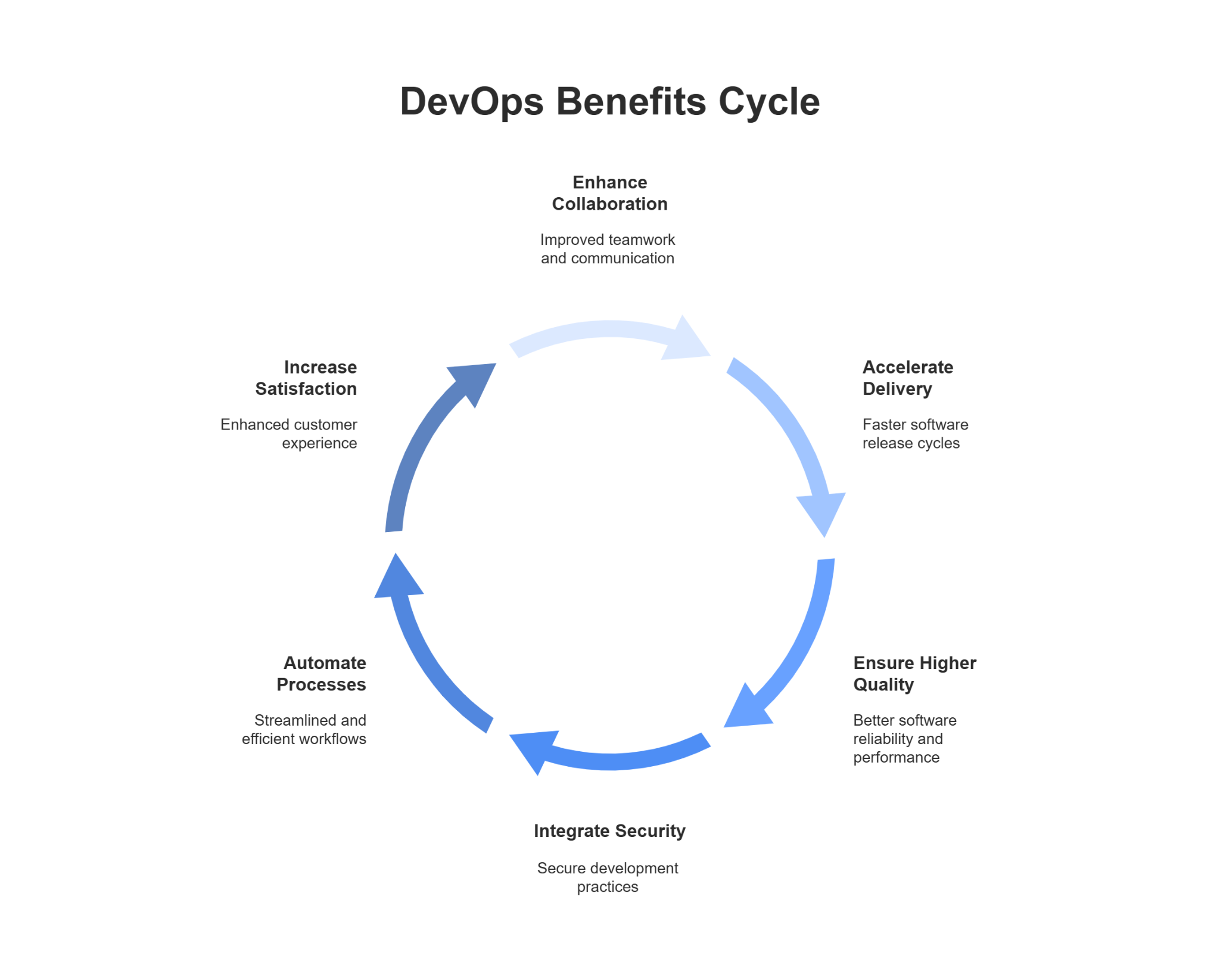
DevOps plays a major role in helping businesses succeed in their digital transformation journey. It brings development and operations teams together, allowing them to work as one. Here are the key benefits:
DevOps automates key parts of the software process, like testing, integration, and deployment. This reduces delays and helps companies release new features and updates much faster.
With constant testing and feedback, bugs are caught early in the process. This leads to fewer problems after launch and overall better-quality software.
DevOps breaks down the walls between development, operations, and security teams. Everyone works together, improving communication and reducing misunderstandings.
Security is included in every step through DevSecOps. This ensures that security checks happen early and often, rather than being added last.
DevOps tools support cloud environments and Infrastructure as Code (IaC), making it easier to scale apps up or down based on business needs.
Automated processes reduce the risk of manual mistakes. Tasks like testing, building, and deploying software become faster and more reliable. In many DevOps pipelines, email notifications are used to alert teams about build failures or deployment events. To ensure these alerts are not missed, it's important to test your outgoing email systems using an email deliverability tool so they reliably reach inboxes instead of spam folders.
With quicker updates, better quality, and fewer issues, customers get a smoother experience, which builds trust and loyalty.
While DevOps offers many advantages, it also comes with challenges. Here are the most common hurdles businesses face:
Teams used to traditional methods may be slow to adopt new tools and workflows.
With so many DevOps tools available, it’s easy to feel overwhelmed. Picking the right set is key.
Not all team members have the skills needed for automation, scripting, or cloud management. Training is essential.
Legacy systems can be hard to update or connect with modern DevOps pipelines.
Without a shared vision, teams may have different priorities, causing friction.
Adopting DevOps means changing how people work, think, and communicate—this takes time.
Faster releases may worry some about safety. Without DevSecOps, security risks can grow.
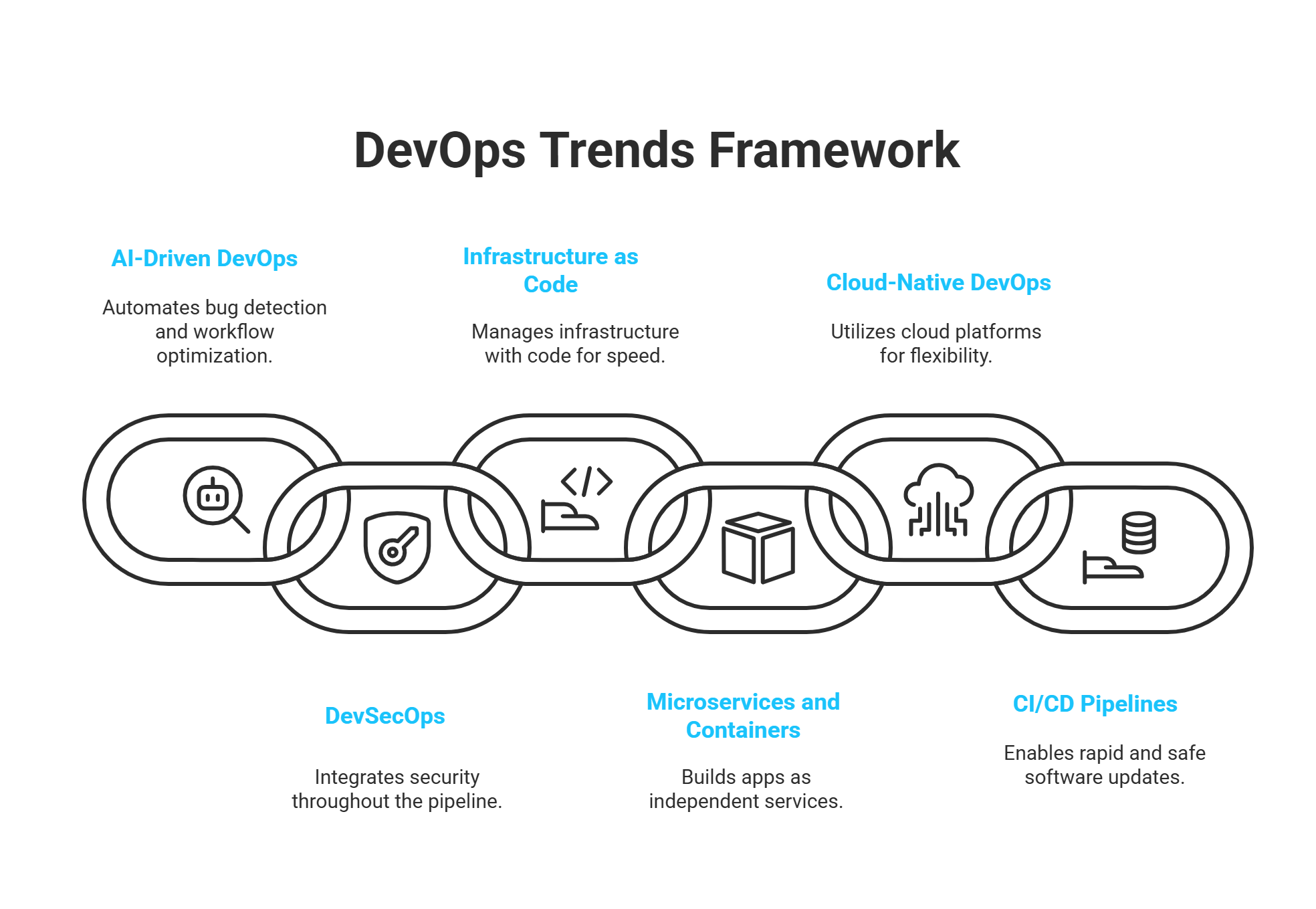
Stay ahead by following these leading DevOps practices that are shaping digital strategies this year:
AI and machine learning help identify bugs, improve testing, and optimize workflows automatically. To productionize these workflows, some teams hire AI DevOps engineer to design model CI/CD, serving, and monitoring.
Security is no longer an afterthought. DevSecOps integrates security into every step of the DevOps pipeline.
Teams now manage servers and infrastructure using code, reducing errors and making deployment faster.
Apps are built as small, independent services, making them easier to update, test, and scale.
Modern DevOps tools are designed for the cloud. They use platforms like AWS, Azure, and Google Cloud for flexibility.
Automated pipelines enable quick, safe, and regular software updates. This is vital for agility.
All industries use DevOps to improve delivery speed and reliability. This is especially true in tech, finance, healthcare, and retail.
Yes, you do. Popular DevOps tools include Jenkins, Docker, Kubernetes, GitLab, and Terraform. Monitoring platforms like Prometheus and Grafana are also key.
No, they are not the same, but they work well together. Agile focuses on development, while DevOps covers deployment and operations.
DevOps isn’t just a tech upgrade—it’s a mindset shift. It connects isolated teams into a united force. This change helps them move faster, deliver better, and adapt quickly.
In today’s world, digital transformation is vital. So, DevOps is no longer optional—it’s essential.
Disclaimer: The views expressed herein are for reference only and don't necessarily represent the official views of Alibaba Cloud.
Enhancing E-Commerce with Alibaba Cloud's Reverse Image Search Technology
Alibaba Cloud Native Community - November 6, 2025
Alibaba Cloud Industry Solutions - January 10, 2022
Alibaba Clouder - December 28, 2020
Alibaba Cloud Native Community - November 24, 2025
Alibaba Cloud Community - May 24, 2024
Alibaba Cloud Native Community - May 23, 2025
 Retail Solution
Alibaba Cloud enables digital retail transformation to fuel growth and realize an omnichannel customer experience throughout the consumer journey.
Learn More Alibaba Cloud Flow
An enterprise-level continuous delivery tool.
Learn More DevOps Solution
Accelerate software development and delivery by integrating DevOps with the cloud
Learn More Digital Marketing Solution
Transform your business into a customer-centric brand while keeping marketing campaigns cost effective.
Learn MoreMore Posts by Neel_Shah


