The average cost of a data breach has risen to USD 4.45 million, with a growing number of incidents involving cloud environments. While disruption happens in different sectors, whether from cyberattacks or natural disasters, your disaster recovery (DR) strategy must be cloud-ready and business-aligned.
By choosing Alibaba Cloud, you gain access to a range of tools designed to keep your operations resilient. With high availability zones, automated backup services, and global redundancy options, Alibaba Cloud empowers you to reduce downtime and meet tight recovery goals. Let’s explore how you can build a strong disaster recovery backbone, from key metrics to architecture best practices.
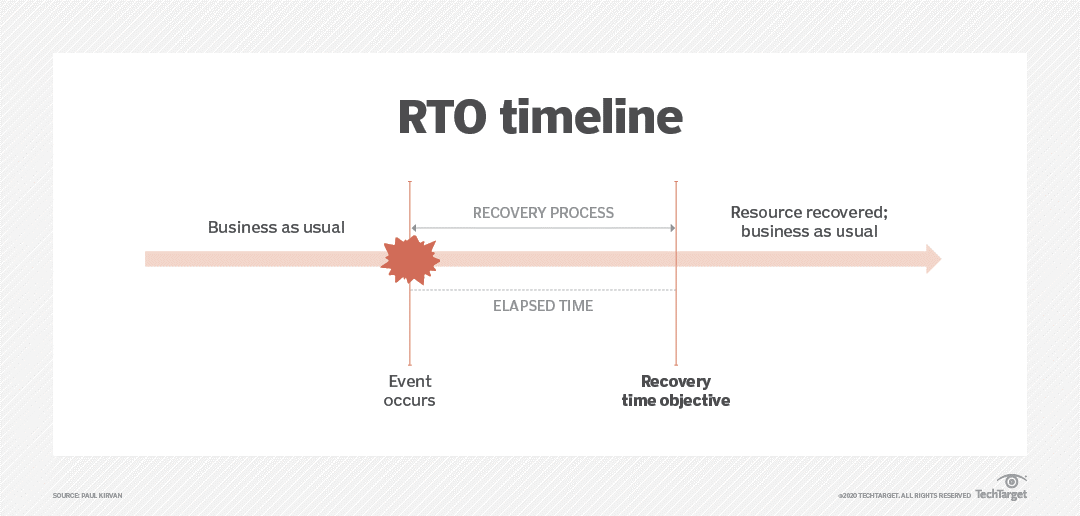
Before you build your disaster recovery (DR) plan, it's important to understand two key ideas, which are the Recovery Time Objective (RTO) and Recovery Point Objective (RPO). These two concepts guide how you prepare for outages and data loss. To figure them out, you can use tools like CloudMonitor to help you monitor system performance and set targets that make sense for your business.
As you move forward with your planning, start by doing a Business Impact Analysis (BIA) to show you which systems matter most for your daily operations, legal needs, and customer trust. With Resource Group, you can sort your tools and systems by function, which makes tagging the important ones easier.
Different industries have different standards when it comes to RTO and RPO. Take a look at this simple table to get a rough idea of what’s considered typical across a few sectors:
| Industry | Typical RTO | Typical RPO |
| Financial | < 1 hour | < 15 minutes |
| E-commerce | < 2 hours | < 30 minutes |
| Healthcare | < 4 hours | < 1 hour |
| SMBs | < 8 hours | < 4 hours |
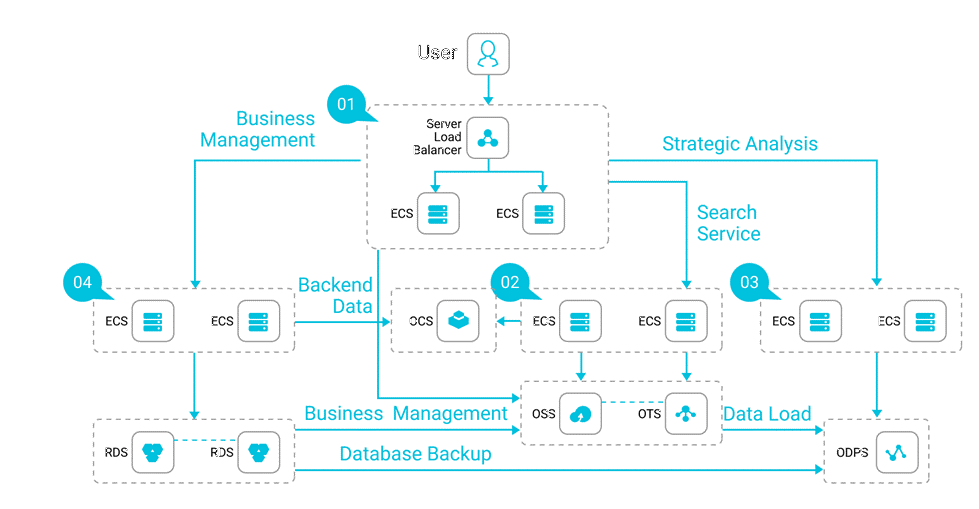
Alibaba Cloud allows you to choose the disaster recovery architecture that fits your business model and budget. You should select your approach based on how mission-critical each system is. For instance, customer-facing portals may need standby, while internal systems may work with scheduled backups.
Generally, there are four recognized strategies:
You can back up your ECS instances, databases, or on-prem data using Hybrid Backup Recovery (HBR). This setup doesn’t cost much, which makes it good if you're focused on saving money. Since recovery takes time due to system rebuilding, this option works best when fast recovery isn’t your concern.
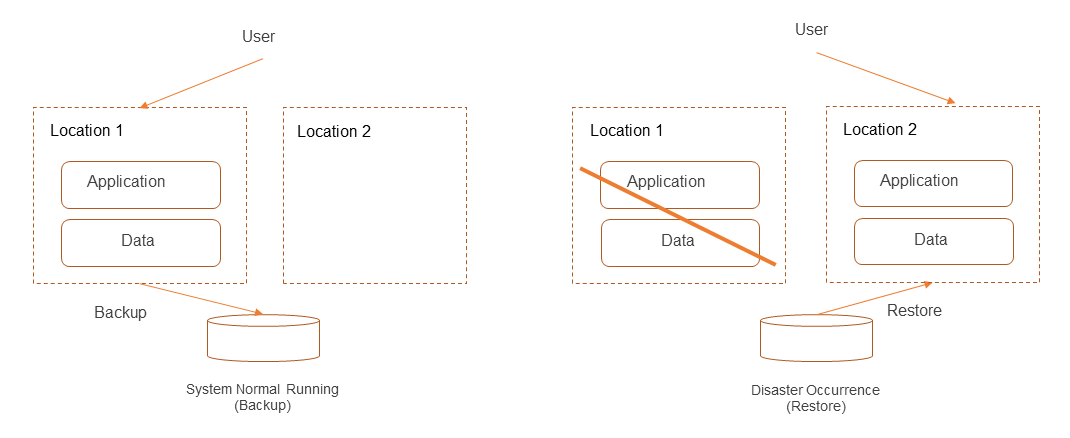
You keep a small version of your main system running at all times, with only the core services active, while Auto Scaling steps in to manage the rest when needed. With this setup, you strike a balance of cost and speed, avoiding the expense of a full system while still being ready to scale during a failure. As a result, it offers a practical middle ground for those aiming for basic readiness without overspending.
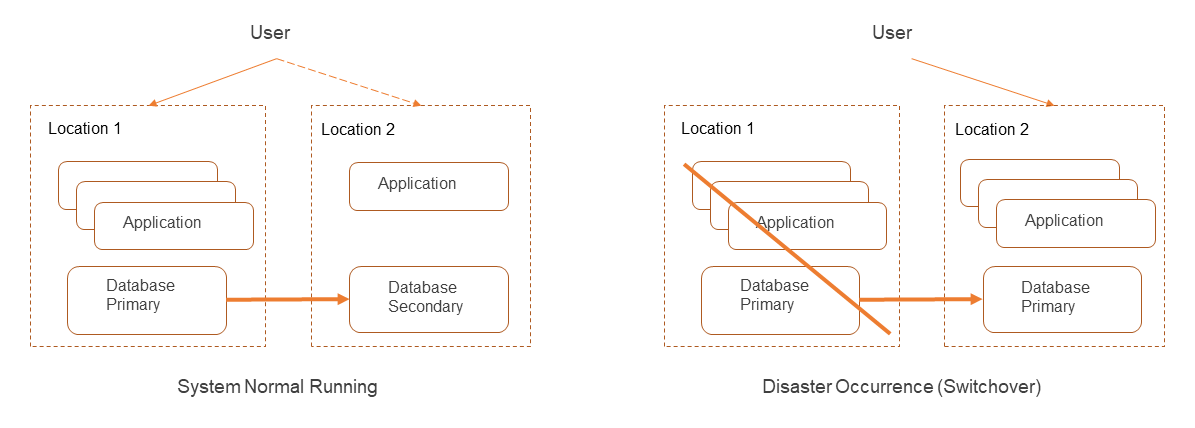
Here, you run a lighter version of your system in a second region so it's ready to take over. Doing this strategy keeps you updated and active, which helps you recover faster than starting from scratch. With the right tools, traffic can switch over when needed, which gives you fast access at a moderate cost.
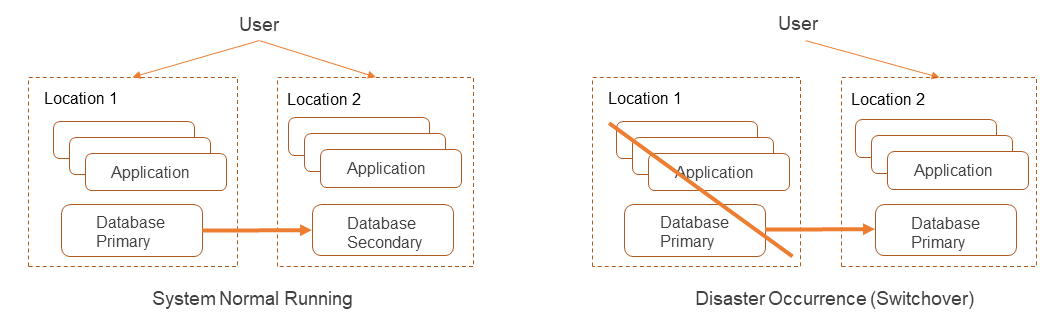
Choosing this setup means running your system in two or more locations at once, with Cloud Enterprise Network keeping everything connected. Both sides handle live traffic, so if one fails, the other takes over. While it costs more to maintain, it delivers the speed and reliability needed for constant uptime.
To build a strong and reliable cloud setup, plan for both day-to-day performance and unexpected failures. Alibaba Cloud offers tools and services that make it easier to stay prepared and recover quickly. Below are simple but effective steps you can take to design a resilient architecture on Alibaba Cloud:
● Use Terraform or ROS to define your setup as code, so everything stays consistent and you can rebuild in another region when needed
● Set up automatic backups with HBR and snapshots to save different versions of your ECS, RDS, and OSS data, making point-in-time recovery simple
● Deploy across multiple regions with CEN so your services stay online even if one region goes down, while keeping the traffic flow smooth between locations
● Use Alibaba Cloud DNS with smart routing policies to automatically direct traffic to the right region and avoid downtime during failures
● Update your RAM settings so the right users have access, helping you avoid any permission issues when fast recovery matters most
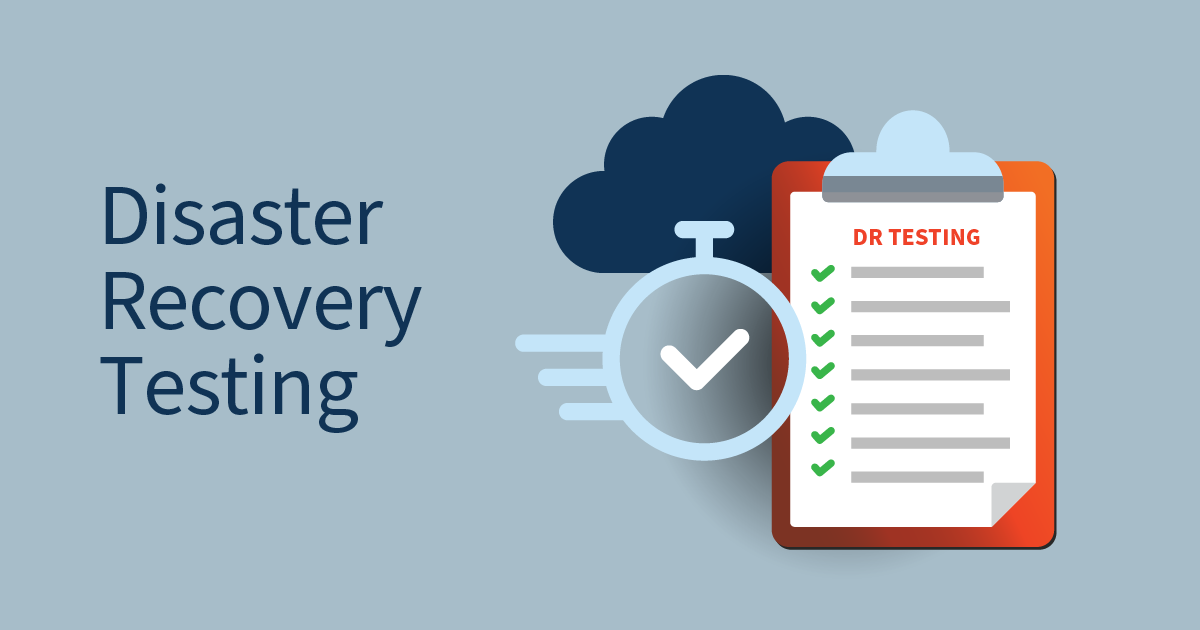
Even if your setup looks solid, always remember that real problems often appear only when something goes wrong. A finance team could lose access to key data, or your support dashboard might crash at the worst time. Since IT downtime can cost over $5,600 per minute, testing your recovery plan is essential.
When you prepare using realistic drills and involve teams outside IT, you avoid delays, reduce confusion, and keep your services running when it counts. Managed service providers supporting diverse client environments often rely on a mix of centralized backup platforms, automated testing and orchestration tools to streamline recovery workflows, ensure compliance, and meet varied RTO/RPO requirements across hybrid infrastructures.
Here are the important steps that you need to follow:
● Use Cloud Config to check compliance and deployment rules
● Run regular audits to avoid misconfigurations
● Simulate recovery using CI/CD pipelines with ROS templates
● After each drill, review RTO, RPO, data restoration, and user access
● Include customer support, compliance, and leaders in outage planning
Planning for outages is about knowing every part of your recovery process works when it matters. A study found that 93% of companies without a disaster recovery plan go out of business after a major data loss. Here’s a simple example table to explain what to check during testing:
| Test Checkpoint | What to Check | Why It Matters | Who to Involve |
| RTO (Recovery Time) | How fast systems came back online | Shows if you can meet downtime targets | IT operations |
| RPO (Recovery Point) | How much data was lost or recovered | Tells you if backups are recent enough | BackUp data teams |
| Access Permissions | If all the right users could log in | Prevents security or access issues | Security teams |
| Data Integrity | Whether the data was restored correctly | Avoids corrupted or missing information | DevOps/Data teams |
| Team Involvement | Who responded and how quickly | Prepares everyone for real-life outages | Customer service/Leadership |
To stay resilient in the cloud, you need more than just tools; you need a plan that’s always improving. Start by grouping your key systems using Resource Groups so it’s easier to manage what matters most. Make sure to add tags to label each asset based on its importance, who owns it, and where it’s located.
Make it a habit to check your disaster plan regularly, especially after changes like new updates, system changes, or new rules. Use Cloud’s Trusted Advisor-style tool through Cloud Config to catch issues. At the same time, your team should know how to respond, who to alert, and how to bounce back.
A short outage may not seem like much at first, but it can lead to lost sales and broken trust. That’s why building a solid disaster recovery plan is more than just a safety net; it helps you stay ready, act fast, and keep everything on track. You can start with small steps, test as you go, and let your plan grow with your business. With the right setup, you’ll spend less time worrying and more time focusing on what matters.
https://docs.aws.amazon.com/whitepapers/latest/disaster-recovery-workloads-on-aws/disaster-recovery-options-in-the-cloud
https://www.techtarget.com/searchdisasterrecovery/tip/Cloud-disaster-recovery-best-practices
https://cloud.google.com/architecture/dr-scenarios-planning-guide
https://castler.com/learning-hub/how-cloud-based-disaster-recovery-is-redefining-business-continuity-in-2025
https://www.techtarget.com/searchdisasterrecovery/tip/Cloud-disaster-recovery-best-practices
https://www.n-ix.com/cloud-disaster-recovery-best-practices
https://www.cutover.com/blog/cloud-disaster-recovery-practices-success
https://www.nakivo.com/blog/cloud-disaster-recovery/
Disclaimer: The views expressed herein are for reference only and don't necessarily represent the official views of Alibaba Cloud.
Alibabacloud.com Disaster Recovery Article Final.txt
Displaying Alibabacloud.com Disaster Recovery Article Final.txt.
Secure Your Business with Alibaba Cloud’s Asia Data Compliance
Mehmad - December 30, 2024
Kidd Ip - November 24, 2025
Alibaba Container Service - April 17, 2024
Iain Ferguson - June 6, 2022
Alibaba Cloud Community - December 23, 2021
Rupal_Click2Cloud - October 16, 2023
 Hybrid Cloud Solution
Highly reliable and secure deployment solutions for enterprises to fully experience the unique benefits of the hybrid cloud
Learn More Hybrid Cloud Storage
A cost-effective, efficient and easy-to-manage hybrid cloud storage solution.
Learn More Cloud Backup
Cloud Backup is an easy-to-use and cost-effective online data management service.
Learn More Hybrid Cloud Distributed Storage
Provides scalable, distributed, and high-performance block storage and object storage services in a software-defined manner.
Learn MoreMore Posts by Ali Ali