Data Management (DMS) lets you export table data to a CSV, SQL, or Excel file directly from the console. Use this procedure to verify your source data and table character set, then create an export task.
Choose your file format based on your use case:
| Format | Best for |
|---|---|
| CSV | Spreadsheet tools, data analysis pipelines, or sharing data with other systems |
| SQL | Restoring data to another database instance, including self-managed instances |
| Excel | Sharing data with stakeholders who use Microsoft Excel |
Prerequisites
Before you begin, ensure that you have:
Access to the DMS console
A table that contains the data you want to export
Check source data
In the DMS console, verify that the table contains the data you want to export.
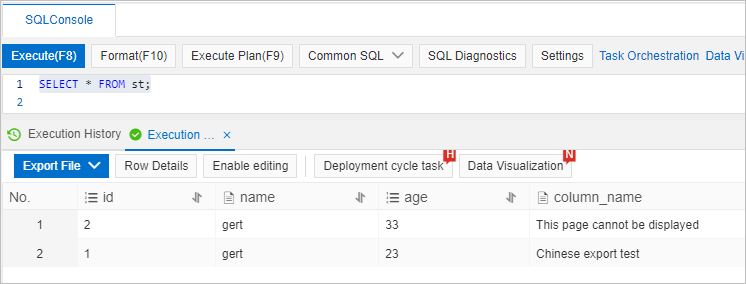
Check the table character set
Run the following statement to check the character set of the table you want to export:
show create table <Table name>;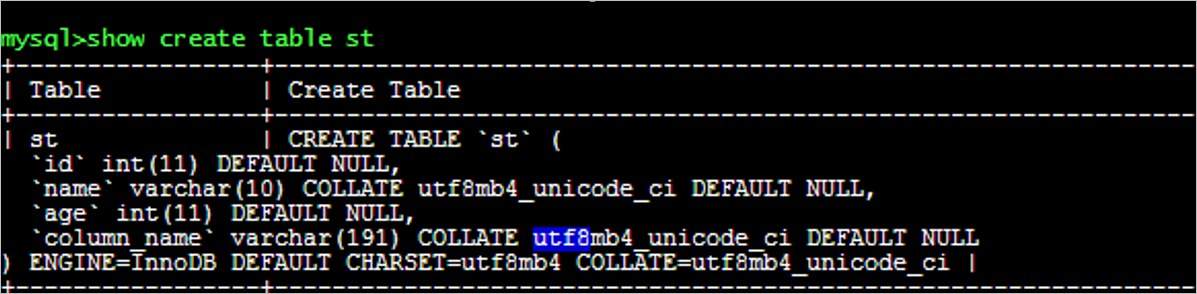
Check the CHARSET value in the output. If the table uses utf8 or utf8mb4, select UTF-8 as the file encoding when you configure the export task. A mismatch between the table character set and the export file encoding causes garbled text in the output file.
Create an export task
In the DMS console, go to Database Development > Data Export > Database Export.
Click Database Export.
Select the table to export and configure the export parameters.
ImportantIf you plan to use the exported file to restore data to another database instance, set Exported Structure Type to Data and Structure. If you select Structure only, the restore operation recreates the table but imports no row data.
Parameter Description File Format The output file format: CSV, SQL, or Excel. Exported Structure Type Controls what the export file contains. Select Data and Structure to export both the table schema and row data. Select Structure only to export only the CREATE TABLE statement. Select Data only to export only the row data without the schema. 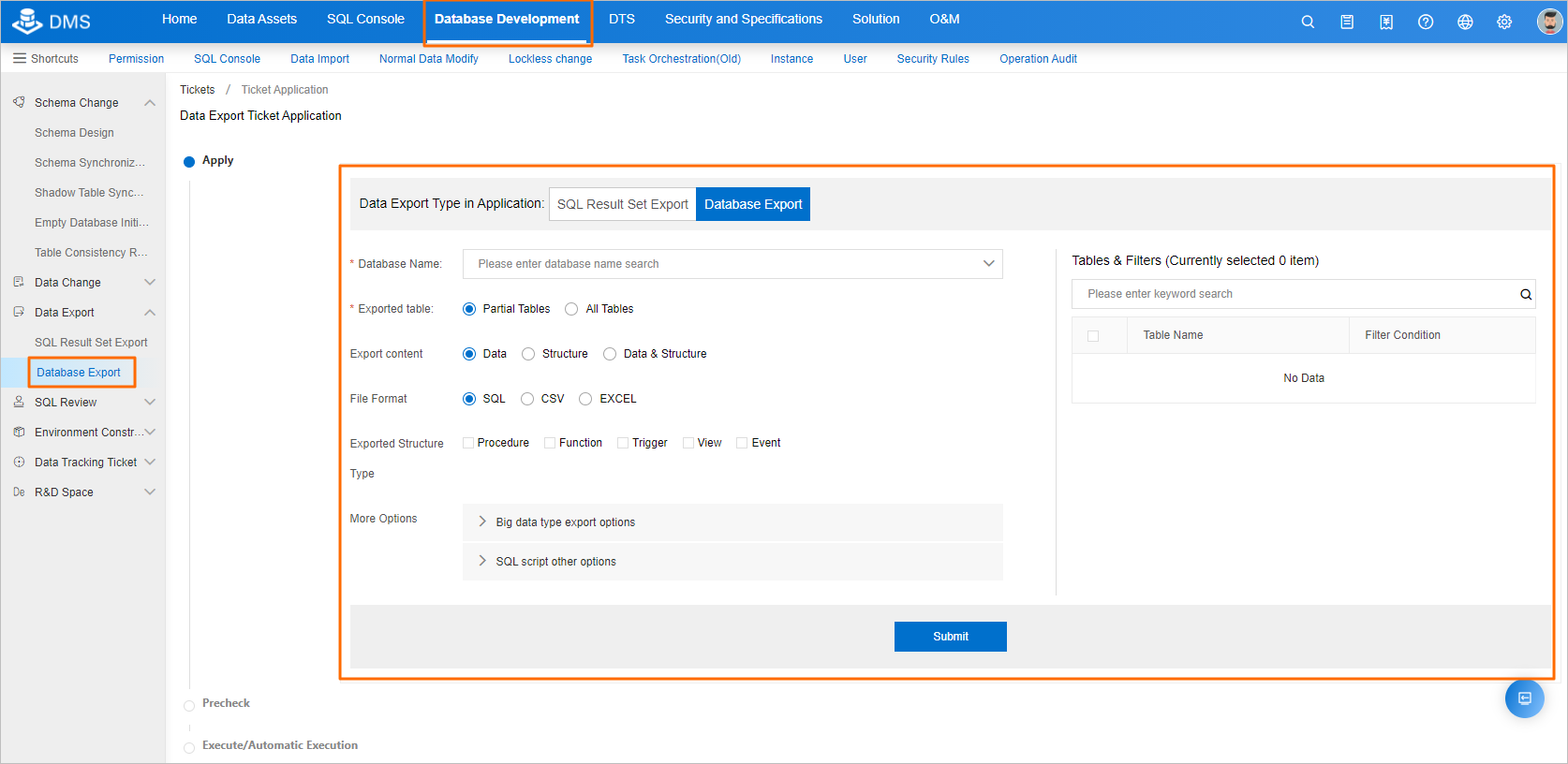
Click Submit.
FAQ
When I use the exported SQL file to restore data to a self-managed instance, only the table names are restored. Why?
Set Export content to Data & Structure before exporting. If you export only the structure, the restore operation creates the tables but imports no row data. Before running the restore, create the target databases on the self-managed instance, then import the SQL scripts into those databases.