Add query conditions to filter your workbook data. Query controls are available only for workbooks purchased separately in the Professional and Premium Editions.
Prerequisites
A workbook has been created. For more information, see Create a Workbook.
Background Information
Each workbook supports only one query control. All conditions are configured within this single control.
Procedure
-
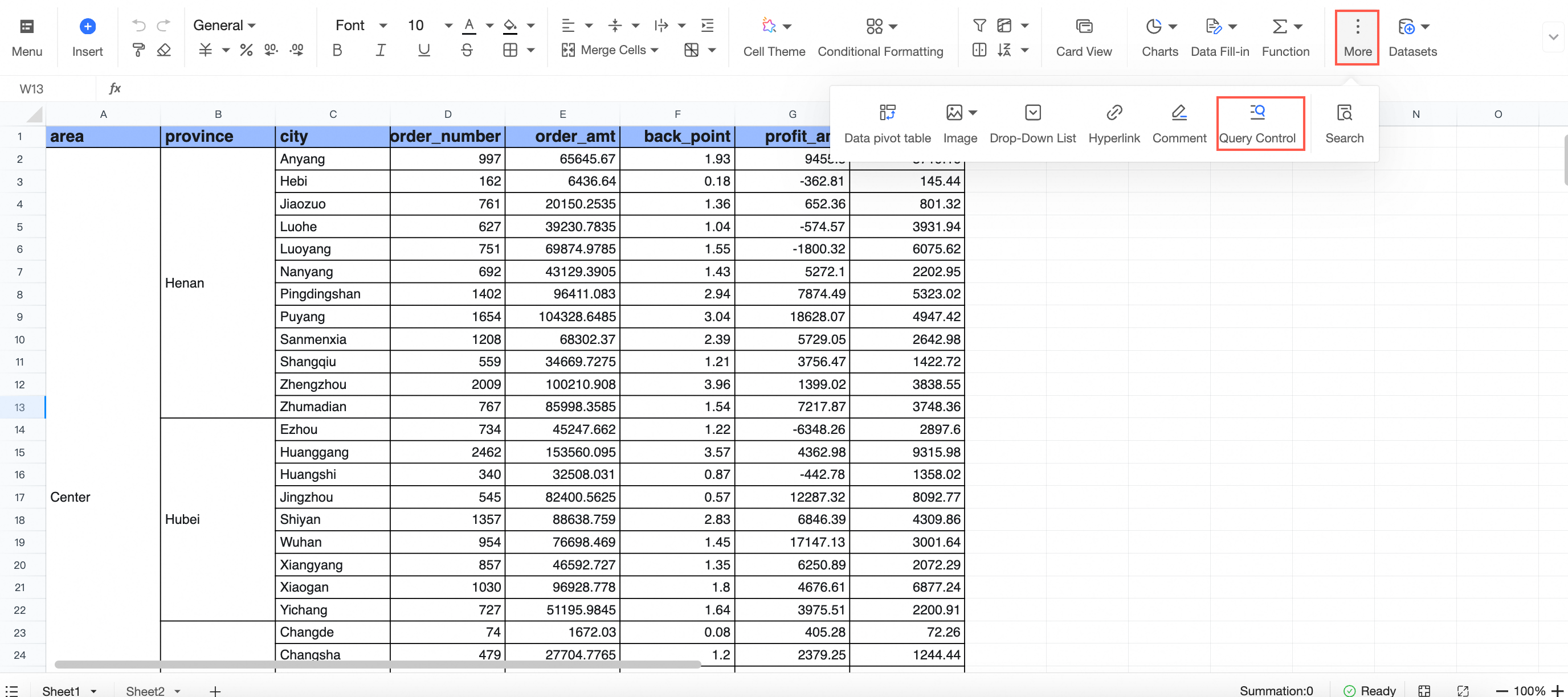
On the toolbar, click Query Control.
-
In the workbook display area, click
 to create a new query condition.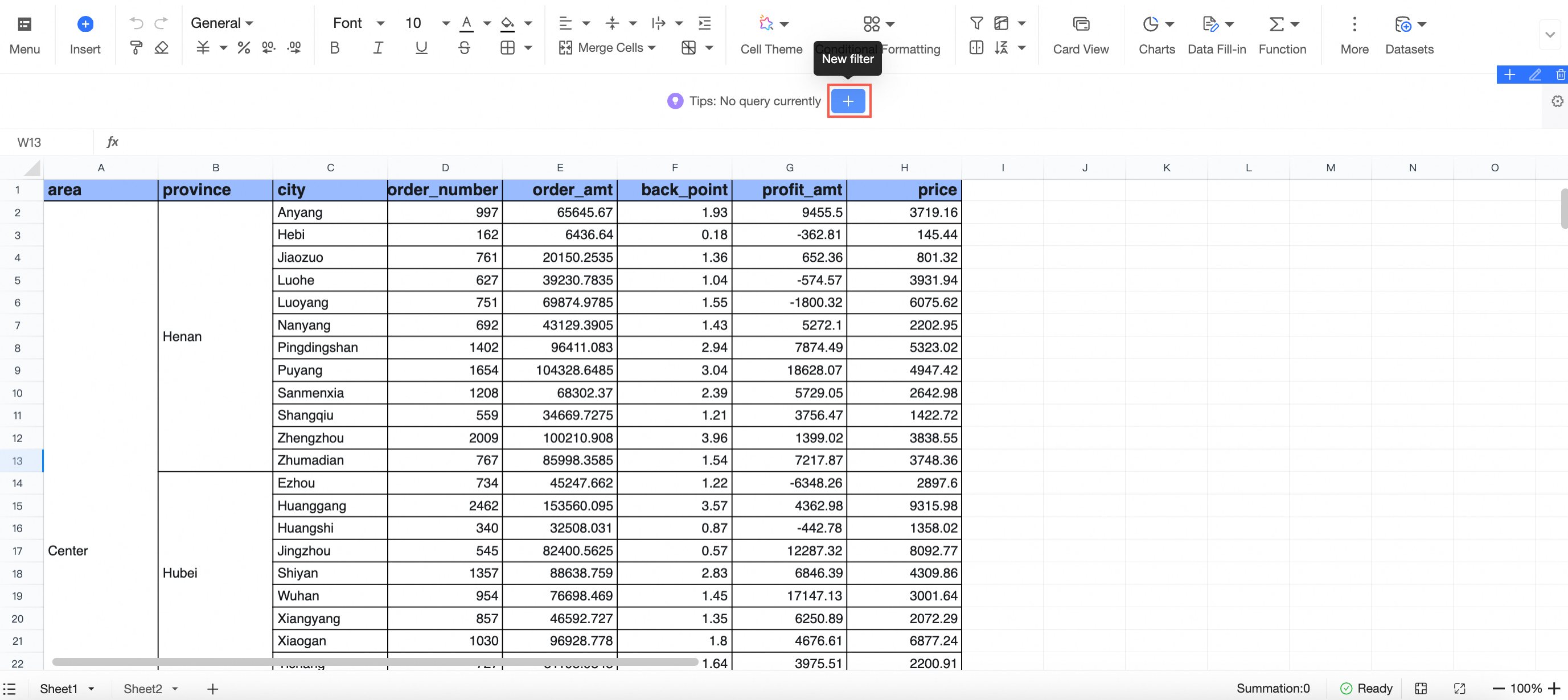
-
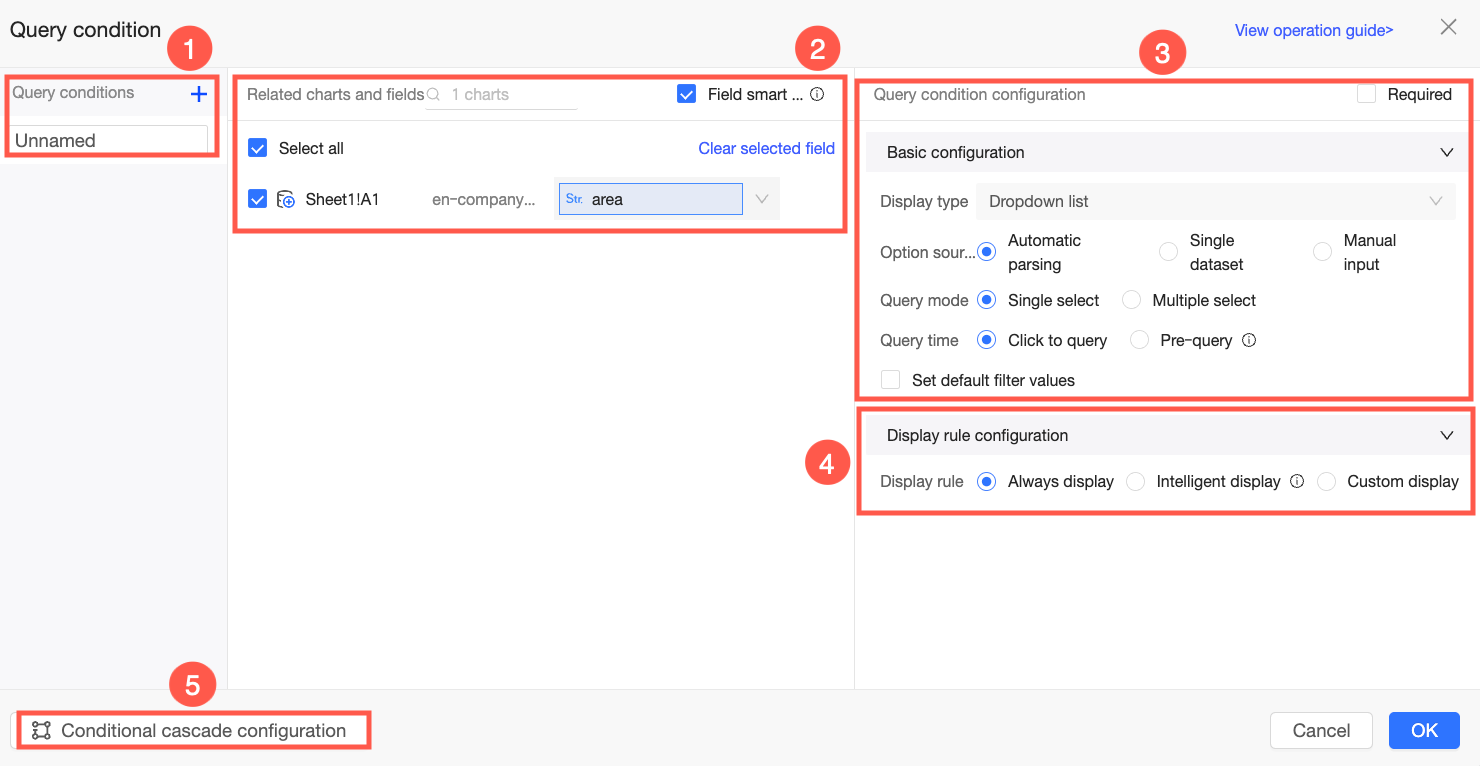
On the Query Condition Settings page, configure the Name (①), Associated Charts and Fields (②), Basic Configuration (③), Display Rule Configuration (④), and Conditional Cascade Configuration (⑤).
Parameter
Description
Name
The default name is Unnamed. Rename the query condition to match your business needs, such as Region Query or Date Query. The following operations are available:
-
Click the
 icon to add a new query condition.
 -
Click the
 icon to hide the current query condition. The configuration is saved but the condition is no longer displayed on the dashboard.
 -
Click the
 icon to rename or delete the current query condition.
Associated Charts and Fields
Select the charts and fields to associate with the query condition. Enable smart field selection to automatically populate associated fields for charts within the same dataset. If you have many charts, use the filter feature to locate the ones you need.
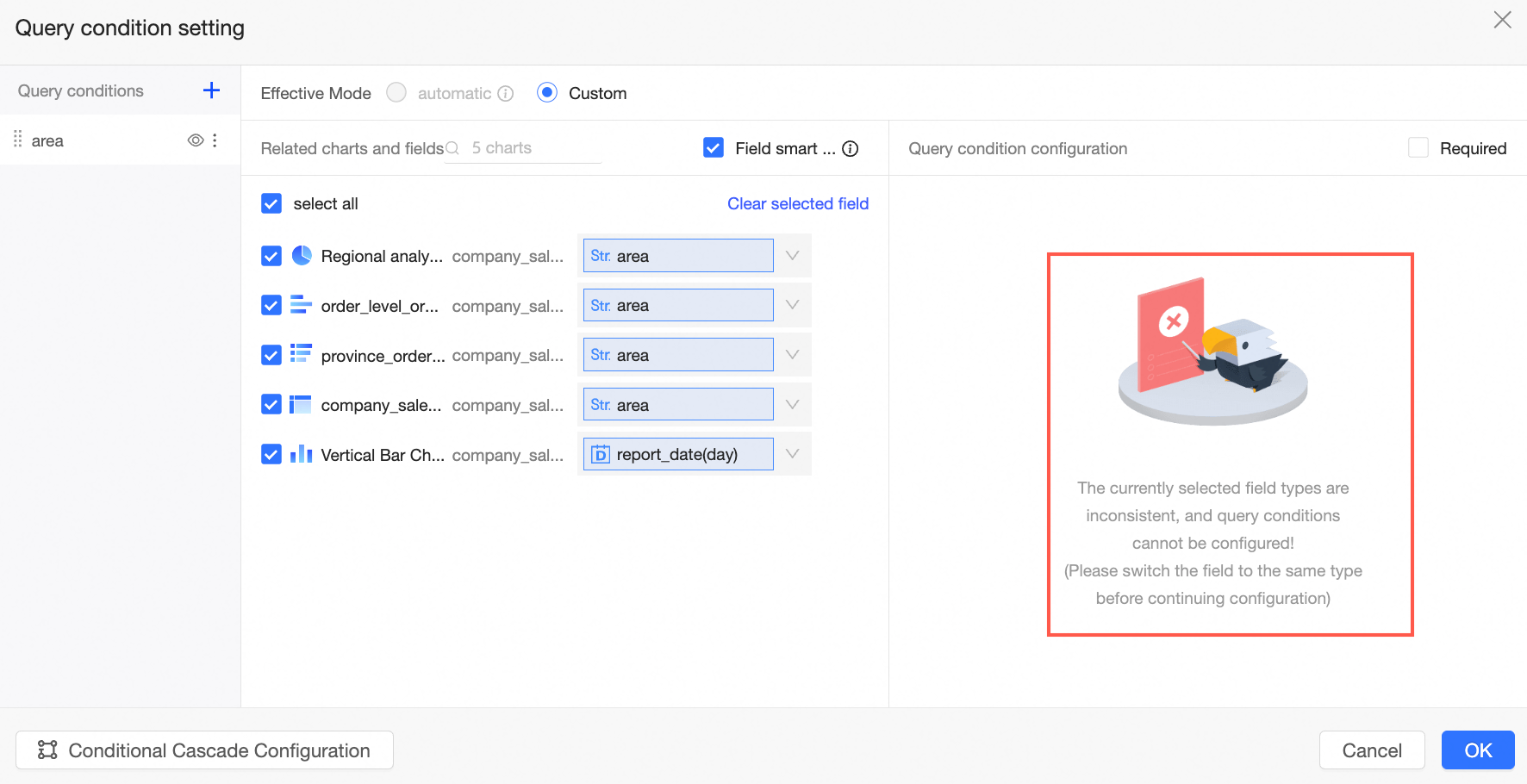
NoteAssociating fields of different types at the same time is not supported. For example, if you associate a date field and a numeric field, a prompt appears as shown below.
Basic Configuration
Basic configuration settings vary based on the associated field type. For details about each field type, see Query type configurations.
Display Rule Configuration
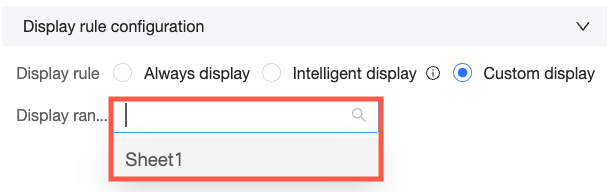
Control when the query condition is visible in the workbook. Options: Always show, Smart show, or Custom show.
-
Always show: The query condition is displayed on every sheet. This is the default option.
-
Smart show: The query condition is displayed only on the sheets that contain the associated charts.
-
Custom show: Select this option, and then from the Display Scope drop-down list, select the sheets where you want the query condition to appear. The condition will be displayed only on the selected sheets.
Conditional Cascade Configuration
Link query conditions through cascading relationships. For example, selecting a region in Condition A narrows the province list in Condition B to provinces within that region. For detailed instructions, see Configure query control cascading.
NoteFor detailed query condition configurations, see Create a new query control.
-
-
Click OK.
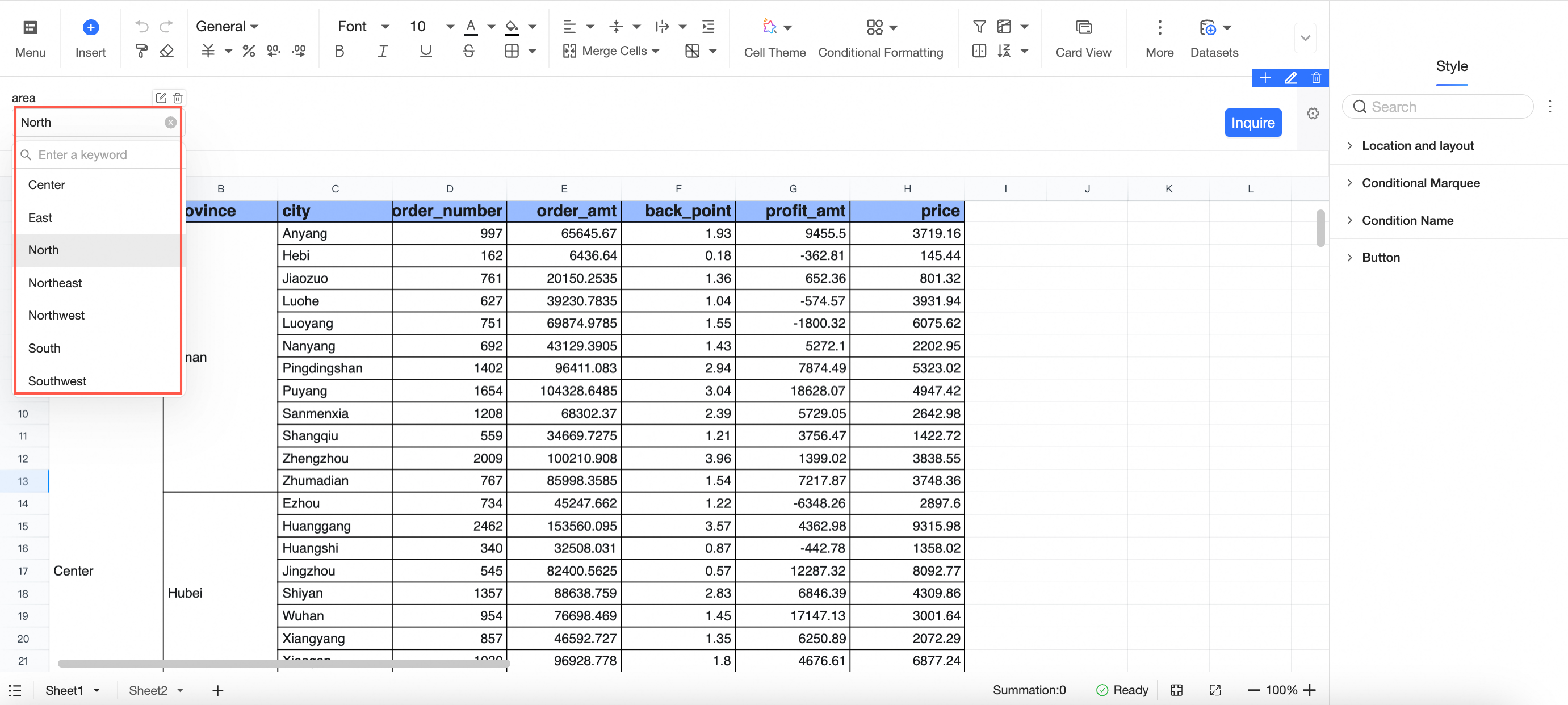
The query control appears on the page. You can now use it to run filtered queries.
Results
Set Region to Northeast and click Query. The query results are shown below.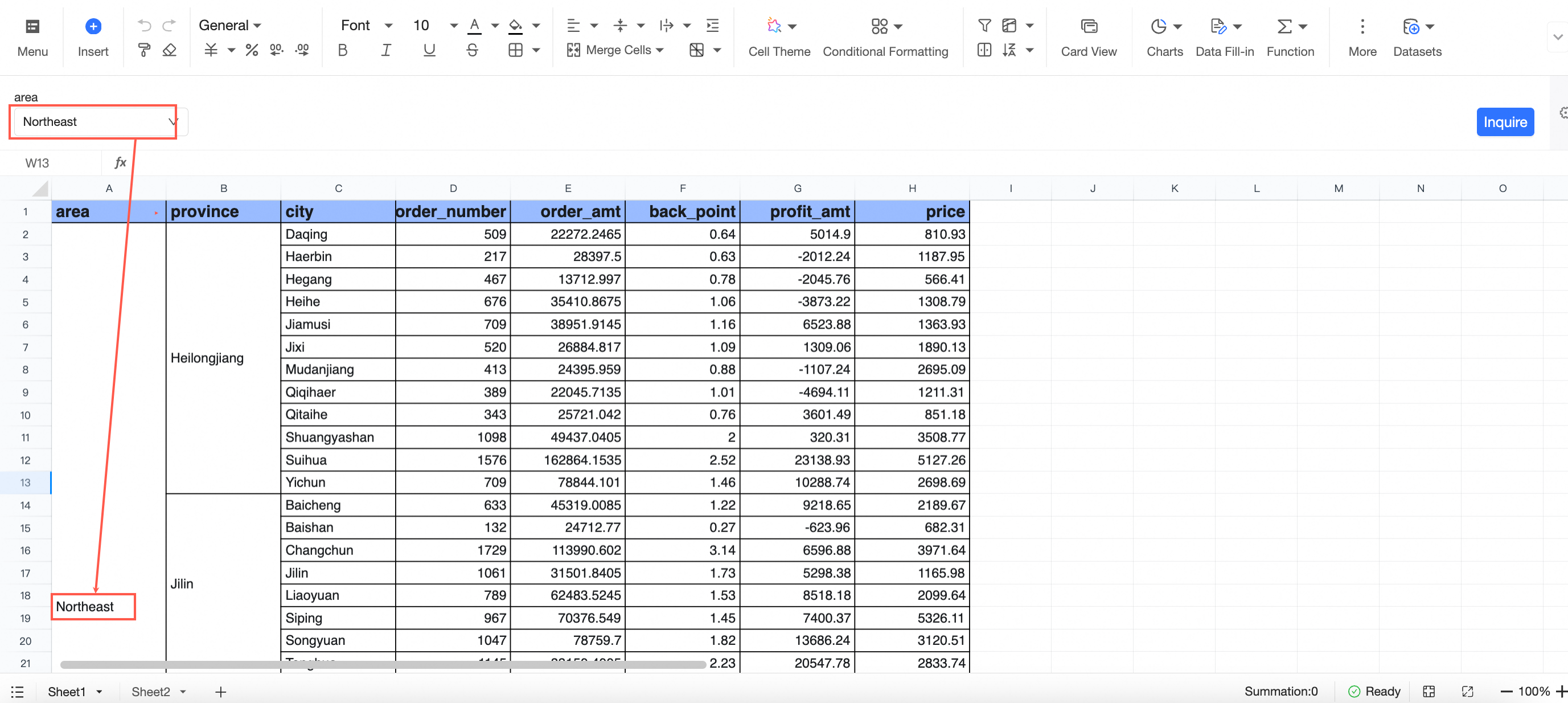
Style
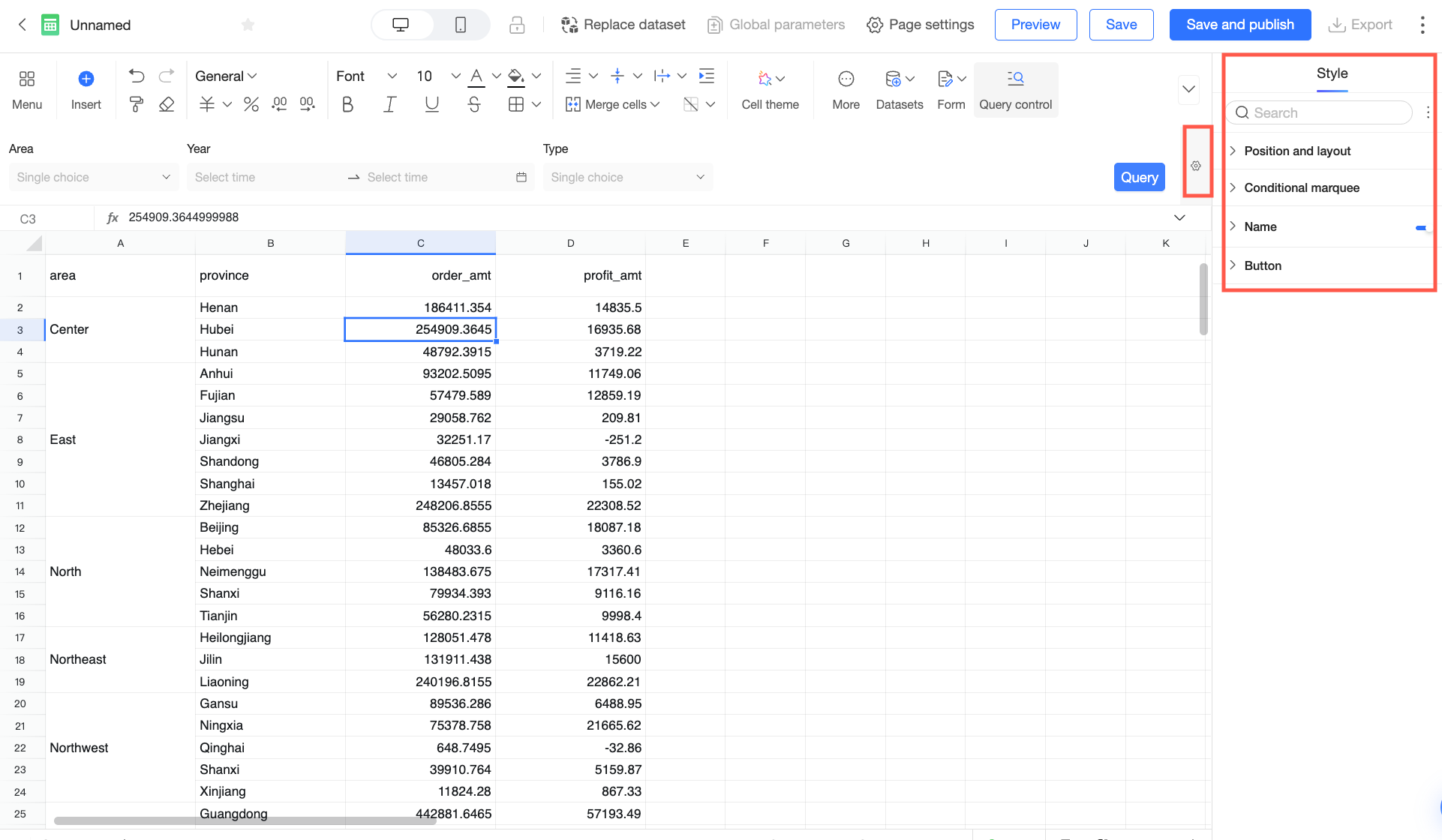
Click the  icon to the right of the query control to configure its Style.
-
In the Position and Layout section, configure Expand all filter conditions by default, Arrangement, Position within container, and Spacing between conditions.
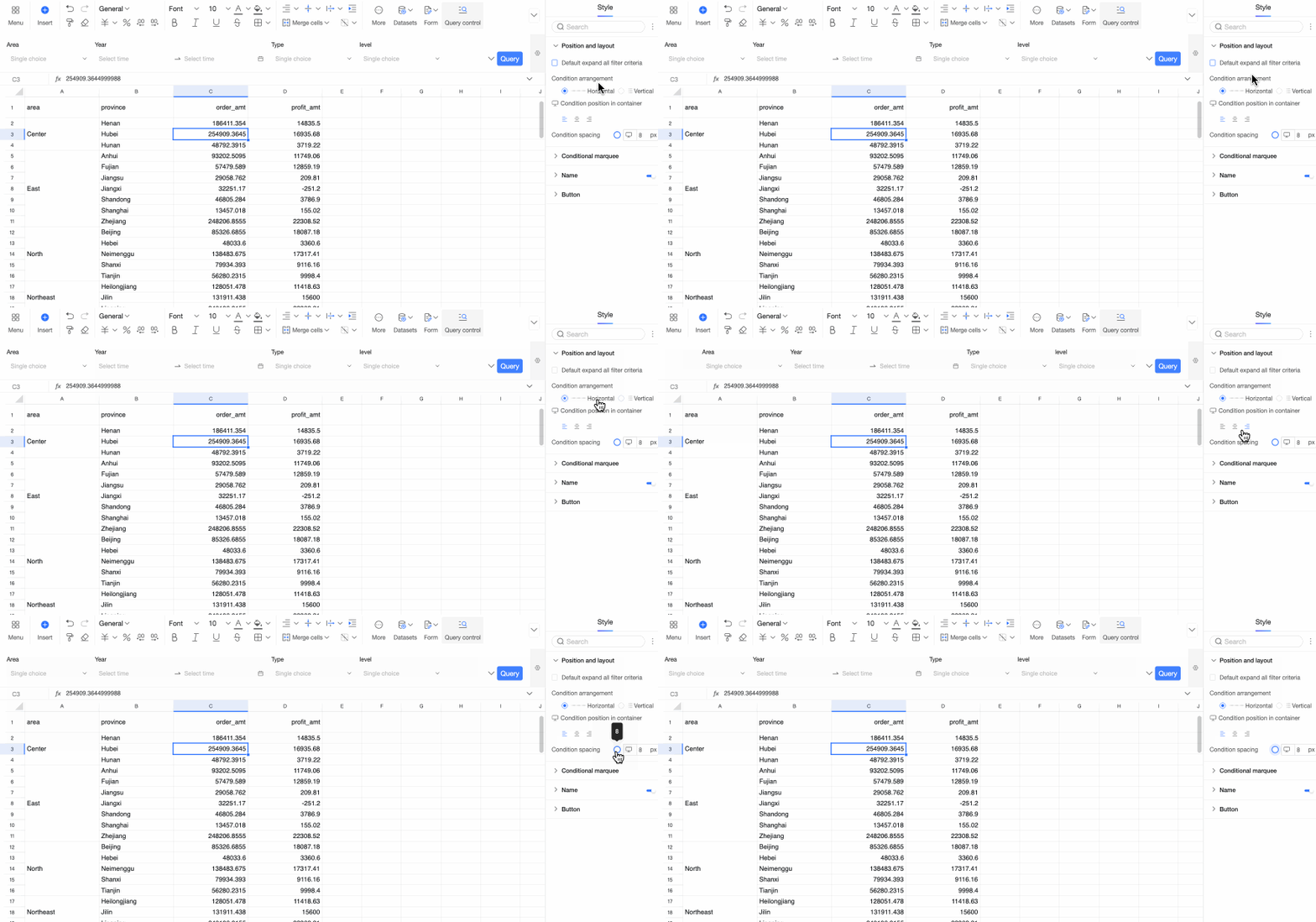
-
In the Condition box section, configure the Box style, Background color, Border radius, Text, and Custom condition style.
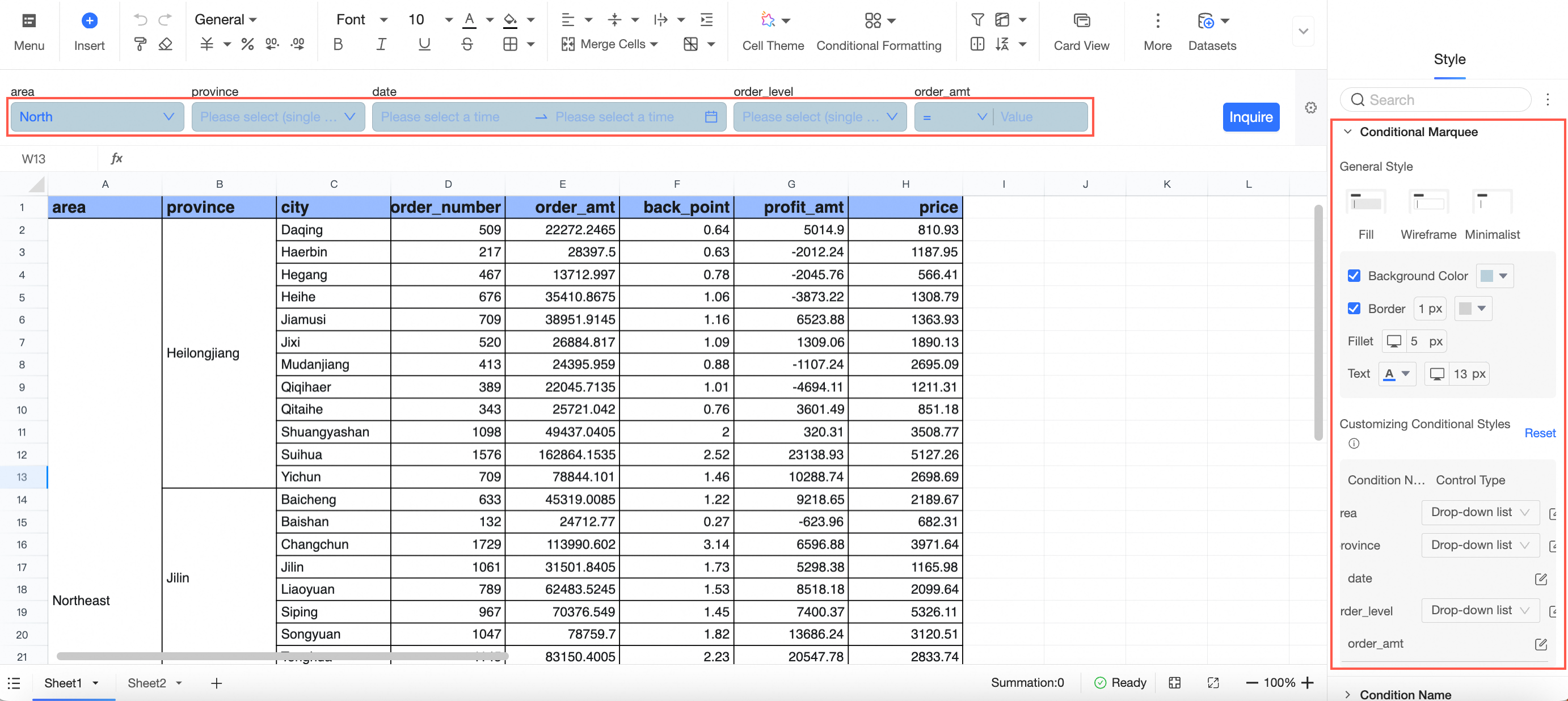
-
In the Condition name section, configure the Position, Text, and Spacing from box.
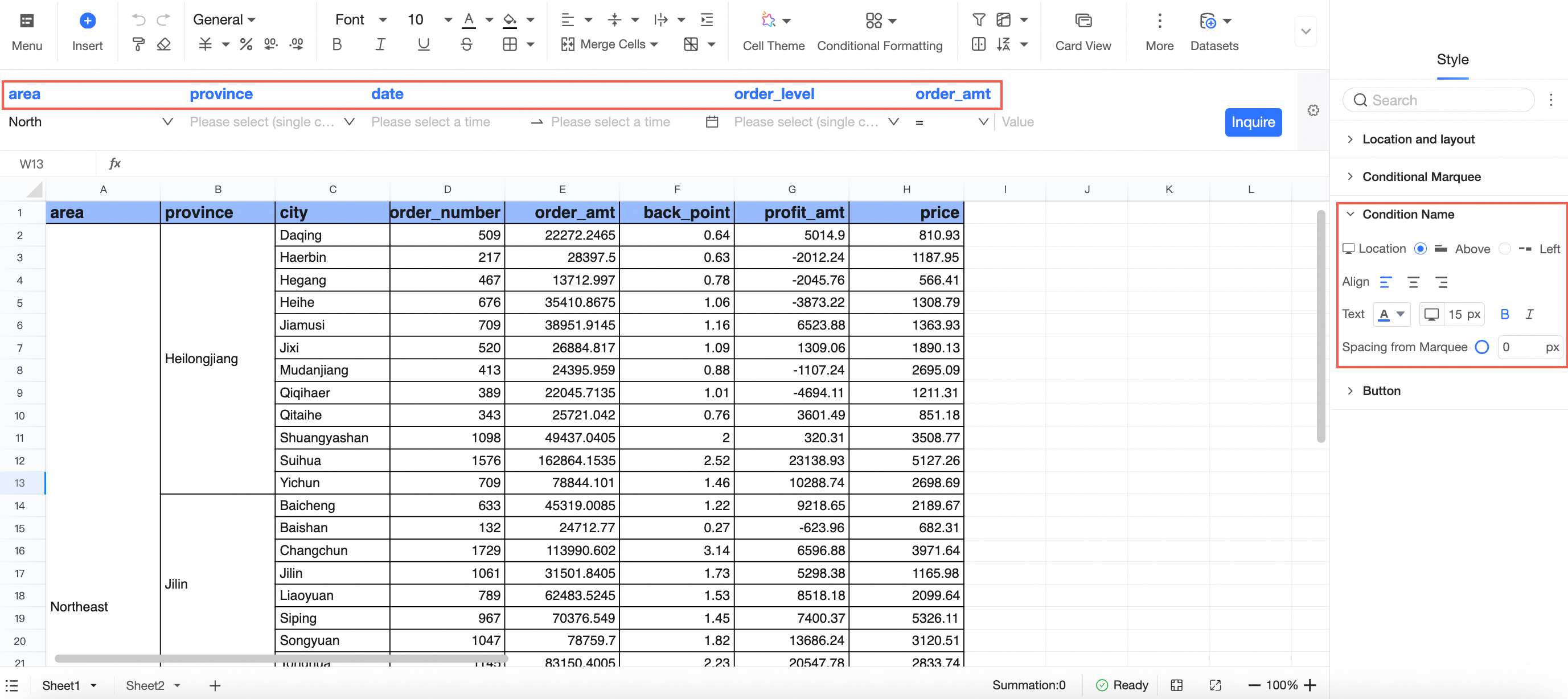
-
In the Button section, configure Button display, Button color, Button border radius, and Text style.
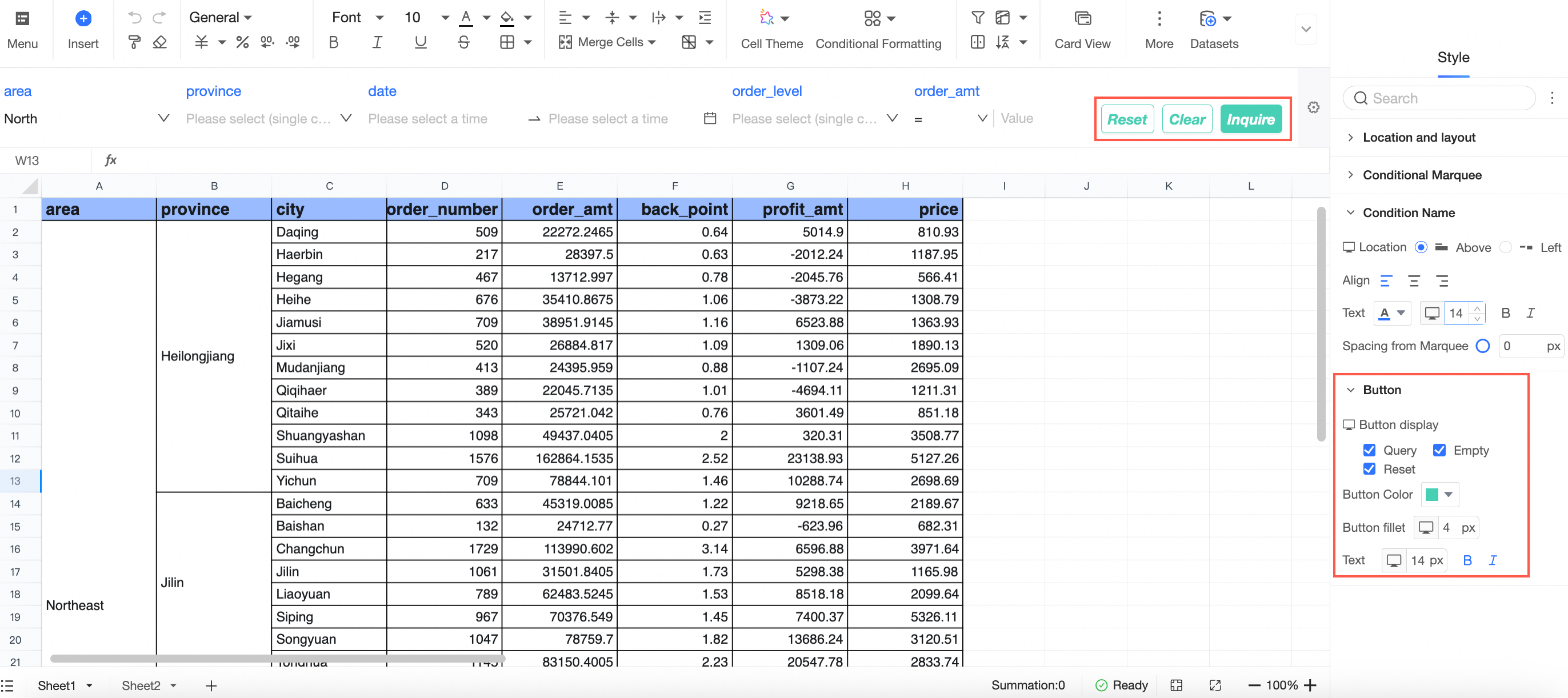
For details about style configuration, see Configure query control style.
Remember Query Conditions
-
Query conditions can be saved at the report level. Select the
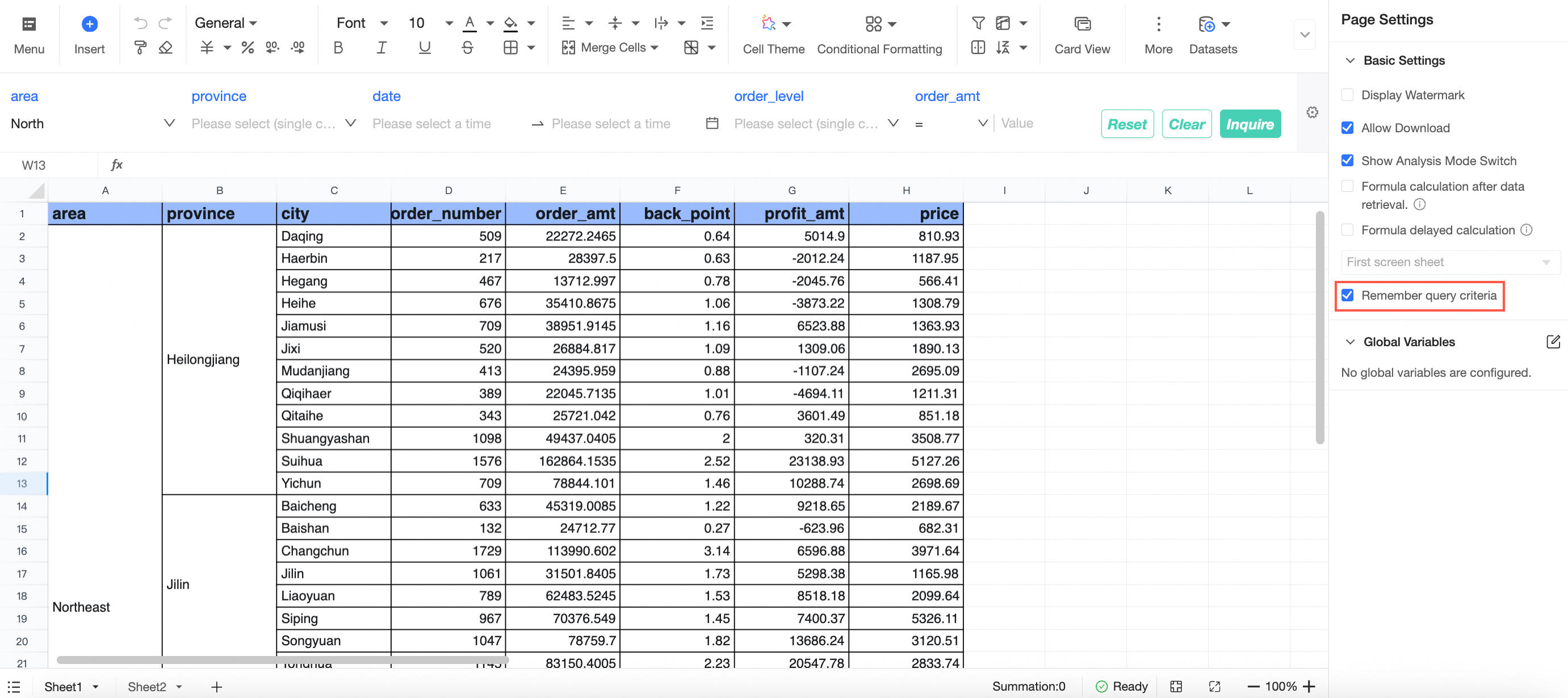 checkbox to save the last used query conditions.
 -
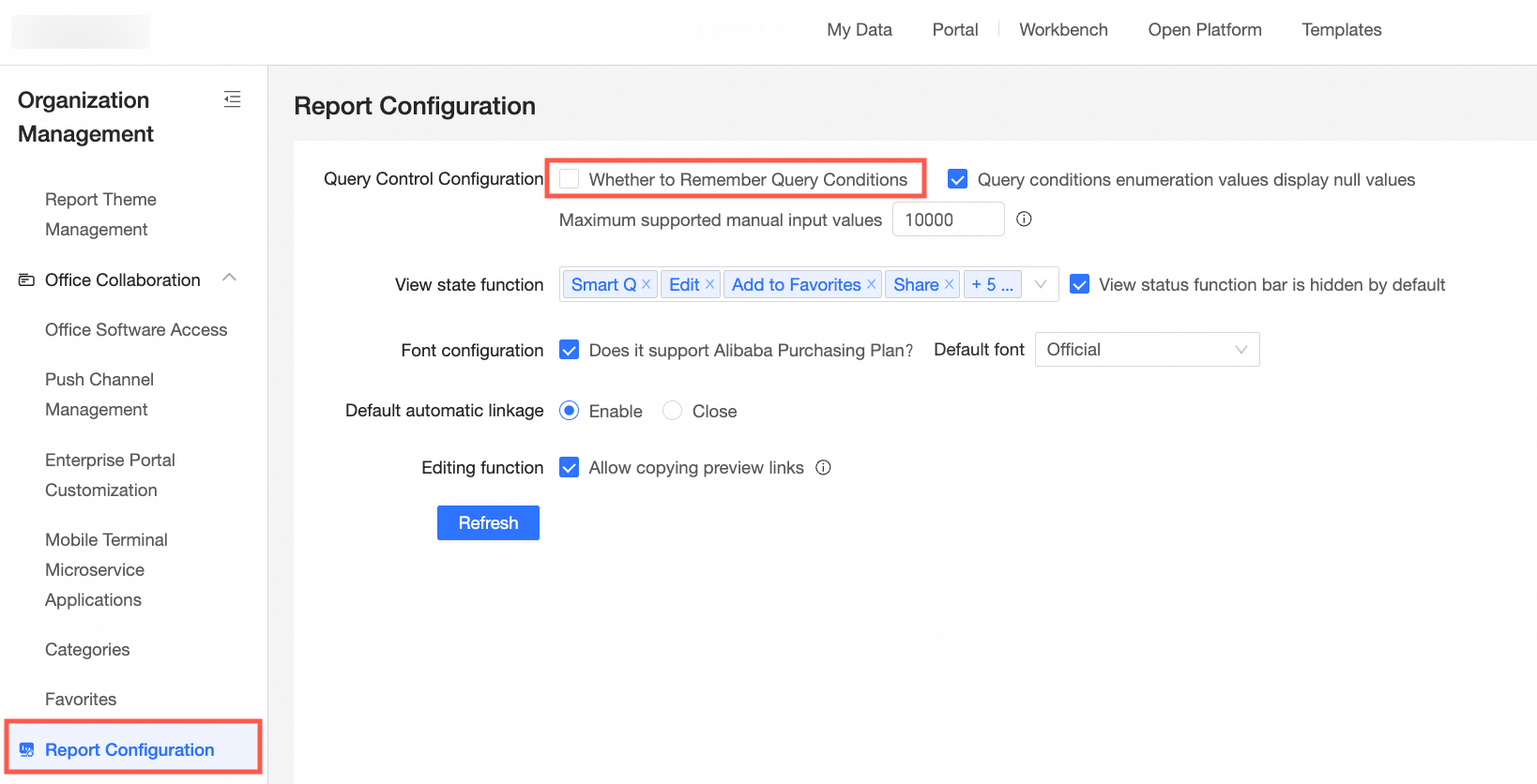
Organization-level configuration takes precedence over report-level settings.
-
If Remember query conditions is enabled in the Report configuration settings, the per-report checkbox is disabled.
-
If Remember query conditions is not enabled in the Report configuration settings, you can configure this setting for each report individually.
-