The mounted drive maps cloud storage to a local drive, enabling you to access, edit, and back up cloud files as if they were stored locally.
Prerequisites
Log on to the Cloud Drive for Enterprises PC client (version 1.4.0 or later). To download the latest version, see Client download.
Limitations
The mounted drive does not support simultaneous editing by multiple users (collaboration). For collaborative editing, see Online Editing feature.
The mounted drive cannot be installed on Windows systems with ARM processors, such as some Microsoft Surface devices that use Qualcomm Snapdragon processors.
Mounted drive relies on the local file system's concurrency mechanism for file transfers. Transferring more than 1,000 files at once or a single file larger than 1 GB may take a long time. For better performance, use the Alibaba Cloud Drive Enterprise Edition desktop app to upload files, then view and edit them in the mounted drive.
When an application accesses files in the mounted drive, it reads and writes cloud files in real time, which requires stable network connectivity. Slow or unstable networks (such as mobile hotspots or restricted environments) may cause upload or download failures. In such scenarios, use the Sync backup (in invitational preview) feature to synchronize data, or use the Alibaba Cloud Drive Enterprise Edition desktop app to download, modify, and re-upload files.
Microsoft ended support for Windows 7 on January 14, 2020, and many software ecosystems have followed. The mounted drive may not work on Windows 7. Upgrade to Windows 10 or Windows 11.
Features
Two-way real-time synchronization between local and cloud storage.
Direct access to cloud files as a local disk, without pre-downloading.
Smart prefetching and on-demand downloads. For example, stream audio and video files without waiting for a full download.
Smart cache management with minimal local disk usage.
Support for both Windows and macOS.
Install the mounted drive
If the mounted drive is enabled but not visible in the user interface, restart the Cloud Drive for Enterprises PC client.
Install on Windows
Log in to the Alibaba Cloud Drive Enterprise Edition PC client.
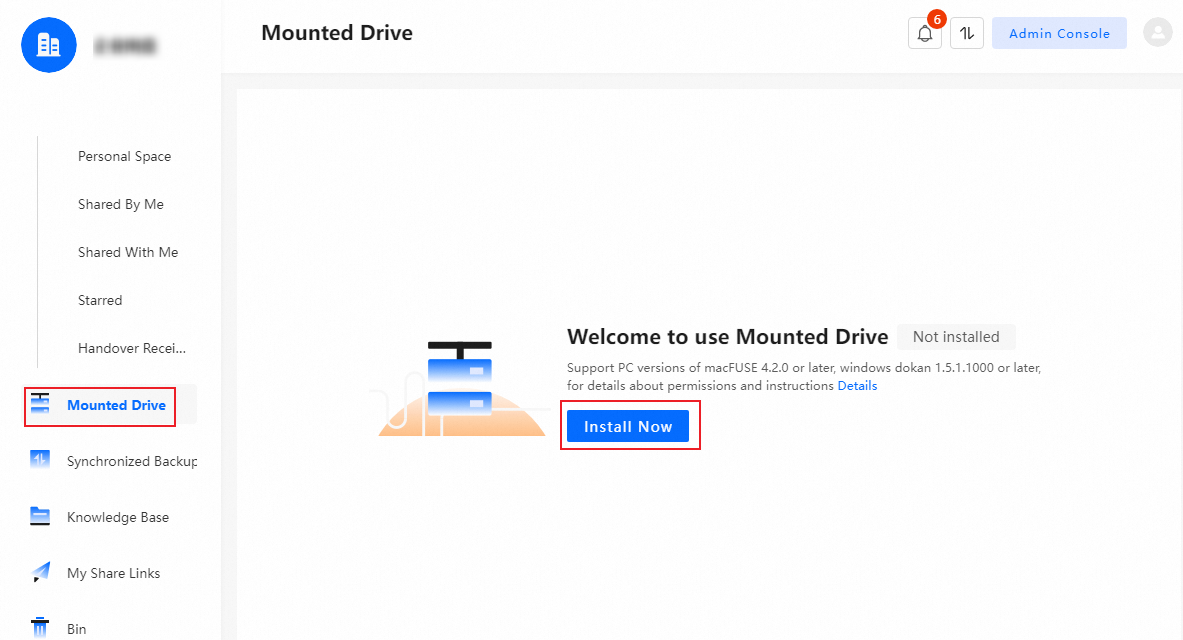
Go to the Mounted Drive page and click Install Now. After the installation is successful, the mounted drive is ready to use.
The mounted drive cannot be installed on Windows systems with ARM processors, such as some Microsoft Surface devices with Qualcomm Snapdragon processors.
If the installation fails on Windows, see How do I resolve a mounted drive installation failure on Windows? for troubleshooting.
Install on macOS
If you are using an Apple silicon Mac, configure system extensions first. See Change security settings on the startup disk.
Download and install the macFUSE driver.
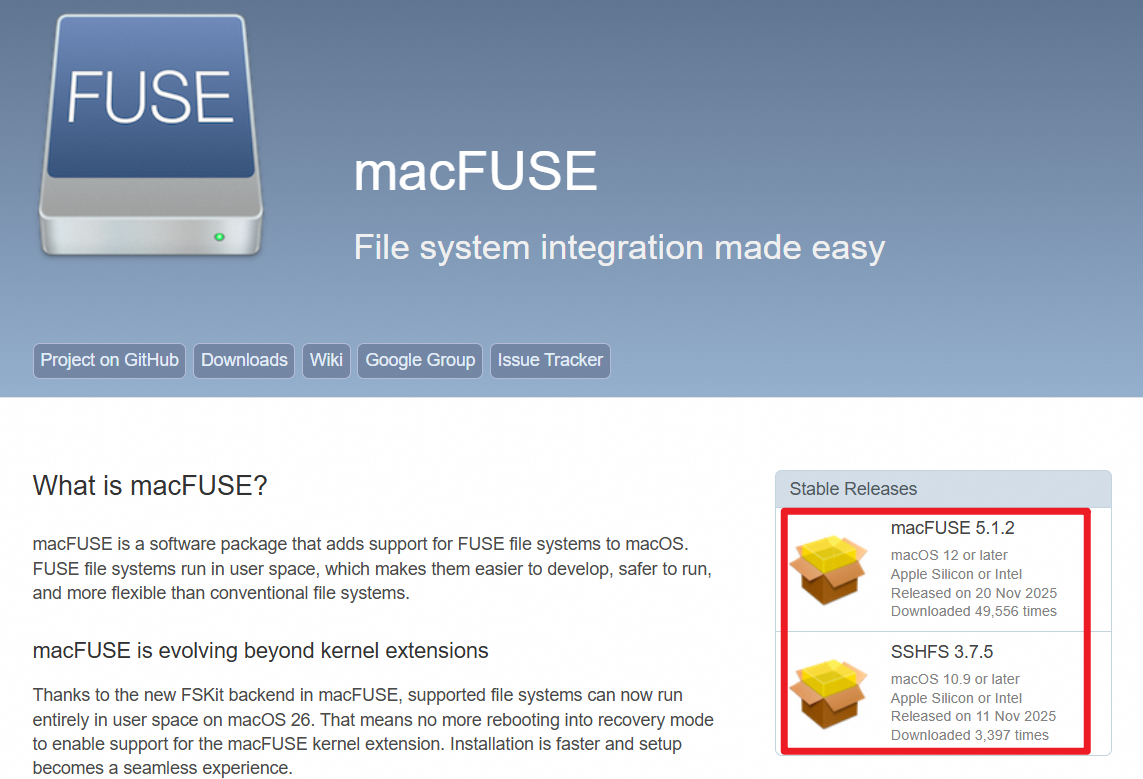
Select the recommended macFUSE version for your macOS:
macOS version
macFUSE version
Notes
Tahoe 26.x
5.1.2
For the latest macOS version, install the latest macFUSE.
Sequoia 15.x
4.10.2
Sonoma 14.x
4.6.1
Ventura 13.x
4.6.1
Monterey 12.x
4.6.1
Big Sur 11.x
4.6.1
Other earlier versions
3.11.2
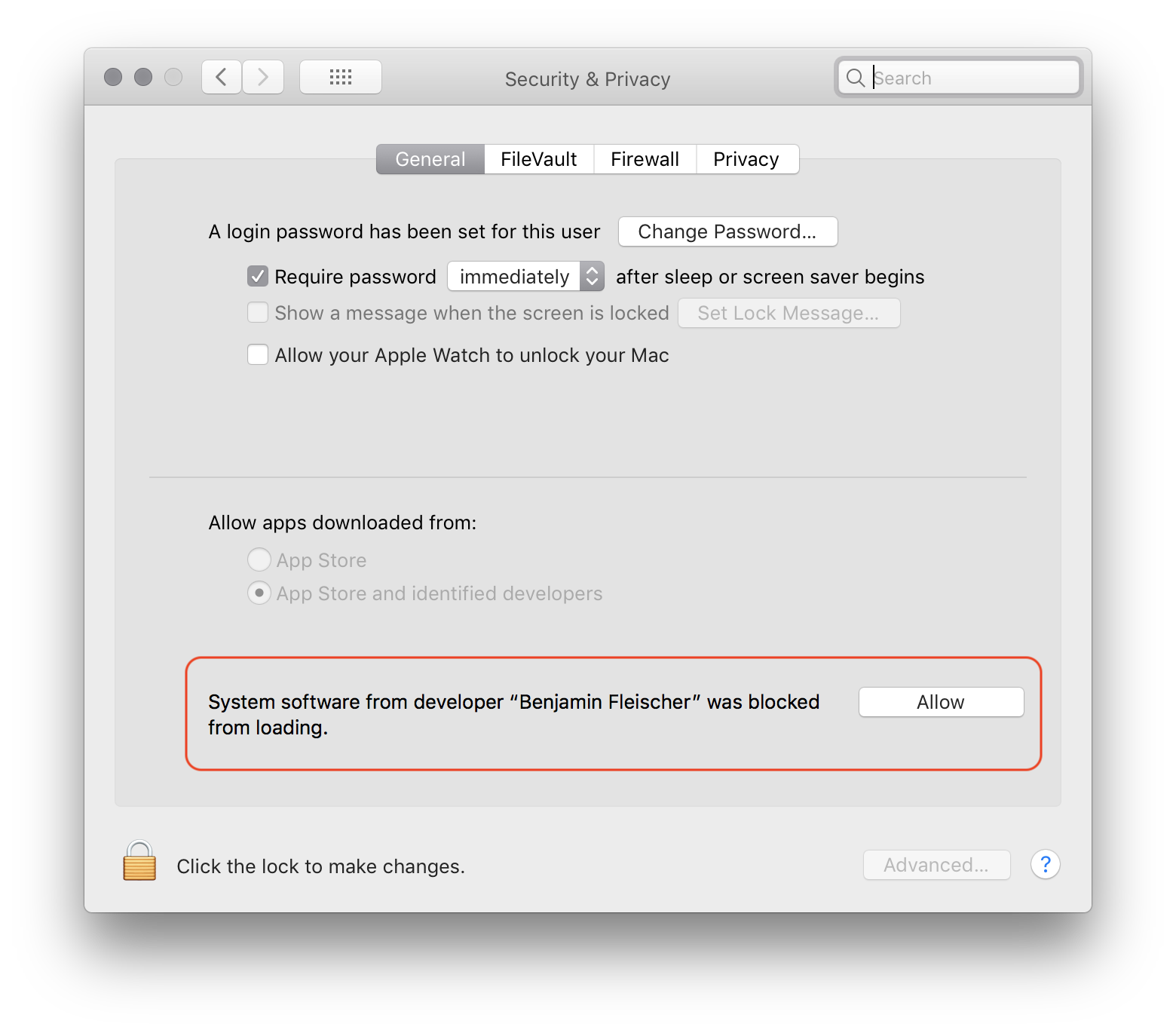
After installation, if you see a System Extension Blocked prompt, click Open Security Preferences.
Follow the prompts to go to System Settings > Privacy & Security. In the Security section, set "Allow applications downloaded from" to App Store and identified developers.
Authorize macFUSE (from developer Benjamin Fleischer) to load.
Install the mounted drive.
Log in to the Alibaba Cloud Drive Enterprise Edition PC client.
Select Mounted Drive and click Install Now. After the installation is successful, the mounted drive is ready to use.
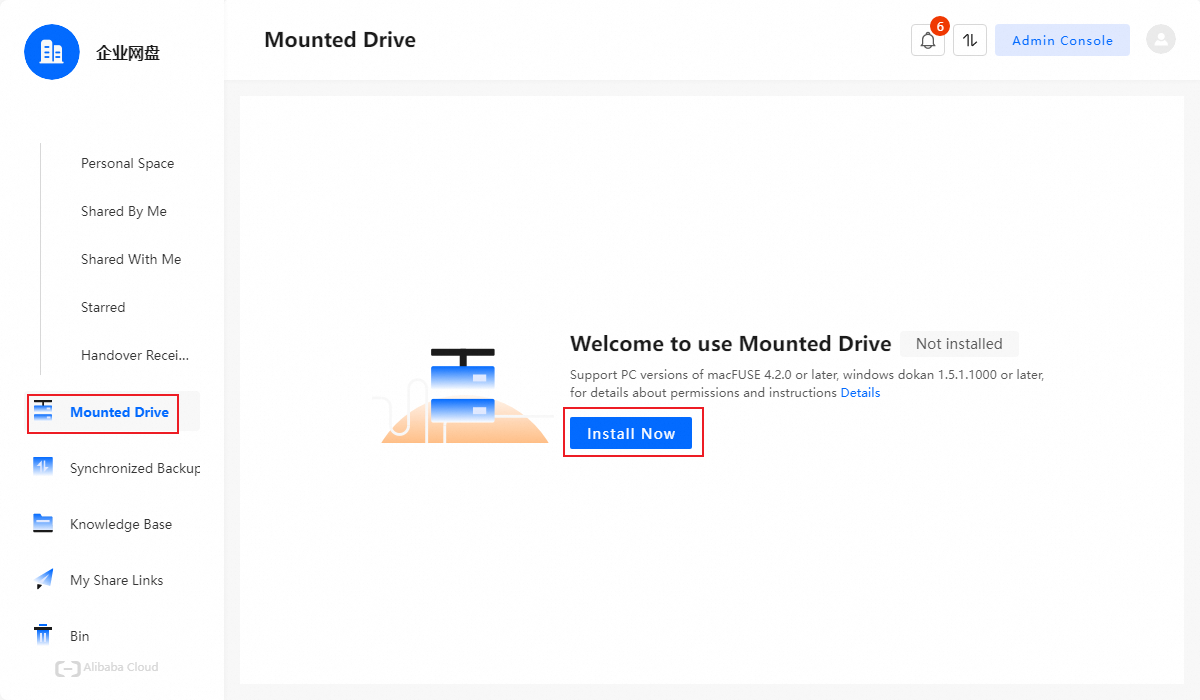
Use the local mounted drive
On the Mounted Drive page, click Open Local Mounted Drive. The local mounted drive is named PDSDrive by default when it is created.
NoteChanging the drive letter is only supported on Windows.
Once opened, manage content in the personal space, received shares, and team space.
ImportantDo not delete, rename, or add files or folders to the root directory of the mounted drive.
Uninstall the mounted drive
Log in to the Alibaba Cloud Drive Enterprise Edition PC client.
Go to the Mounted Drive page and click Uninstall.
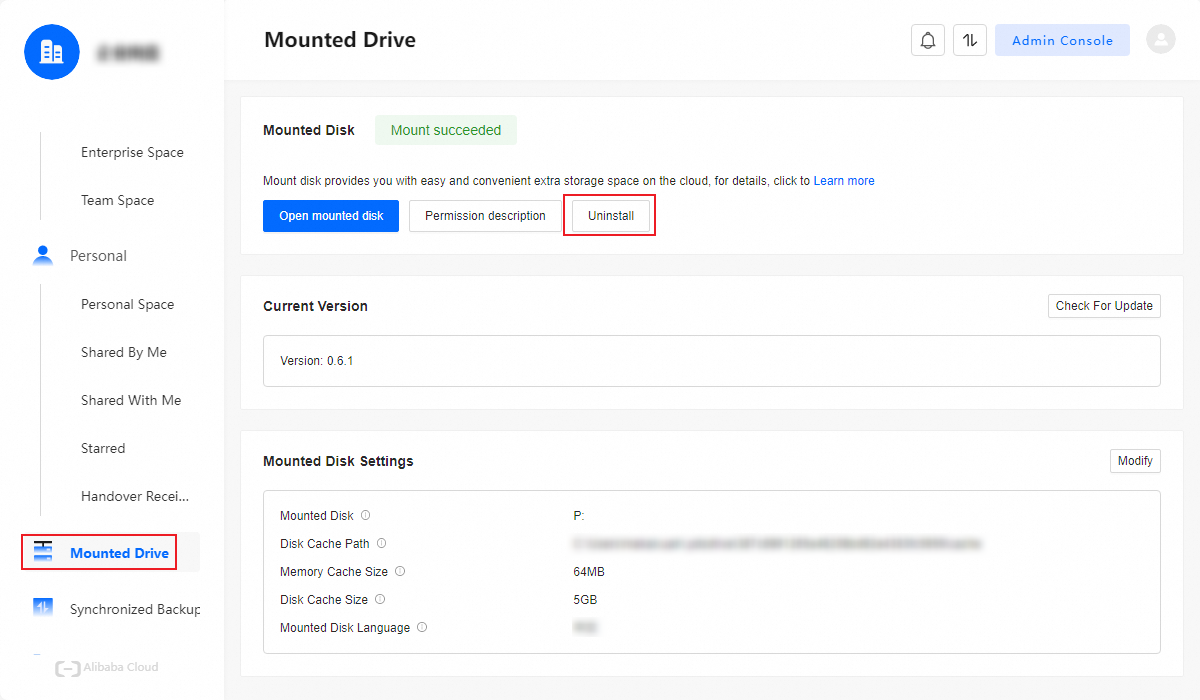
In the Uninstall Mounted Drive dialog box, click OK.
FAQ
How do I resolve a mounted drive installation failure on Windows?
This failure is usually caused by an issue with the Dokan driver, a required dependency. Follow these steps to troubleshoot the problem.
For best results, install the mounted drive on a genuine, unmodified version of Windows.
To prevent data loss, always save and close your files before exiting the client.
Troubleshooting
First, check if the Dokan driver is installed by going to Control Panel > Programs and Features.

If you don't see the Dokan driver in Programs and Features, you need to install it manually.
Navigate to the following directory:
C:\Users\[YourUsername]\.edm\plugins\mountapp\pkgDouble-click the
Dokan_x64-noVC.msiinstaller to run it.
After the installation is complete, try installing the mounted drive again from the client.
On Windows 7, manual installation of the Dokan driver may fail if a required security patch is missing. You might see an error like this:
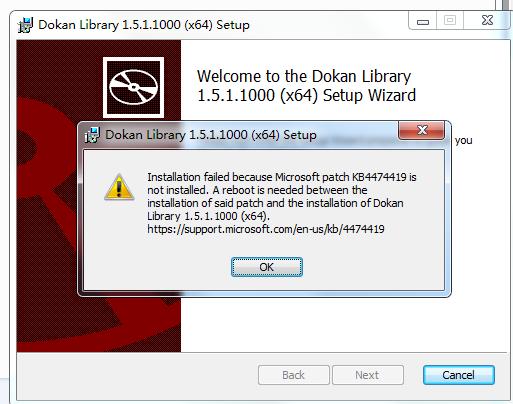
To fix this, you must install the patch before installing the driver.
Go to the Microsoft Update Catalog for KB4474419.
Download and install the correct version of the patch for your system. You must restart your computer for the changes to take effect.
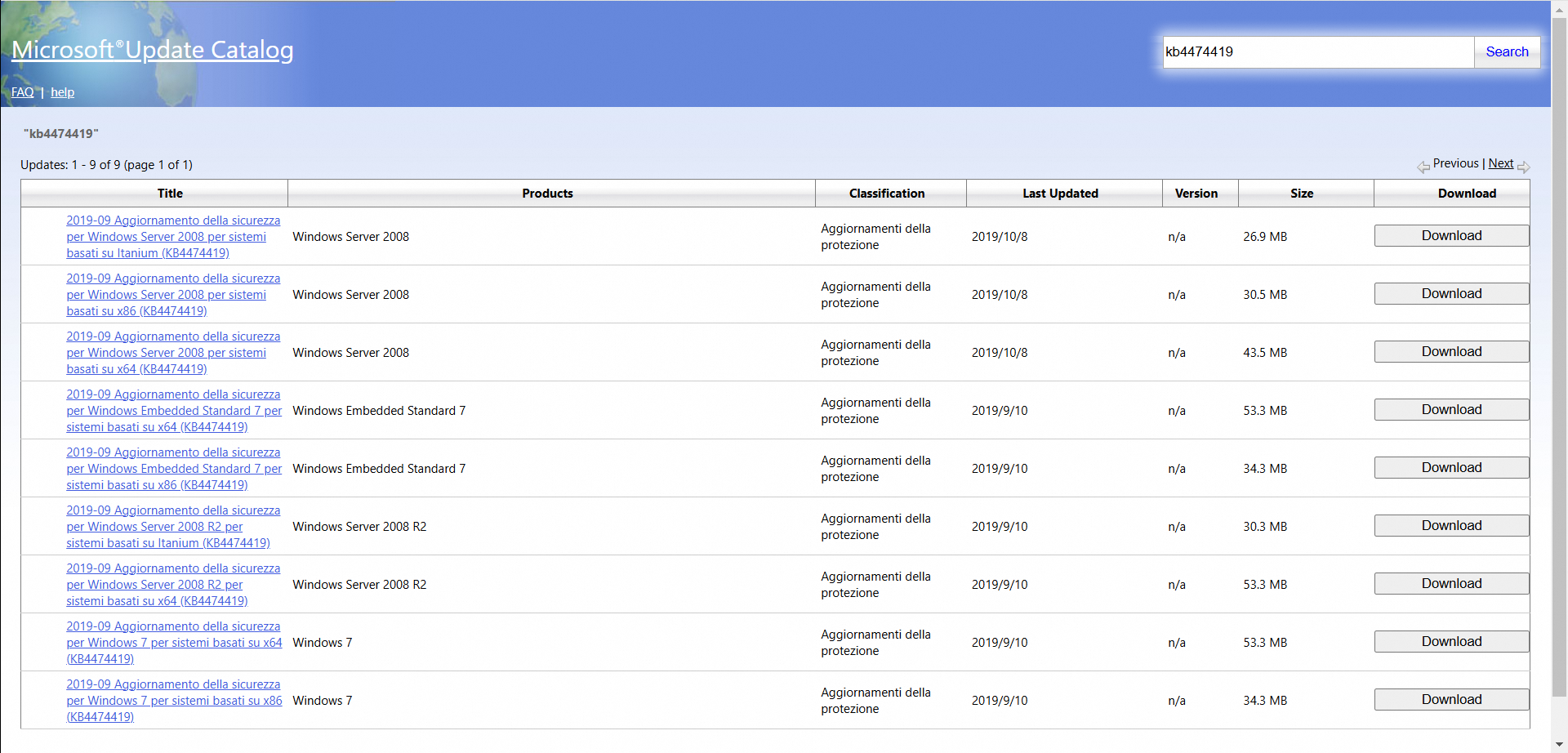
Follow the steps in Scenario 1 to manually install the Dokan driver.
After the Dokan driver is installed, try installing the mounted drive again.
How do I fix the macFUSE "Unsupported macOS Version" error after upgrading macOS?
Problem
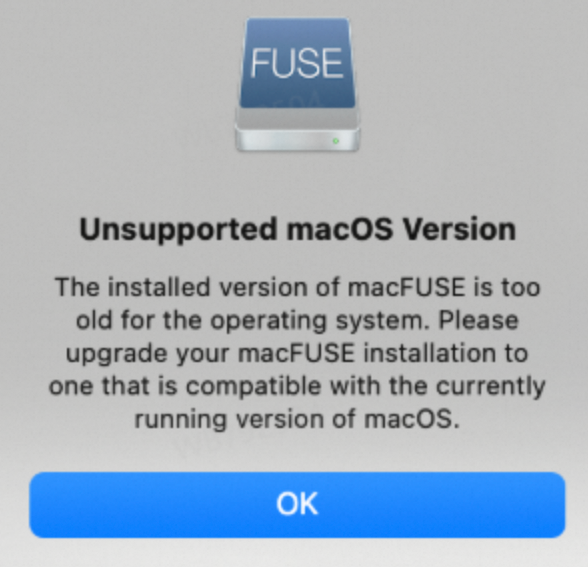
After upgrading to a new version of macOS (such as 15.0 or later), the mounted drive may become unusable, and you see an "Unsupported macOS Version" error from macFUSE.
Cause
This error occurs because the new version of macOS is incompatible with the older version of macFUSE installed on your system.
Solution
Update macFUSE to the latest compatible version:
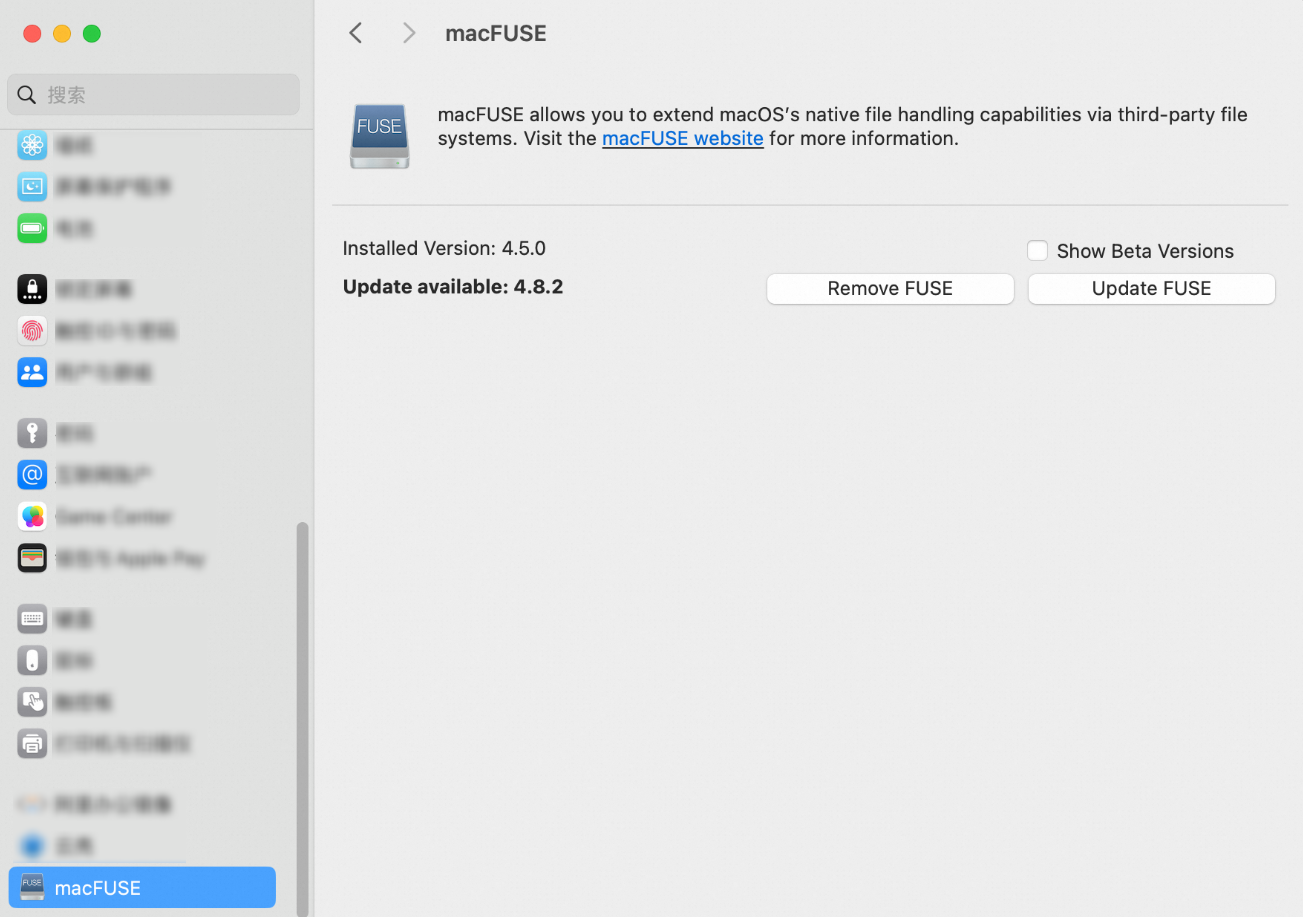
Open System Settings on your Mac.
Navigate to the macFUSE preference pane.
Click the Update FUSE button to install the latest version.
After the update is complete, restart the Alibaba Cloud Drive Enterprise Edition PC client.
Where do files go when I delete them from the mounted drive?
How do I disable the mounted drive for my organization?
How do cloud permissions map to local file system permissions in the mounted drive?
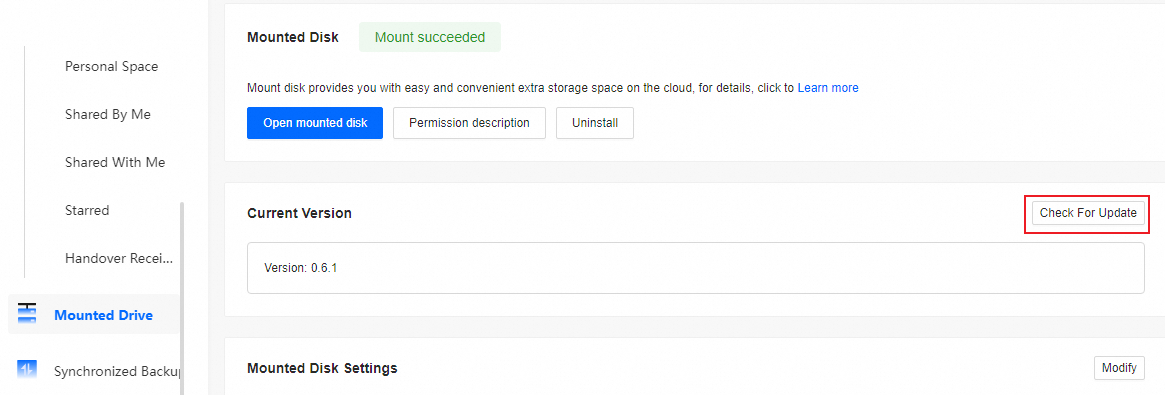
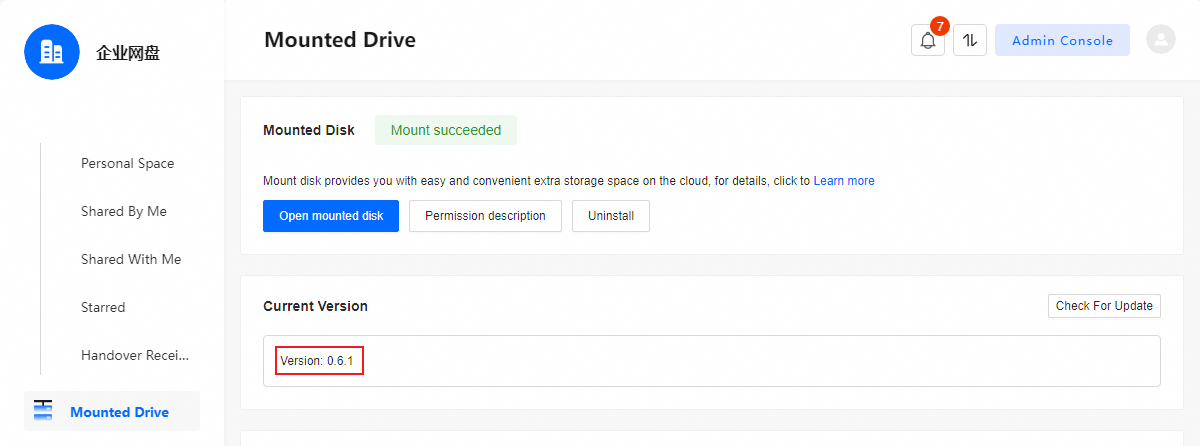
How do I check the version of the mounted drive client?
Find the current version number on the Mounted Drive page within the Cloud Drive for Enterprises PC client.
How do I upgrade the mounted drive client?
The client automatically prompts you when a new version is available. To manually check for updates:
Go to the Mounted Drive page in the client.
Click Check For Updates.