Activate HTTPDNS, add domain names, verify DNS resolution, and integrate the client SDK into your app.
Overview
If your mobile app uses a domain name such as www.example.com, users may experience redirects to malicious websites, stuttering, or disconnections caused by domain hijacking or inaccurate DNS scheduling. Integrating the HTTPDNS client SDK into your app prevents these issues. Complete the following steps to get started:
-
Activate HTTPDNS.
-
Add the domain name to resolve.
-
Verify the resolution result.
-
Run the sample Android, iOS, or HarmonyOS project to test the integration.
Step 1: Activate the service
-
Log on to the EMAS console.
-
Accept the agreements and click Submit.
-
The EMAS service is now activated.
-
Skip this step if you have already activated EMAS or created a project.
Step 2: Add a domain name
HTTPDNS resolves only domain names that you explicitly add. Without adding a domain name, HTTPDNS cannot resolve it or its subdomains.
-
Log on to the EMAS console.
-
In the navigation pane on the left, choose Website Config.
-
Click Add Domain Name, enter the domain name to resolve, and click OK.
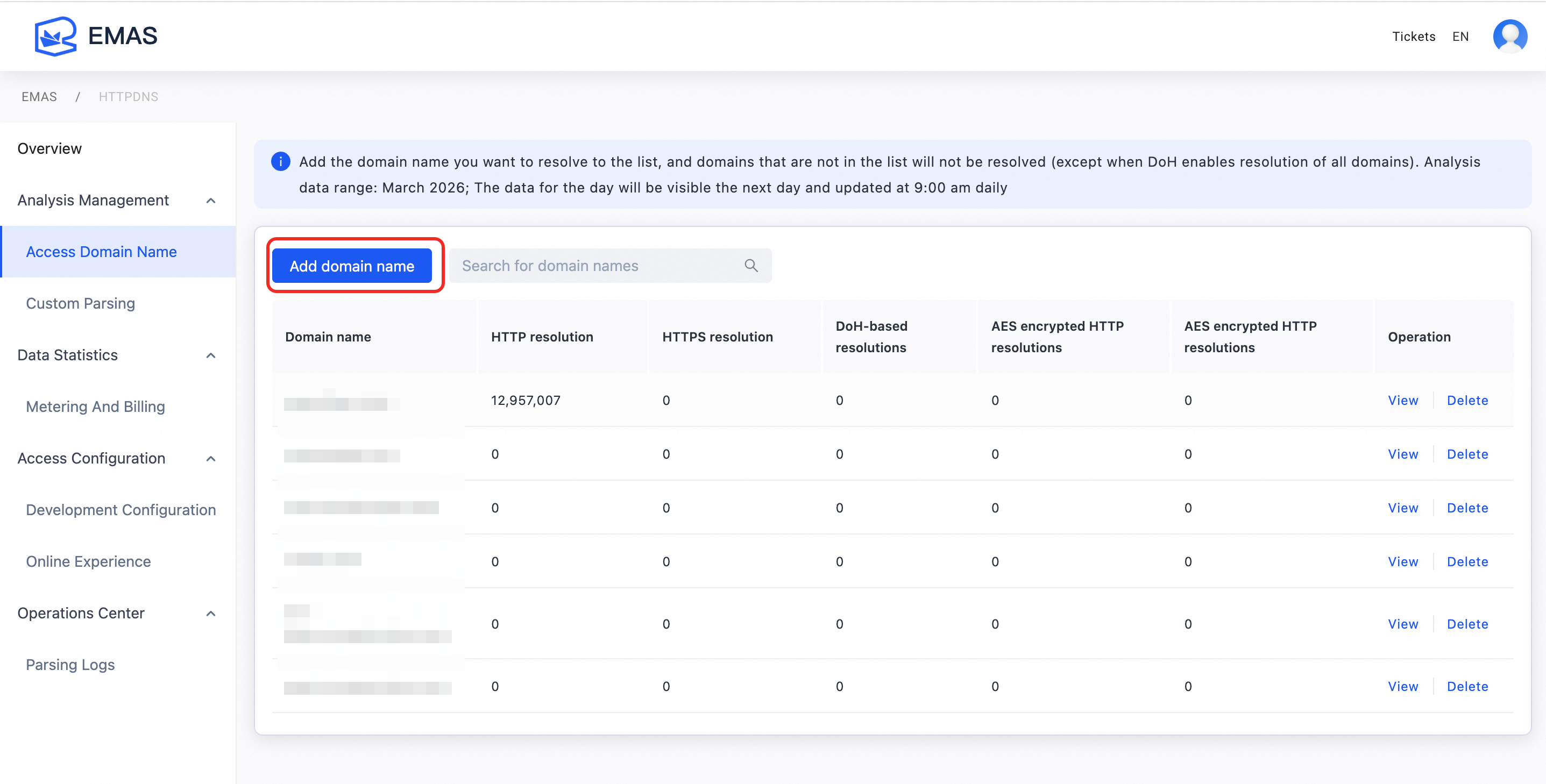
The domain name is added. You can now verify the resolution.
Step 3: Verify the resolution
Verify that the domain name resolves correctly:
-
Log on to the EMAS console.
-
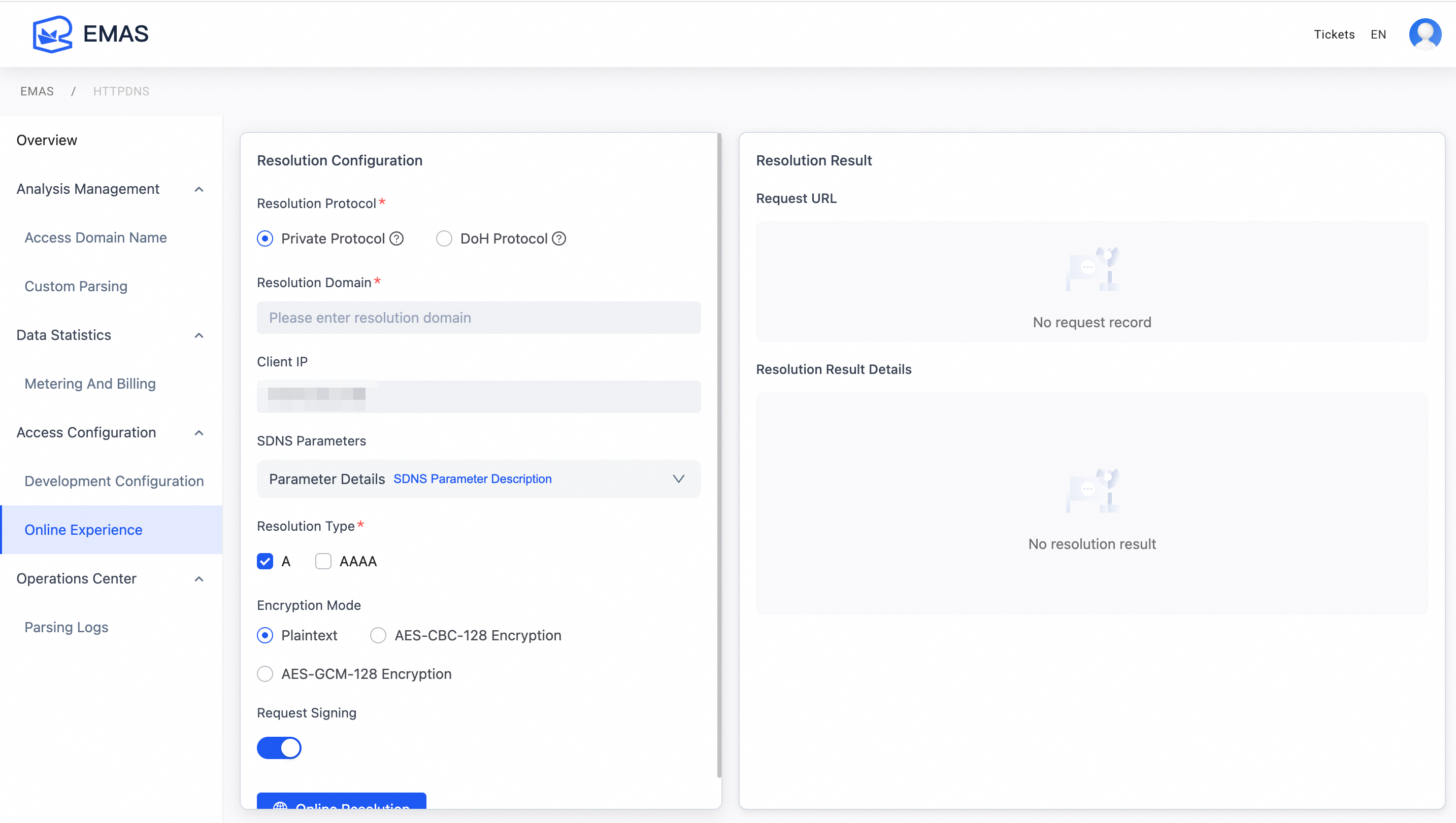
In the navigation pane on the left, choose Configuration > Online Experience.
-
Enter the domain name and click Online Parse to view the resolution result.
The result shows whether the domain name configuration is effective. Online Experience
Step 4: Run the sample project
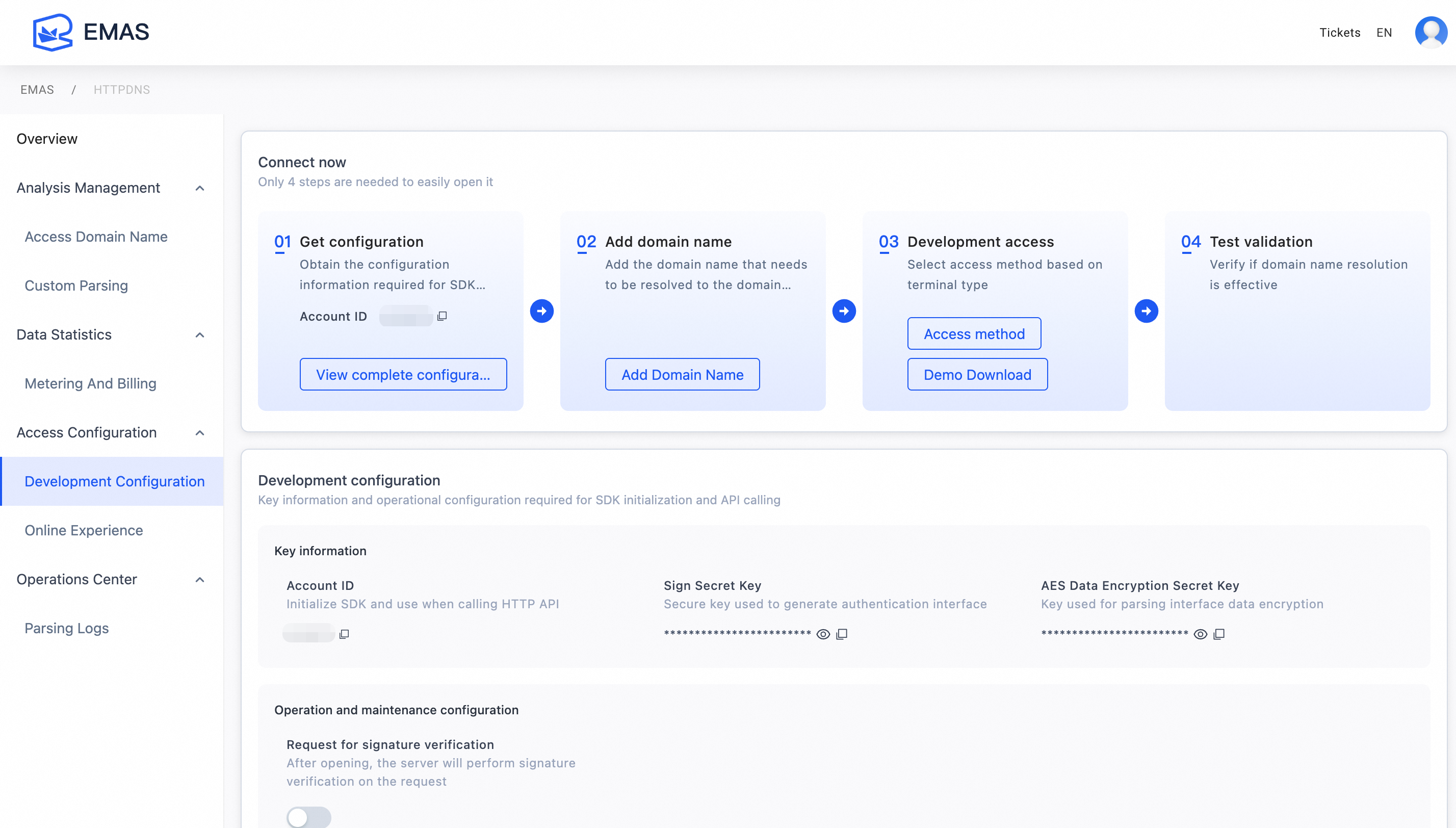
The HTTPDNS console provides sample projects for multiple platforms to help you understand the integration process.
-
In the Developer Configuration menu, click Download Sample Project.
-
Select and download the sample project for your platform, then run it locally.
To use HTTPDNS in your mobile app or on your PC, integrate the client SDK: