This topic describes how to migrate data by using a Data Transport Micro device. The process covers the steps from order creation to completion of data migration. You can use a Data Transport Micro device to migrate offline data between your data center and Alibaba Cloud Object Storage Service (OSS) based on your business requirements.
Process of migrating data from your data center to OSS
You can lease a Data Transport Micro device only in regions within the Chinese mainland.
The following figure shows the process of migrating data from your data center to OSS.
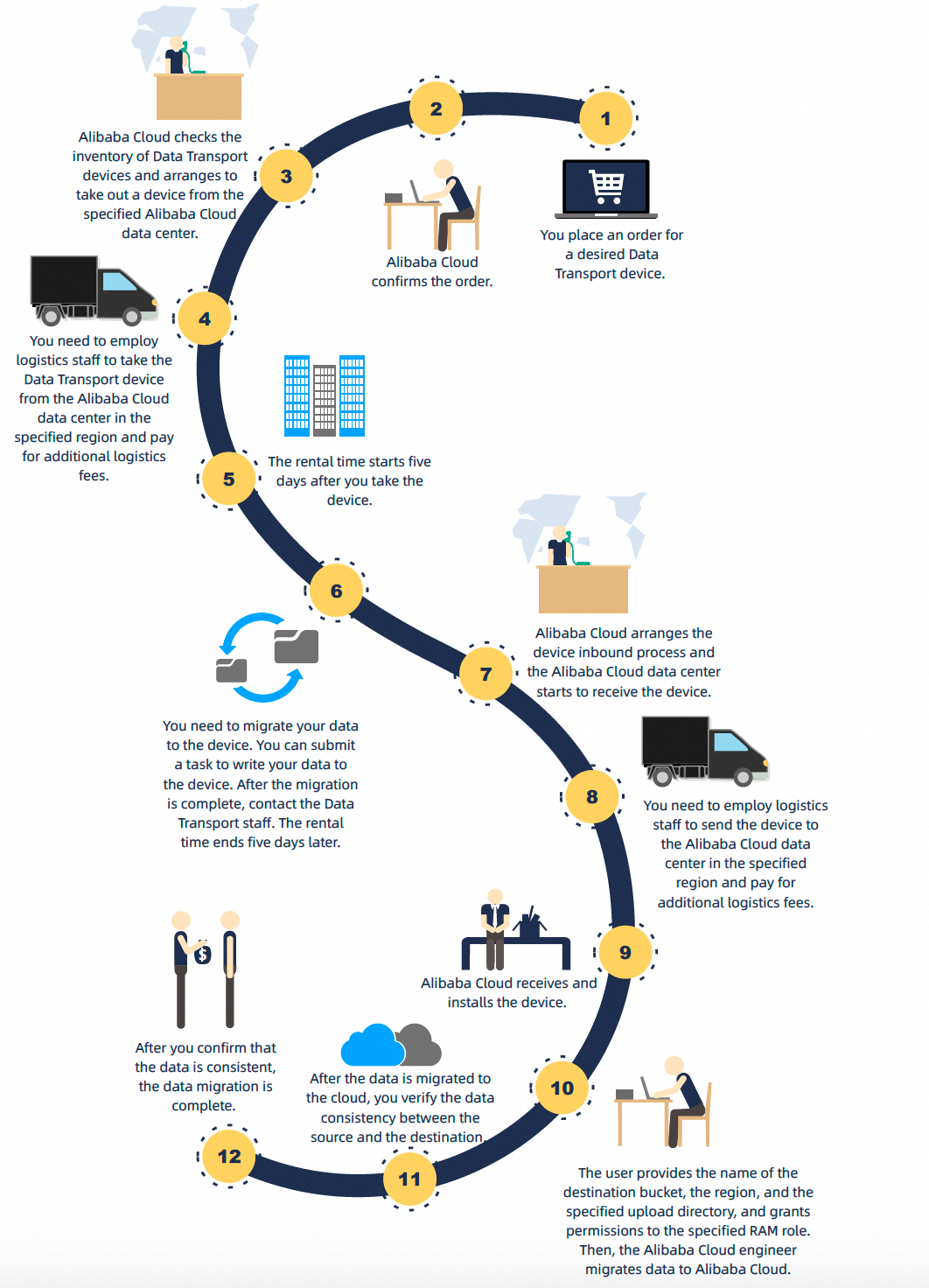
Migrate data from your data center to OSS
Create an order for a Data Transport Micro device and complete the payment. For more information, see Create an order to lease a device for a single time.
NoteAfter an order is created, Alibaba Cloud prepares a Data Transport Micro device that meets your requirements and delivers the device to the address specified in the order.
Create an OSS bucket. For more information, see Create buckets.
After you confirm the receipt of the Data Transport Micro device, install the device. For more information, see Install a Data Transport device.
Mount the file system in which the source data is stored. For more information, see Mount a Data Transport device.
Create and run a data migration task to migrate your on-premises data to the Data Transport Micro device. For more information, see Migrate data.
Power off the Data Transport Micro device and notify Alibaba Cloud to retrieve the device. For more information, see Migrate data to the cloud and verify the migration result.
NoteAfter your on-premises data is migrated to the Data Transport Micro device, Alibaba Cloud performs the following operations:
Arrange for a logistics provider to collect and deliver the Data Transport Micro device to an Alibaba Cloud data center.
Install the Data Transport Micro device in the Alibaba Cloud data center and migrate the data from the device to OSS.
After the data migration task is complete, Alibaba Cloud staff provide you with a data migration report. This data migration report contains information, such as the total number of files and the total amount of data migrated to OSS, and the paths of all migrated files and files that failed to be migrated. The migration report is for reference only. You can check whether the source data is the same as the data in the cloud. After the data migration task is complete, you must also revoke the permissions granted to the specified RAM role.
Process of migrating data from OSS to your data center
The following figure shows the process of migrating data from OSS to your data center.
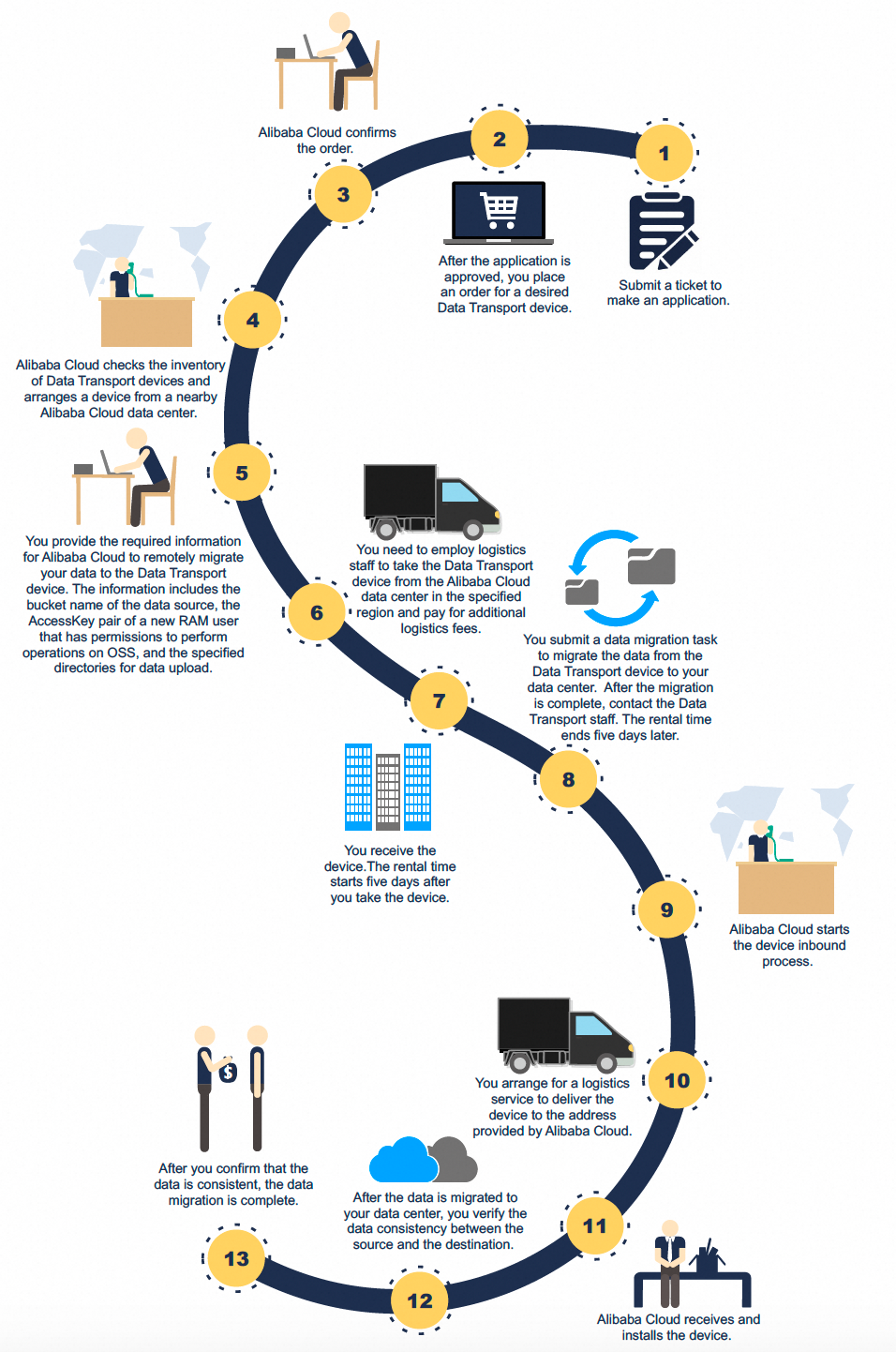
Migrate data from OSS to your data center
When you use a Data Transport Micro device to migrate data from OSS to your data center, you are charged USD 28.57 for 1 TB of data. You are charged a minimum fee of 10 TB of data. If the data volume you upload is less than 10 TB, you are charged for 10 TB of data.
Data migration by using a Data Transport Micro device involves transferring data over the Internet. Therefore, in addition to the device rental fee, you are charged OSS-related fees, including outbound traffic fees and request fees. For more information, see Billing overview.
Before you use a Data Transport Micro device to migrate data of the Archive storage class, you must restore the data. Take note of the following items when you restore the data:
Make sure that you have restored the data before you migrate the data.
You must specify the number of days during which the restored data remains in the restored state based on the amount of data that you want to migrate. This prevents data from entering the archived state during data migration.
You are charged for data retrieval when you restore data. In some cases, the restoration fees are high. For more information about the billing, see Billing overview.
Before you place an order, submit a request. You must provide your user ID (UID) and the reason for data migration.
After your request is approved, select Back up to Data Center in the Data Transport console, create an order, and then complete the payment.
You must provide the required information for Alibaba Cloud to migrate data to the specified Data Transport Micro device. The information includes the bucket name of the data source, the AccessKey pair of a new Resource Access Management (RAM) user that has permissions to perform operations on OSS, and the specified directories for data download.
After the data is migrated to the Data Transport Micro device, Alibaba Cloud staff provide you with a data migration report. This data migration report contains information, such as the total number of files and the total amount of data migrated to the device, and the paths of all migrated files and files that failed to be migrated. The migration report is for reference only. Alibaba Cloud staff arrange a logistics provider to deliver the device to the designated address.
After you confirm the receipt of the Data Transport Micro device, install the device. For more information, see Install a Data Transport device.
Mount the file system in which the data of your data center is stored. For more information, see Mount a Data Transport device.
Create and run a data migration task to migrate data from the Data Transport Micro device to your data center. For more information, see Migrate data.
NoteYou can run a data migration task to migrate data to your data center that uses a remote file system such as a remote Windows file system, a remote Linux file system, or an Apsara File Storage NAS (NAS) server. If your data center uses Hadoop Distributed File System (HDFS) or other storage systems, you must use other tools for data migration.
Power off the Data Transport Micro device and notify Alibaba Cloud of retrieving the device. For more information, see Migrate data to the cloud and verify the migration result.
After data migration is complete, you must check the data consistency between the cloud and your data center.