ApsaraDB MyBase dedicated clusters provide OS-level access to the underlying hosts. Two connection methods are available:
-
Bastion host — SSH into a host from your local terminal using a managed jump server. Use this method when you need persistent terminal sessions or must integrate with existing SSH-based workflows.
-
Webshell — Connect directly from the ApsaraDB MyBase console without installing an SSH client. Use this method for quick, browser-based access from any operating system.
Connect using a bastion host
Prerequisites
Before you begin, ensure that you have:
-
An ApsaraDB MyBase for MySQL dedicated cluster with OS permissions enabled
-
A host created in the cluster. For details, see Create a host in an ApsaraDB MyBase for MySQL dedicated cluster.
-
A host account created for the cluster. For details, see Create a host account.
Step 1: Associate the bastion host with your MyBase host
-
Log on to the ApsaraDB MyBase console.
-
In the upper-left corner, select a region.
-
Find the cluster and click Details in the Actions column.
-
In the left-side navigation pane, click Bastion Hosts.
-
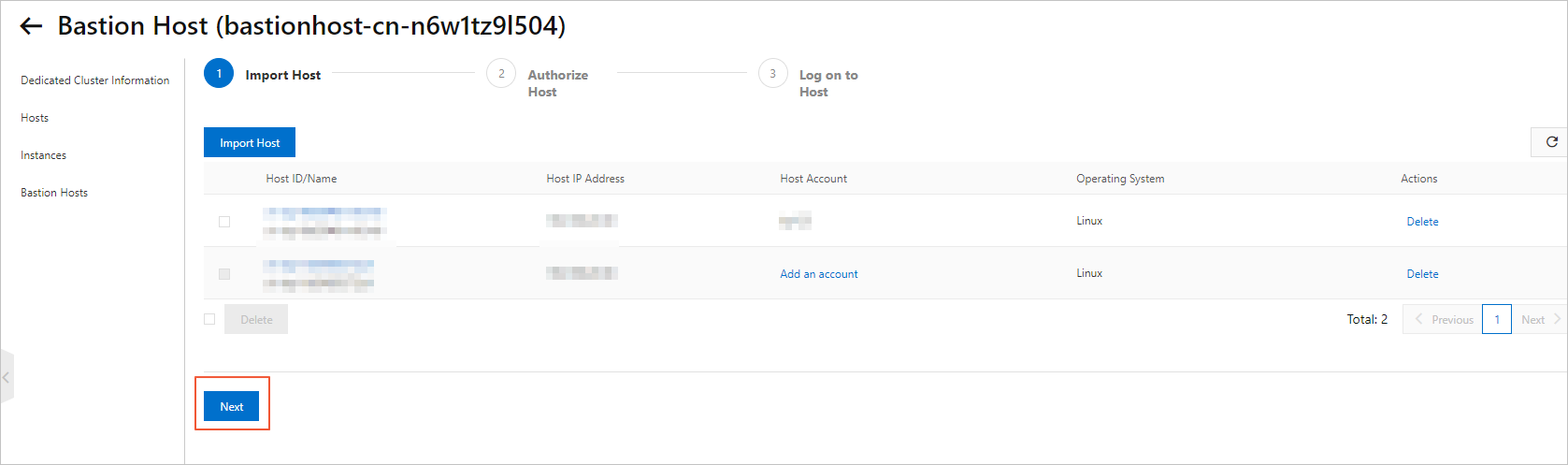
Find the bastion host and click Associate with Bastion Host in the Actions column.

-
Select the host to connect to and click Next.
Step 2: Create a bastion host account
-
Click Create Bastion Host Account.
-
In the Create Bastion Host Account dialog box, configure the following parameters.
Parameter Description Username The username for logging on to the bastion host. Must be up to 50 characters and contain at least three of the following character types: uppercase letters, lowercase letters, digits, and special characters ( _,-,.,%).Password The password for logging on to the bastion host. Must be 8–64 characters and contain letters, digits, and special characters ( @,#,$).Confirm password Re-enter the password to confirm. Name Your name. Up to 100 characters. Email address (Optional) Your email address. Phone number (Optional) Your phone number. 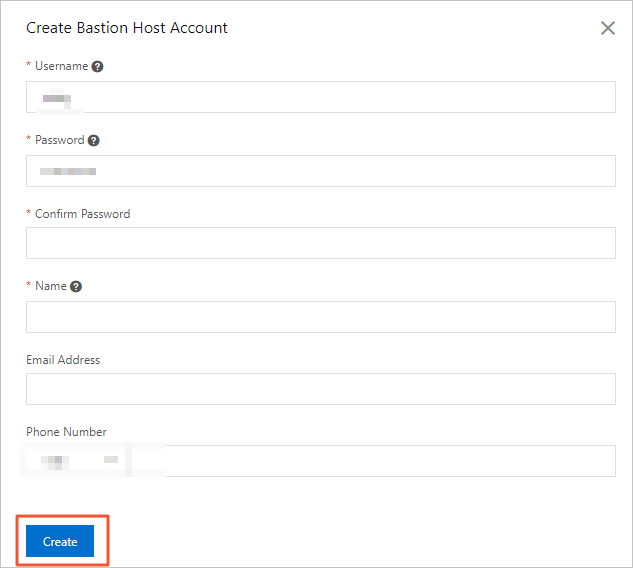
-
Click Create.
Step 3: Authorize the bastion host account
-
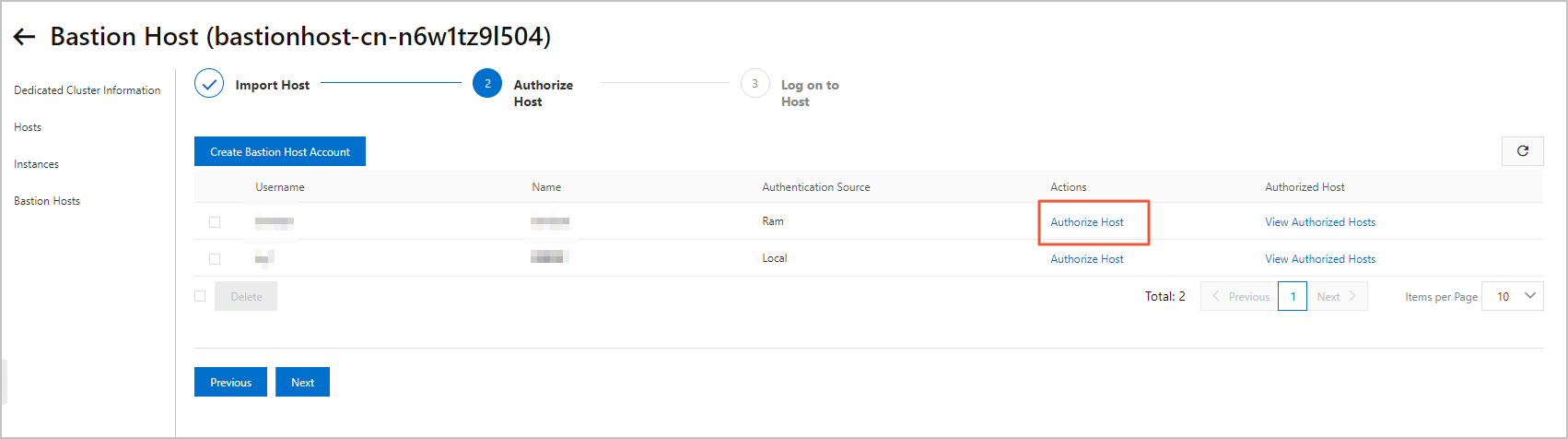
In the bastion host account list, click Authorize Host in the Actions column. The Bastionhost console opens.
-
On the Users page, find the account and click Authorize Hosts in the Actions column.

-
On the Authorized Hosts tab, click Authorize Hosts.
-
In the Authorize Hosts panel, select the host to connect to and click OK.
After authorization is complete, go to the Authorize Host wizard. Click View Authorized Hosts in the Authorized Host column to verify which hosts the account can access.
Step 4: Log on to the host via SSH
-
On your local terminal, run the following command:
Placeholder Description <Username>The username of the bastion host account you created. <Bastion host O&M address>The public endpoint of the bastion host. Find this value on the Bastion Hosts page. <Bastion host port>The port of the bastion host. Default: 60022.ssh <Username>@<Bastion host O&M address> -p<Bastion host port>Example:
ssh test@wdd*****-public.bastionhost.aliyuncs.com -p60022 -
Enter the password of the bastion host account.
-
Use the arrow keys to select the target host, and then press Enter.
Connect using a webshell
Prerequisites
Before you begin, ensure that you have:
-
An ApsaraDB MyBase for MySQL dedicated cluster with OS permissions enabled
-
A host created in the cluster. For details, see Create a host in an ApsaraDB MyBase for MySQL dedicated cluster.
Start a remote connection
-
Log on to the ApsaraDB MyBase console.
-
In the upper-left corner, select a region.
-
Find the cluster and click Details in the Actions column.
-
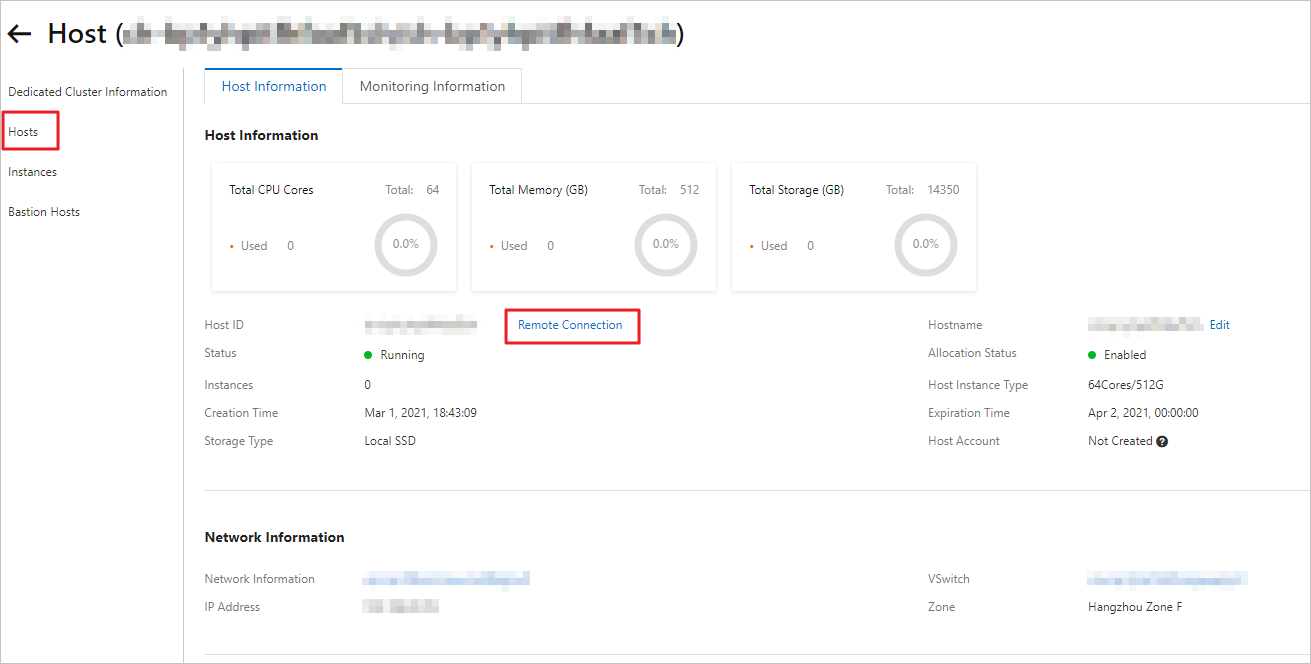
In the left-side navigation pane, click Hosts.
-
Connect using one of the following methods:
-
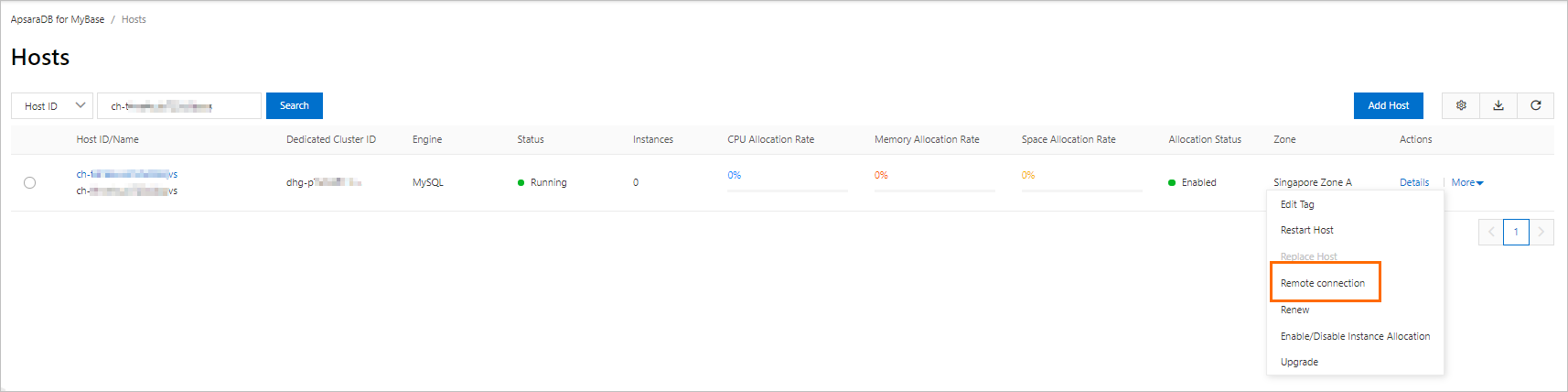
From the host list: Find the host, click More in the Actions column, and select Remote connection. In the confirmation dialog box, click OK.
-
From the host details page: Click Details in the Actions column. On the Host Information tab, click Remote Connection.
-
-
After you log on to the host, the following page appears.
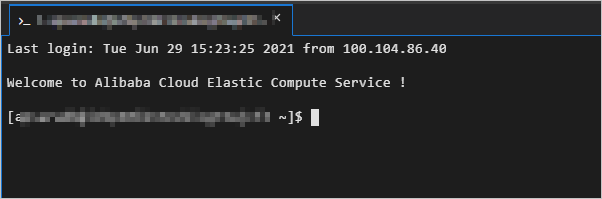
The system automatically connects to the host from the server. You do not need to enter the username or password of your account.