Artificial intelligence is transforming how people prepare for high‑stakes evaluations. Across sectors, adaptive simulators deliver realistic practice, instant feedback and performance metrics. They run at scale thanks to powerful cloud infrastructure, enabling applicants and employees worldwide to sharpen skills before facing real‑world challenges. This article explores how different industries are adopting AI‑driven training, highlights credible statistics and explains why cloud platforms such as Alibaba Cloud are critical enablers.
AI training simulators are digital systems that replicate real-world scenarios so learners can practice skills in a safe, adaptive environment. Instead of static courses, these models use artificial intelligence to mirror live conditions, respond dynamically to user input, and deliver feedback in real time. They’re already used in fields ranging from medicine to finance, helping people prepare for complex tasks without the risks or costs of physical training.
What makes them powerful is the combination of realism and scalability. Because they run on cloud infrastructure, thousands of participants can access simulations at the same time, with each experience personalized. Research shows that AI-driven training can cut learning costs by up to 40% and shorten training time by nearly 50%, while also improving retention and performance. This makes simulators a practical way for industries to upgrade workforce readiness and future-proof professional development.
AI training models are not limited to one profession. They are already being tested or adopted across multiple industries where performance and decision-making are critical. Each sector uses simulations differently depending on its needs, but the goal is the same: to create realistic practice environments that improve readiness, reduce costs, and enhance outcomes.
Airlines and regulators require rigorous pilot training, and AI is helping meet growing demand. Global manufacturers expect airlines to need about 674,000 new pilots between 2024 and 2043. To prepare them efficiently, next‑generation flight simulators use AI to adjust scenarios on the fly, analysing pilot responses and generating personalized exercises. Safety data show why this matters: fatal accidents per million aircraft departures declined from around 40 in 1959 to roughly 0.1 today thanks to improvements in technology and pilot training.
AI‑enhanced simulators further reduce risks by exposing pilots to rare emergencies and atypical conditions in a controlled setting. They also accelerate training by adapting difficulty, allowing trainees to spend more time on weaknesses and less on mastered skills. Although these simulators might run on various hardware, their sophistication relies on high‑performance compute resources, often delivered through cloud infrastructure.
Aspiring doctors face intense competition, and interview performance often determines admission outcomes. AI-powered platforms now allow applicants to rehearse in realistic conditions by simulating live admissions interviews, asking follow-up questions, and scoring responses. One example of these platforms is Confetto, which focuses specifically on medical school admissions training and provides transcripts, competency scores, and coaching tips while adapting scenarios to each candidate’s target programs. These tools fill the gap left by limited access to human coaching and enable repeated practice without scheduling constraints.
Clinical research supports this approach. A non-randomized trial using AI-simulated patient interactions found that students receiving AI-assisted training performed better in medical interviews than those without it. The study also concluded that AI-driven simulations improved safety and overall educational outcomes, though they were less effective at teaching non-verbal communication. By combining realistic practice with immediate feedback, AI interview preparation platforms help candidates build confidence and sharpen their communication skills before the real evaluation.
Banks and fintech firms face constant pressure to keep up with new fraud tactics and strict regulations. AI-powered training platforms give staff a safe environment to practice compliance checks, fraud detection, and customer conversations without risking real money or data. For example, employees can walk through simulated suspicious transactions, learn how to respond to phishing attempts, or practice explaining regulatory requirements to customers.
This approach is already mainstream. A 2024 survey by BioCatch found that nearly three-quarters of financial institutions now use AI for crime and fraud detection. For training teams, simulators mean staff can rehearse identifying unusual spending patterns, escalate cases properly, and follow compliance protocols. The result is faster onboarding, fewer costly errors, and stronger protection for both customers and institutions.
Front-line employees in retail and customer support often face unpredictable situations, from handling frustrated customers to solving complex technical issues. AI-powered simulators let them rehearse these scenarios with virtual customers that adapt in real time, offering instant coaching on tone, clarity, and problem-solving. This gives staff the chance to make mistakes and learn from them without risking customer satisfaction.
The results are tangible. A Deloitte survey found that over a third of companies already use AI in employee training, citing faster onboarding and higher consistency across teams. For large retailers and call centers, this means thousands of employees can practice the same high-stakes interactions simultaneously, leading to better customer experiences and lower training costs.
At the core of every AI simulator is a trained model that understands patterns of behavior and adapts to them. When a learner interacts with the system, for example by answering an interview question or responding to a simulated customer complaint, the AI processes the input, compares it to expected competencies, and generates an appropriate follow-up. This can include more probing questions, alternative scenarios, or immediate hints to guide improvement.
The real strength comes from data. These simulators capture every interaction, turning it into measurable insights such as response quality, timing, or emotional tone. Over time, the AI uses this data to adjust difficulty levels, highlight progress, and pinpoint gaps. Combined with cloud infrastructure, this allows simulations to run at scale with consistent quality, whether training ten people or ten thousand. The result is a feedback loop where practice, evaluation, and improvement happen continuously and efficiently.
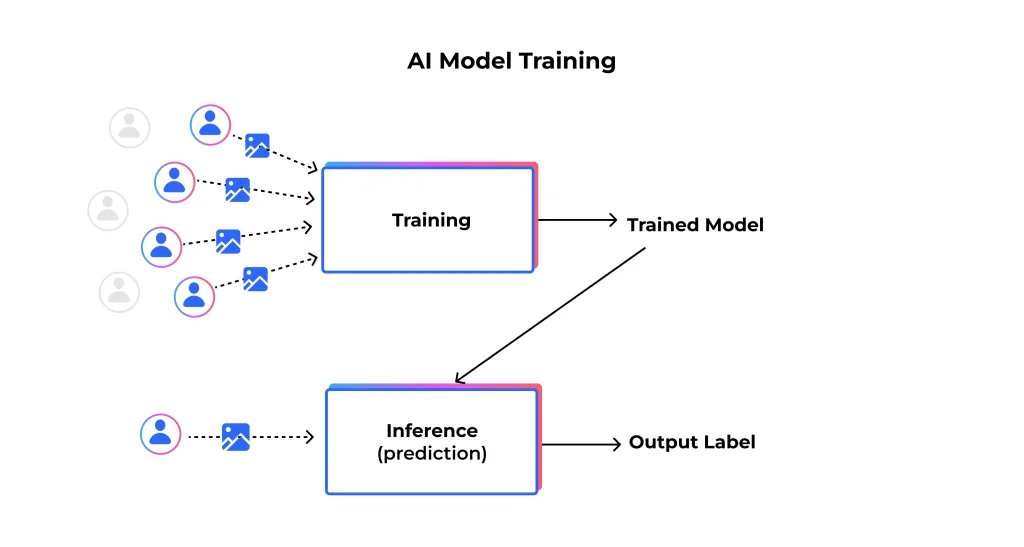
(image source: Openxcell)
AI simulators might look simple from the user’s perspective, answer a question, get feedback. But behind the scenes they require serious computing power. Each simulation involves natural language processing, data storage, real-time scoring, and adaptive responses. Multiply that by hundreds or thousands of users training at the same time, and the demand quickly grows.
This is why cloud infrastructure is critical. Running on local machines alone would limit scale and increase latency. By relying on cloud platforms, AI training tools can offer seamless experiences: instant responses, consistent quality, and secure handling of sensitive data.
AI simulators can only work well if the infrastructure behind them is powerful enough to handle heavy workloads. When thousands of learners interact with an AI system at the same time, the platform needs to process inputs instantly, generate responses without lag, and keep data secure. This is where providers like Alibaba Cloud come in.
Alibaba Cloud’s Platform for AI (PAI) is designed to run large, complex models efficiently. Recent updates have made it possible to support super-large models that deal with long text, multiple speakers, or highly detailed simulations. In practice, this means an interview simulator could run a full panel of AI “interviewers” at once, or a customer-support trainer could generate dozens of realistic role-play scenarios simultaneously, all without slowing down.
Another benefit is accessibility. With the PAI Model Gallery, users can explore and deploy nearly 300 open-source models through a no-code interface. This lowers the barrier for educators, training companies, or startups who want to experiment with AI simulations but don’t have a team of engineers. Paired with Alibaba Cloud’s integrated database solutions, organizations can also keep training data close to the models, improving both speed and security.
AI‑driven training simulators are still in their early stages. Future developments will integrate multimodal inputs, combining text, audio and vision, so that trainees practice not just what they say but also how they behave. Cross‑industry adoption will continue as businesses recognise that upskilling is crucial to remain competitive. Cloud‑based AI services will evolve to support larger models, faster inference and improved security. Platforms like Confetto show how targeted, domain‑specific training can transform preparation for high‑stakes interviews. As AI and cloud infrastructure mature, expect more industries, from law to engineering, to embrace simulators for accessible, personalised learning.
Disclaimer: The views expressed herein are for reference only and don't necessarily represent the official views of Alibaba Cloud.
How to Build a Real-Time AI Endpoint with Server-Sent Events (SSE)
Building AI Applications with Qwen3 Coder Next and Qwen Image 2.0 on Alibaba Cloud
Data Geek - February 27, 2025
Alibaba Cloud Community - August 4, 2023
Neel_Shah - October 30, 2025
Alibaba Cloud Community - August 15, 2025
Alibaba Cloud Community - June 25, 2026
Data Geek - February 25, 2025
 Qwen
Qwen
Full-range, open-source, multimodal, and multi-functional
Learn More Token Plan
Build more, spend less. One plan, every modality.
Learn More Alibaba Cloud Academy
Alibaba Cloud provides beginners and programmers with online course about cloud computing and big data certification including machine learning, Devops, big data analysis and networking.
Learn More
Alibaba Cloud Model Studio
A one-stop generative AI platform to build intelligent applications that understand your business, based on Qwen model series such as Qwen-Max and other popular models
Learn MoreMore Posts by plavookac


5945559992606216 October 9, 2025 at 6:51 am
Fascinating read! The way AI-driven simulators are transforming industries really resonates with what we see in embedded software development. Just like cloud-based AI training adapts in real-time, embedded systems often need to handle complex, dynamic scenarios with precision—whether it’s avionics, medical devices, or industrial automation. Combining scalable AI models with robust Embedded Software Development Company could open up even more possibilities for real-time, on-device training and decision-making. Exciting times ahead for cross-domain innovation!Source: https://embeddedsystems.evontech.com/